West Coast Europe
October, 2025
Introduction
Again it was autumn, one of our favourite periods of the year to travel. This time it offered us a chance to break free from the shackles of home life, and once again visit Europe. Specifically, the coasts of Portugal, Spain and France.
Spring and fall offer the best advantages for travel, since the weather is mostly favourable and family vacations generally don’t happen during these times. The resulting lack of crowds makes everything from air travel to local attractions much less stressful. In this particular case, the overall stress of what’s going on in the U.S.A., and it’s affect worldwide, prompted a desperate need for us to escape the news cycle. Even a two week break can often be enough to reset our cortisol levels, especially when done with like minded people we love spending time with.
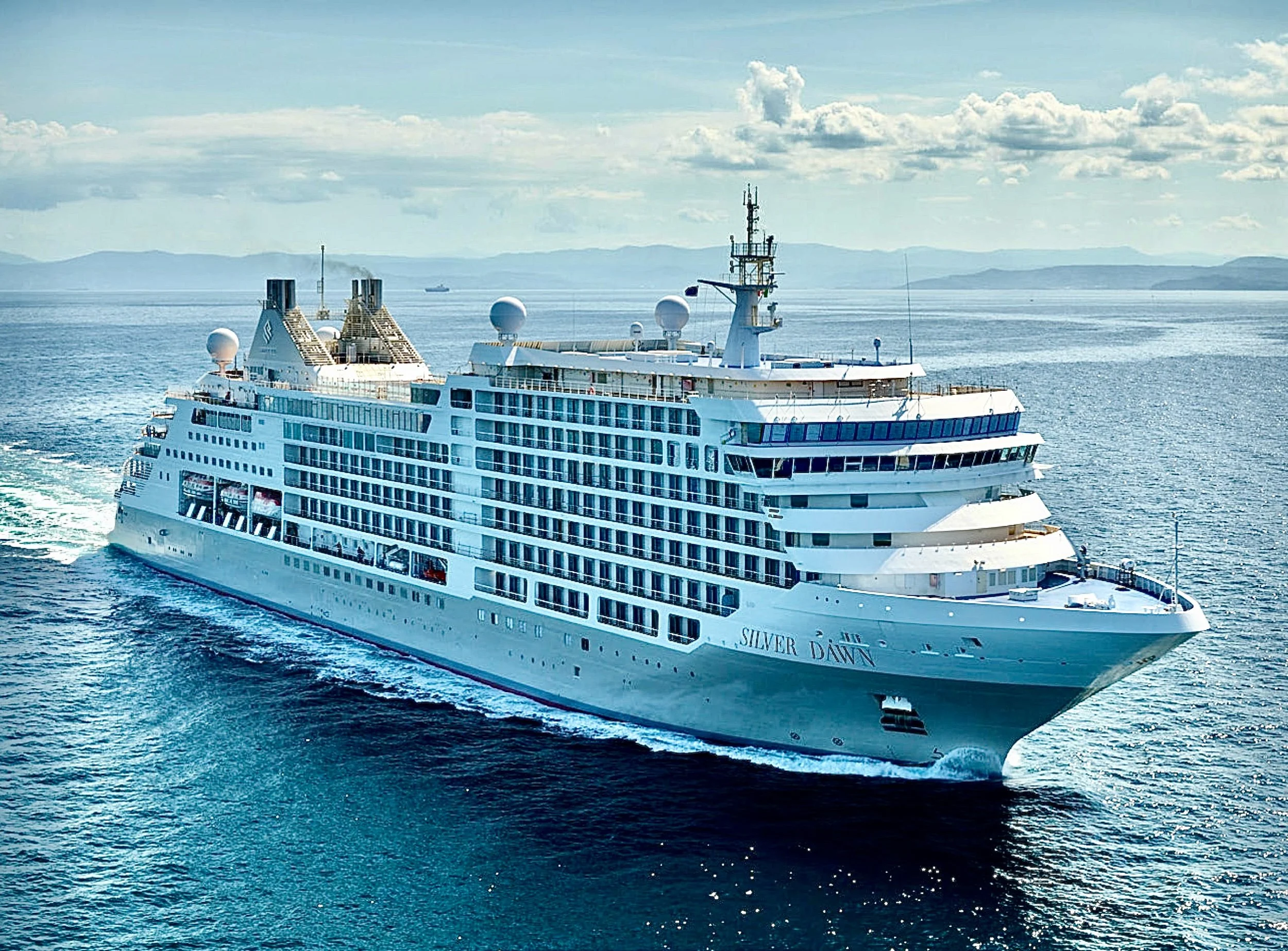
Since this would be an adventure by sea, we once again selected Silversea Cruise Line to move us from one location to another. Since all accommodation and dining is achieved within the confines of this moving platform, it’s an unpack once, and enjoy experience. You can’t get much less stressful than that.
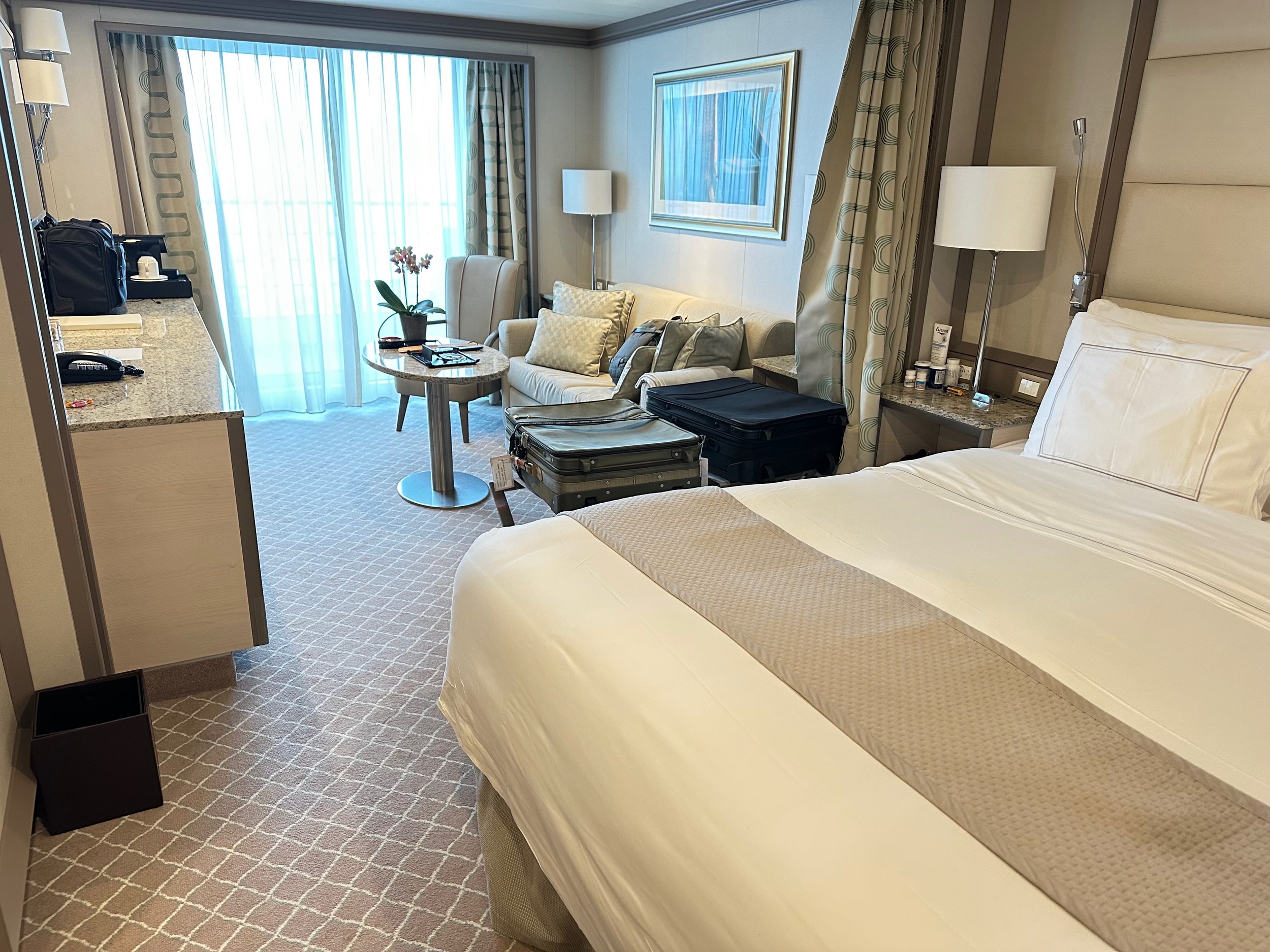
Our suite on board, Room 842.
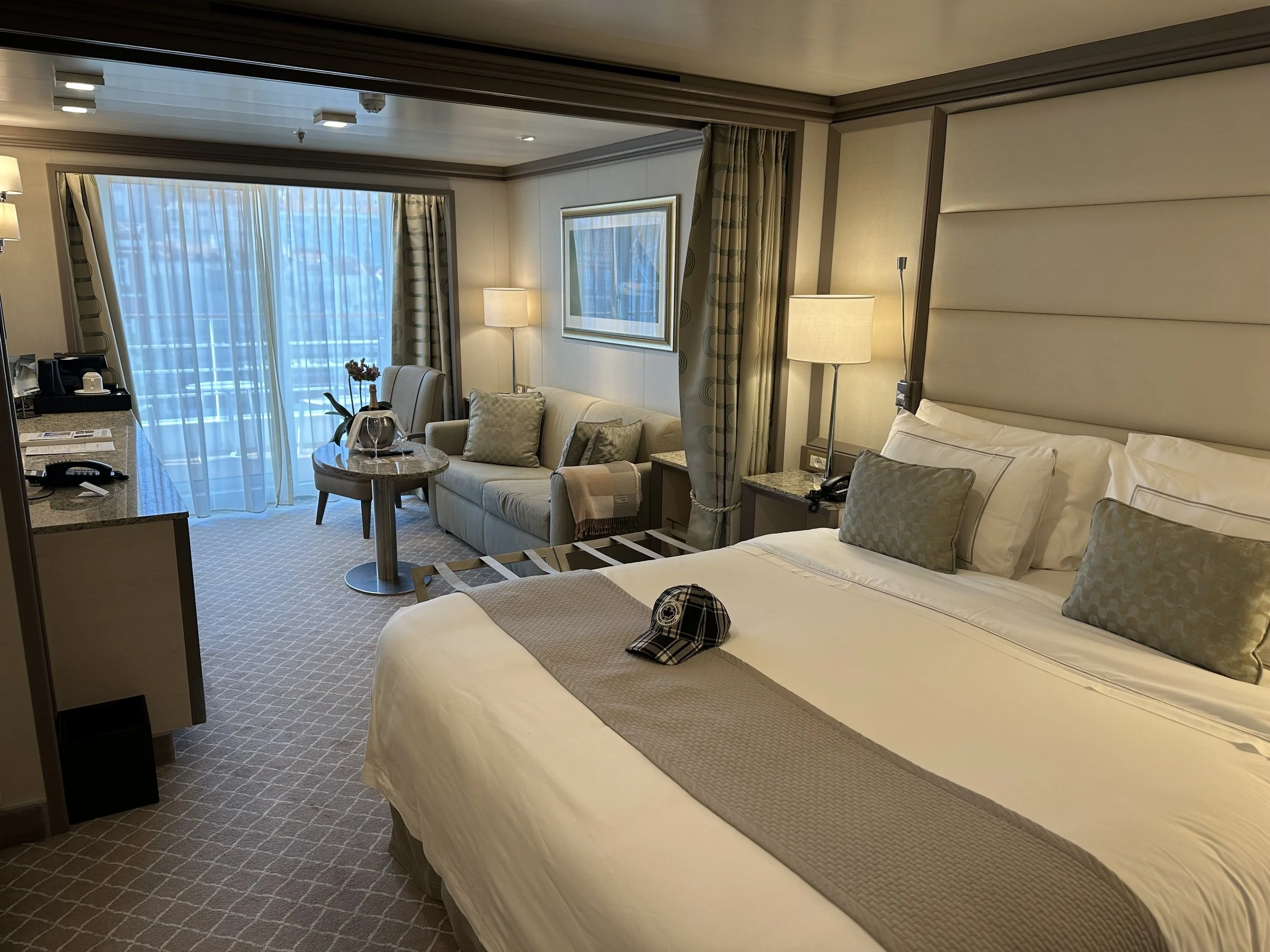
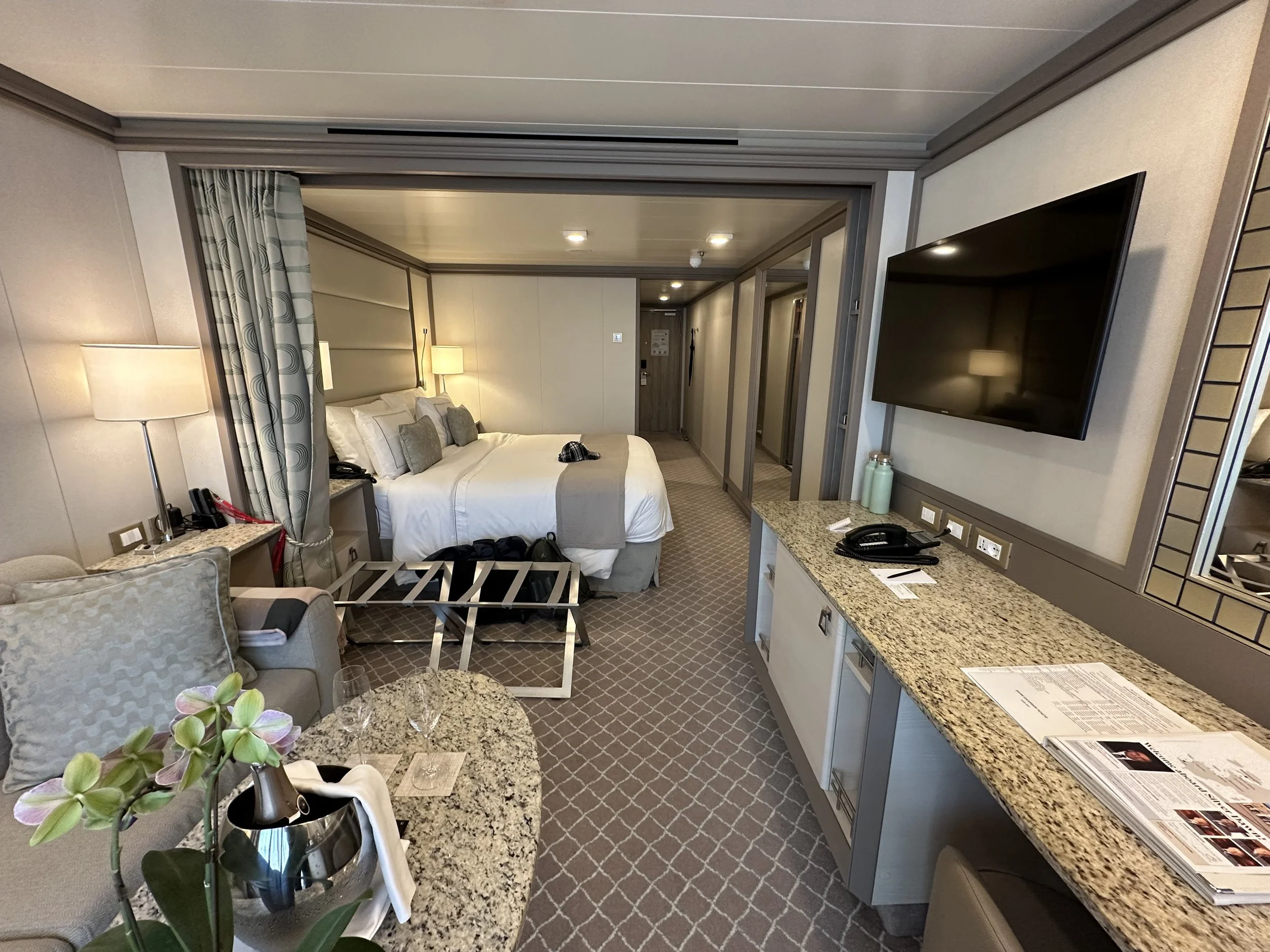
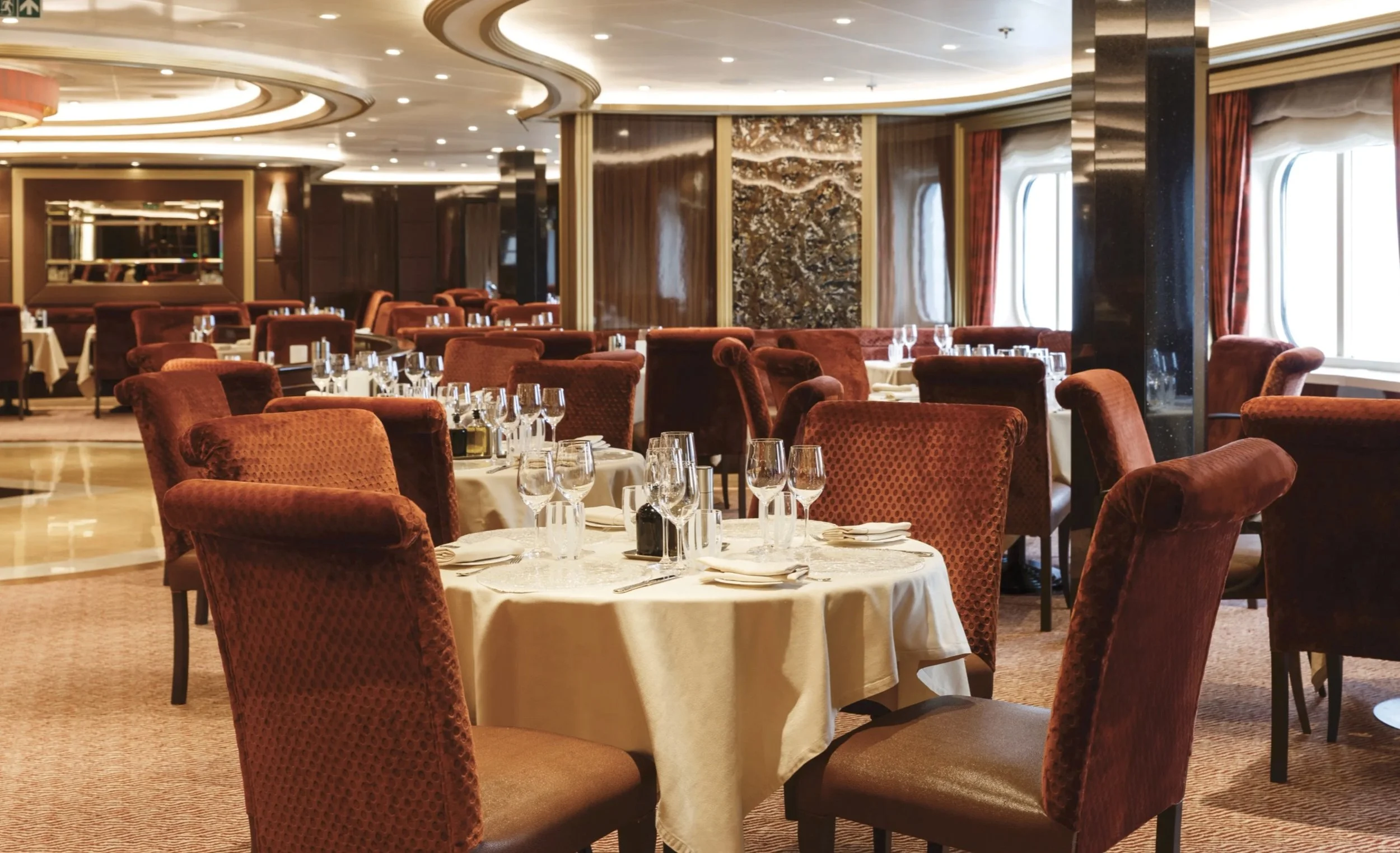
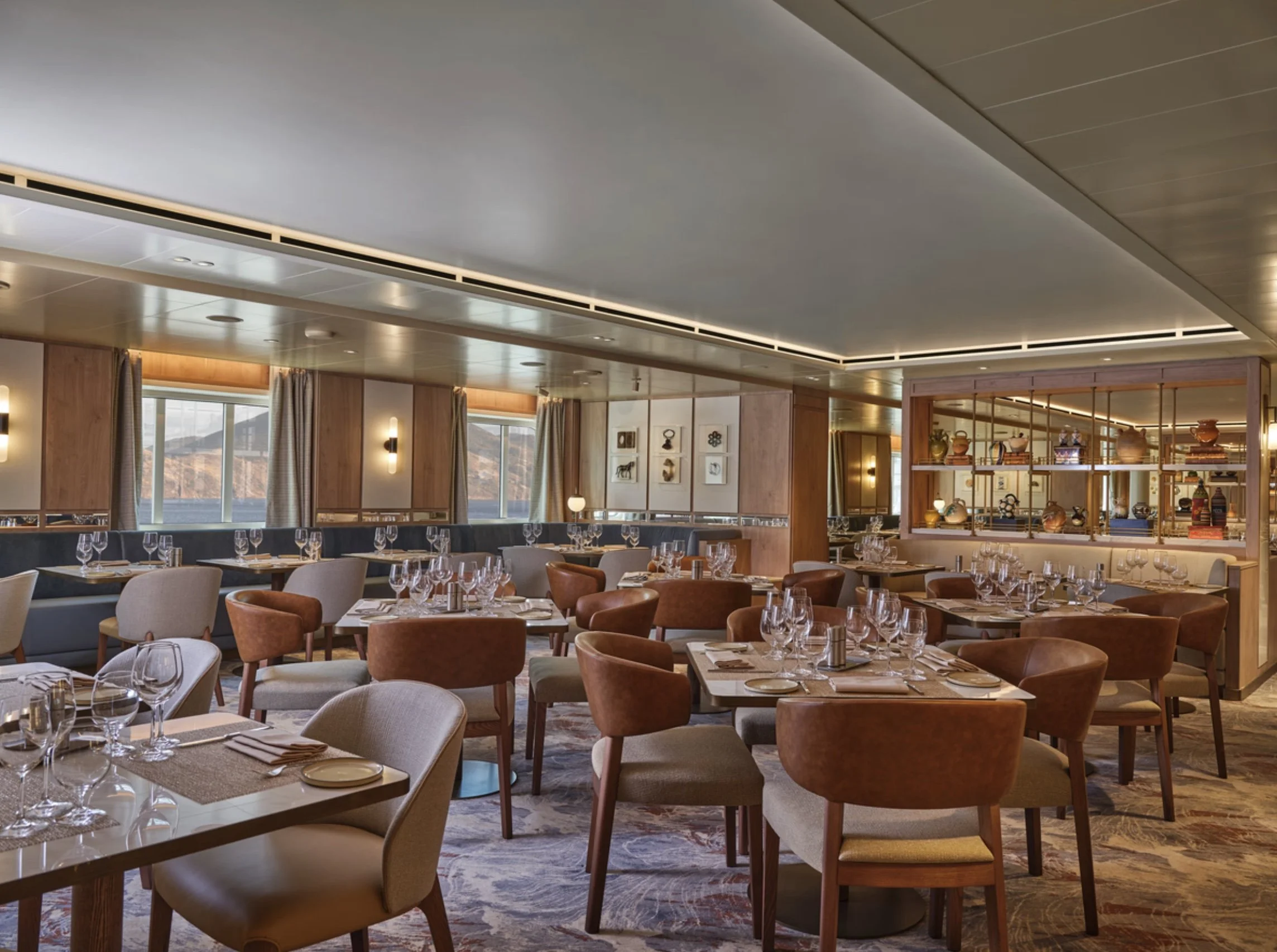
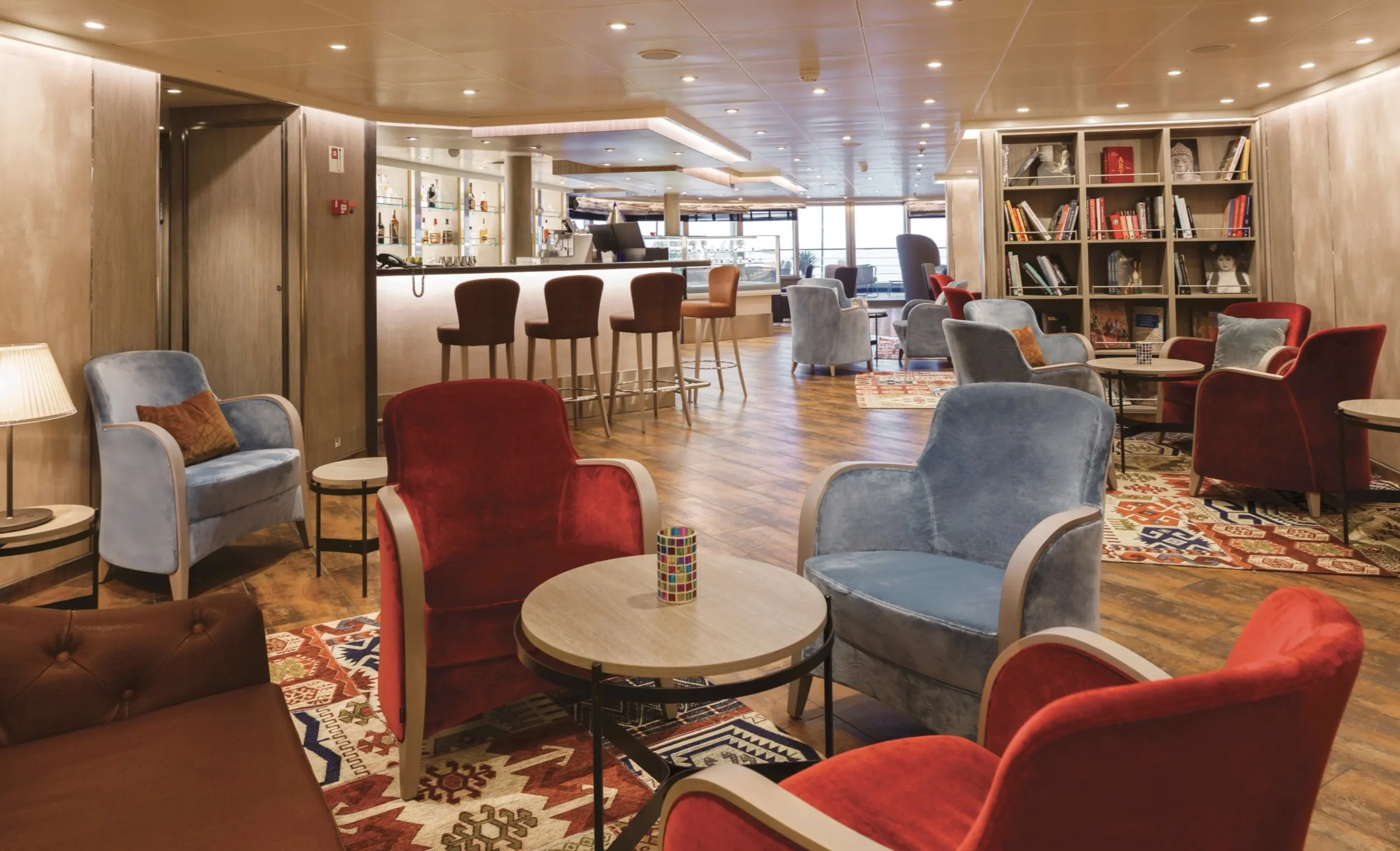
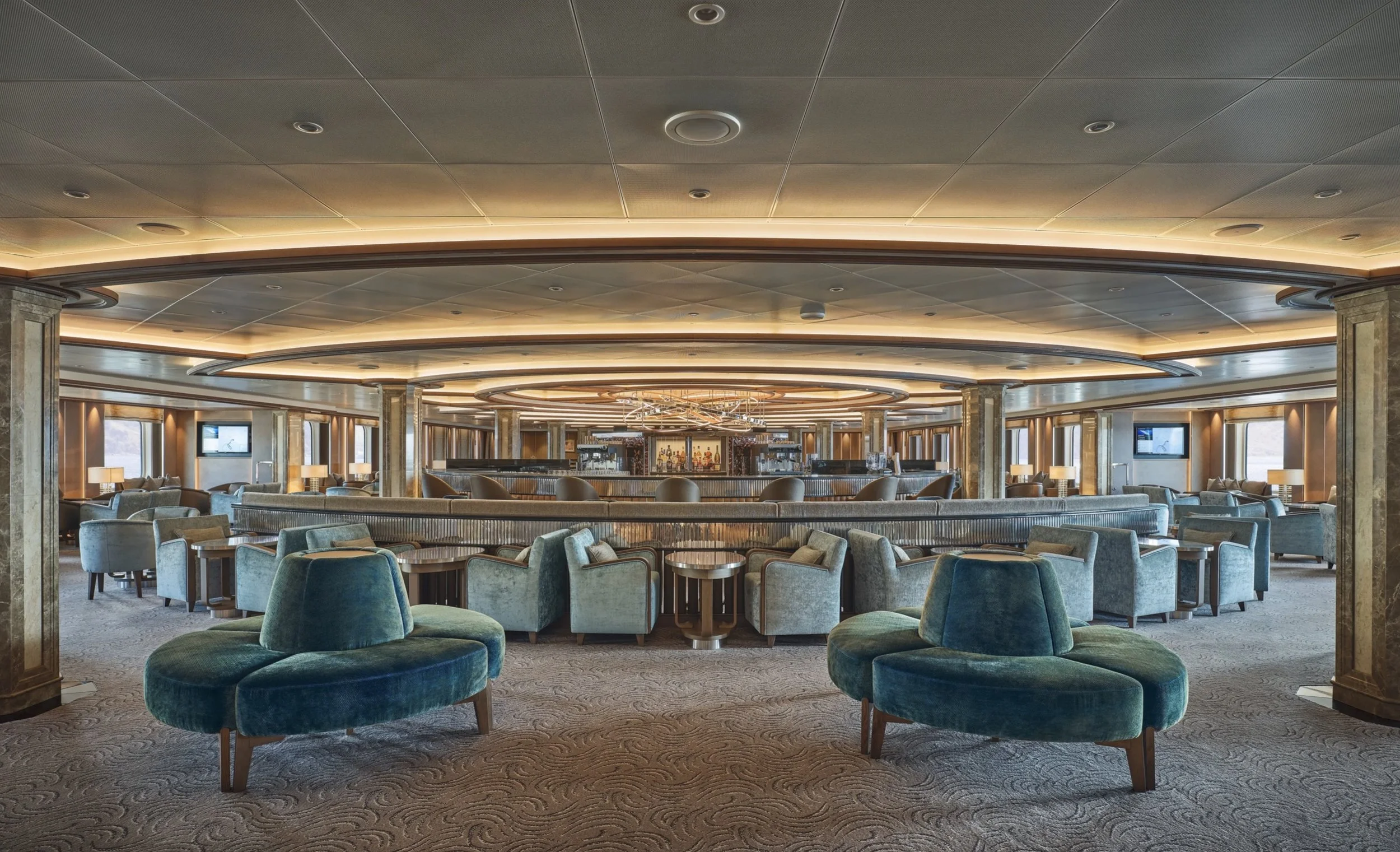
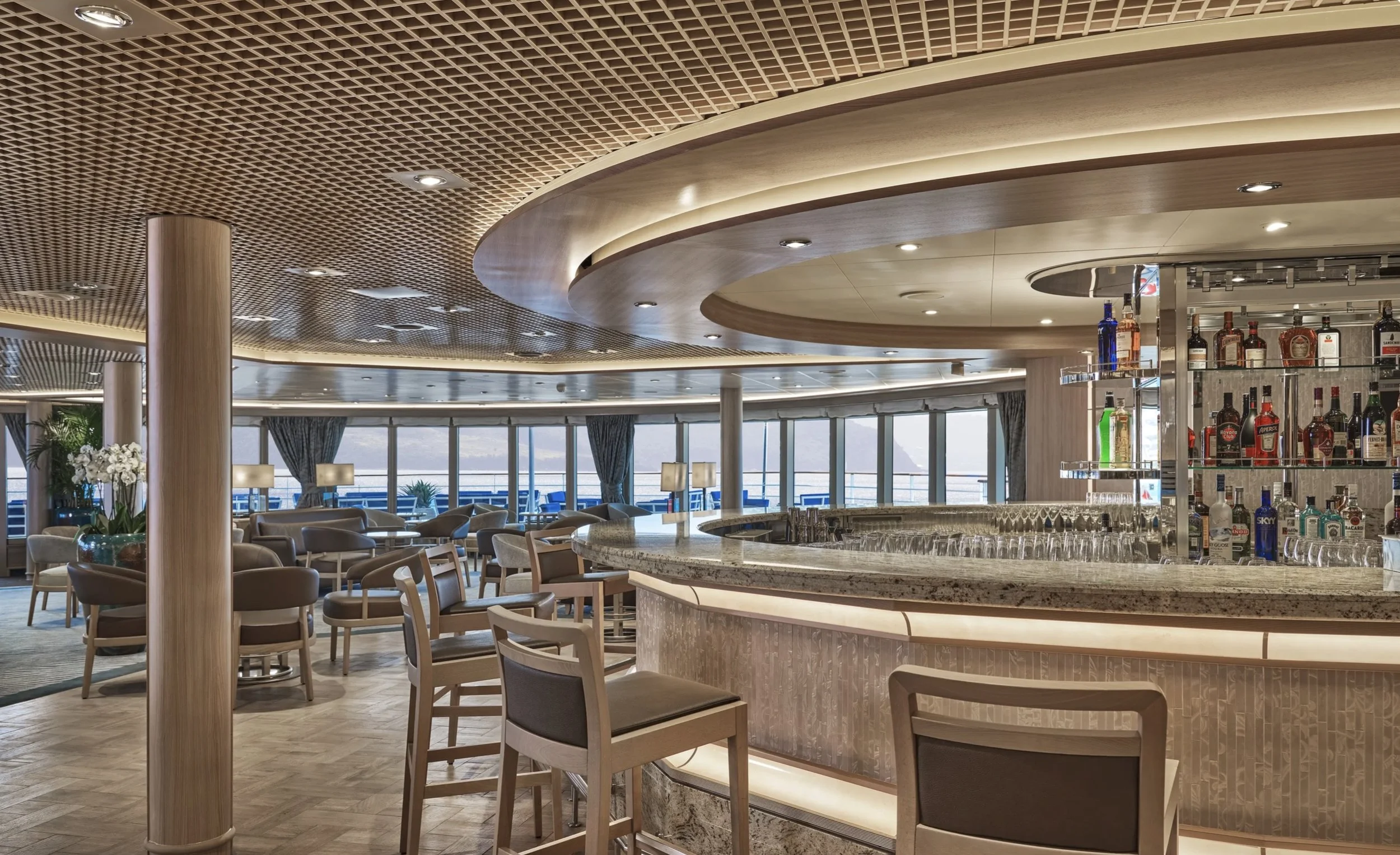
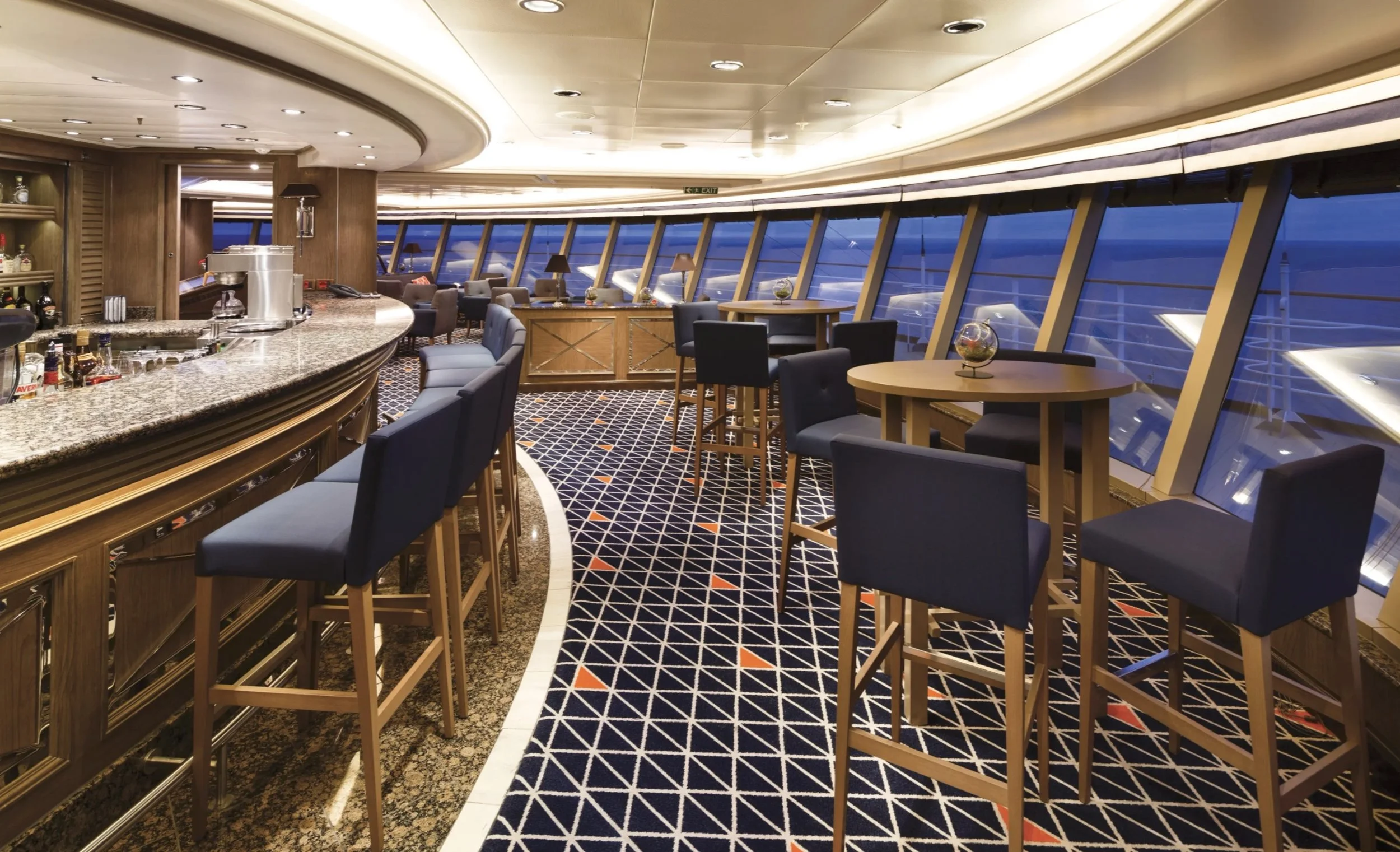
The start of the cruise.
Lisbon, Portugal
Like our previous European trip, this one also started in Lisbon. So the usual plan of spending a few days in the departure city before boarding the vessel wasn’t needed. We had already explored the finer points of this wonderful city. Besides, the “first day” of the cruise was actually spent in this port, and an excursion had been planned through the ship’s various offerings. Although, our own explorations of the previous year were just a tad better, in our opinion. Unfortunately, this feeling of being underwhelmed would become a recurring theme during the trip.
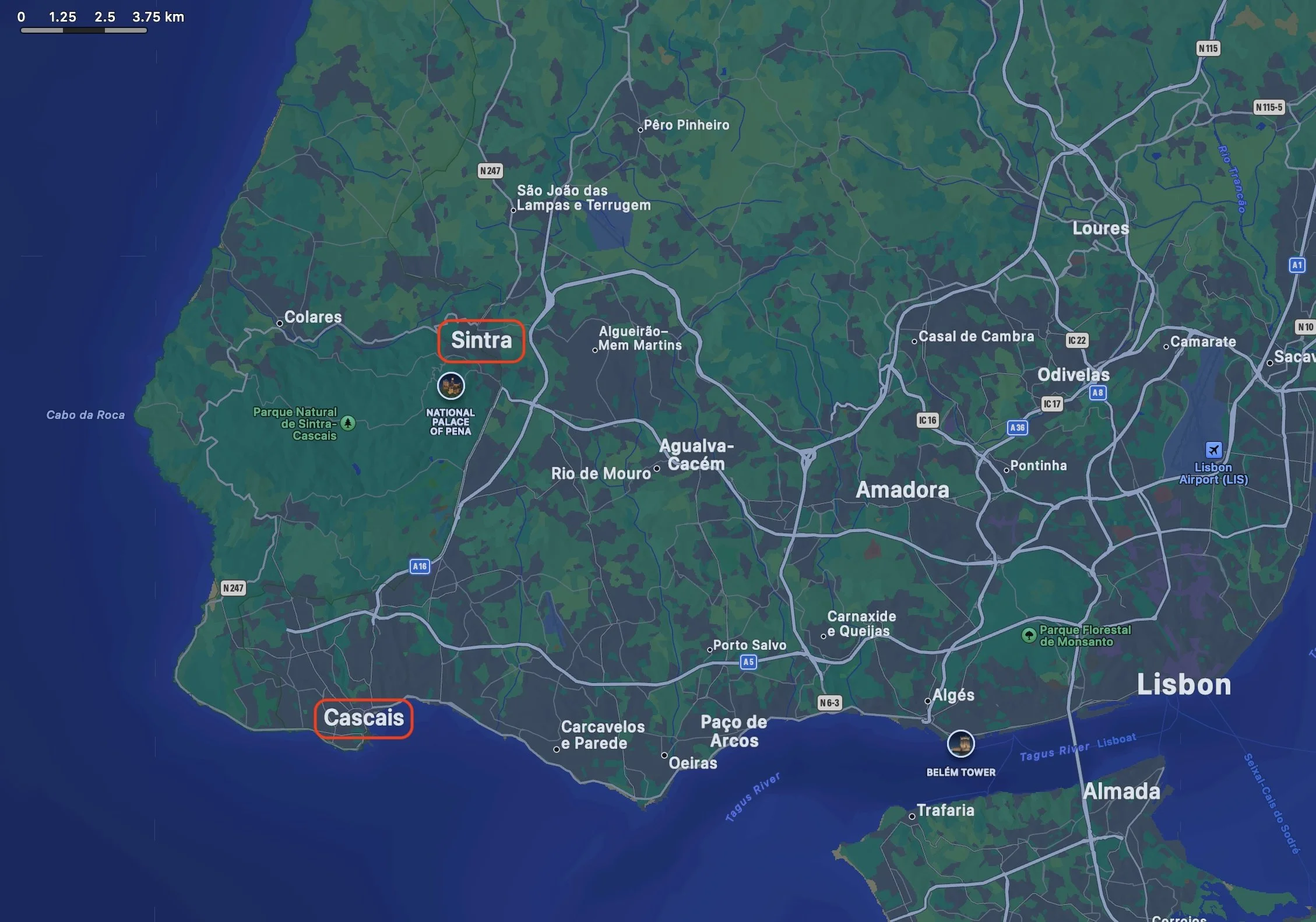
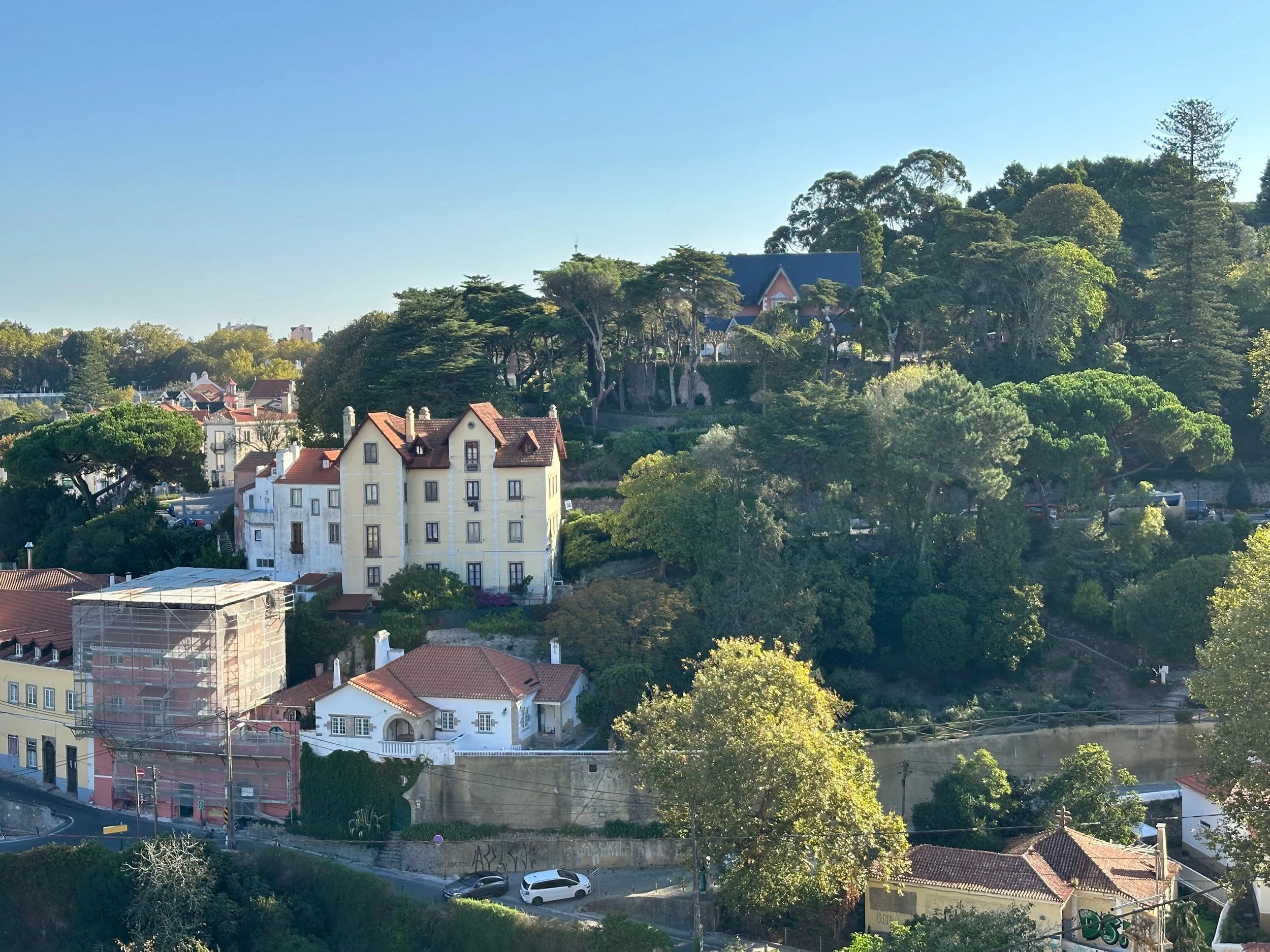
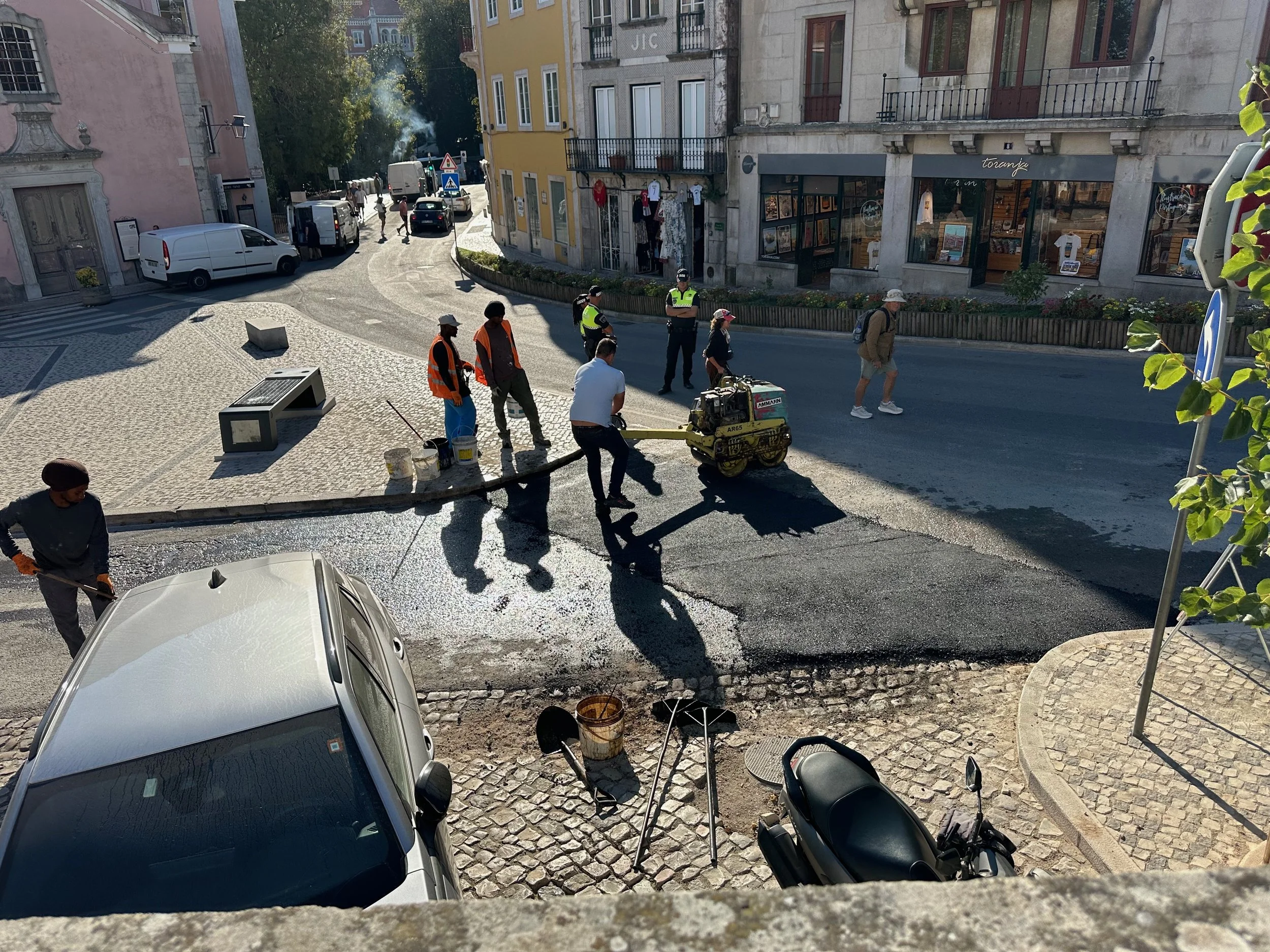
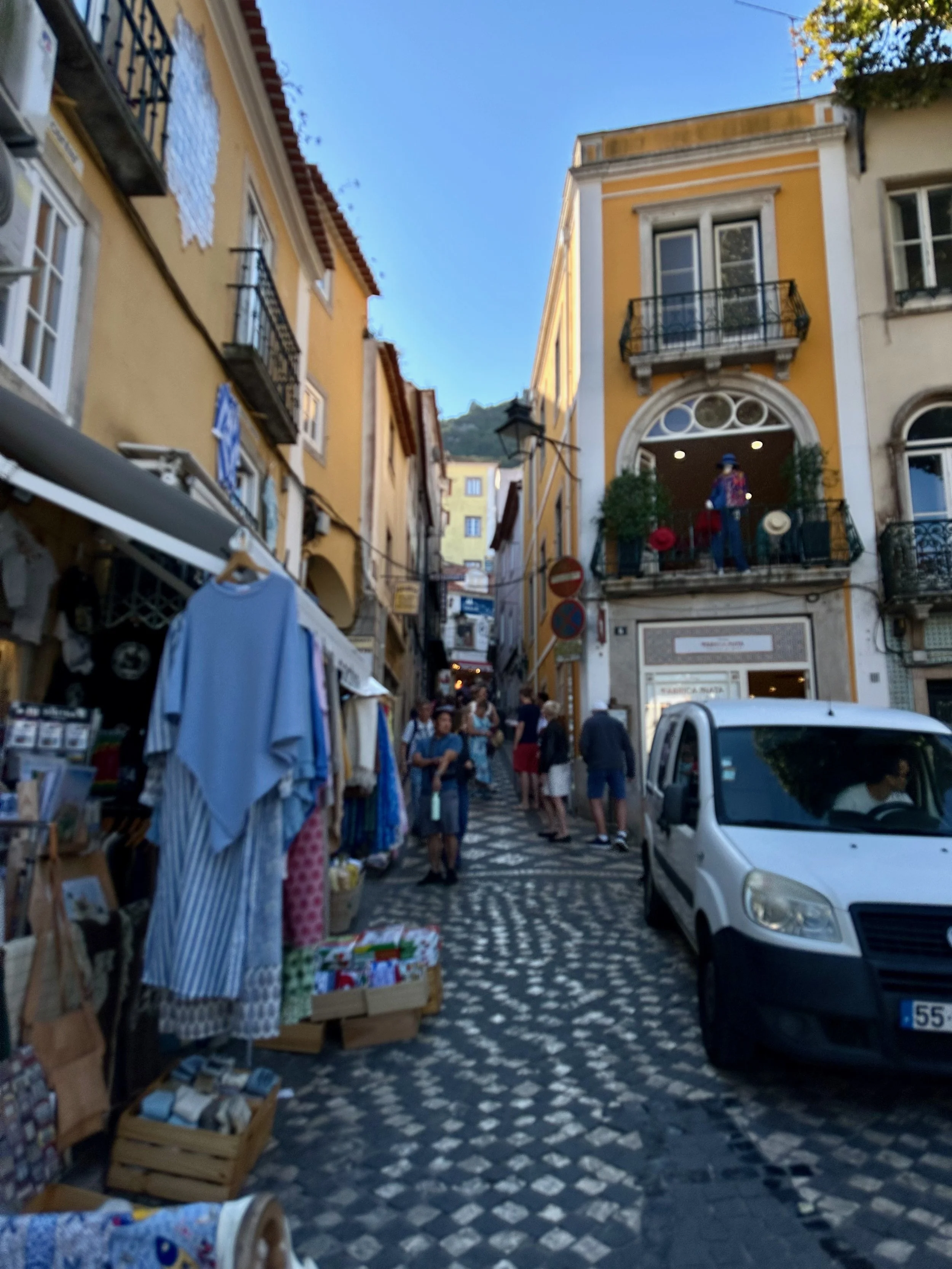
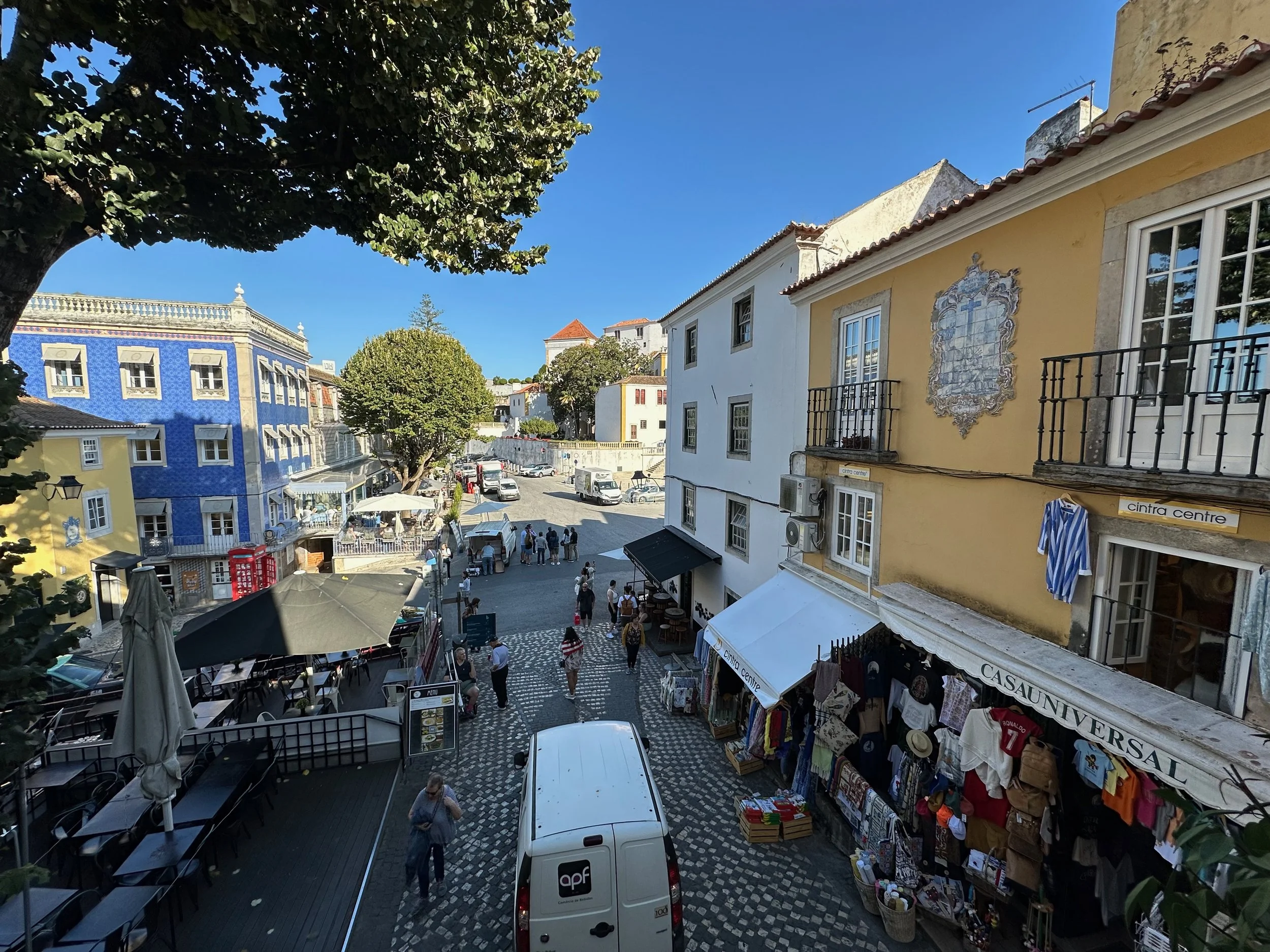
Our excursion this day took by bus to a neighbouring town called Sintra. It’s a lovely town bordered by a national park, Parque Natural de Sintra-Cascais. Old world charm engulfed by beautiful forests of pine and eucalyptus trees. The eucalyptus imported from Australia for paper pulp purposes. The town of Cascais was a popular haunt of movie stars back in the day because of its casino and fancy hotel, and while filming Casablanca, Humphrey Bogart and such were seen staying here often.
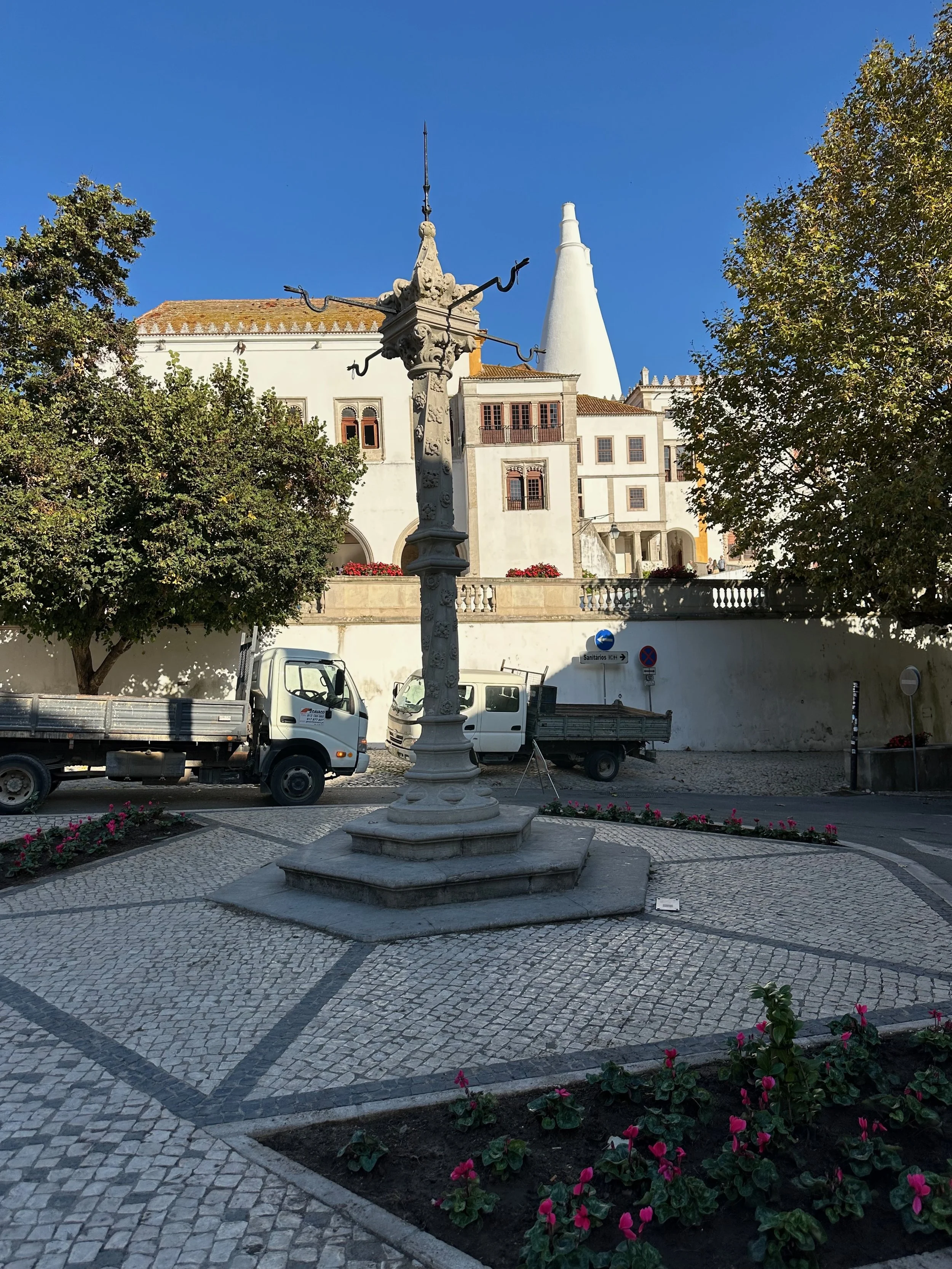
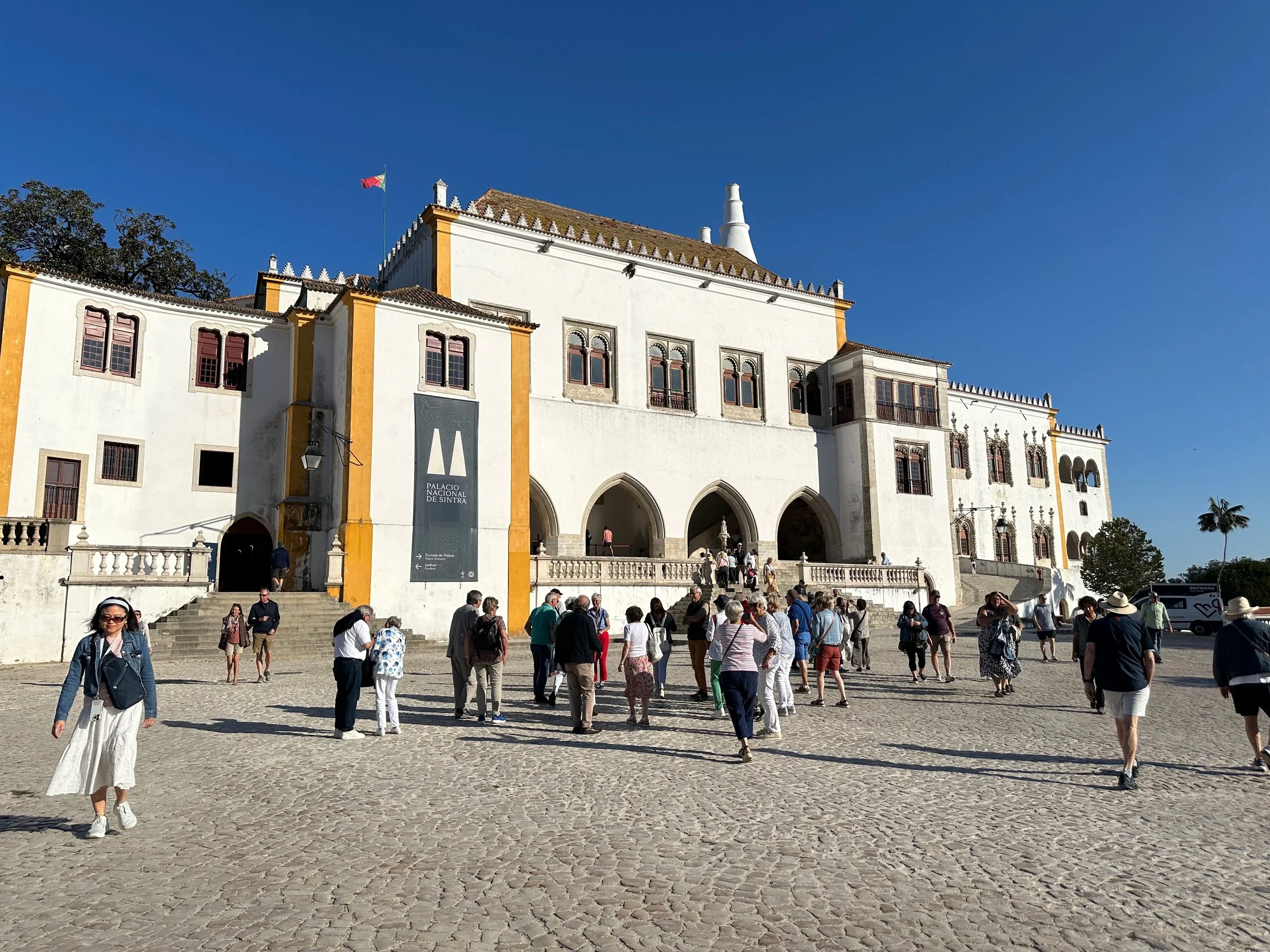
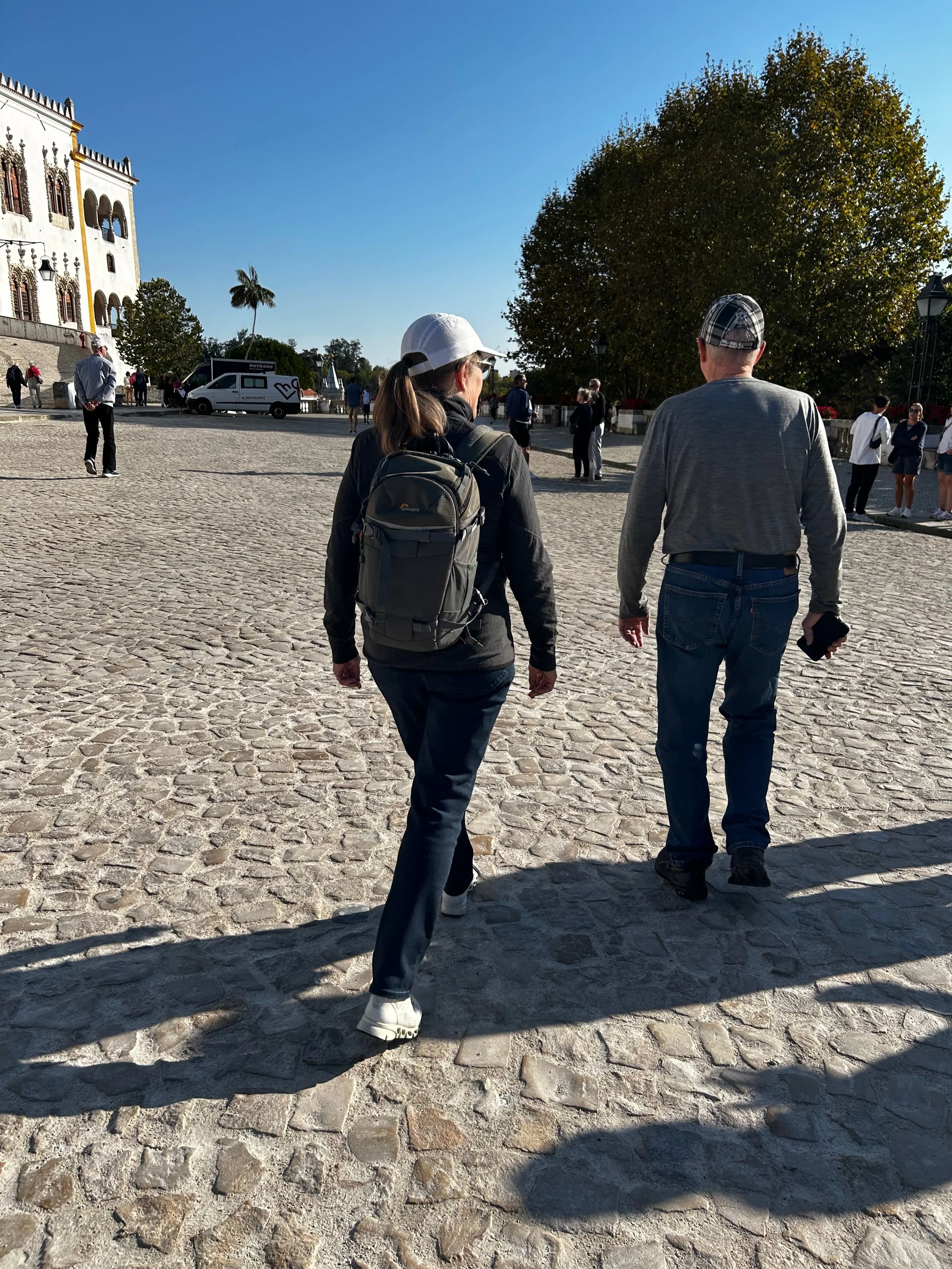
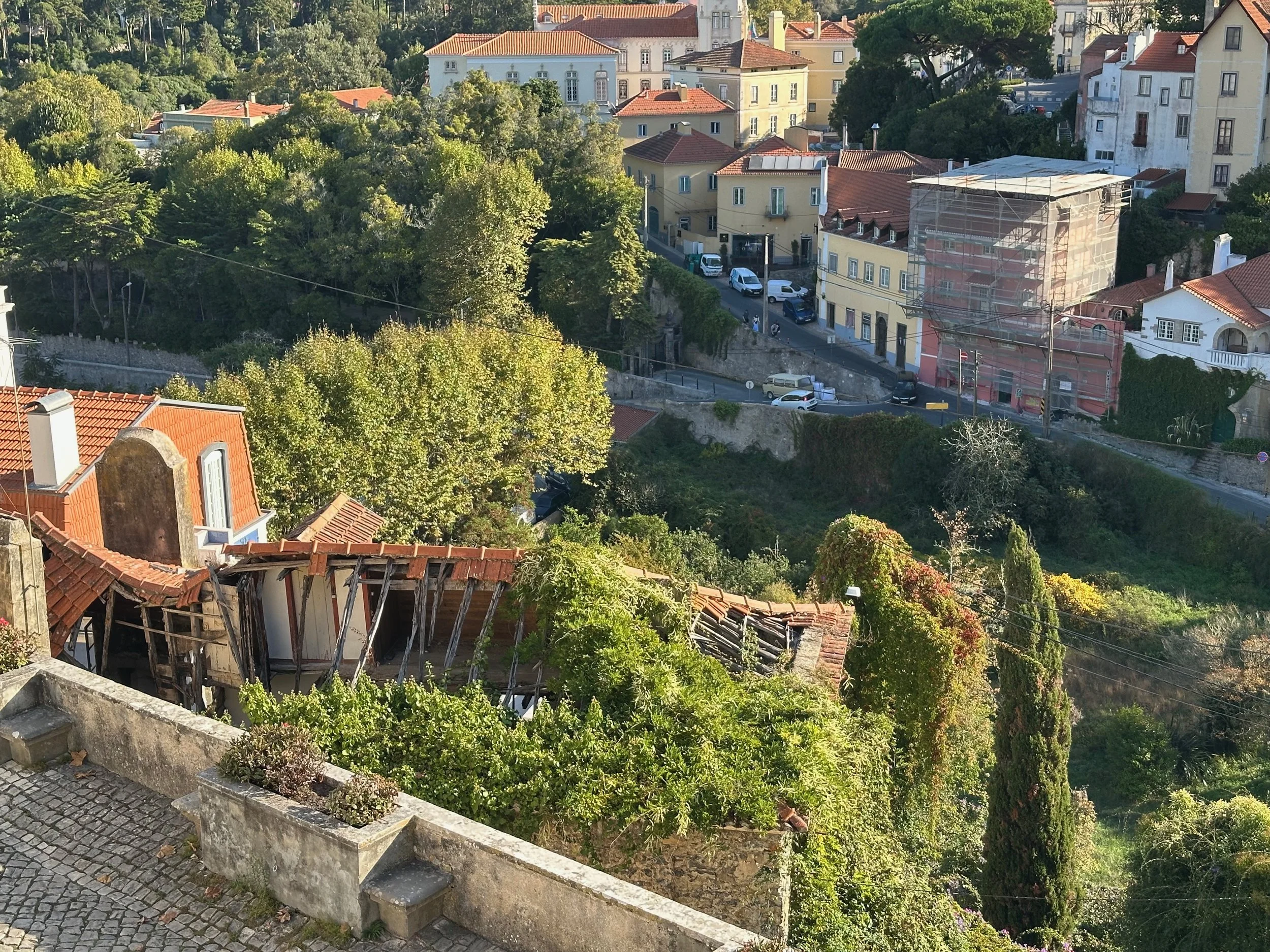
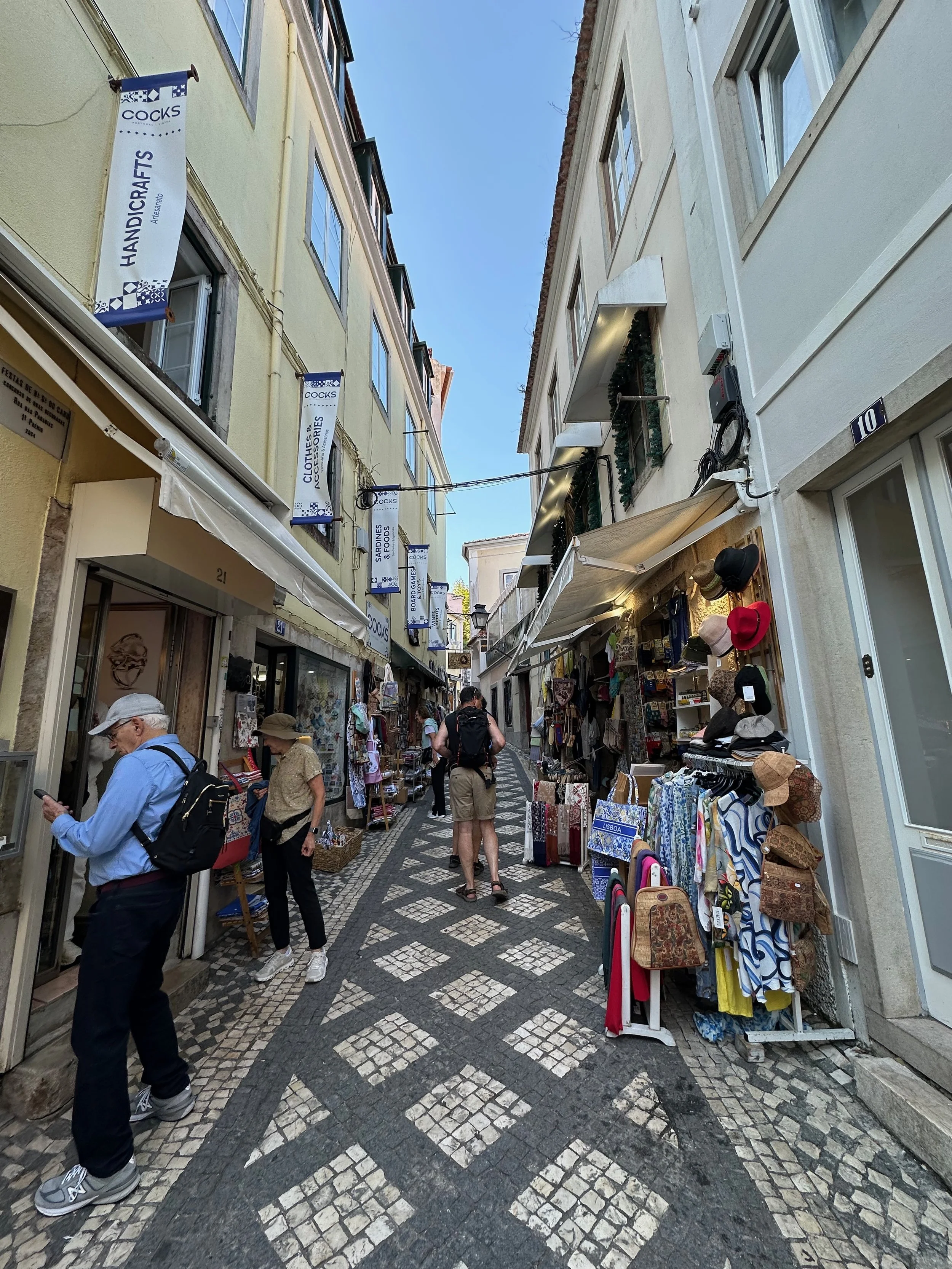
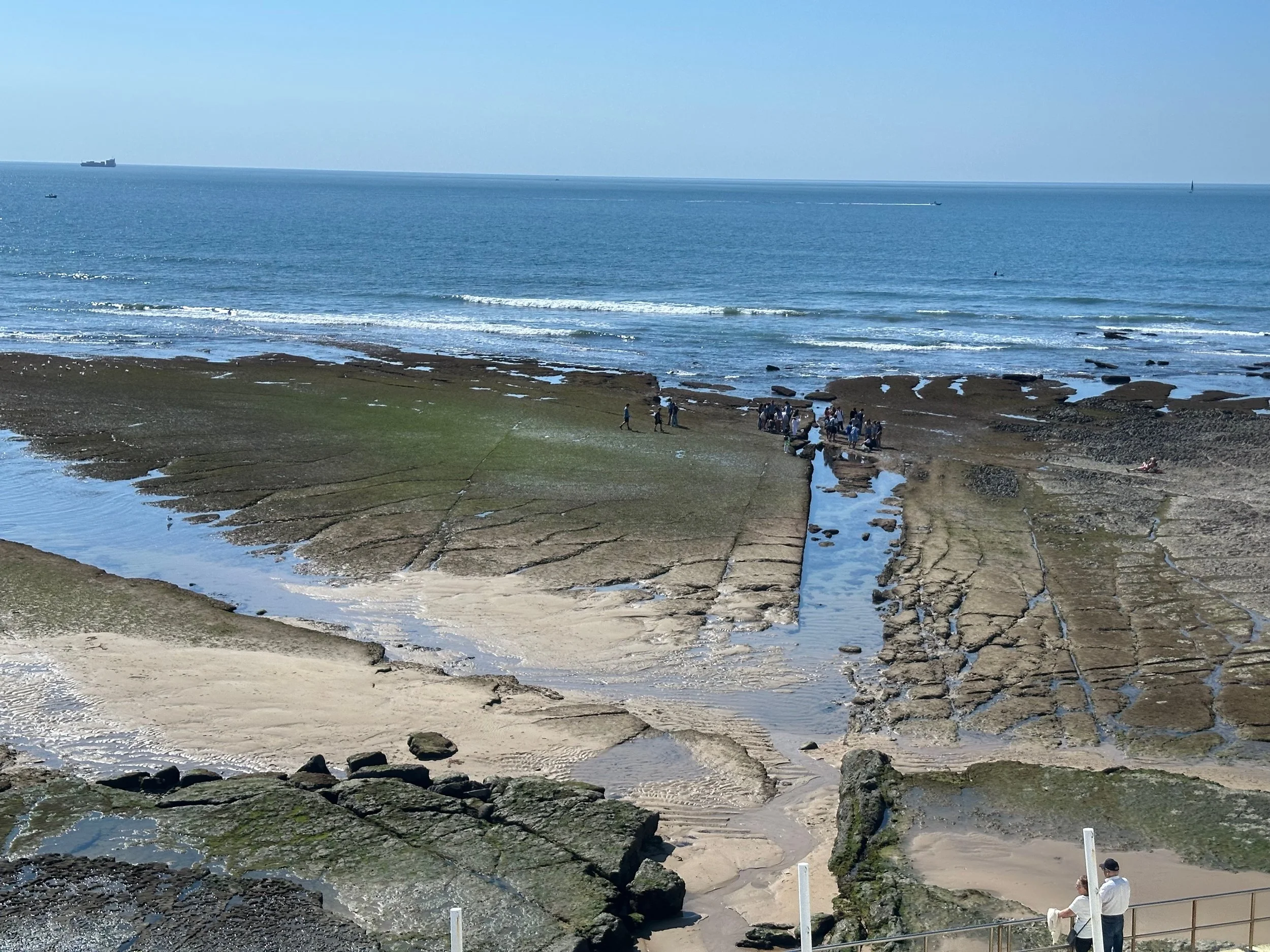
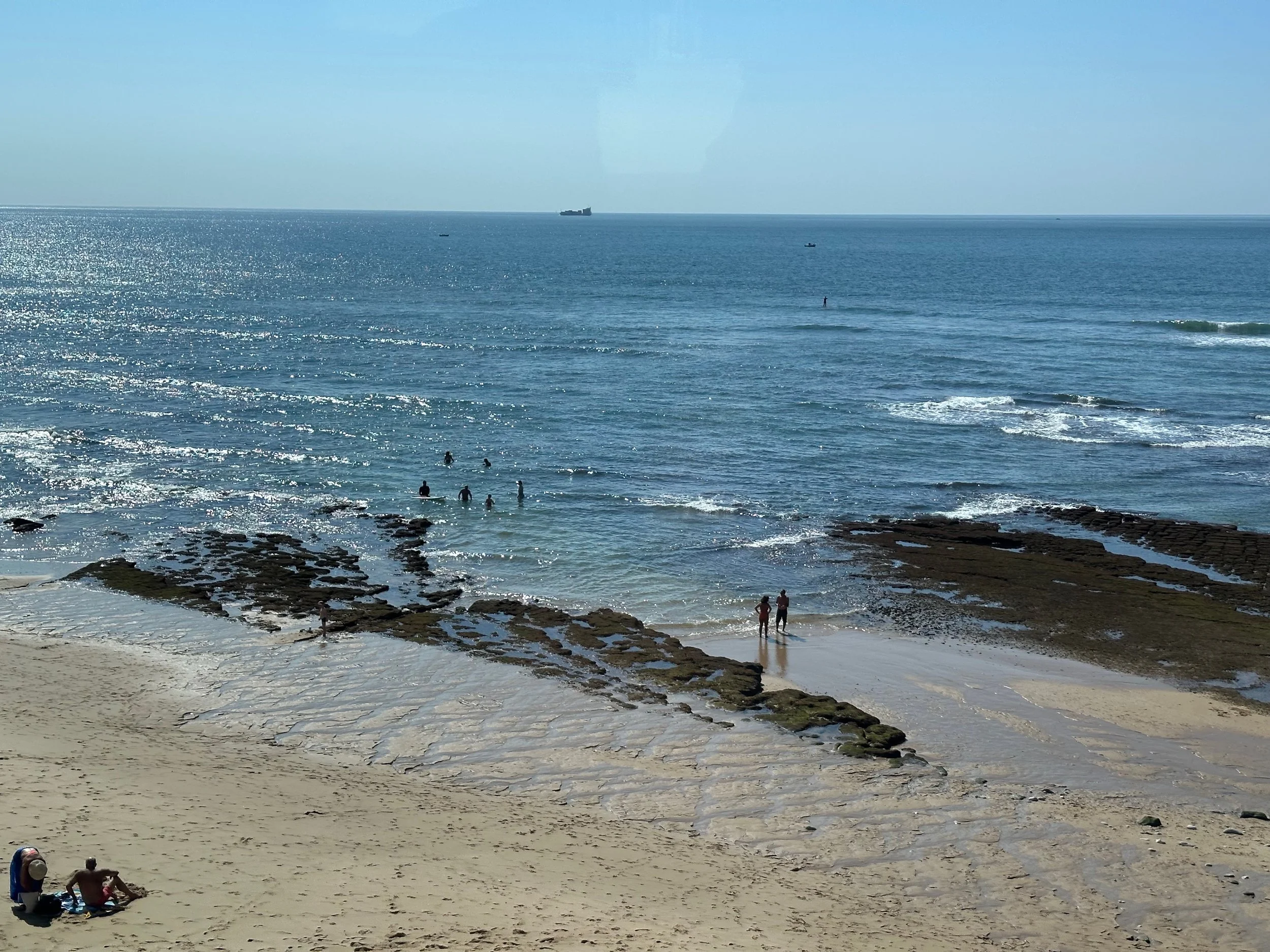
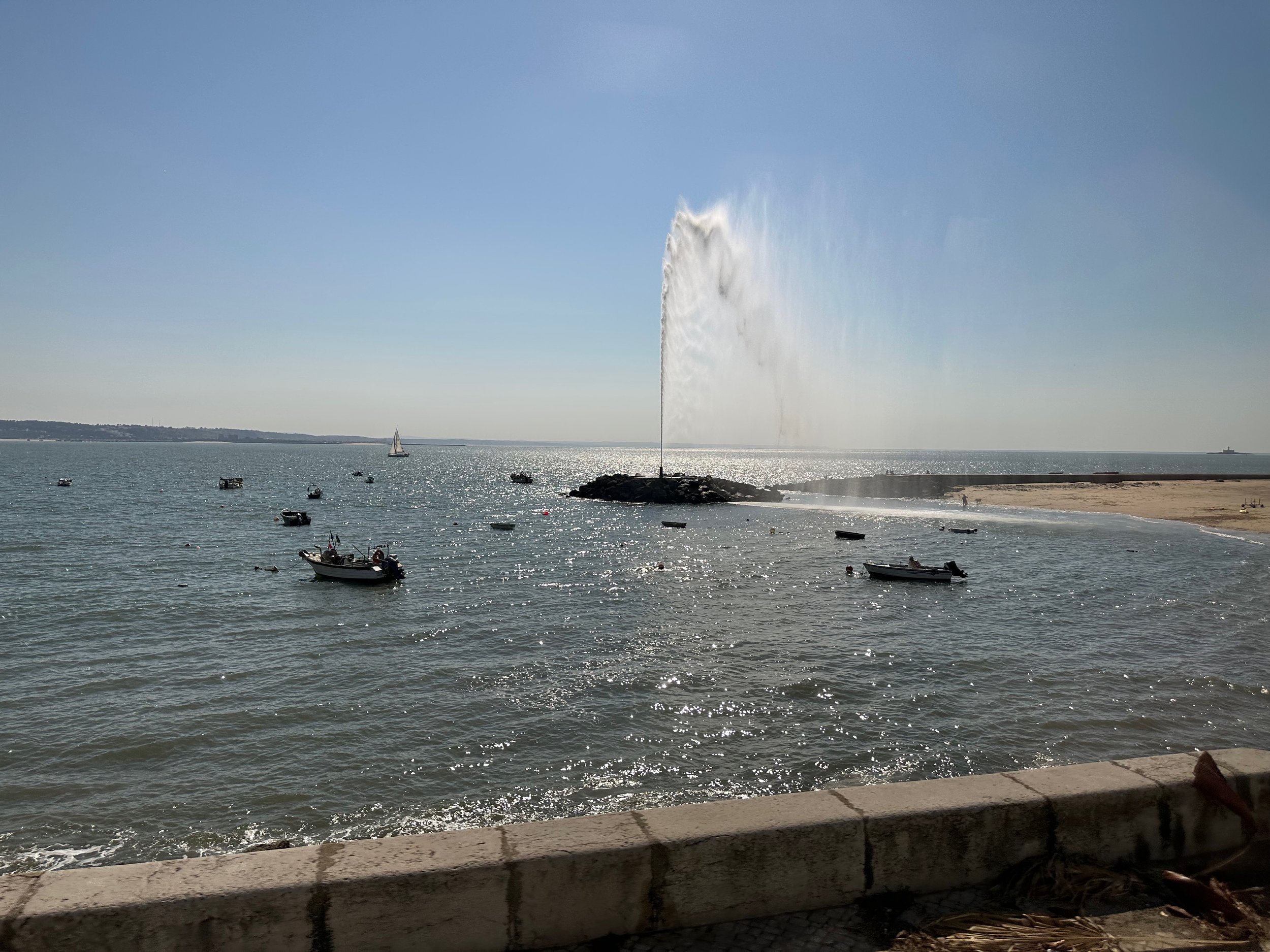
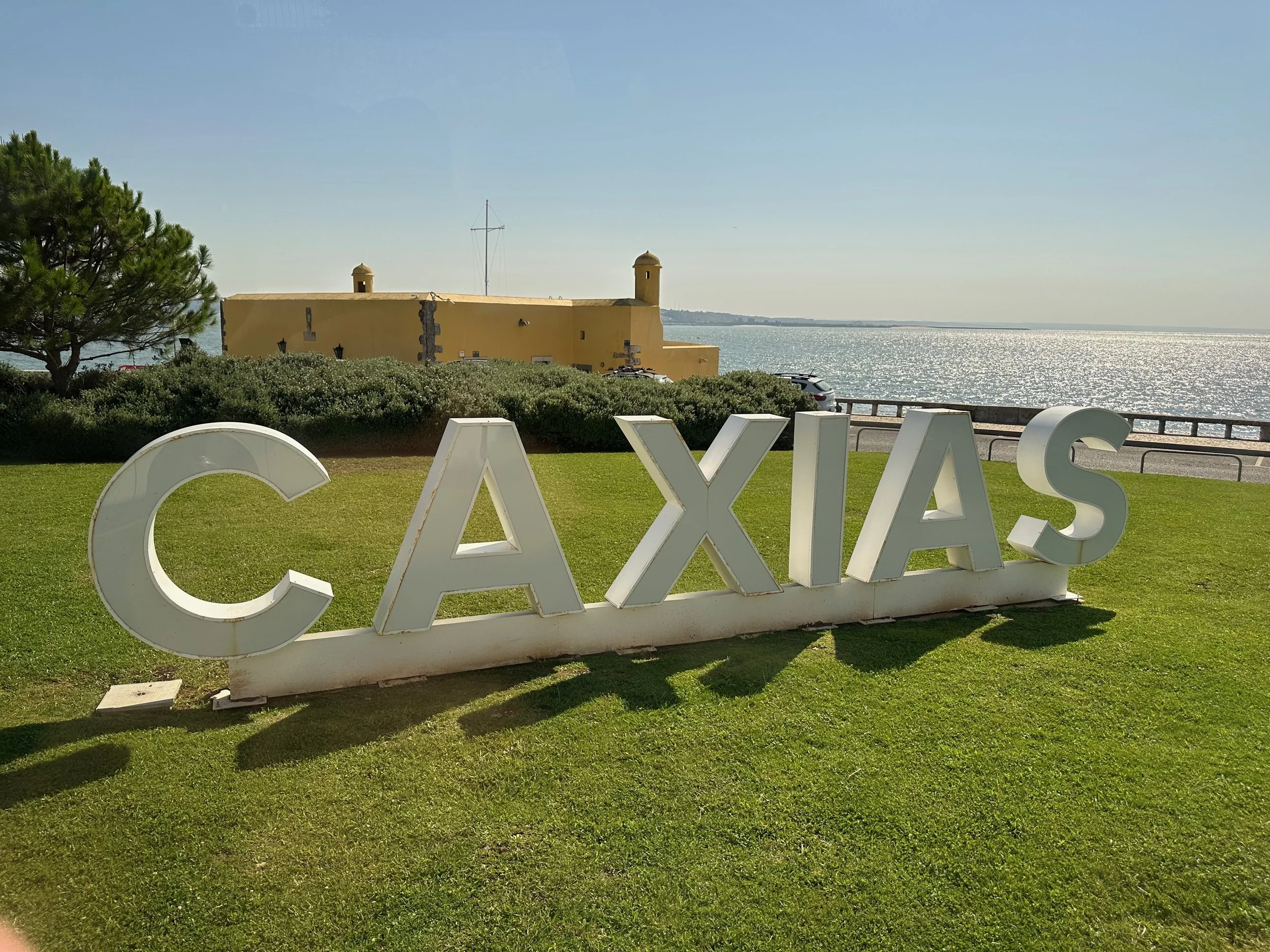
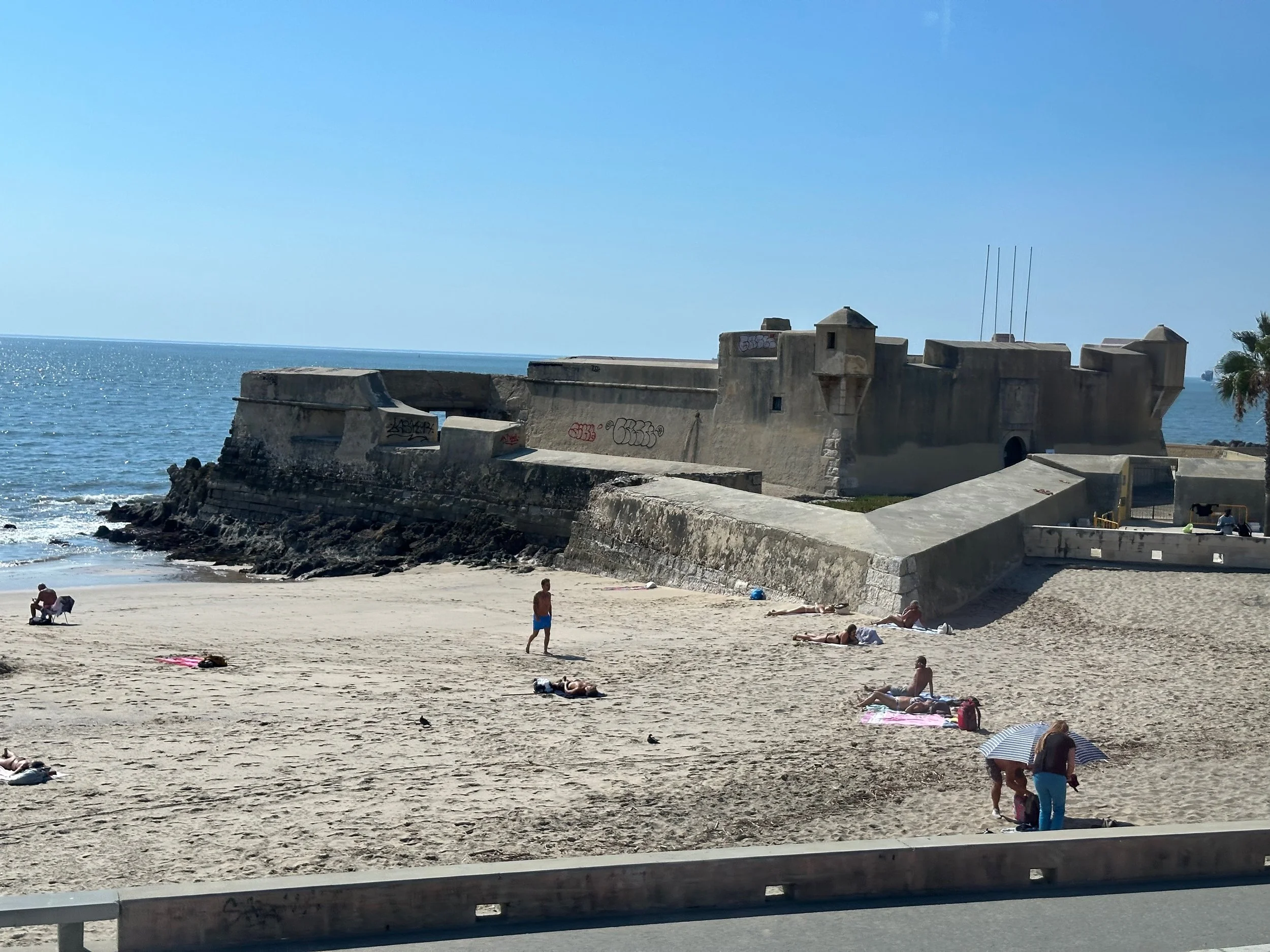
First actual stop of the cruise.
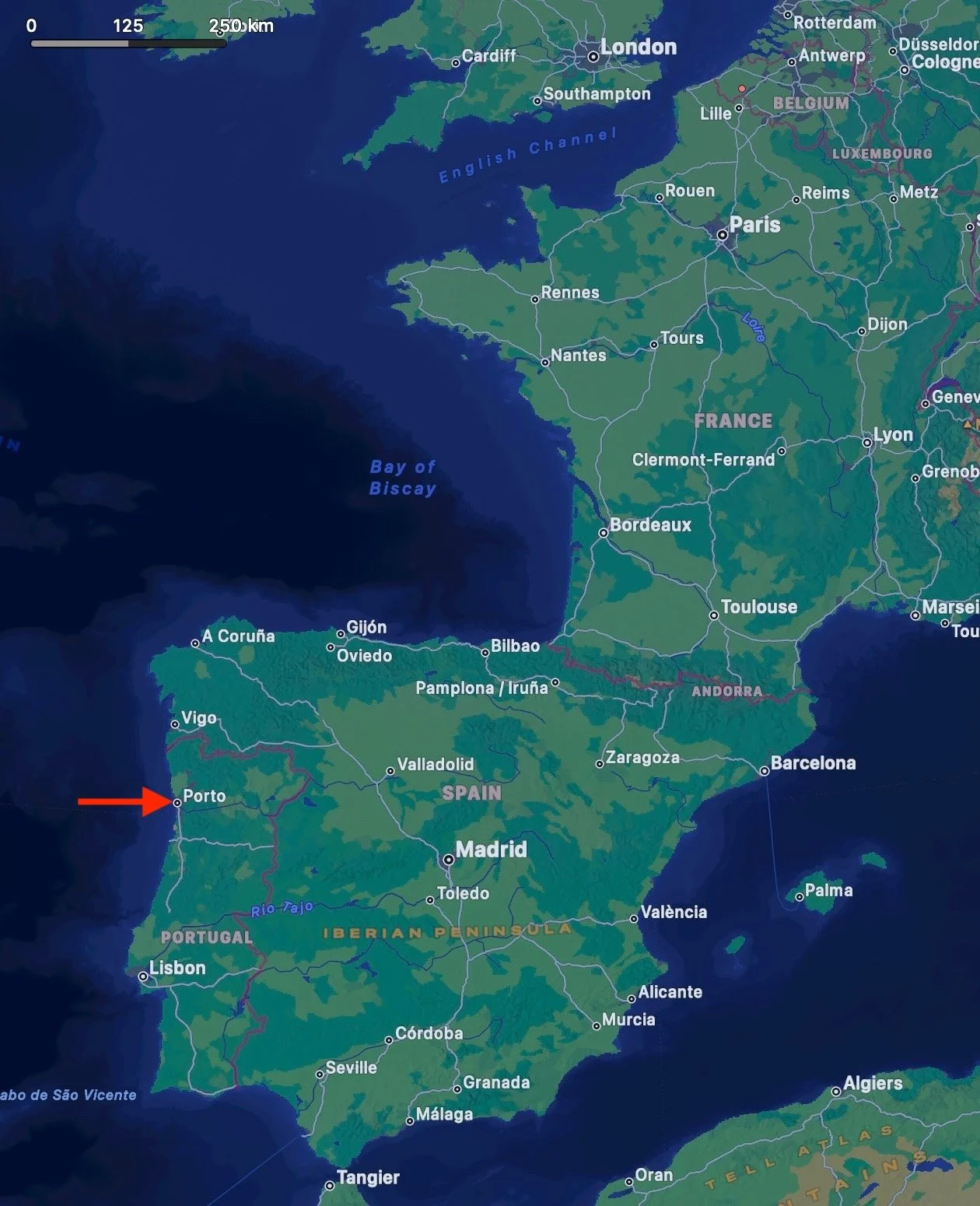
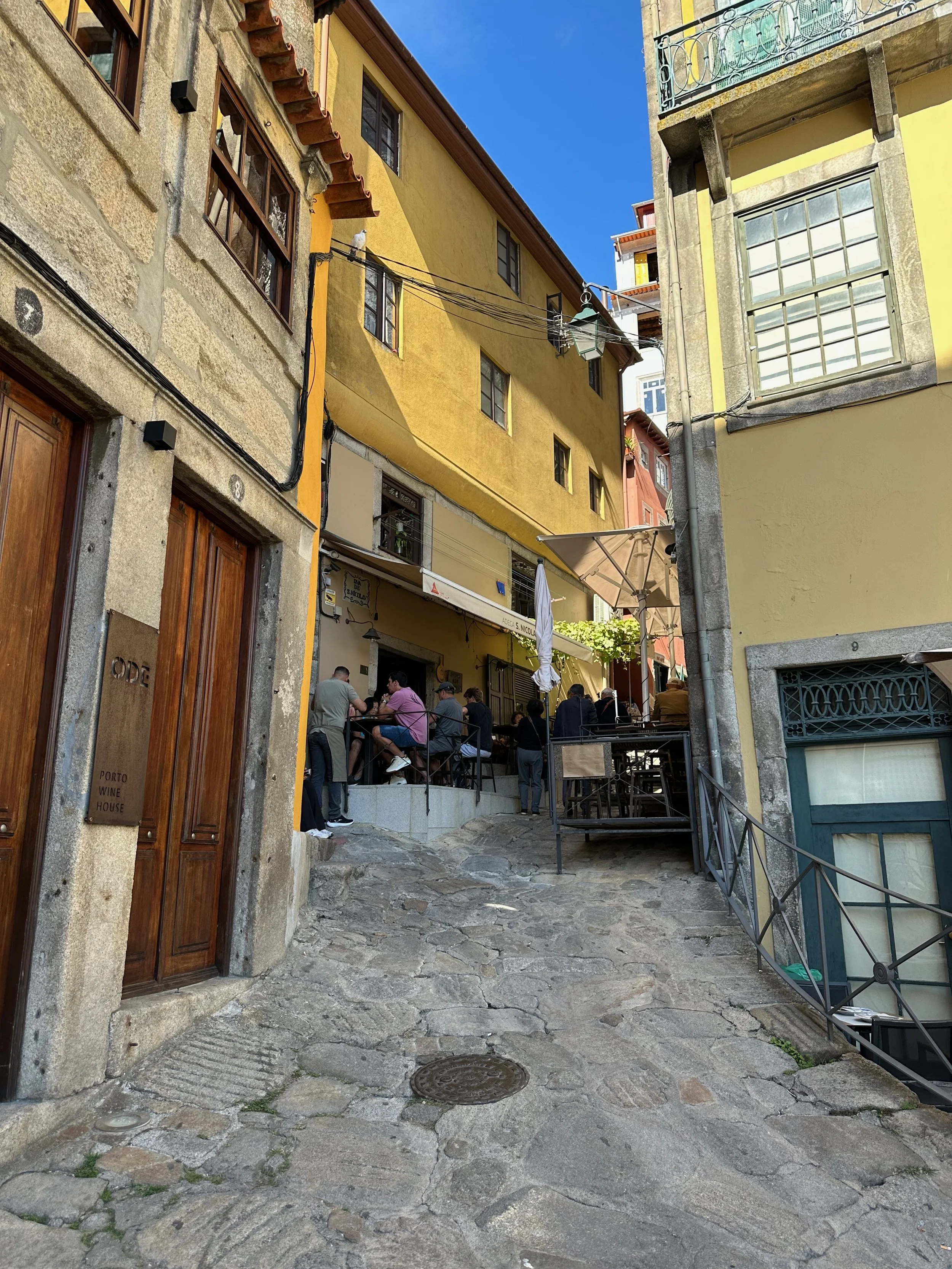
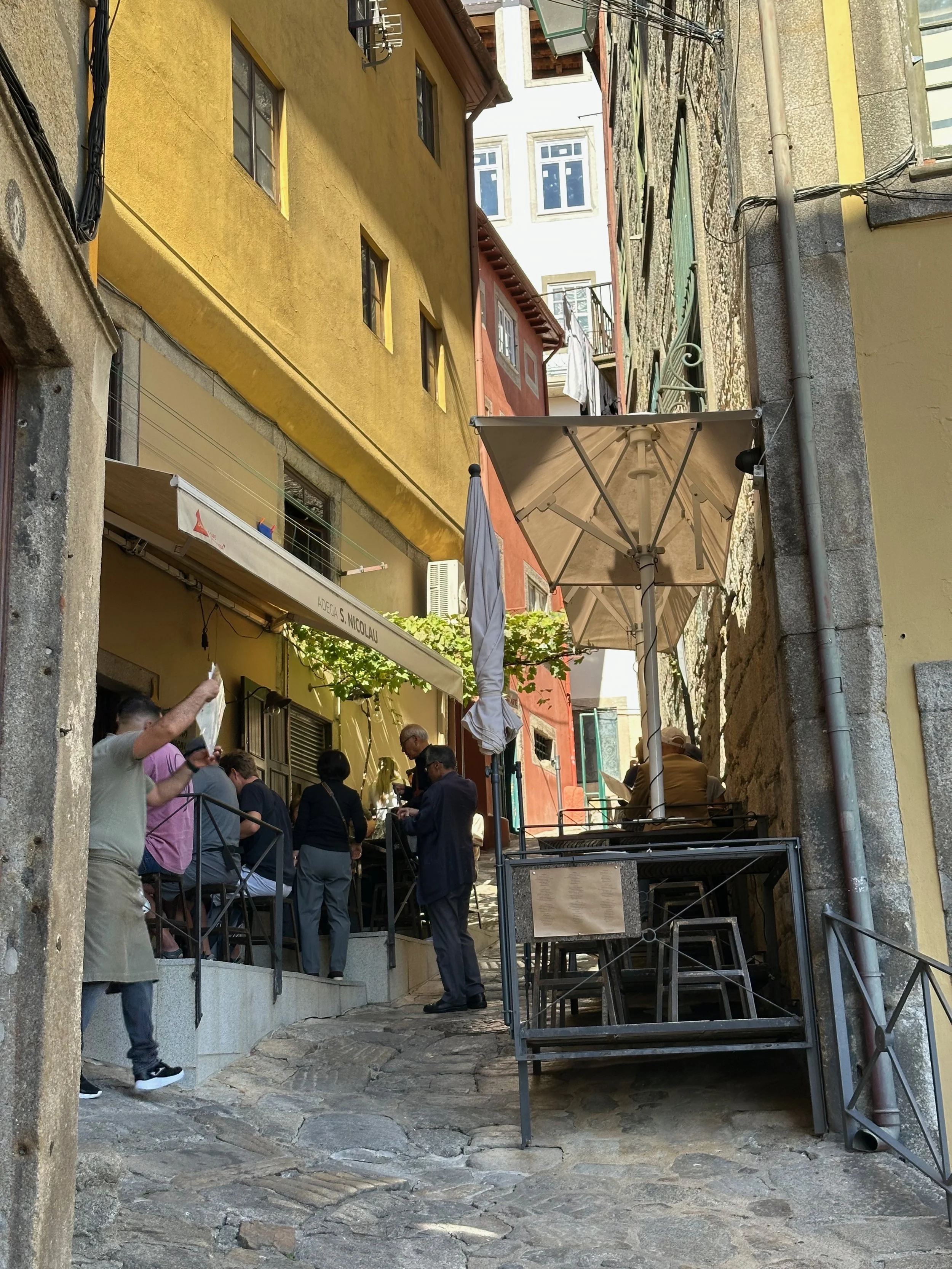
Porto, Portugal
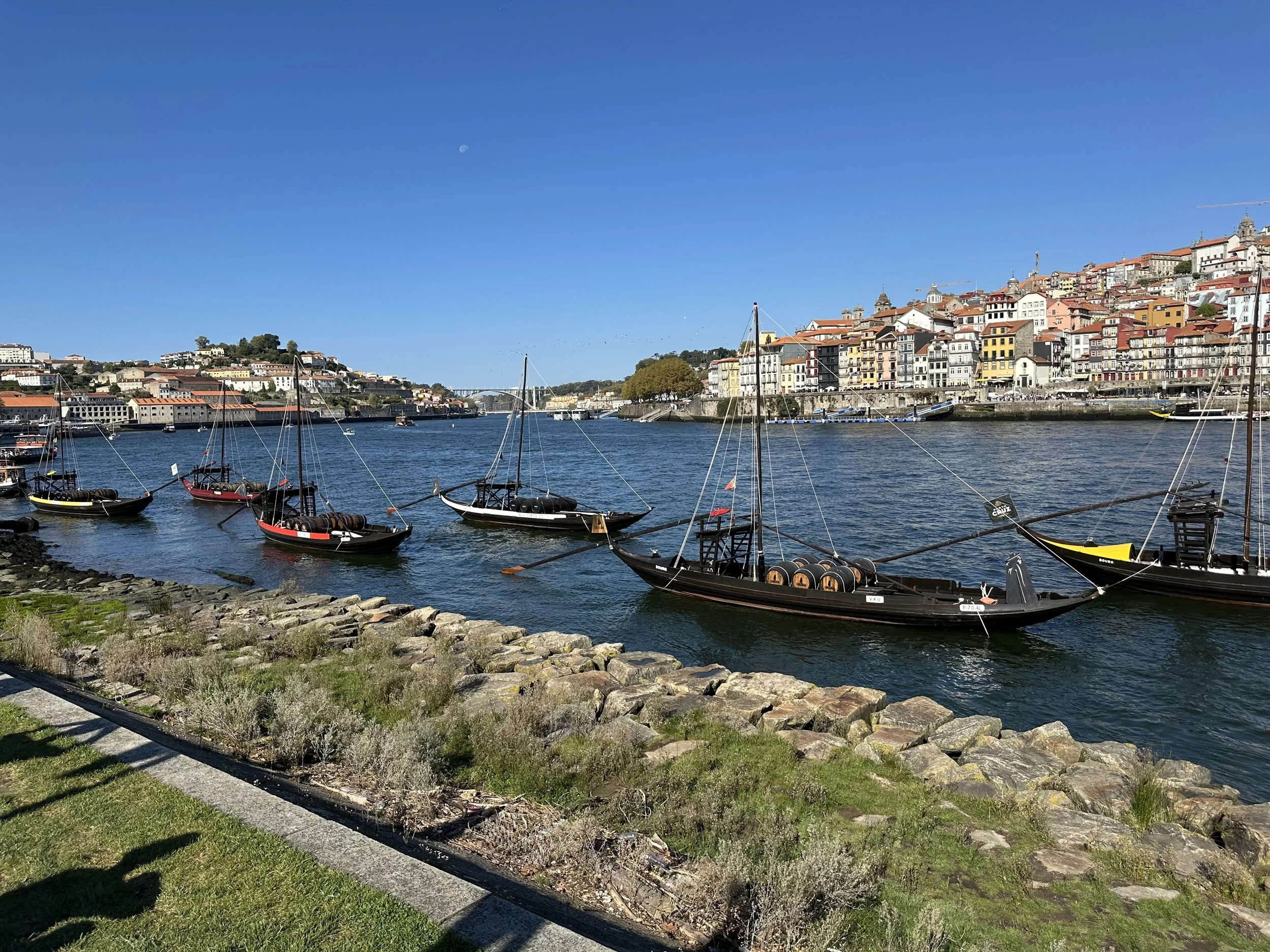
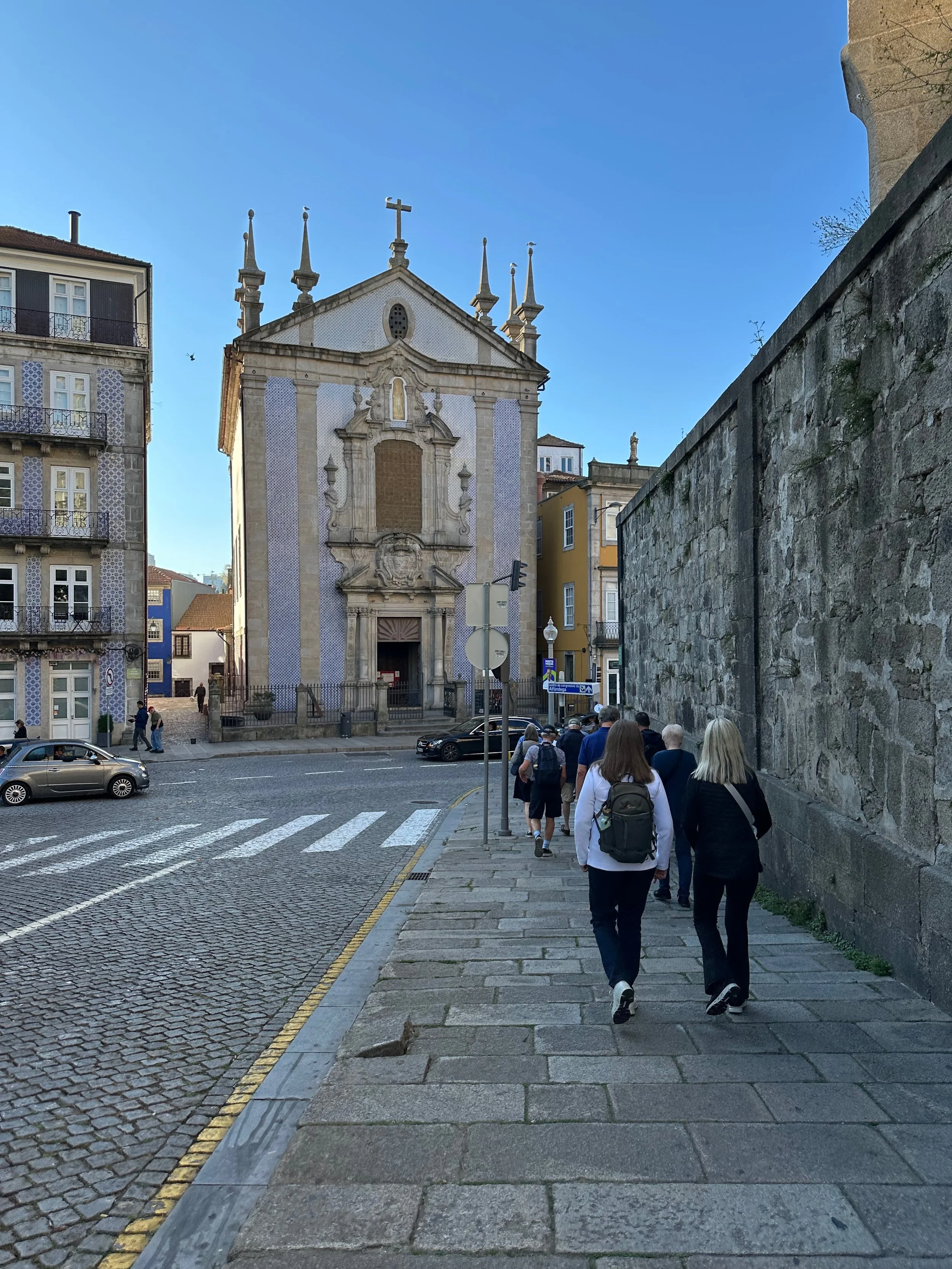
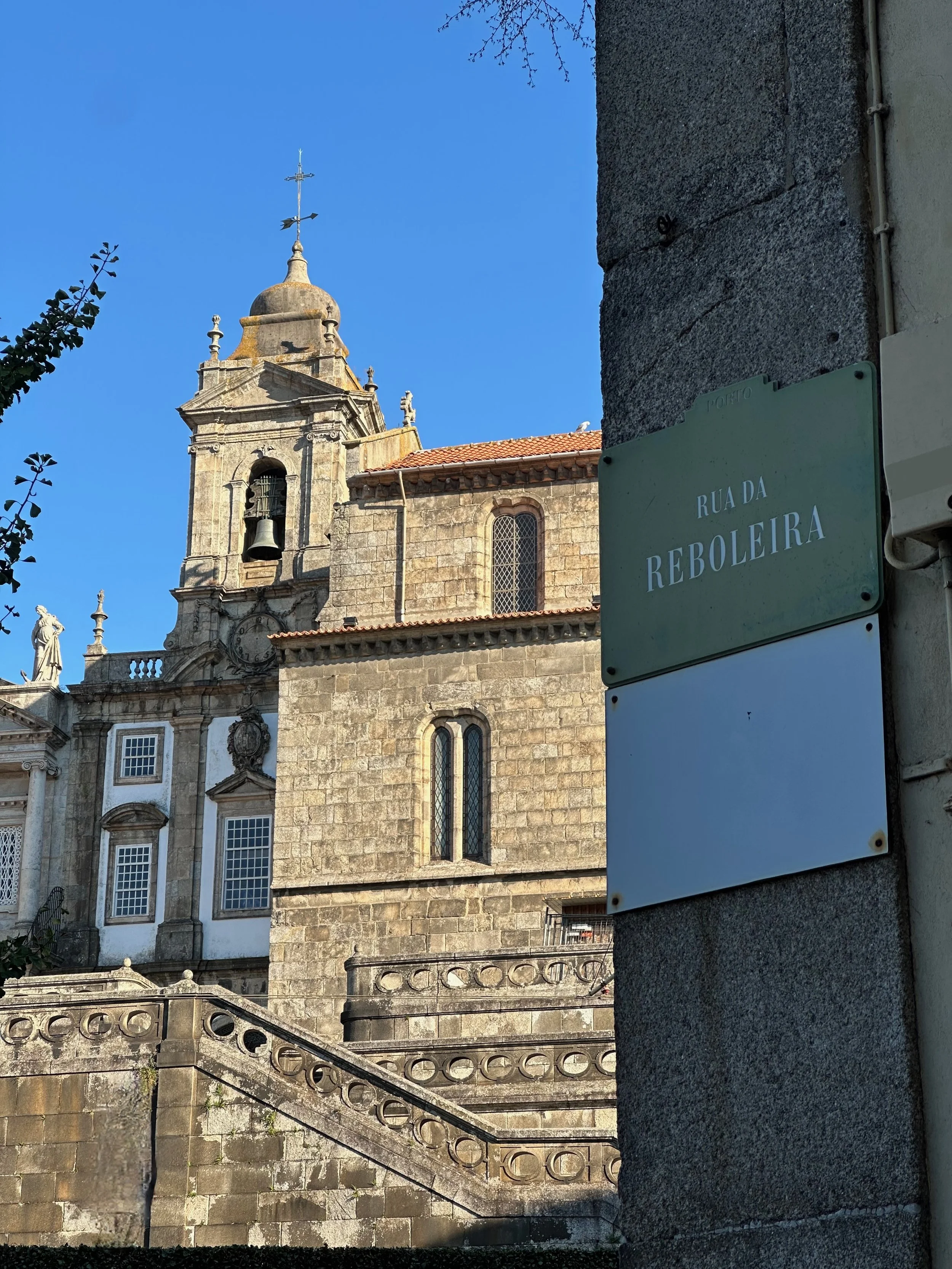
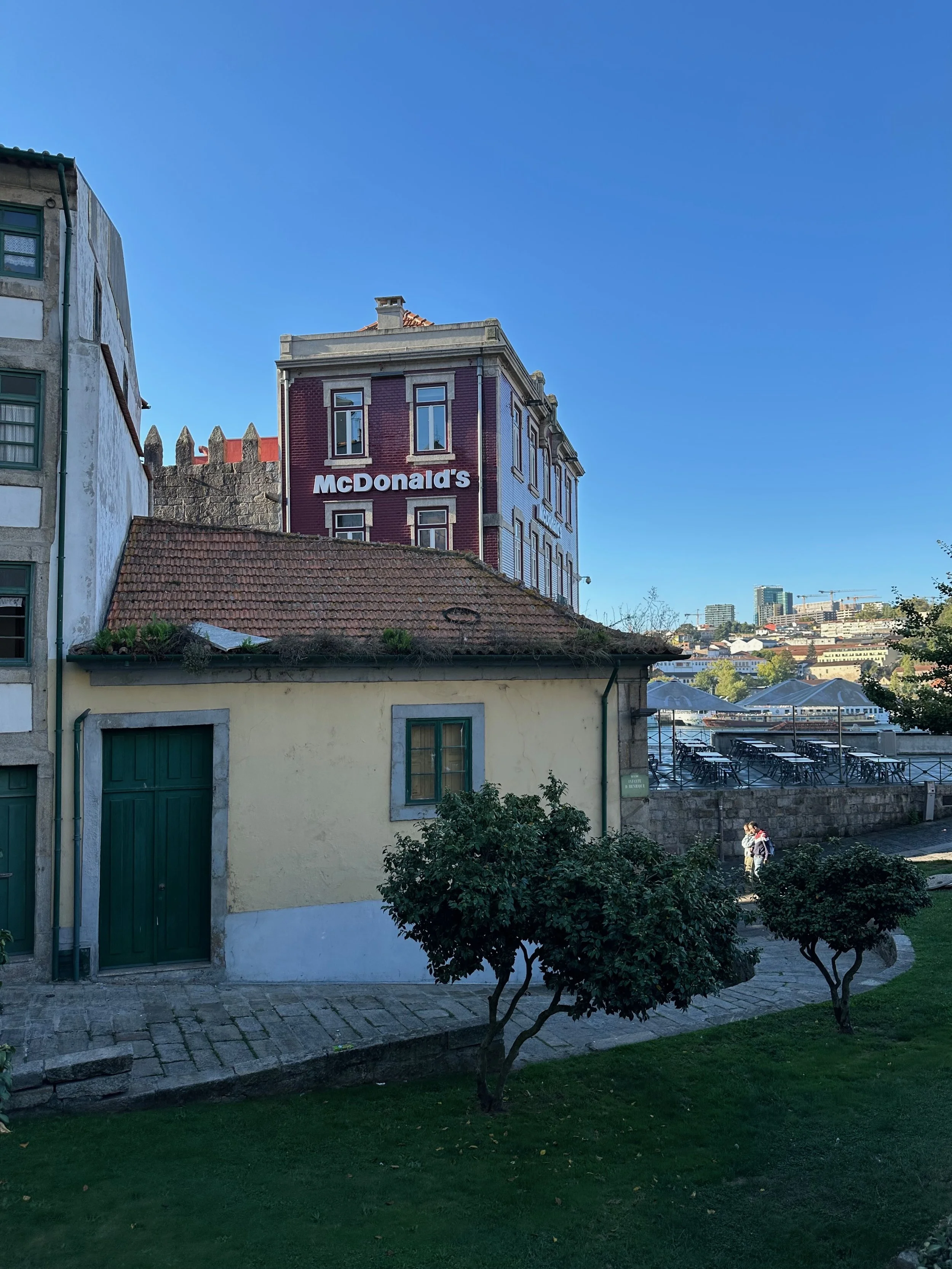
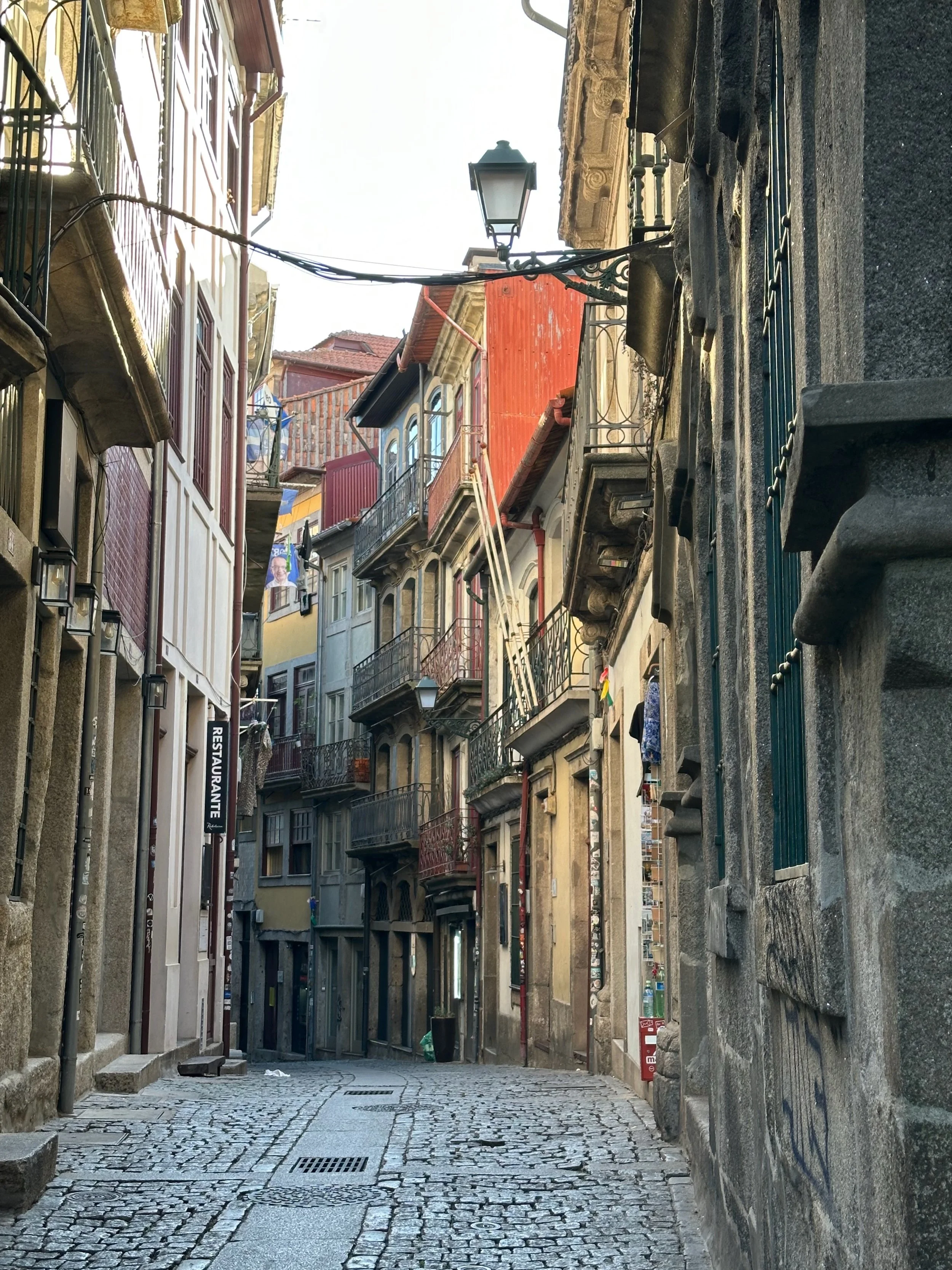
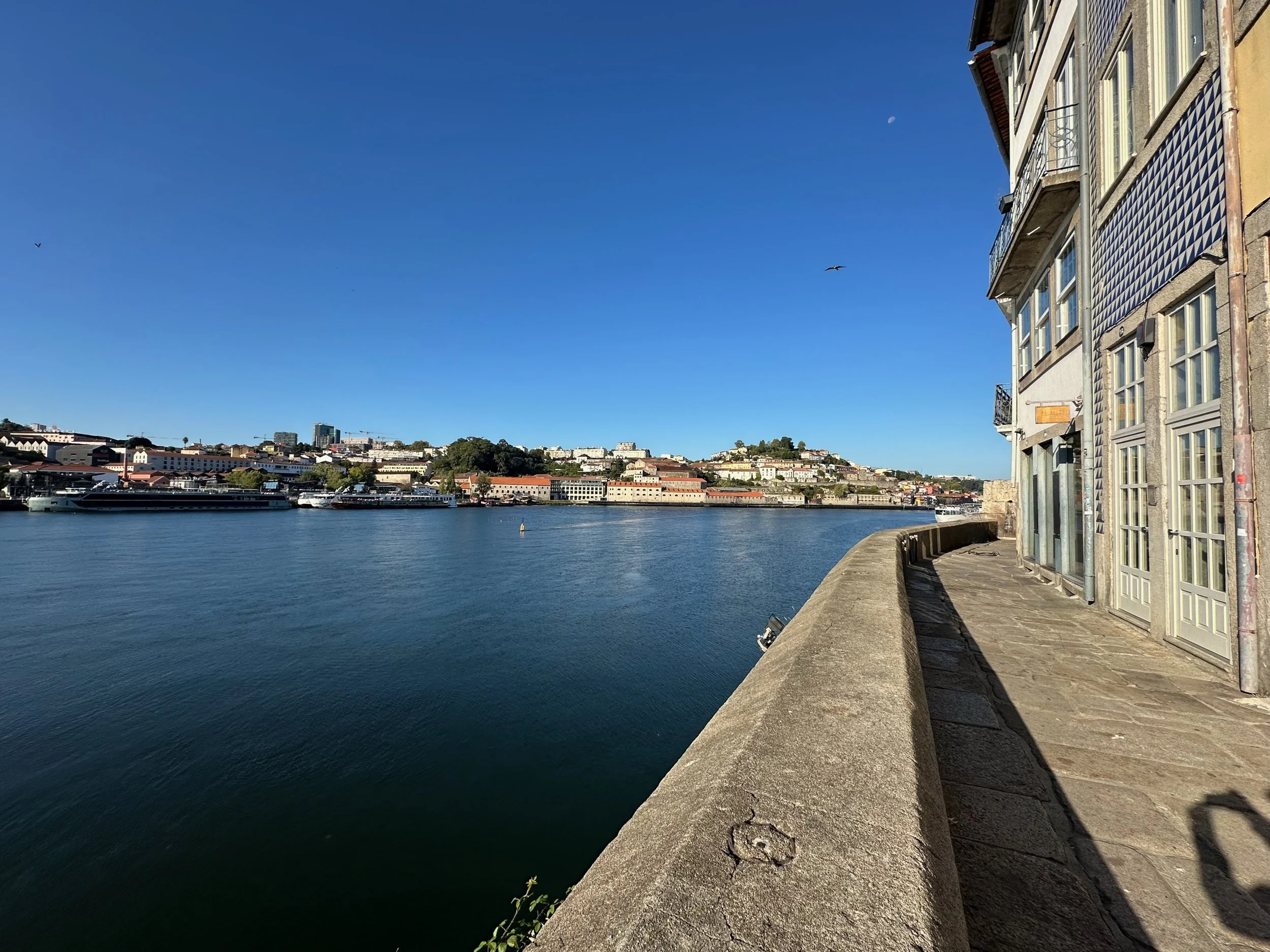
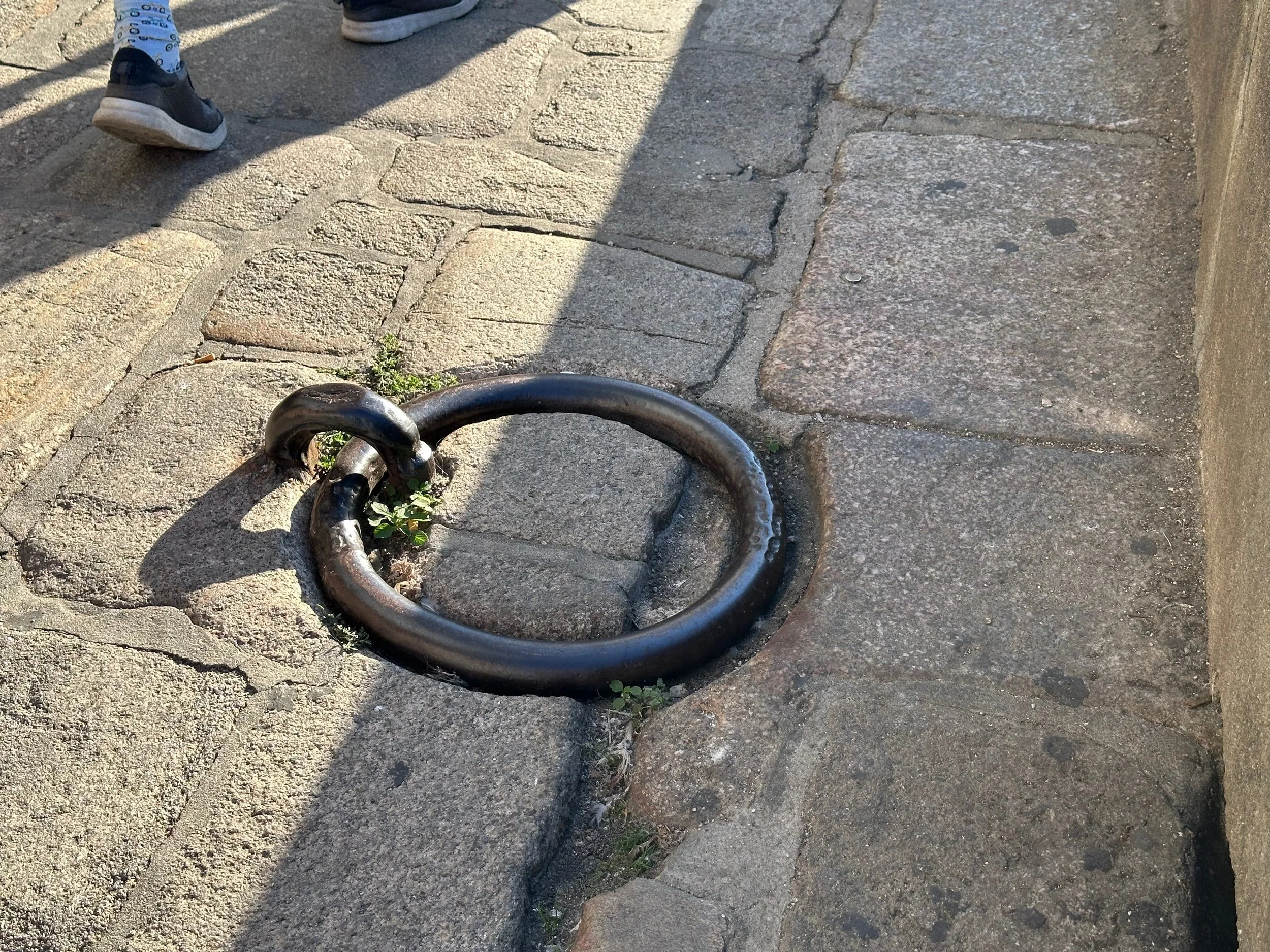
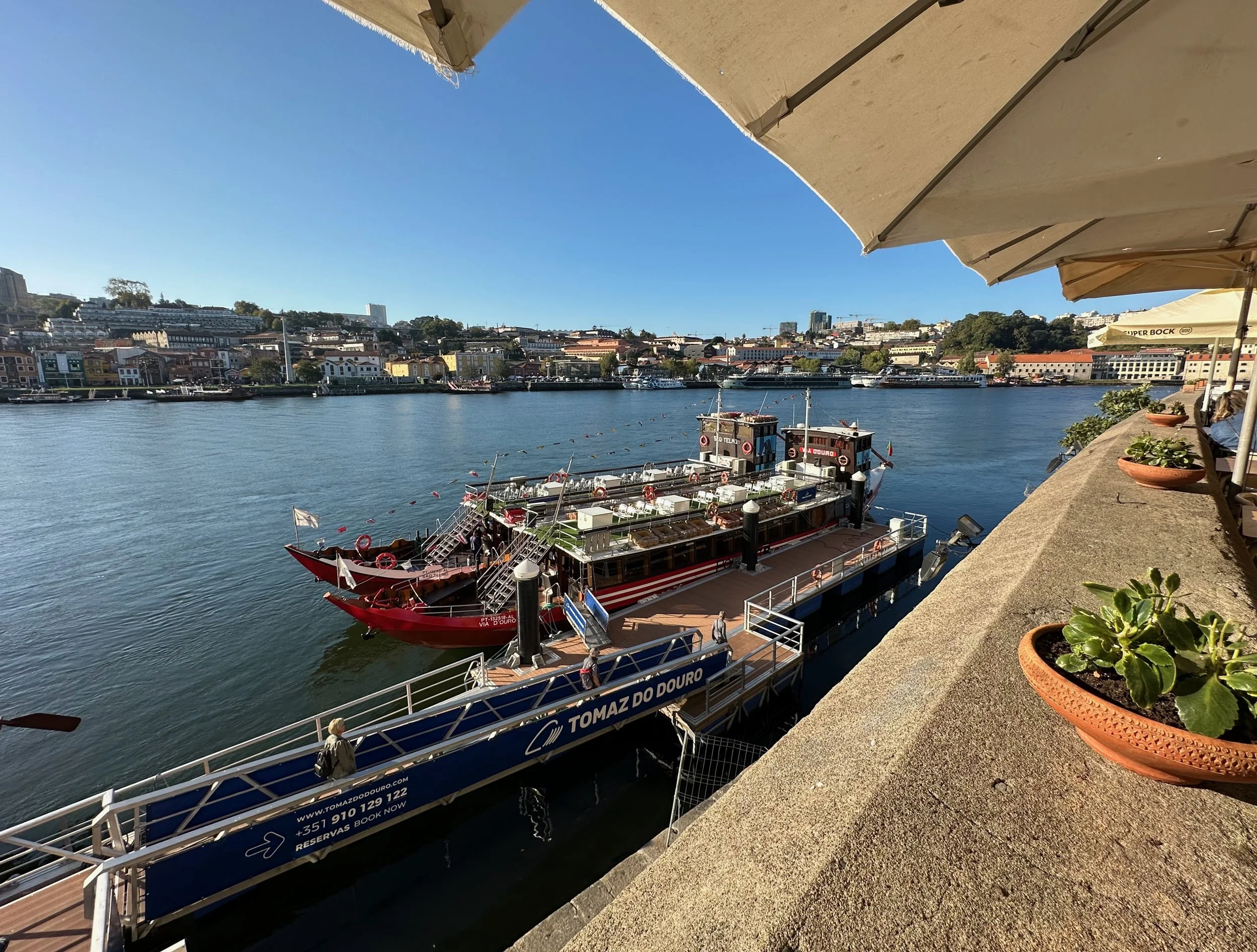
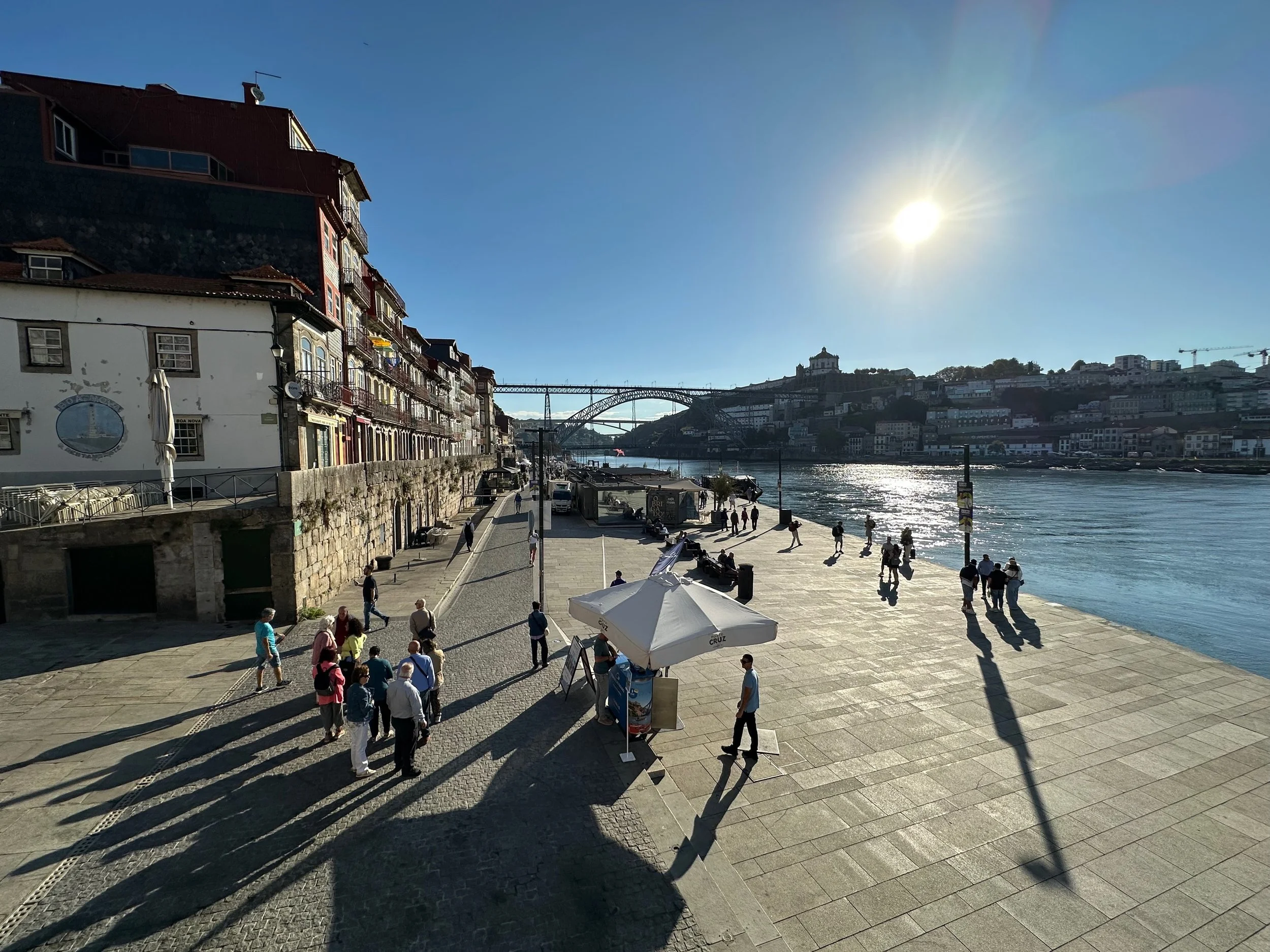
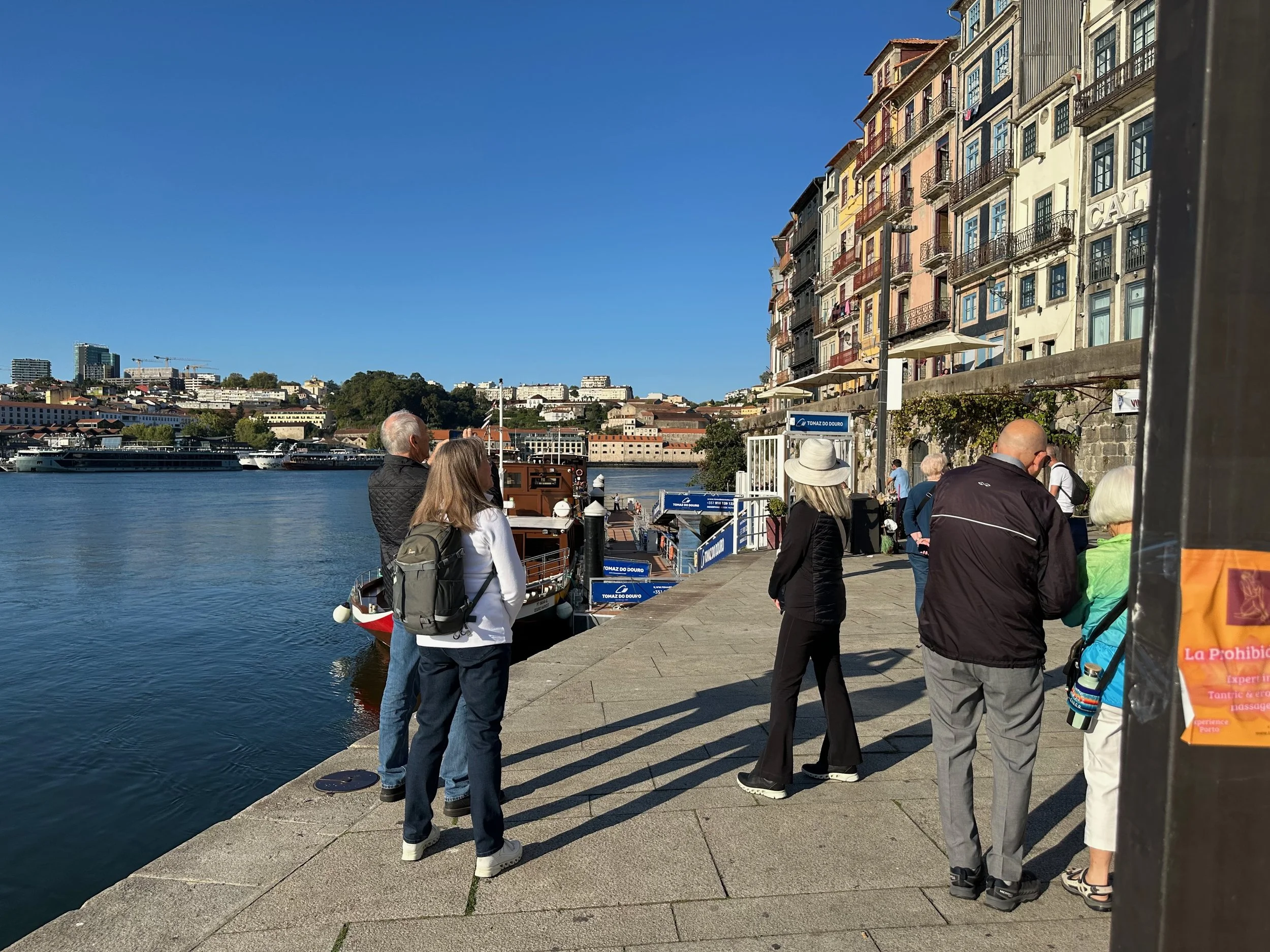
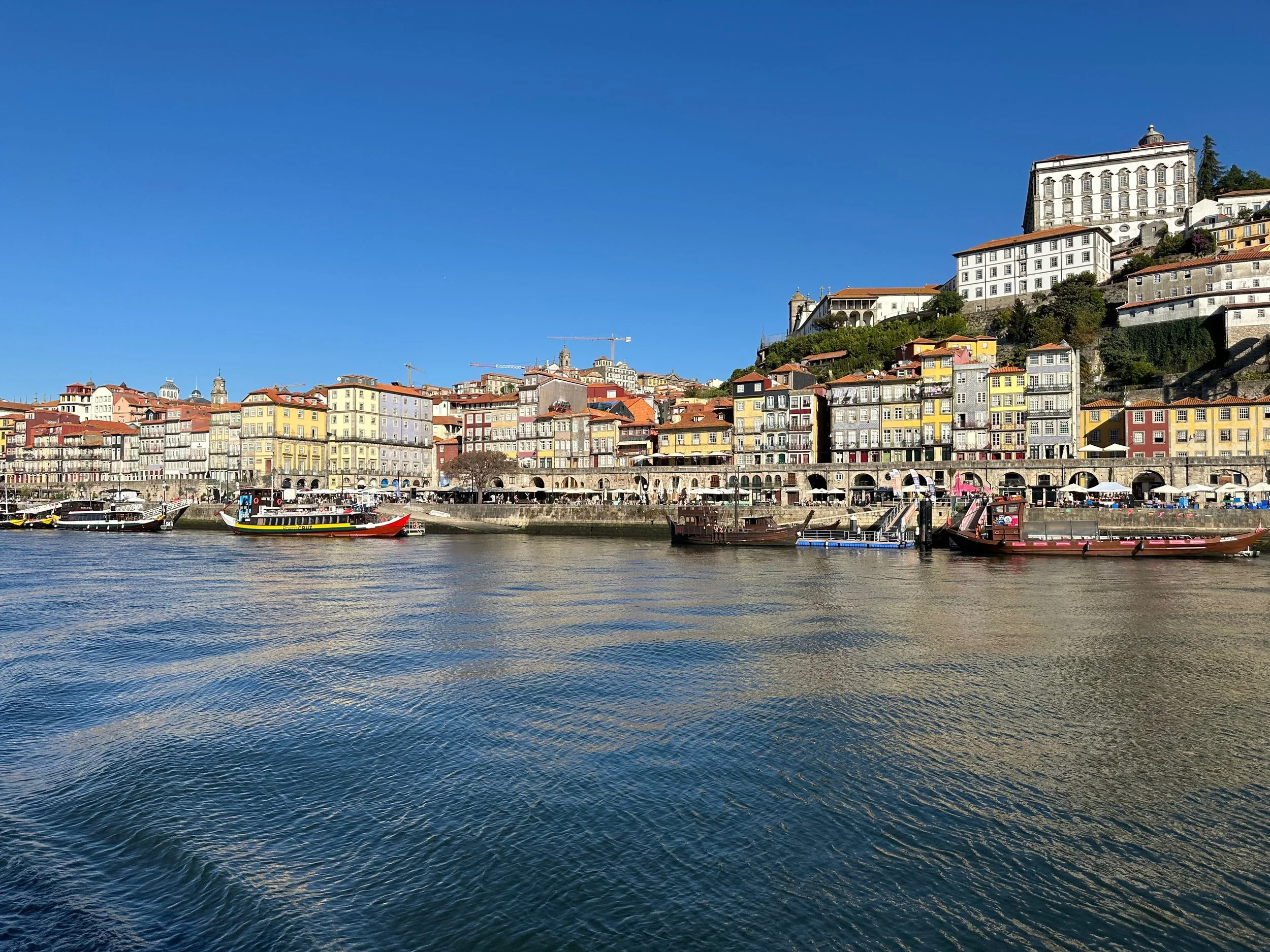
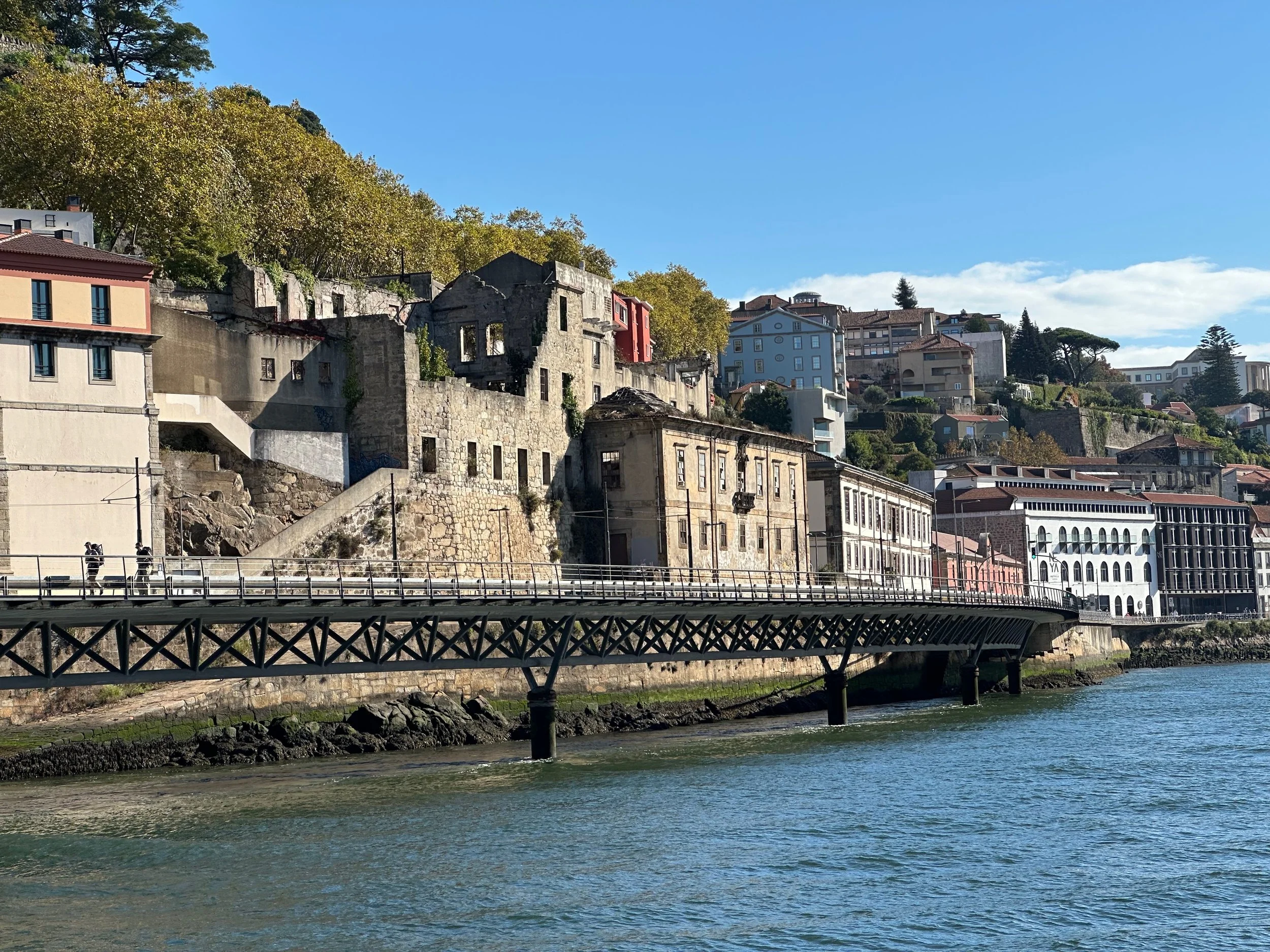
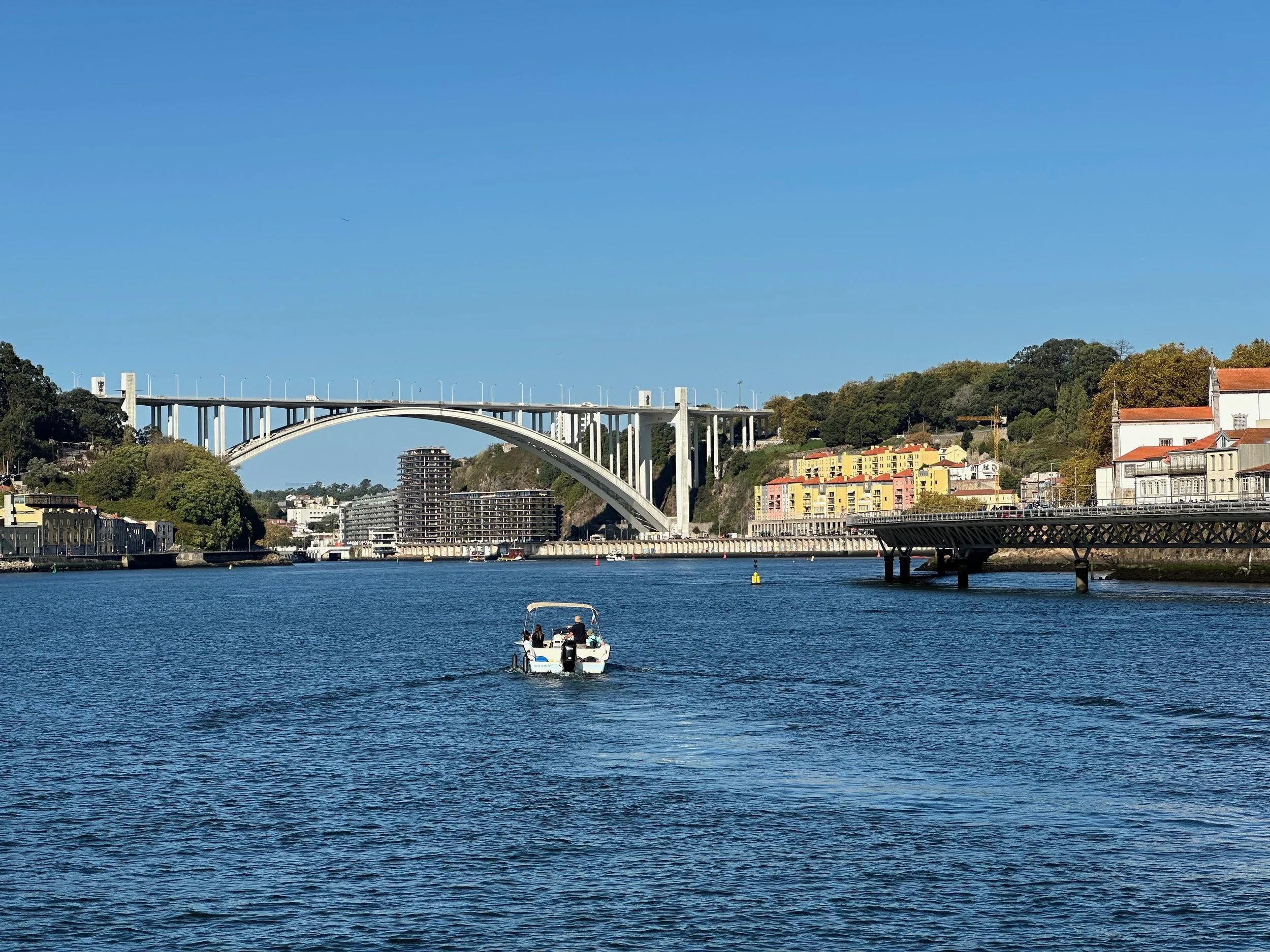
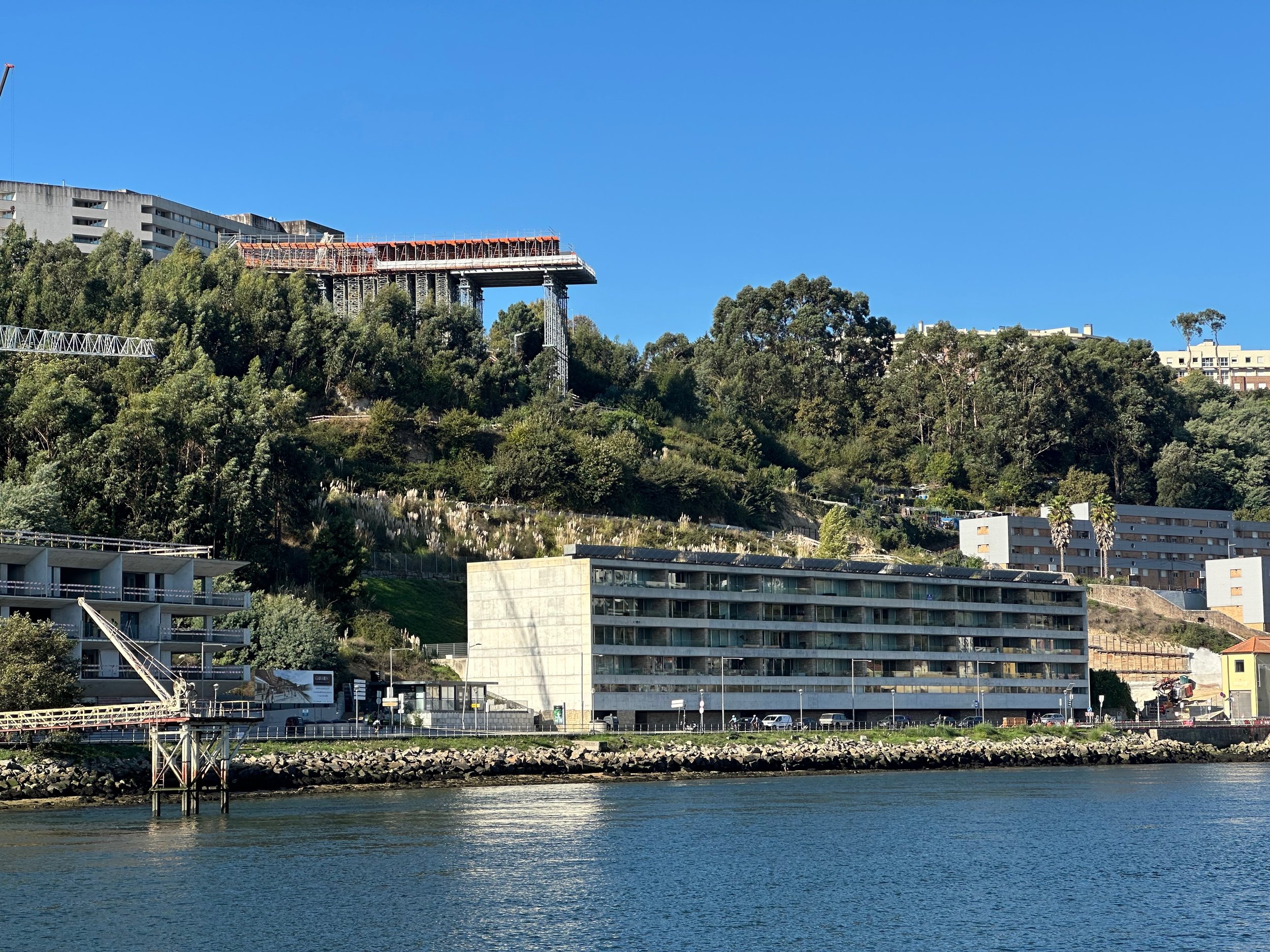
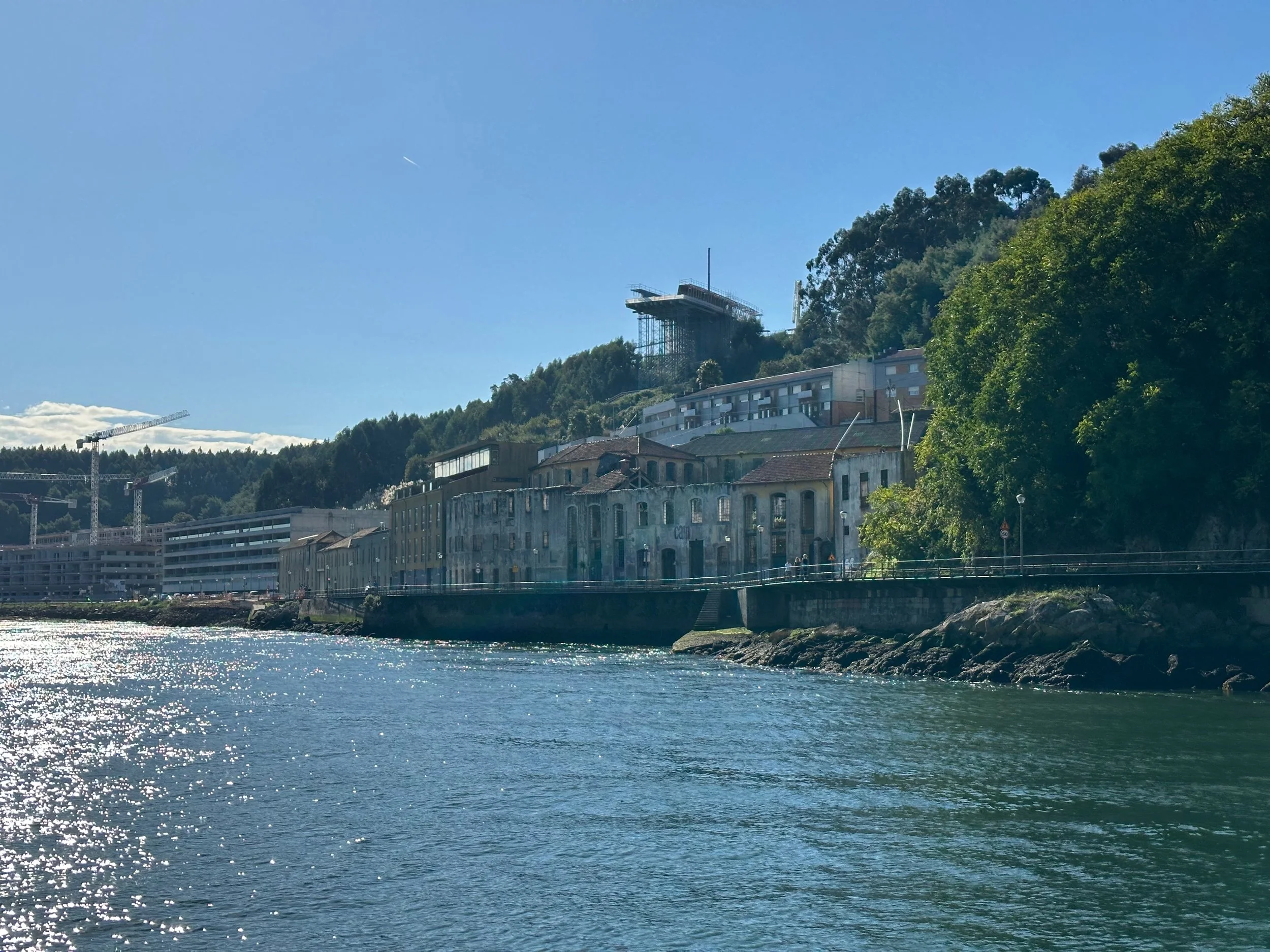
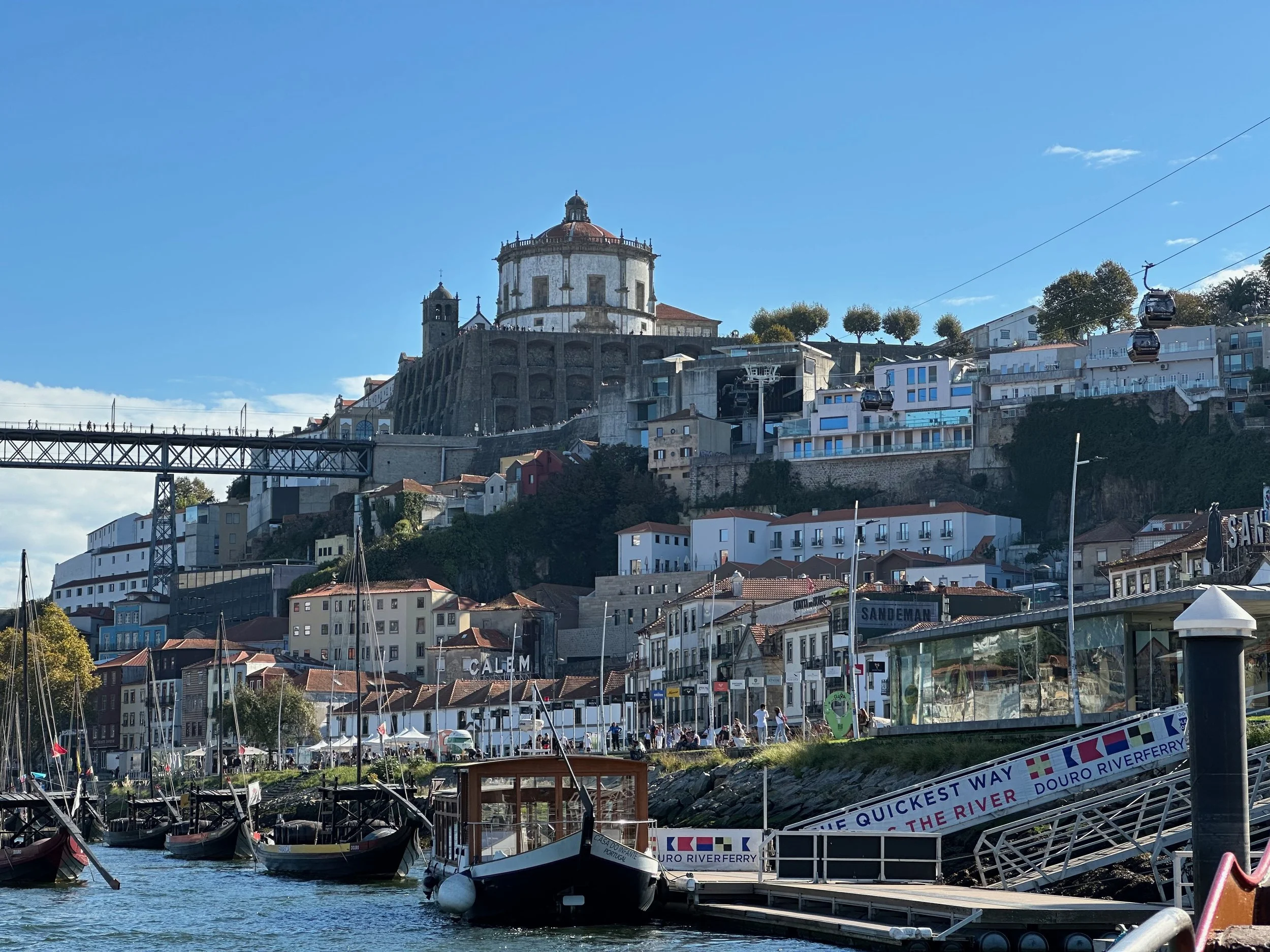
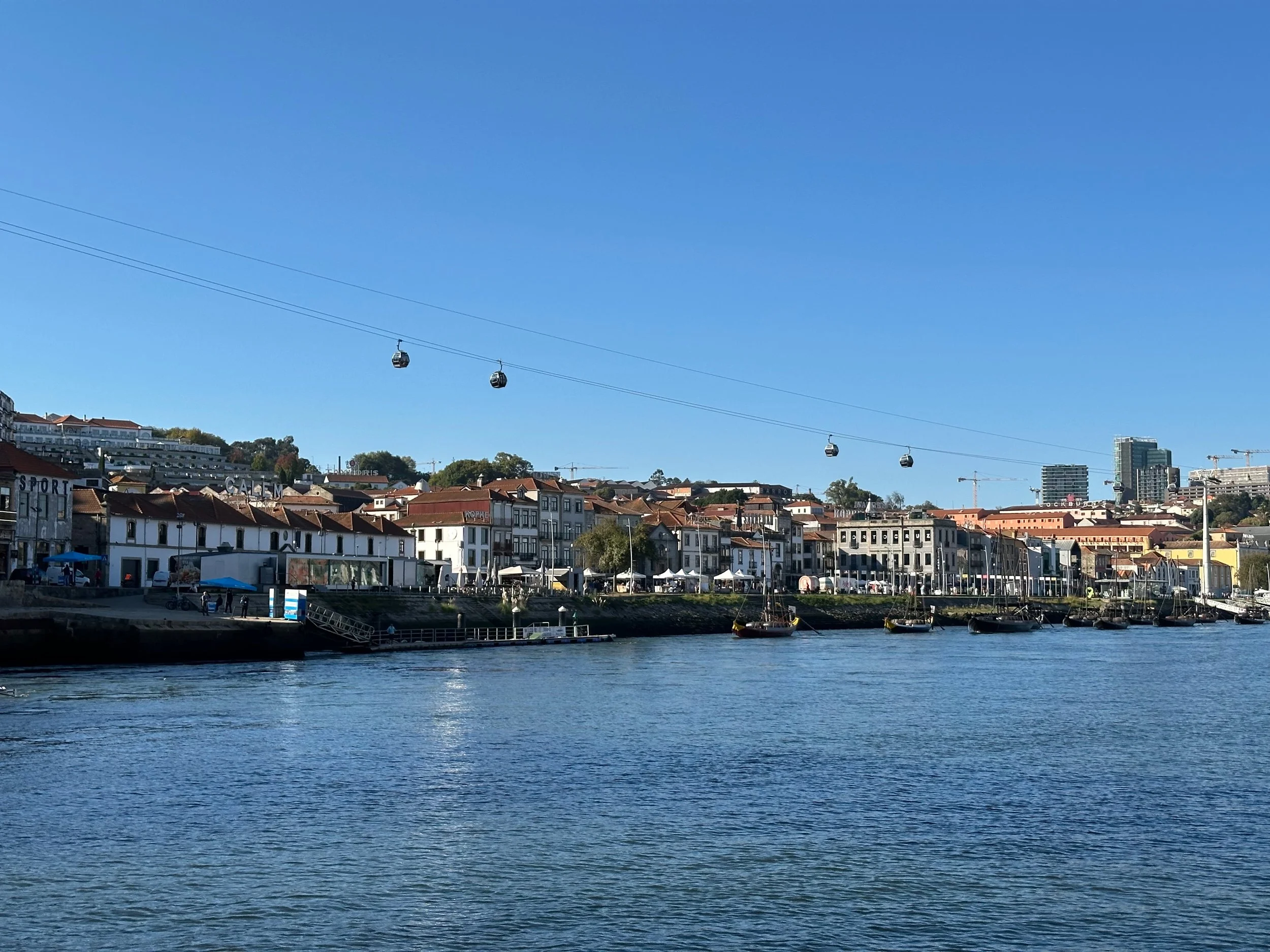
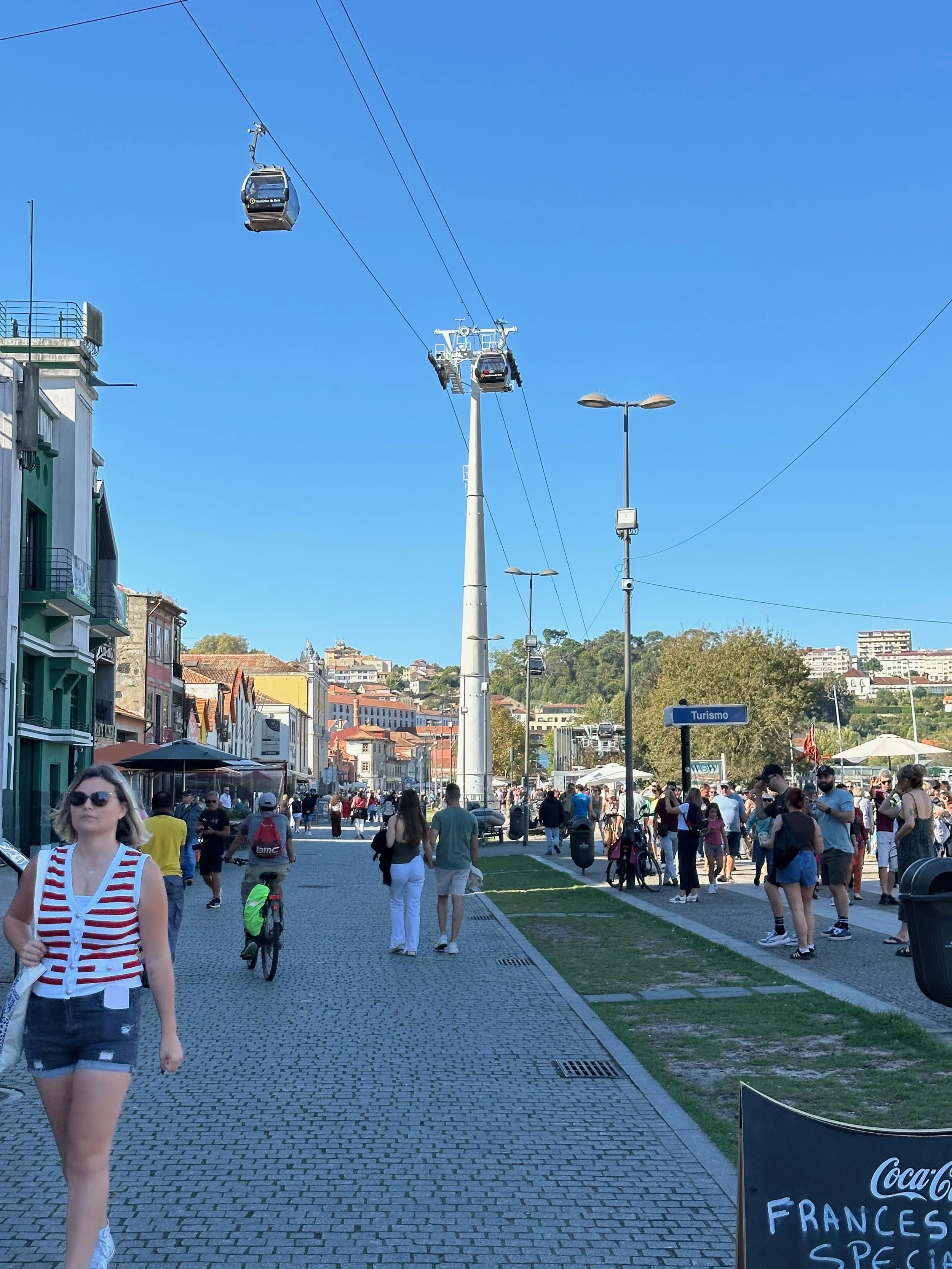
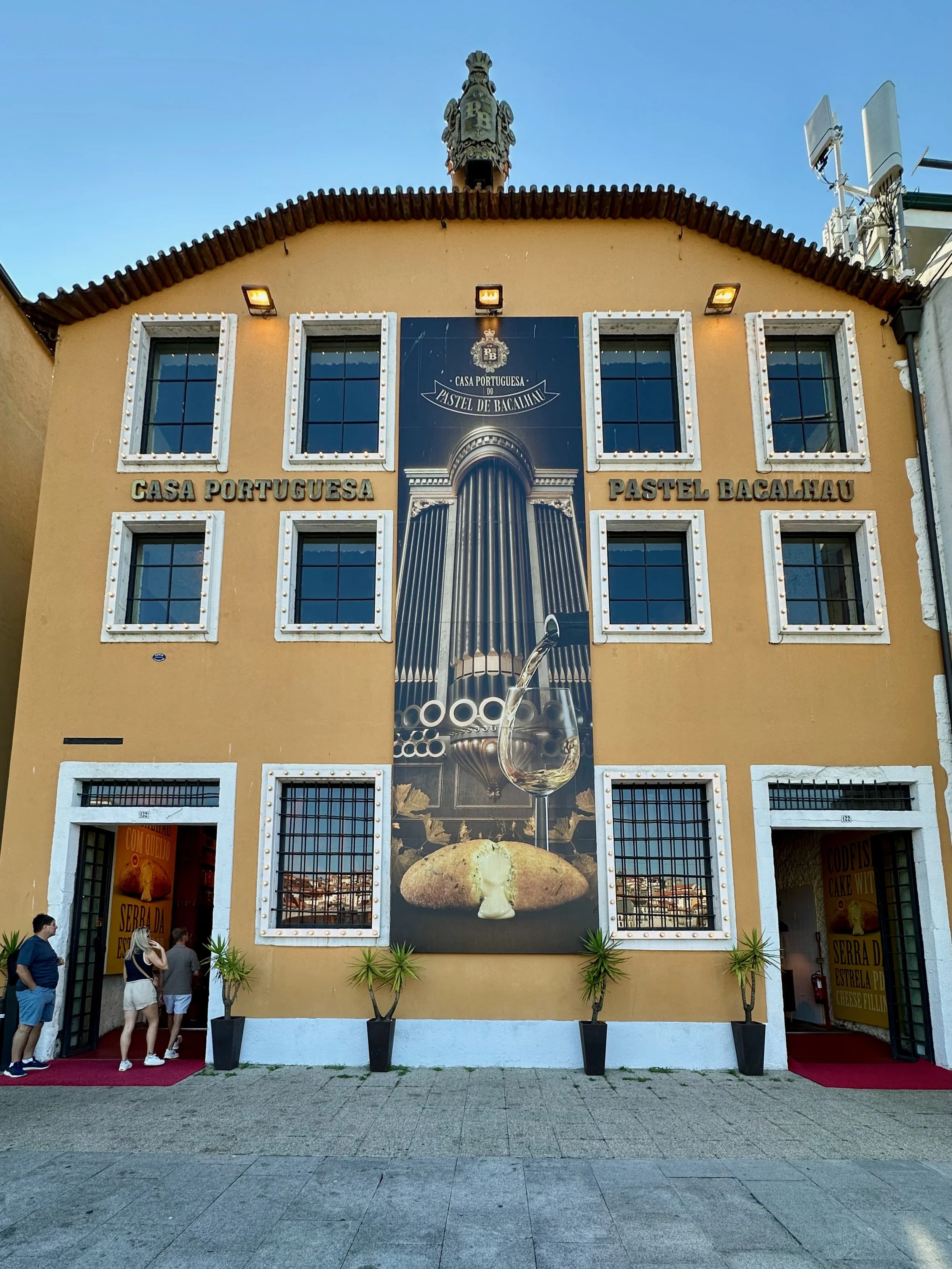
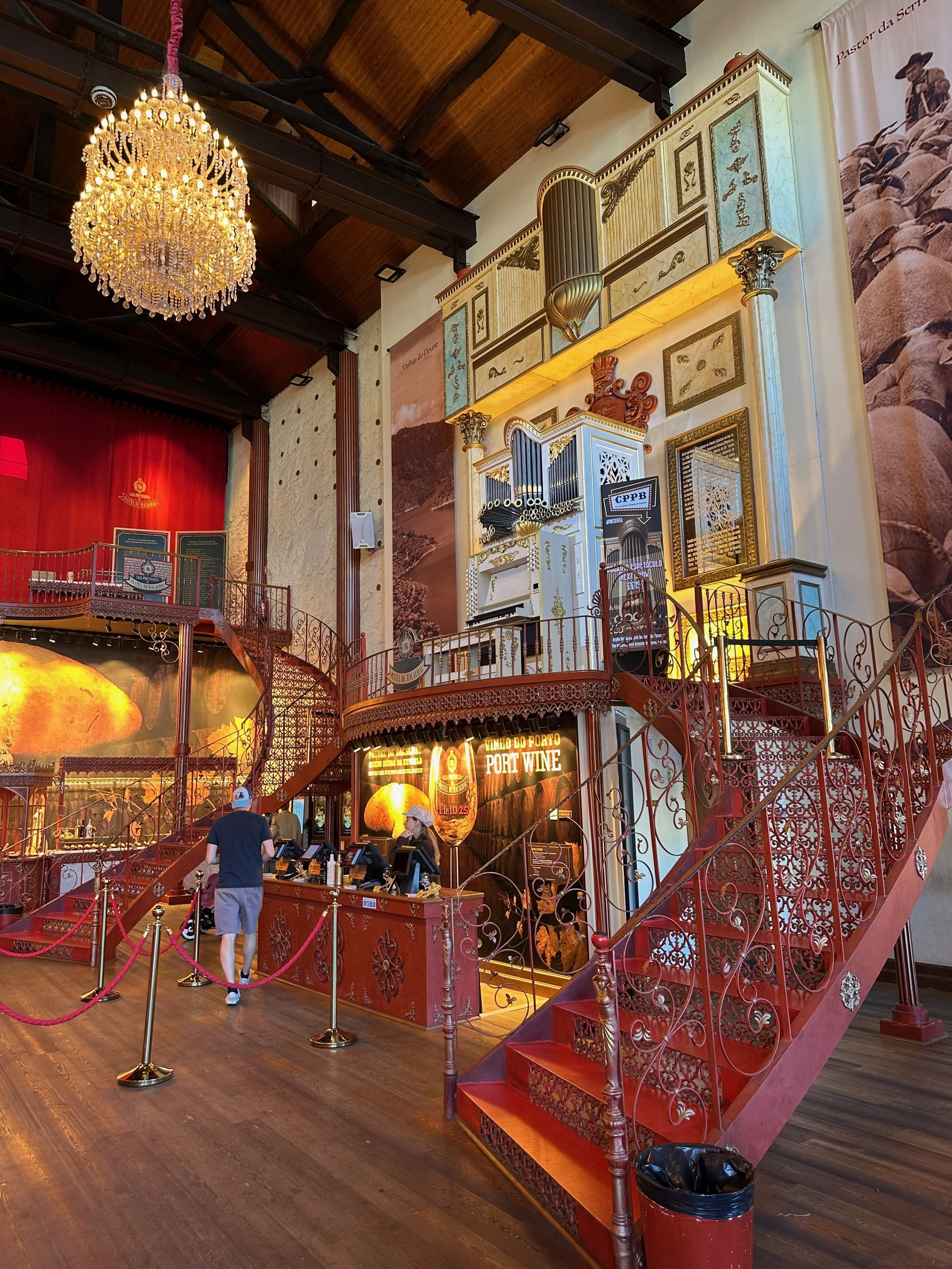
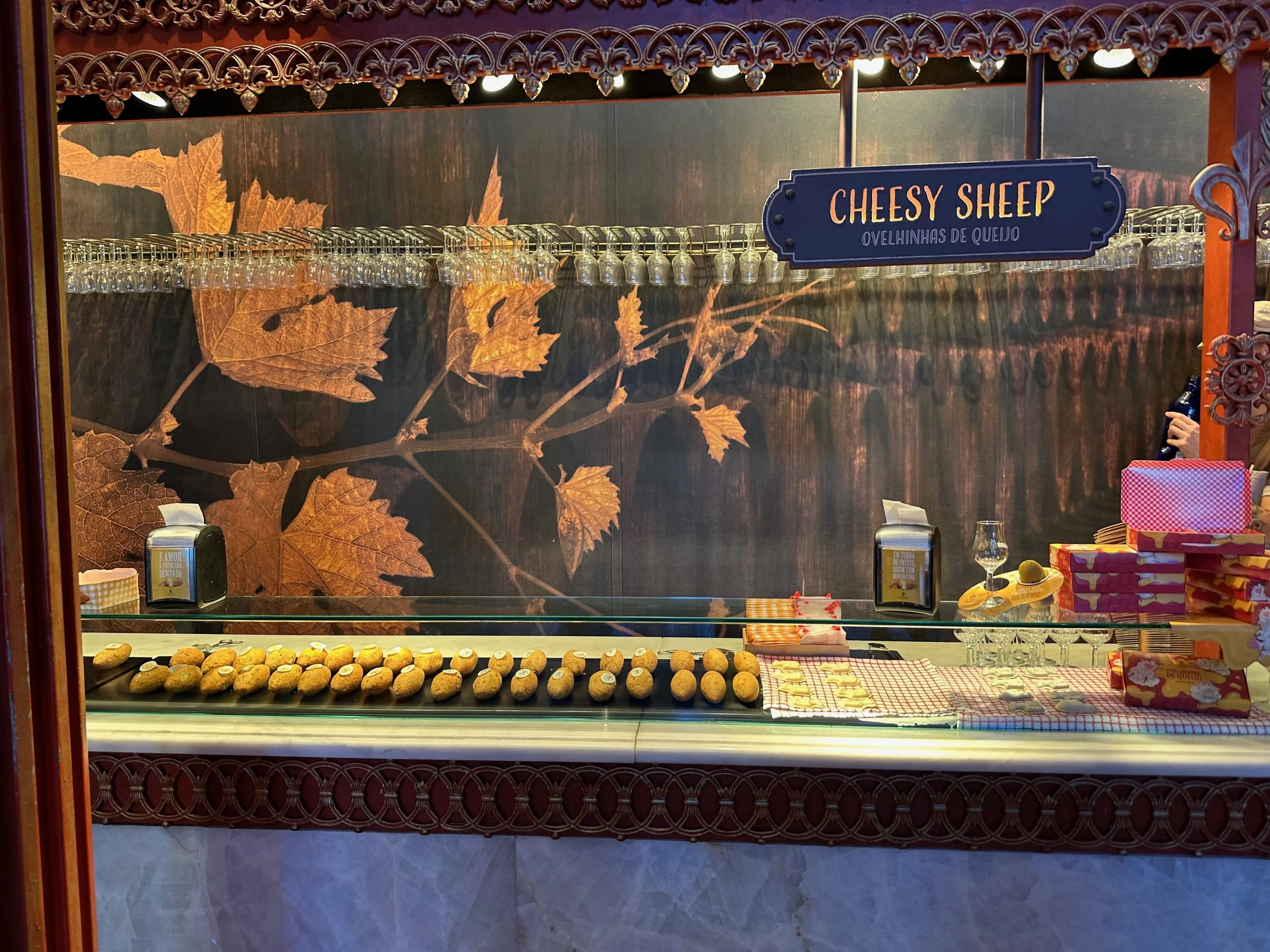
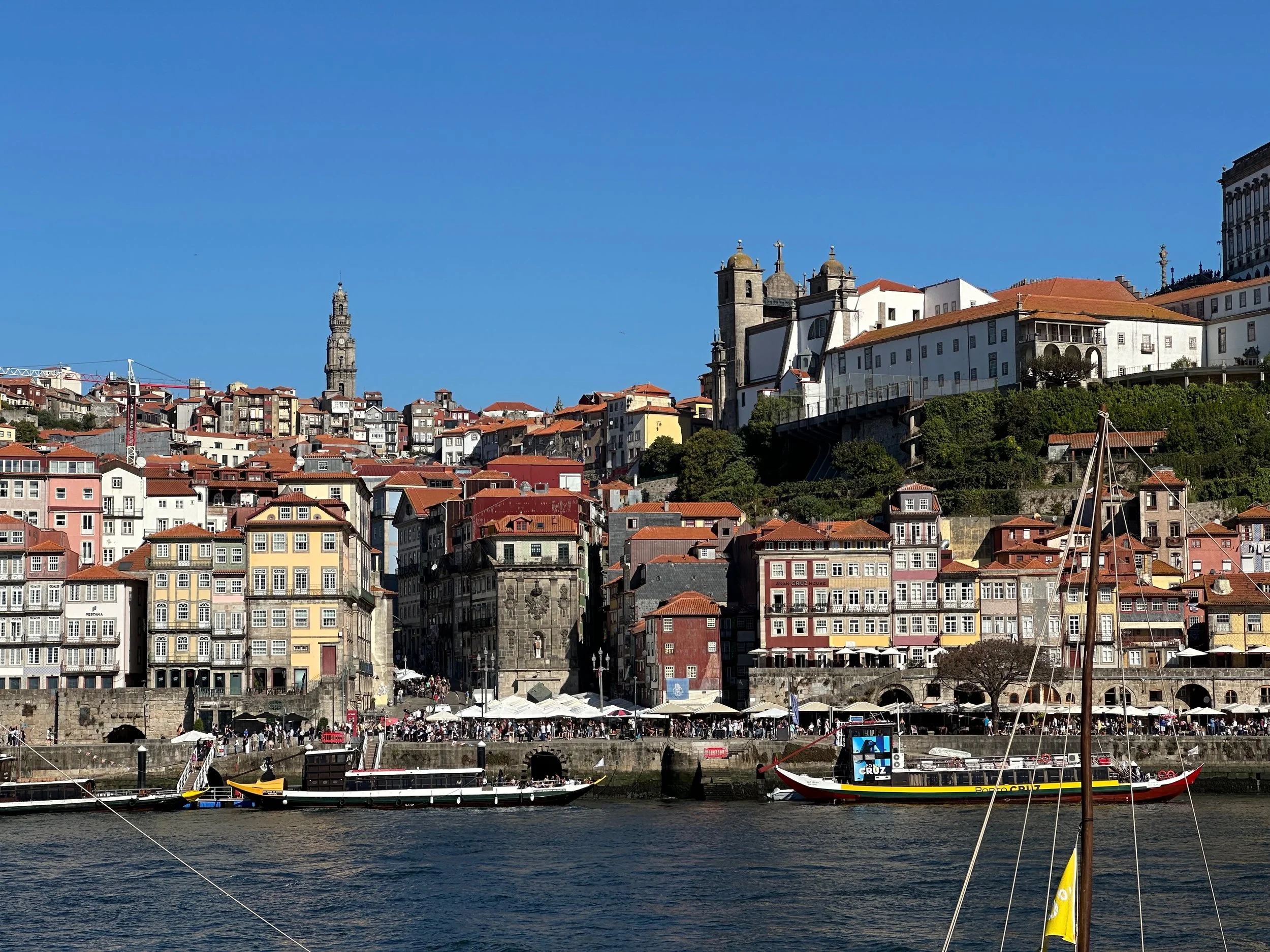
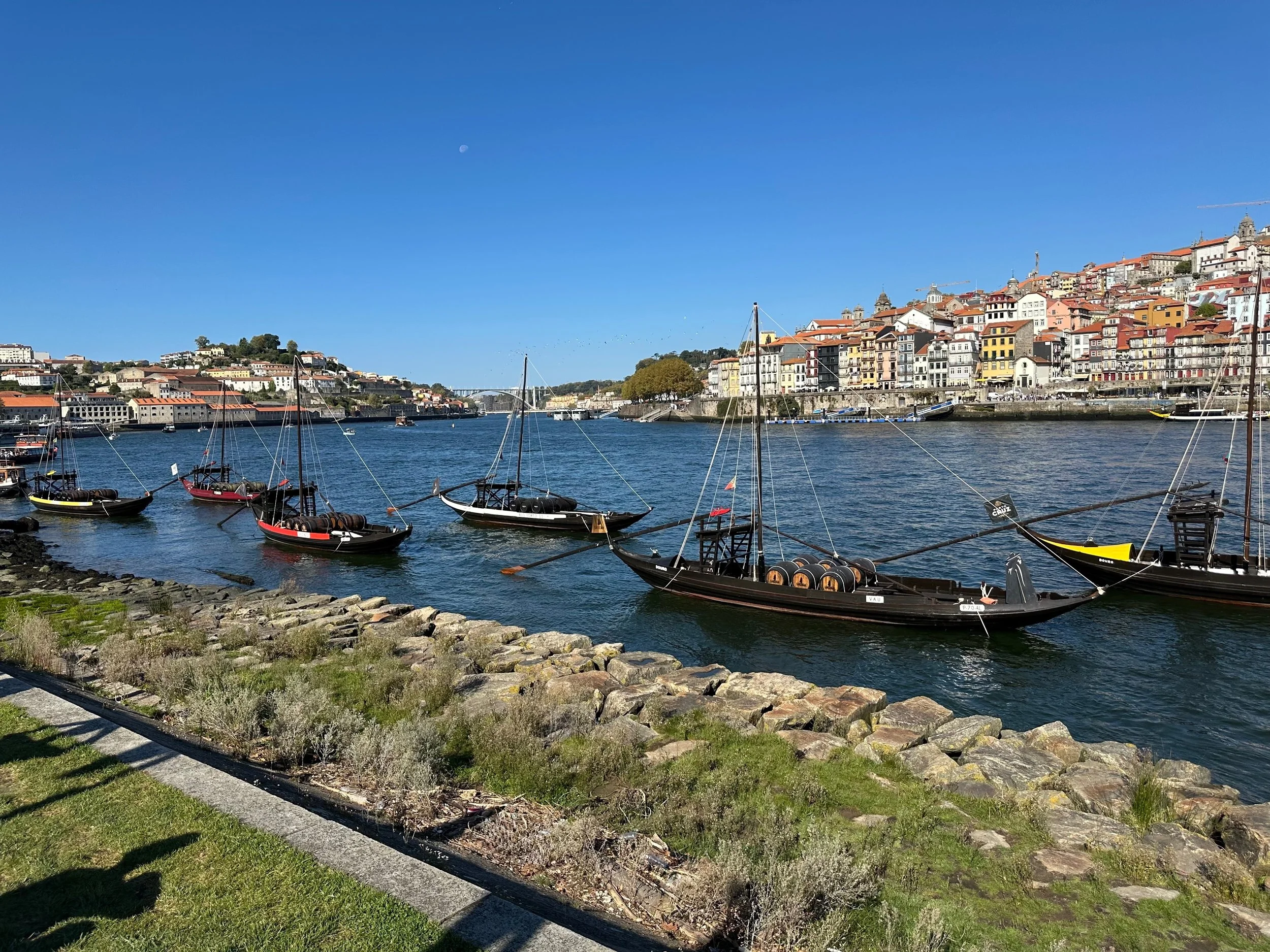
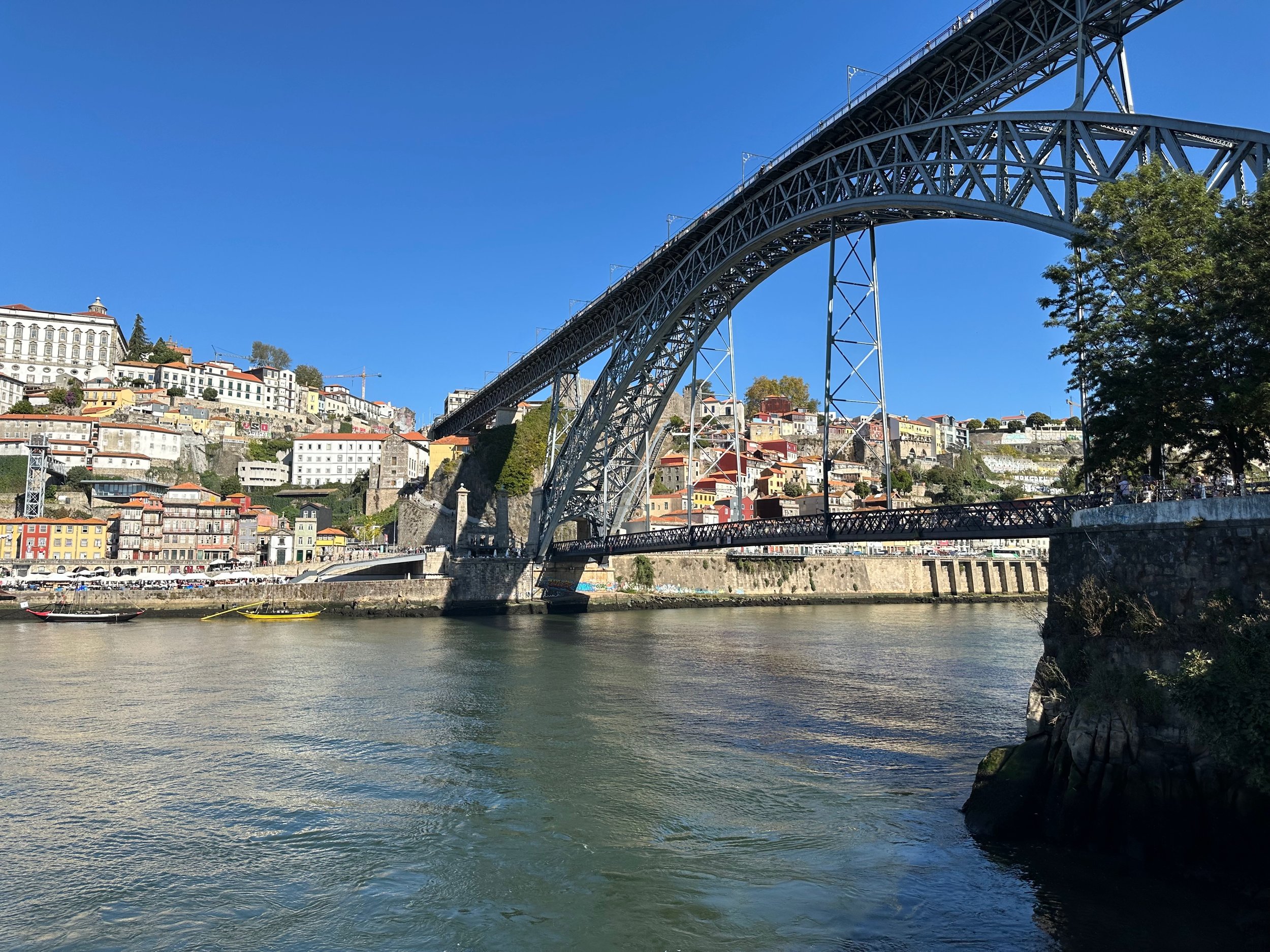
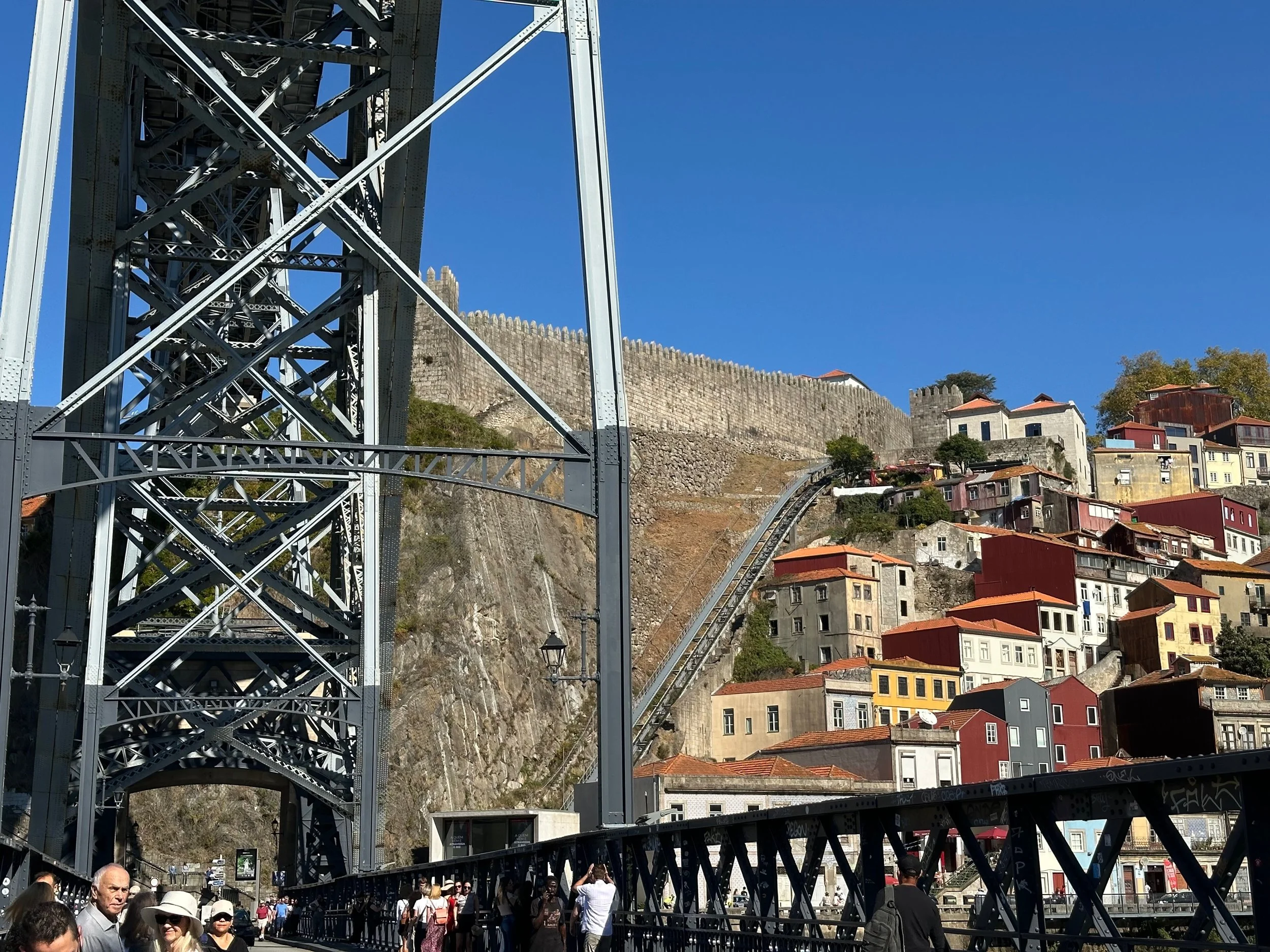
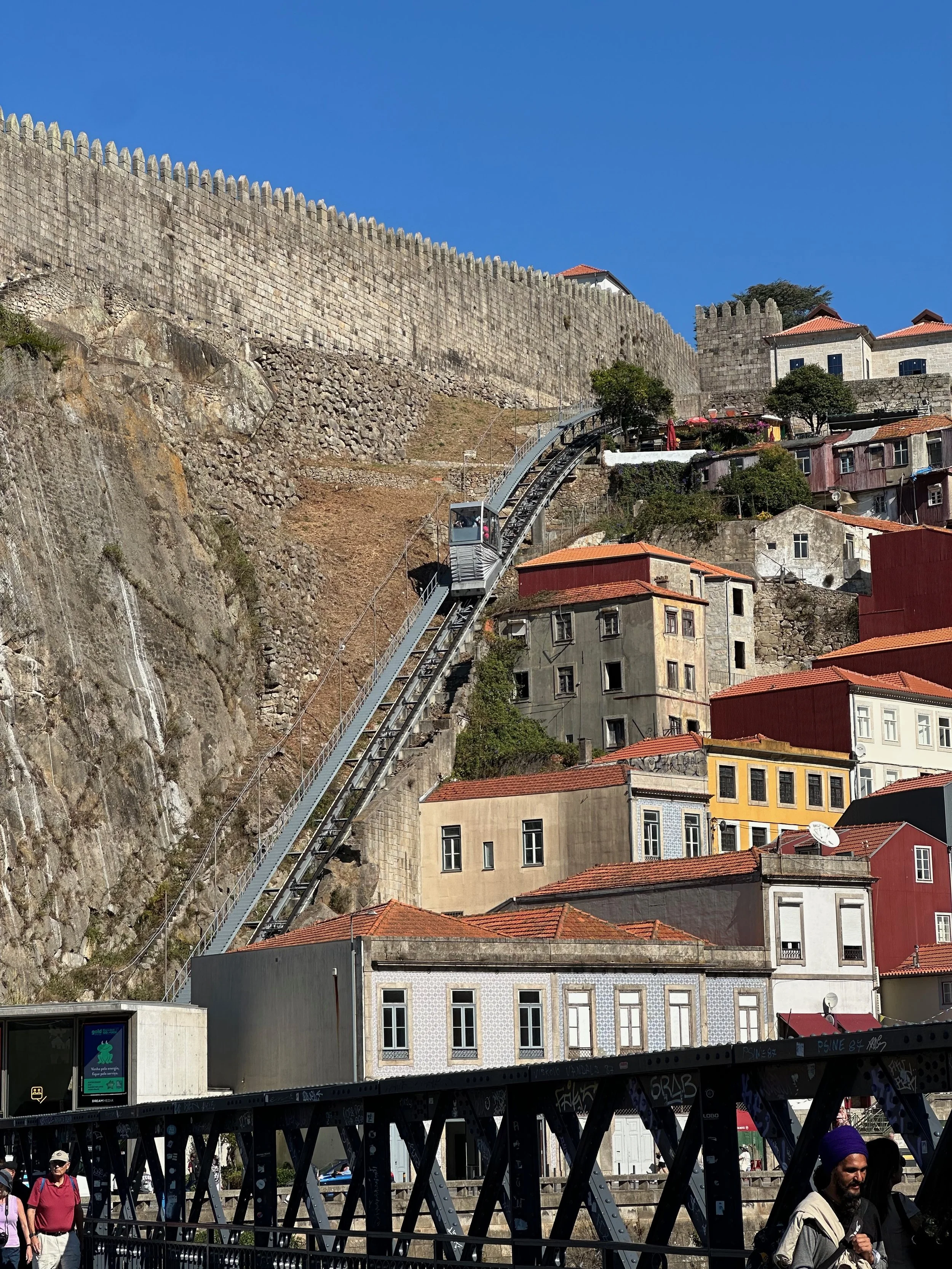
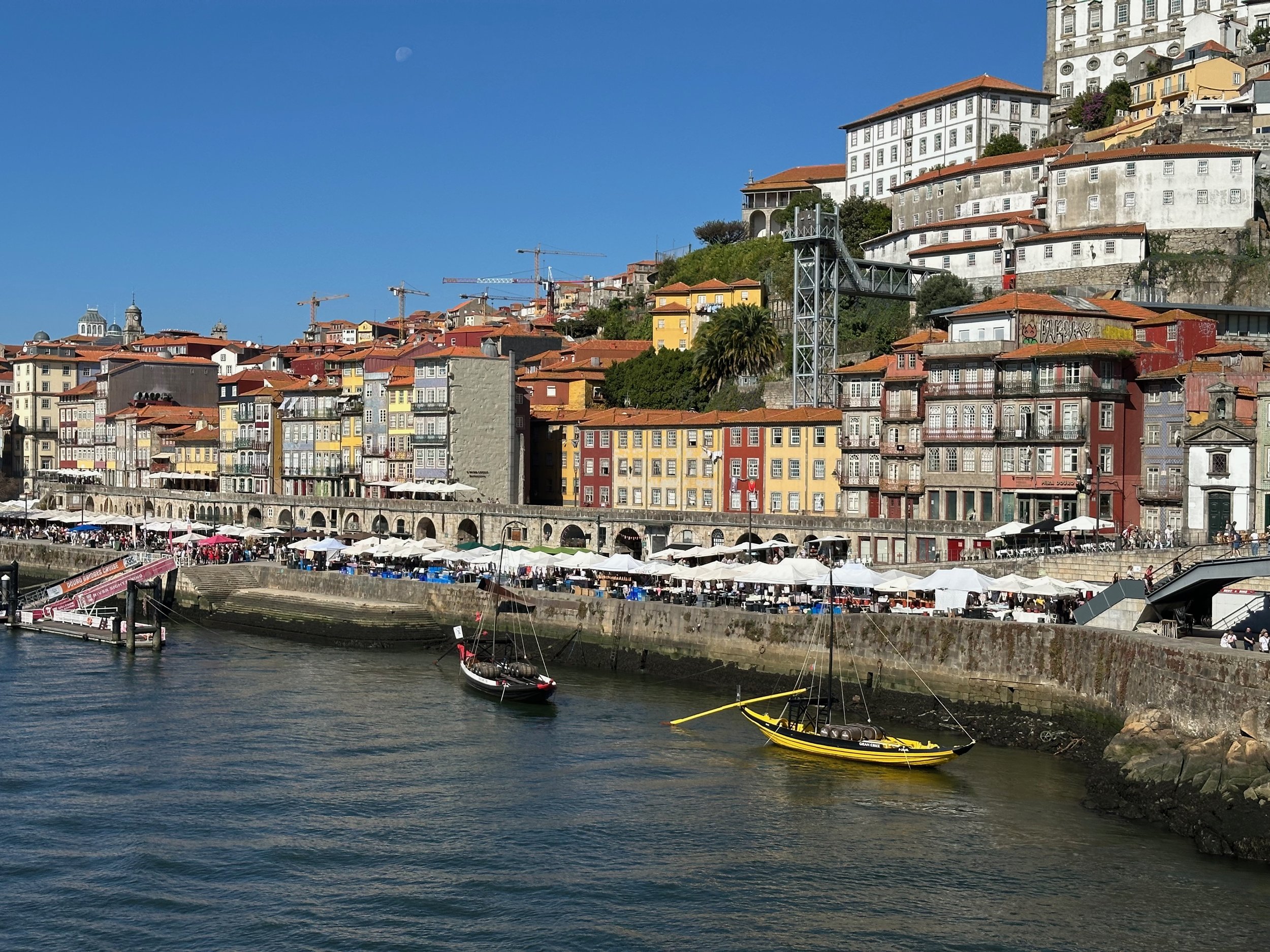
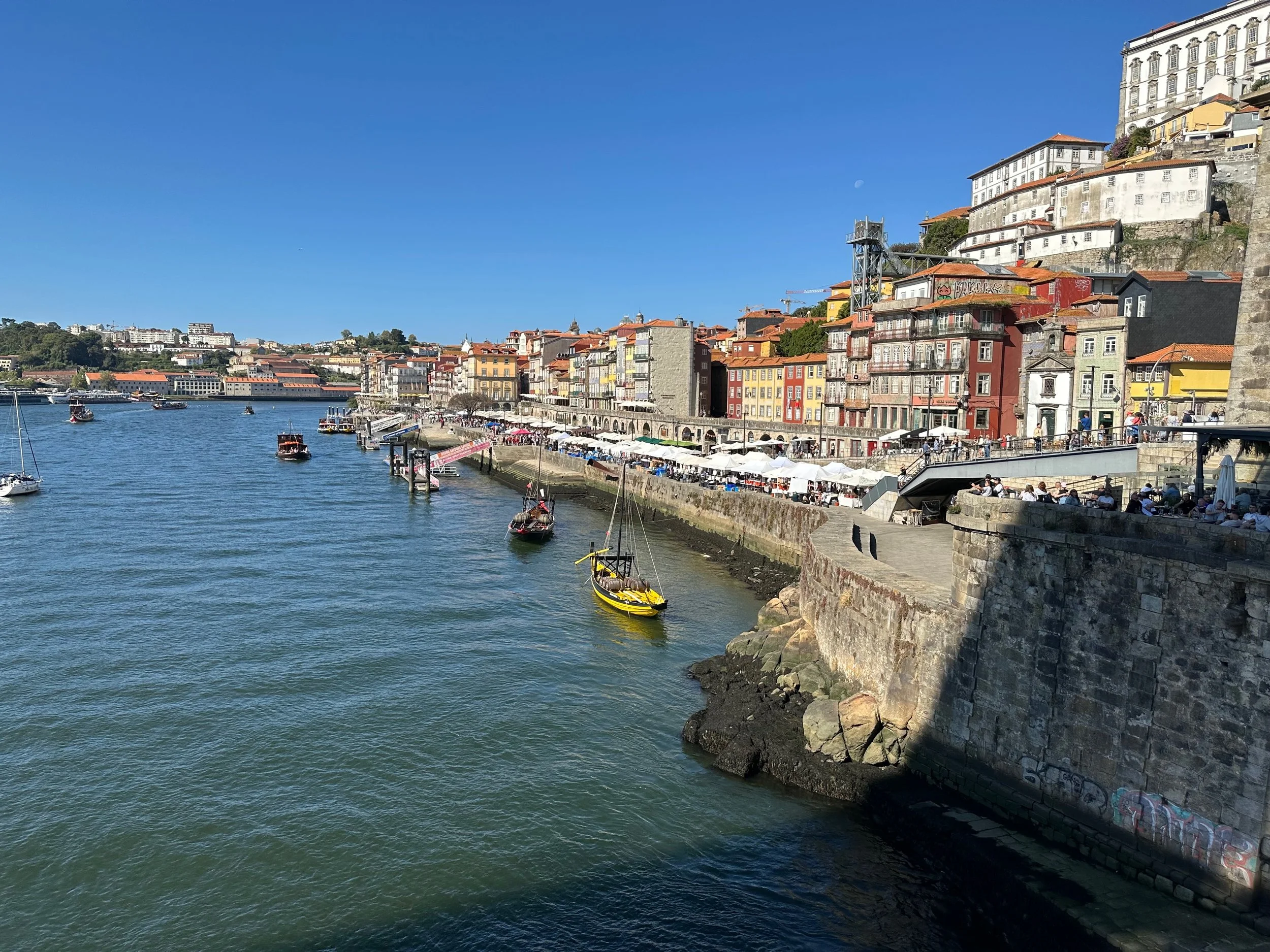
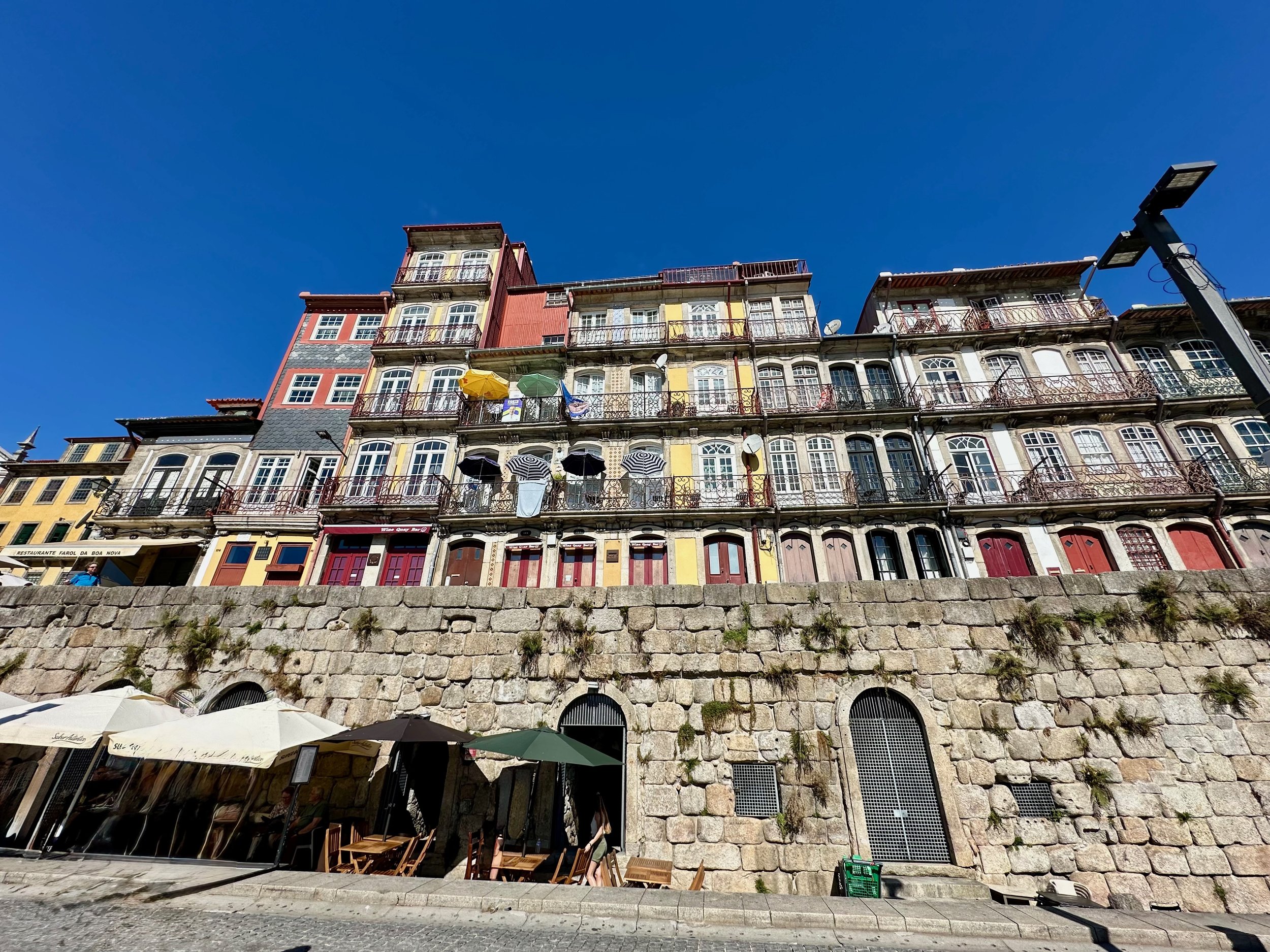
Also known as Oporto, as well as Leixões, it’s the second largest city in Portugal with a total urban area population of 2.1 million. Located on the steep stacked banks of the River Duro, it’s an authentic Portuguese city with wine and bright azuleho tiles which turn the streets into works of art. Many around the world consider it the place to go for a taste of the “real” Portugal. The varied topography and large river make it an endlessly interesting city to explore.
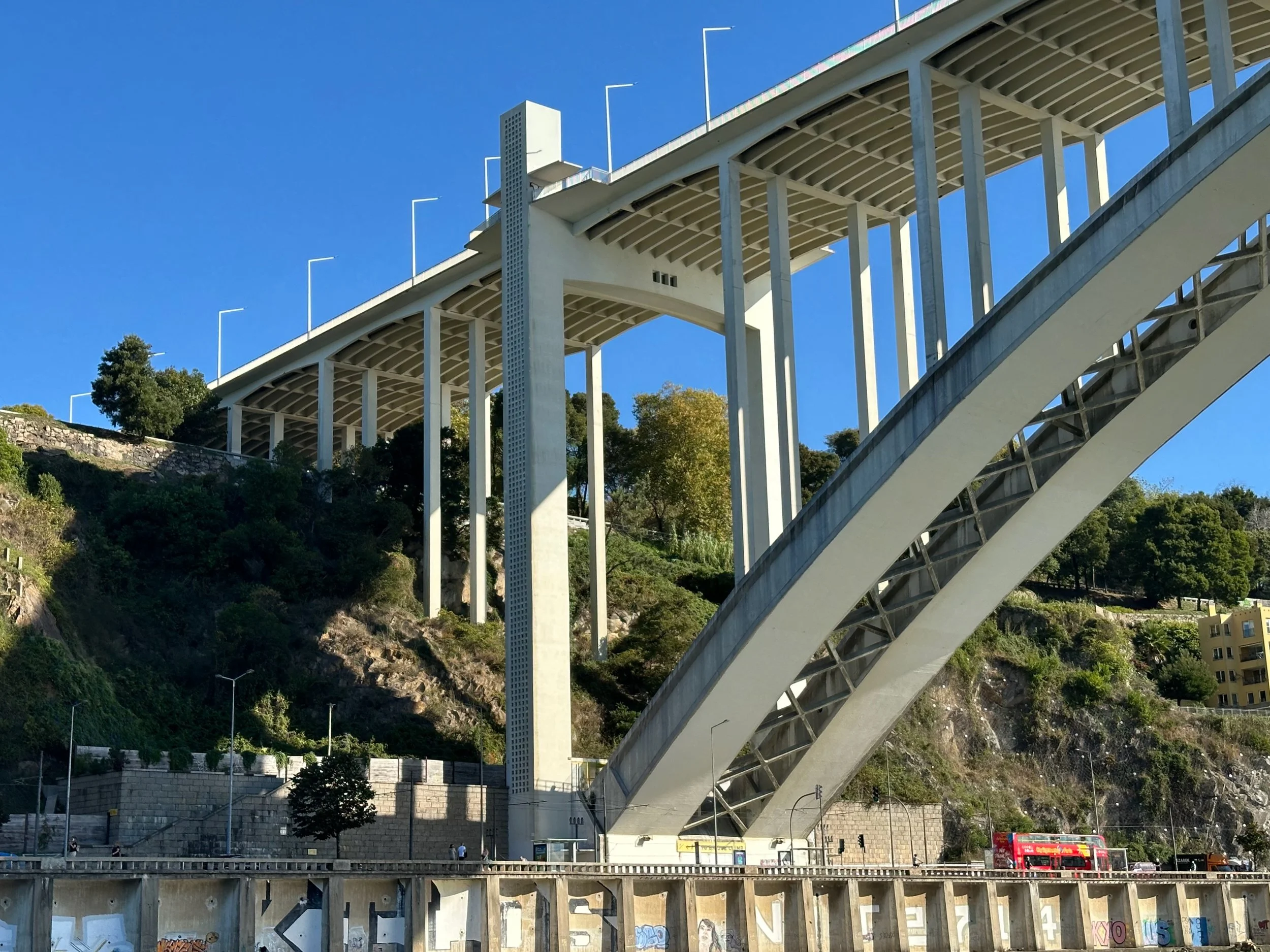
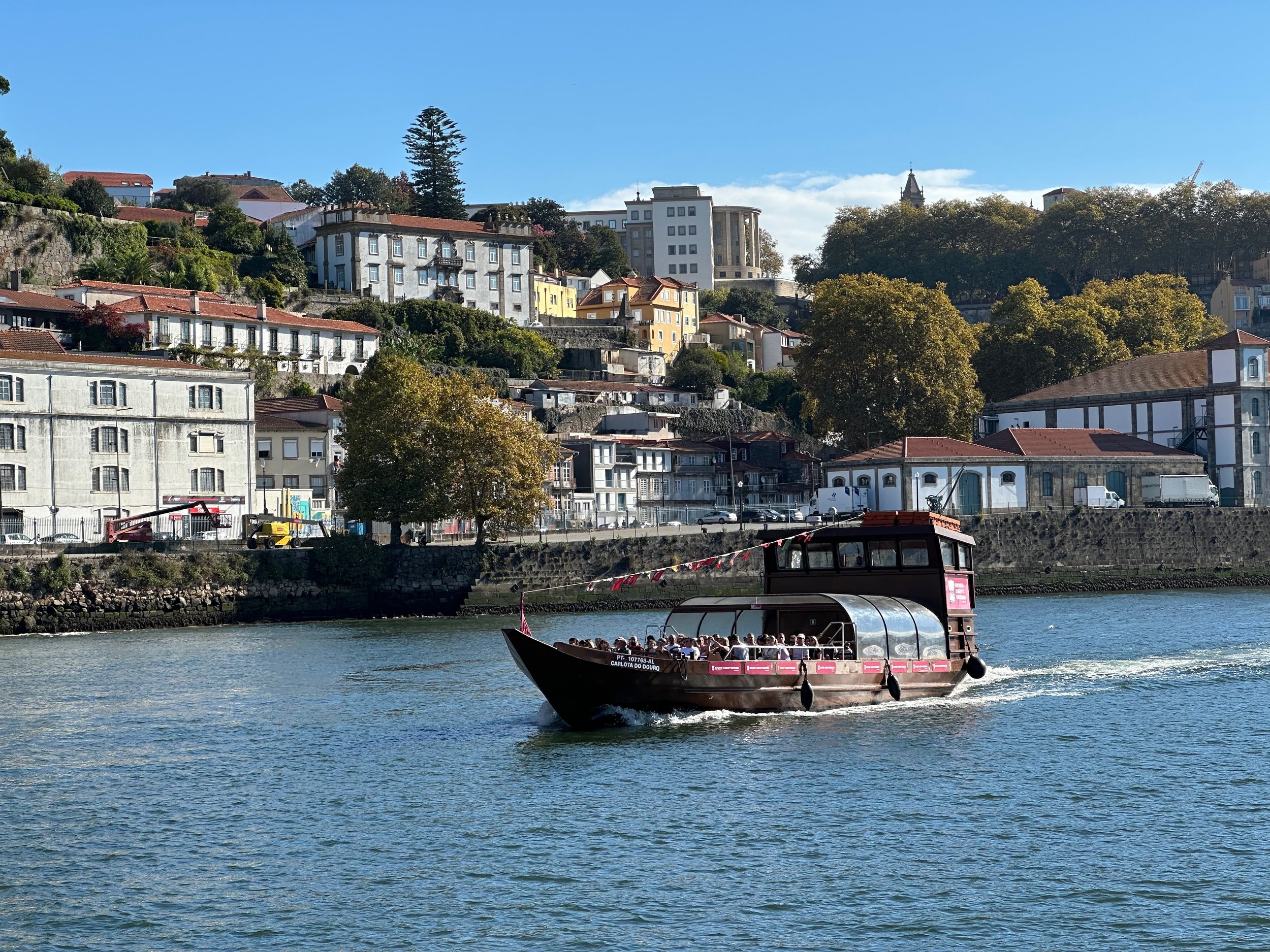
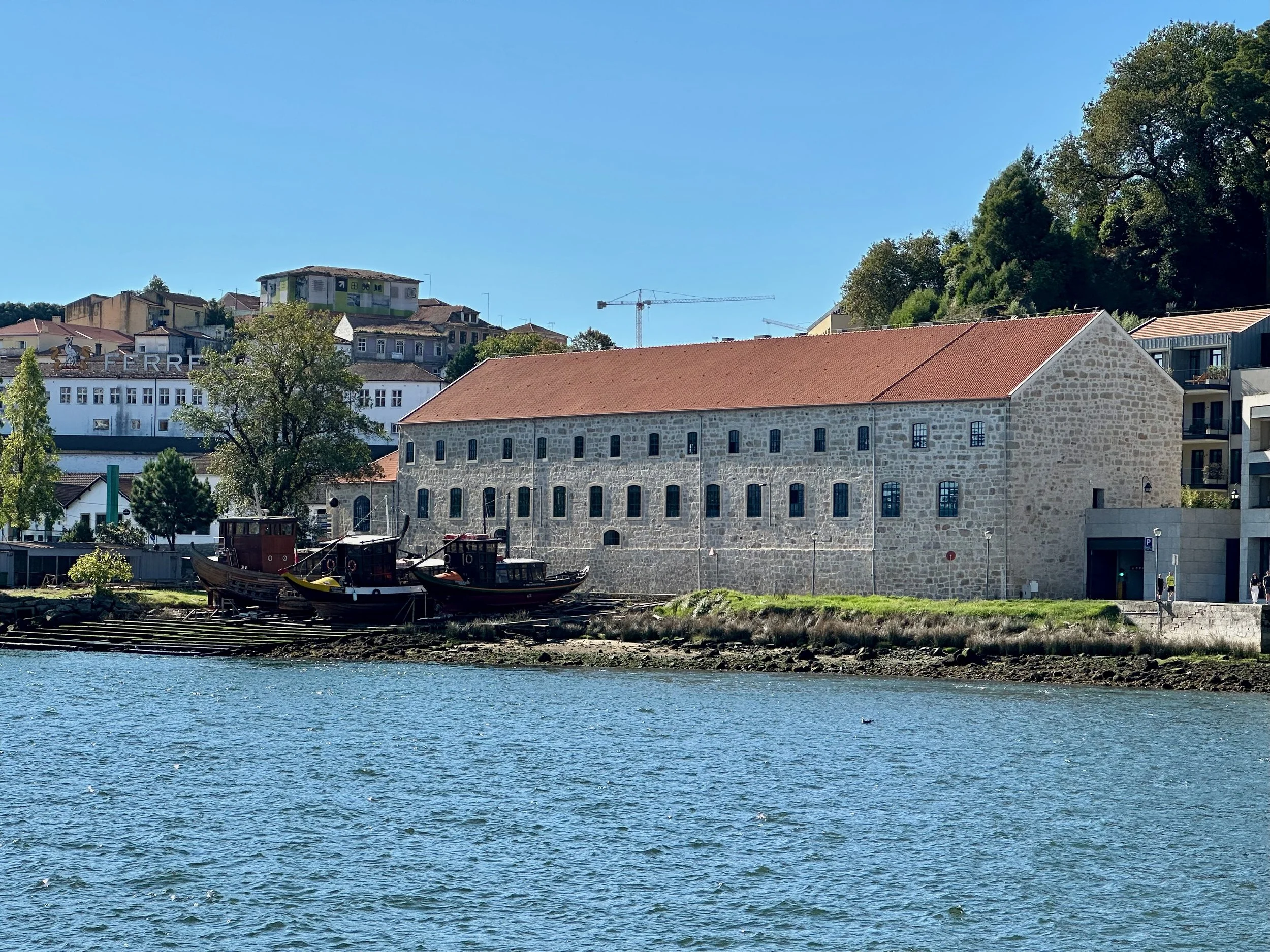
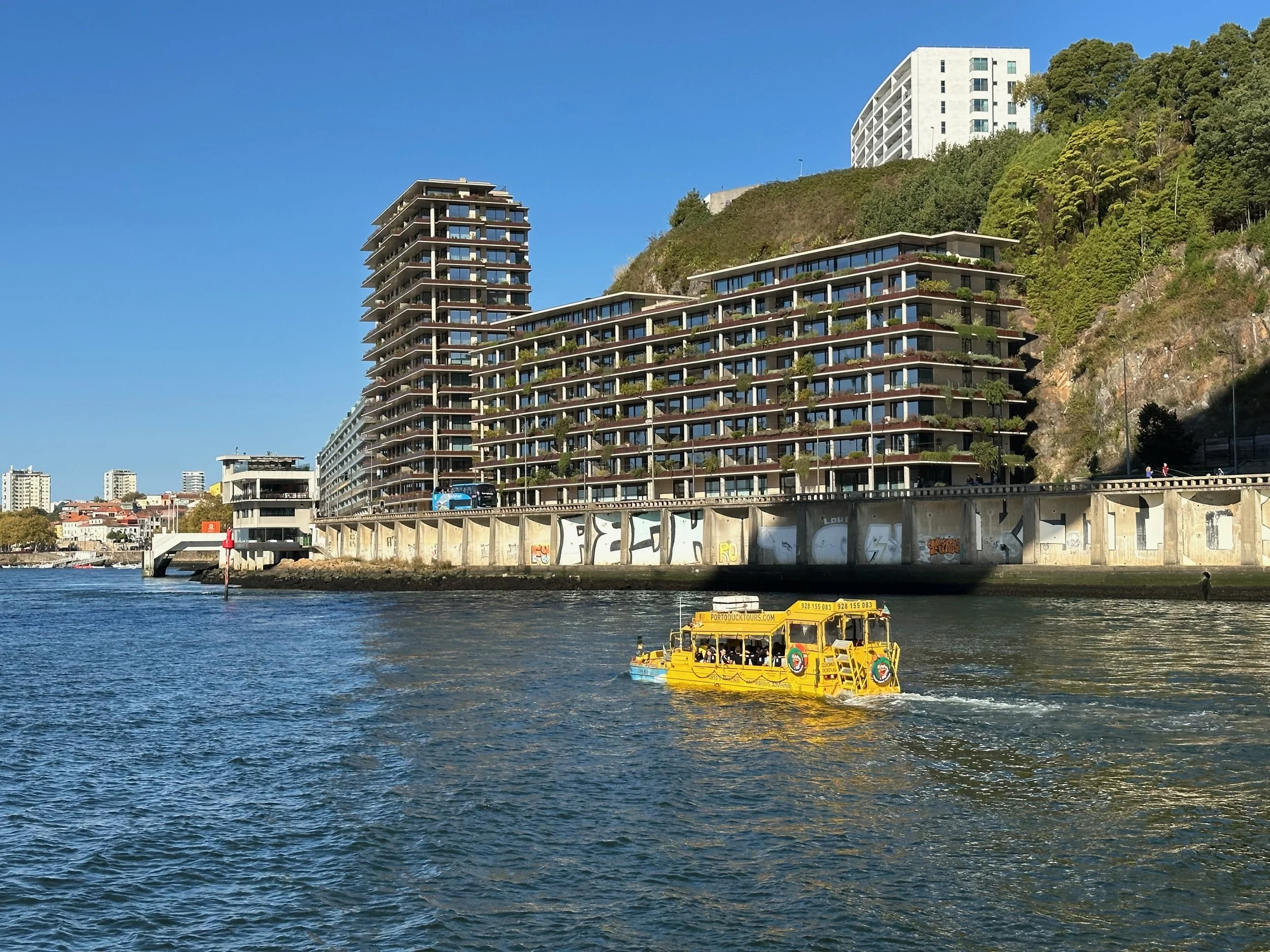
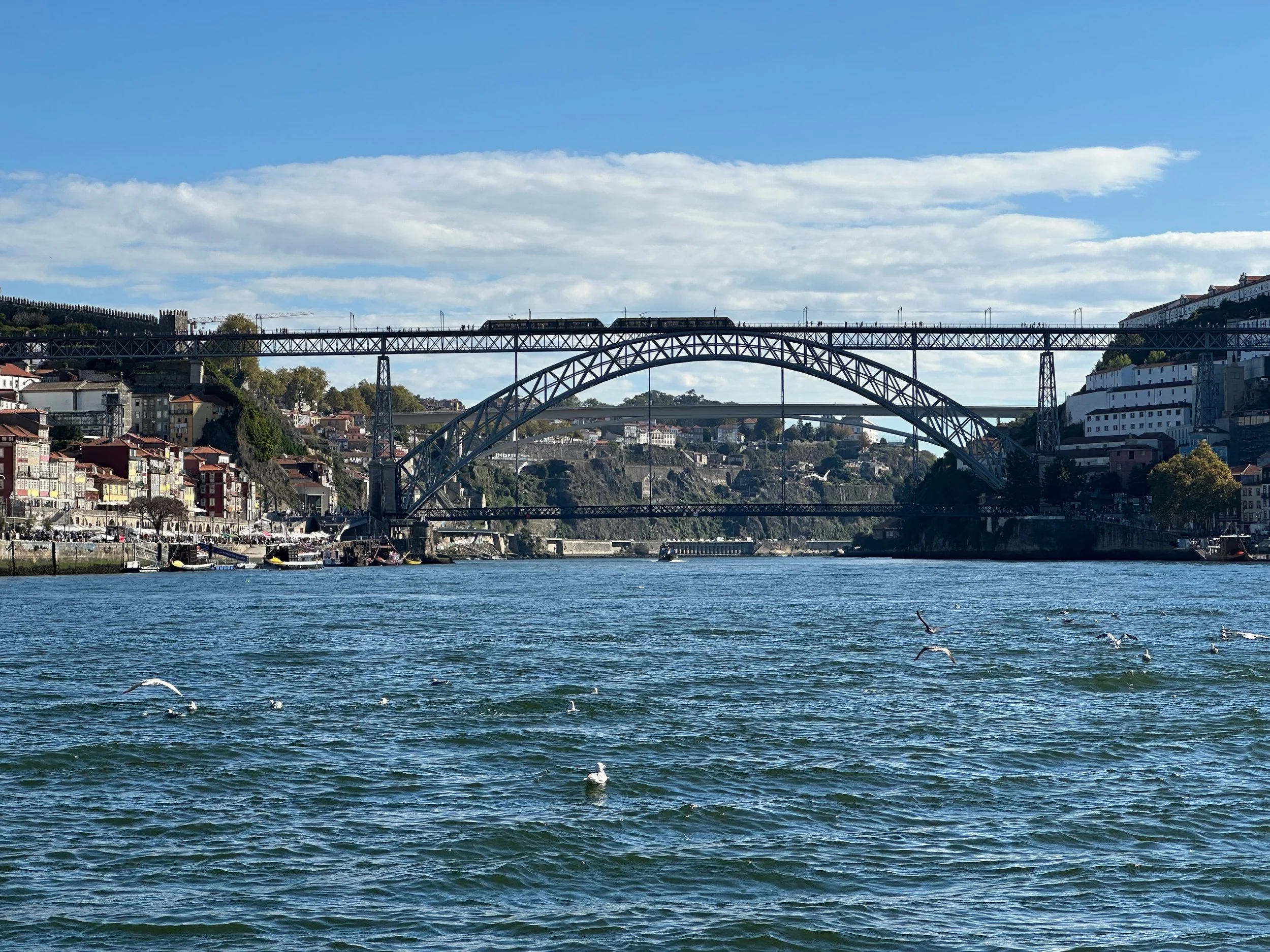
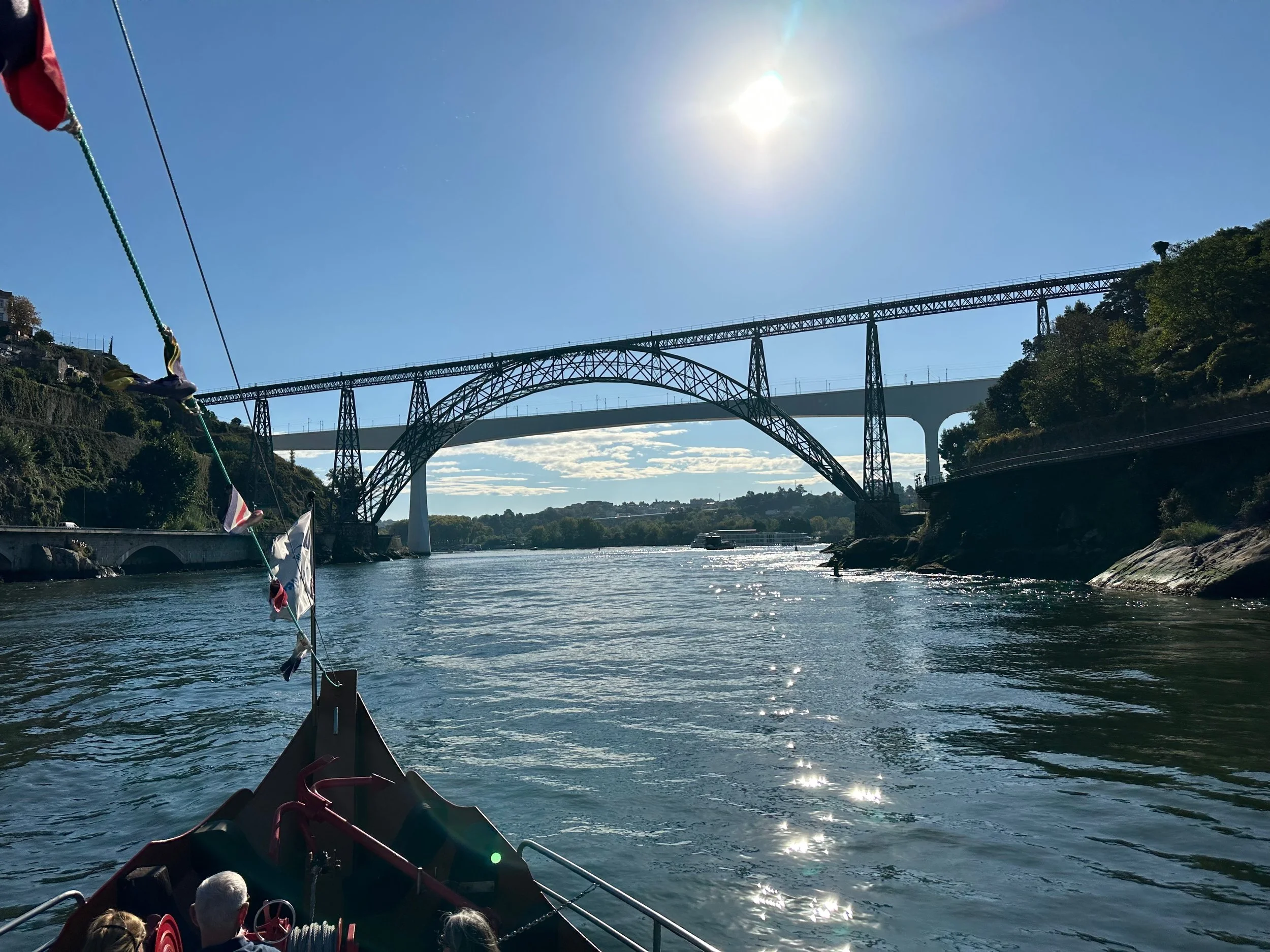
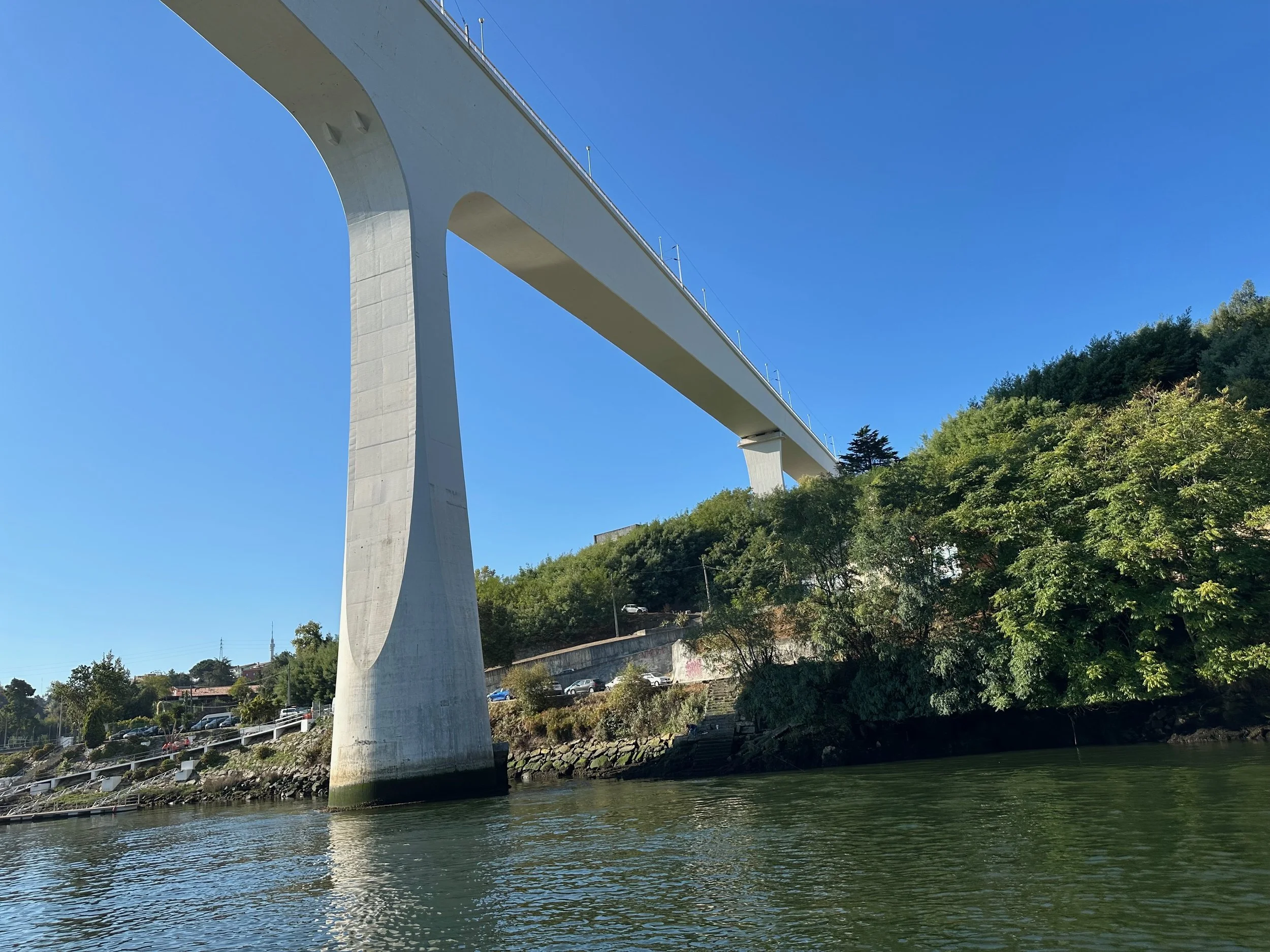
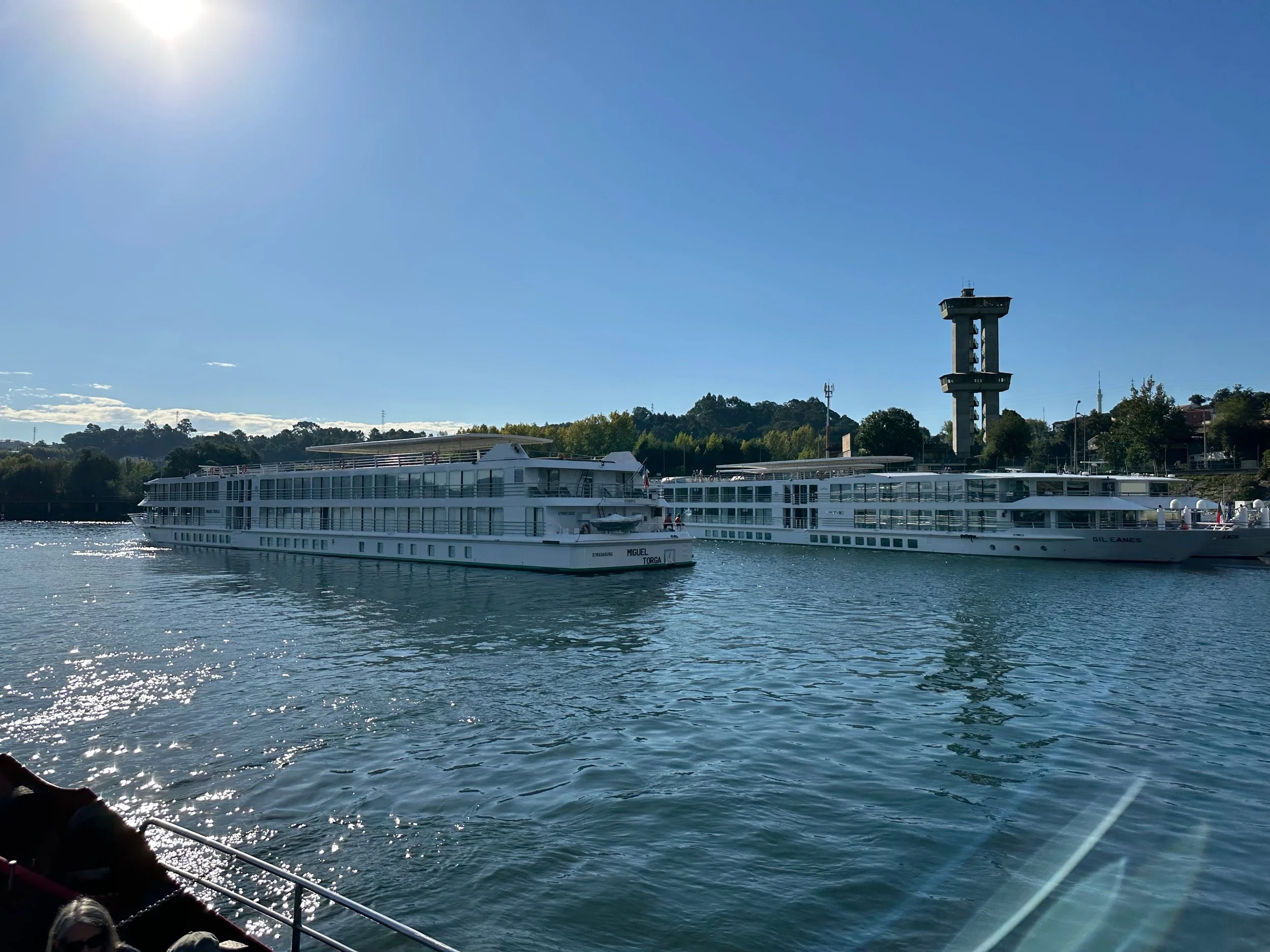
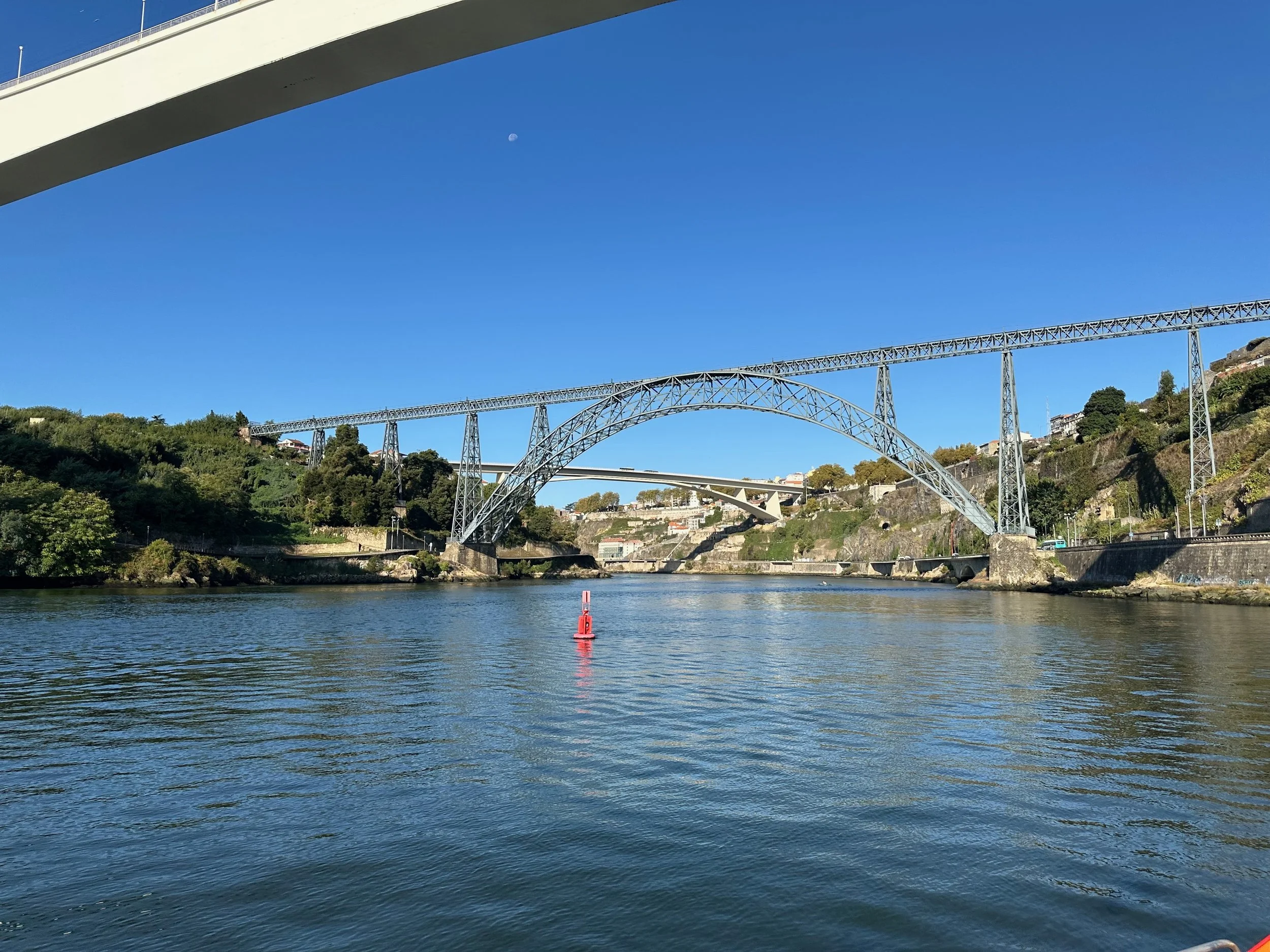
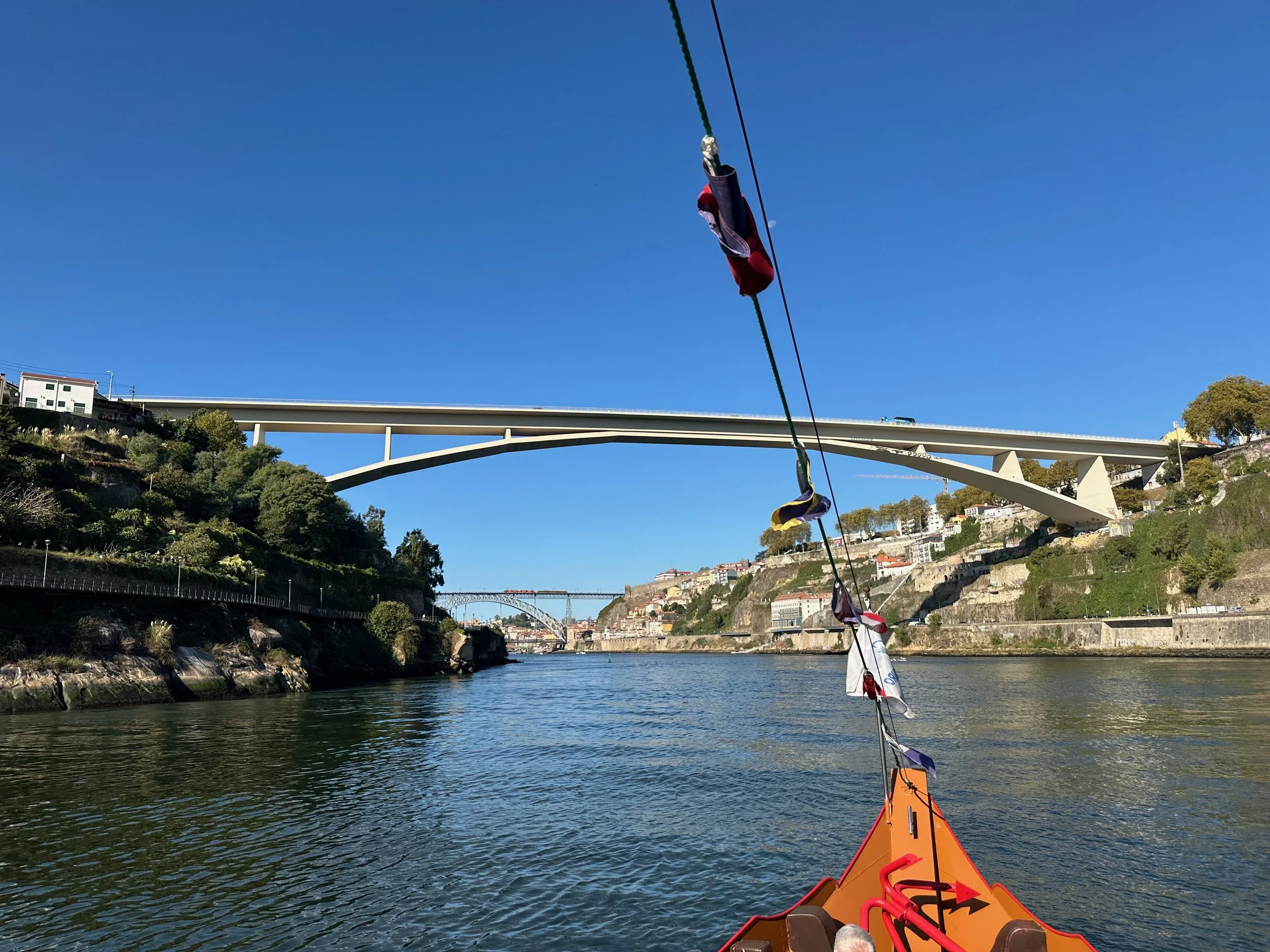
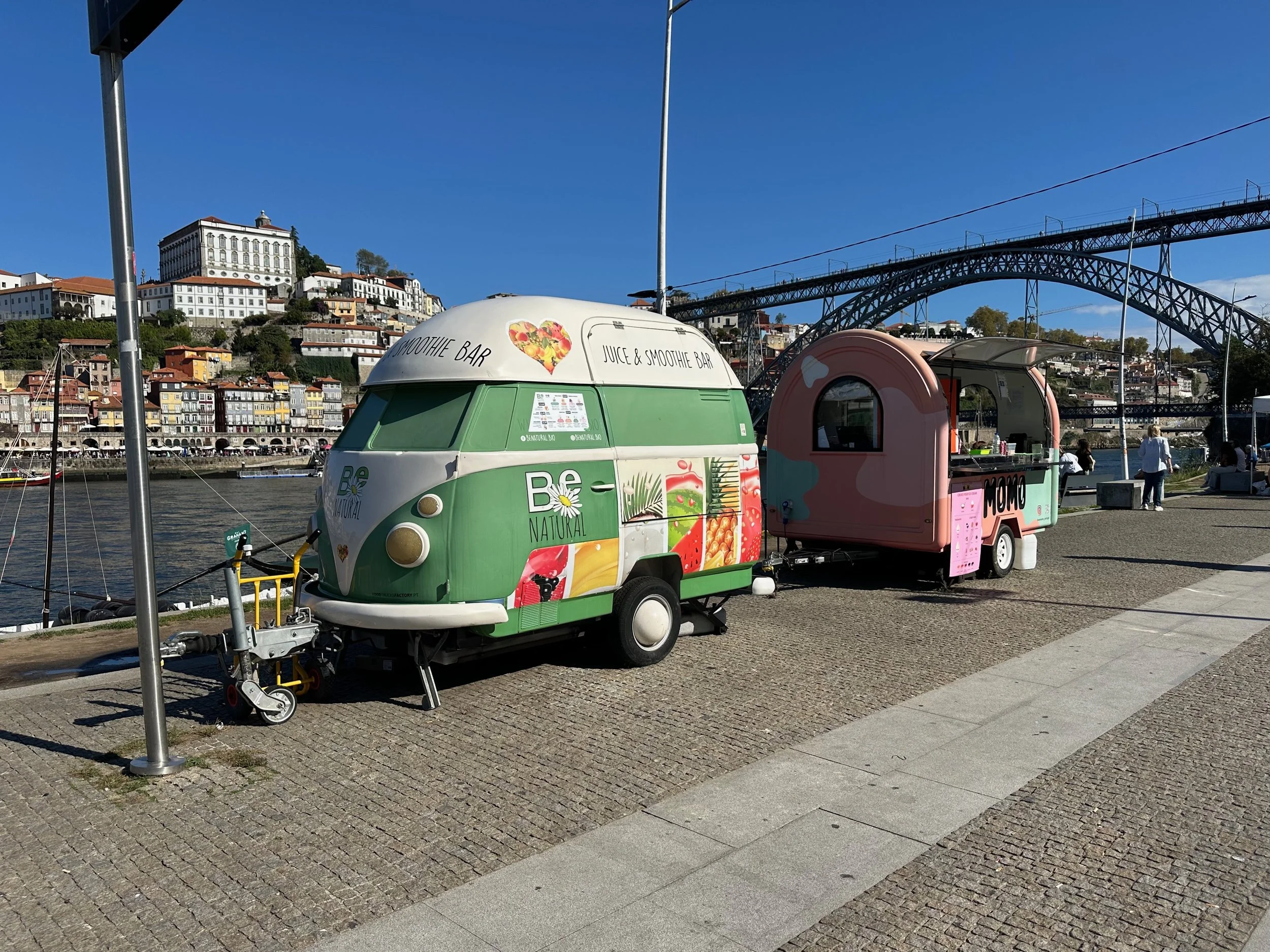
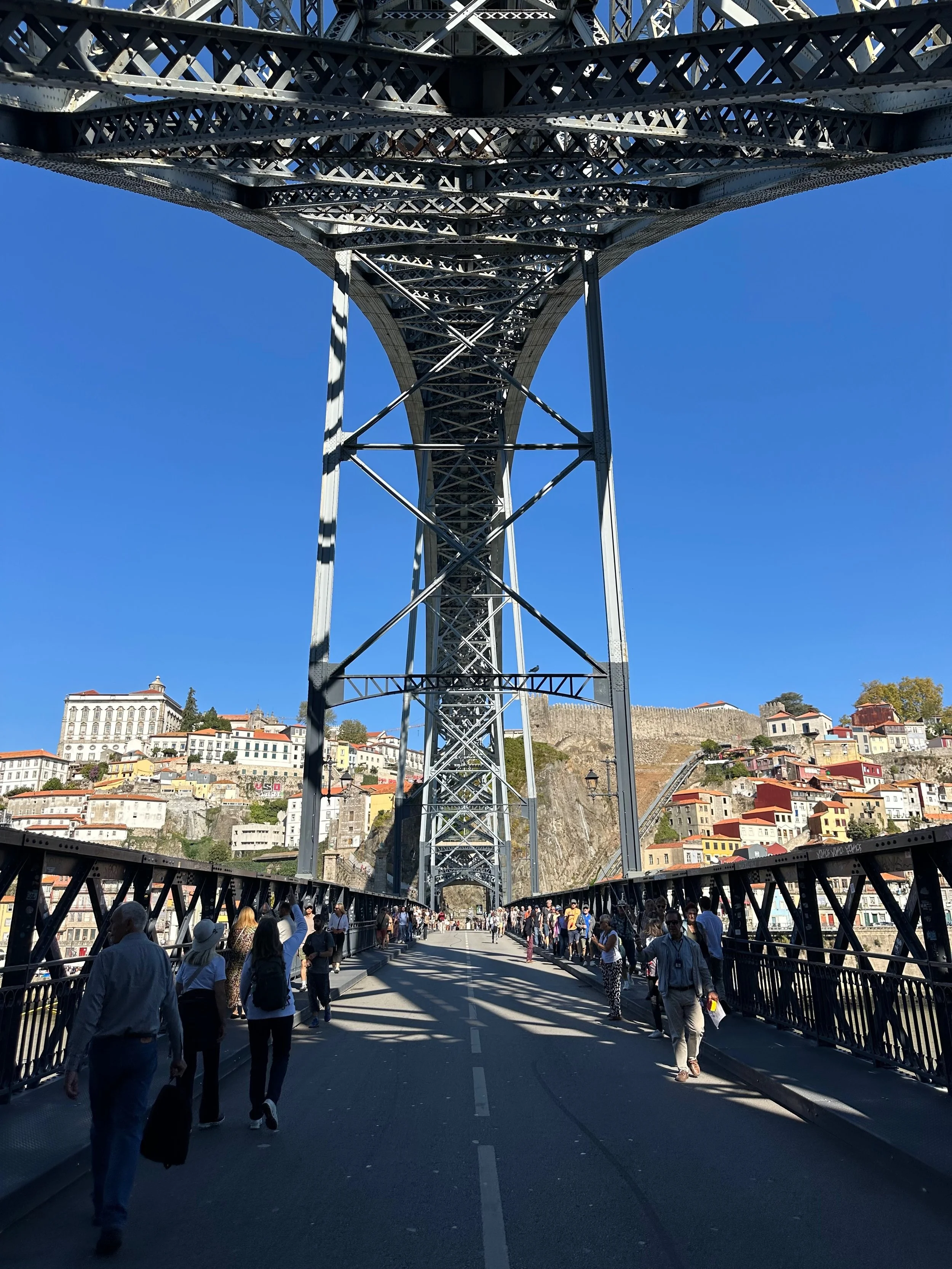
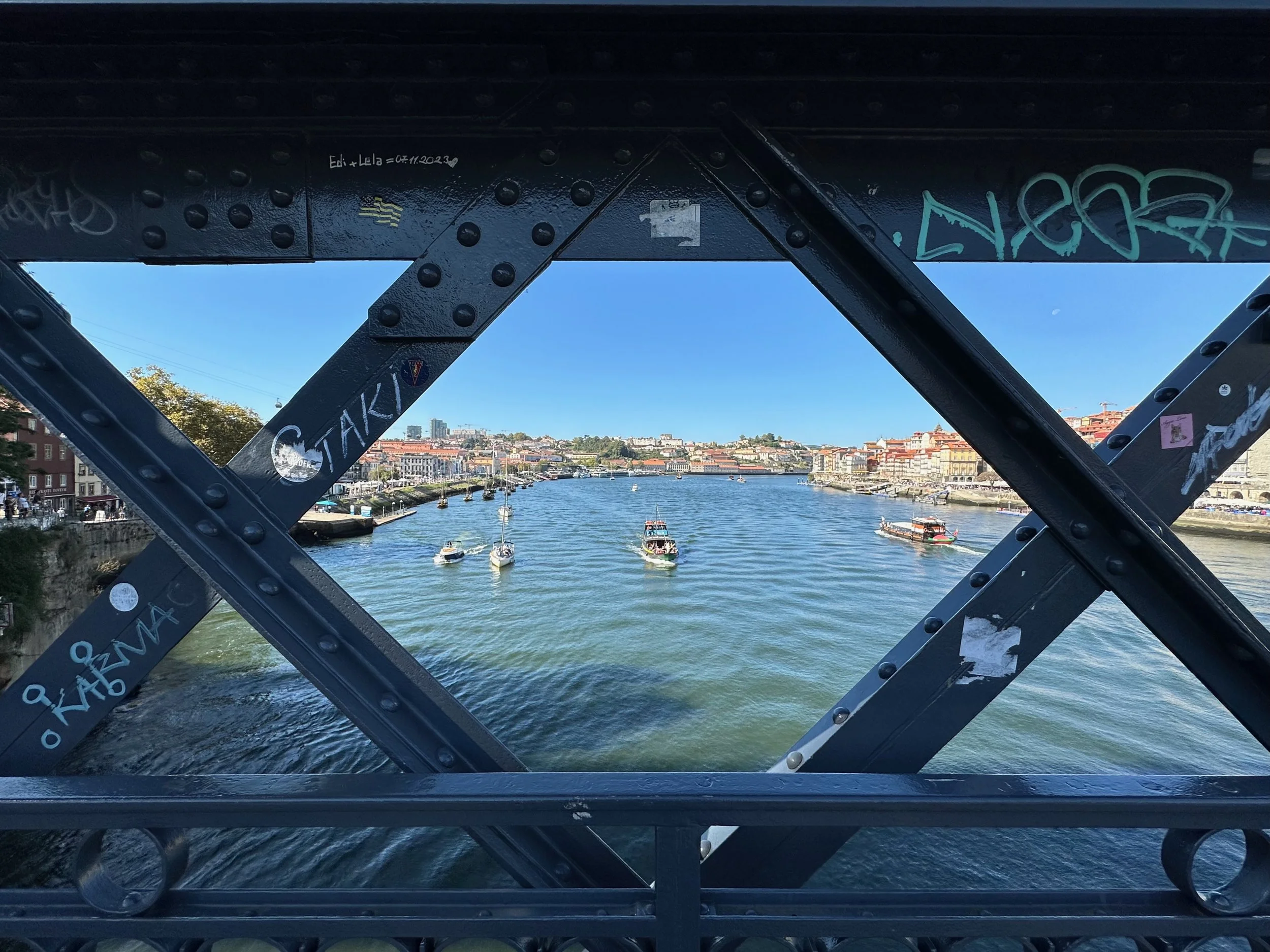
We were taken by bus from the industrial port to the centre of the city, by the river. From there we walked a short distance thought the narrow streets and alleys to reach the obvious tourist centre for the area. Alongside the river, dozens of tour boats of varying sizes lined the banks waiting for hire. After a short wait, we boarded one of the larger boats for our voyage up and down river before being dropped off on the opposite shore. A short walk back over the amazing metal span of the Dom Luis I Bridge got us back to our starting point. Braving the long line of tents operated by the souvenir sellers, we eventually made it to the rendezvous spot for the shuttle bus back to the ship.

Vigo, Spain
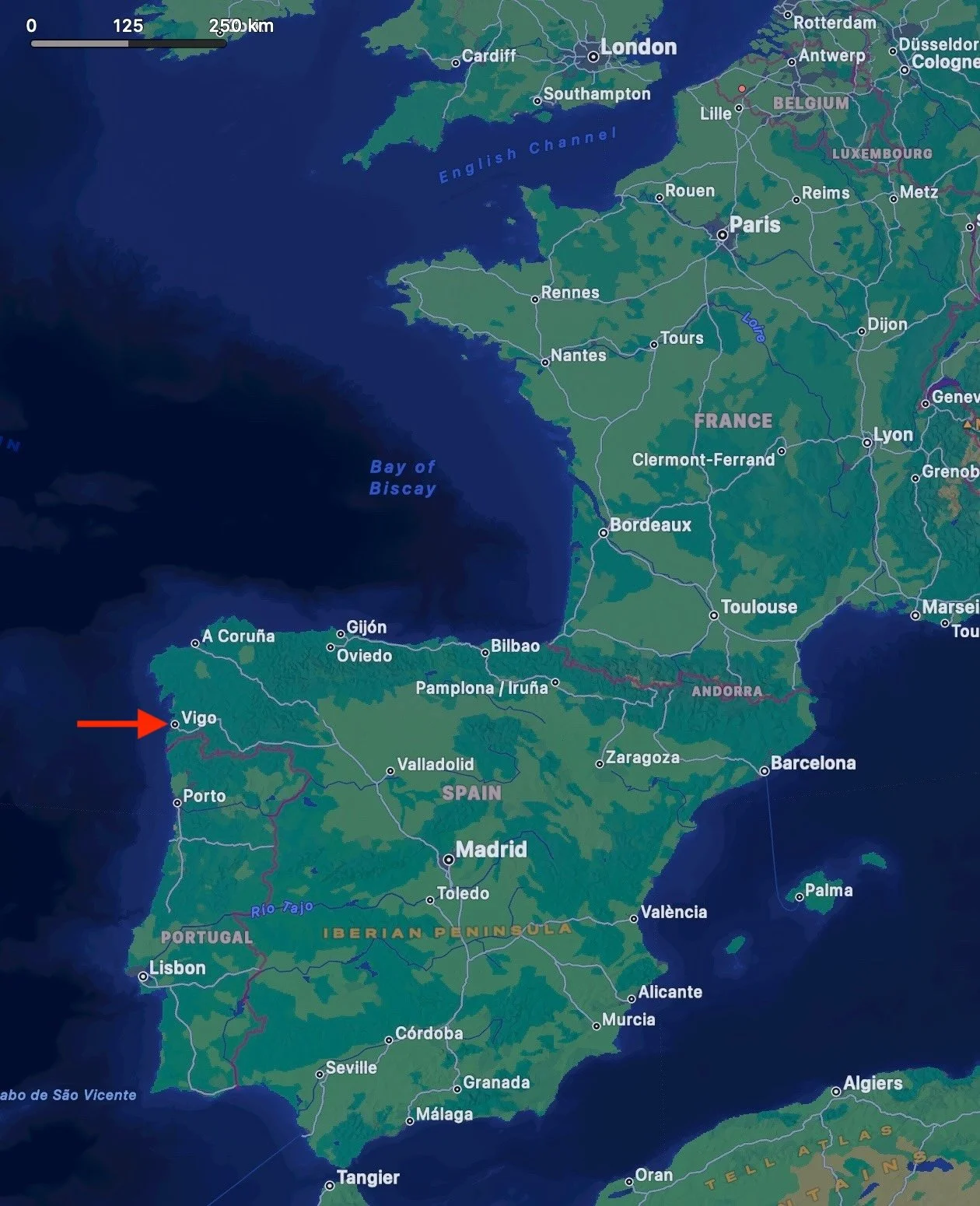
Our first stop in Spain was Vigo, which is located just above Portugal in an odd part of Spain that juts out over the top Portugal. It’s one of those border situations that makes you wonder why the border of Portugal didn’t just go straight up to the northern coast.
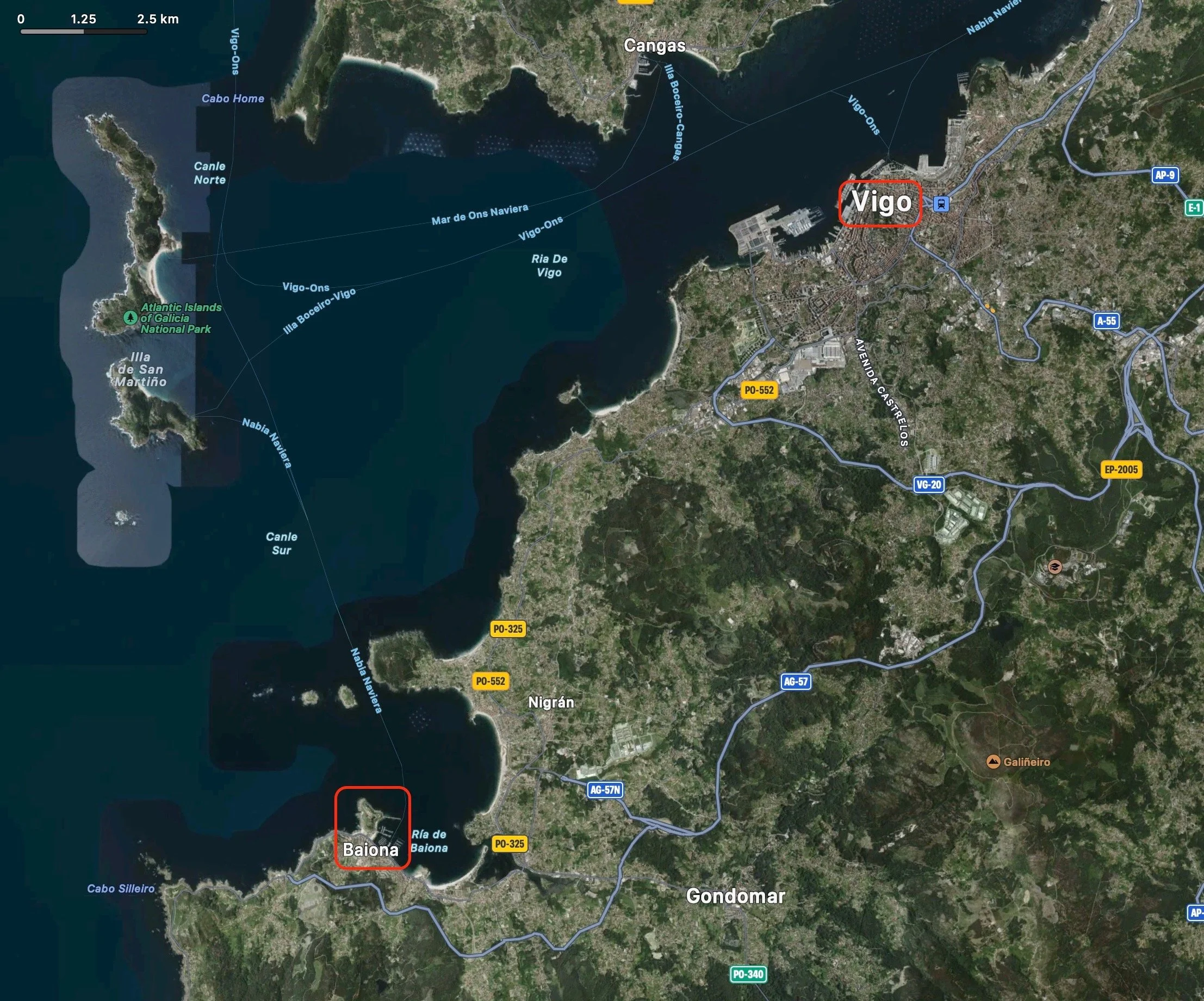
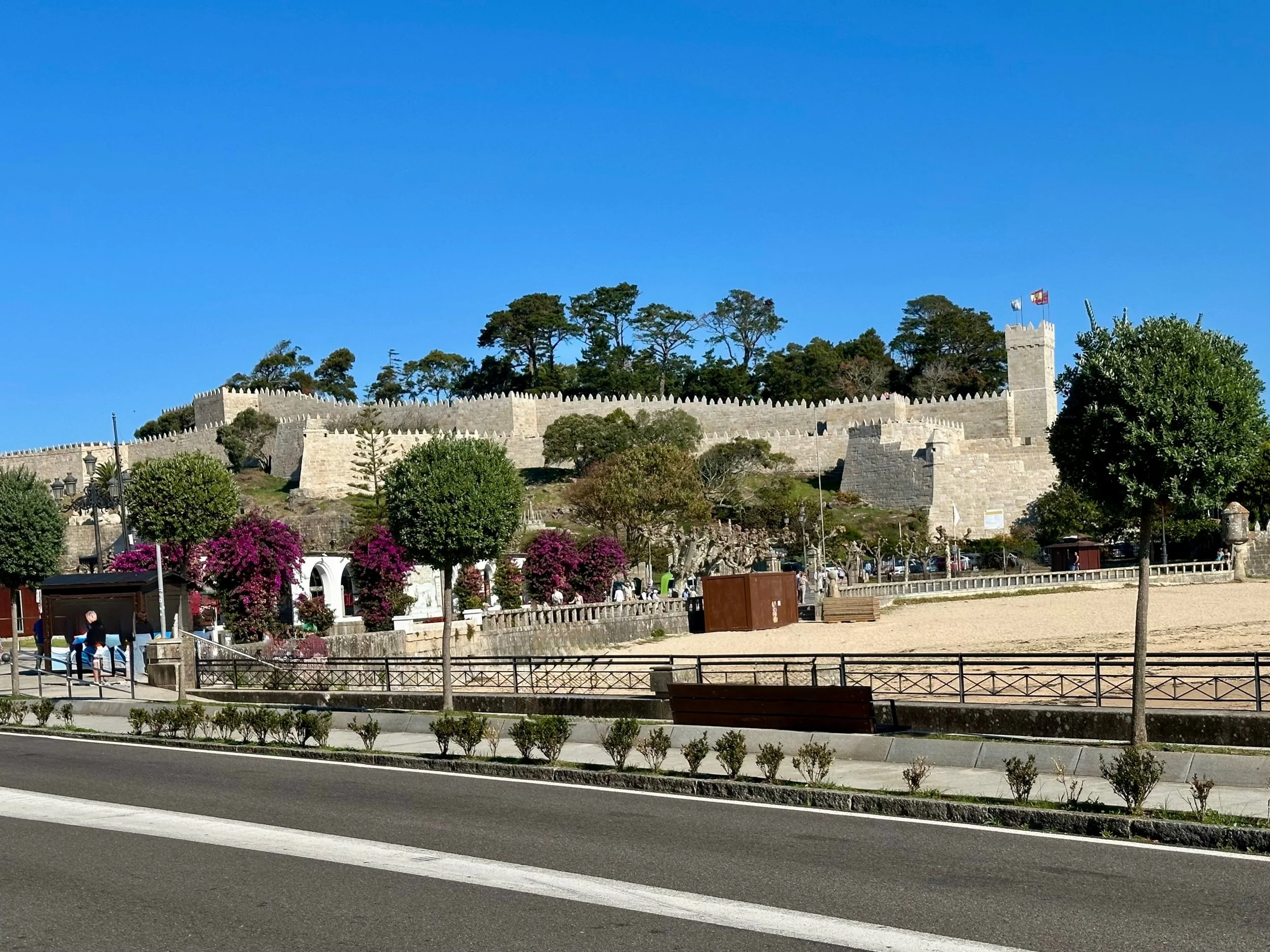
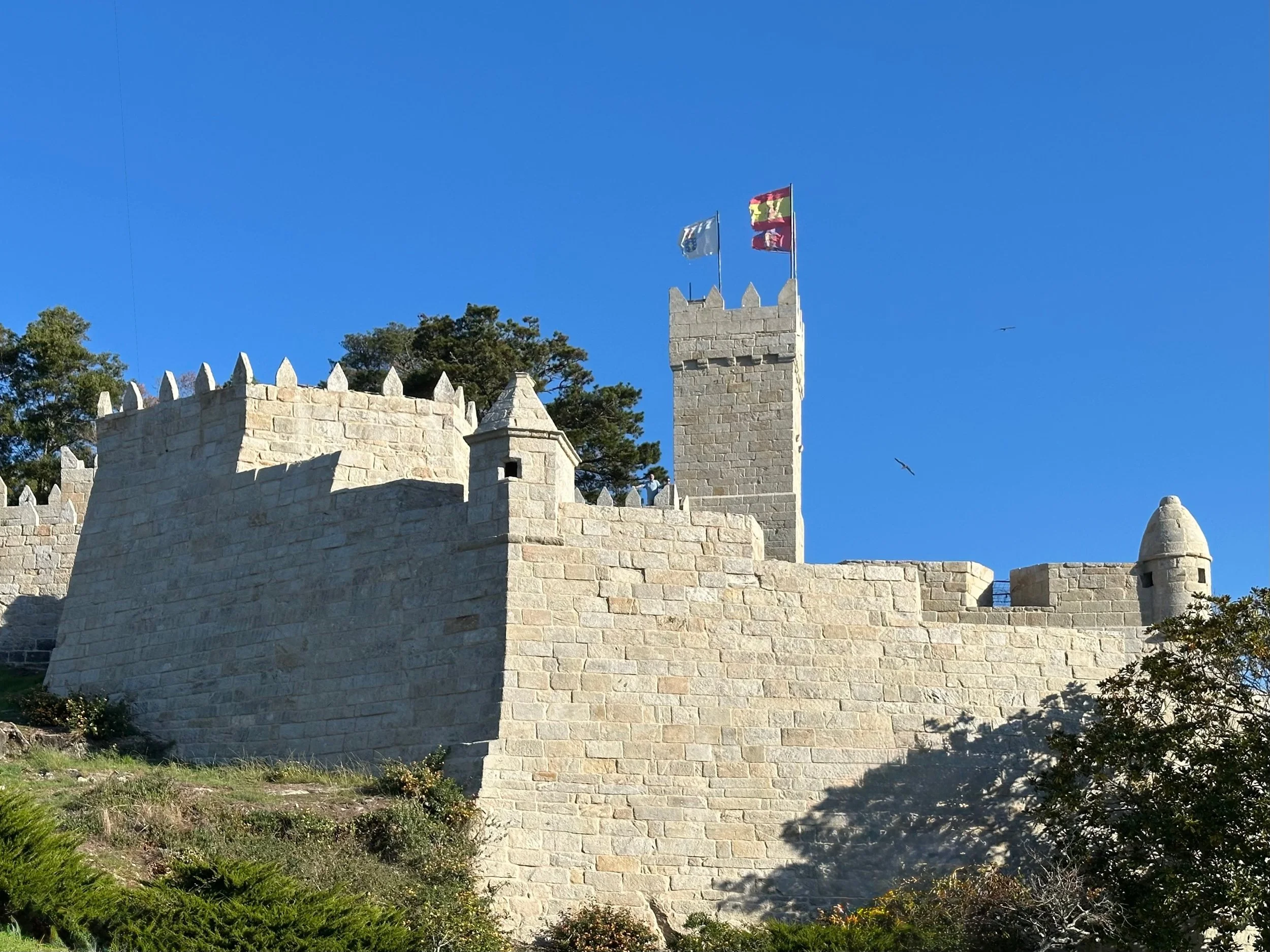
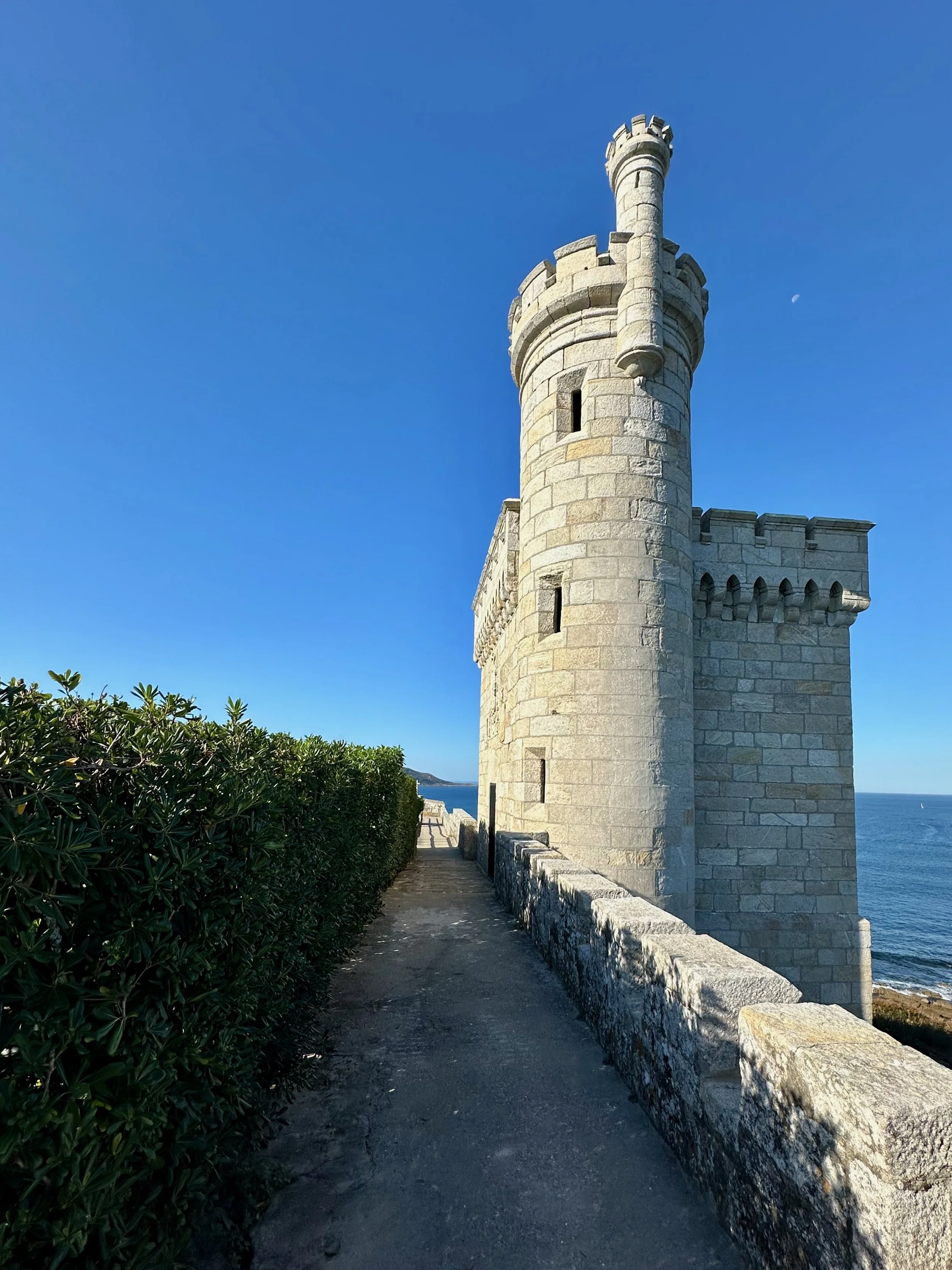
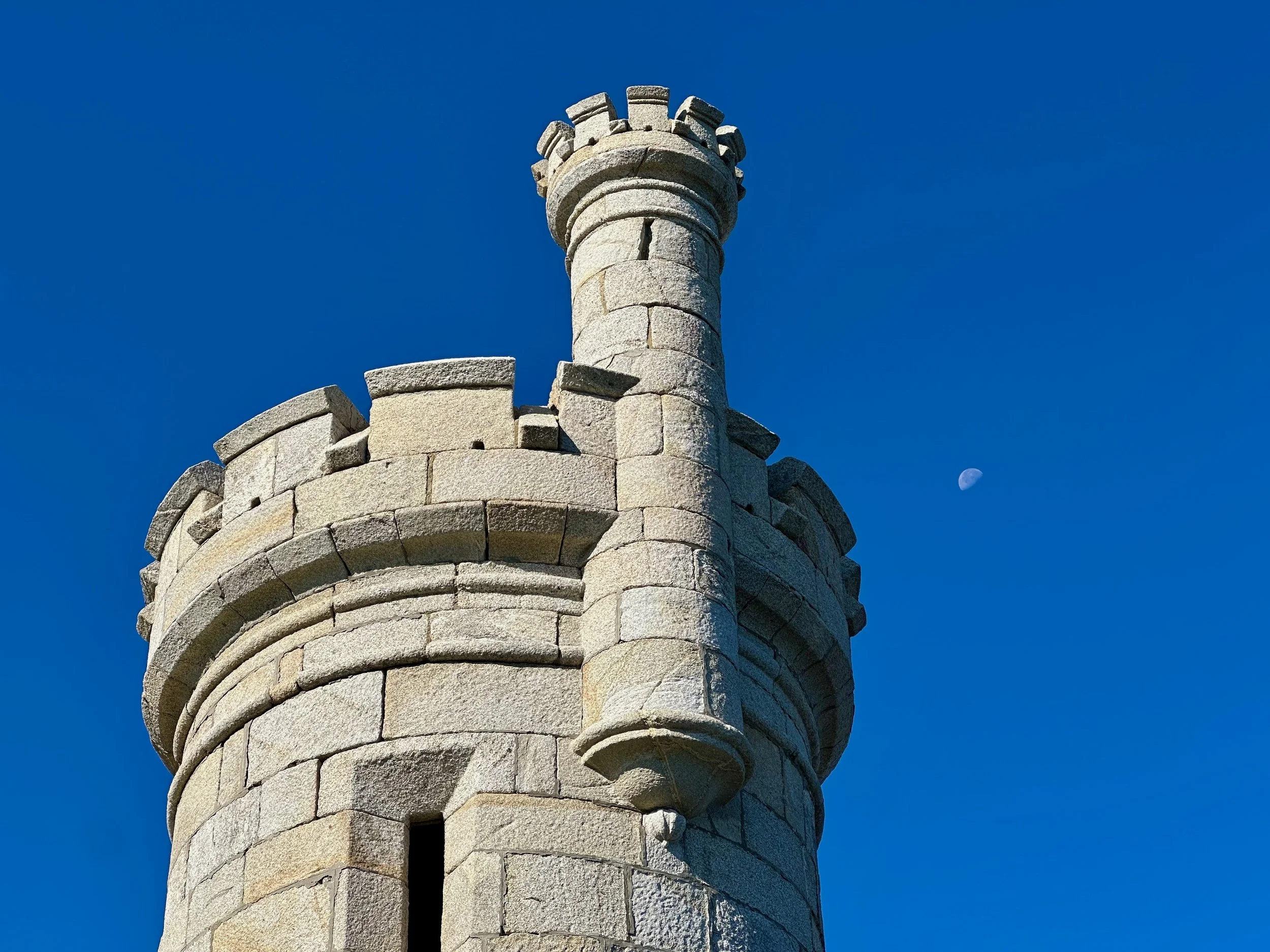
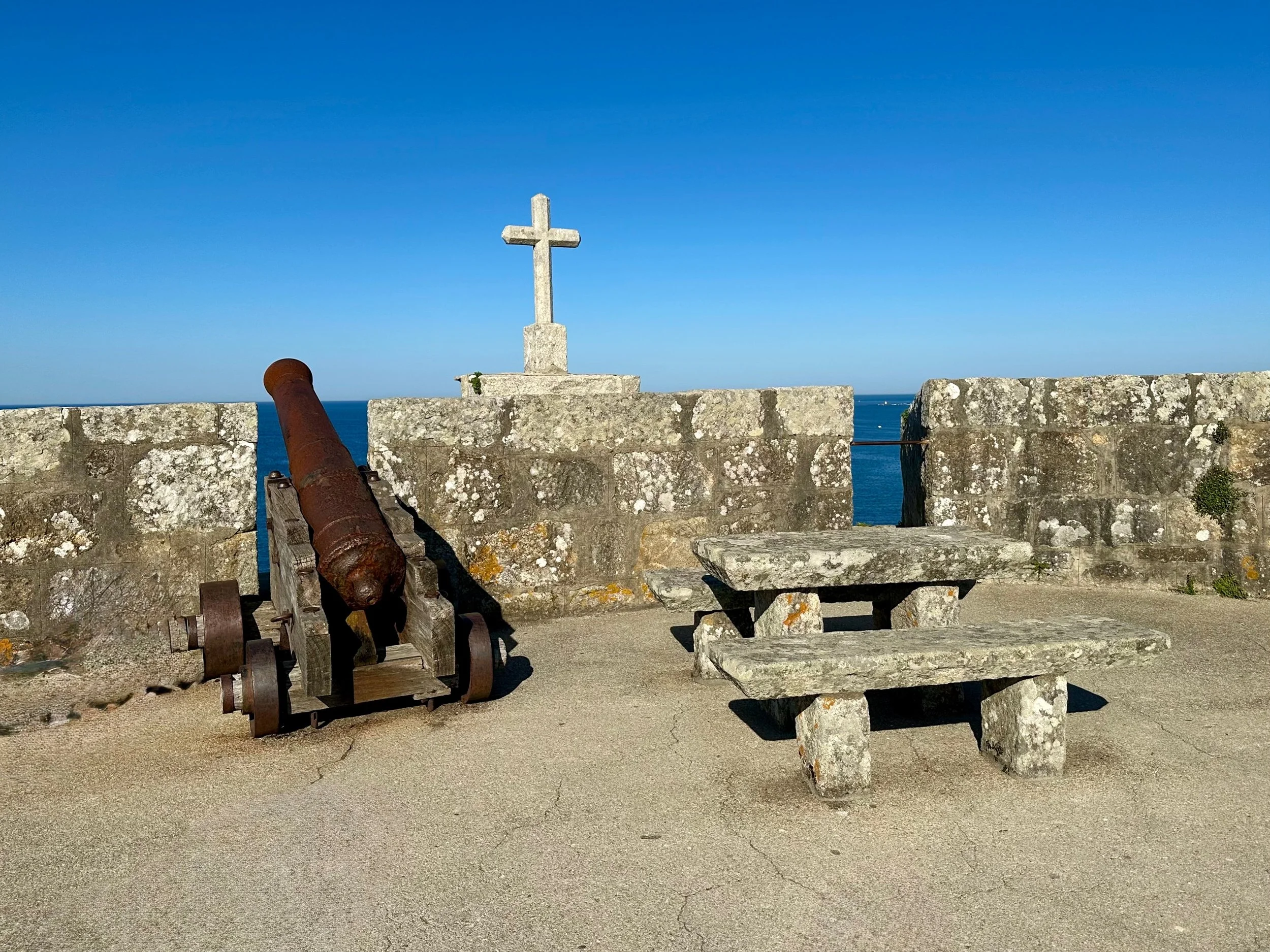
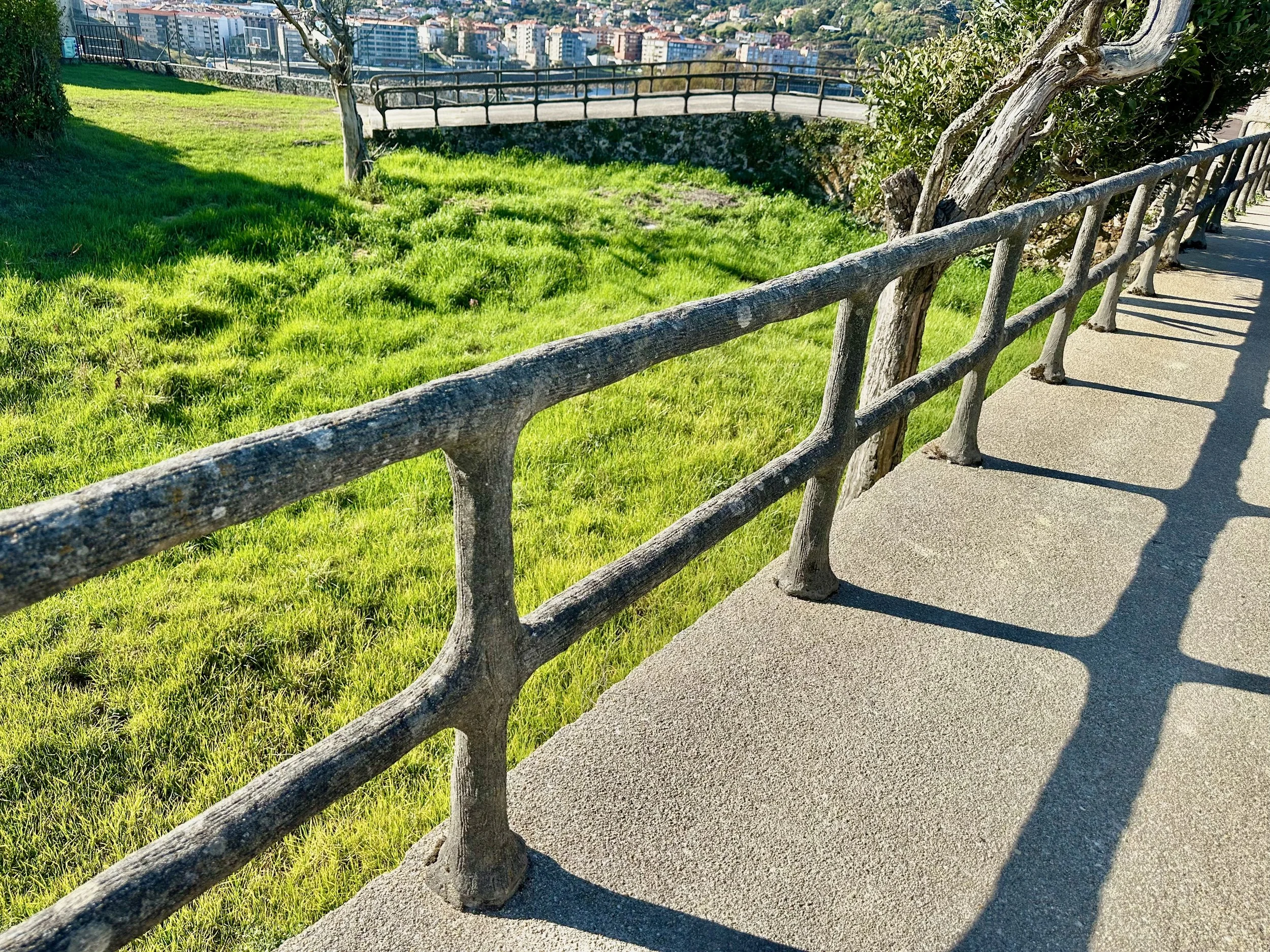
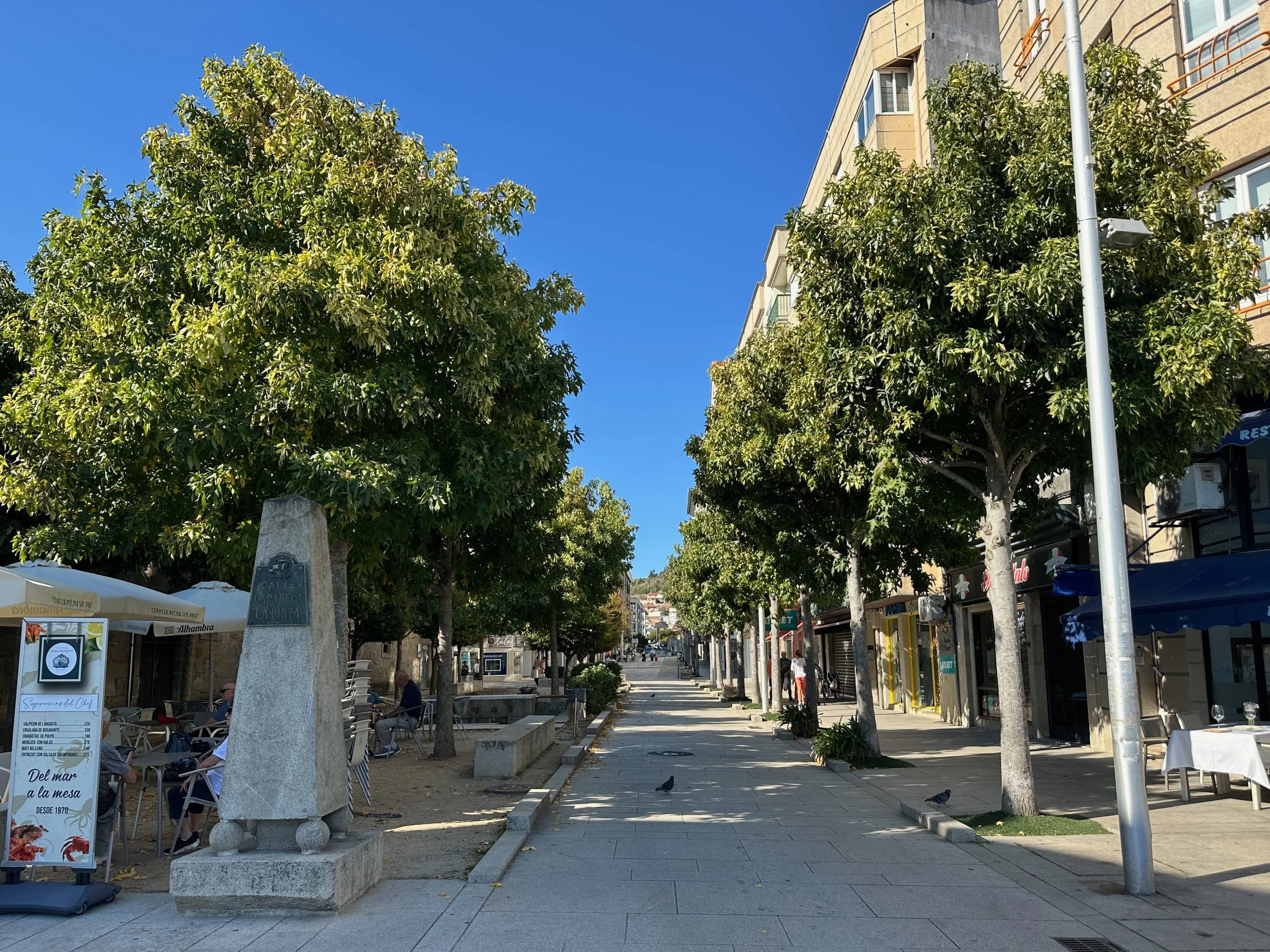
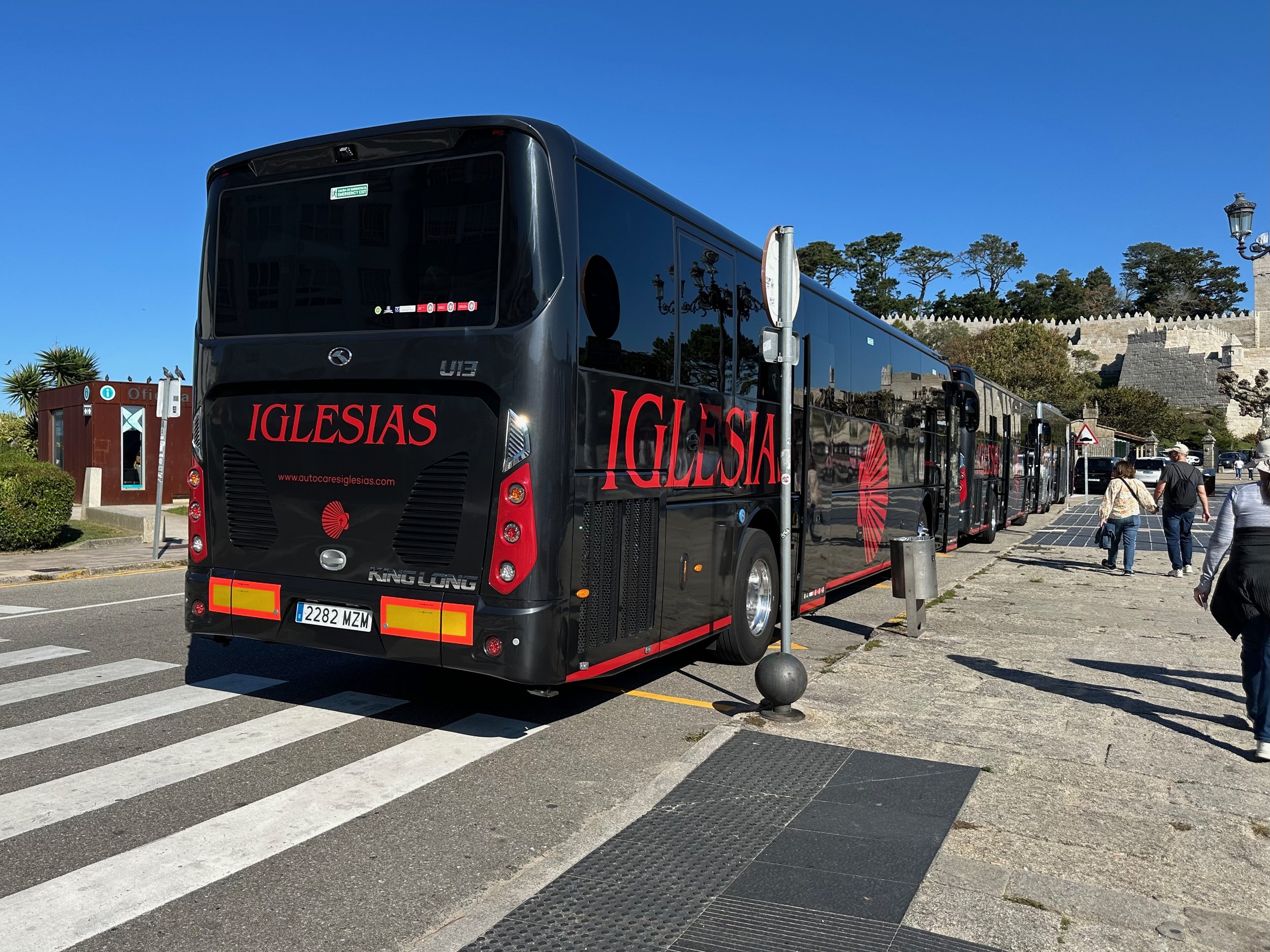
Like one of our previous stops, we only docked in Vigo, but went by bus to another town known as Baiona. It’s where an old fort is located that helped protect the coastline back in the day. The Fortaleza De Monterreal.
The site occupies the entire 18 acre Monte Boi peninsula, and is known to be a walled enclosure for over 2000 years. The current structure was fashioned between the 11th and 17th century. It has been designated as a National Historic Artistic Monument and Historic Artistic Ensemble of Interest. It’s open year round to the public and currently houses the Parador, a high end hotel that occupies the preserved walls and towers.
Close to the coast were a few islands similar to the gulf islands of British Columbia.
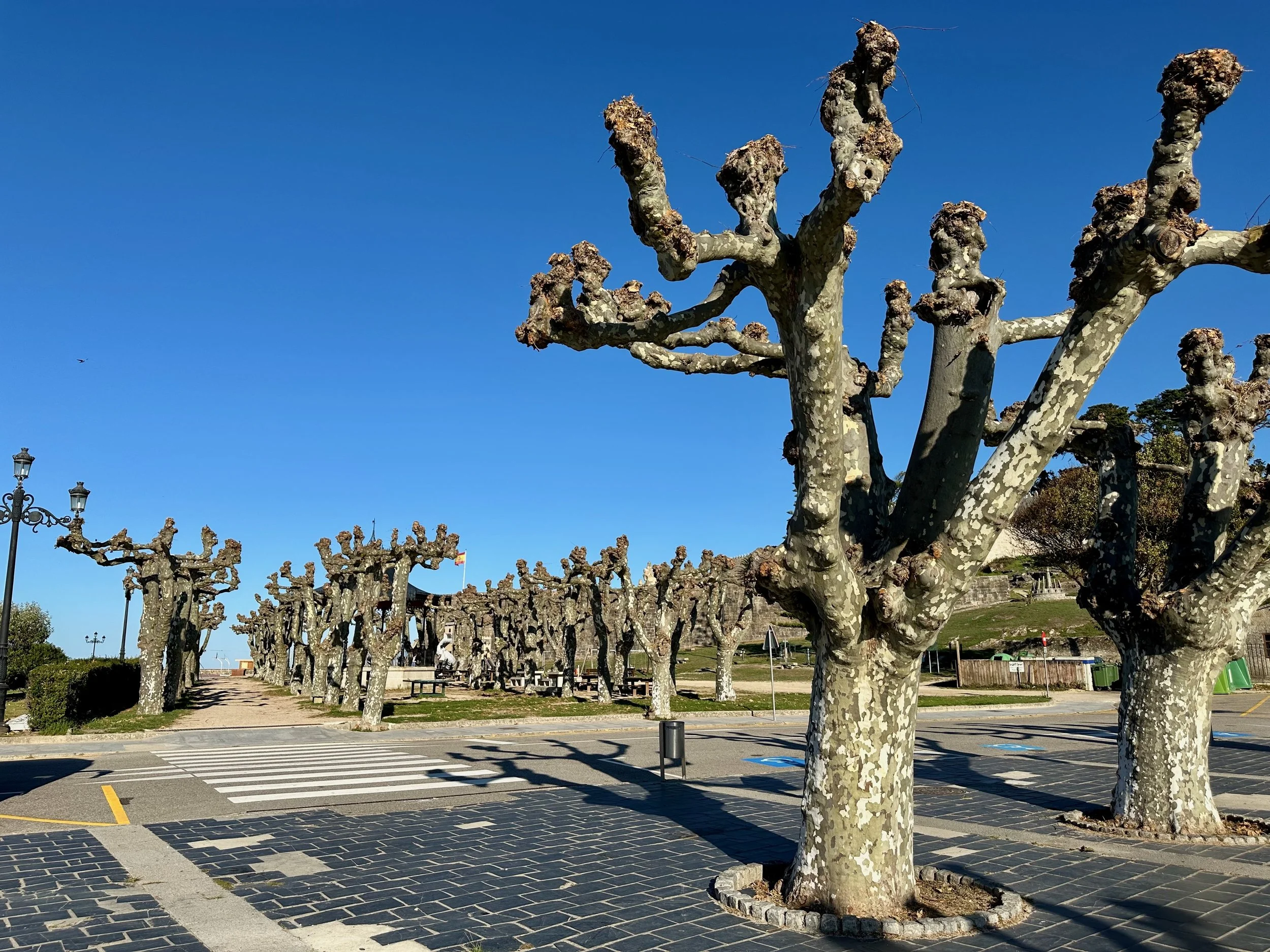
We had a few hours to wander around the grounds and visit the part of Baiona that was close to the fort. It’s a holiday town with a large marina and lovely beach area. However, on this bank holiday Sunday most all of the shops were closed and locals were only starting to venture out by the time we were getting back on the bus to leave. So much for our tourist dollars helping the local economy.
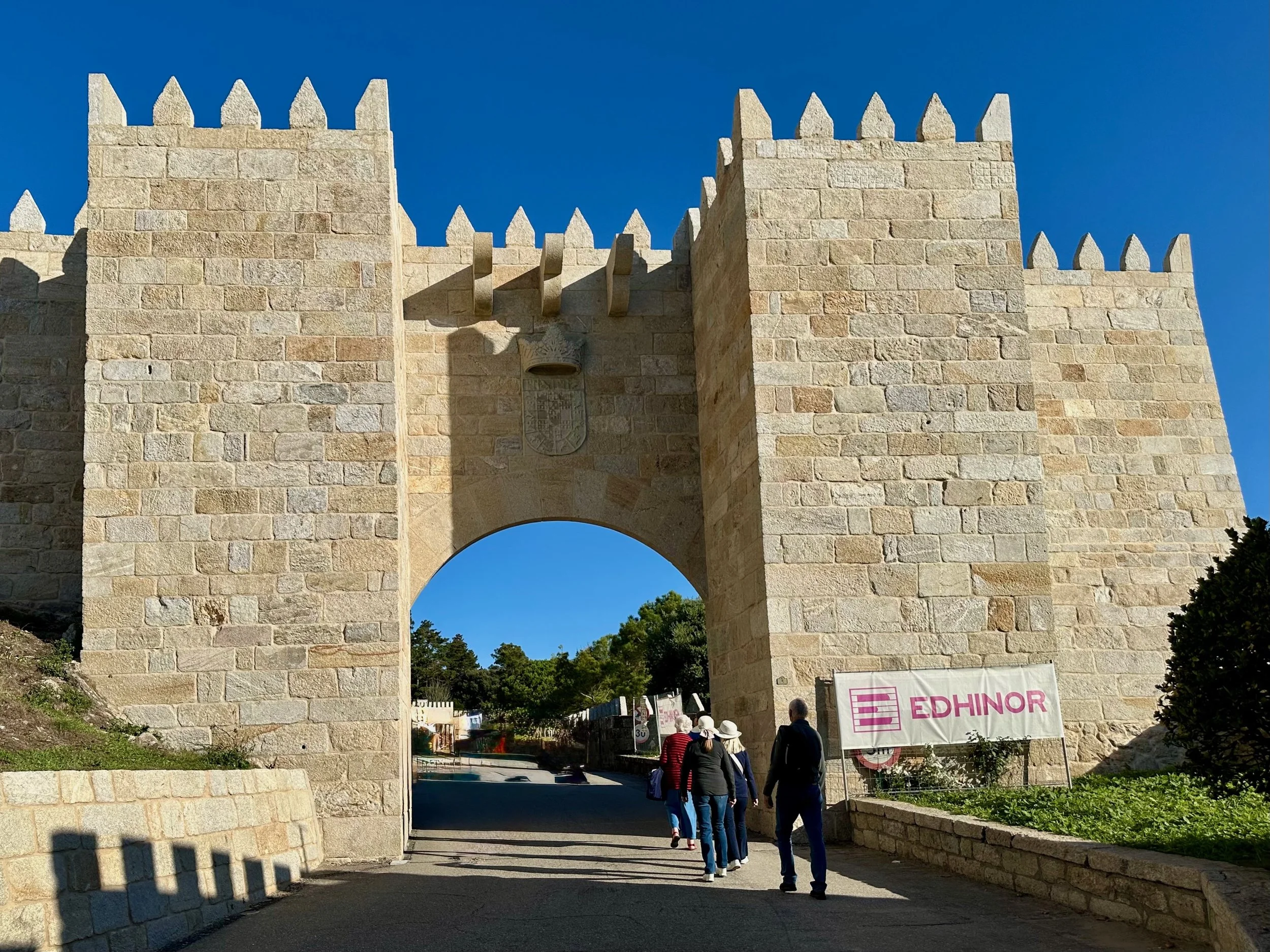
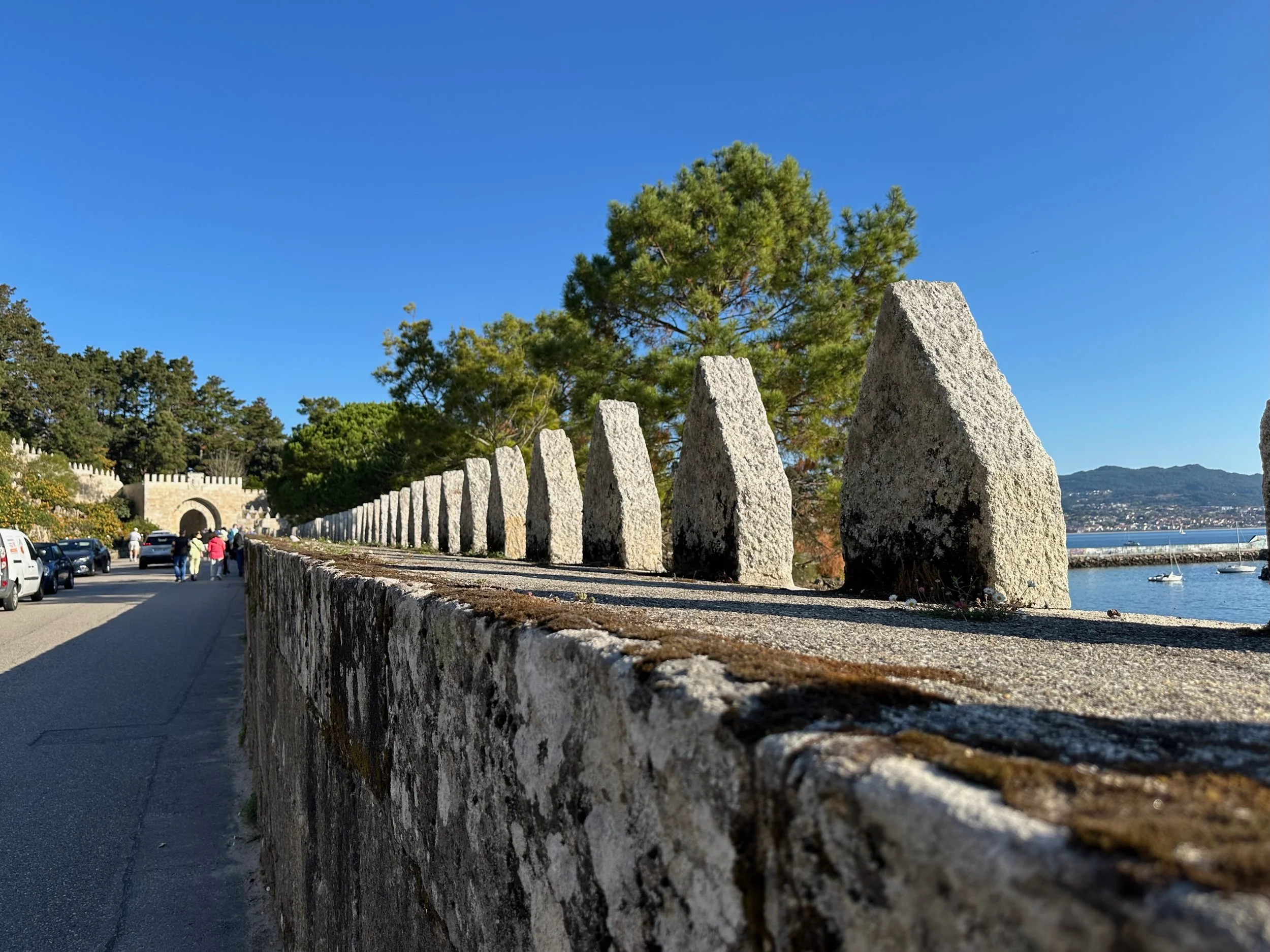
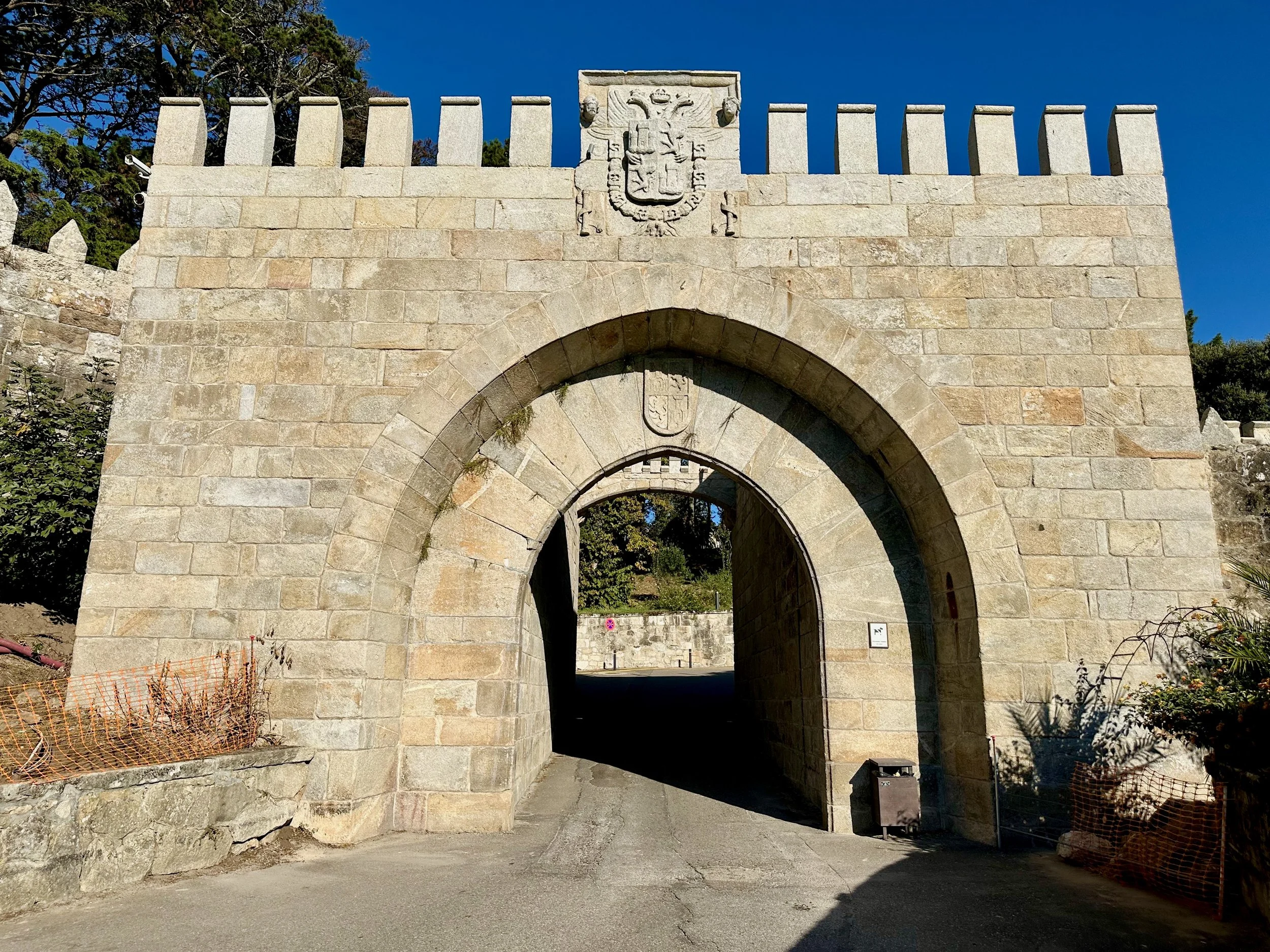
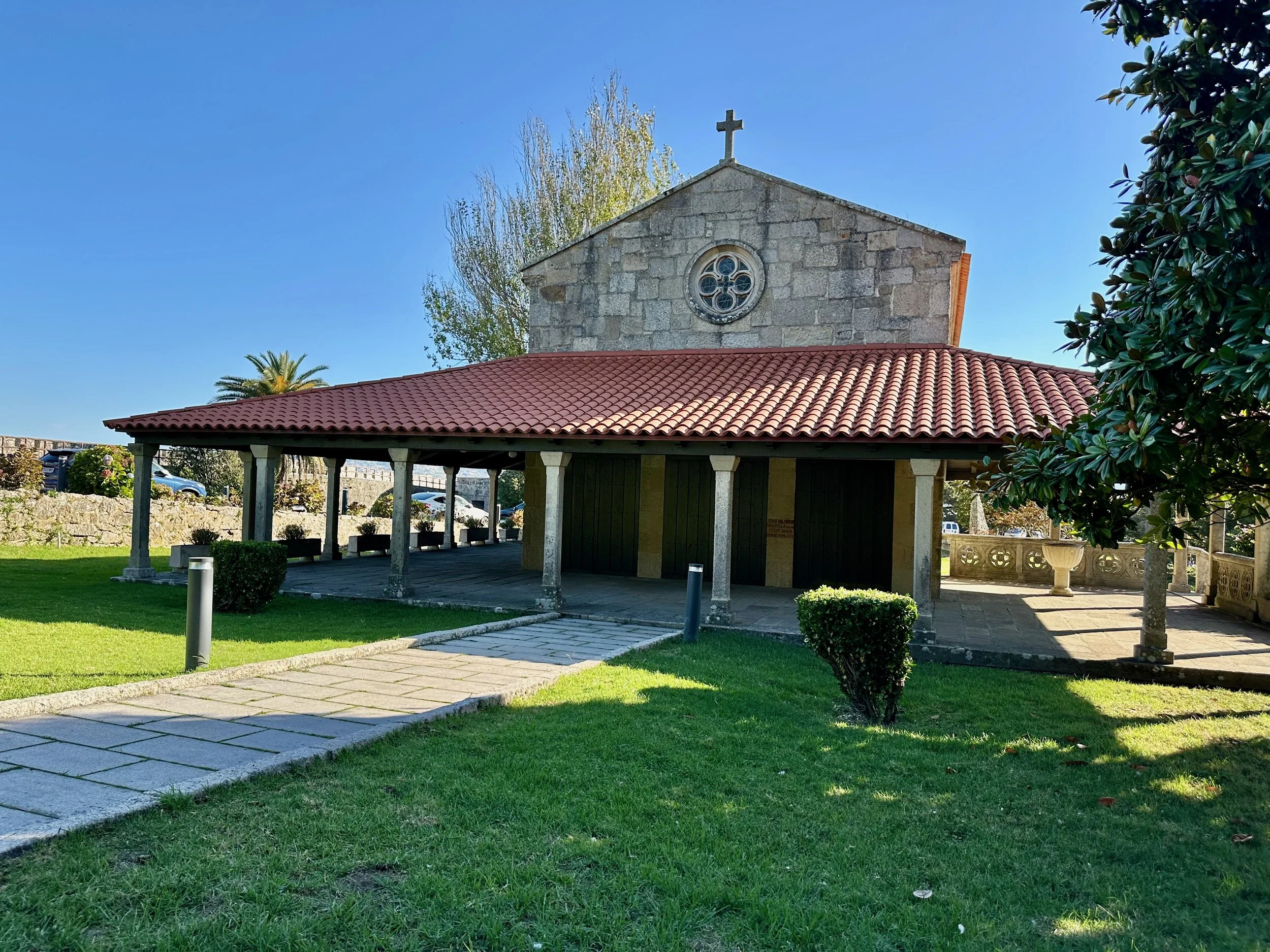
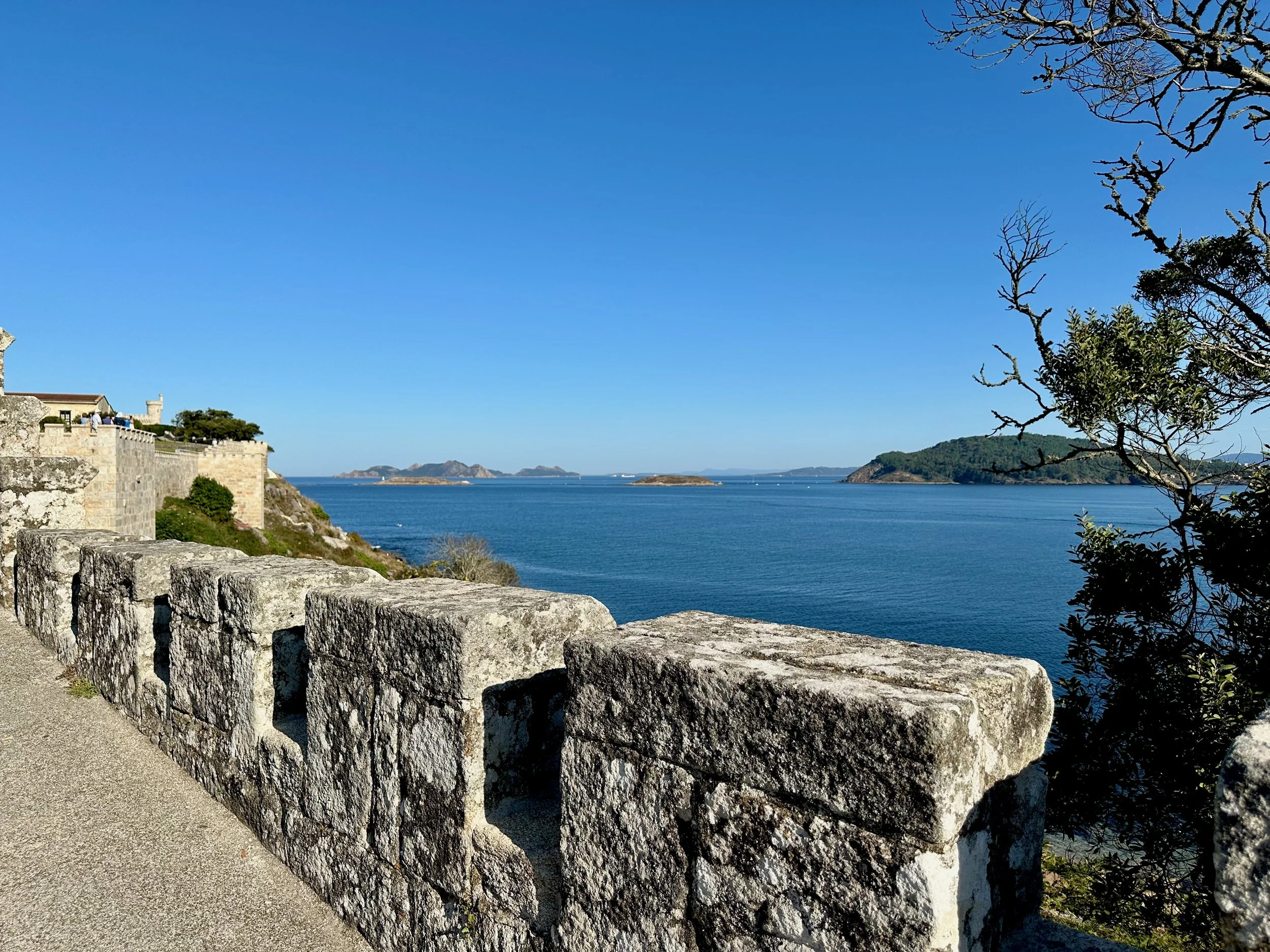
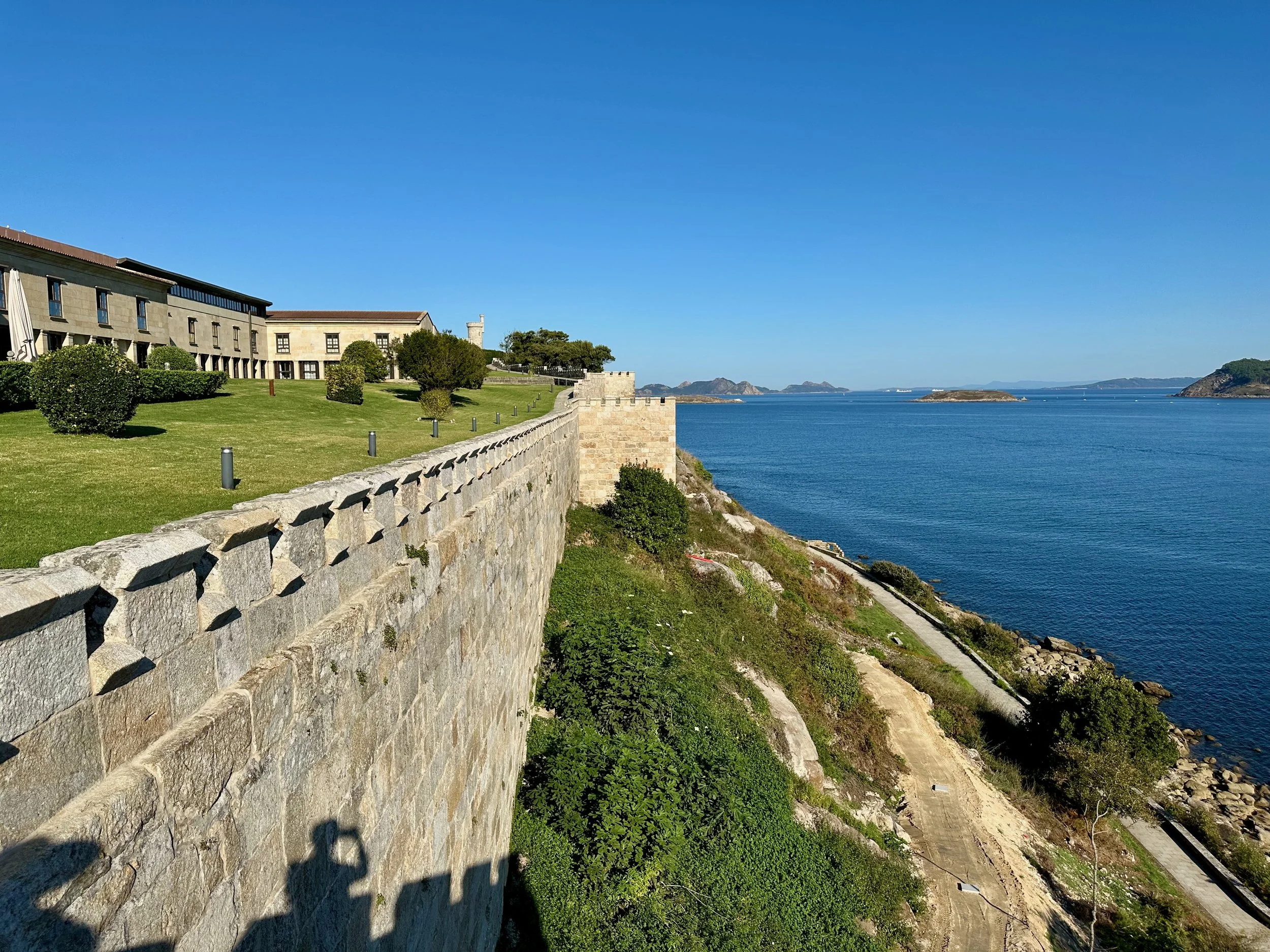
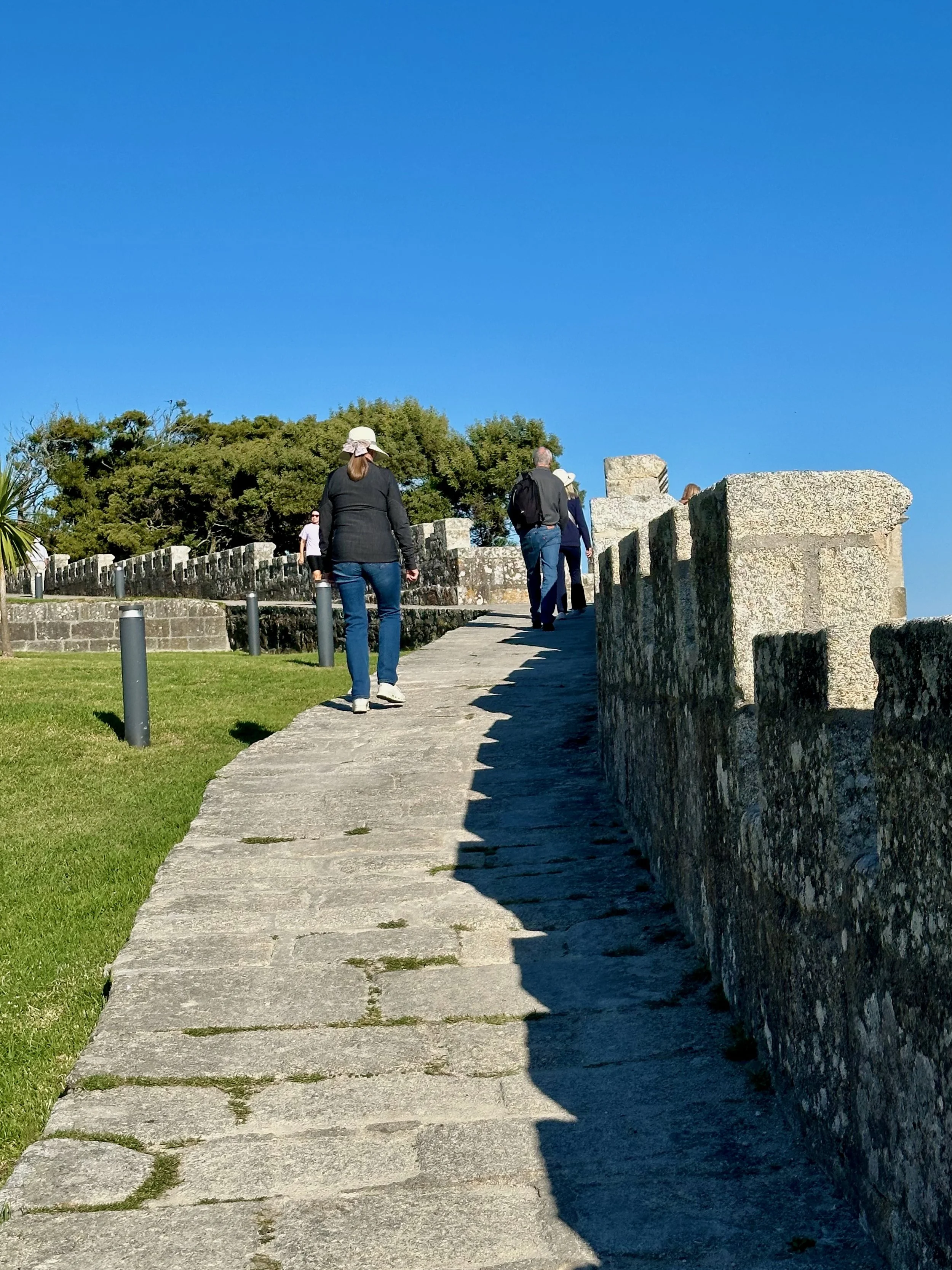
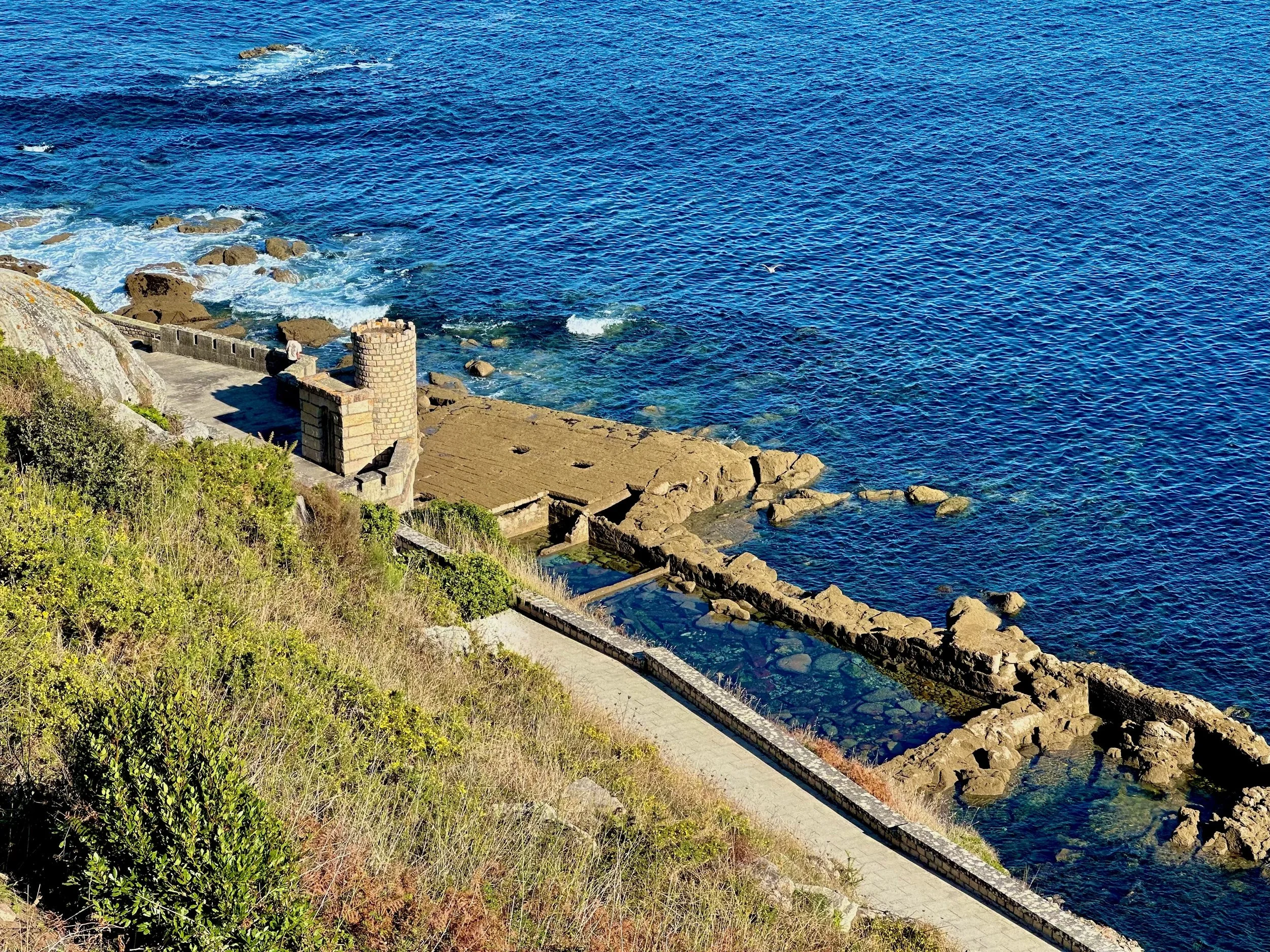
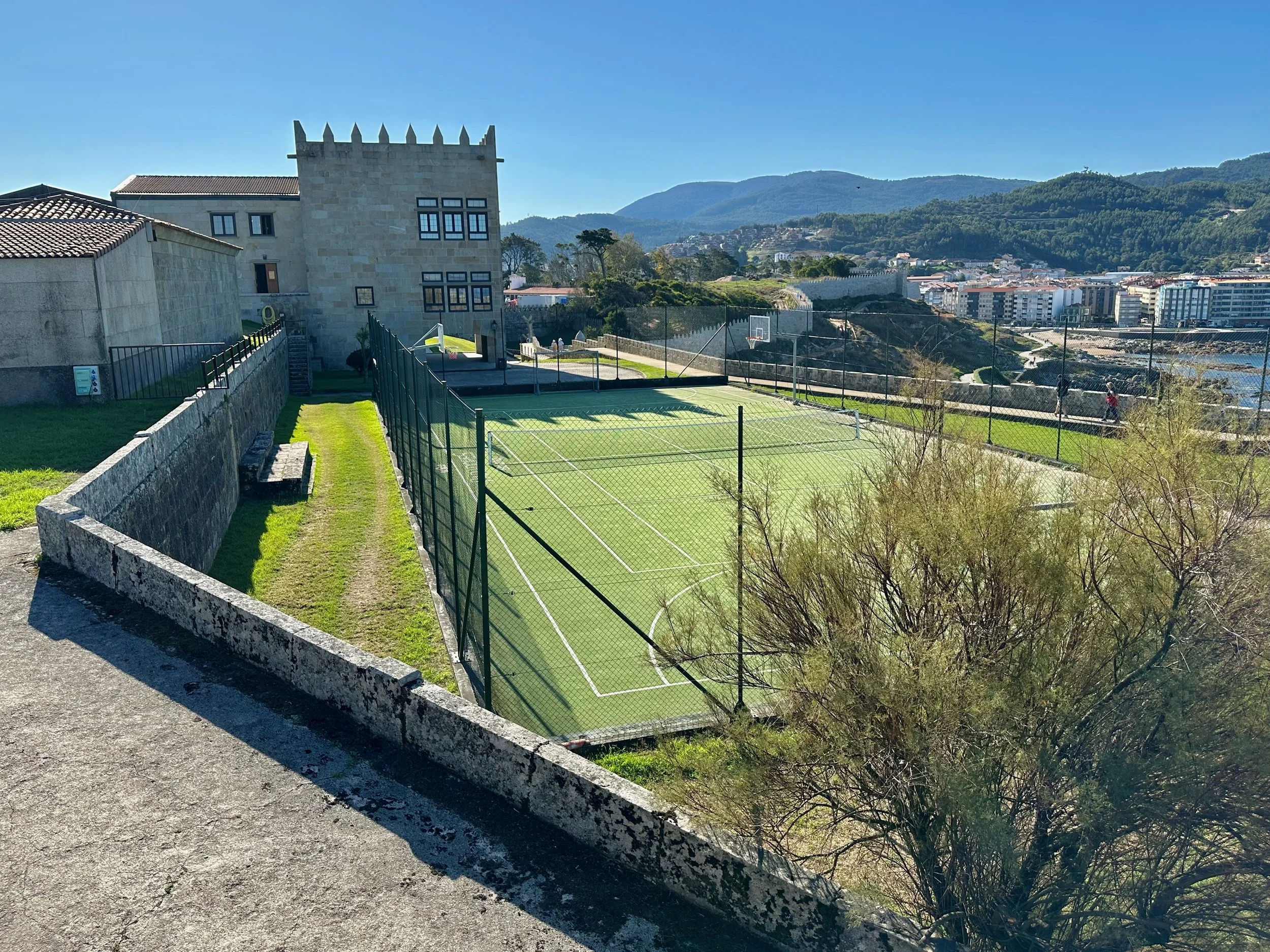
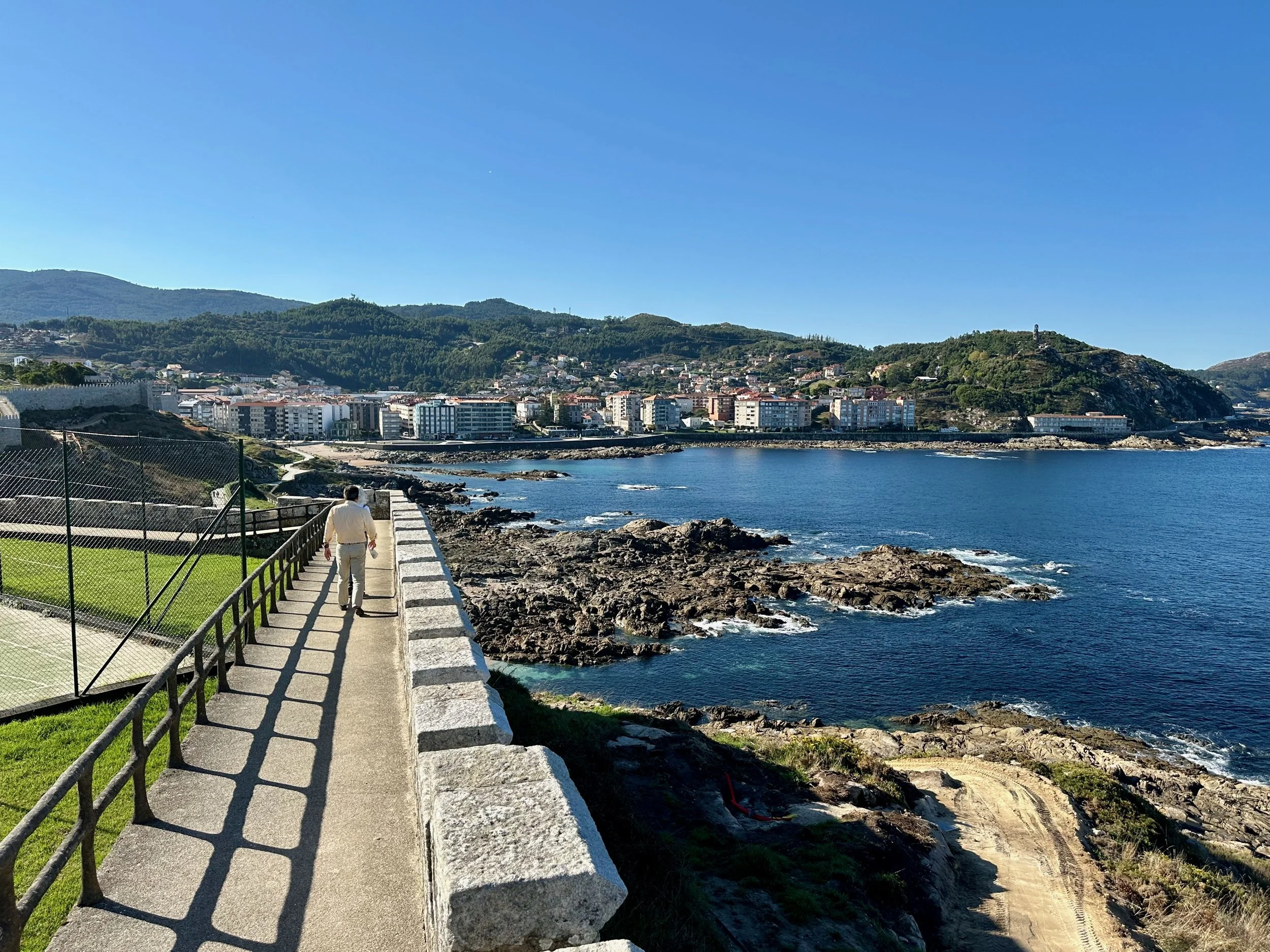
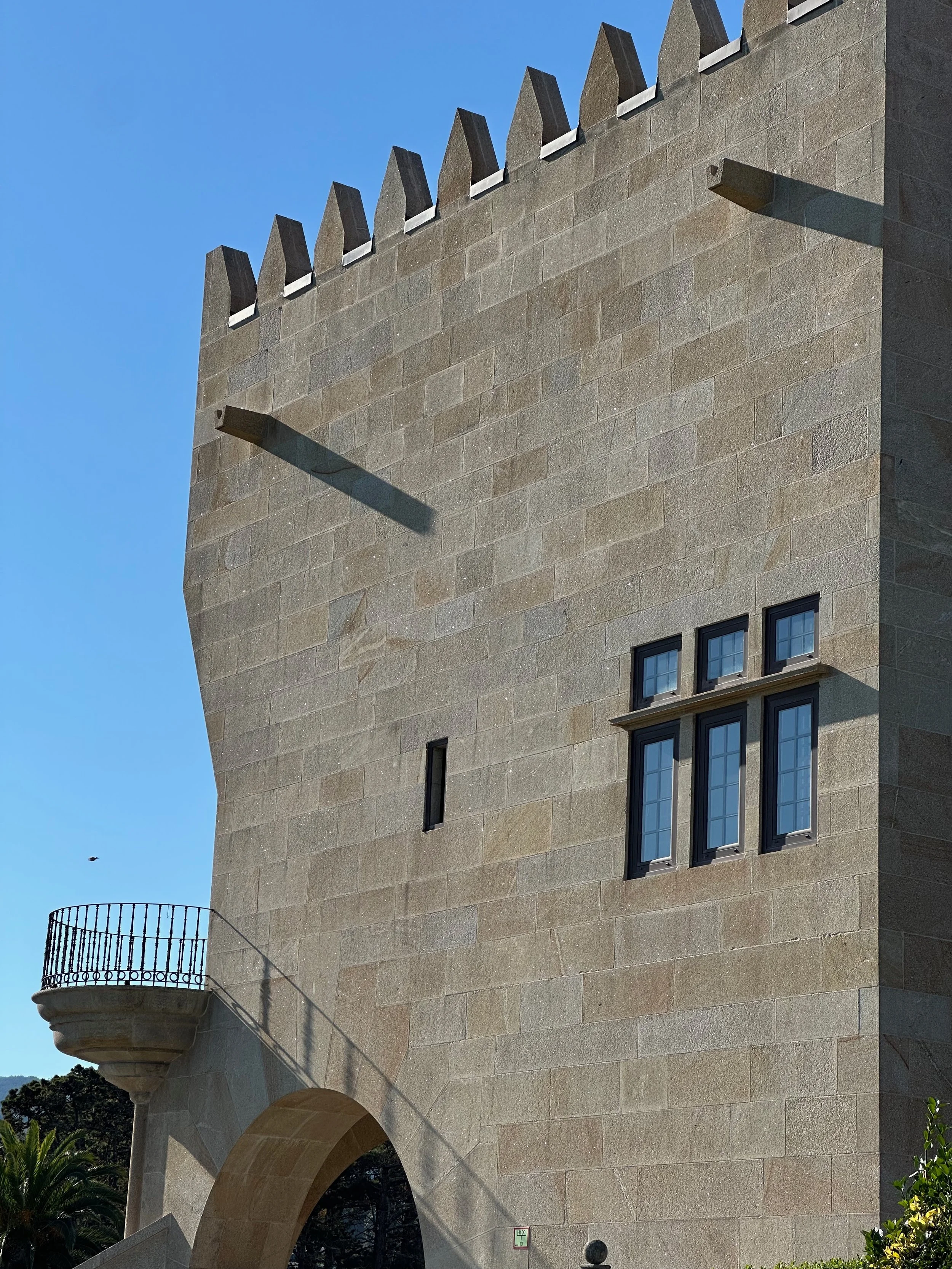
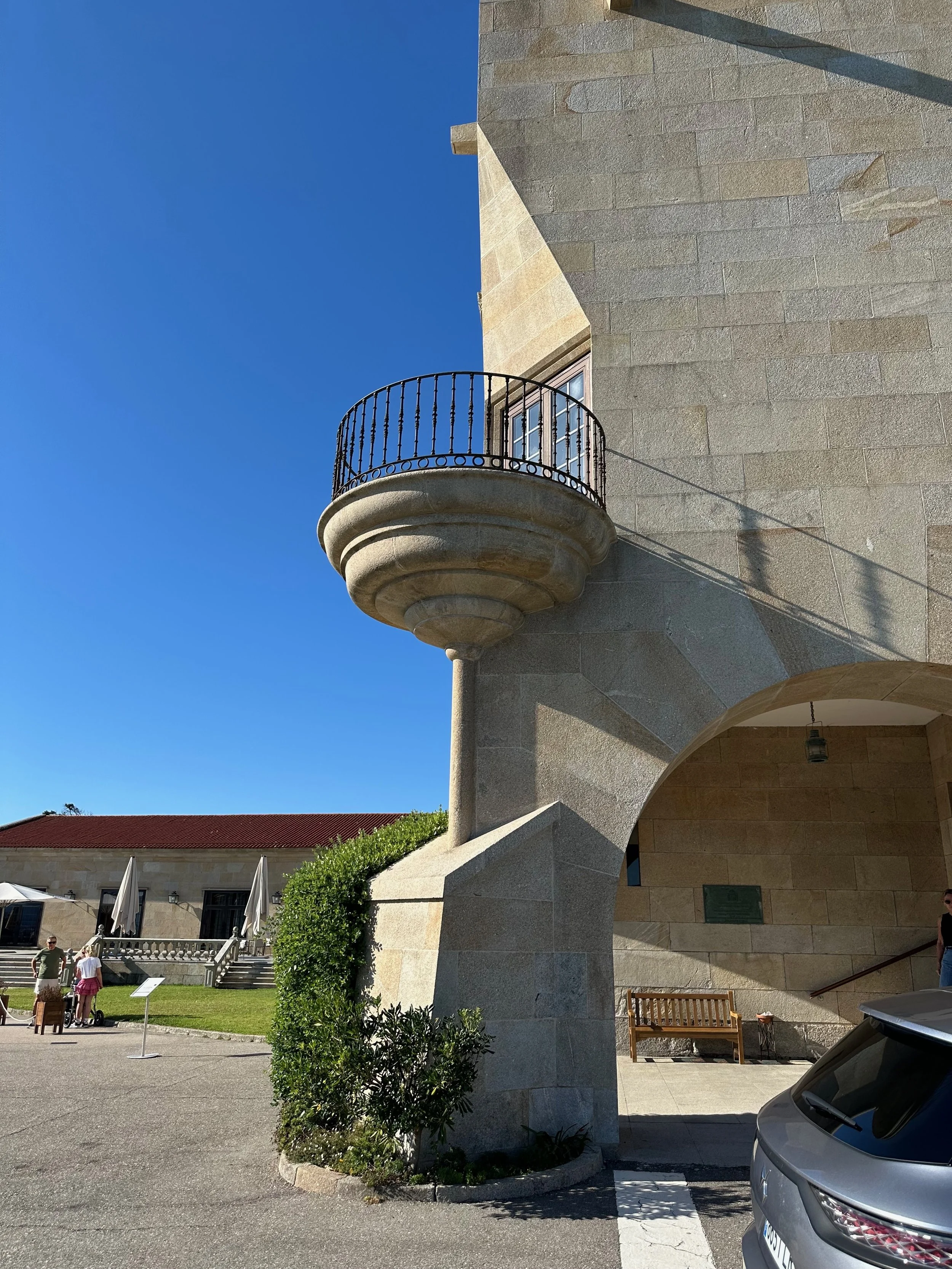
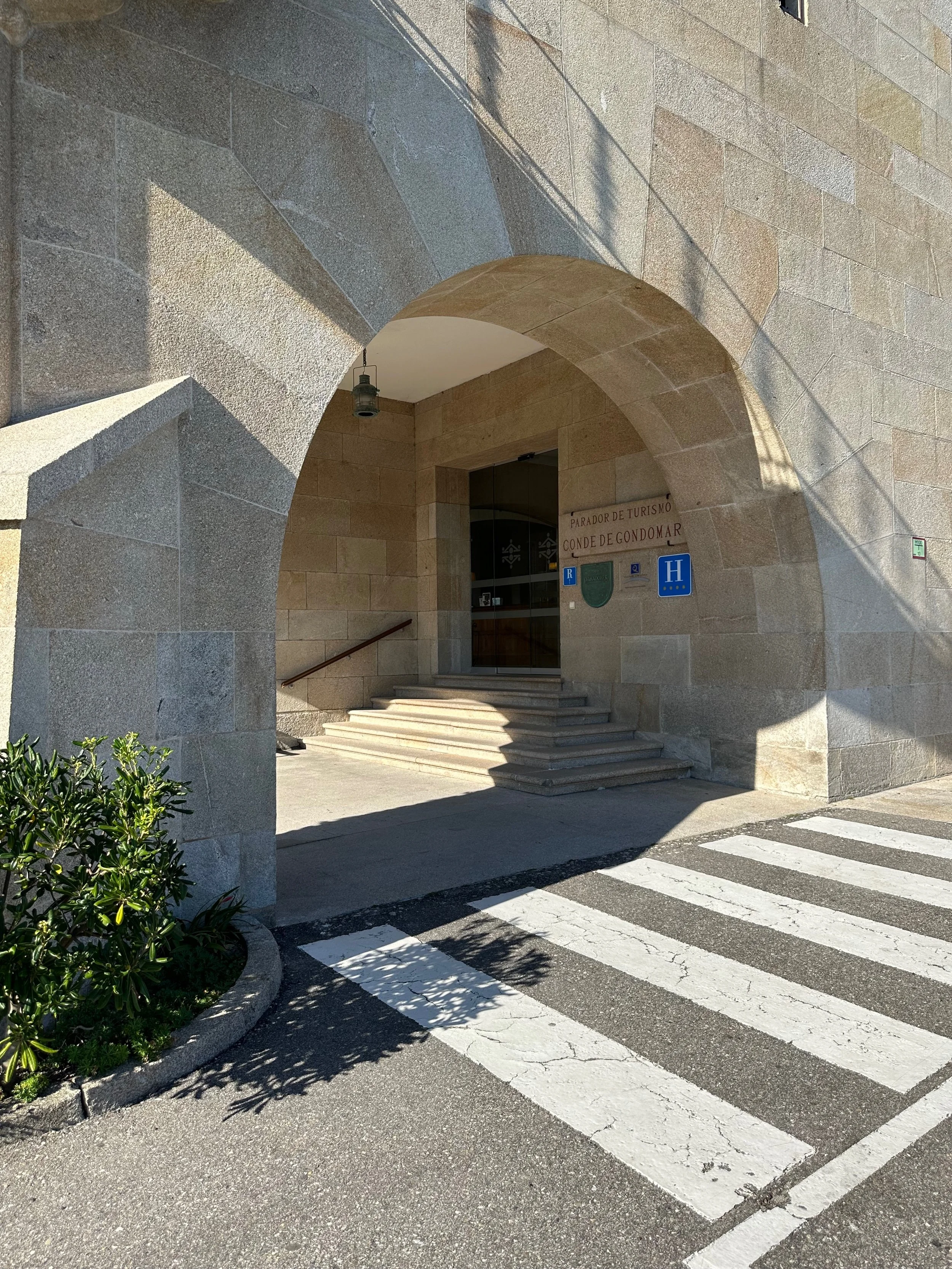
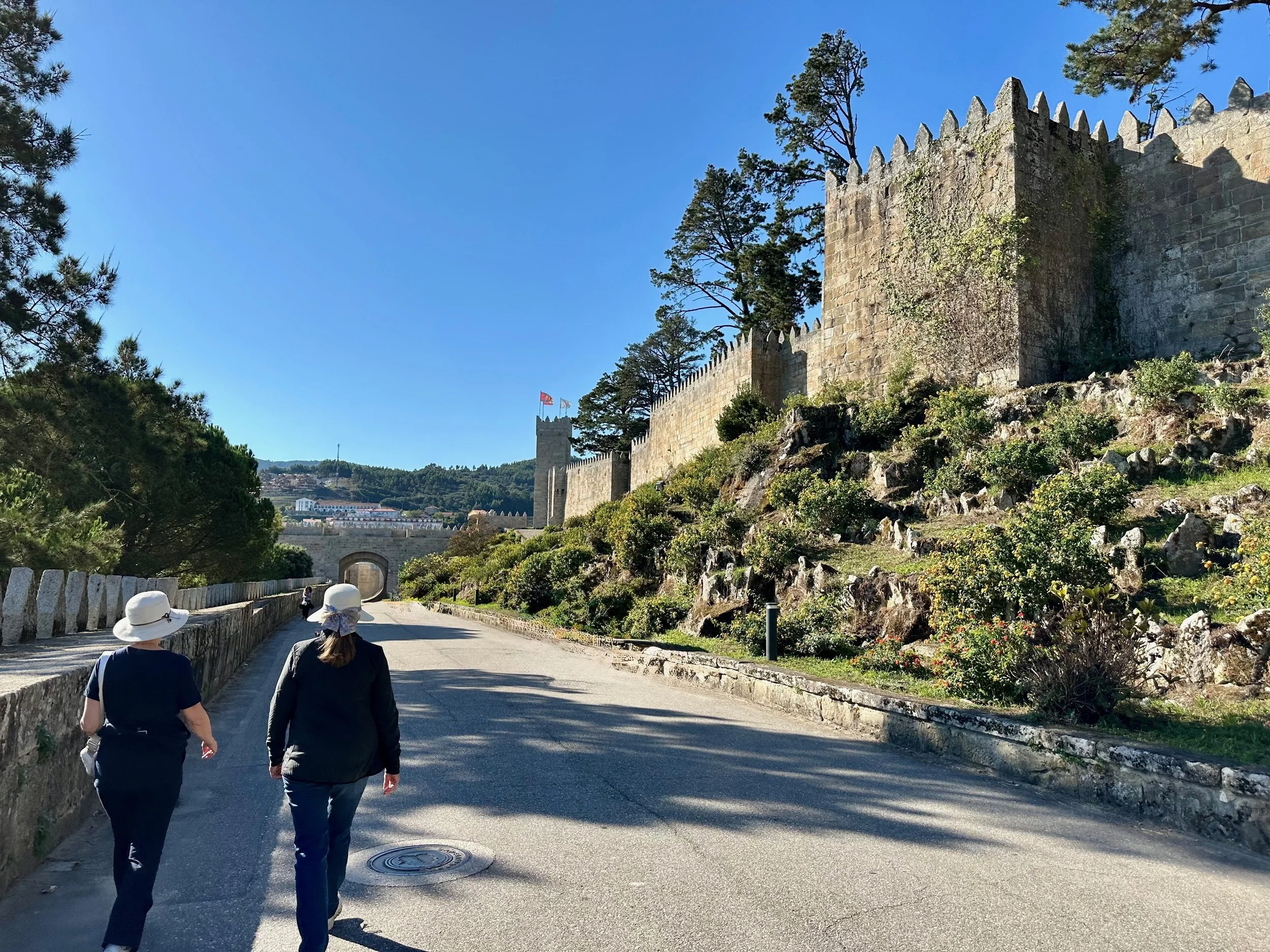
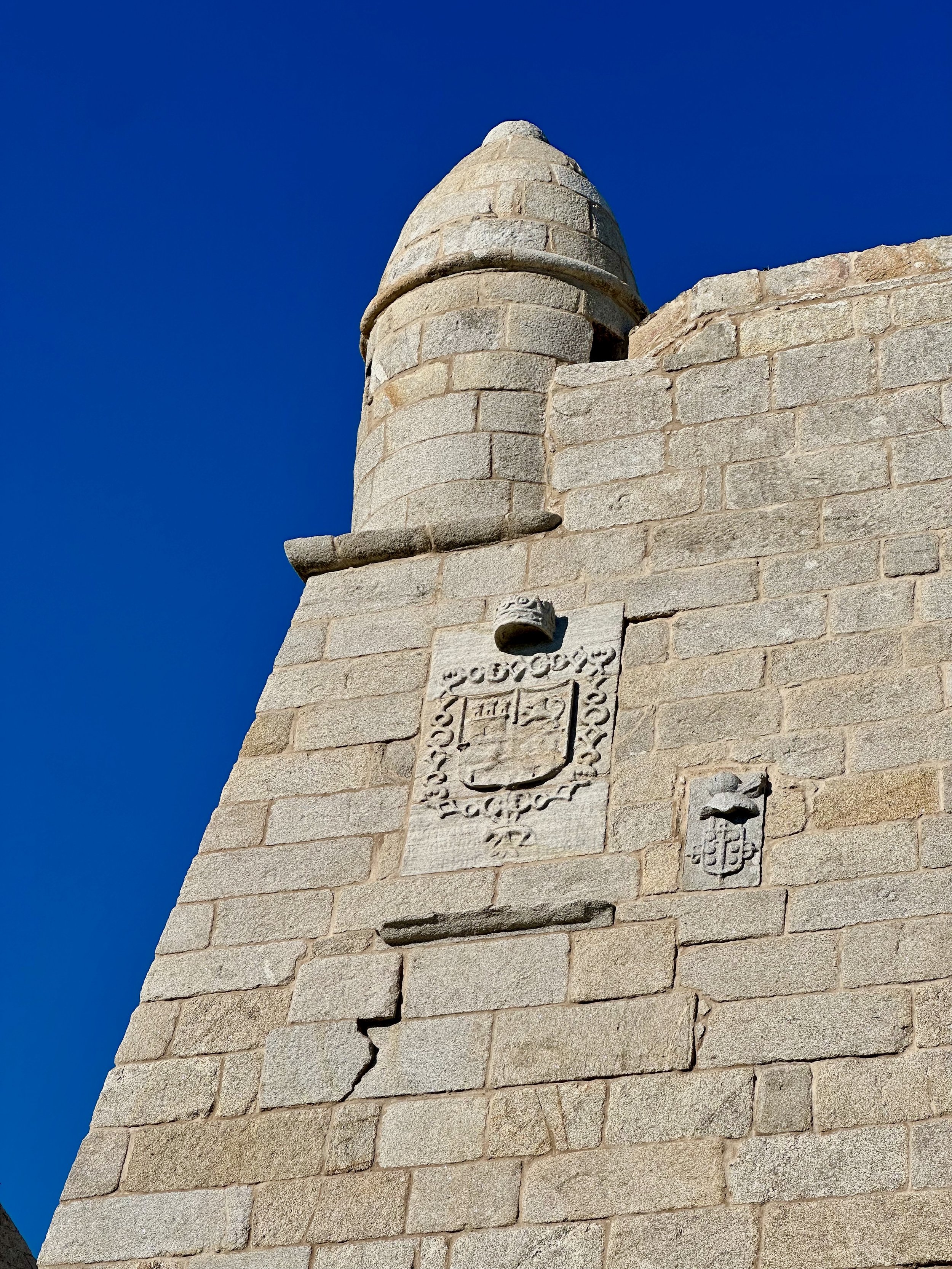
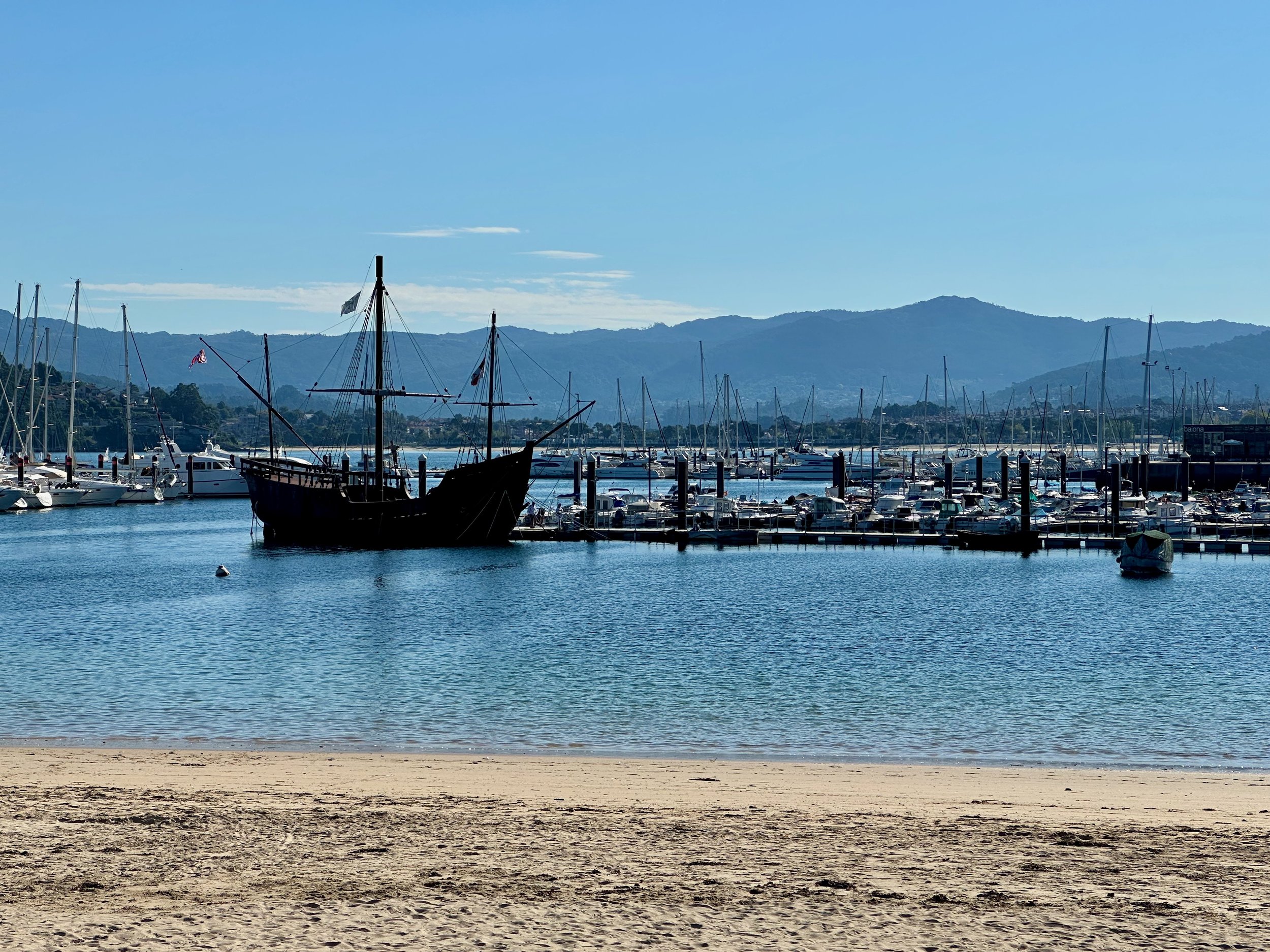
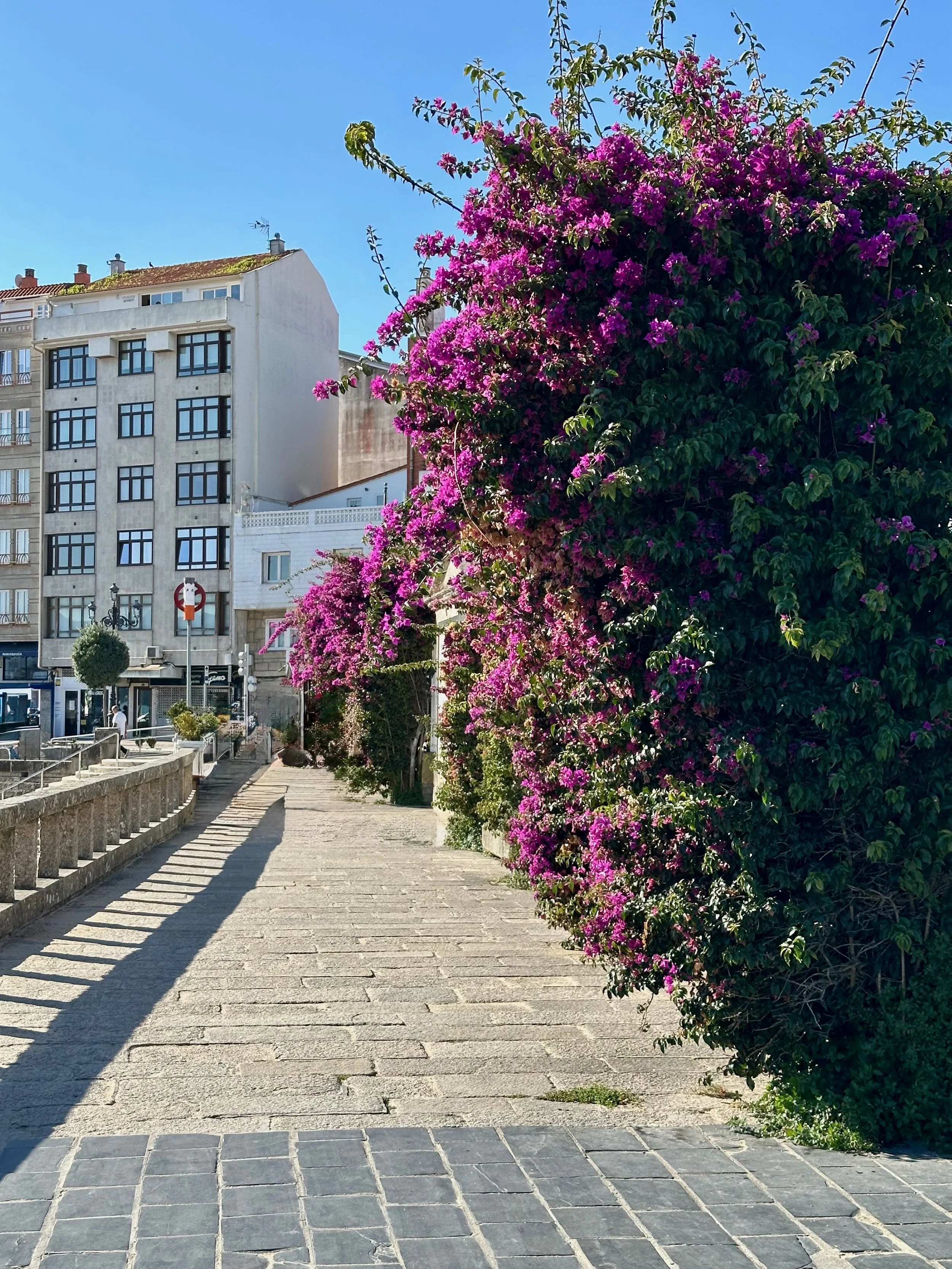
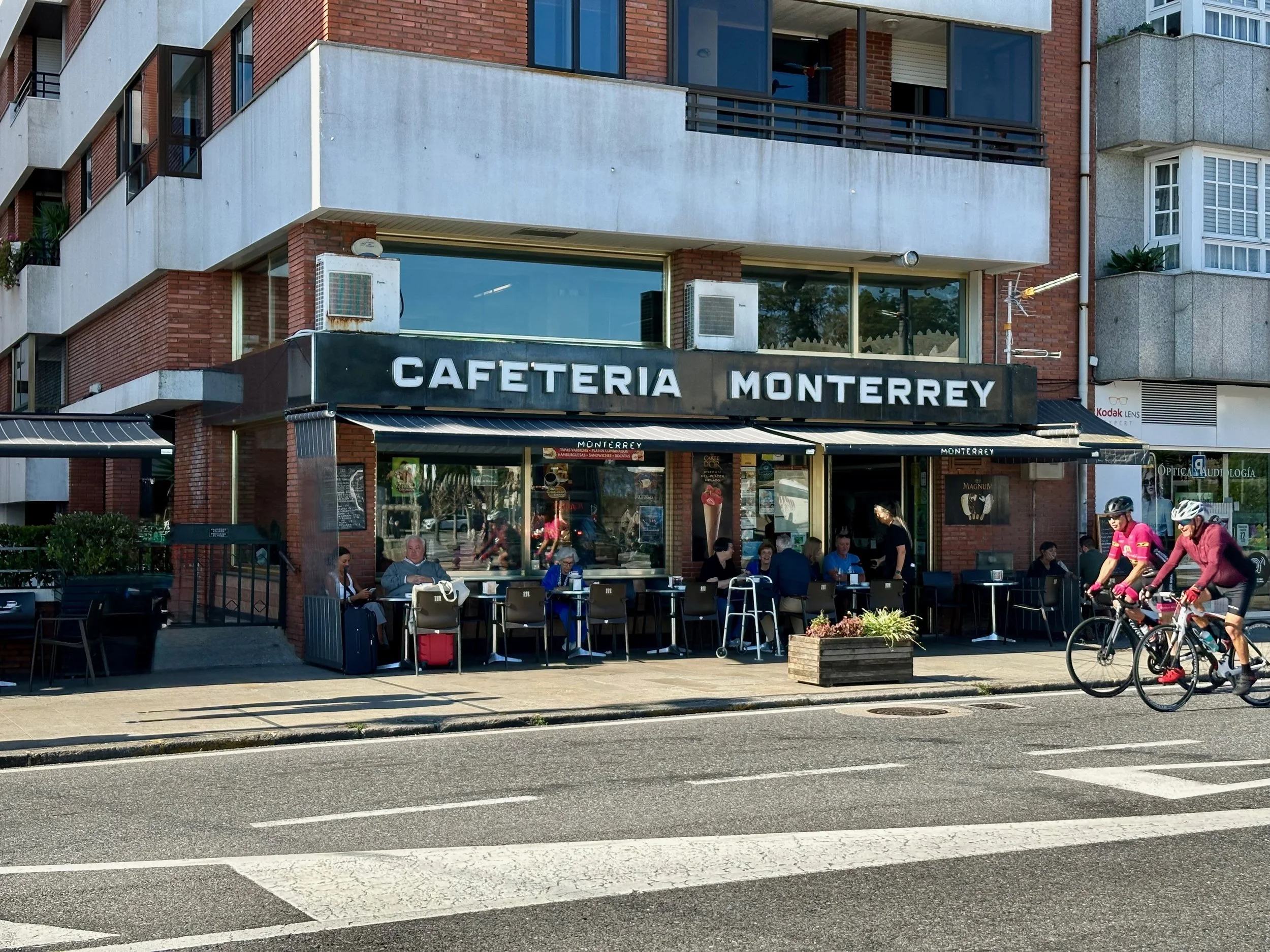
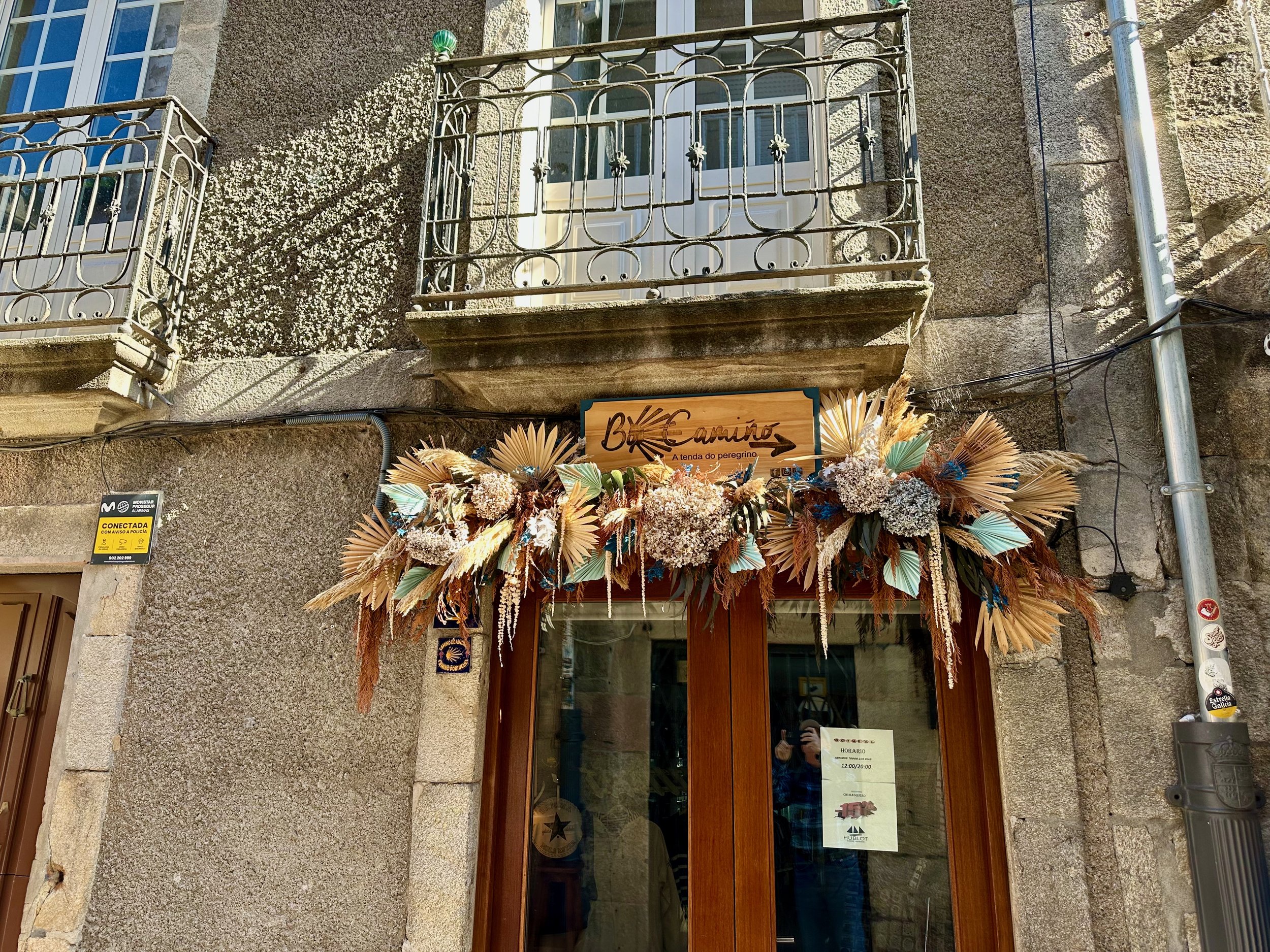
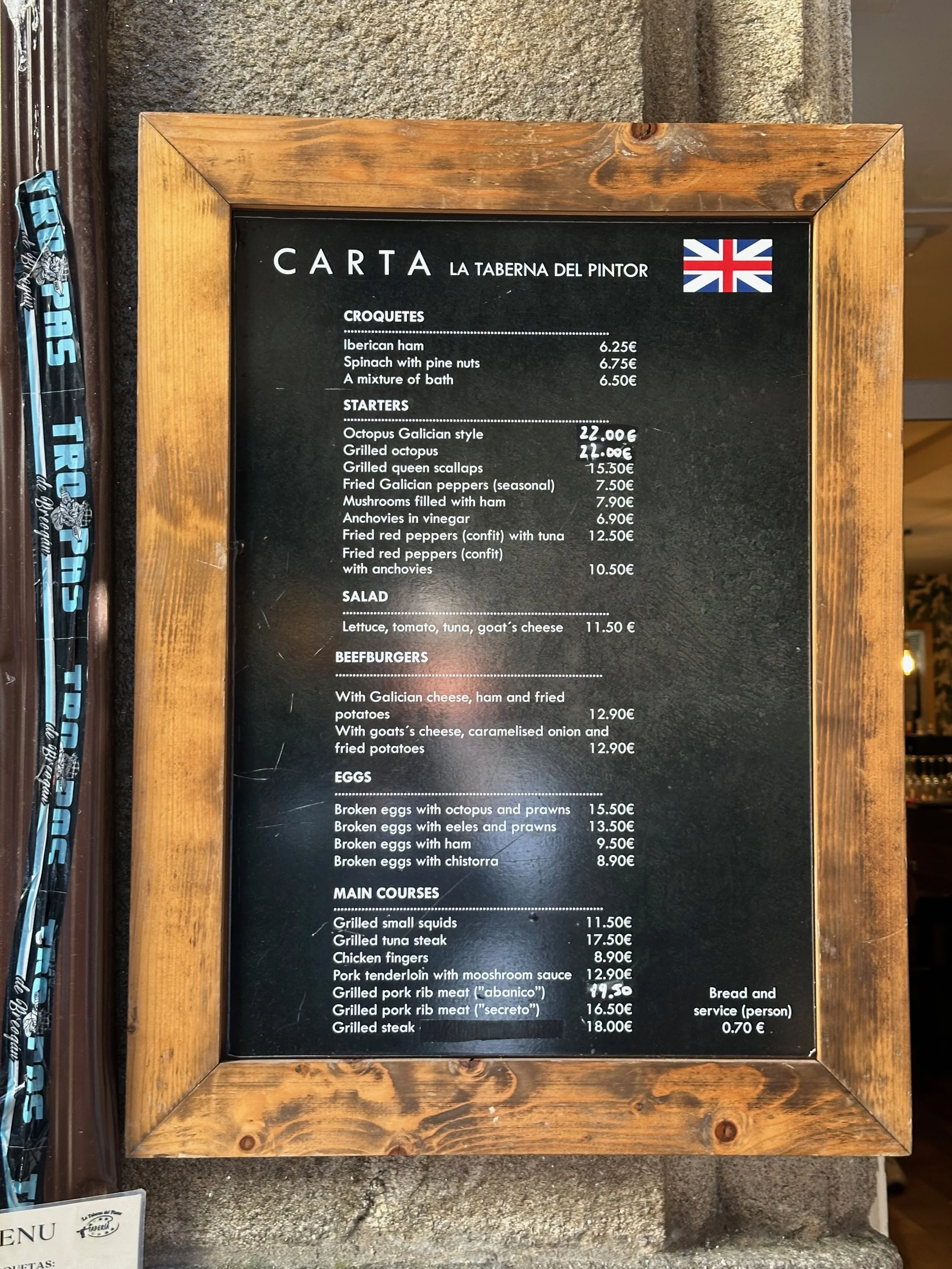
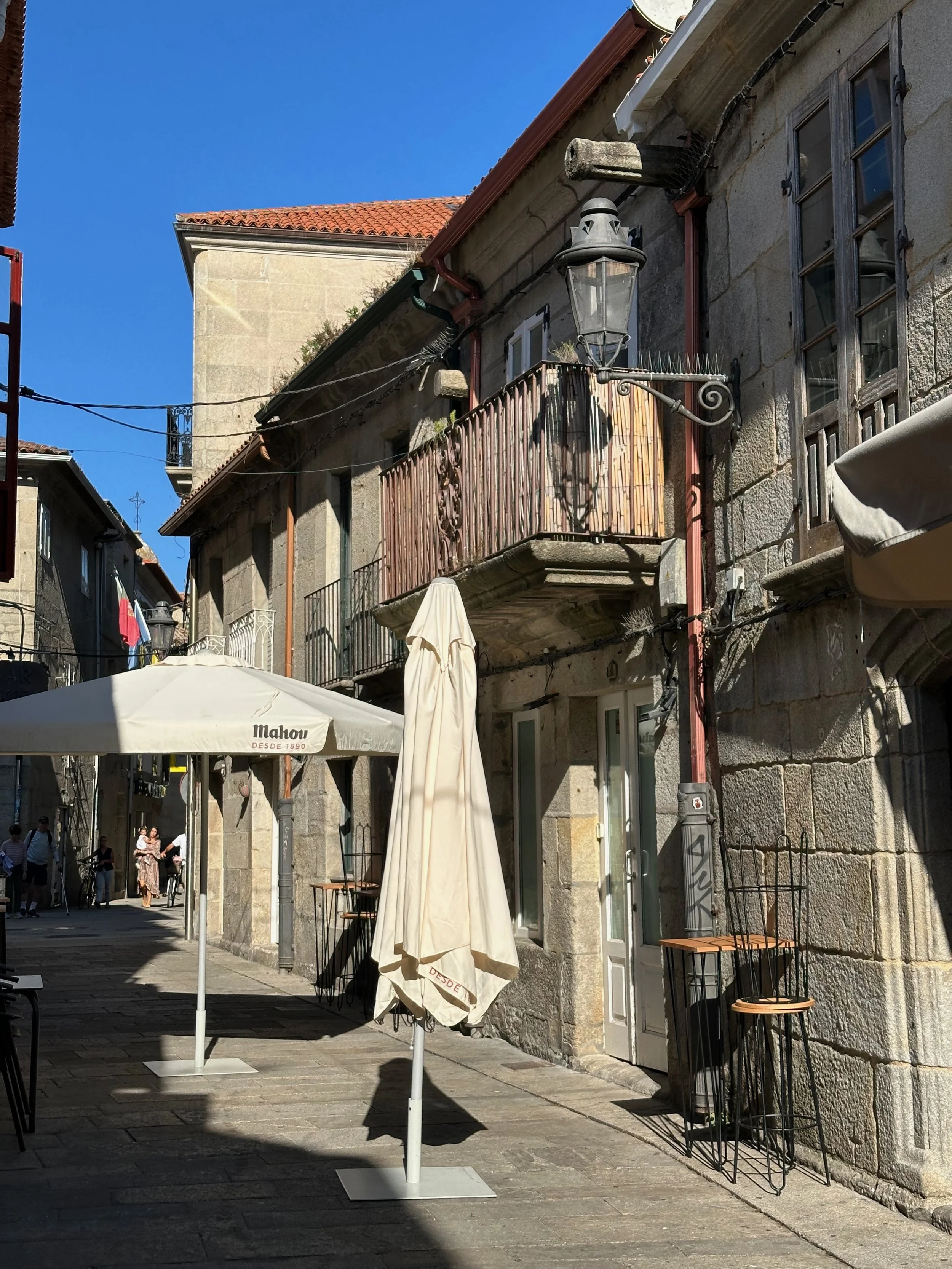
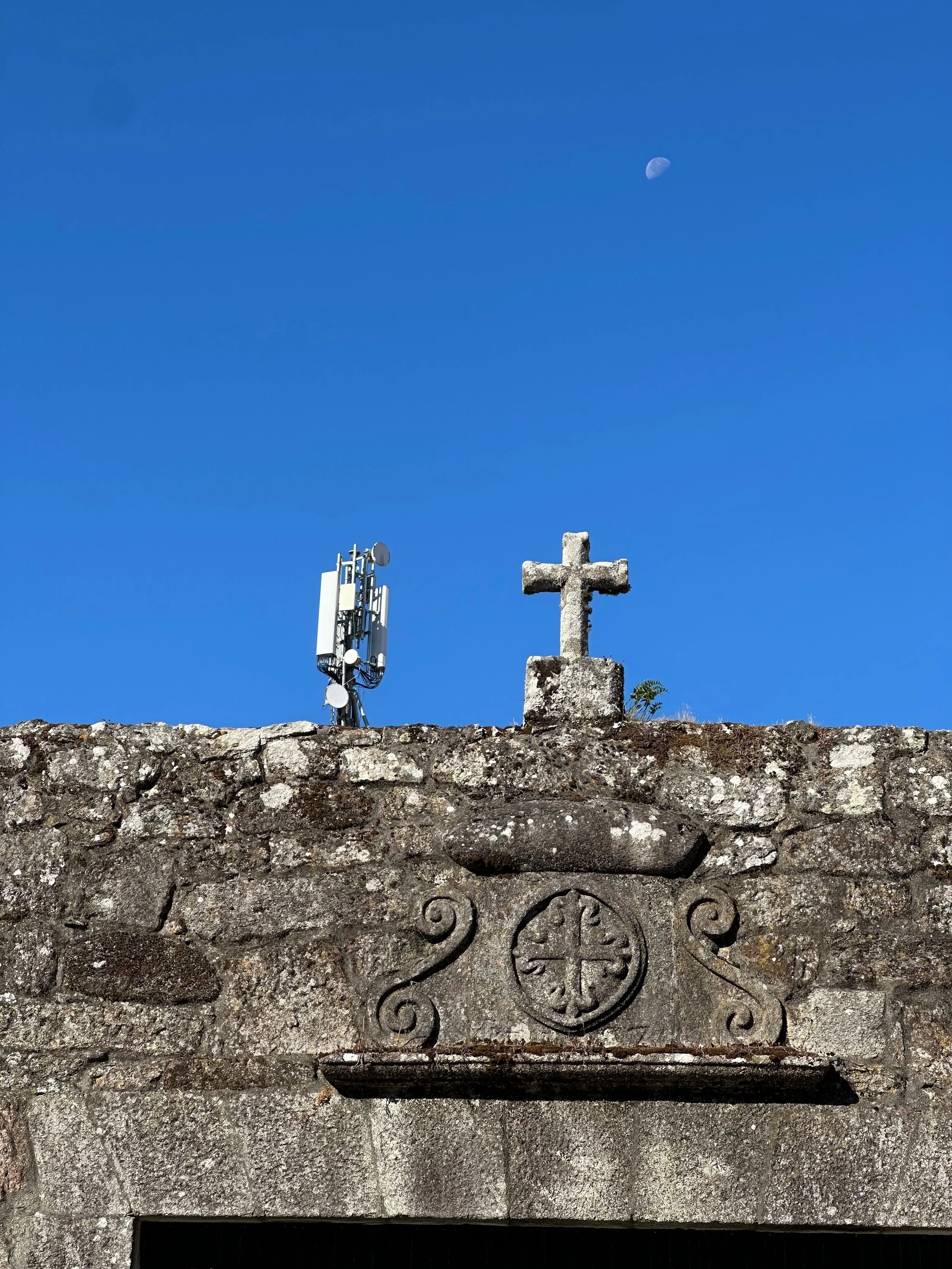
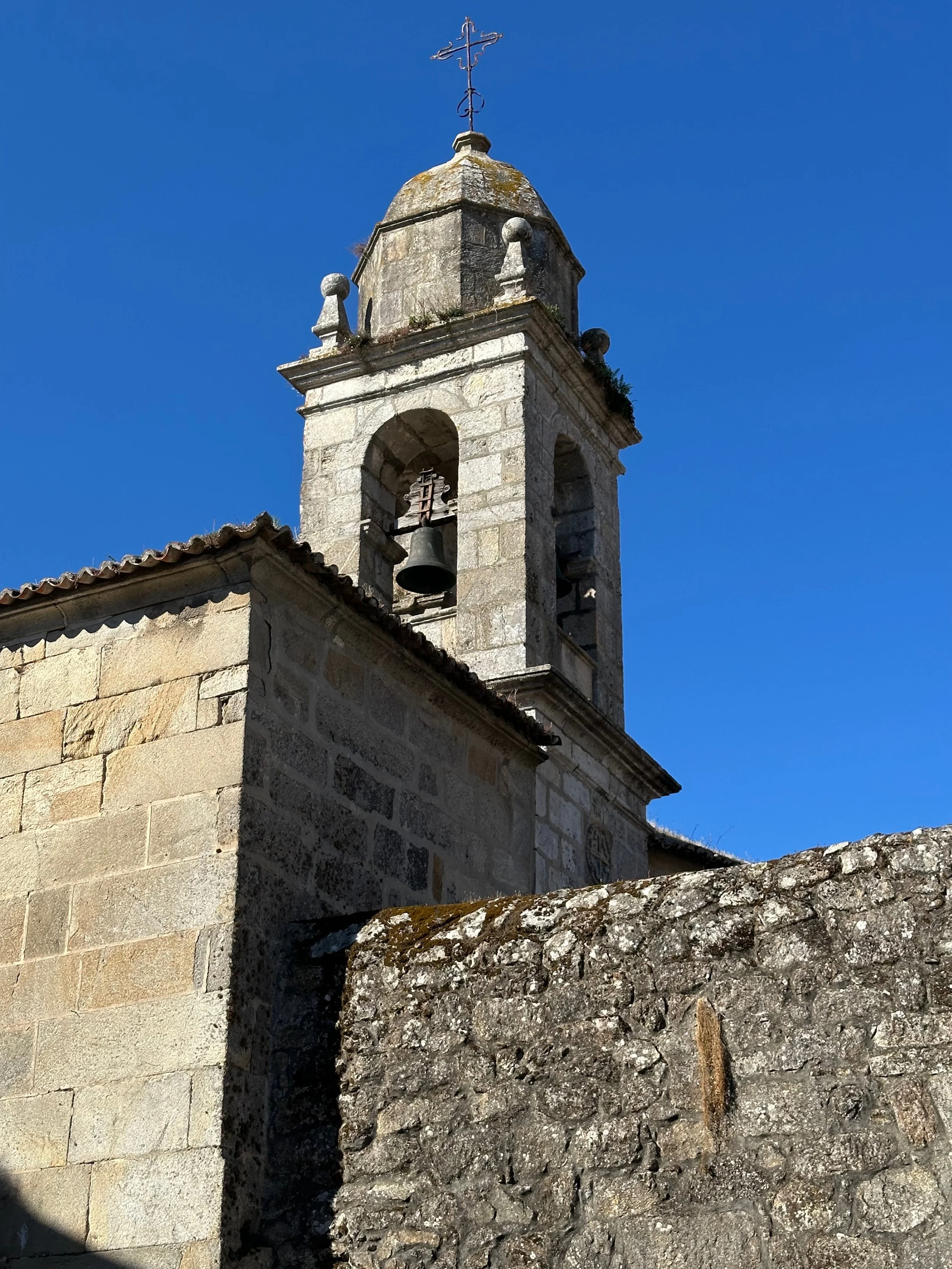
The second stop in Spain.
Gijon, Spain
Gijón is the largest city by population in the autonomous region of Asturias. Located on the coast of the Cantabrian Sea in the Bay of Biscay, it’s approximately 24 km north-east of Oviedo, the capital of Asturias. With a population of roughly 273,750 it’s the 15th largest city in Spain.
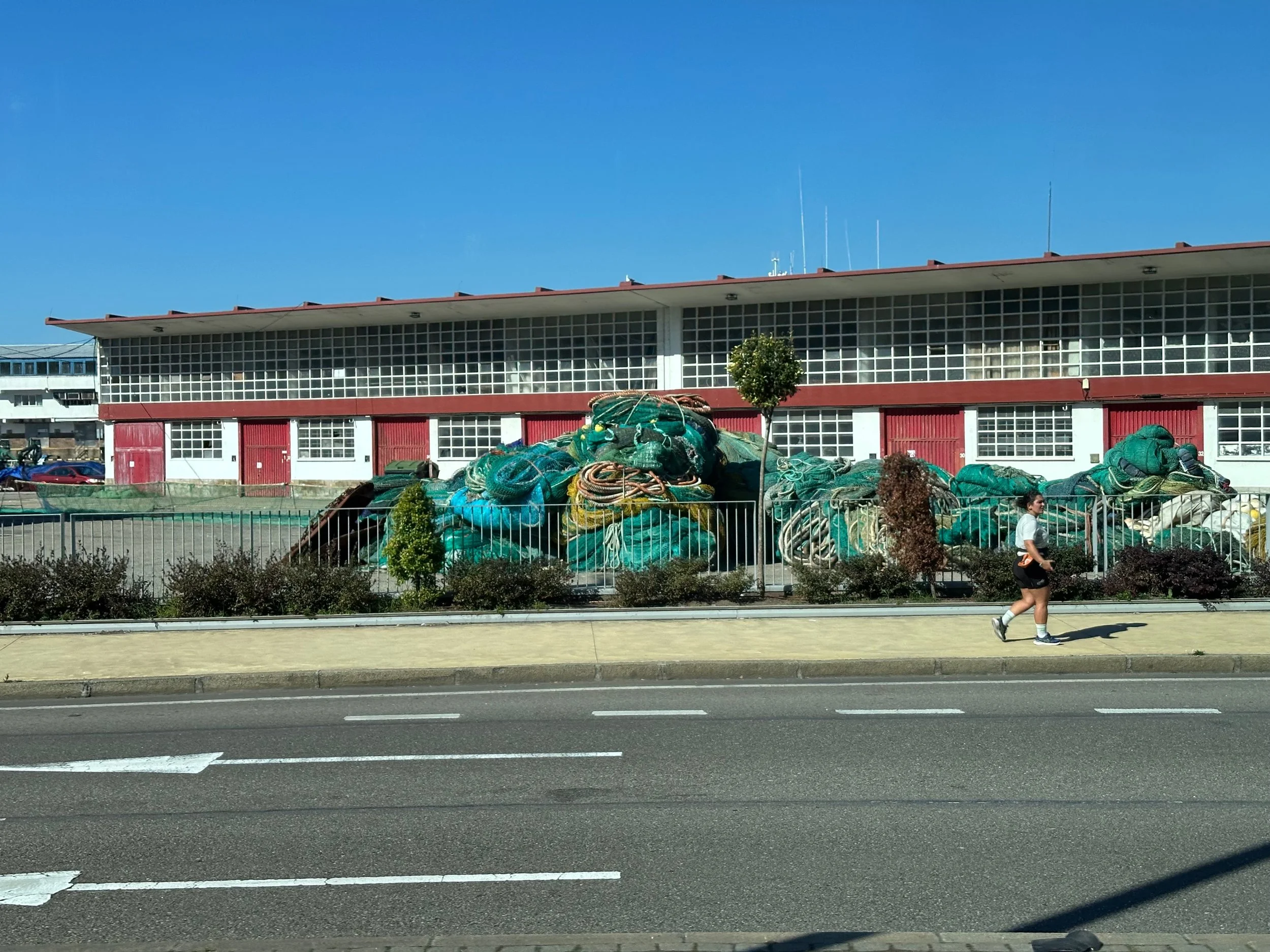
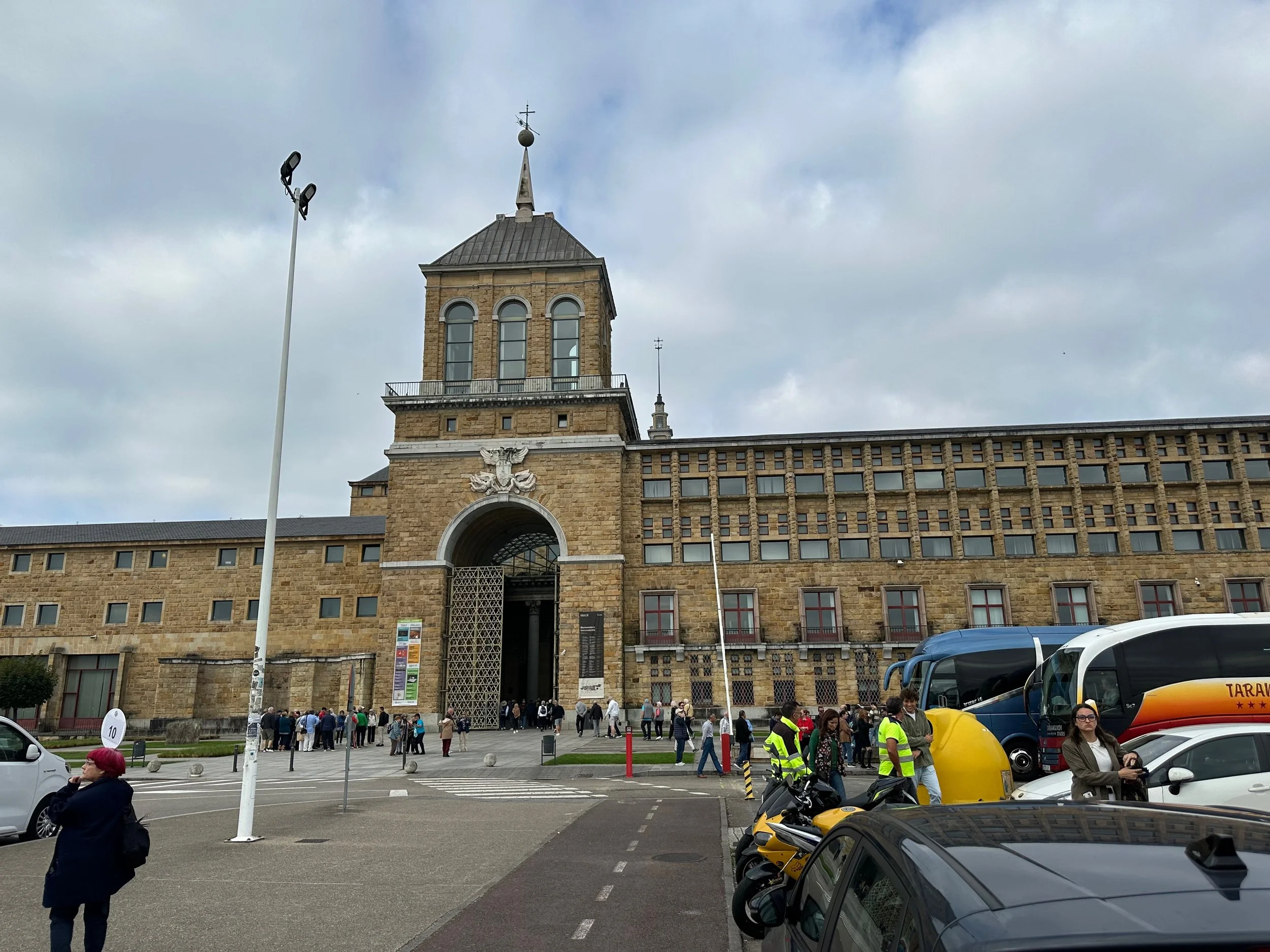
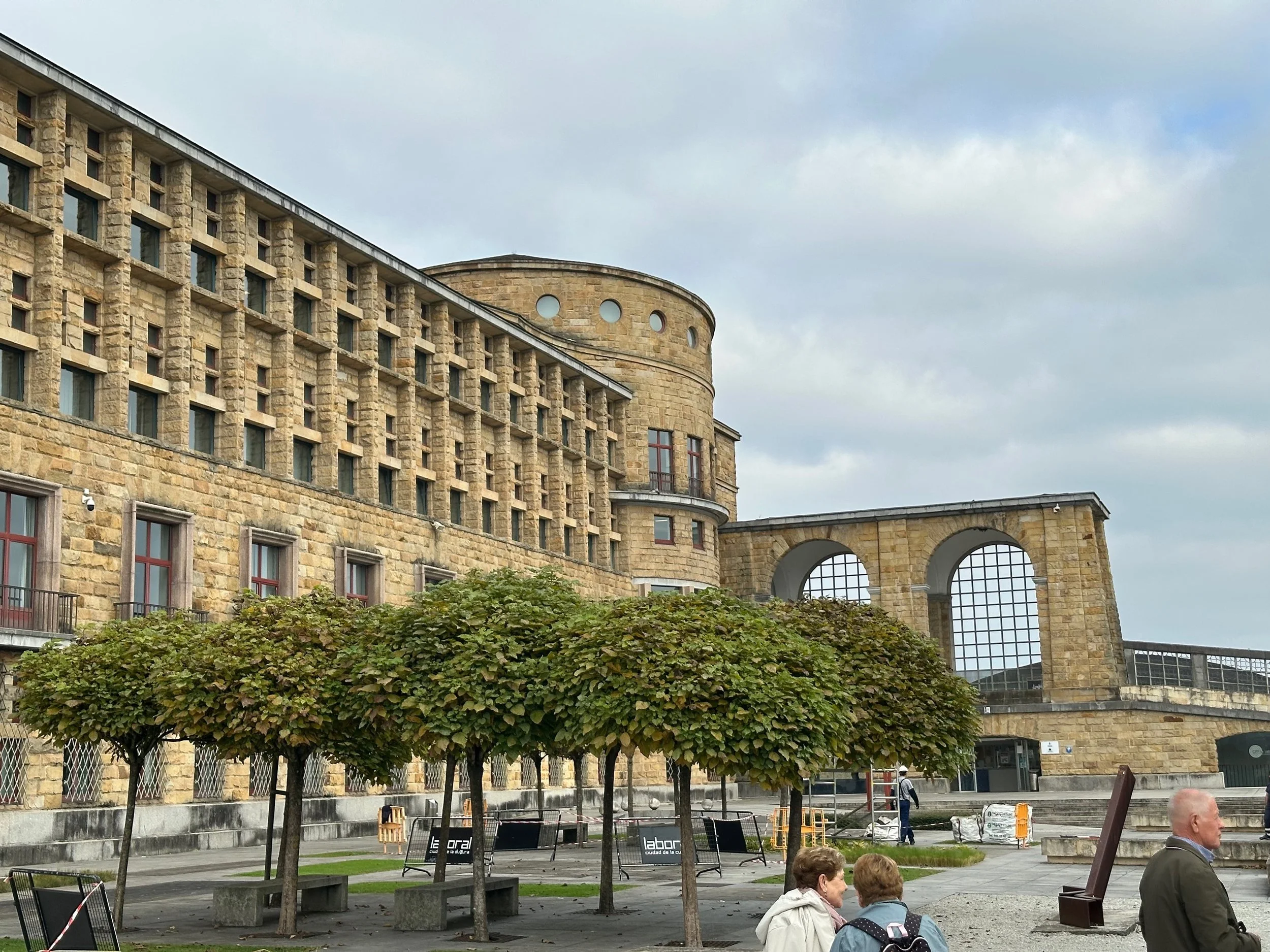
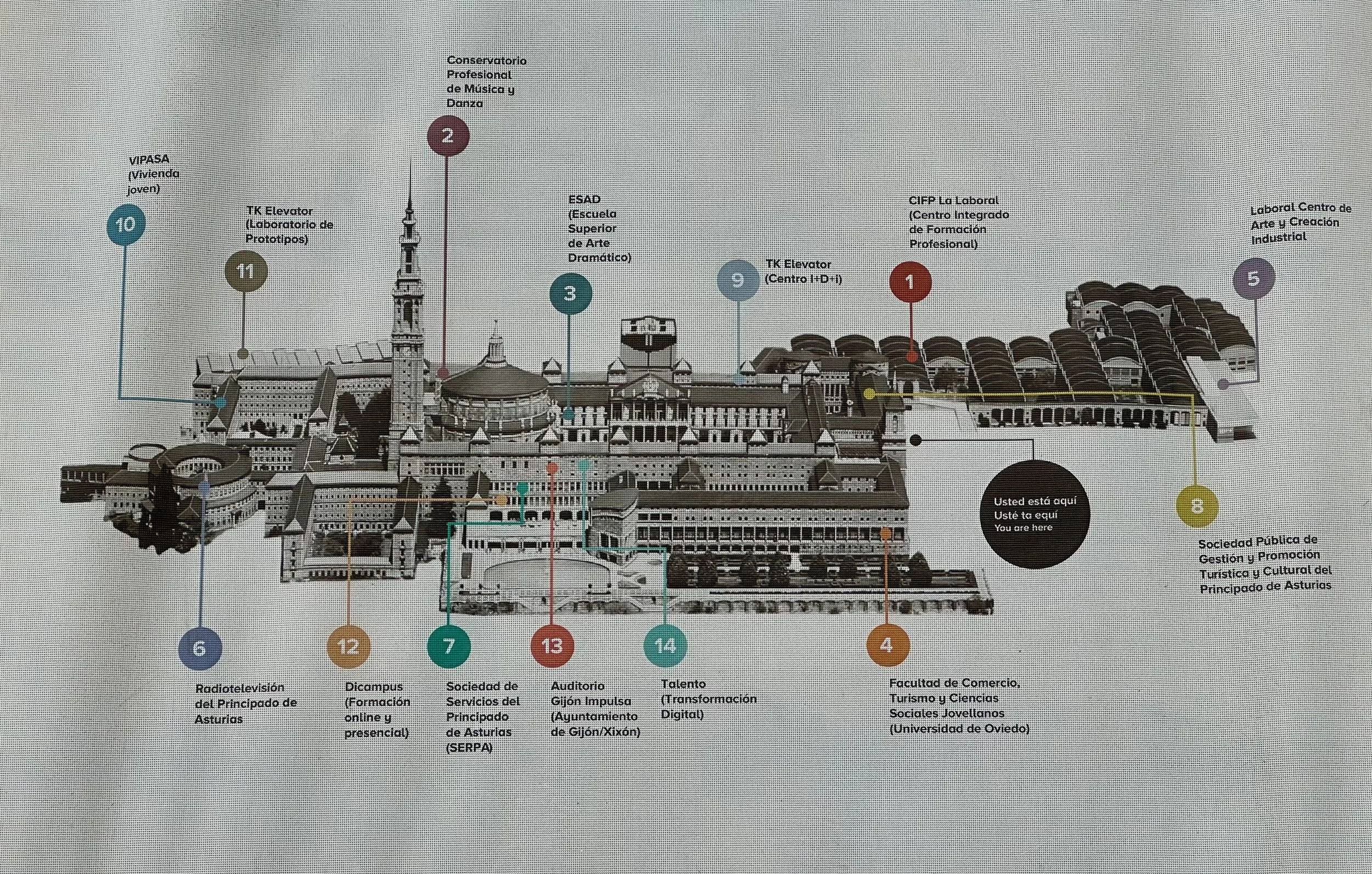
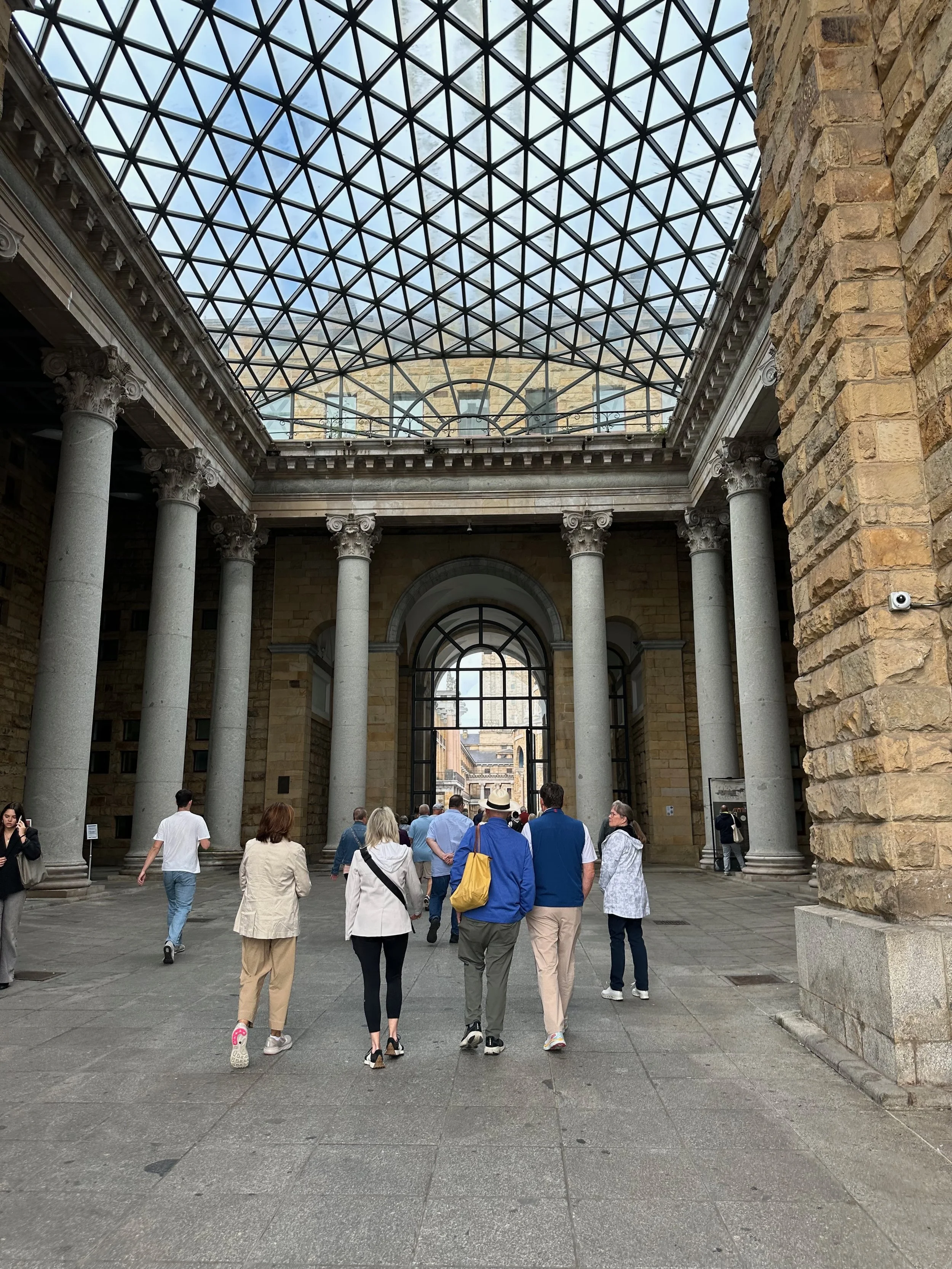
In Gijon, after driving around the city streets to get a feel of the town, the bus took us to two specific locations. One had an elevated view of the city and harbour, and the other was a large building of yesteryear that had been built for one purpose, but now was re-tasked for use as the Laboral Ciudad de la Cultura and Universidad Laboral, Costa Verde, Spain. A cultural centre and university. Oh that we could have such a structure for a university in our home town.
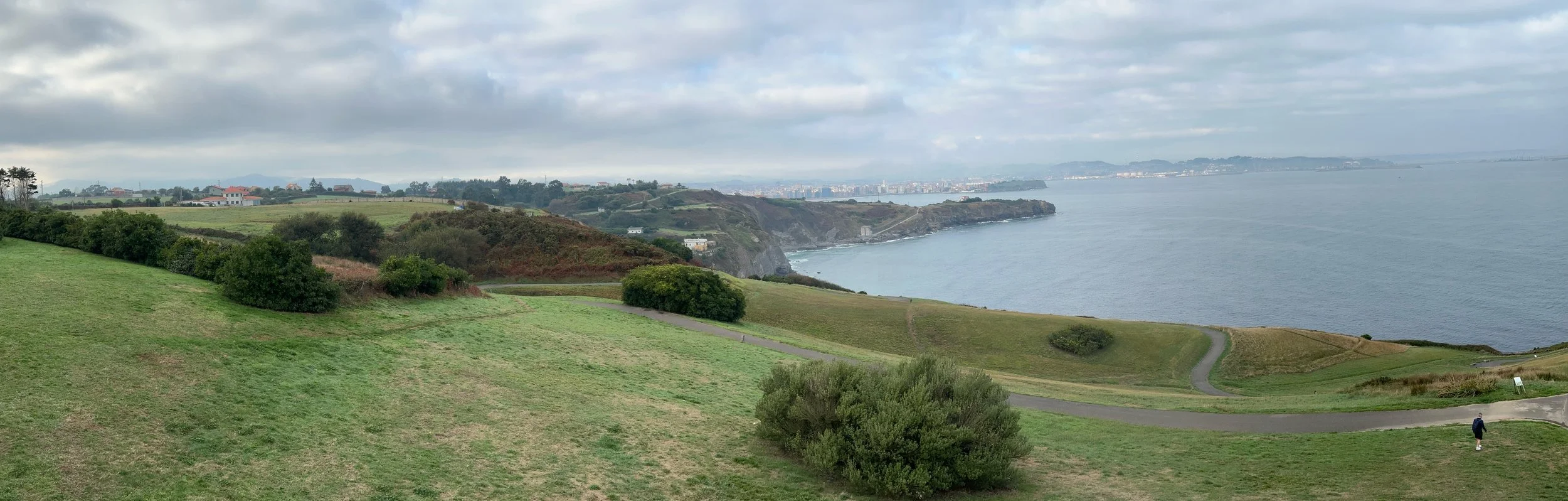
A broader view of the park area we visited on top of the hill. Gijon in the distance.
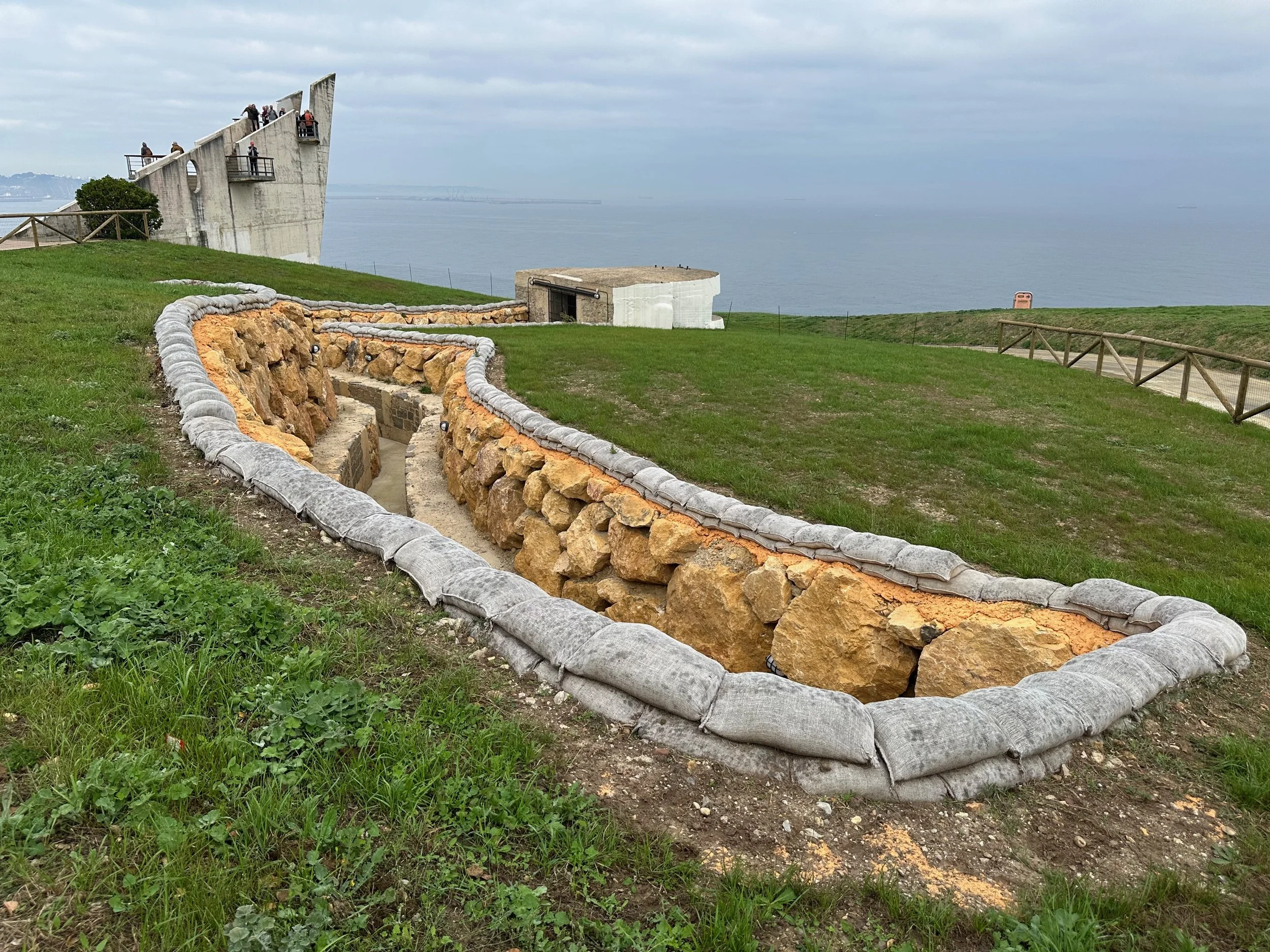
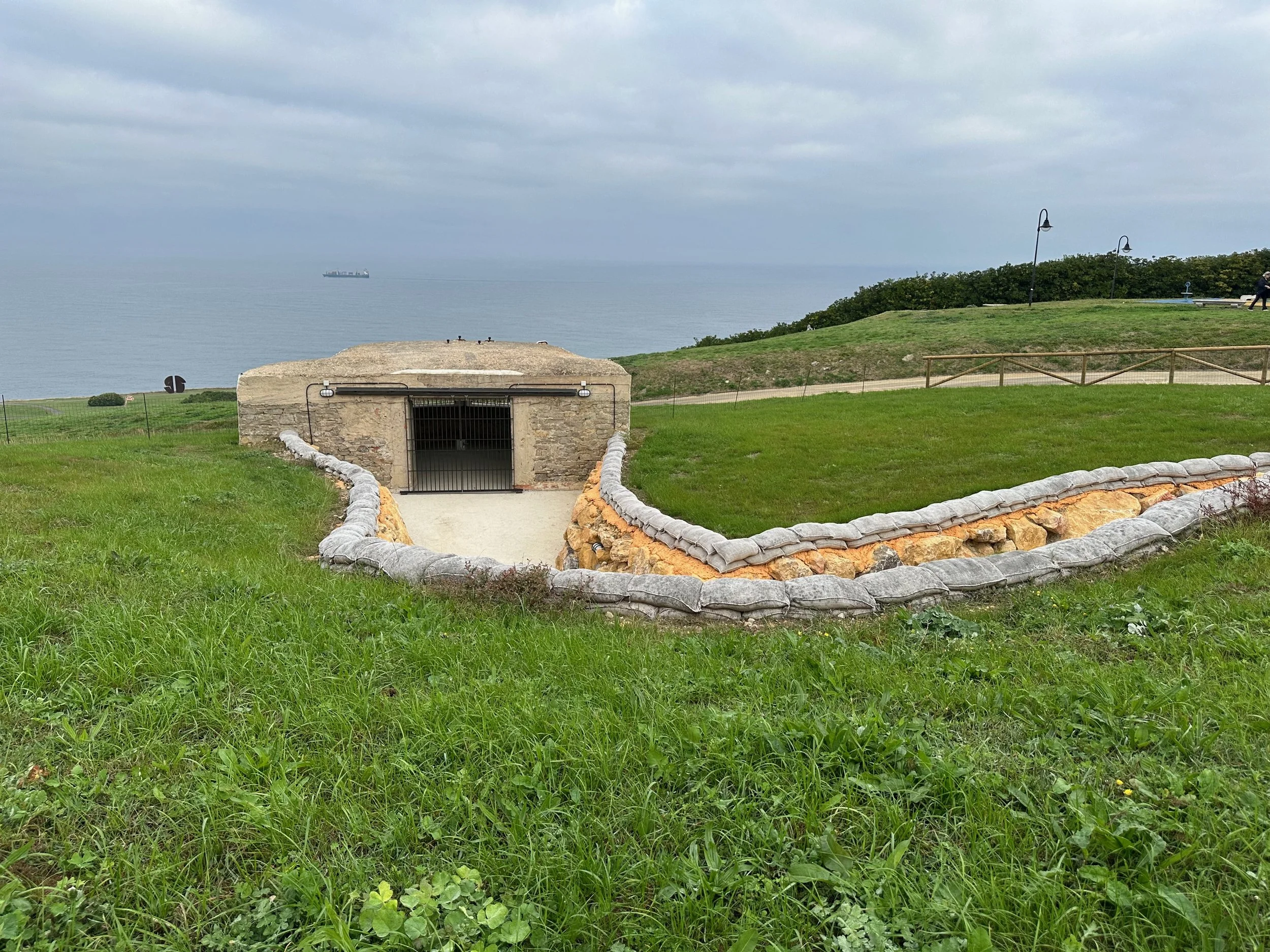
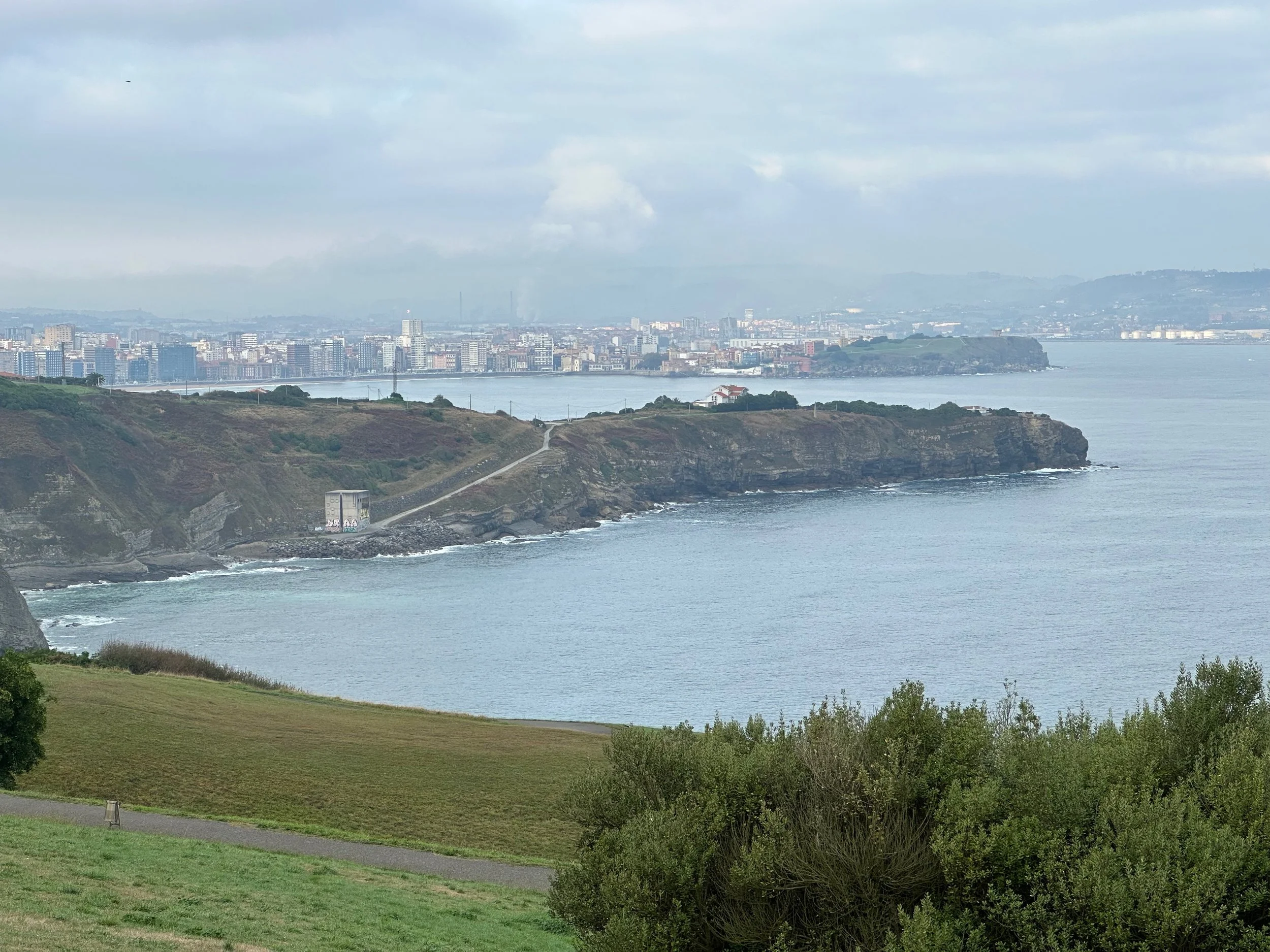
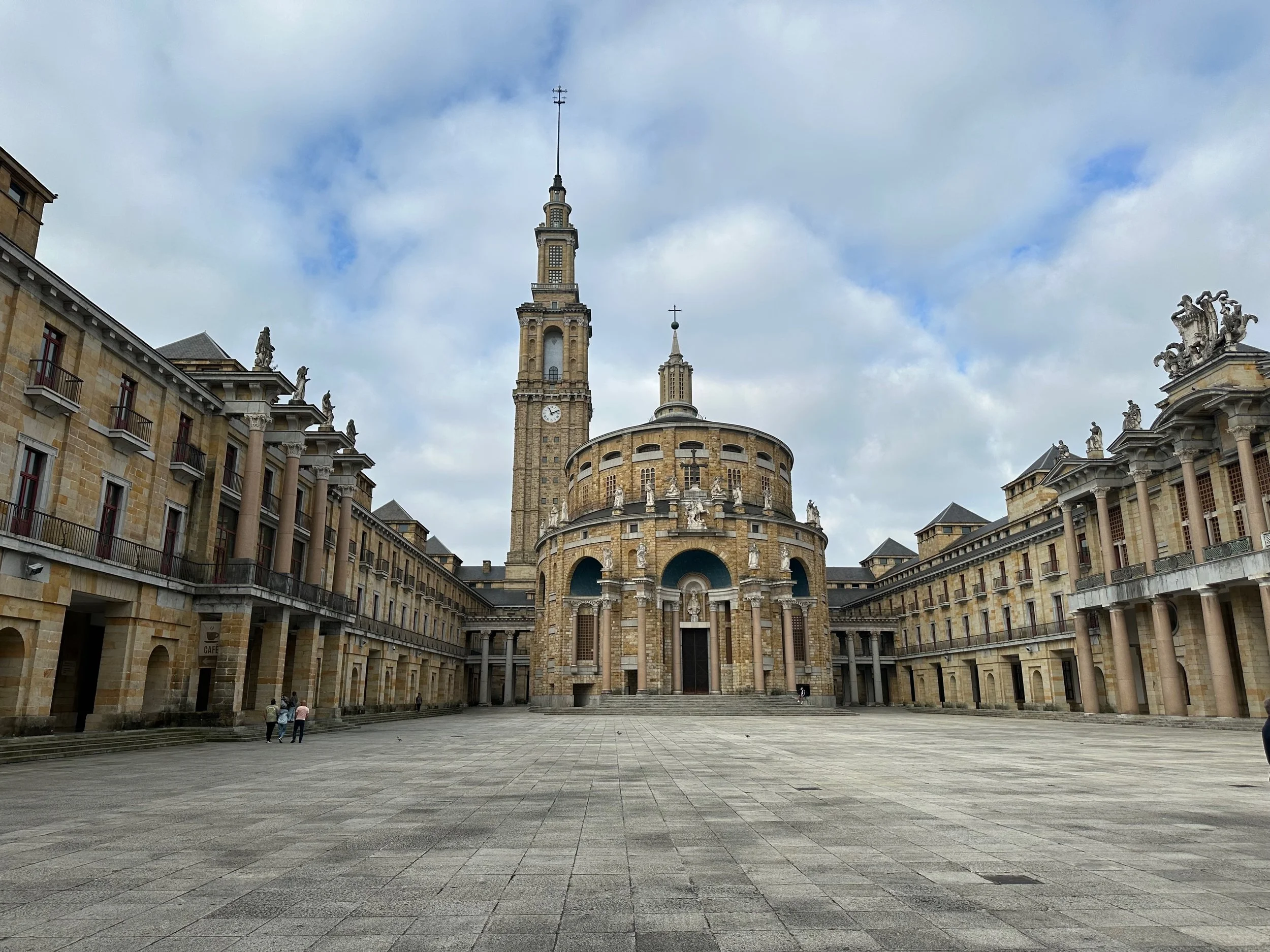
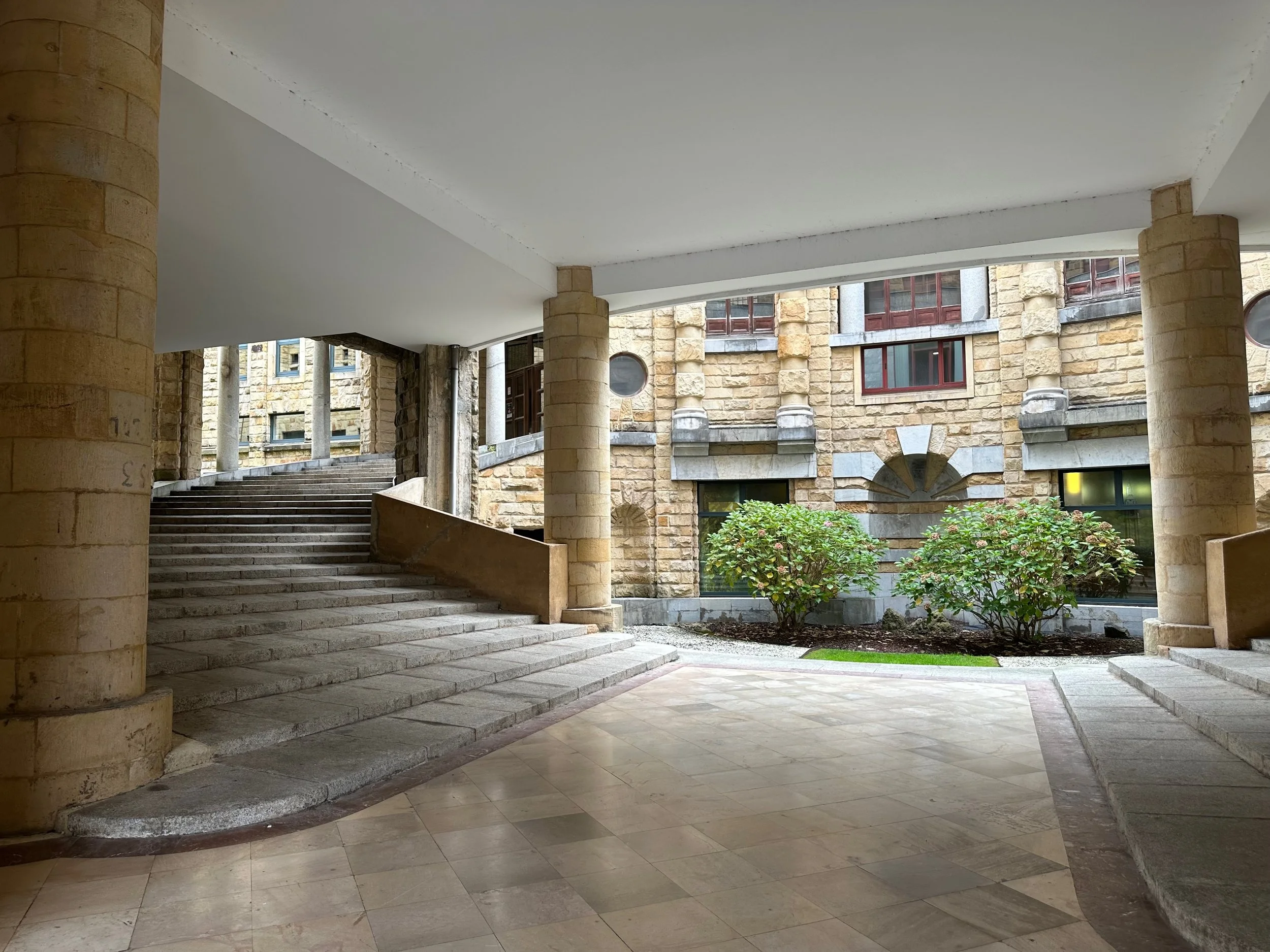
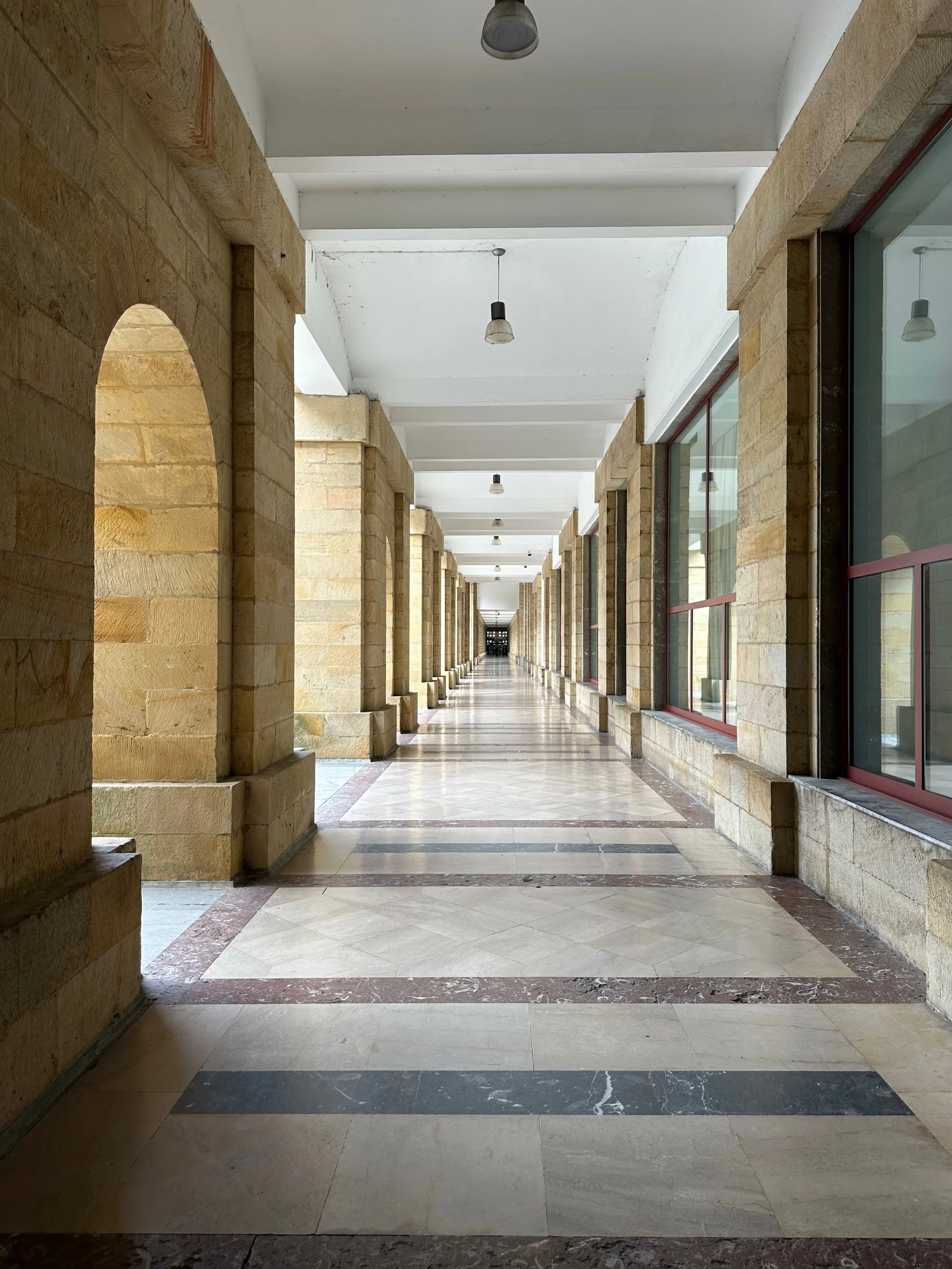
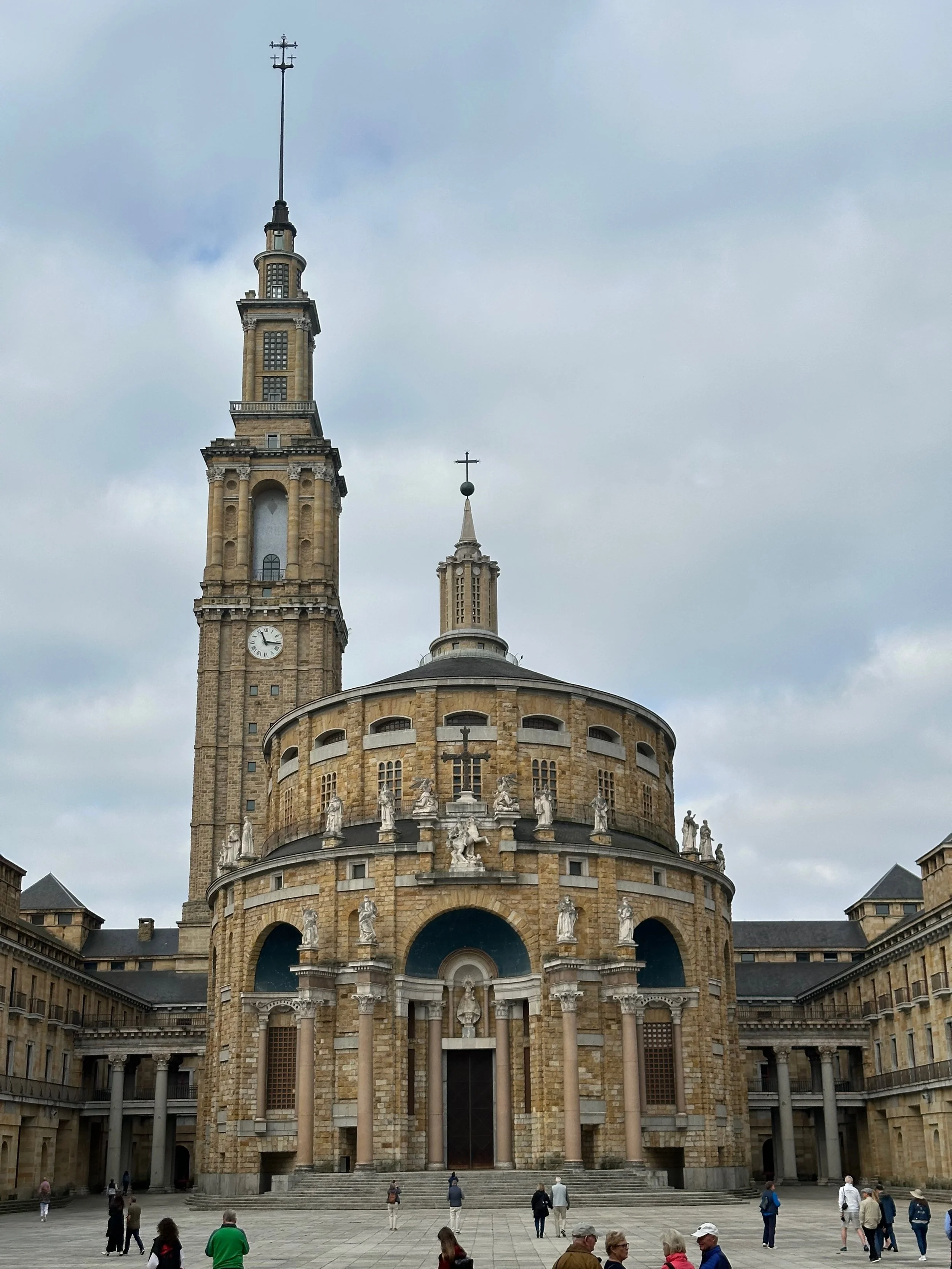
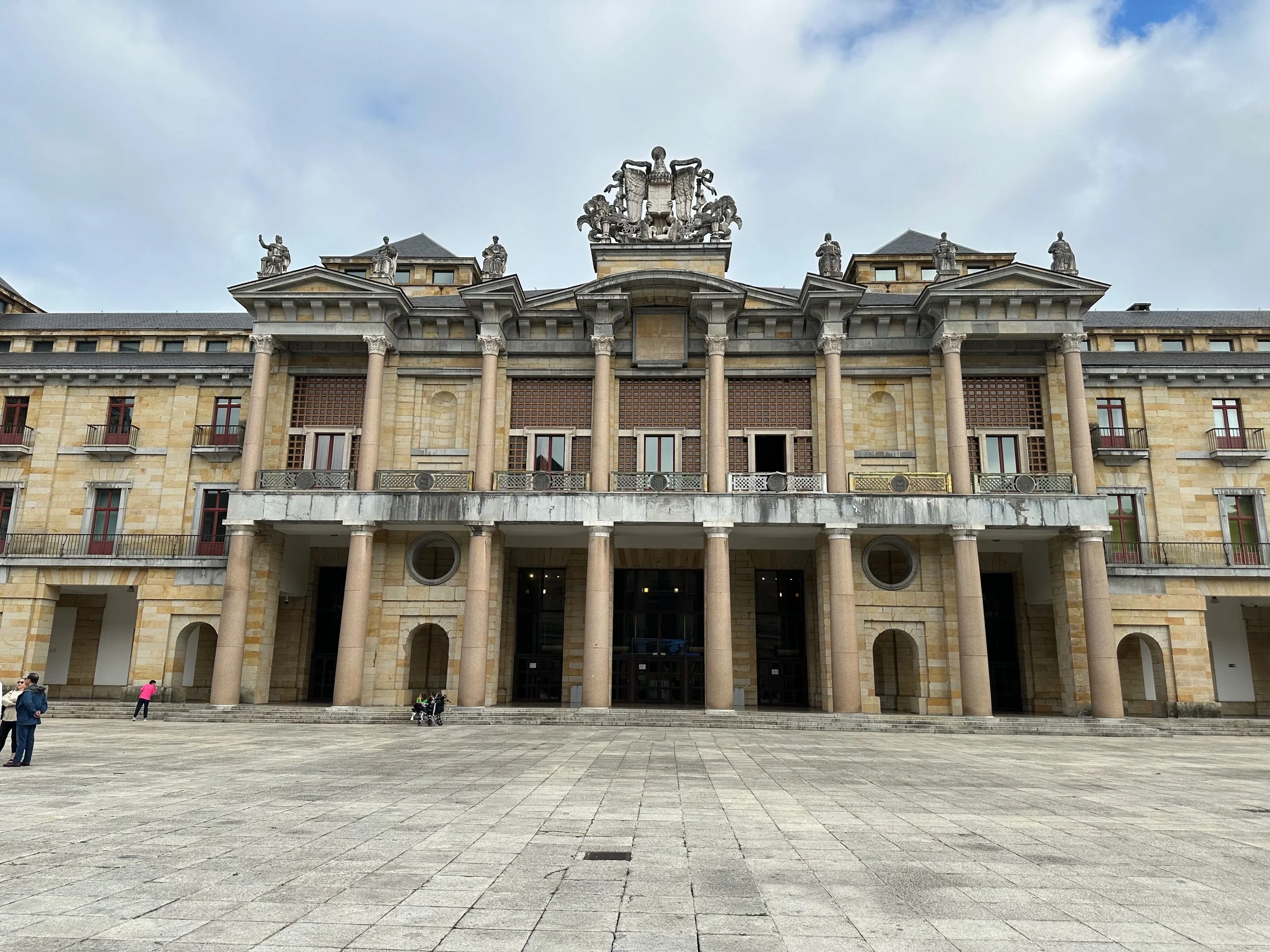
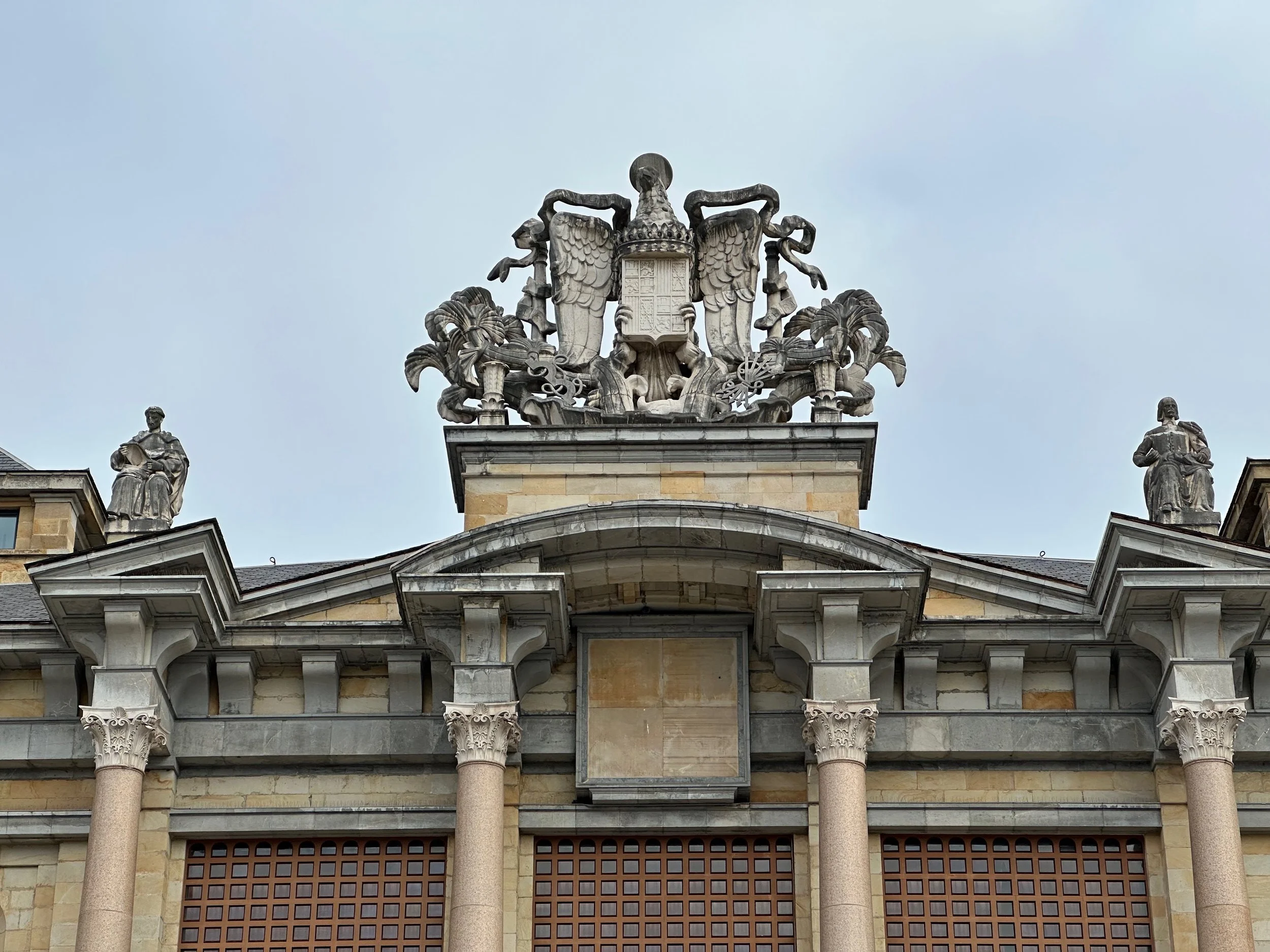
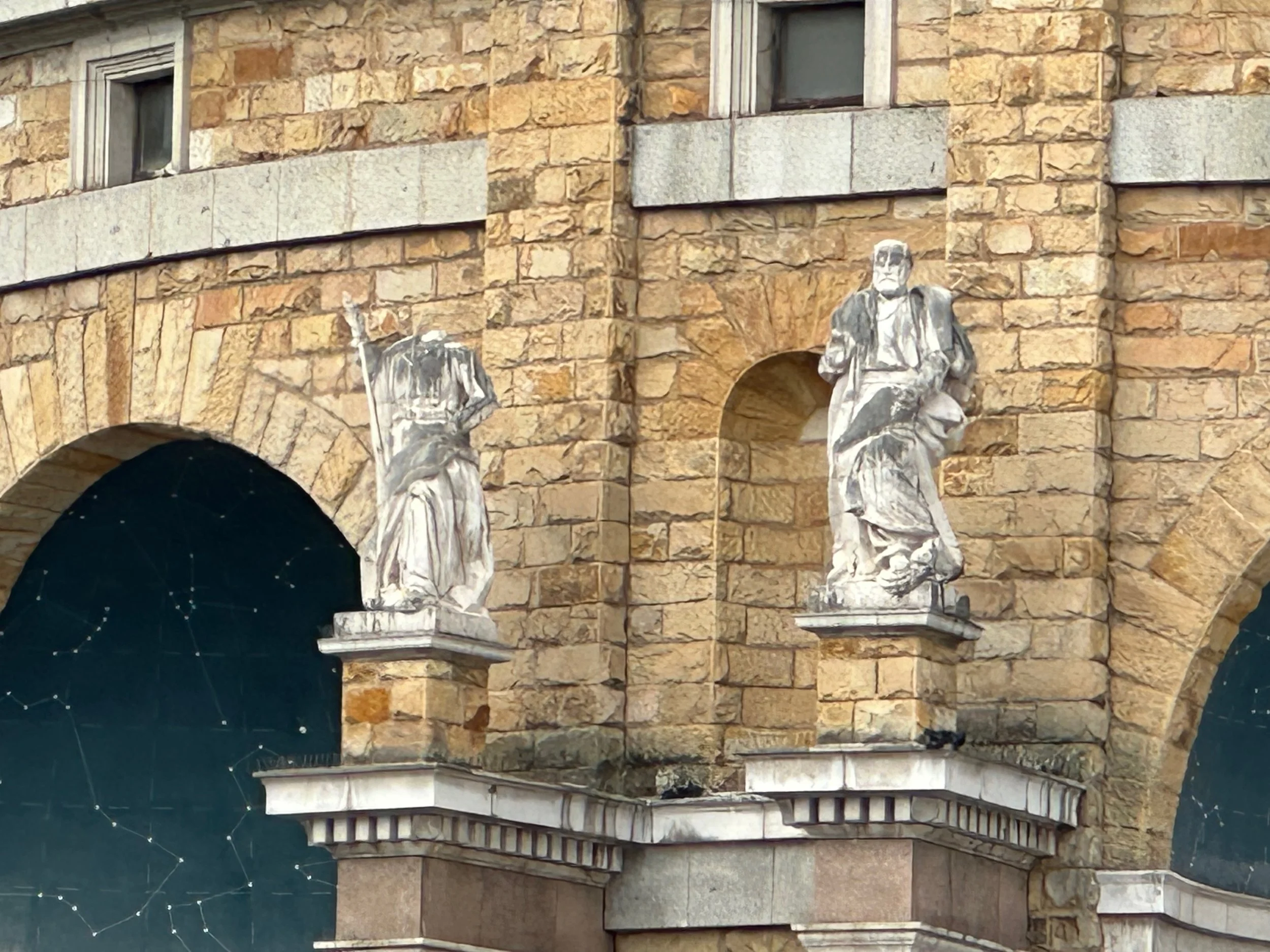
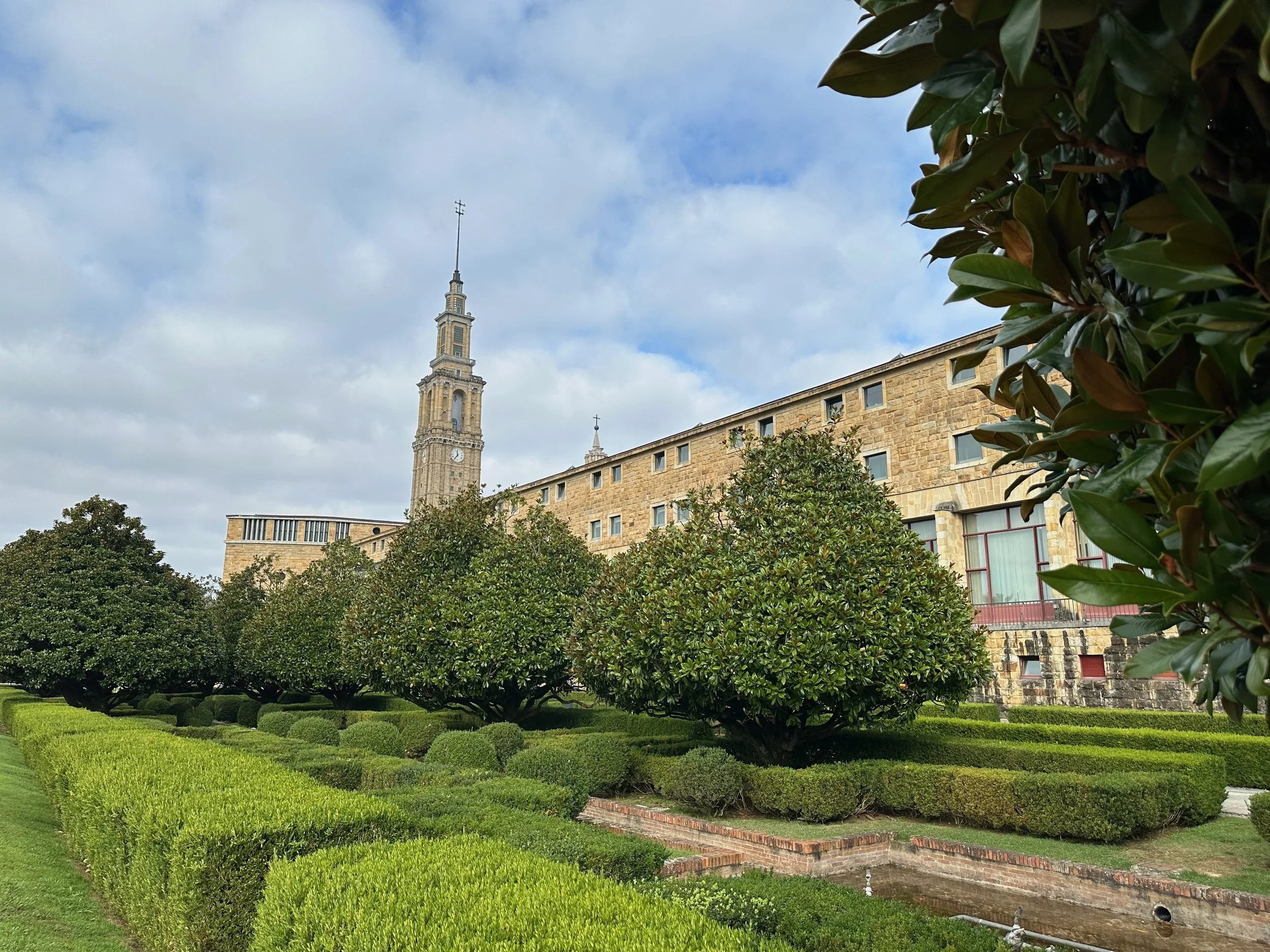
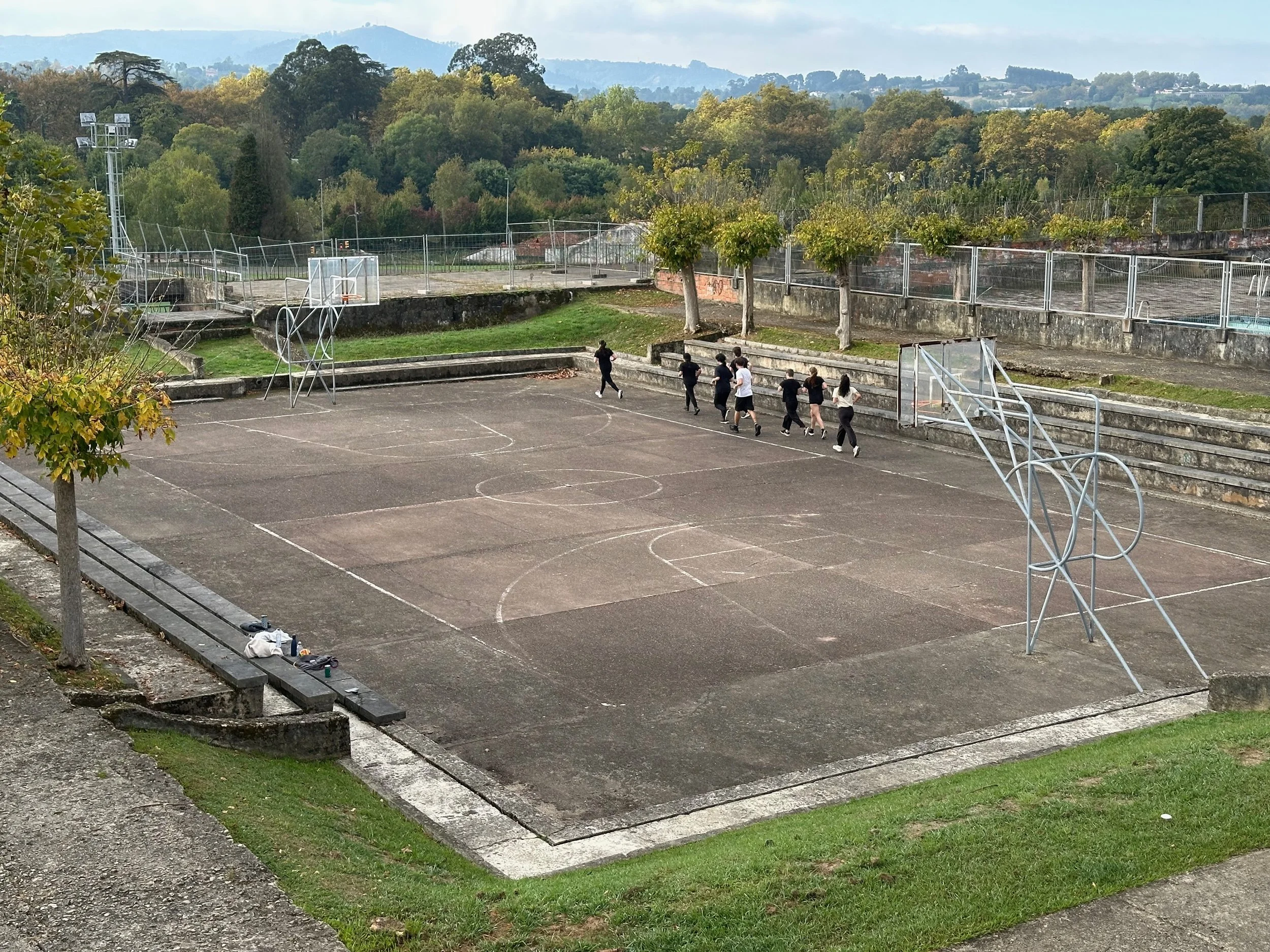
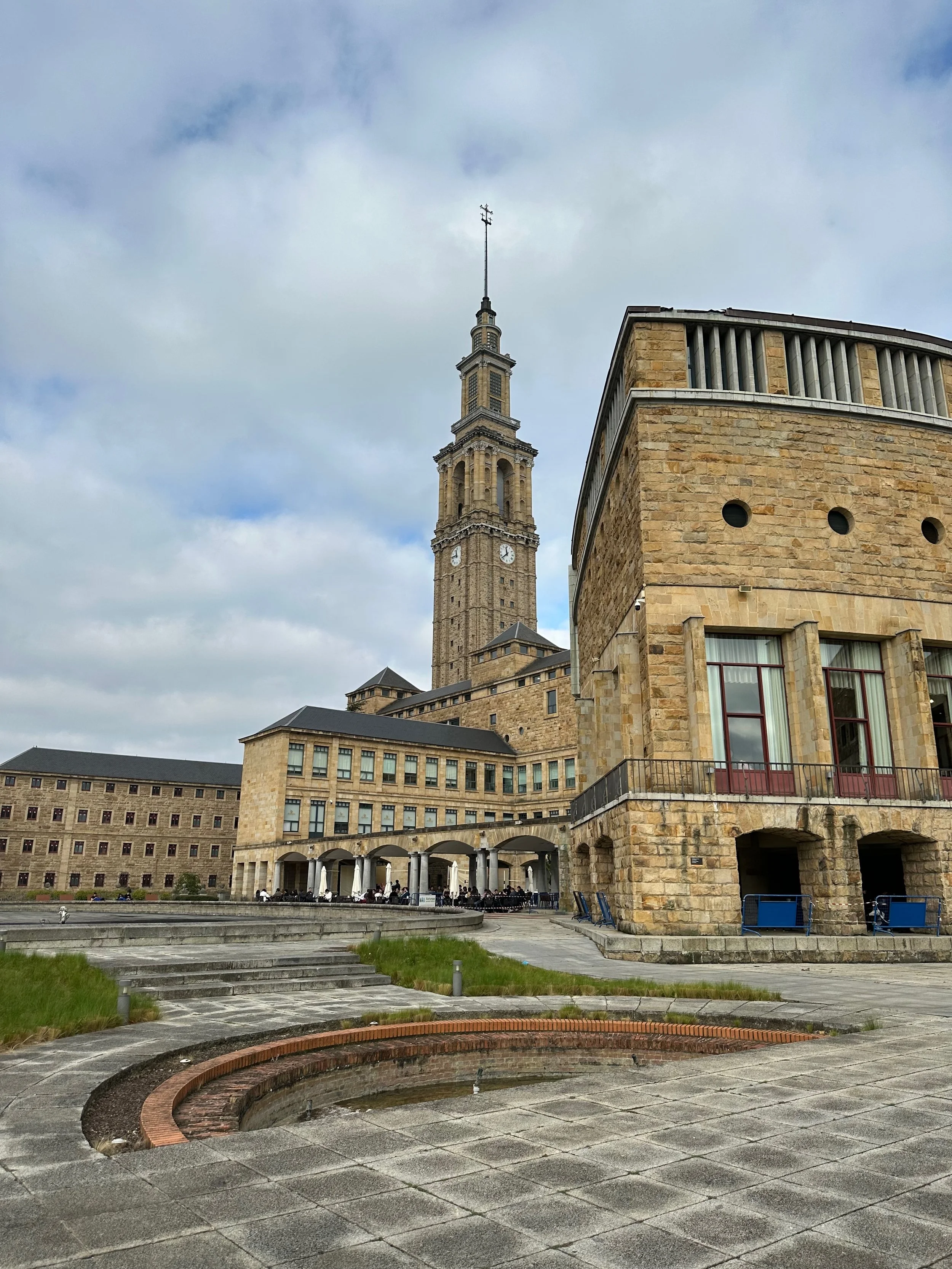
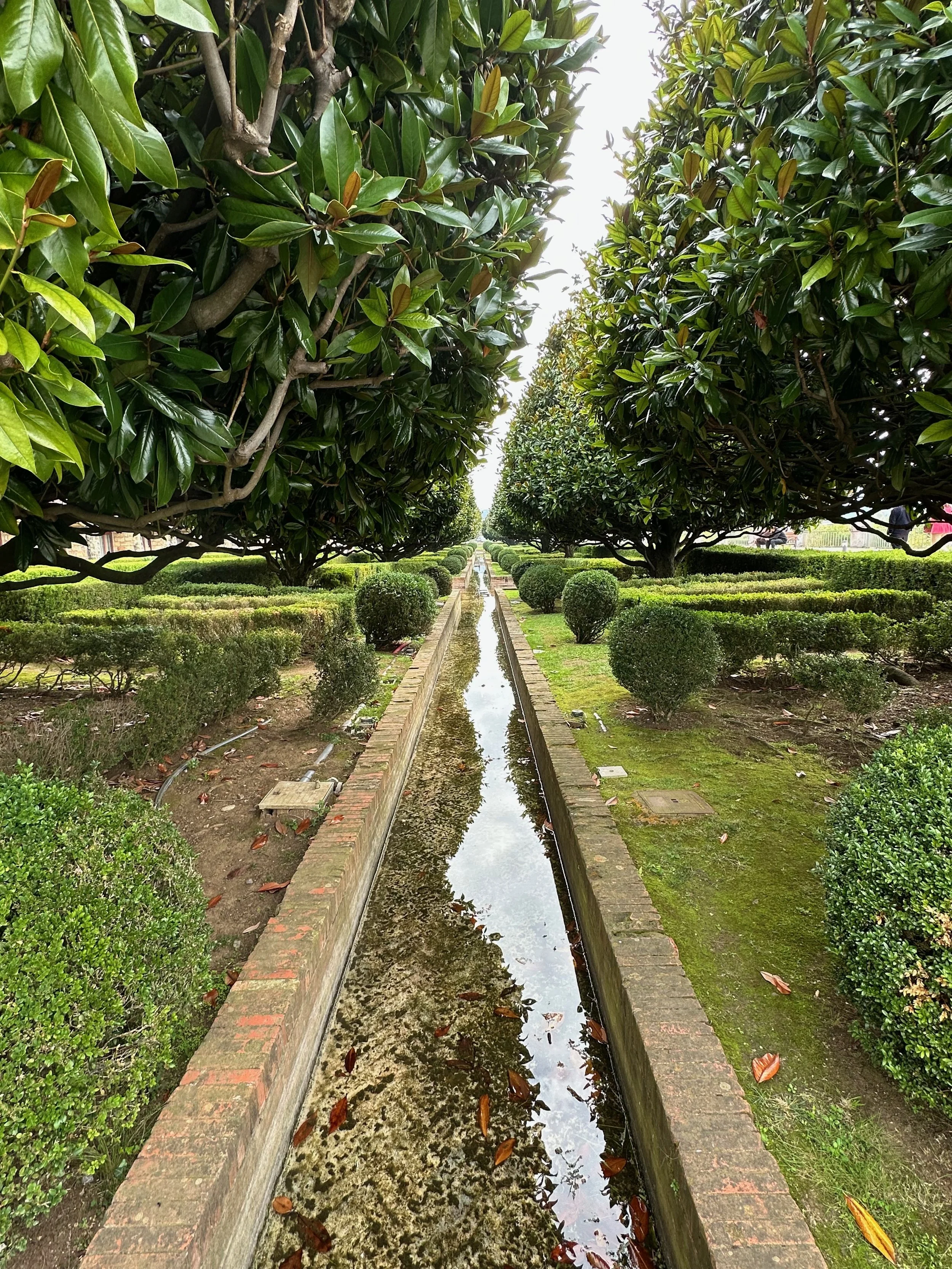
Leaving Gijon, Spain.
Our last stop in Spain was Bilbao.
Bilbao, Spain
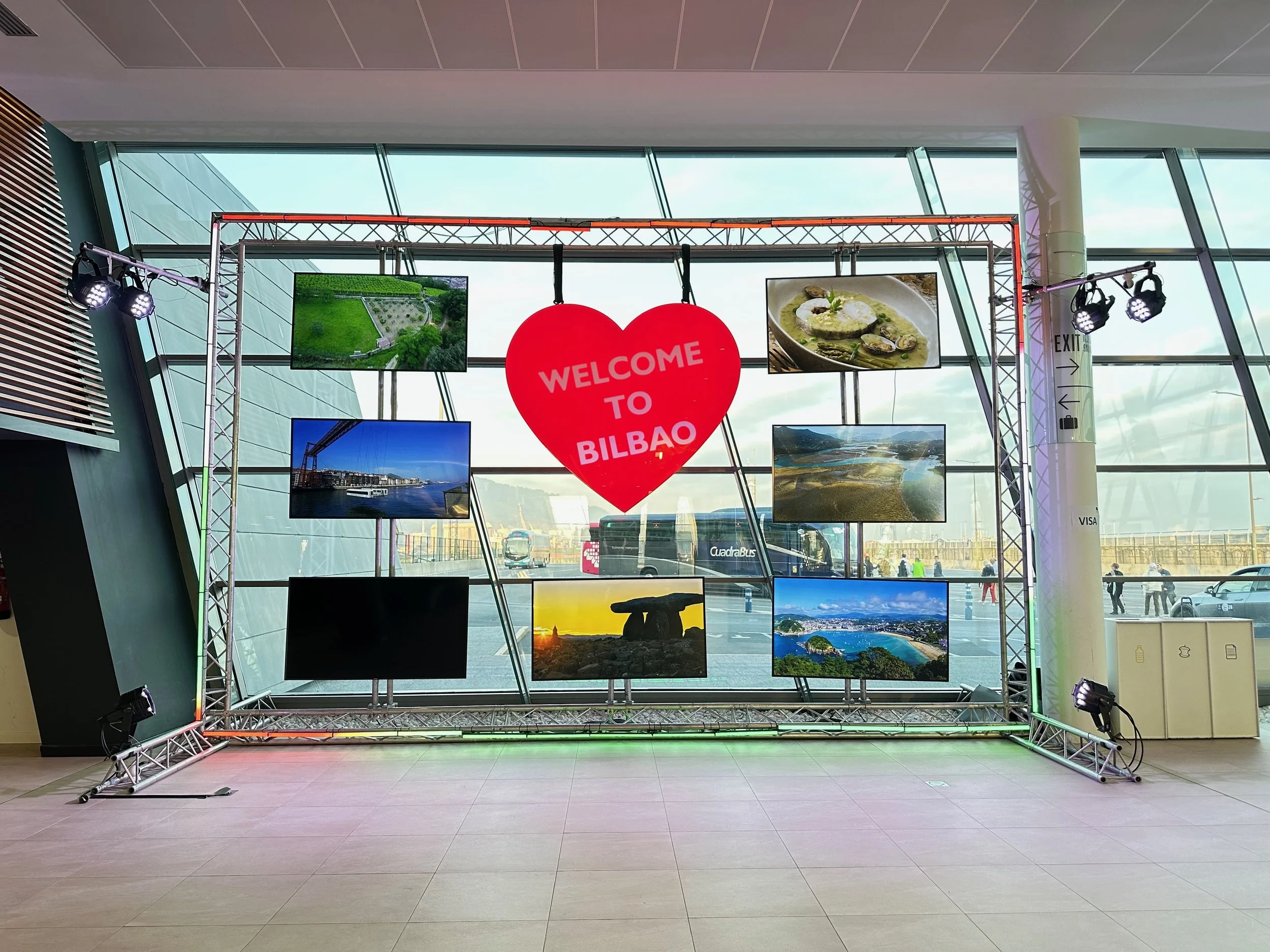
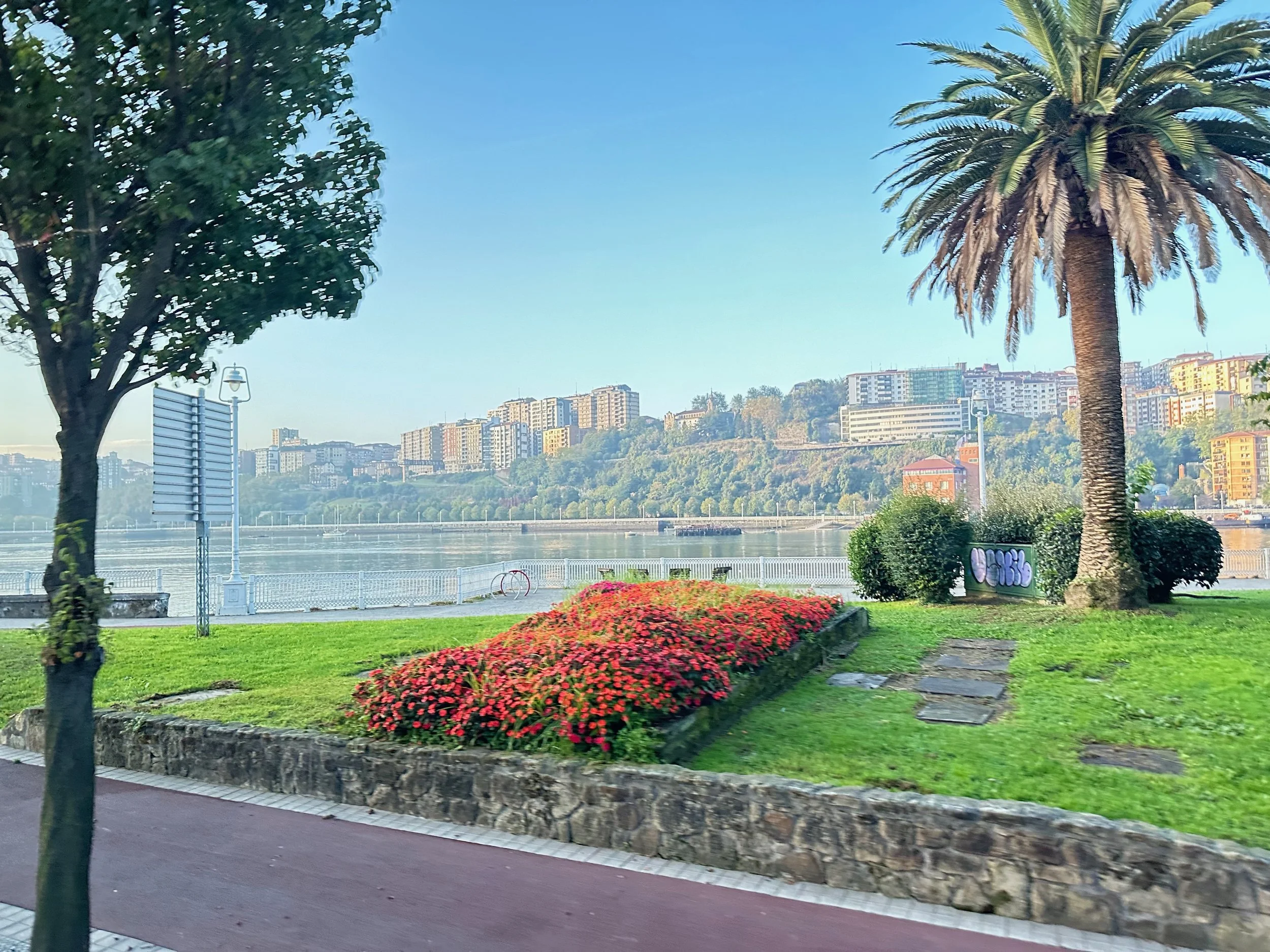
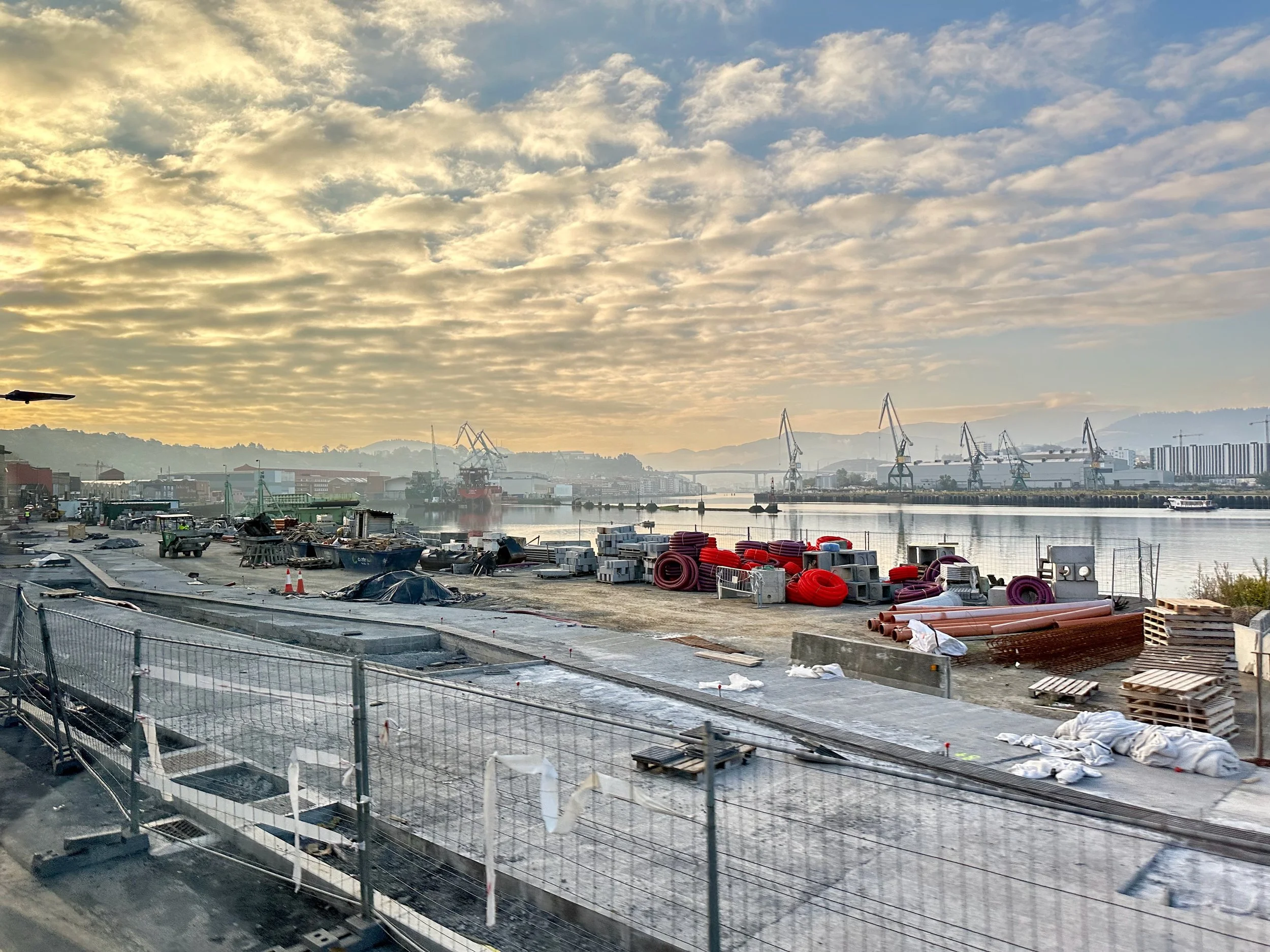
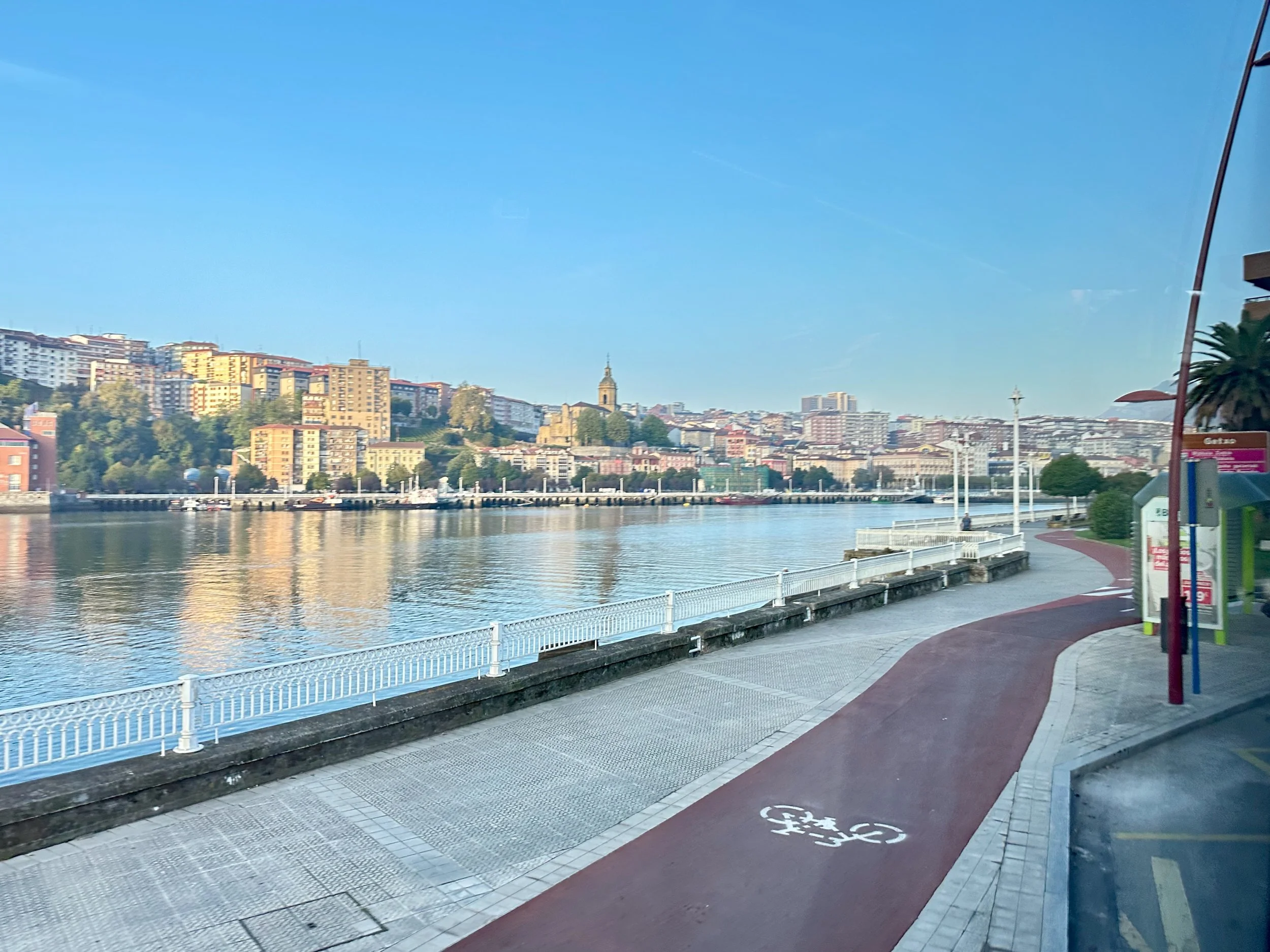
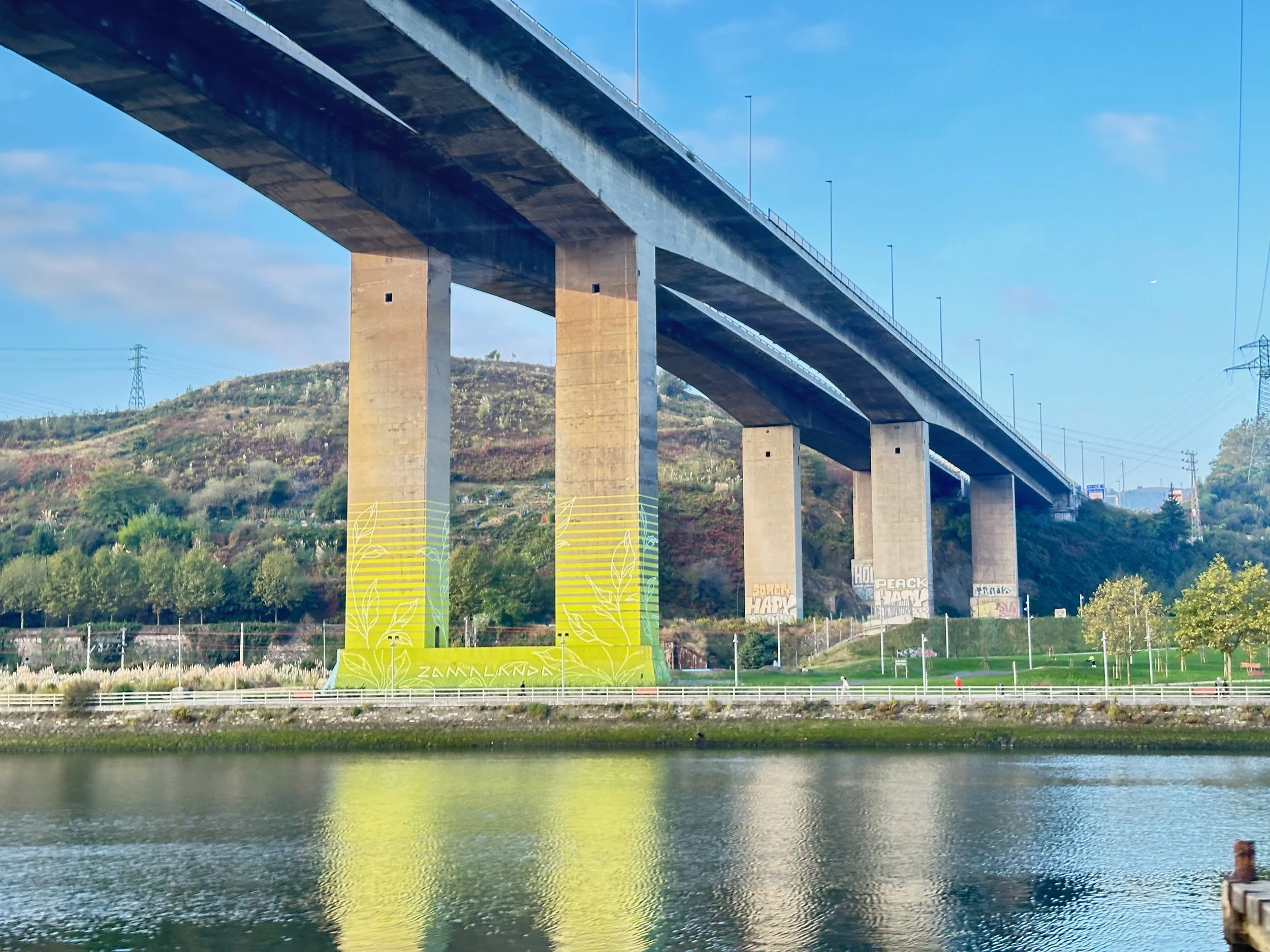
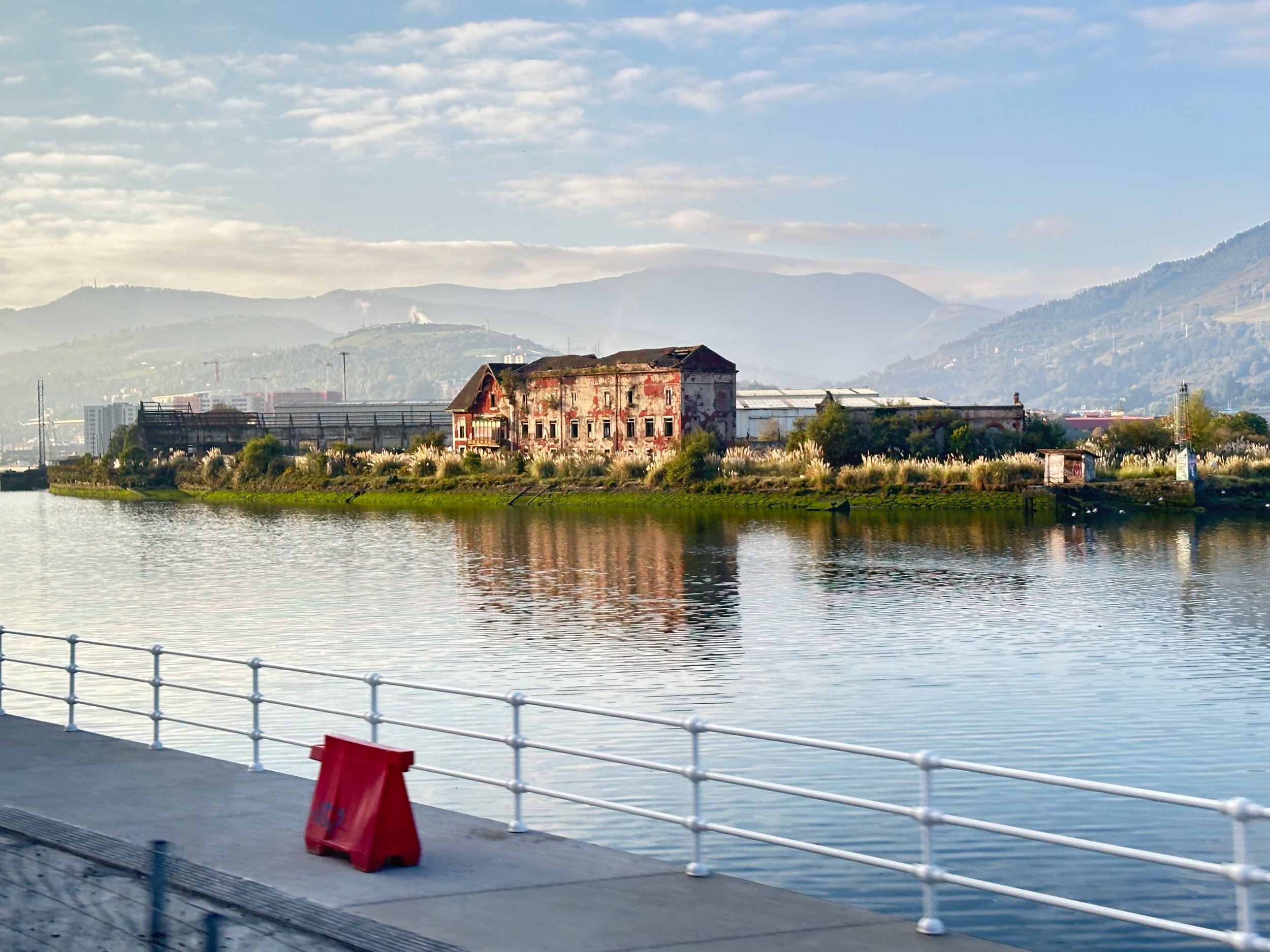
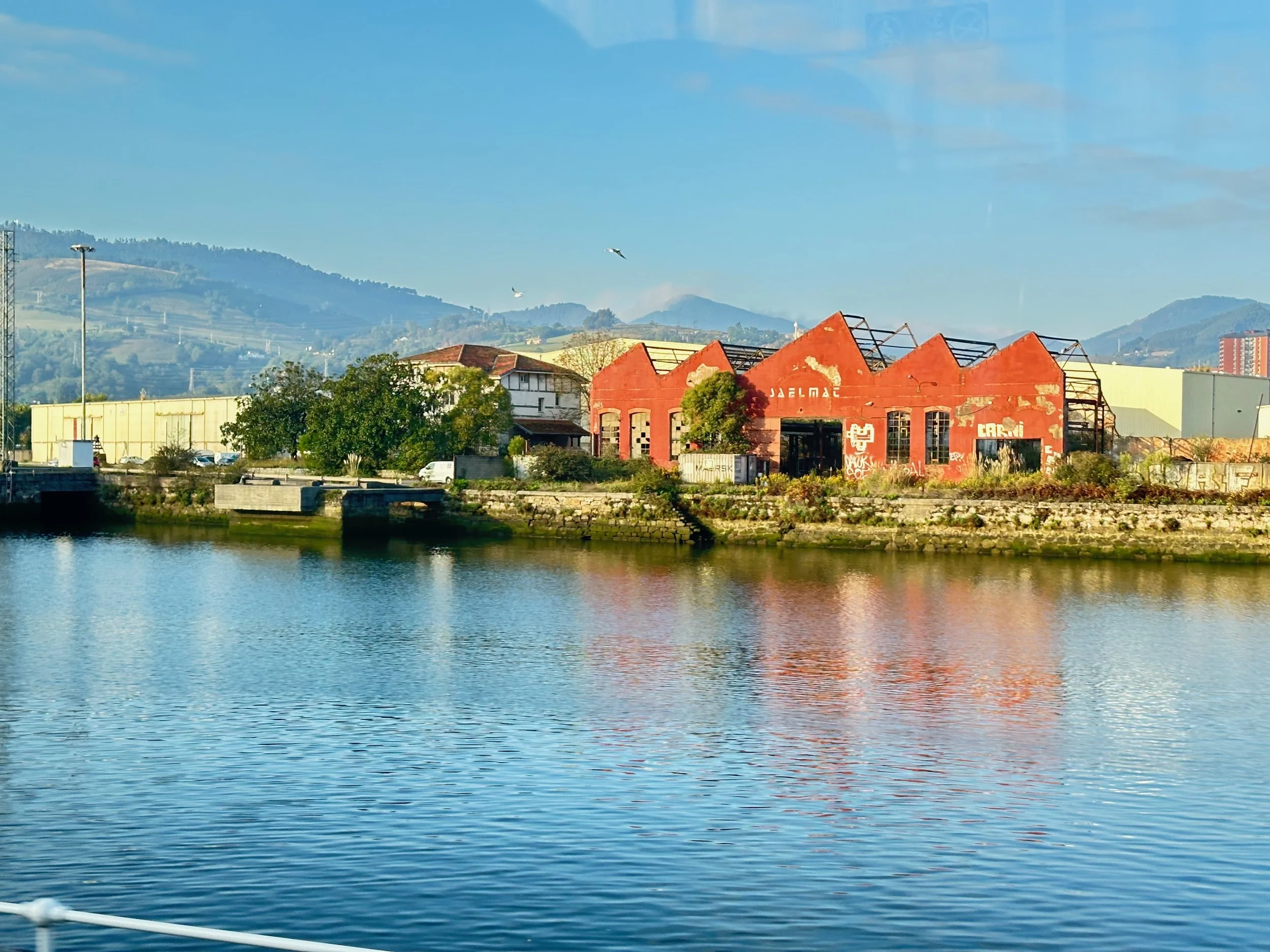
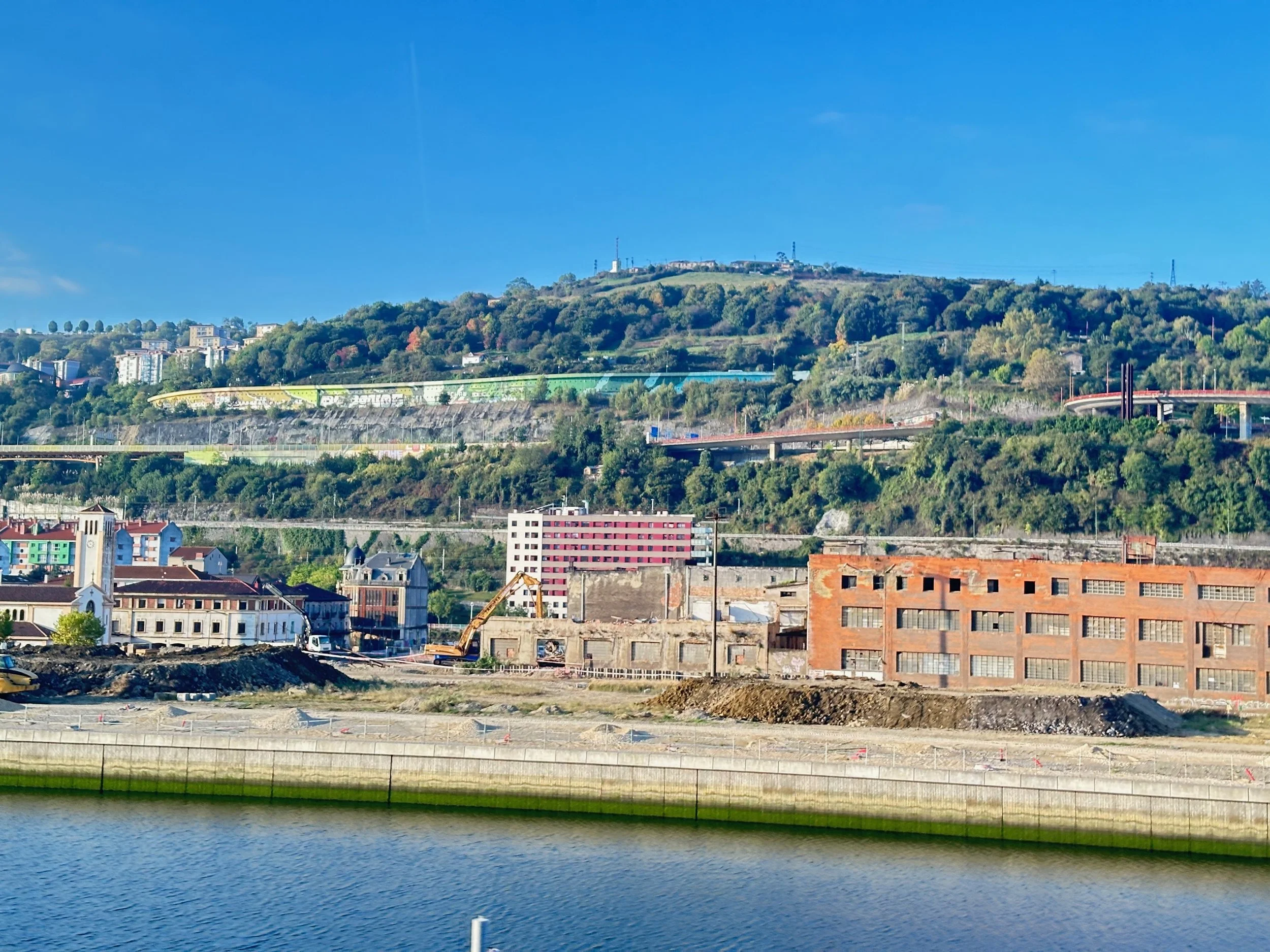
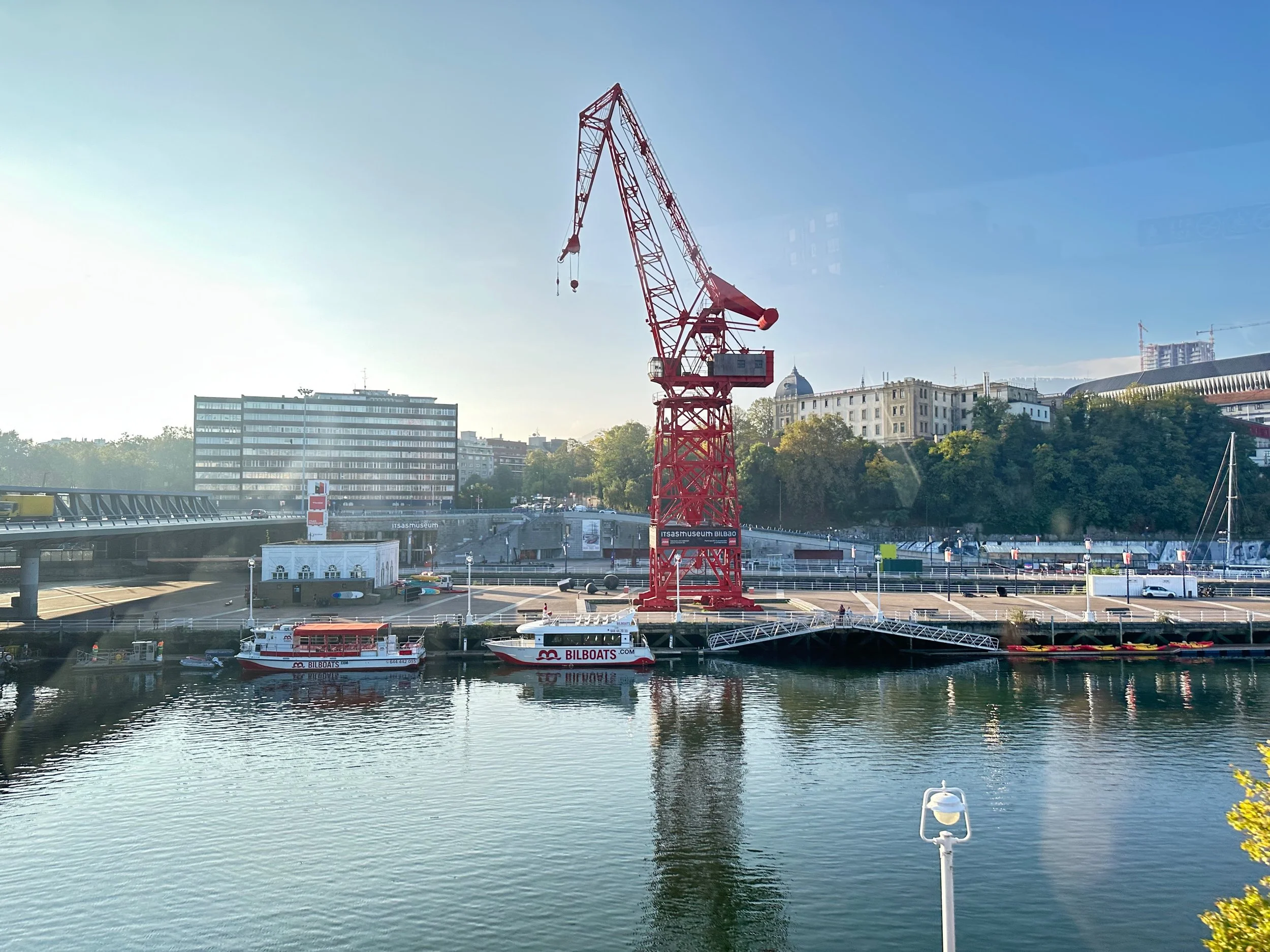
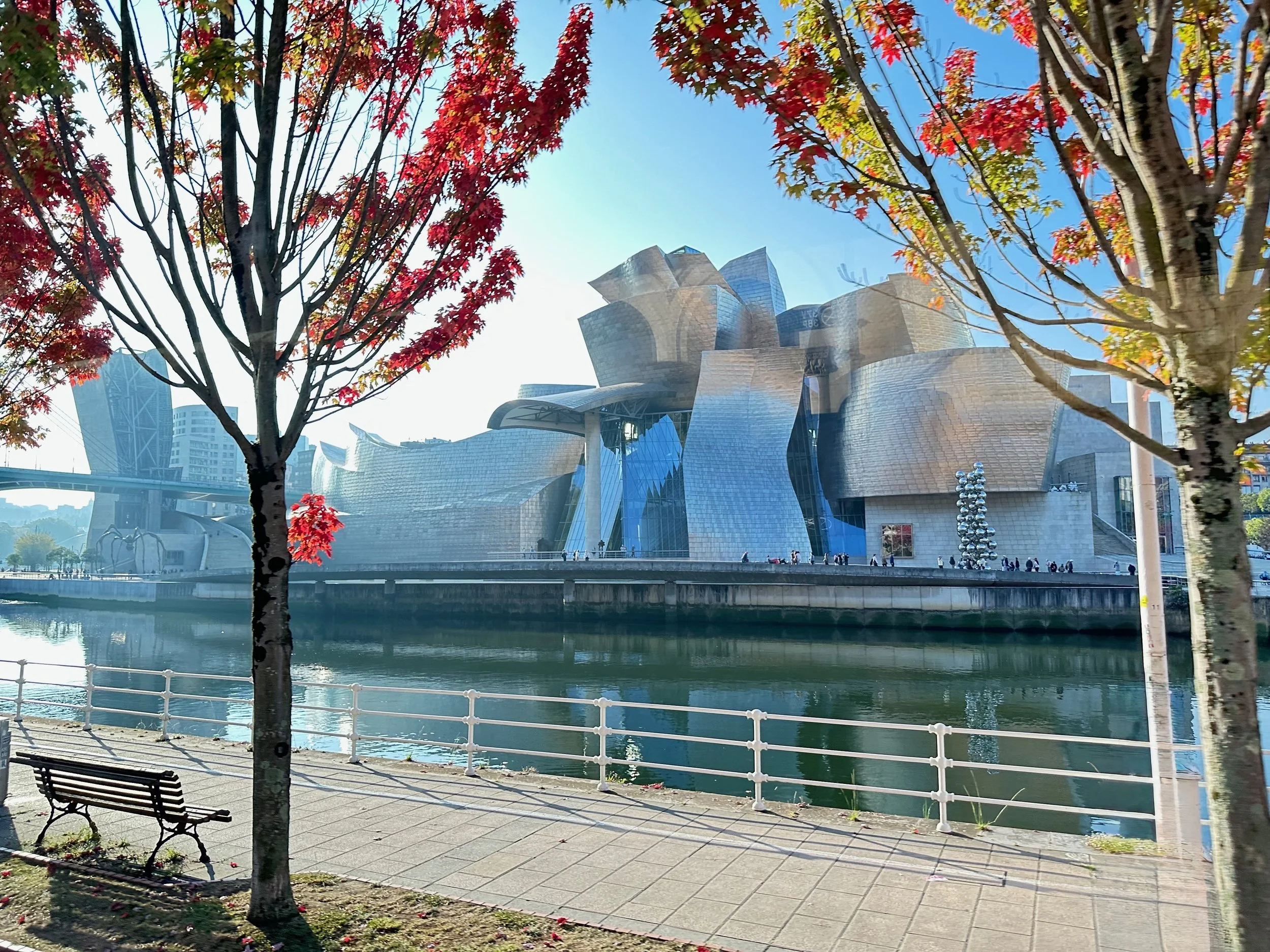
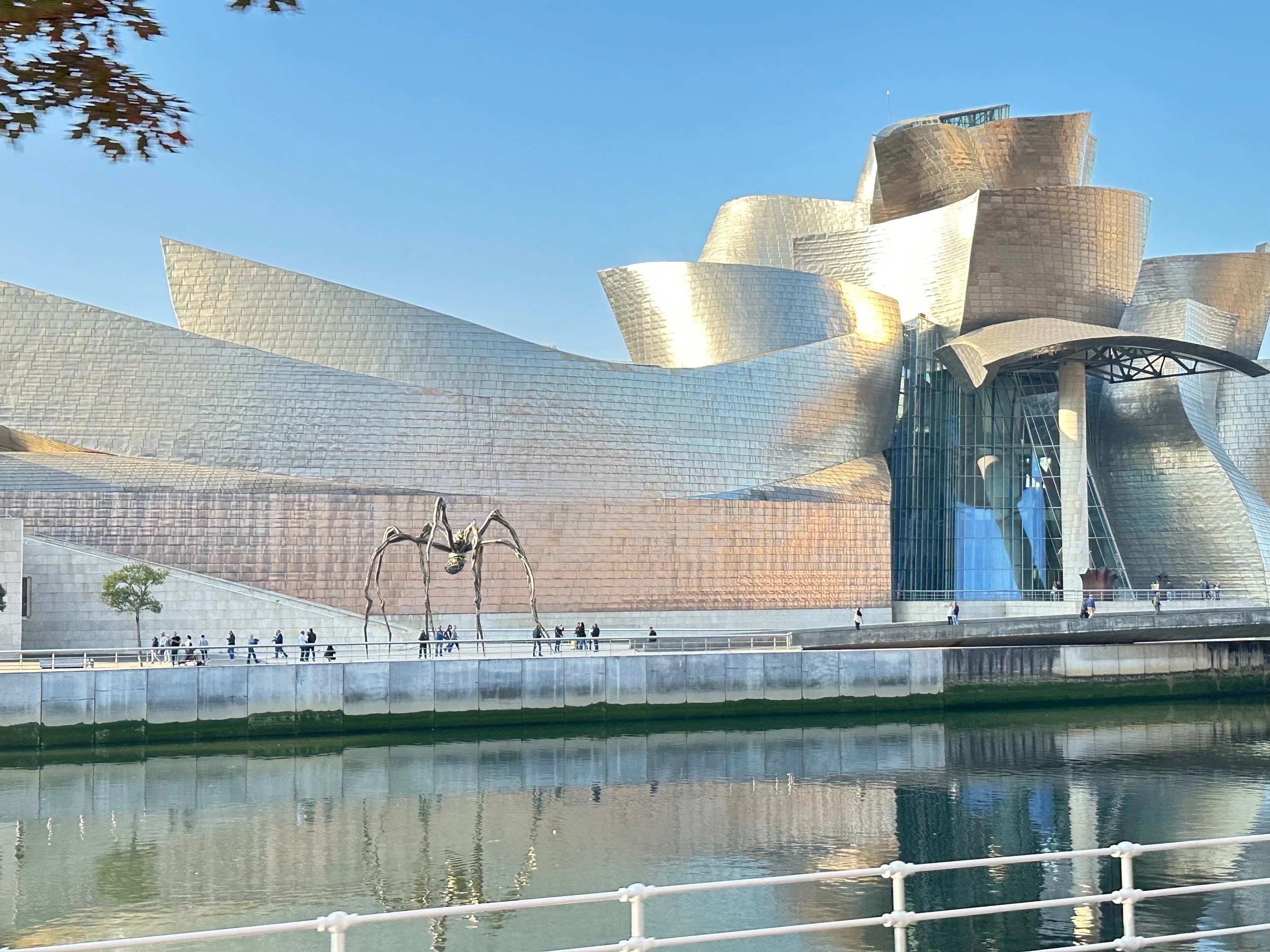
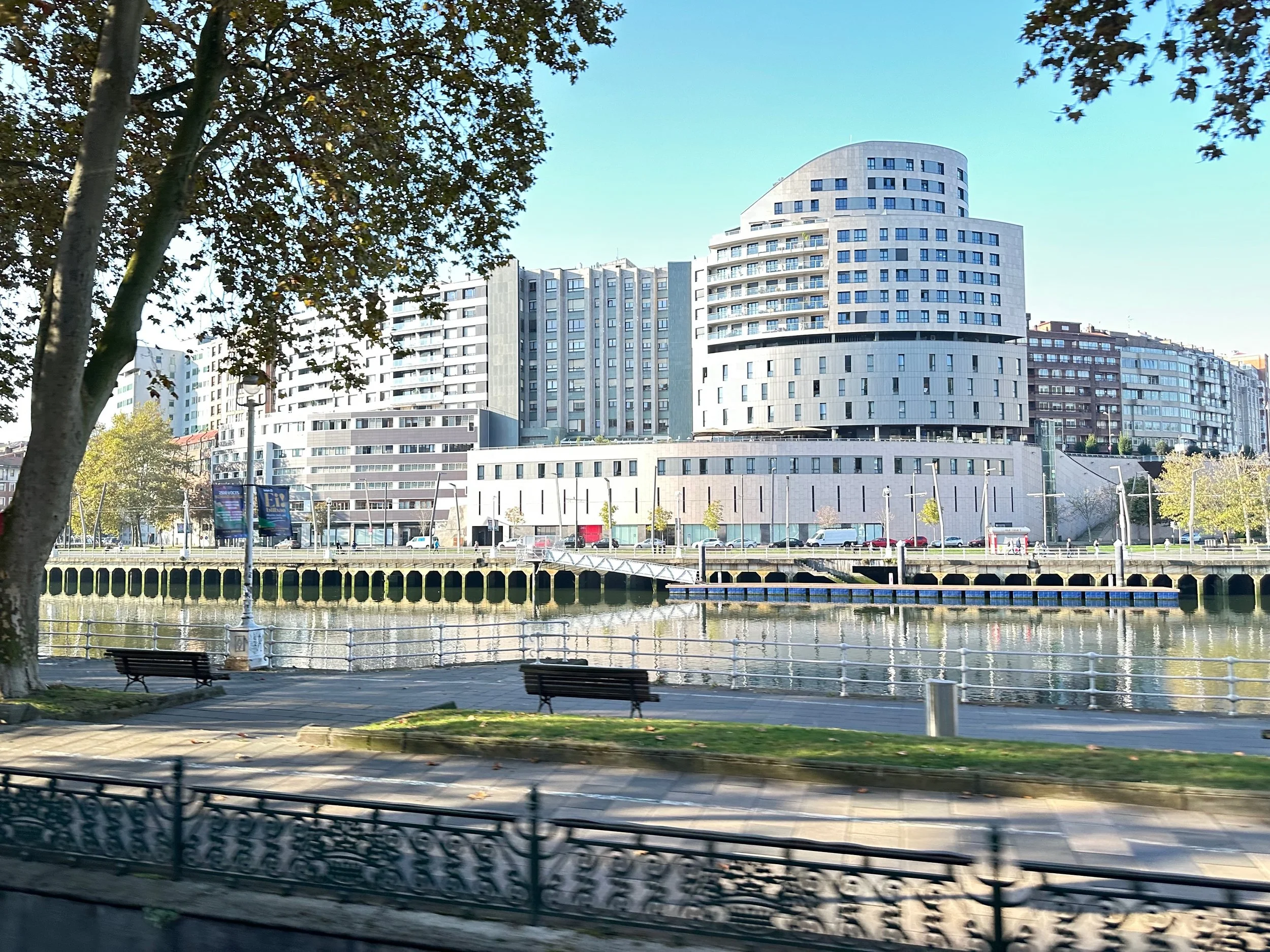
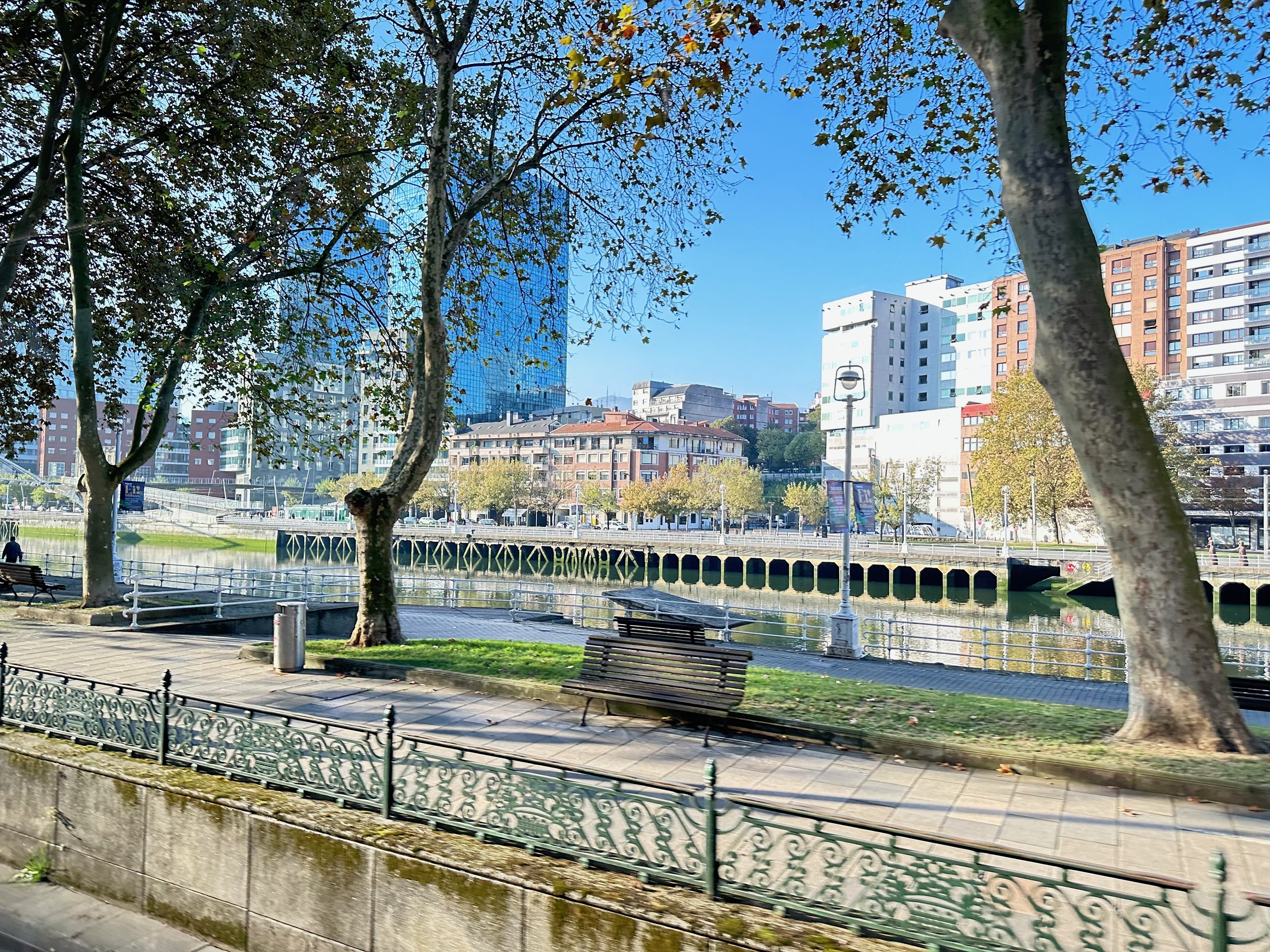
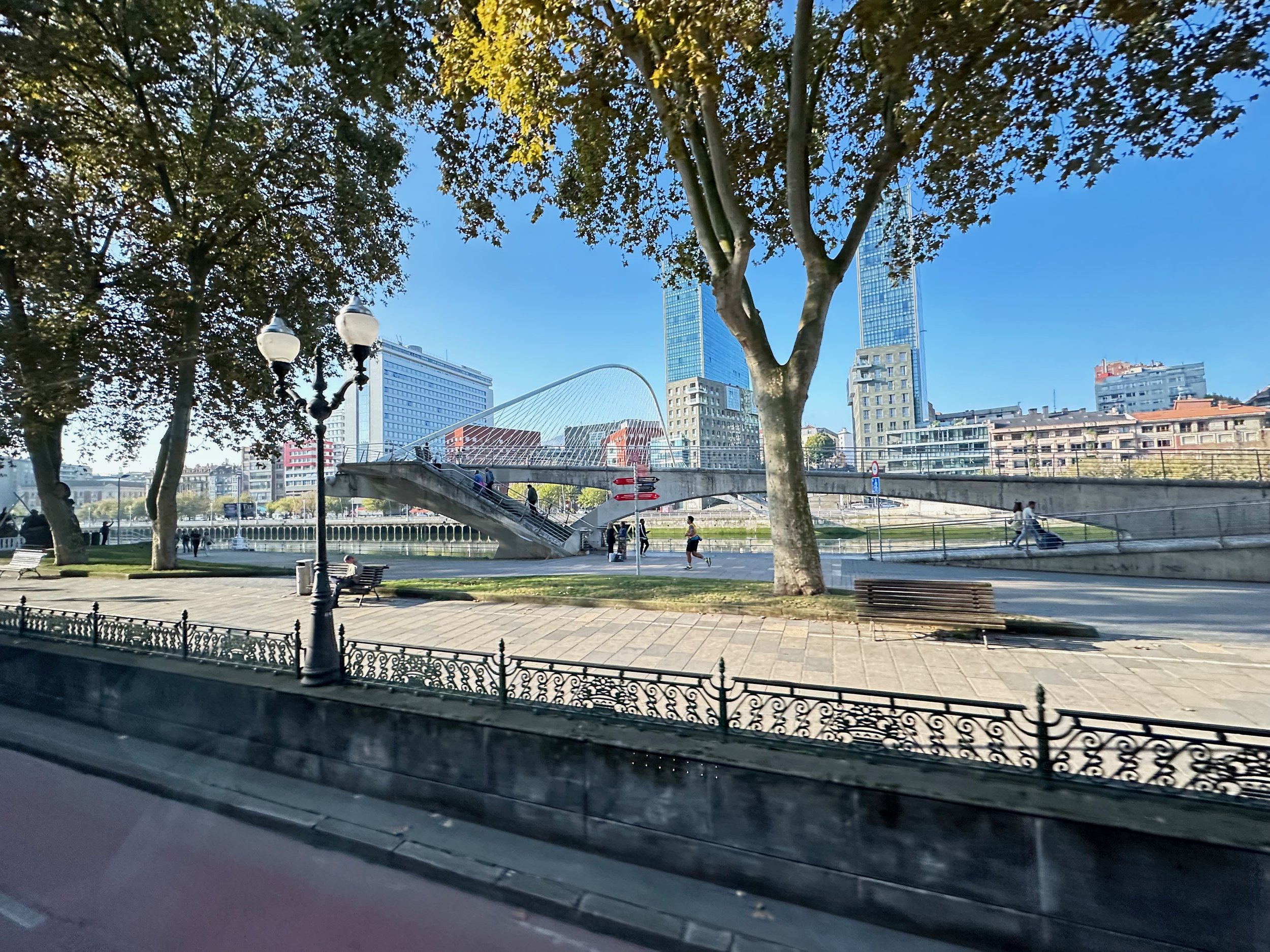
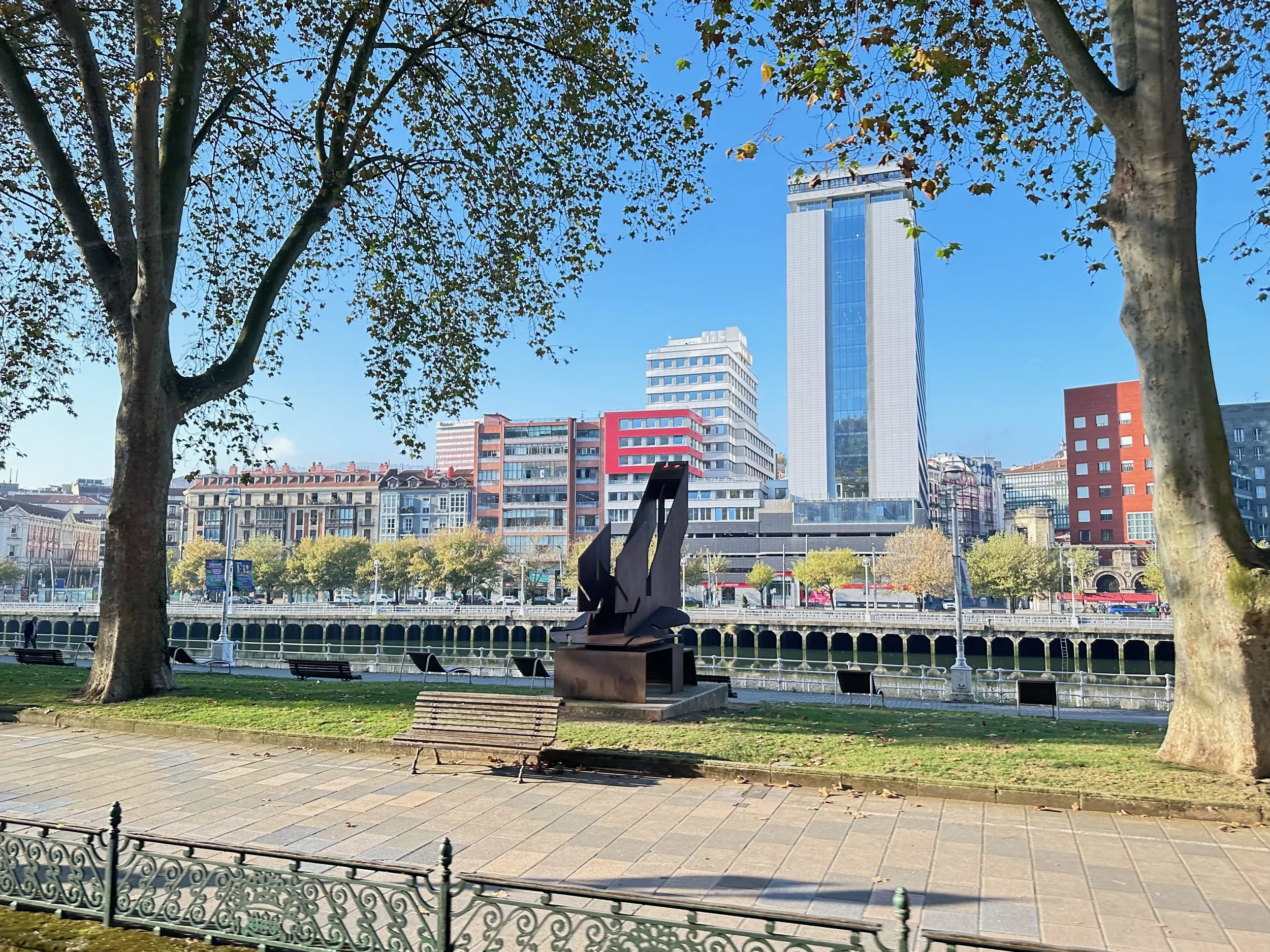
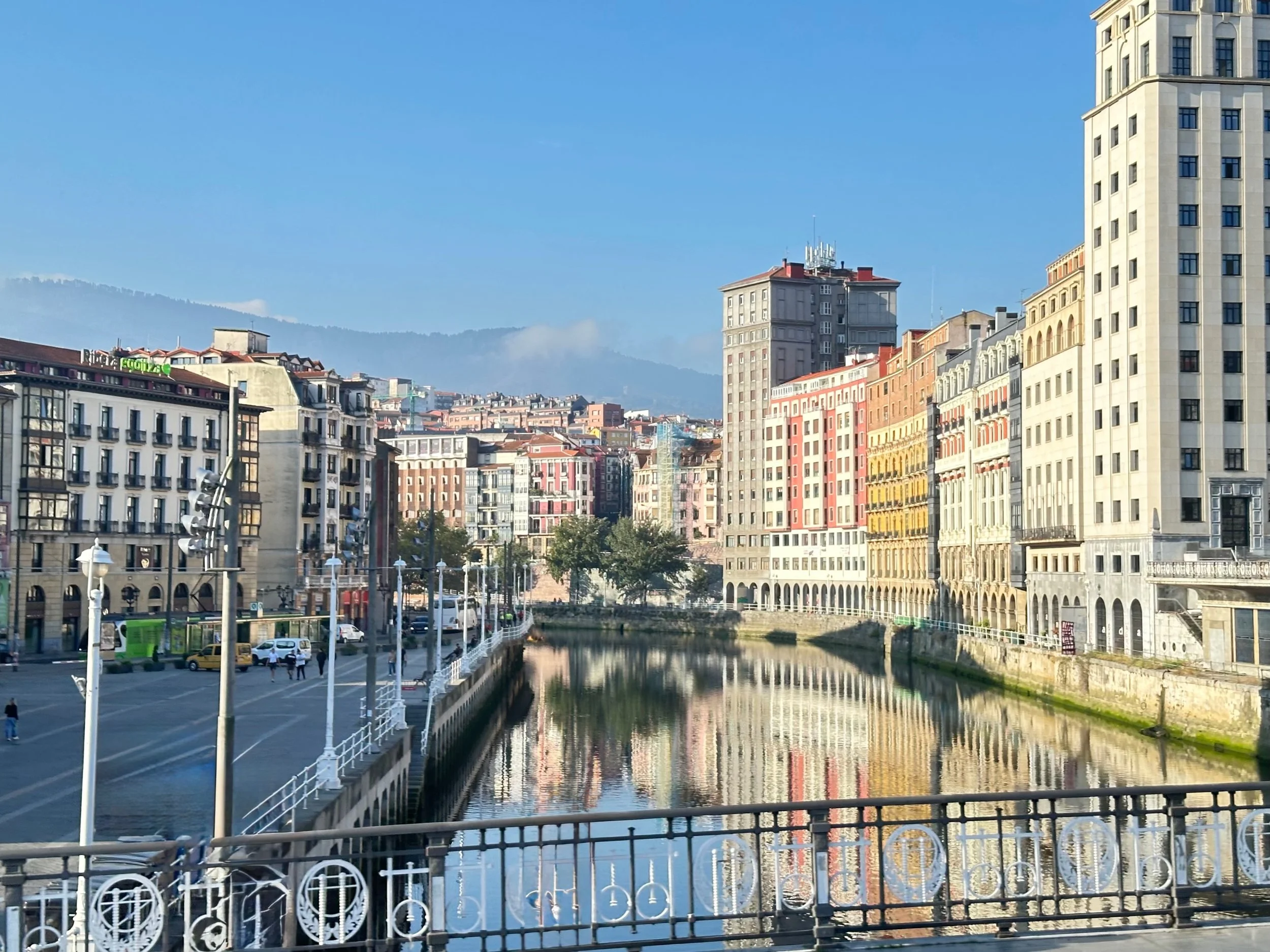
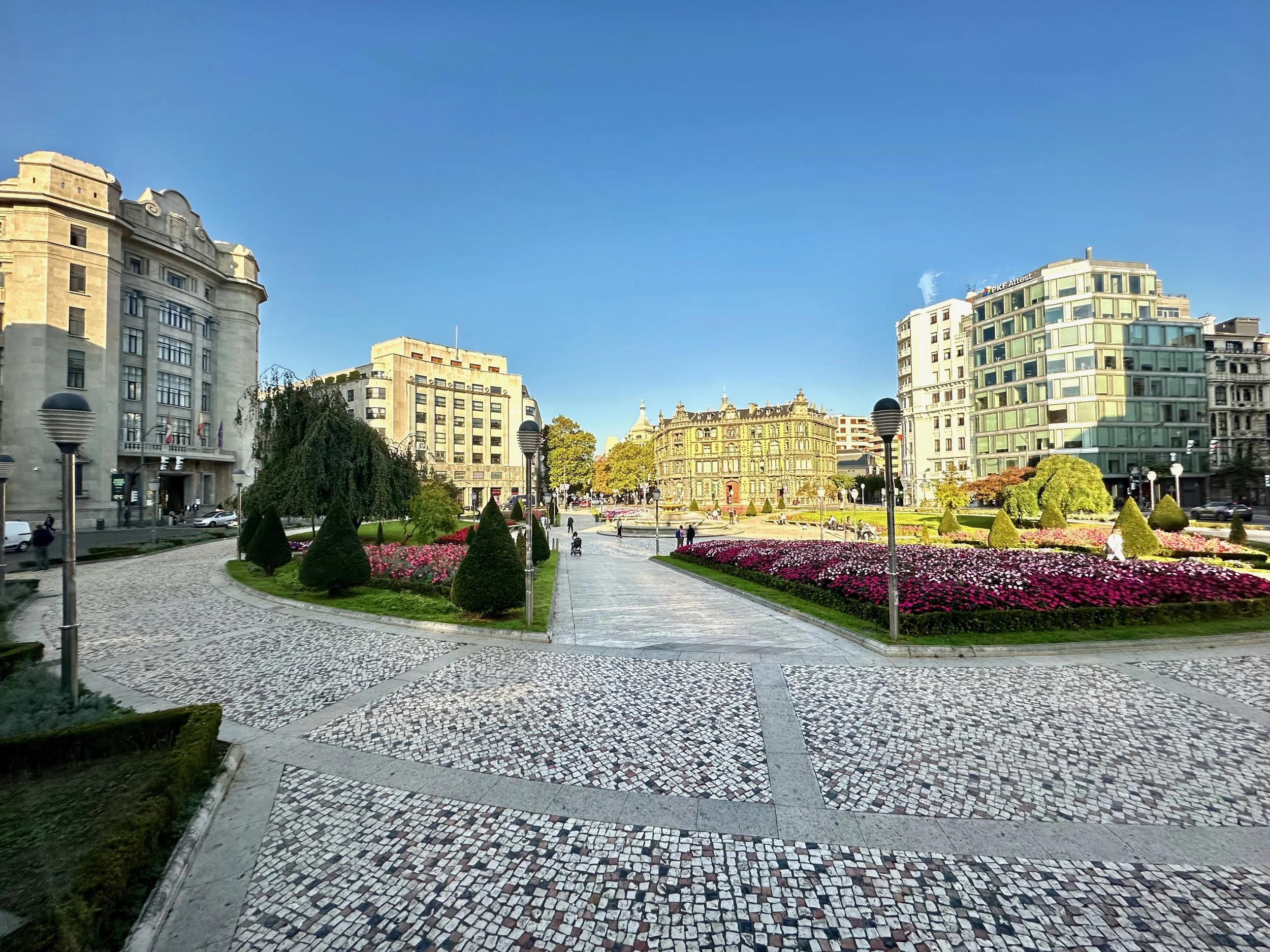
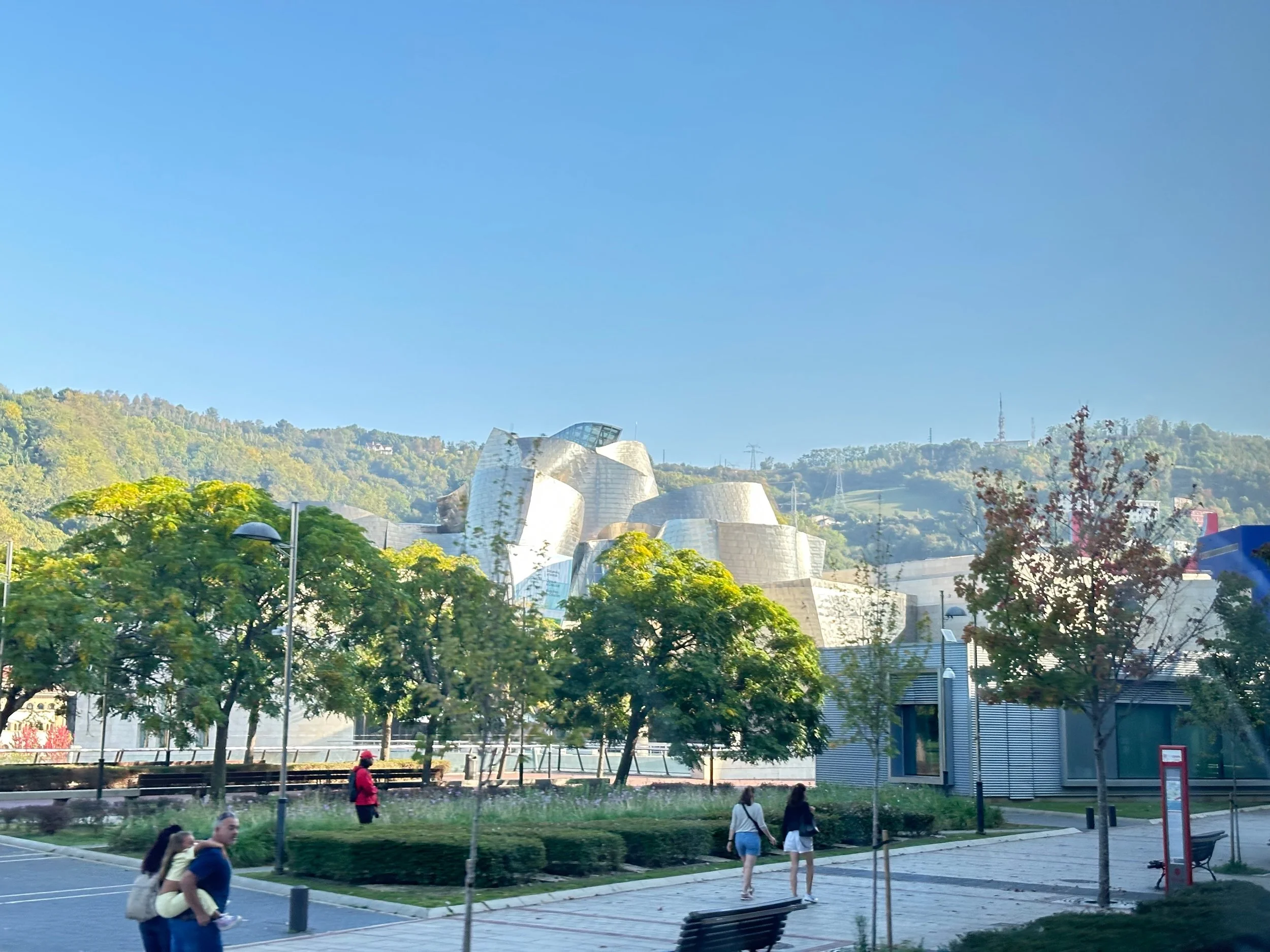
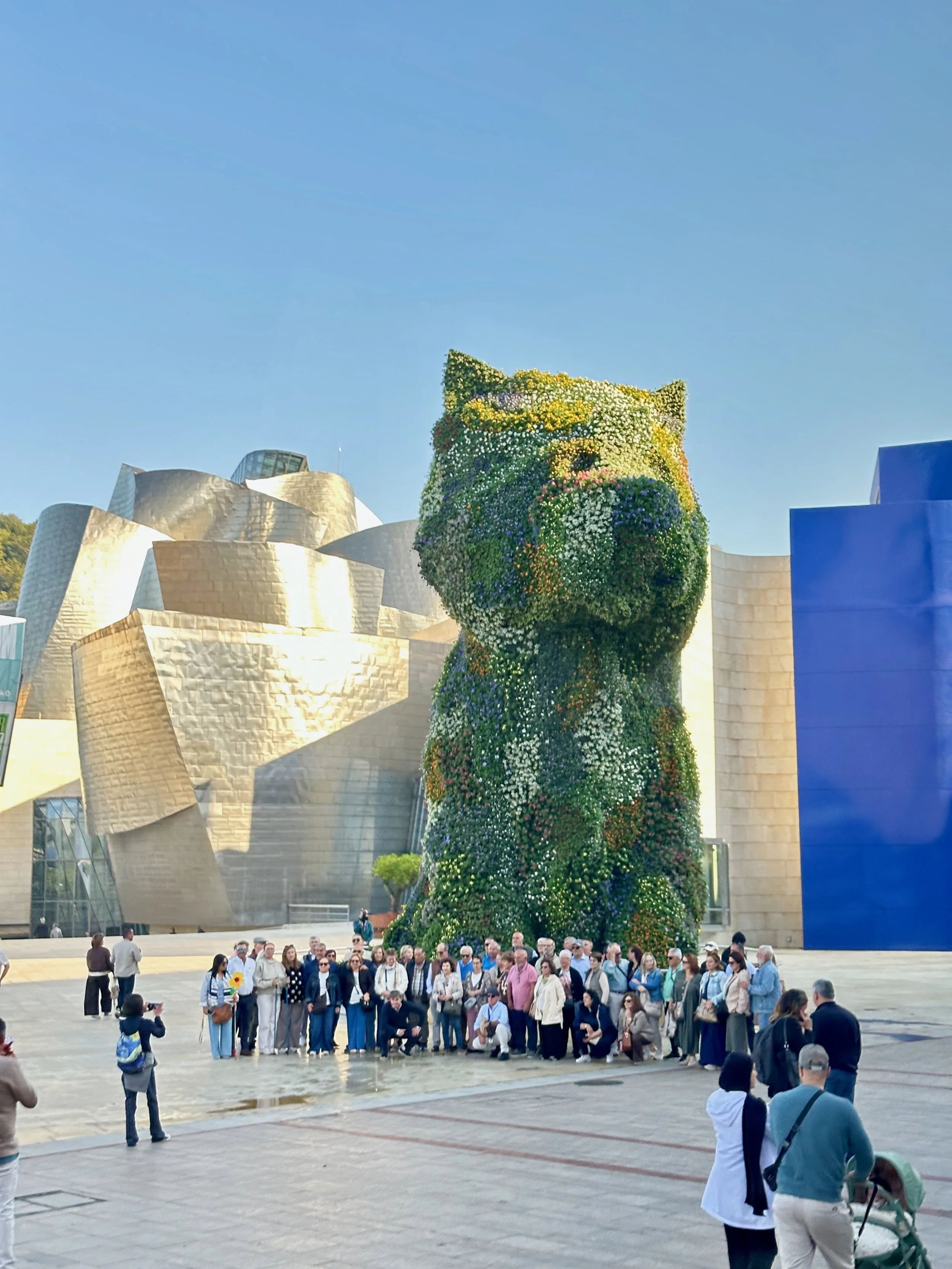
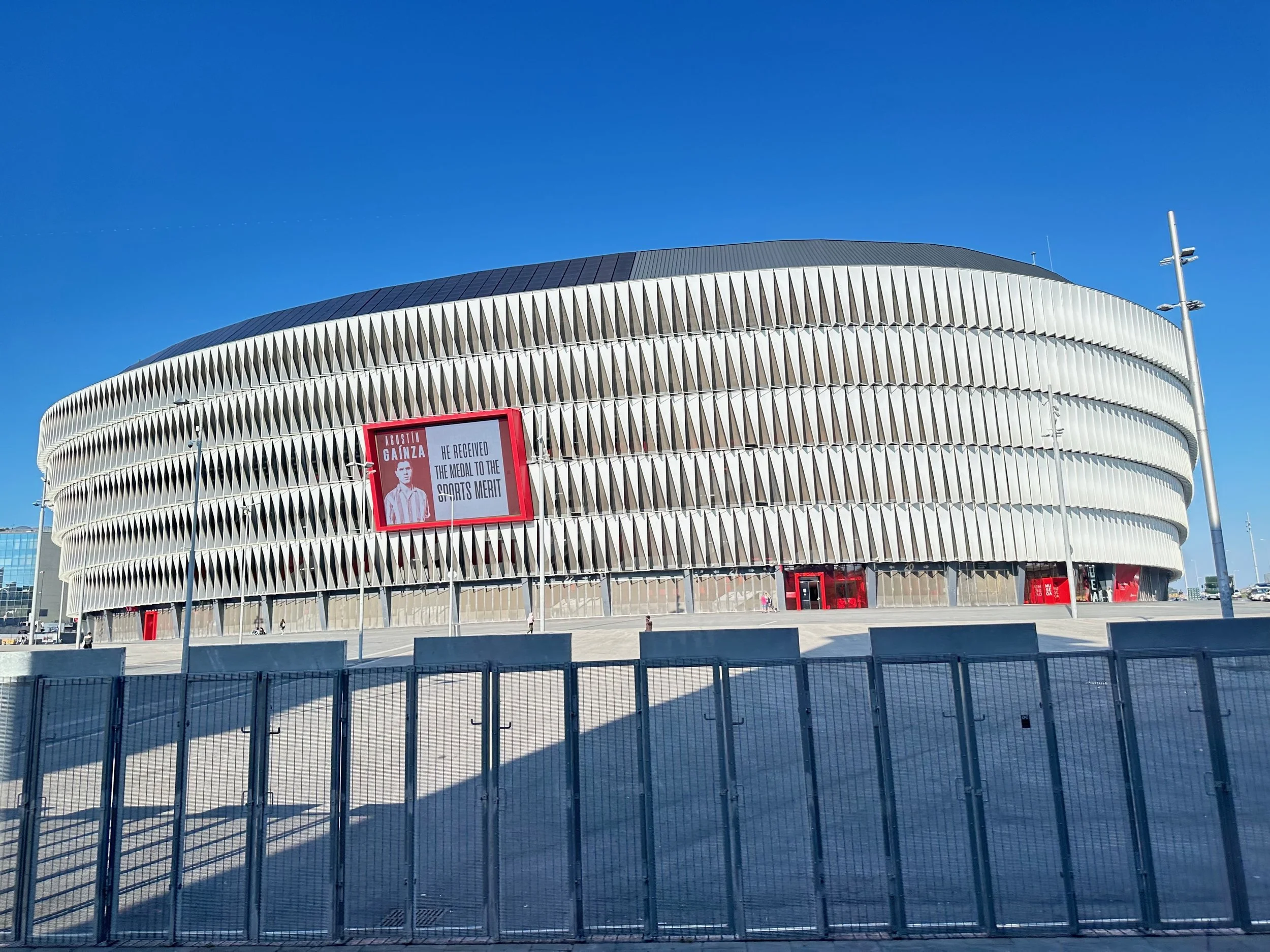
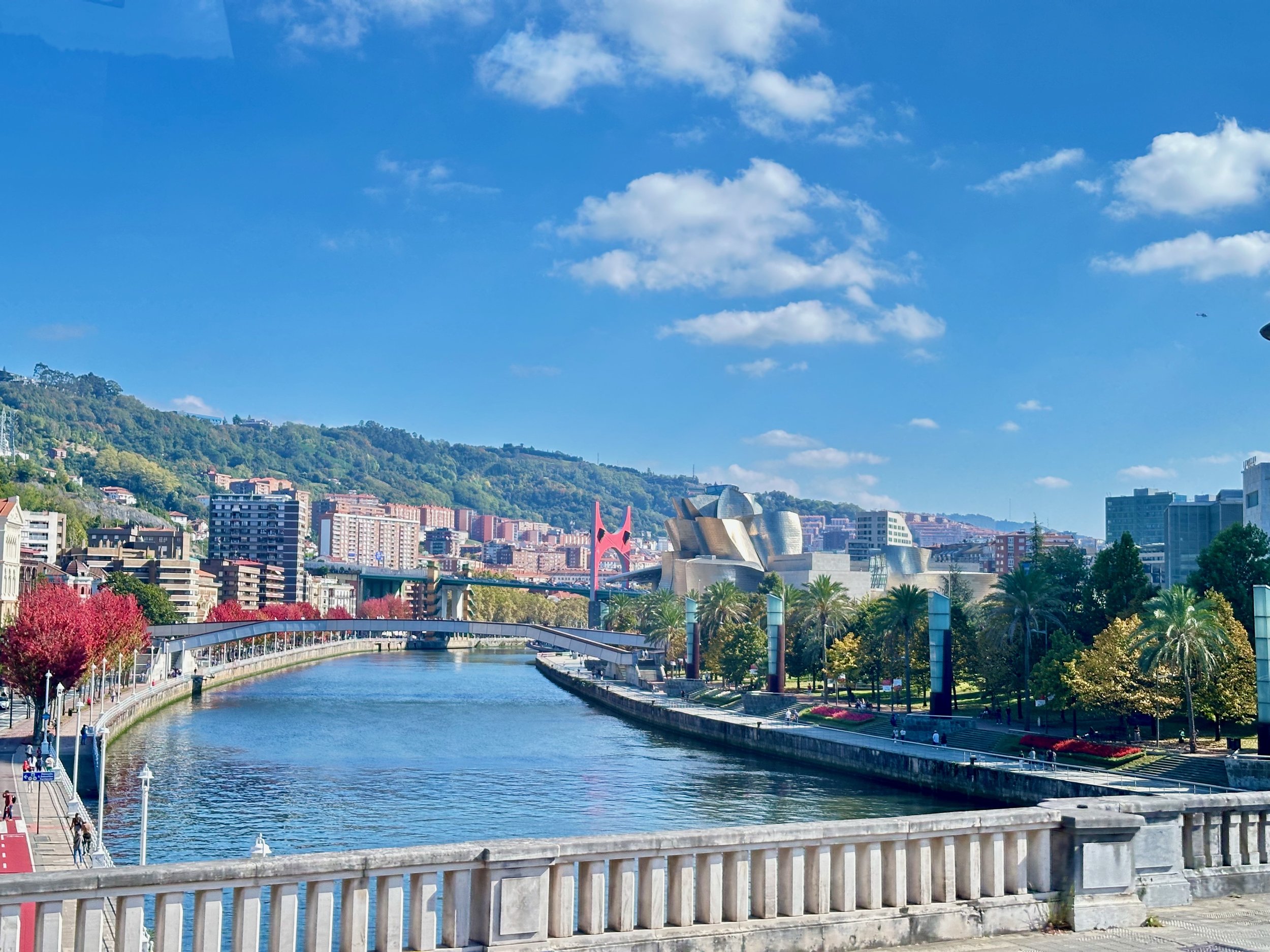
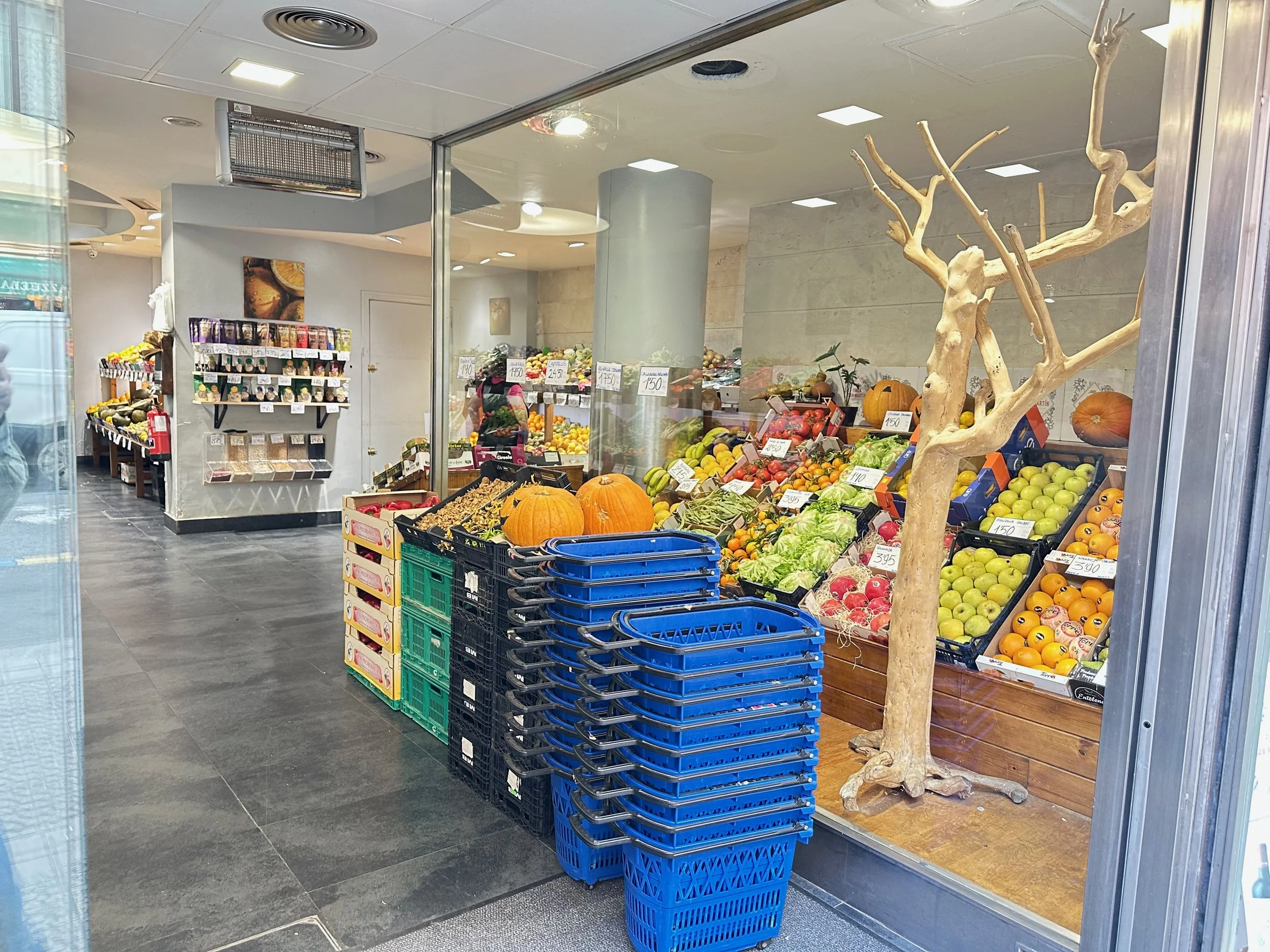
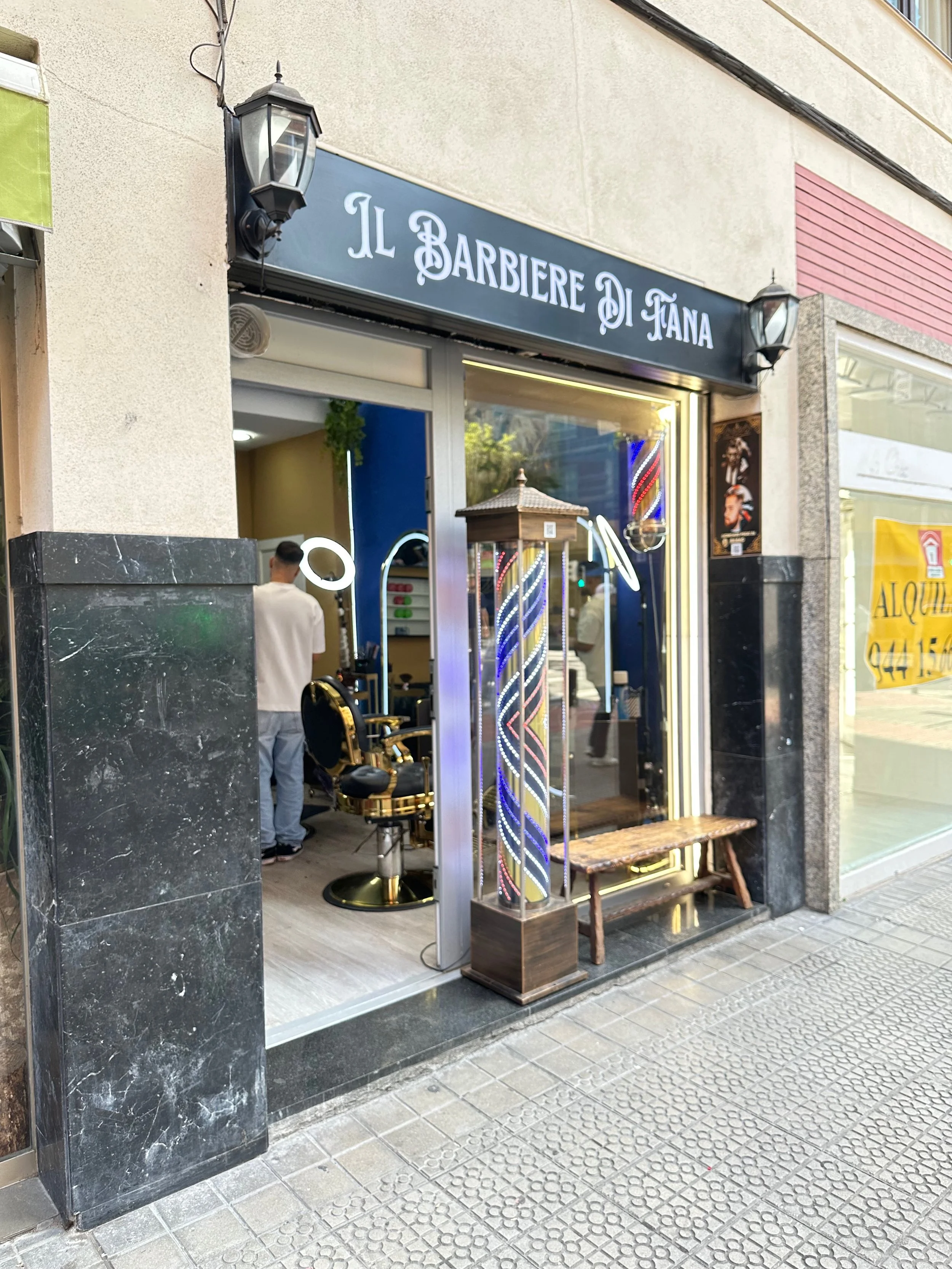
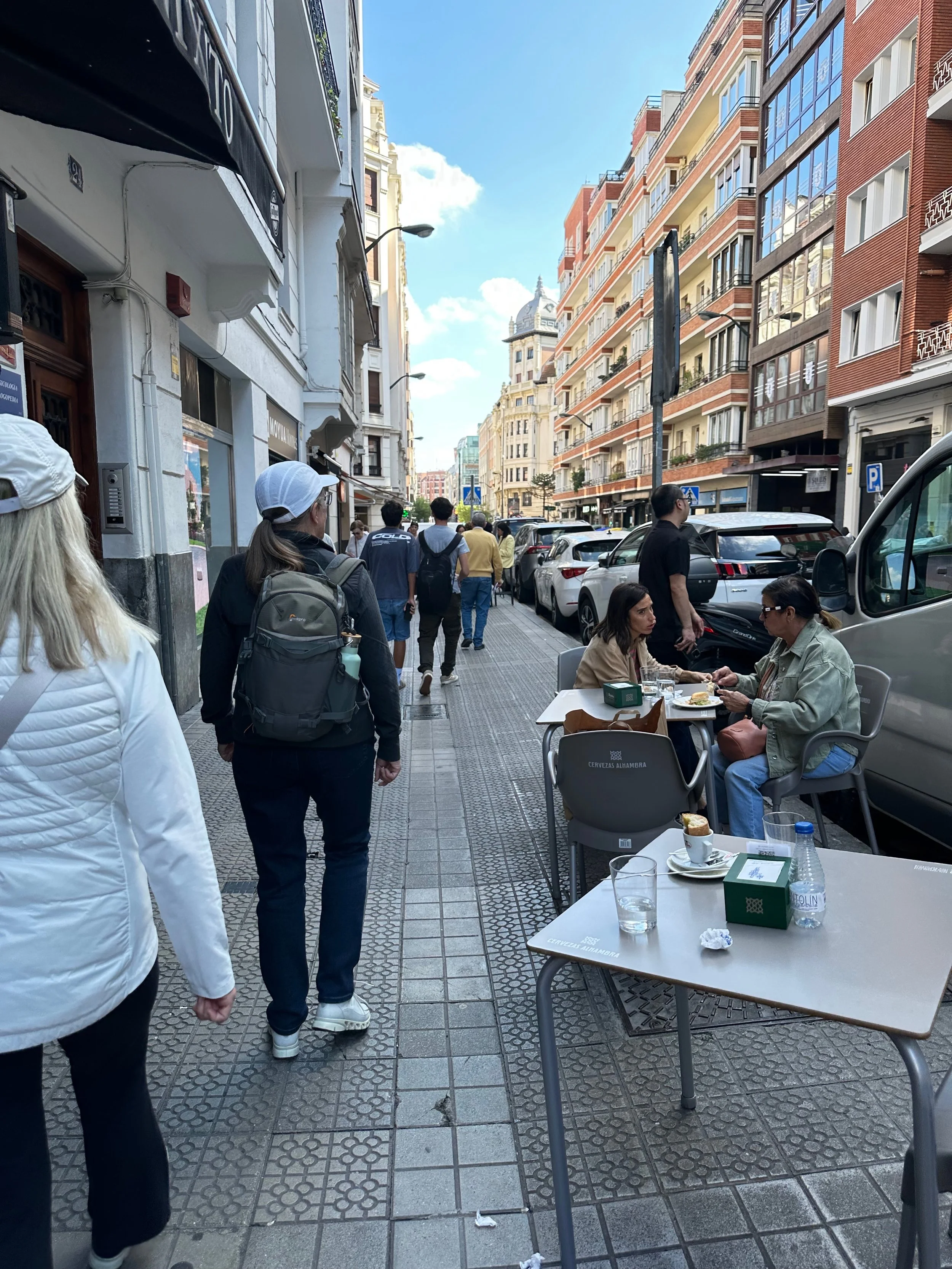
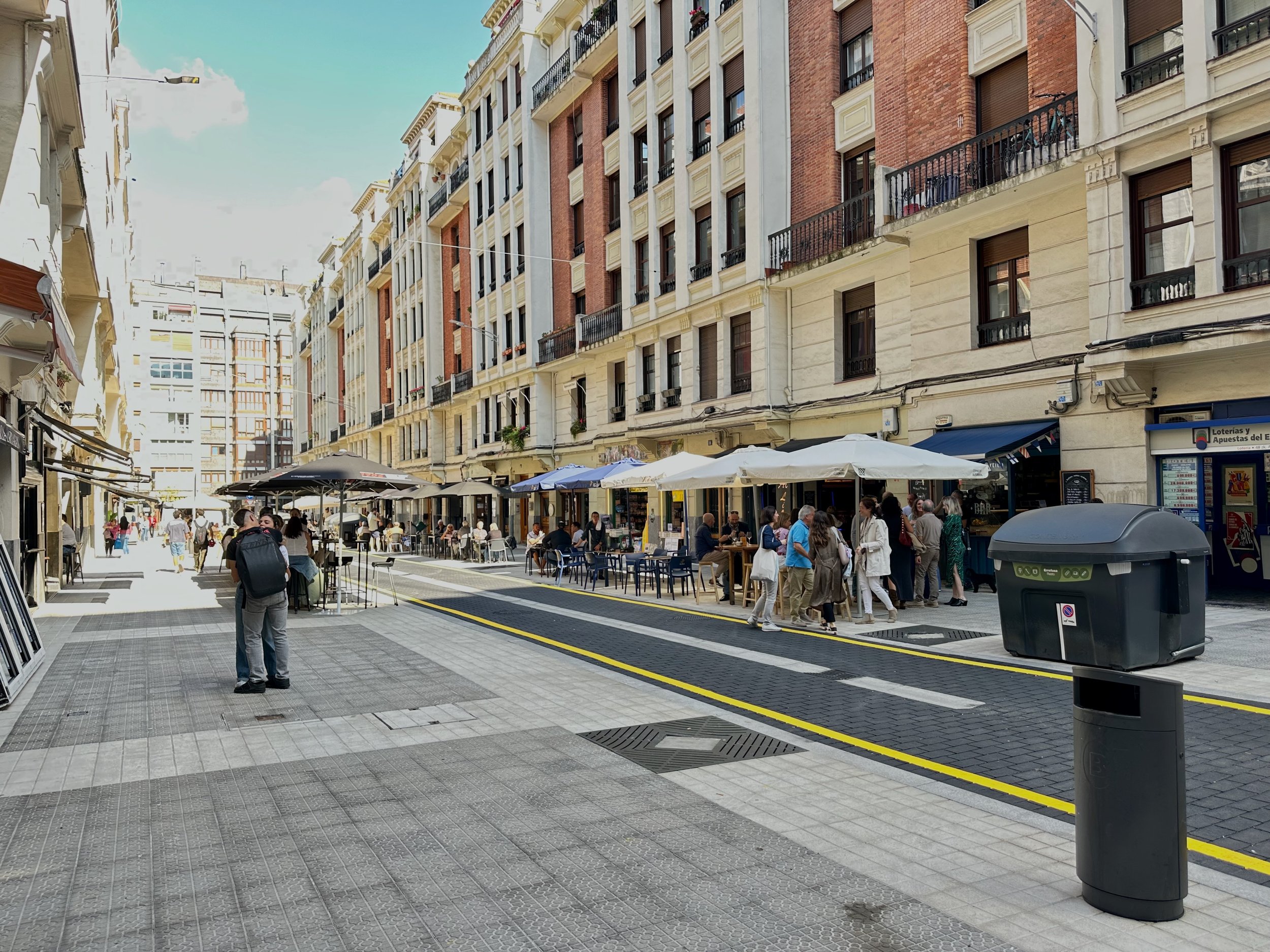
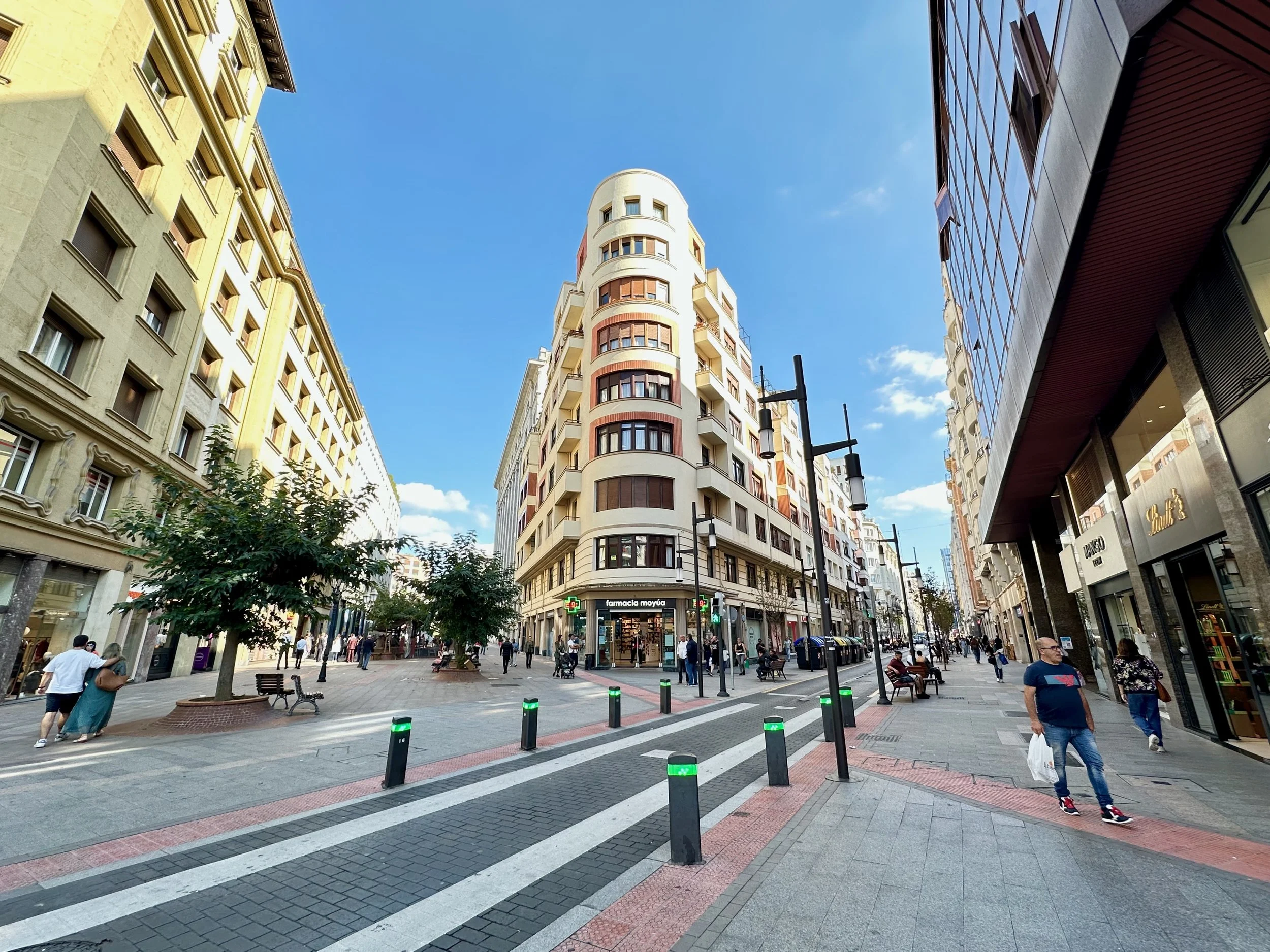
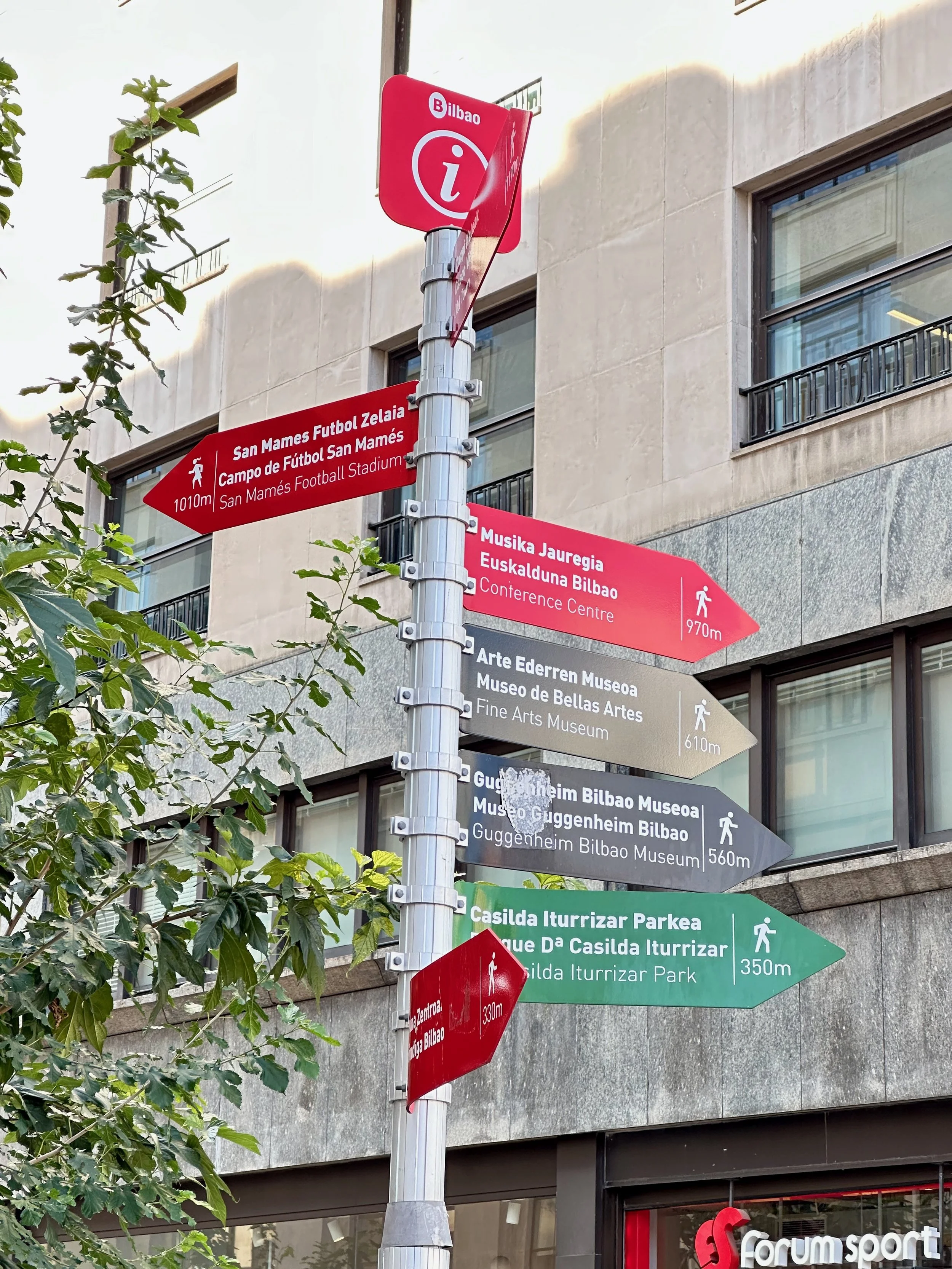
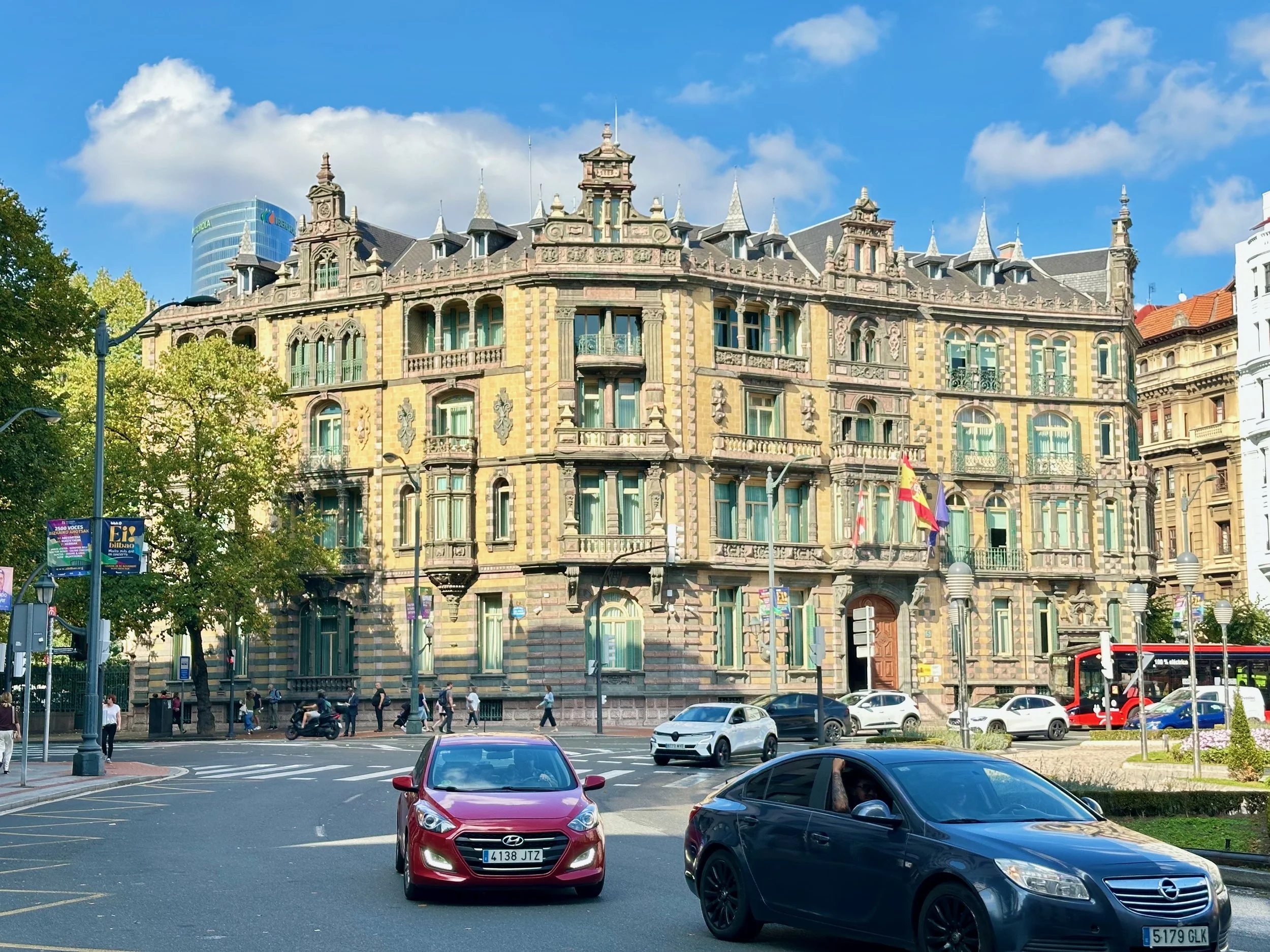
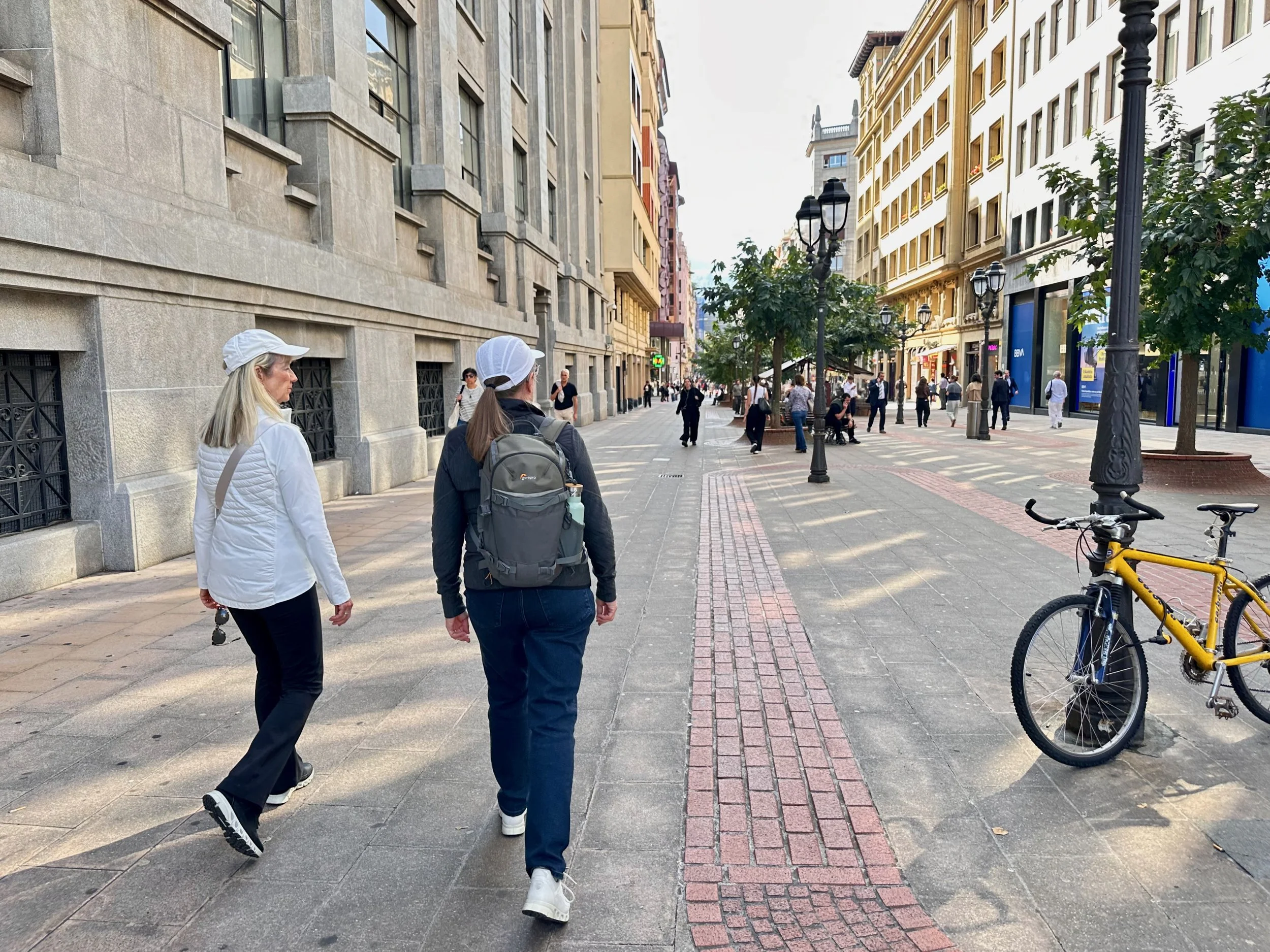
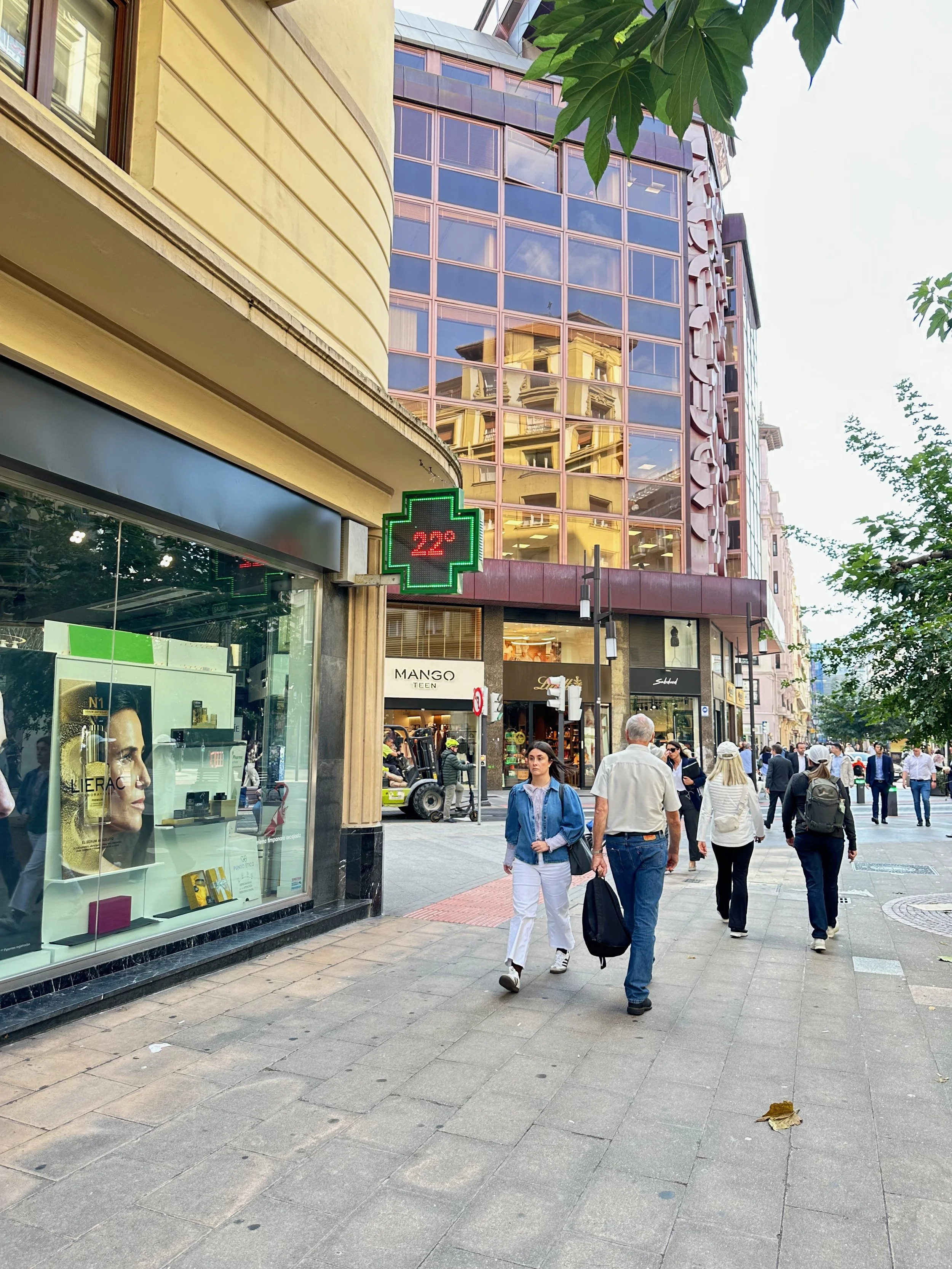
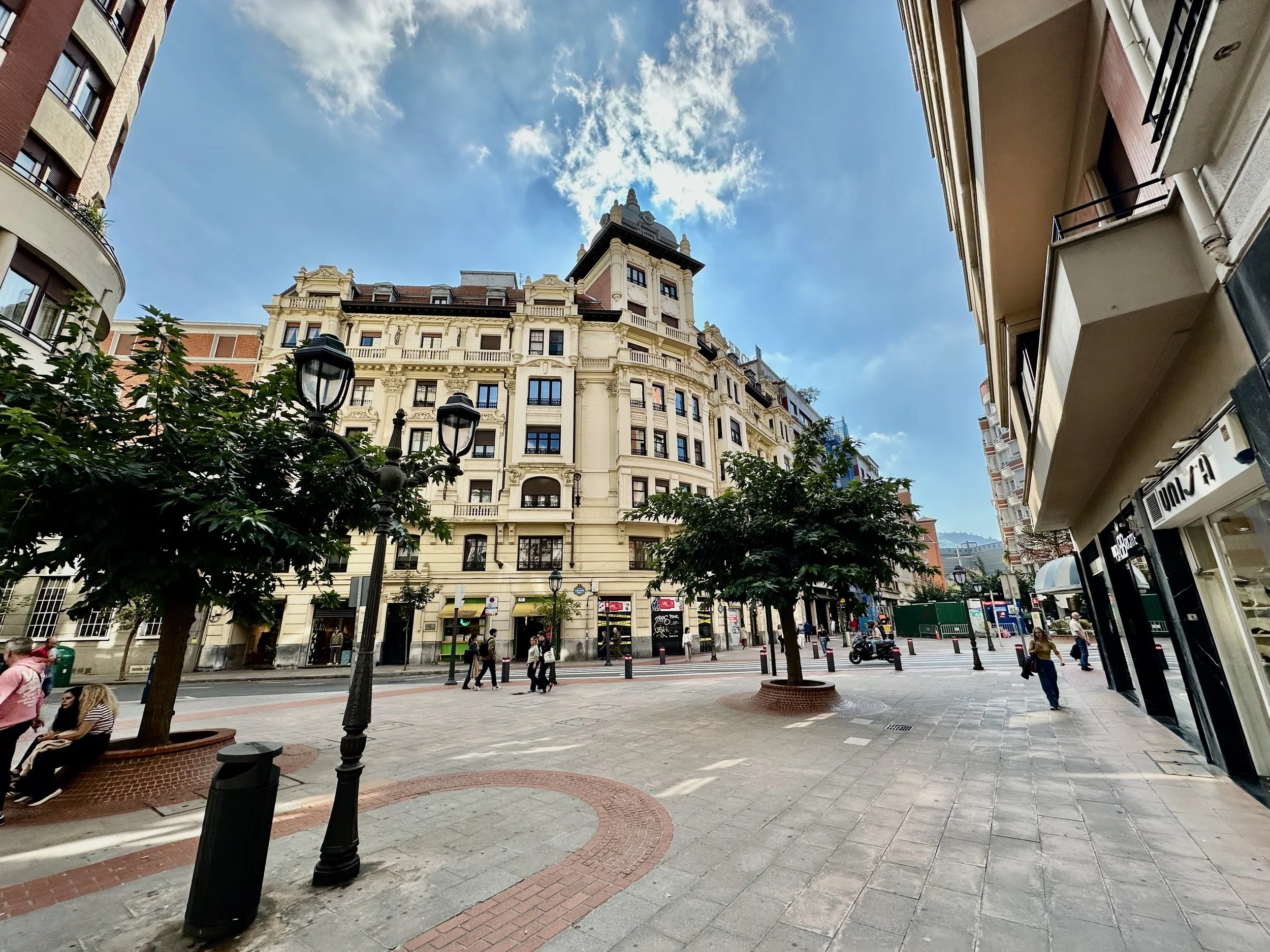
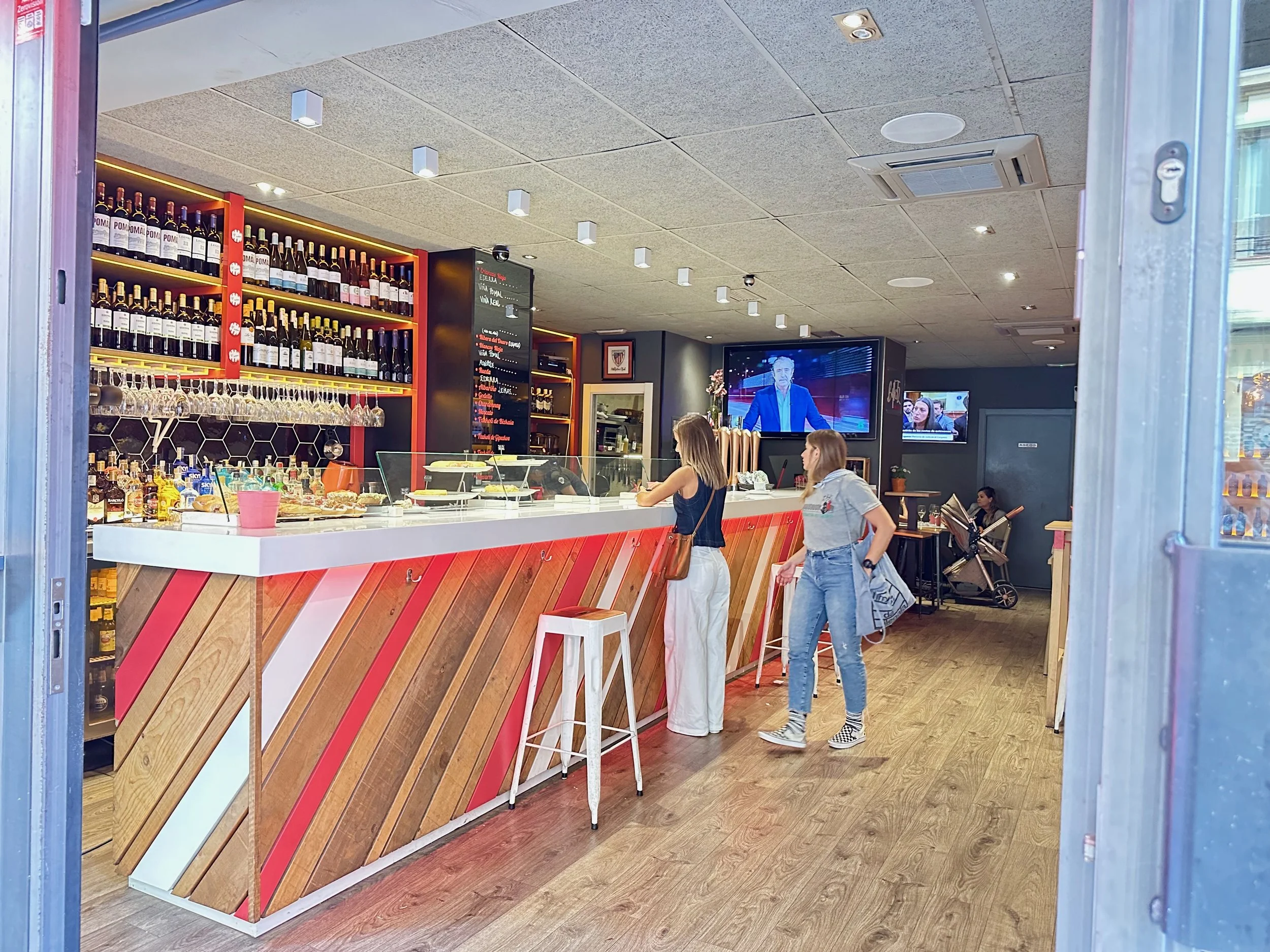
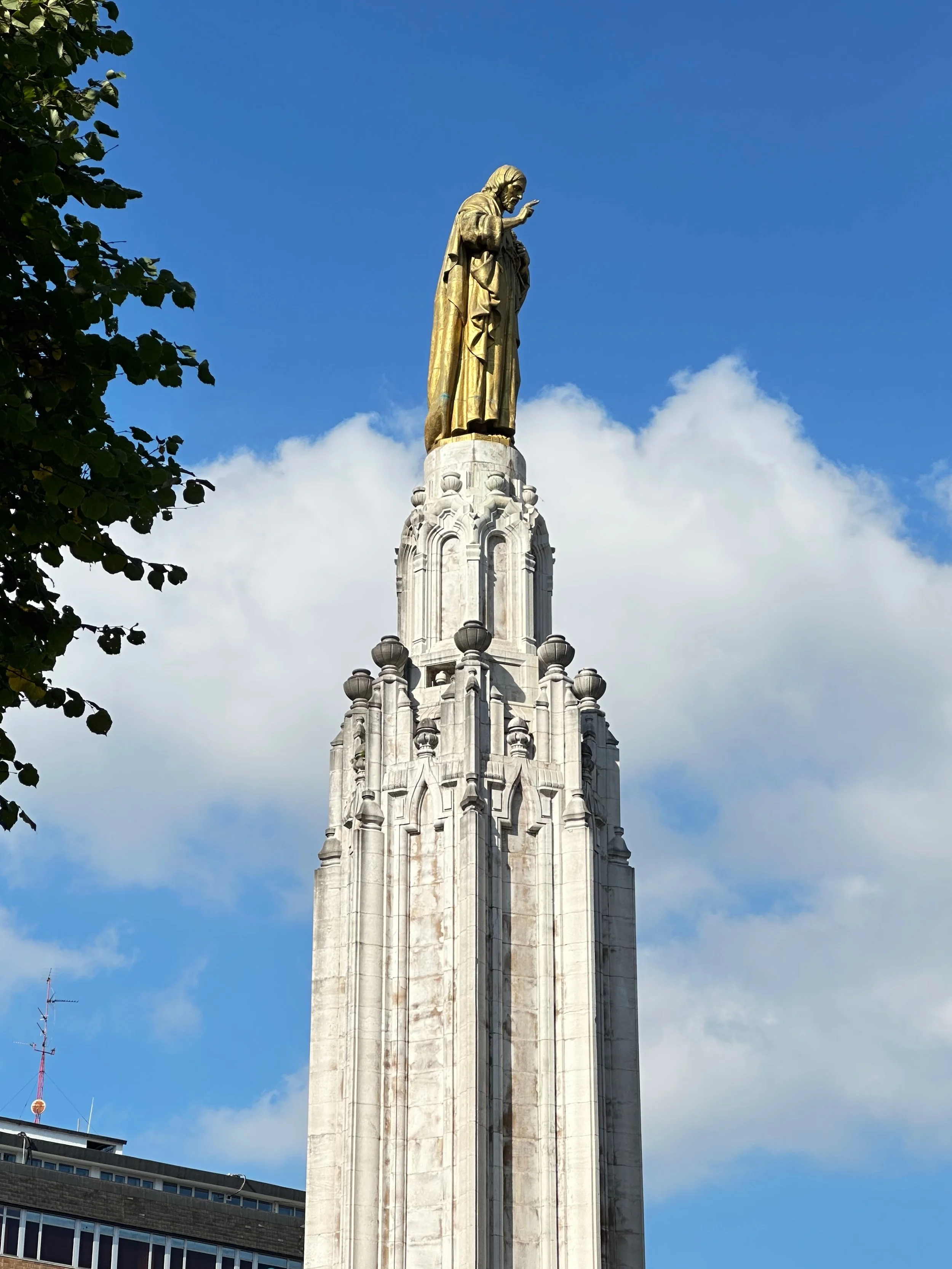
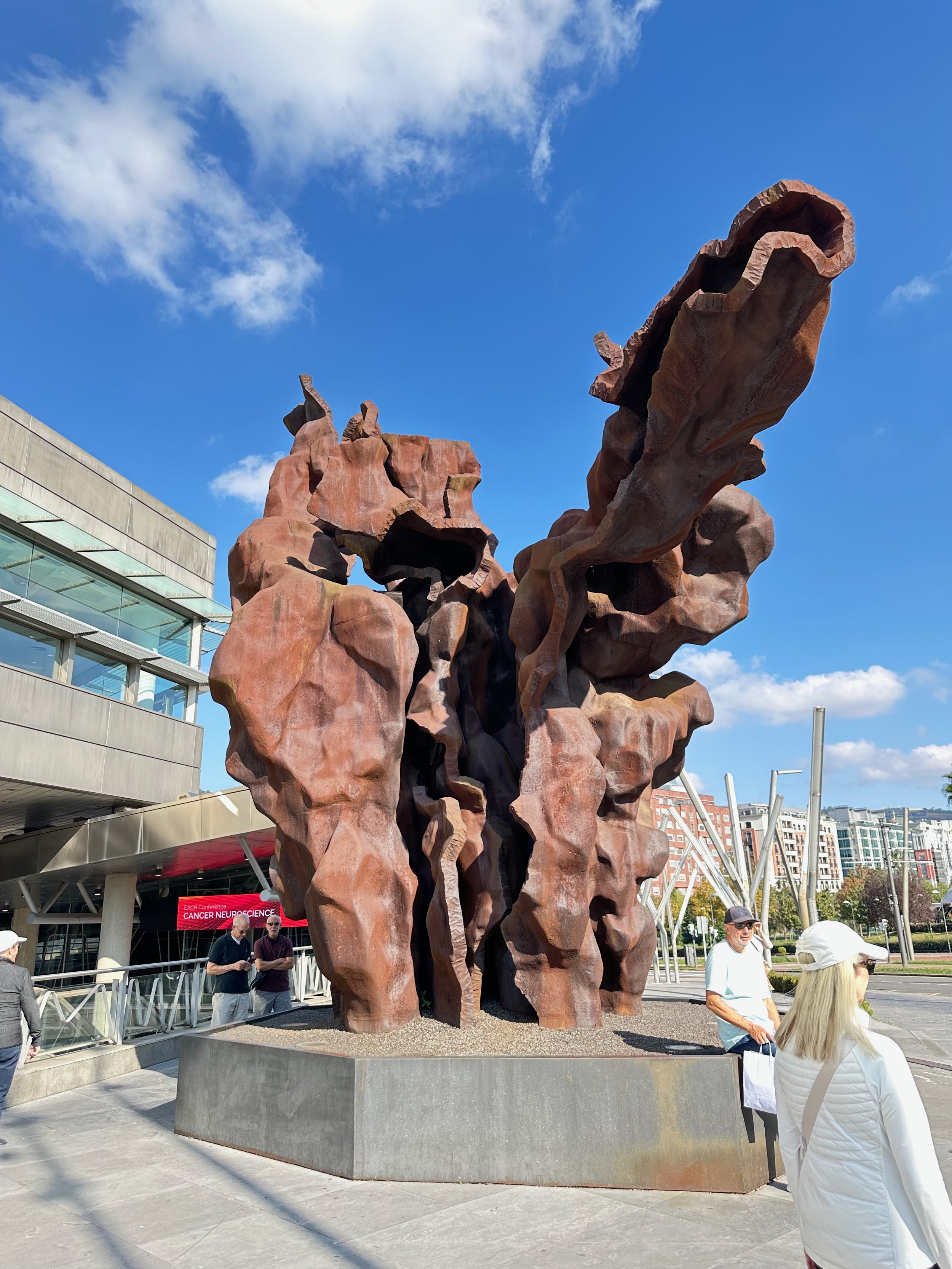
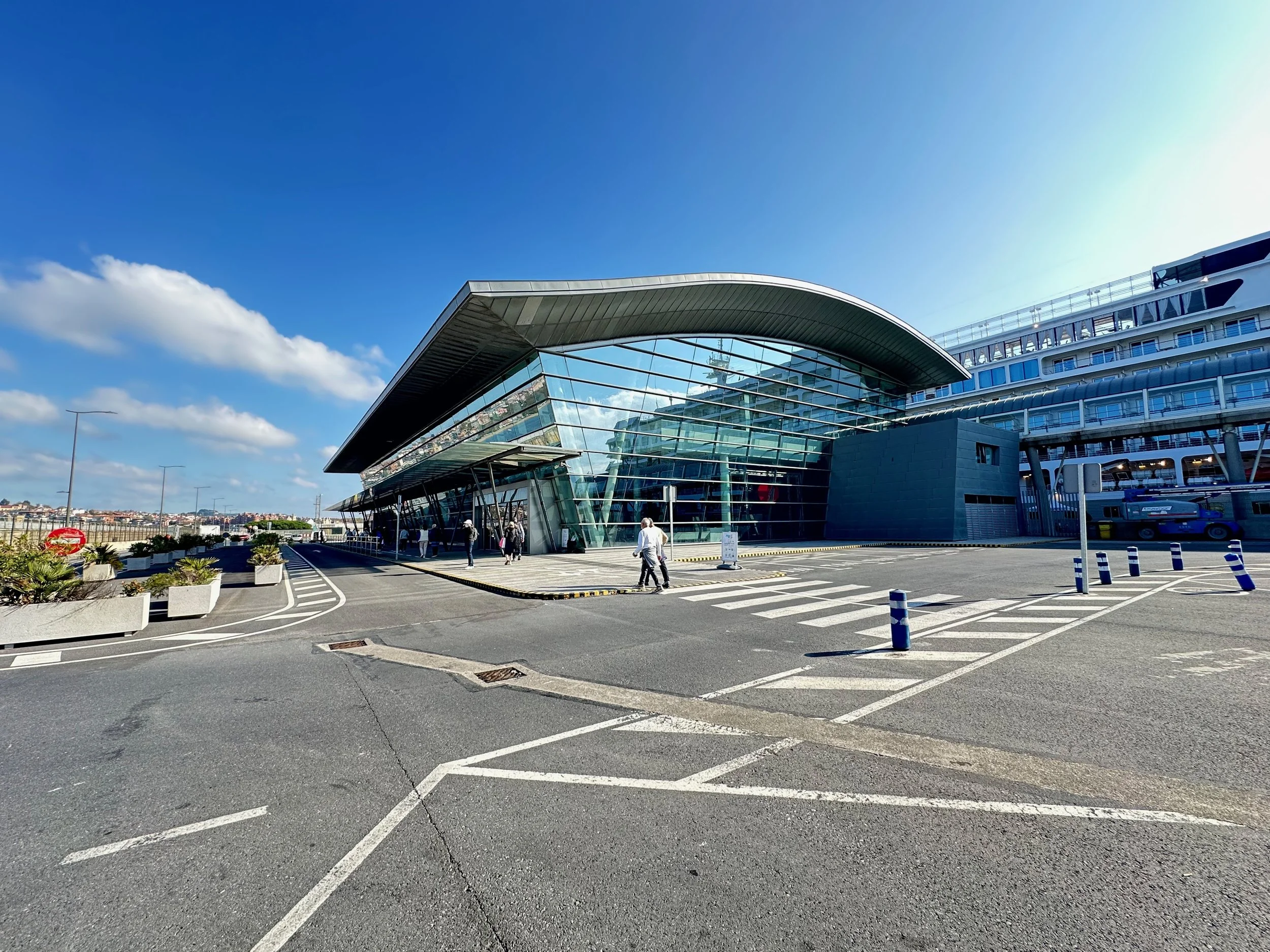
This time we’re in Bilbao, our last stop in Spain. Known best perhaps for the famous Guggenheim Museum, the city of 350,000 residents was built up along the Nervión River. It provided a long sheltered waterfront for the growing industry and trade going back to when it was established in the year 1300. Our visit consisted of a bus tour around the town in the morning just to see the highlights, and then a return to the city centre in the afternoon for a closer look at shops and how the locals lived. In this region of Spain the merchants generally close from 2-4pm for a mid-day break, which from our observation included a lot of drinking and socializing. Since our timing happened to put us there to walk and shop during that time, we had fewer stores to choose from. Probably a good thing…
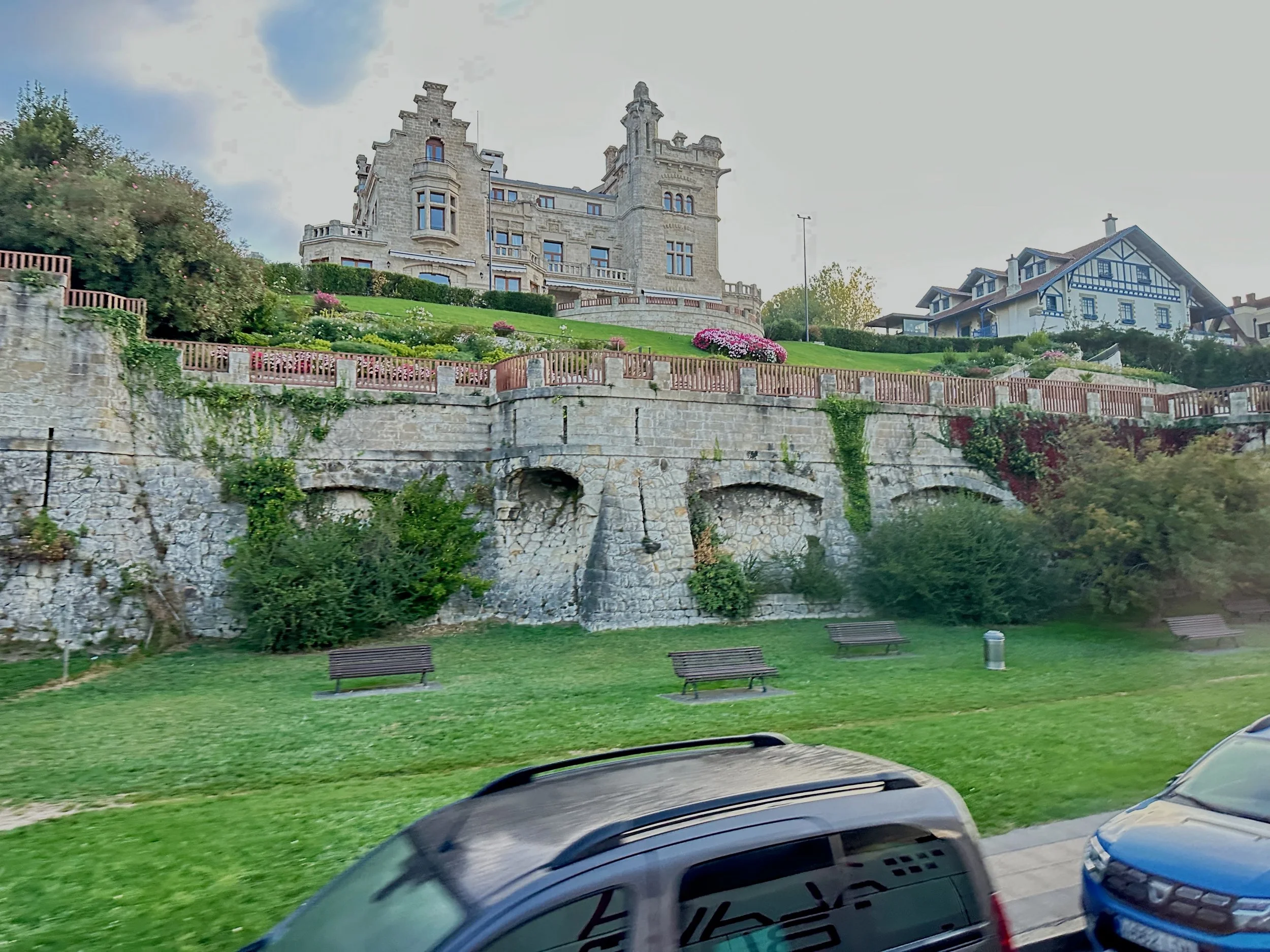
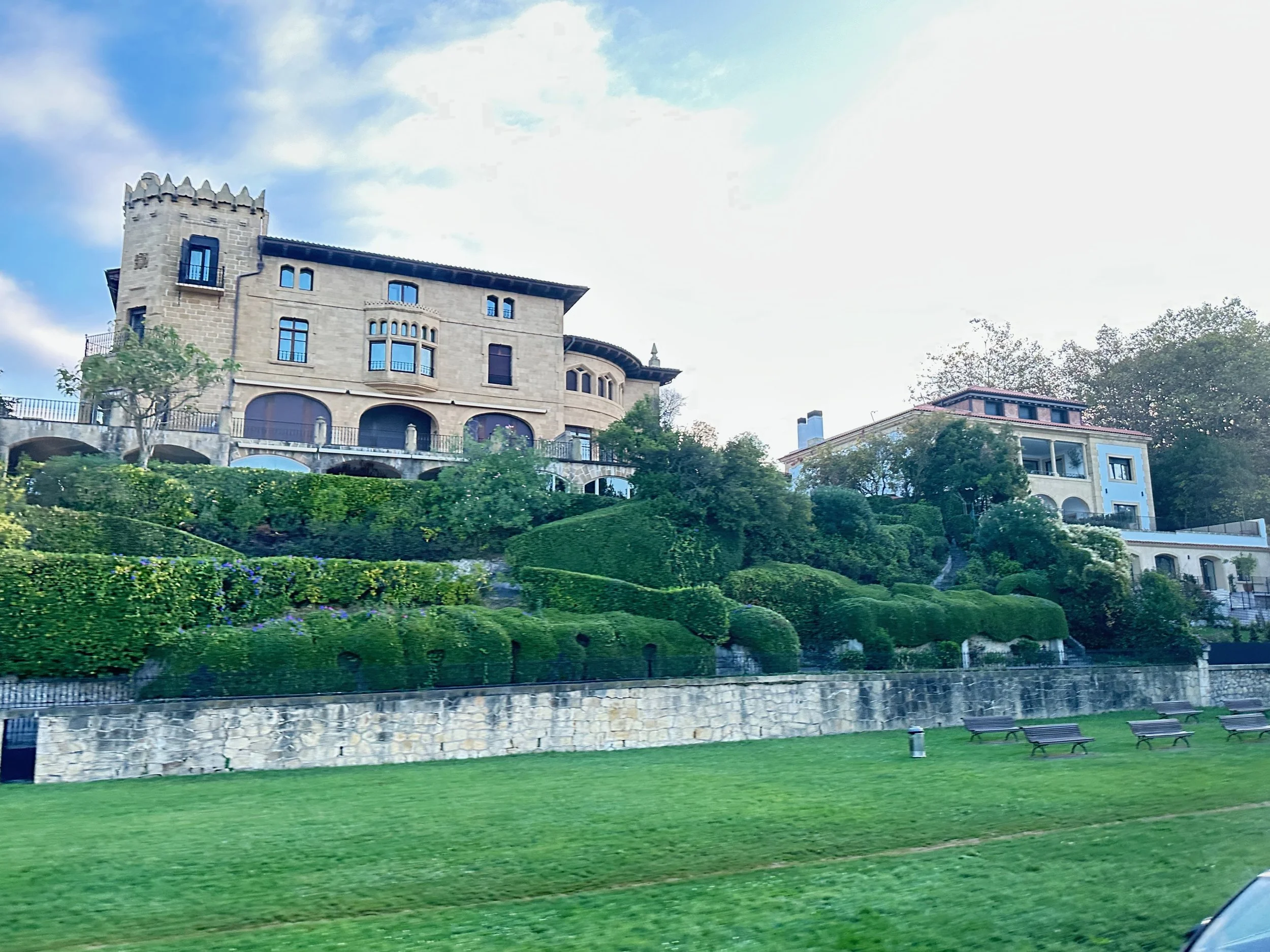
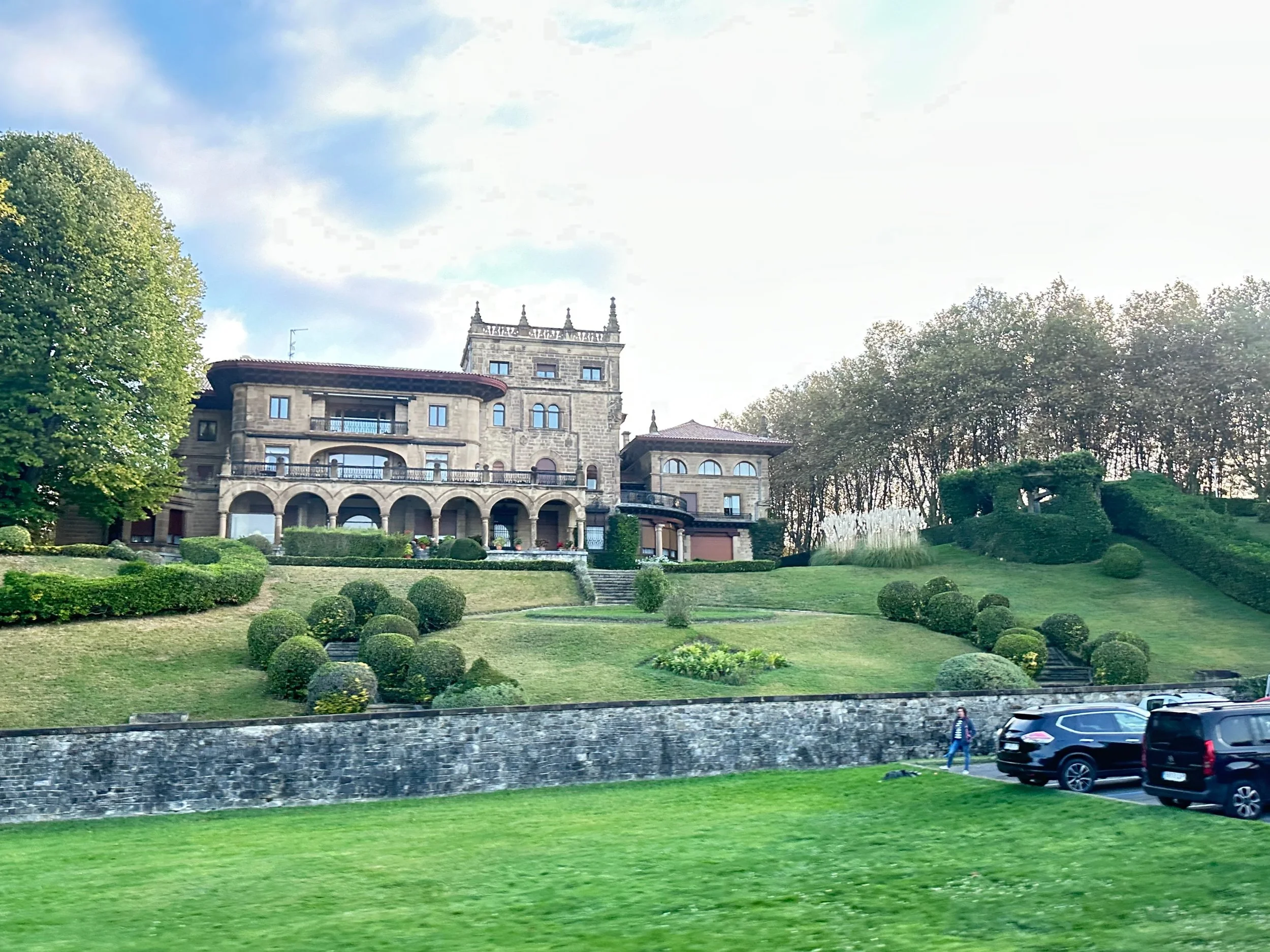
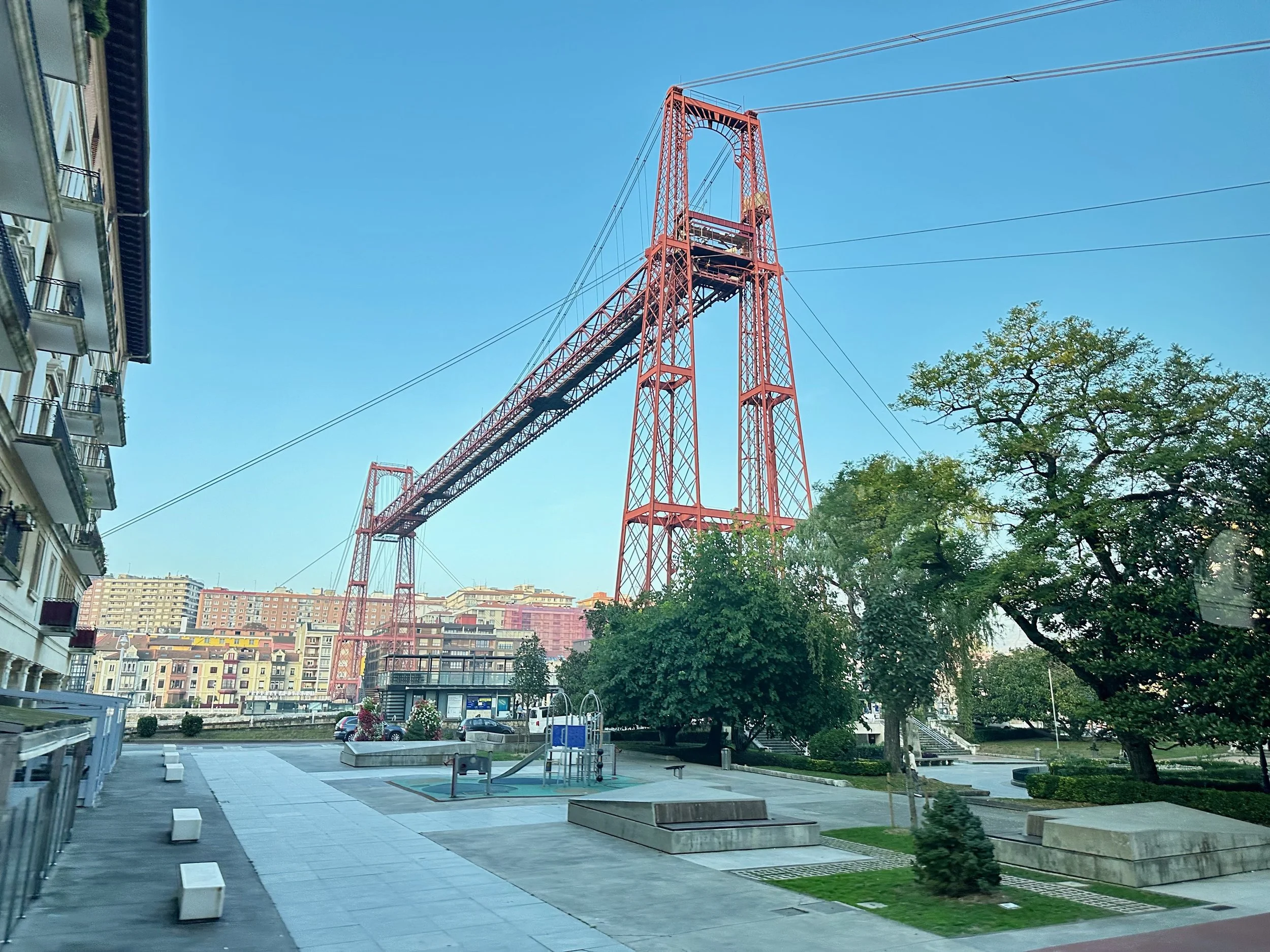

Bordeaux, France
Arrival Upriver
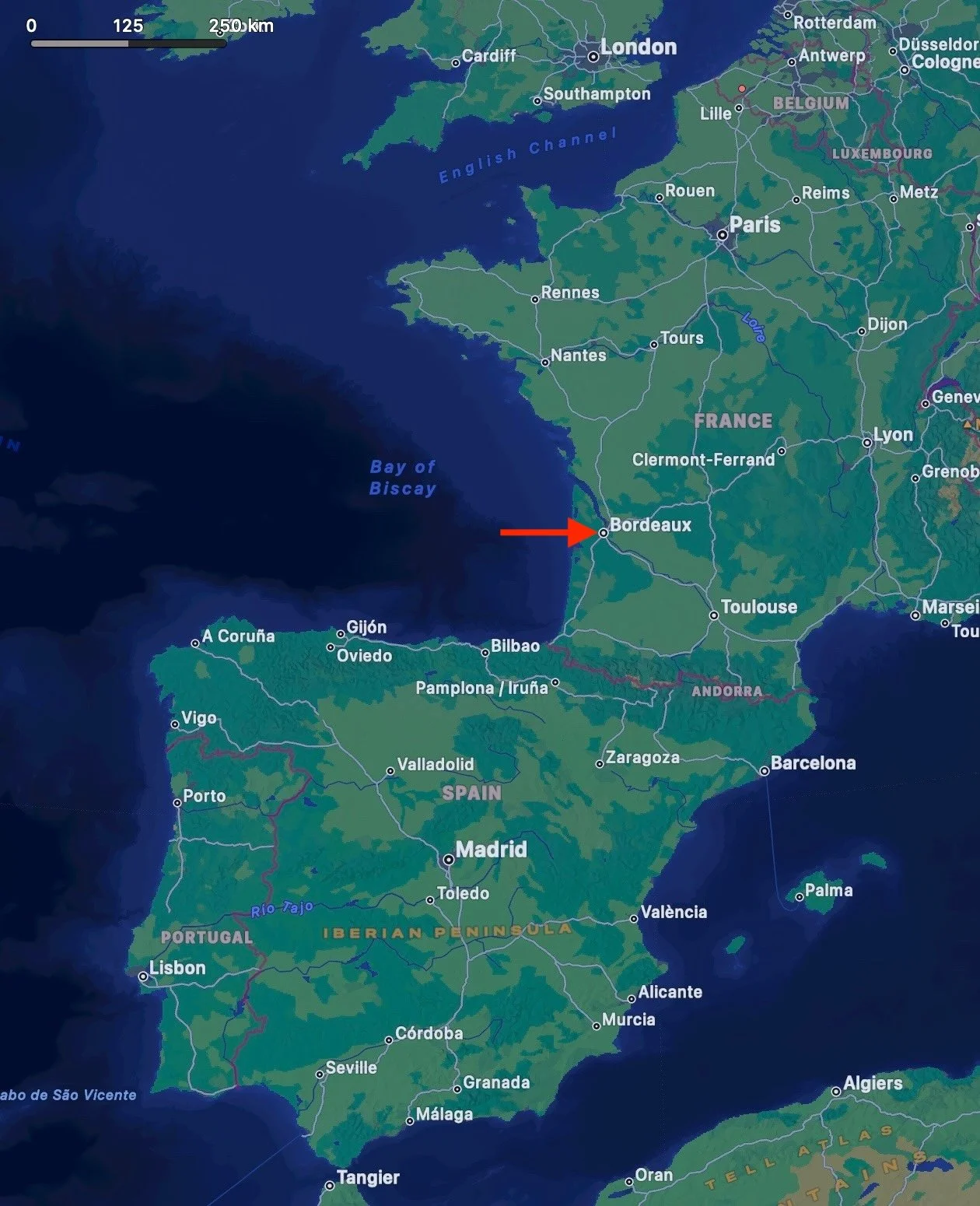
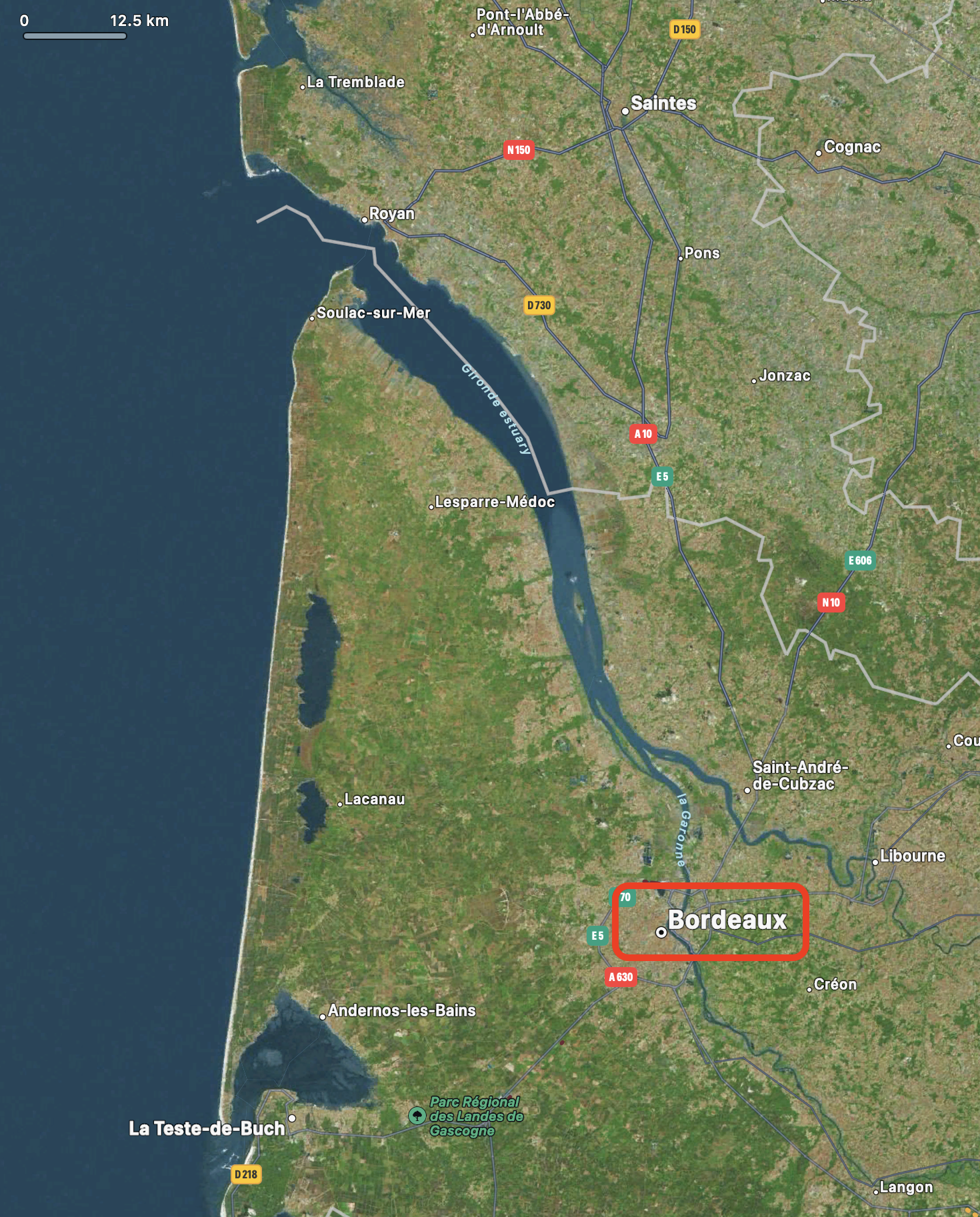
Unknown to us at the time, Bordeaux would be our last stop of the trip before we docked in Southampton for our flight home. More to come on that later.
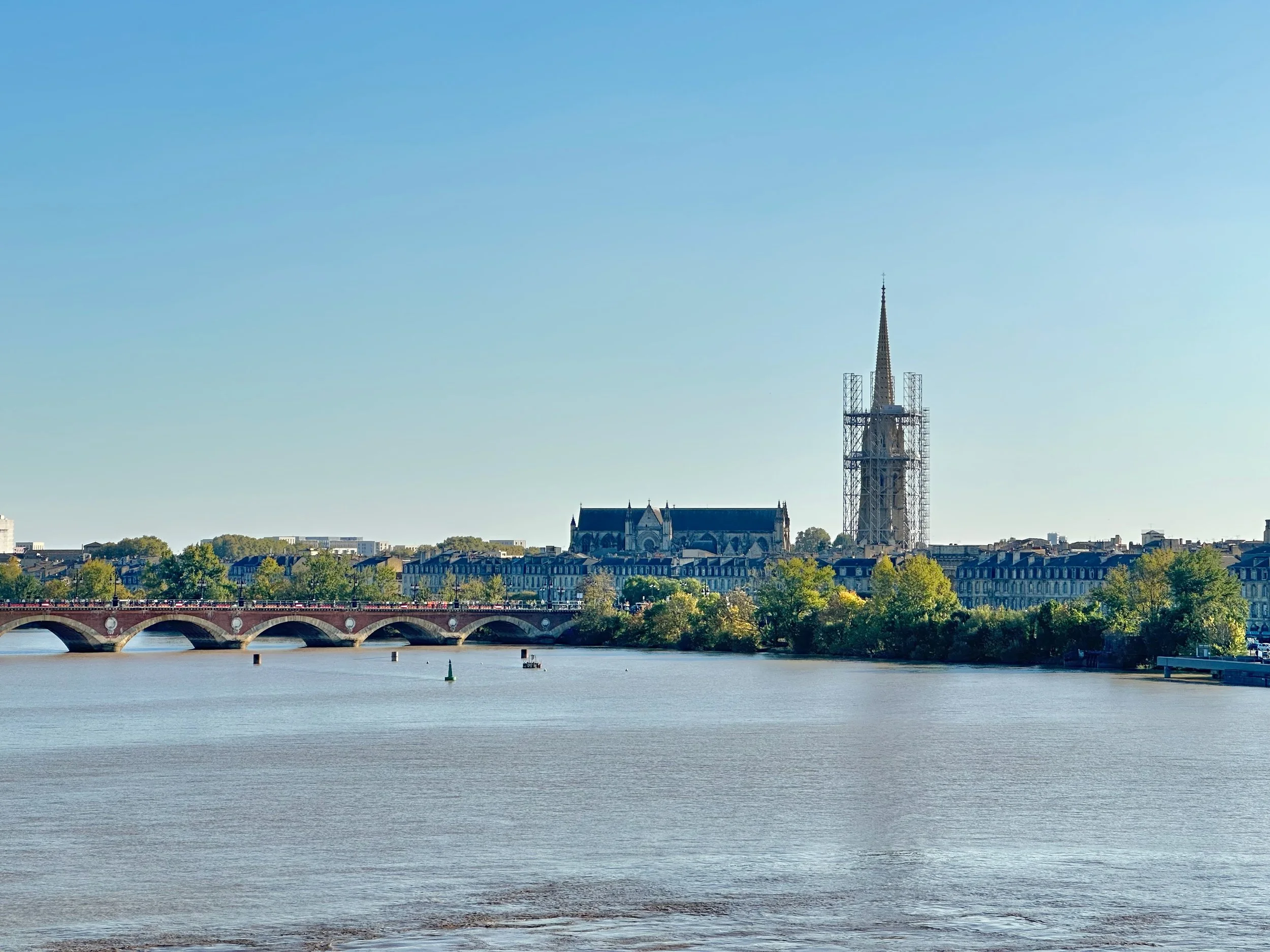
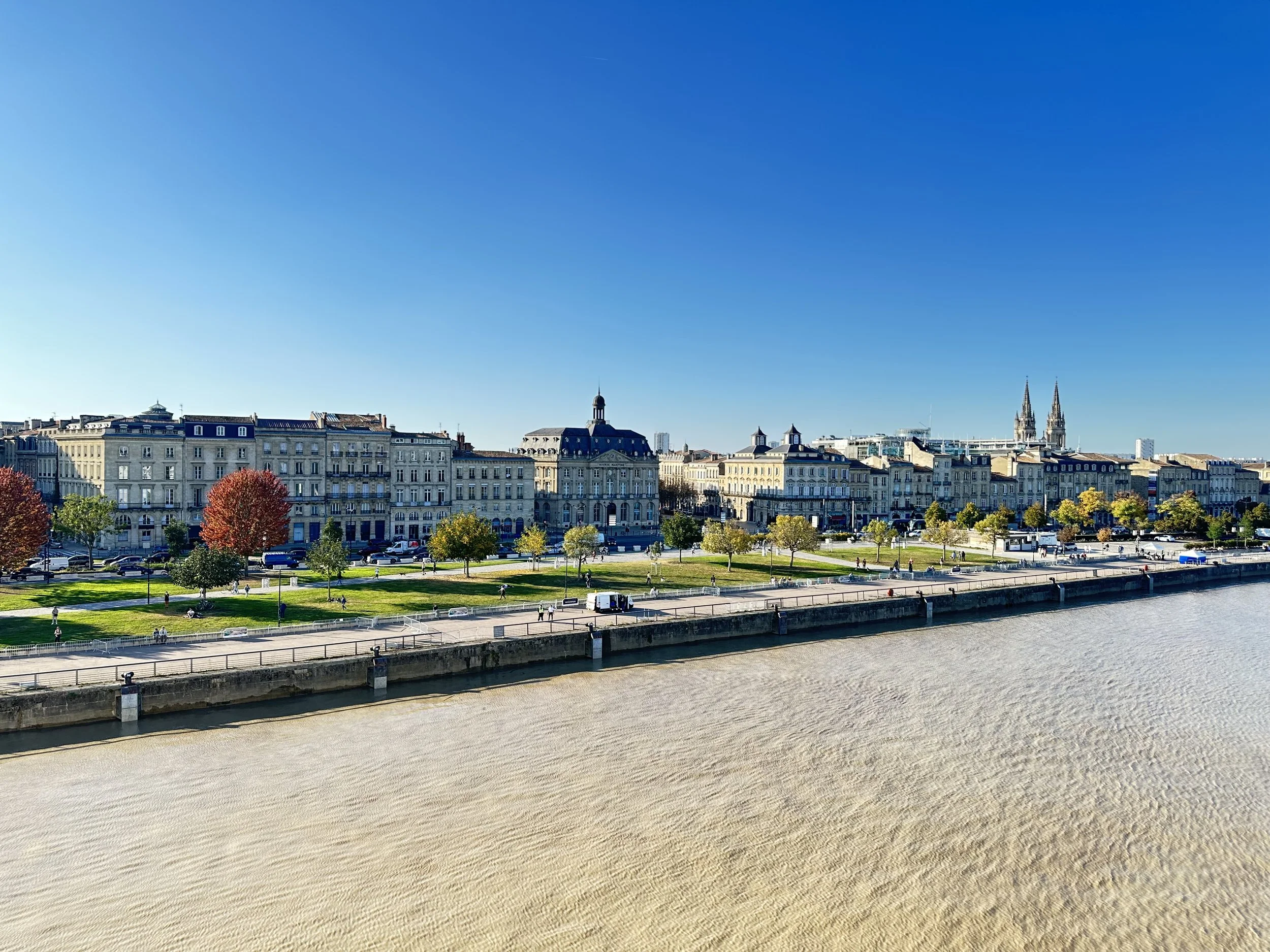
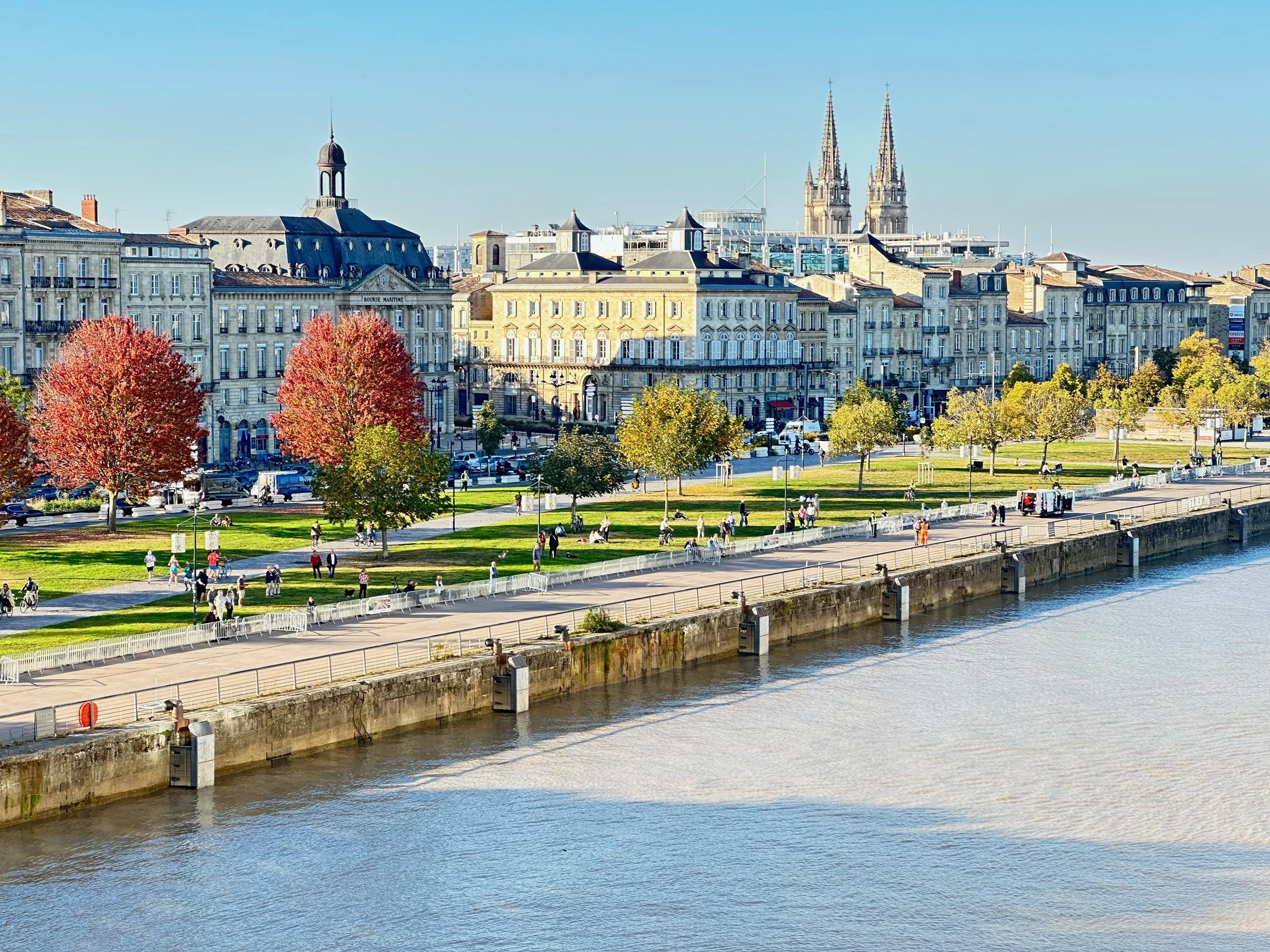
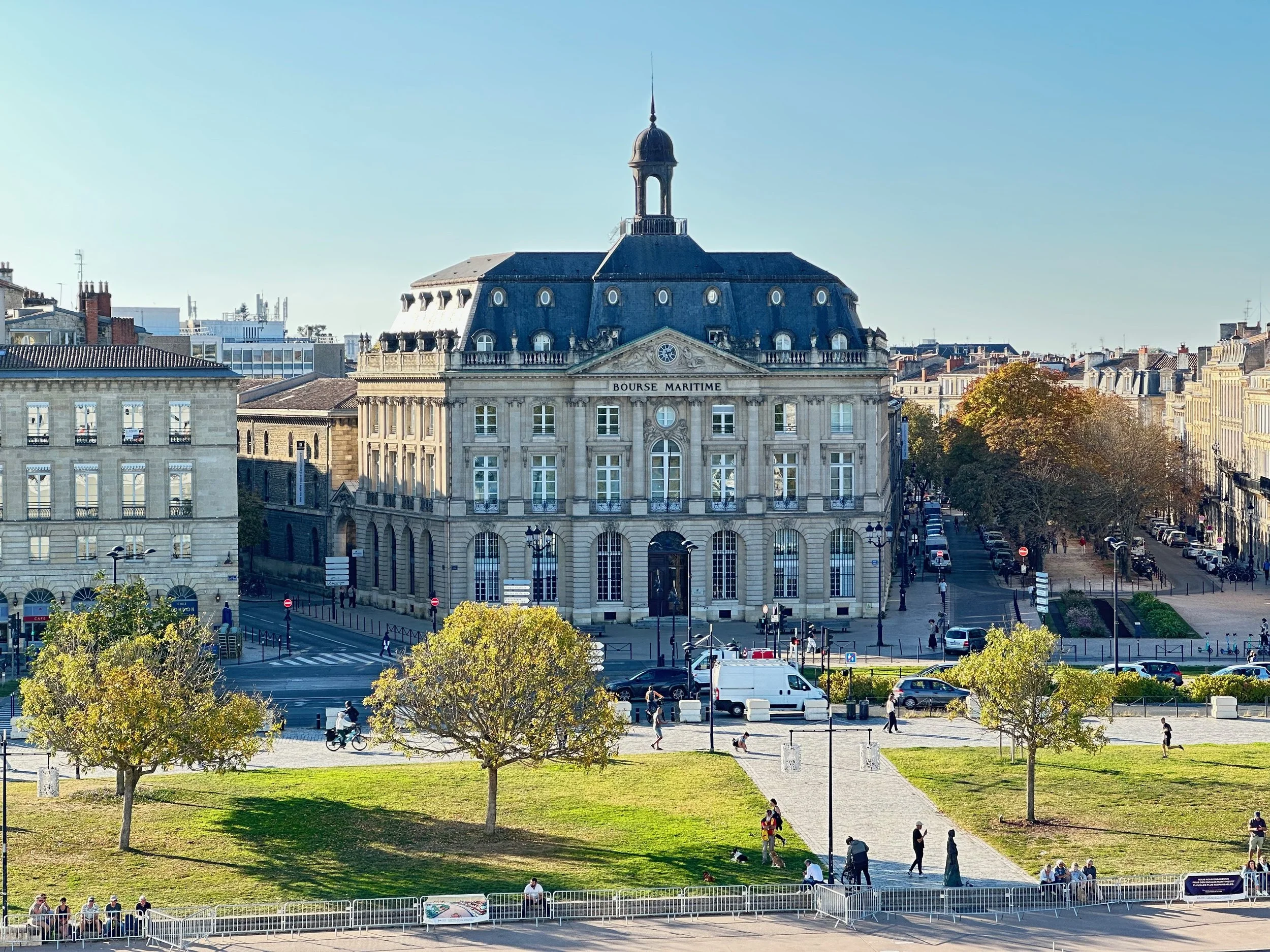
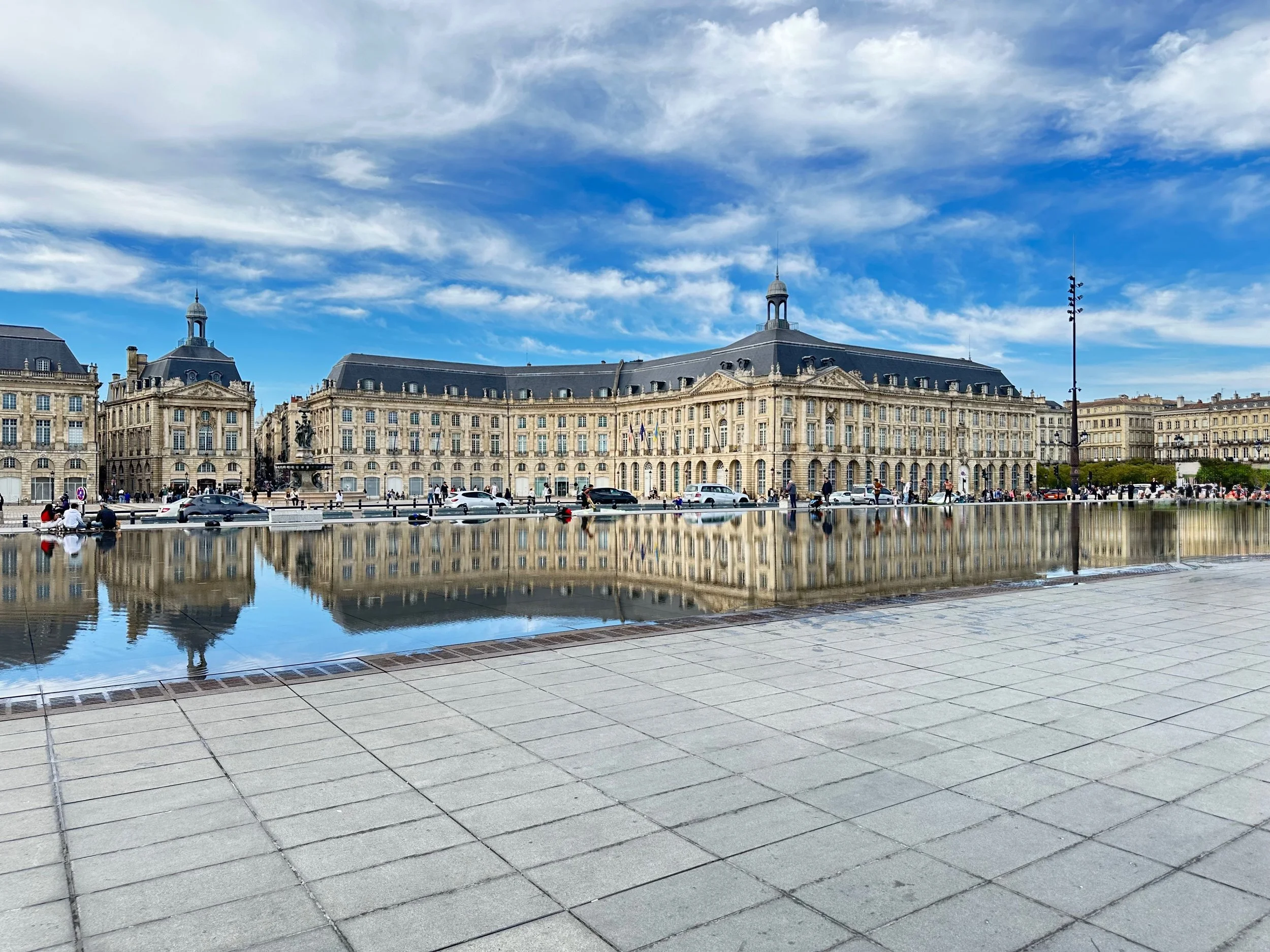
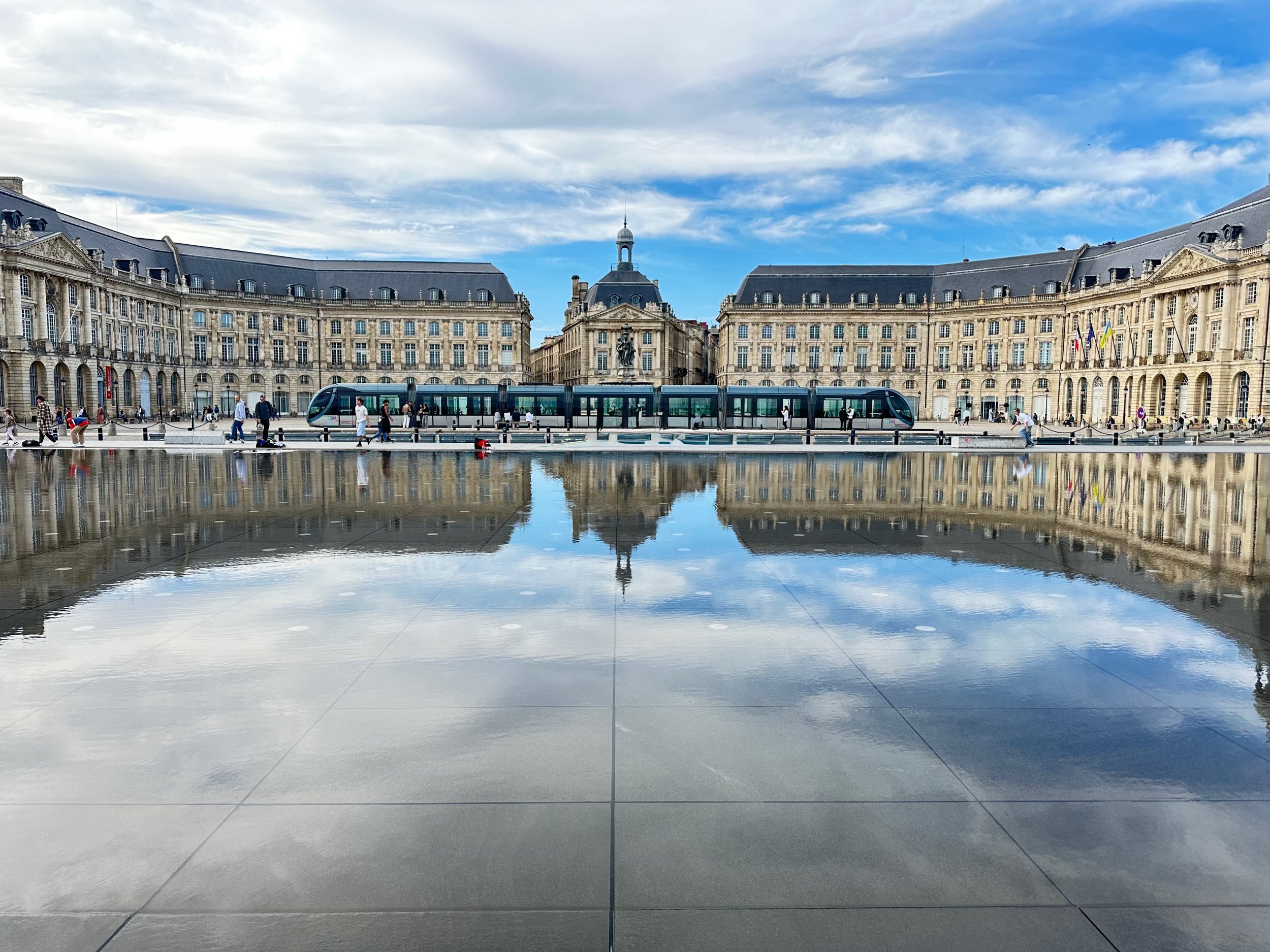
At first we figured three nights in Bordeaux would be a waste of time, but boy were we wrong. Although Porto and Bilbao were terrific cities, and we enjoyed exploring them, Bordeaux turned out to be the real highlight of the entire trip. A perfect walking city, we spent two days putting over 11 miles on the old sneakers peering down laneways, and exploring countless plazas and beautiful buildings. We definitely need to go back for more.
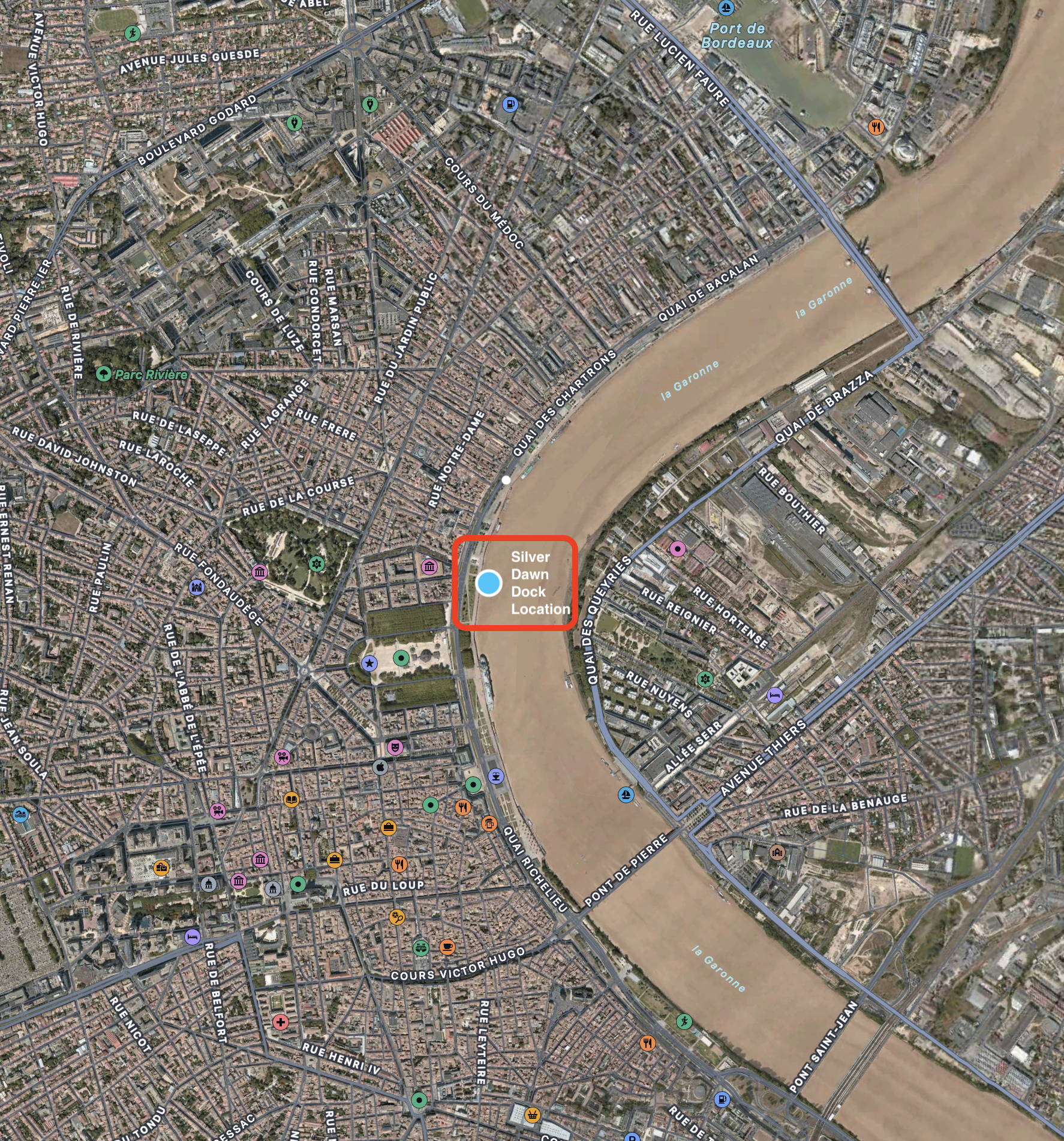
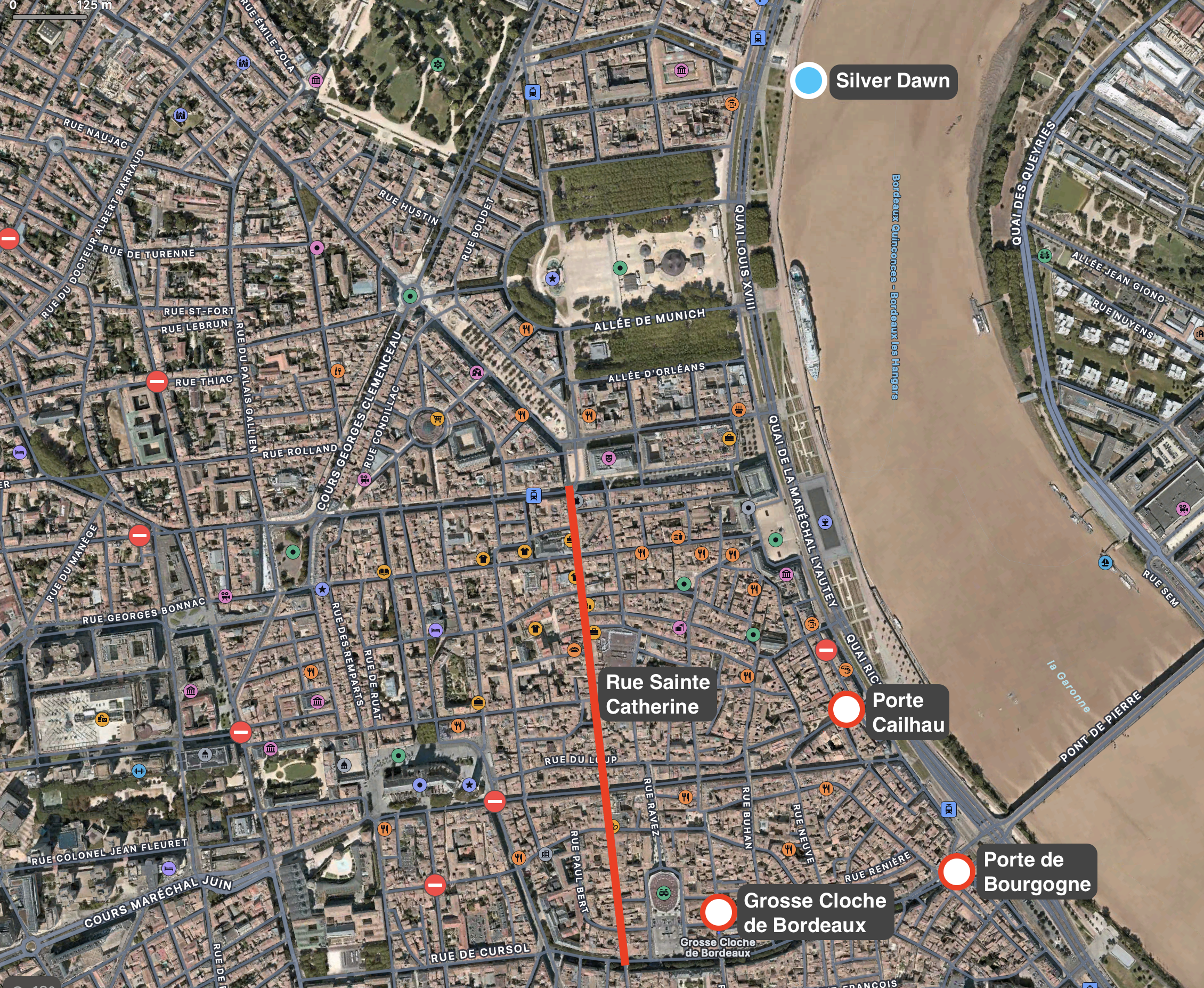
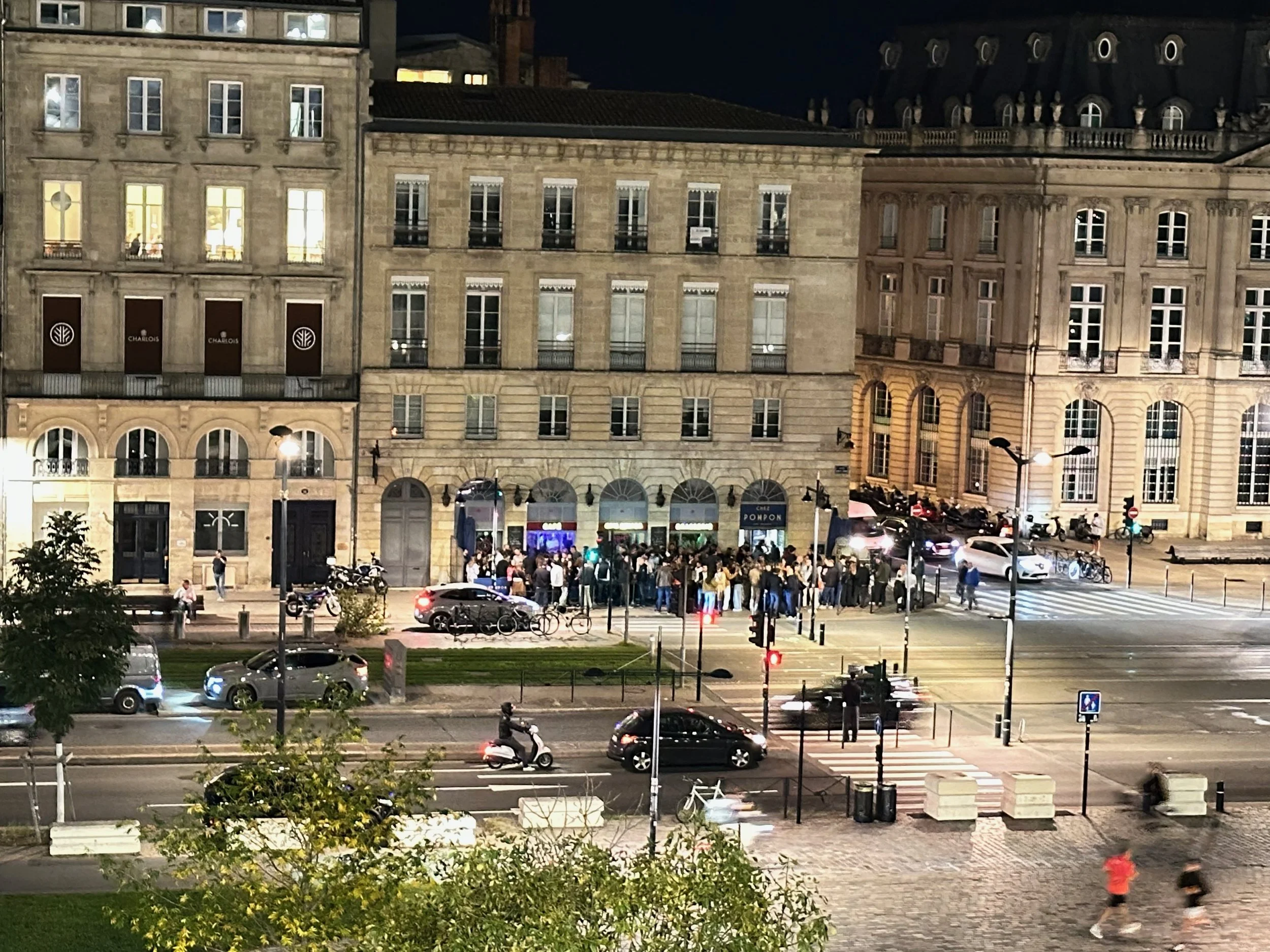
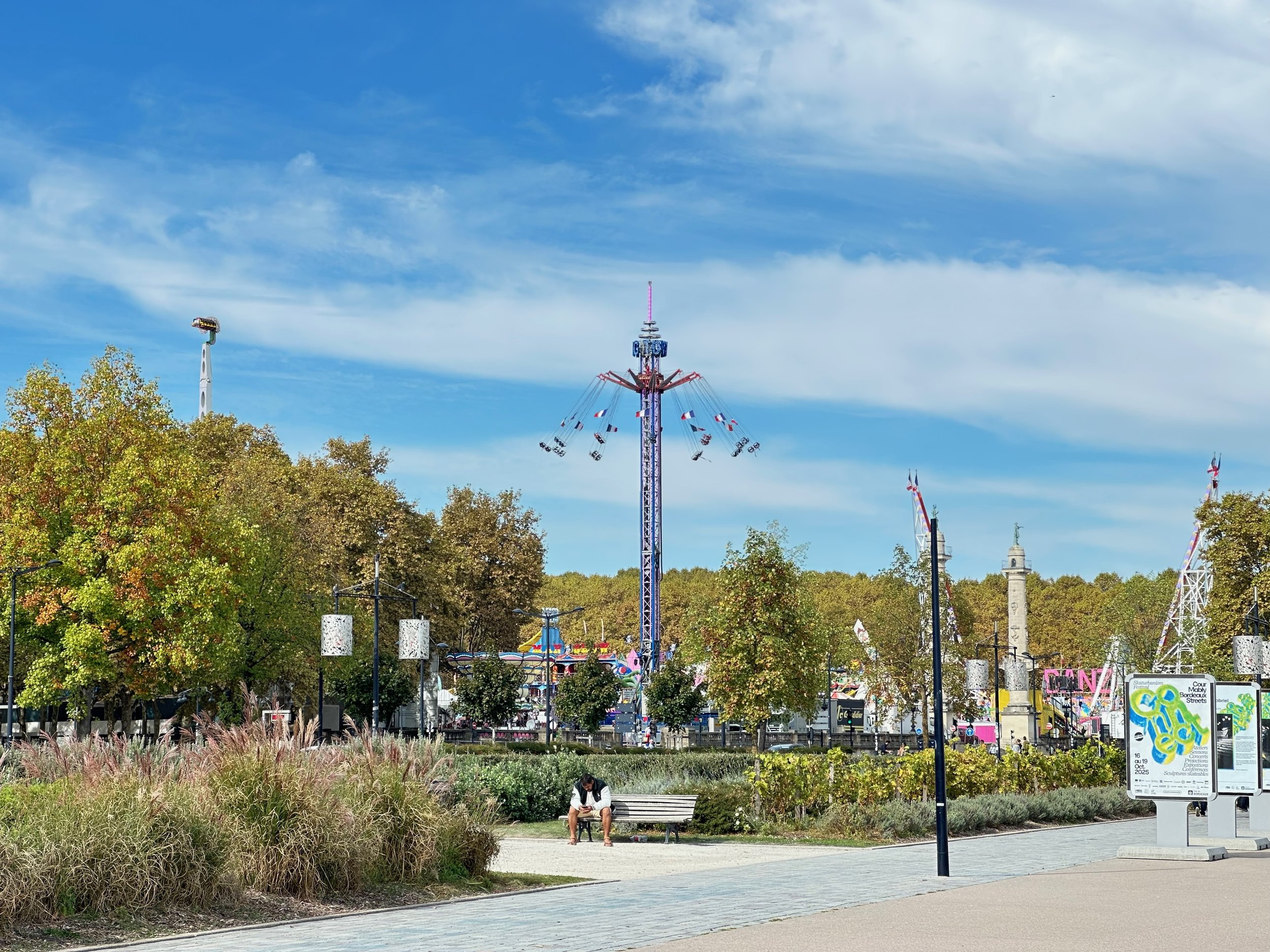
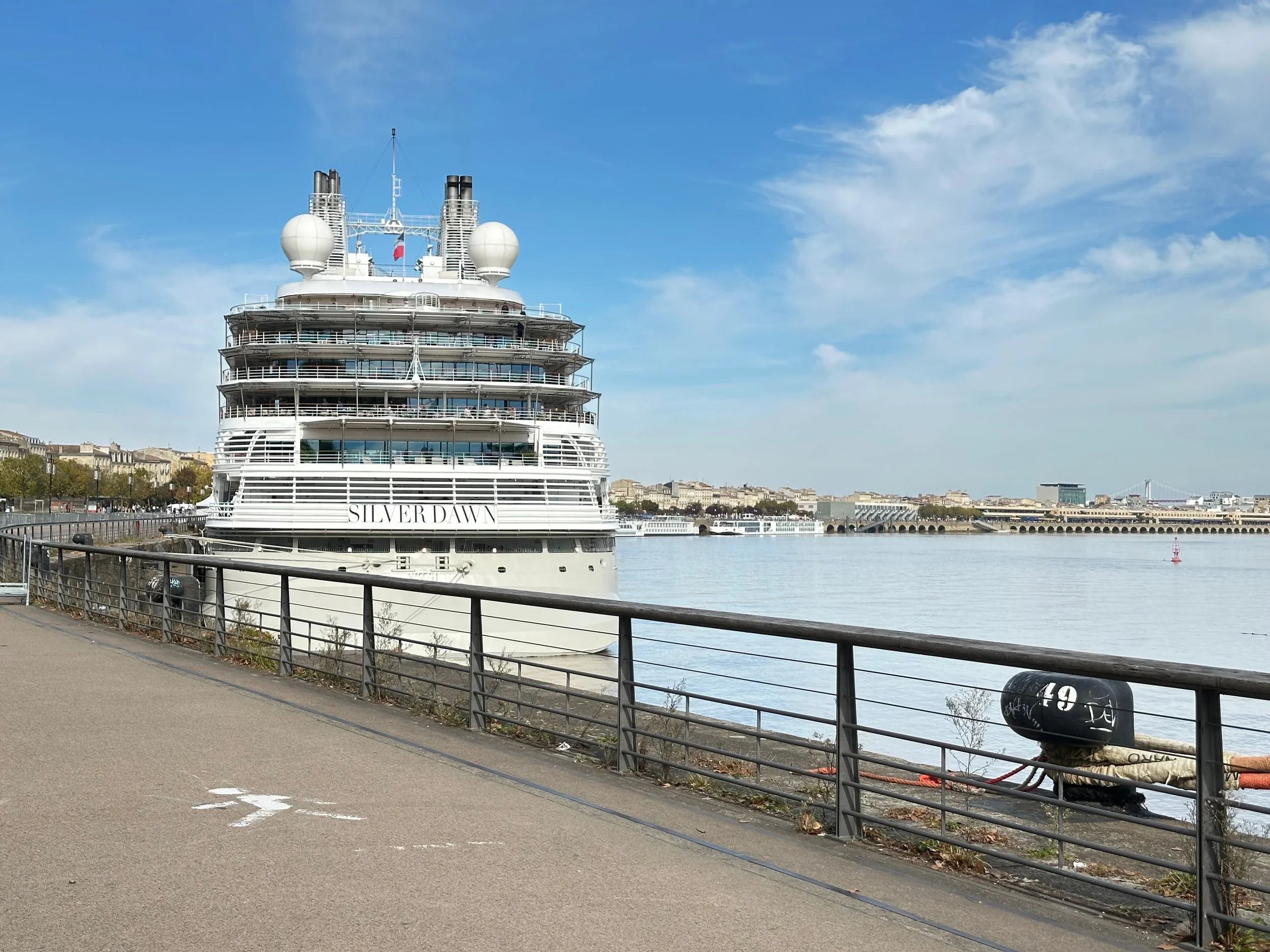
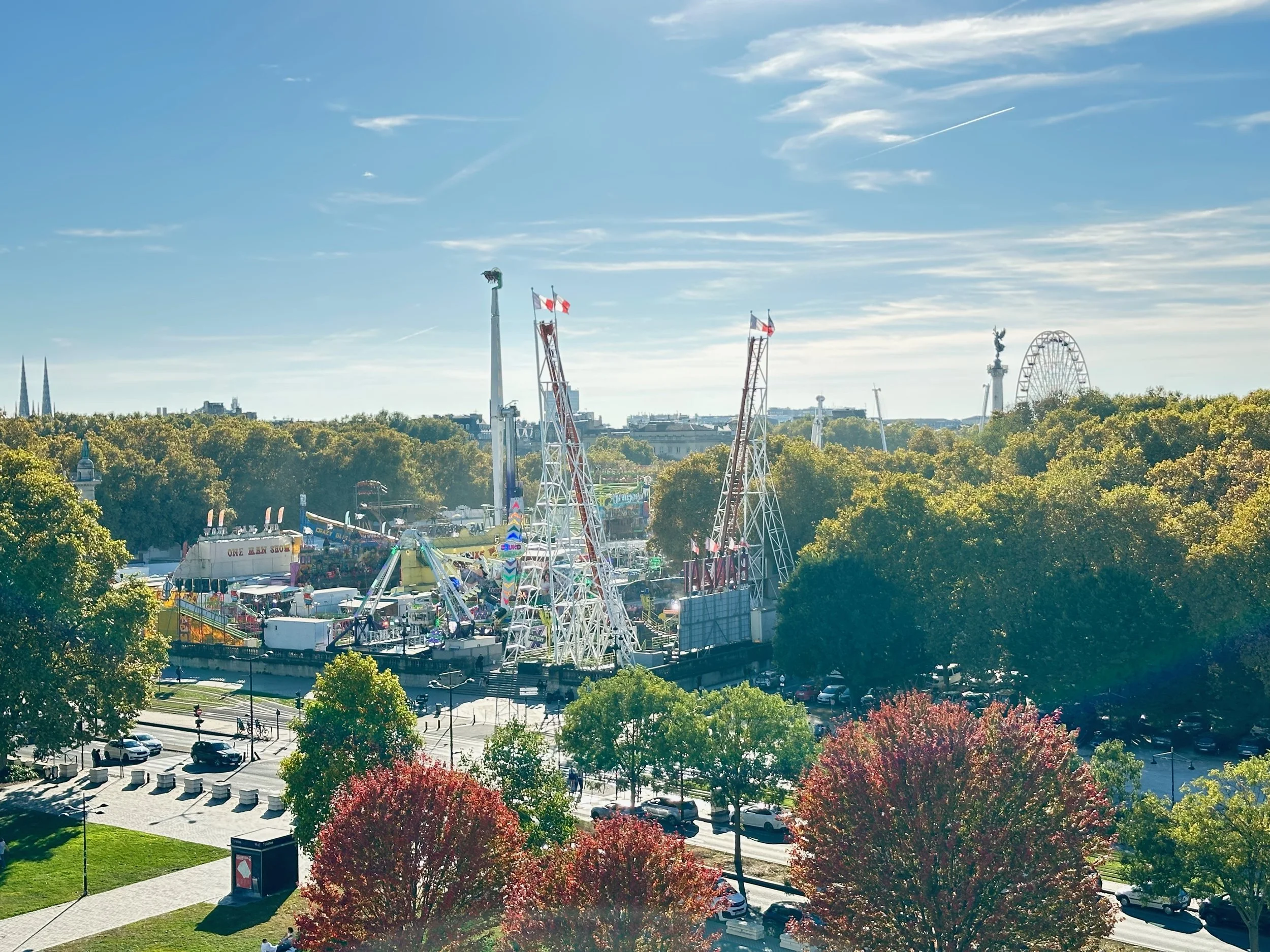
We docked right in the heart of the city like we were a river cruise boat, but because of Silver Dawn’s height, we could see for miles over top of the old world buildings. What added some colour to our location was the operation of a popup ride fairground. At night it was alive with neon colours on every part of each ride. It was spectacular for sure.
The playground as seen from our ship’s deck 7 outside dining area.
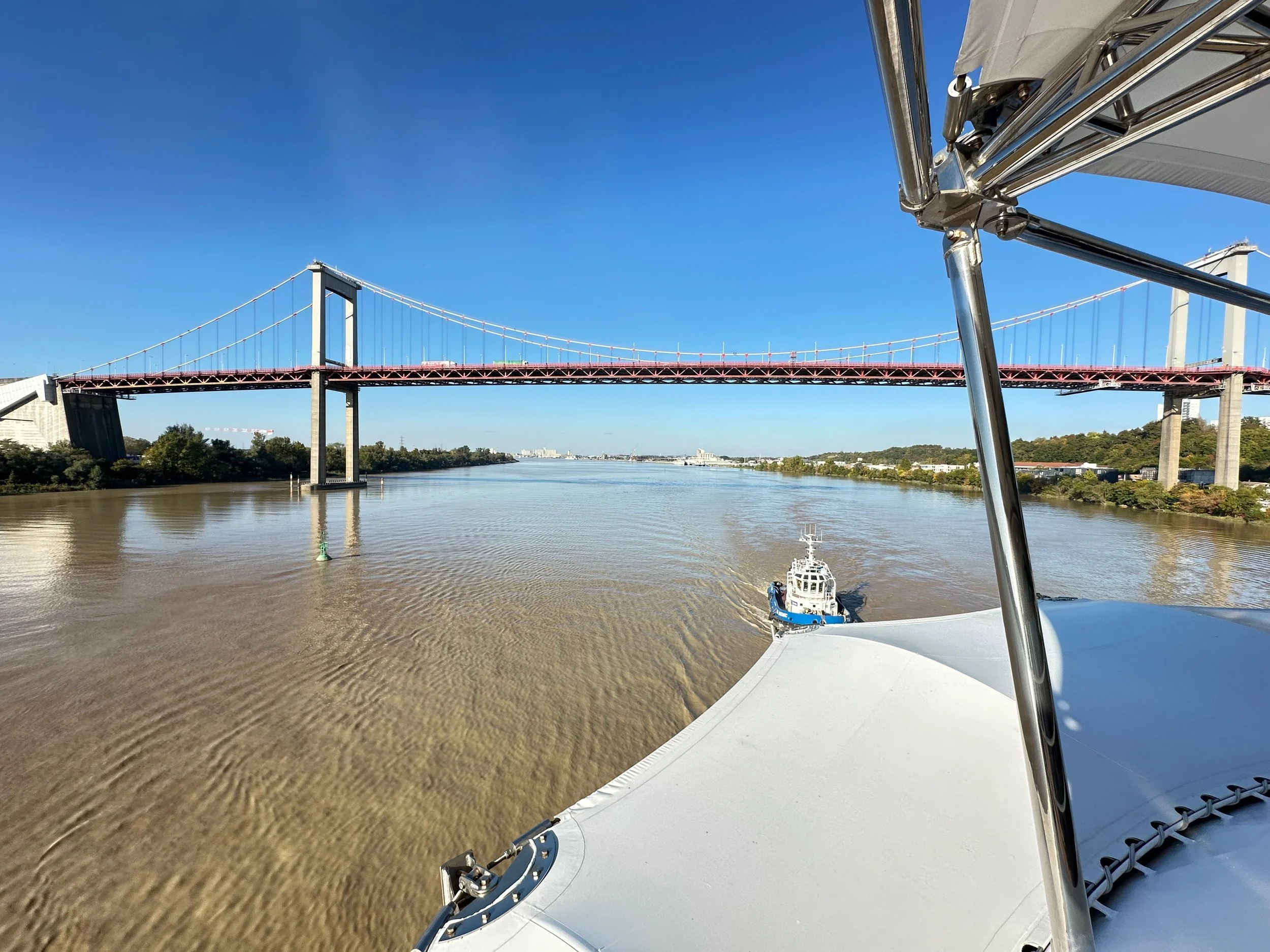
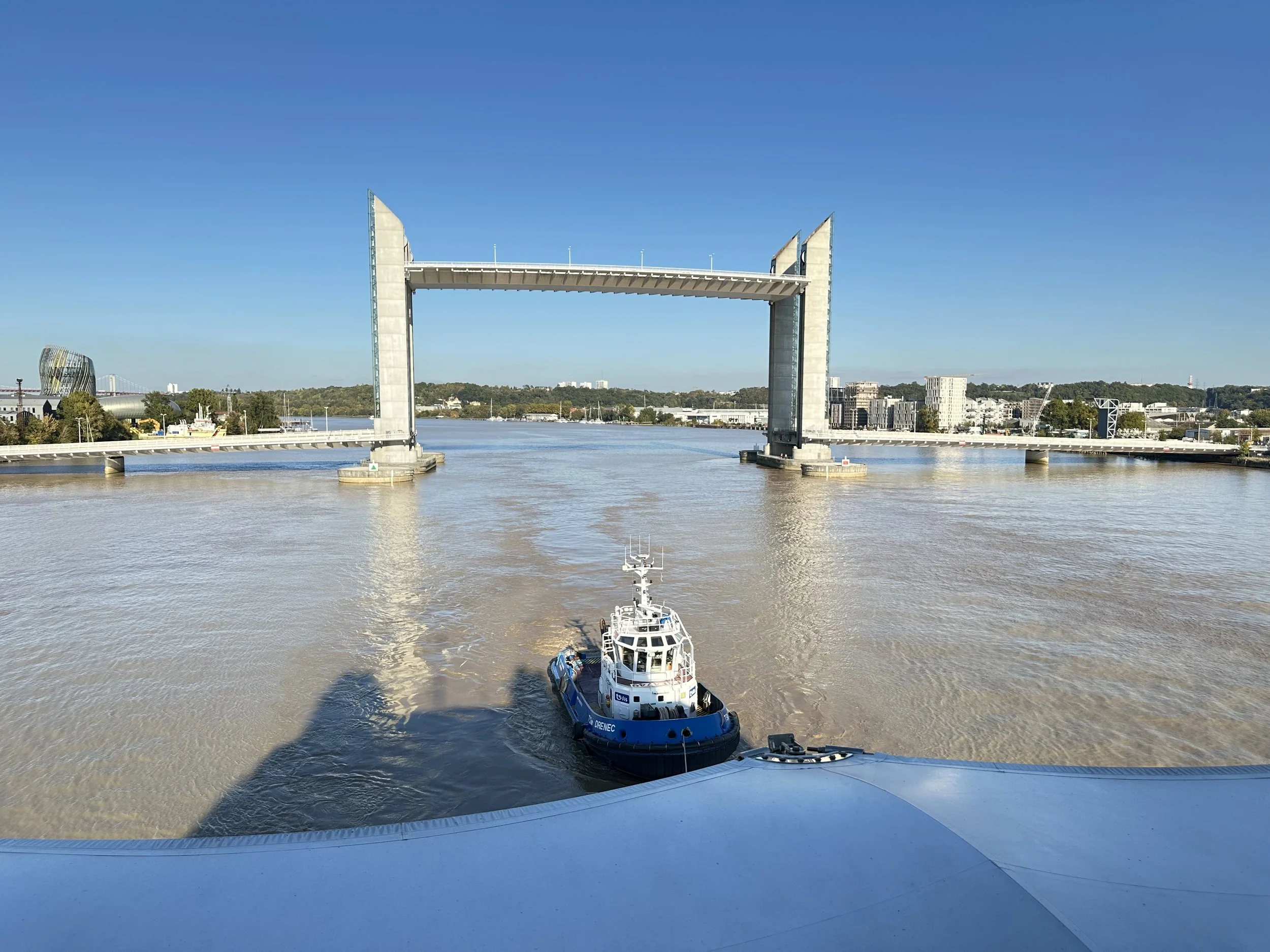
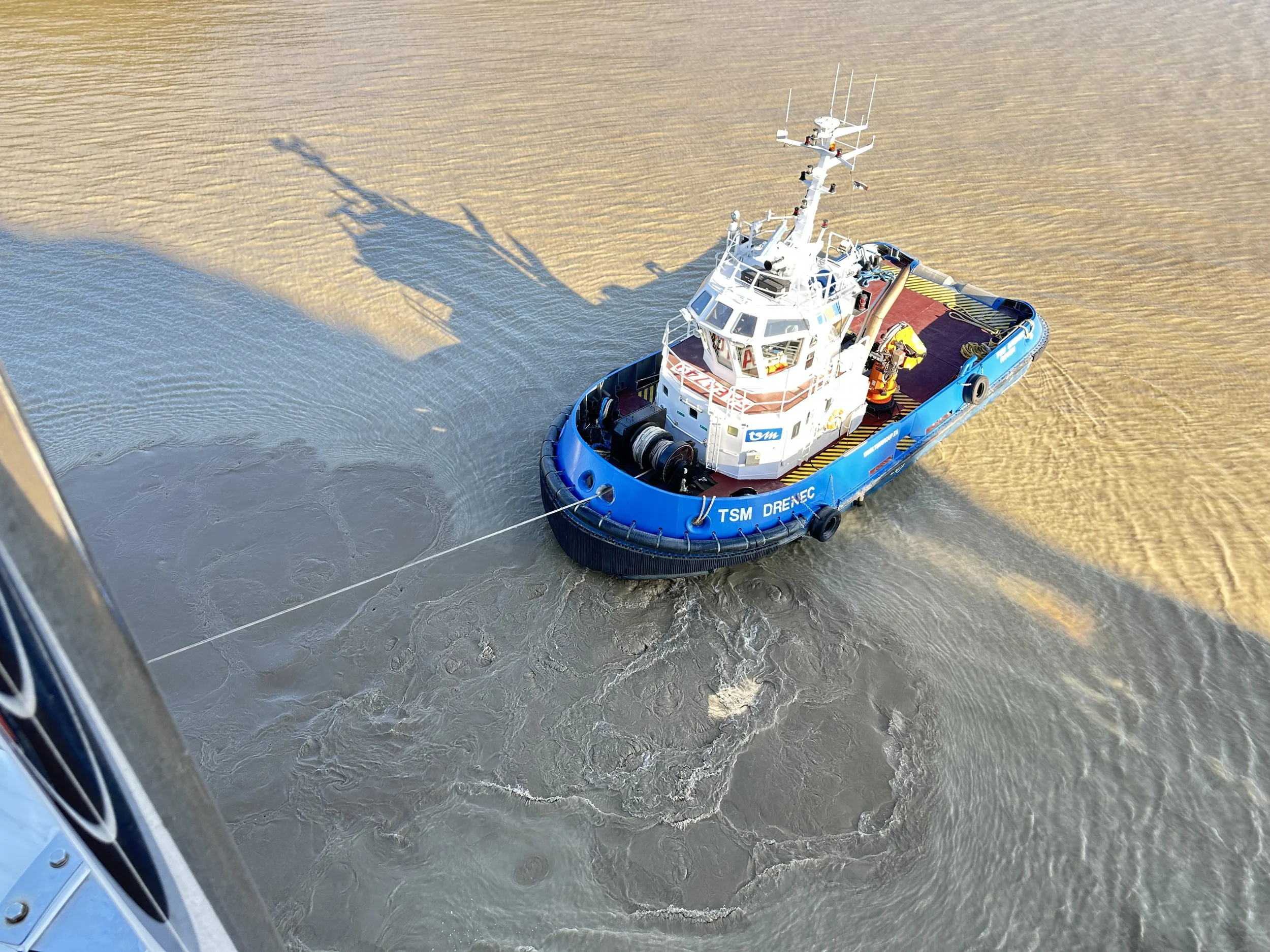
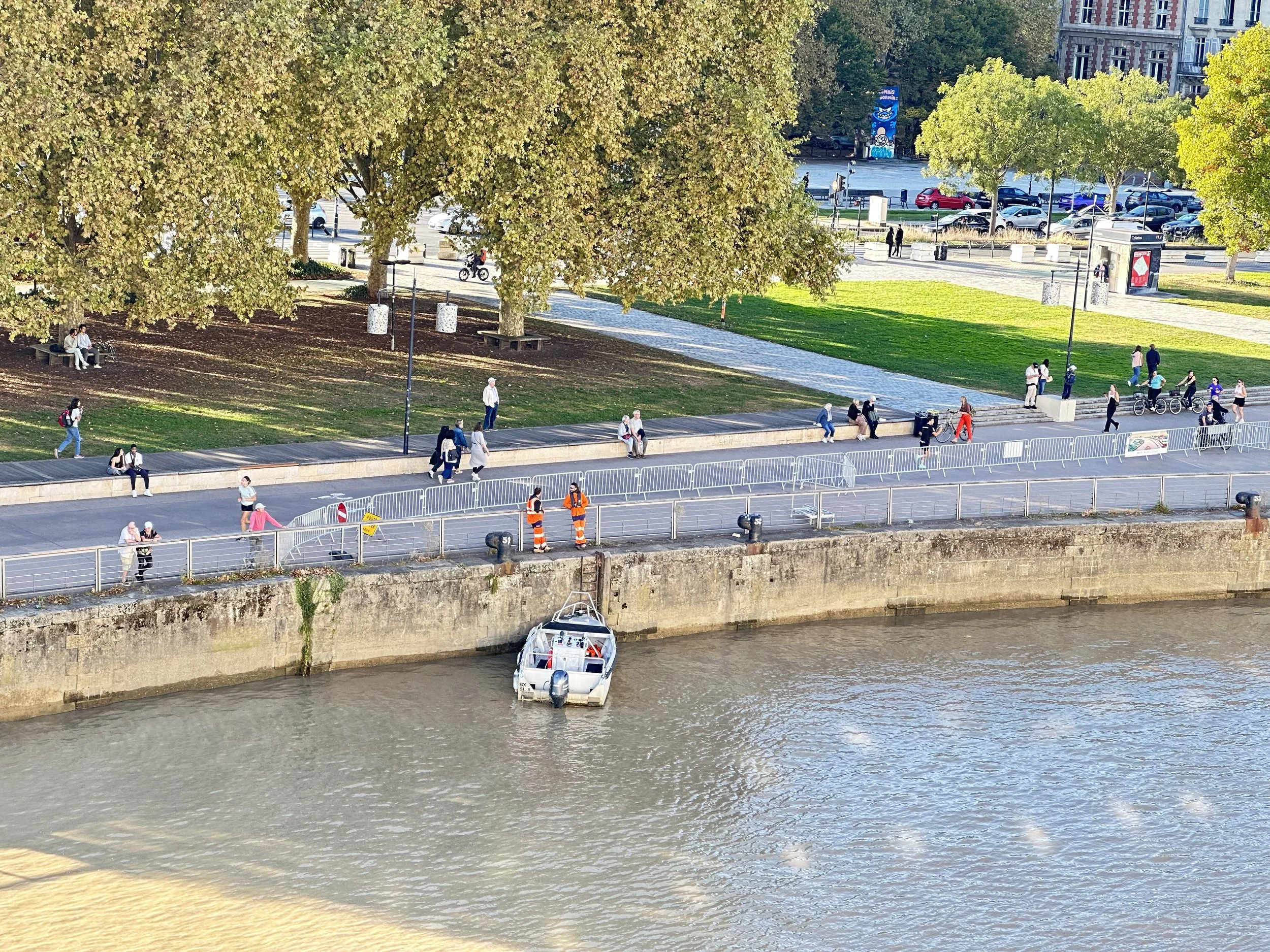
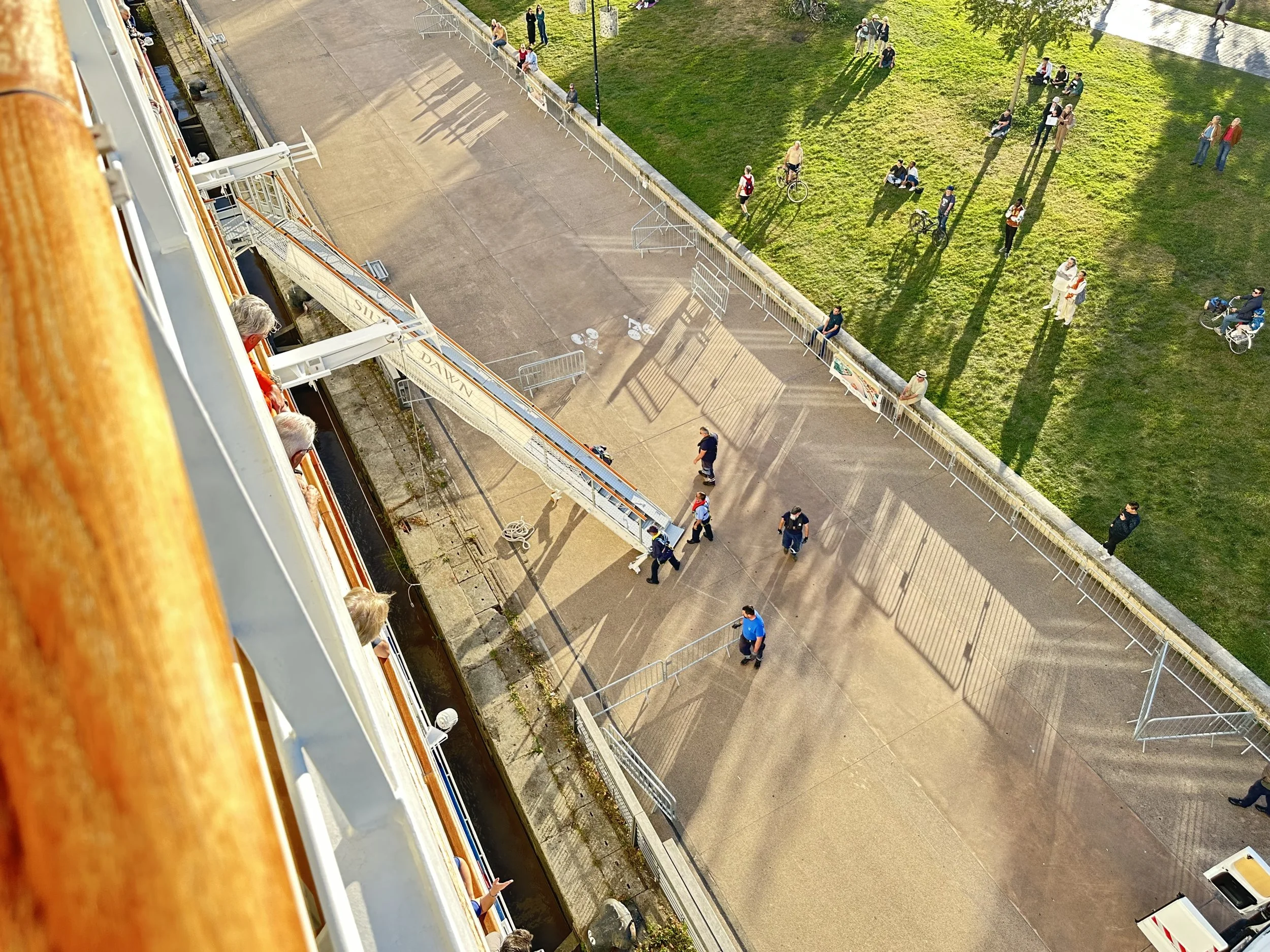
We arrived at about 5pm and before we could dock, the ship had to be spun 180° so the bow was facing downstream. Imagine that, turning a 700 foot long ship like a pinwheel in the middle of a river. To do so without any drama needed the use of a tug attached to the stern. We picked that tug up as we approached the first bridge downriver. Their job was to secure a line to the stern so it could steer the ship if the navigation controls failed, and when we reached our mooring location it helped to pull the stern around and upstream as the ship’s bow thruster pushed the bow in the opposite direction. All happened flawlessly and we nuzzled up to the wharf without so much as a bump. Despite looking nothing like a port, but rather the riverside park that it is, there were men in orange vests standing ready to receive the ships mooring lines and place them on the ballards.
What turned out to be a fantastic bit of luck for us was where our cabin was on the ship. Since we were on the port side of the ship, turning the ship around now placed us on the side facing the city’s beautiful Unesco World Heritage Site, instead of an industrial area on the opposite shore. By the time dinner on the back deck was served at 18:30, the gang plank was down and people were already leaving the ship for an excursion to explore the area. By the time we had finished dinner, it was dark and the bright lights of the ride playground were at full blaze. It just doesn’t get any better than that. We can’t overstate just how grateful we felt to be there.
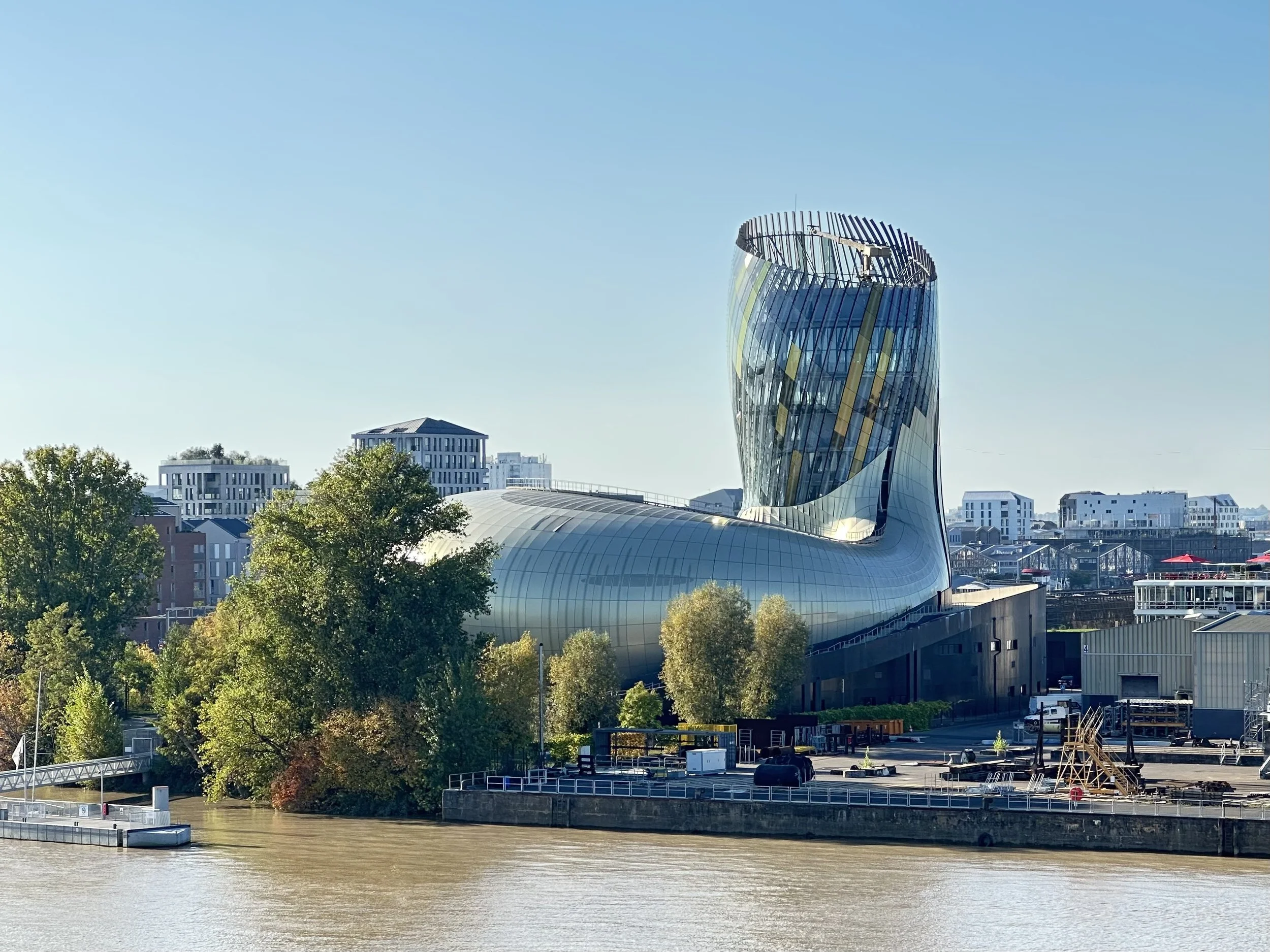
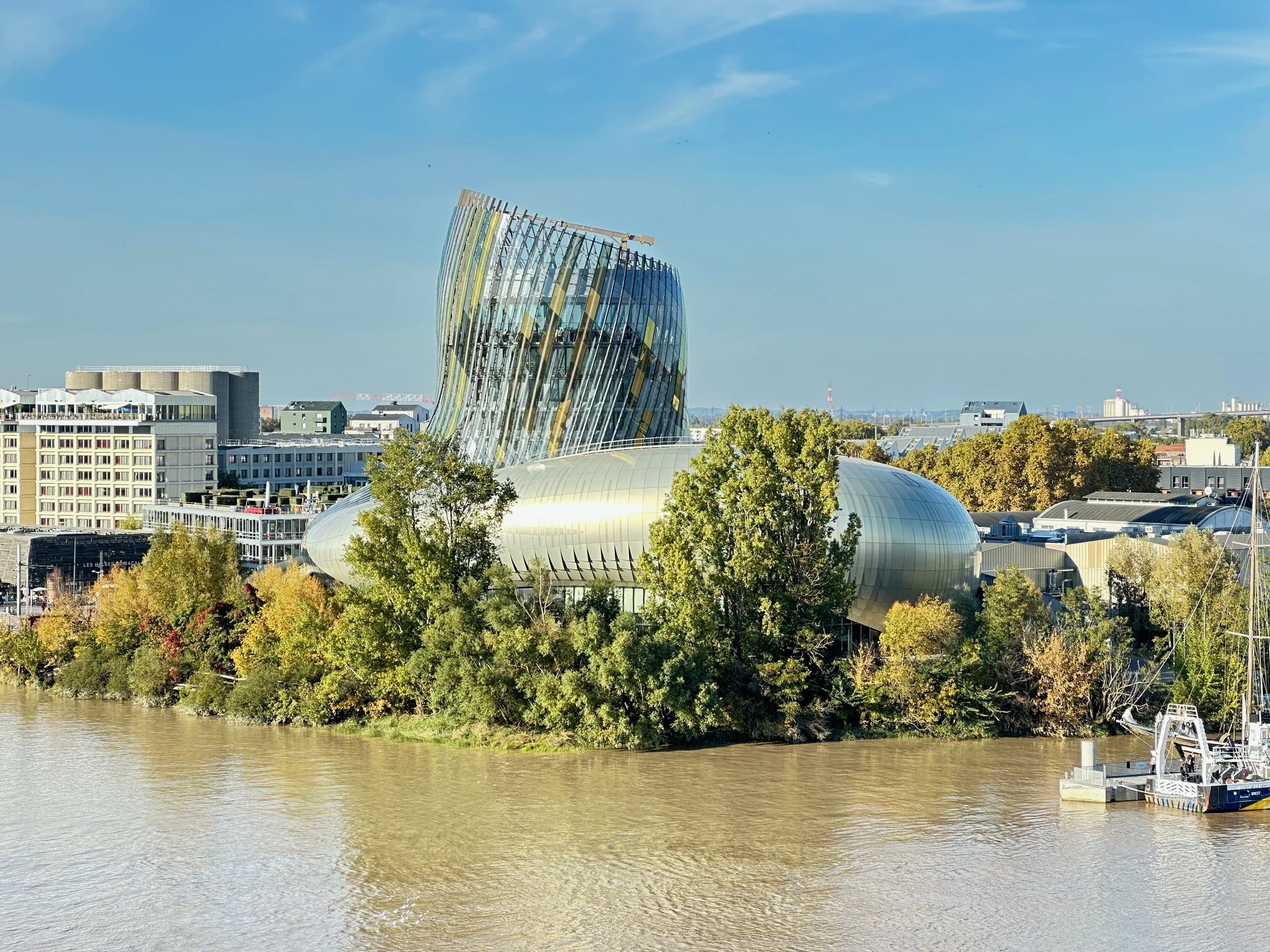
The Cité du Vin as we passed by on the river.
Day 1… Visiting the Cité du Vin
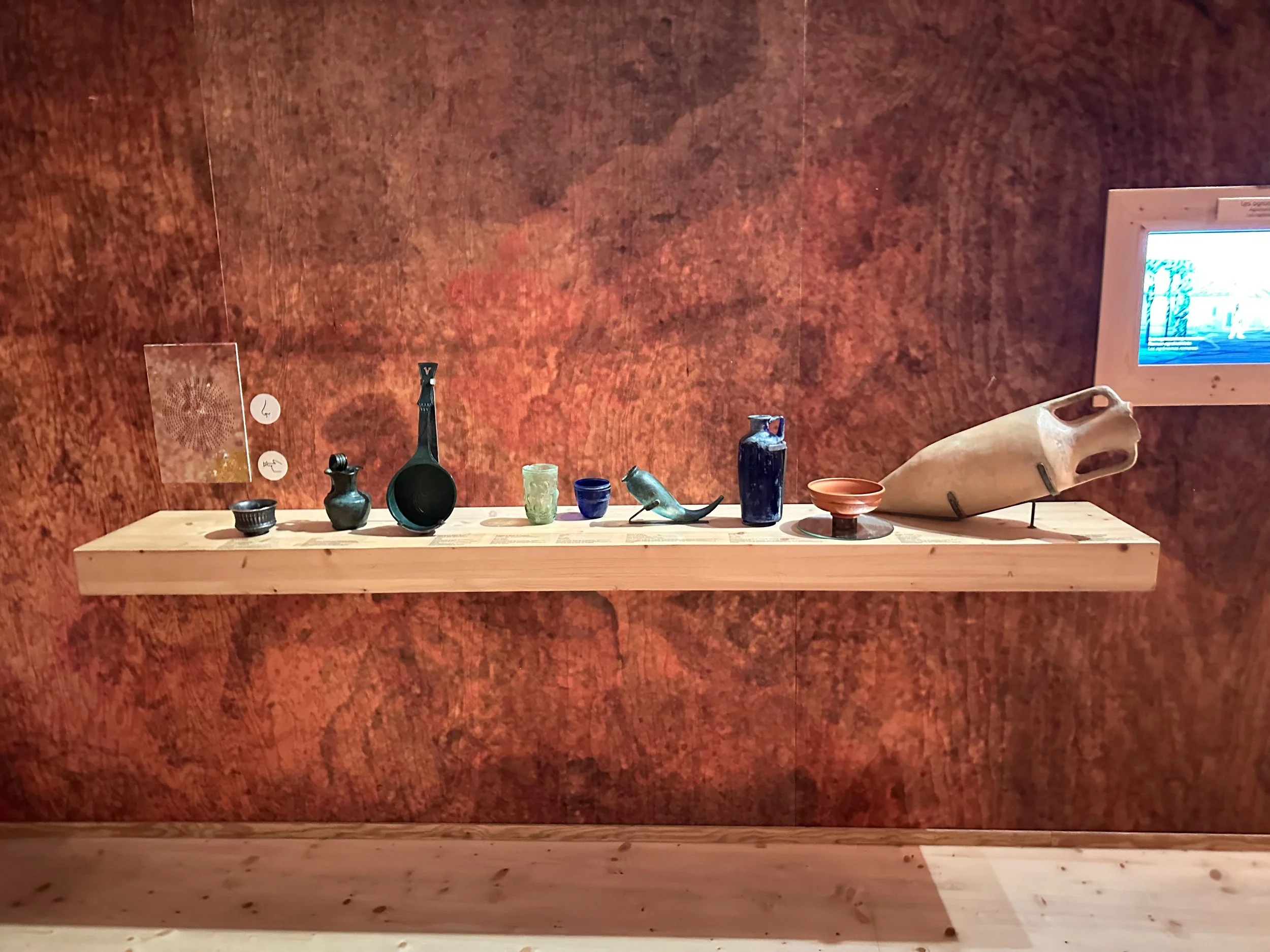
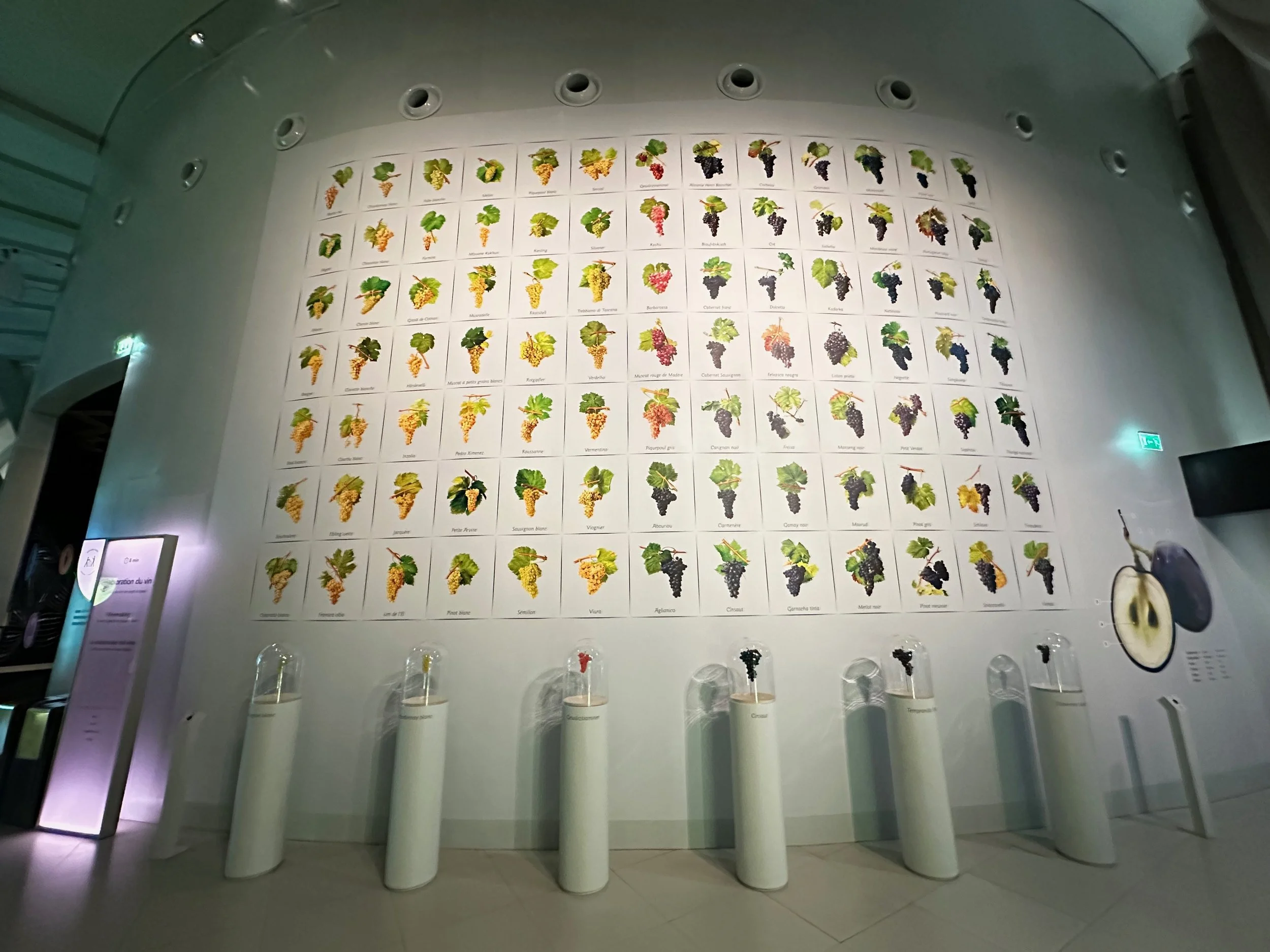
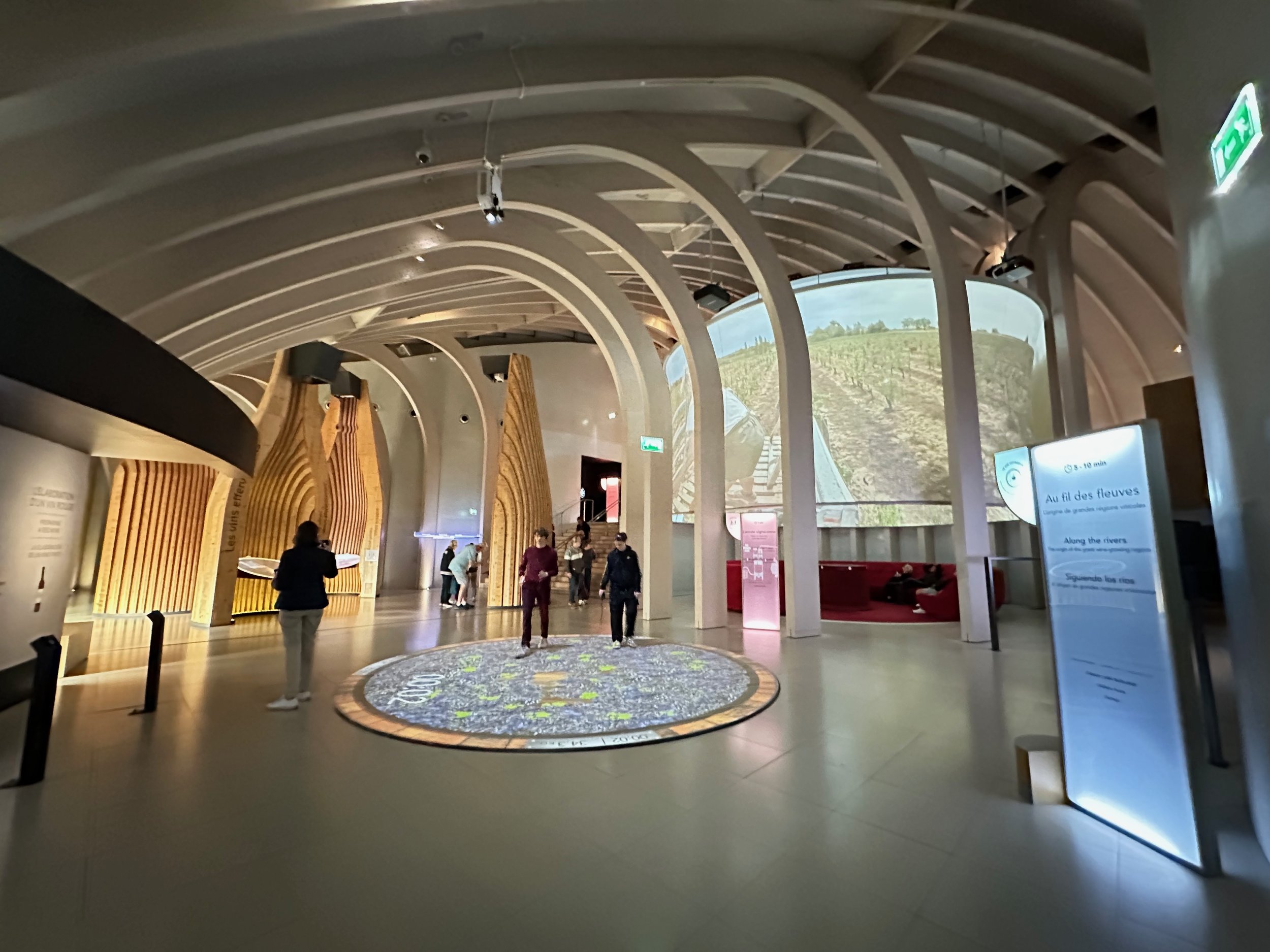
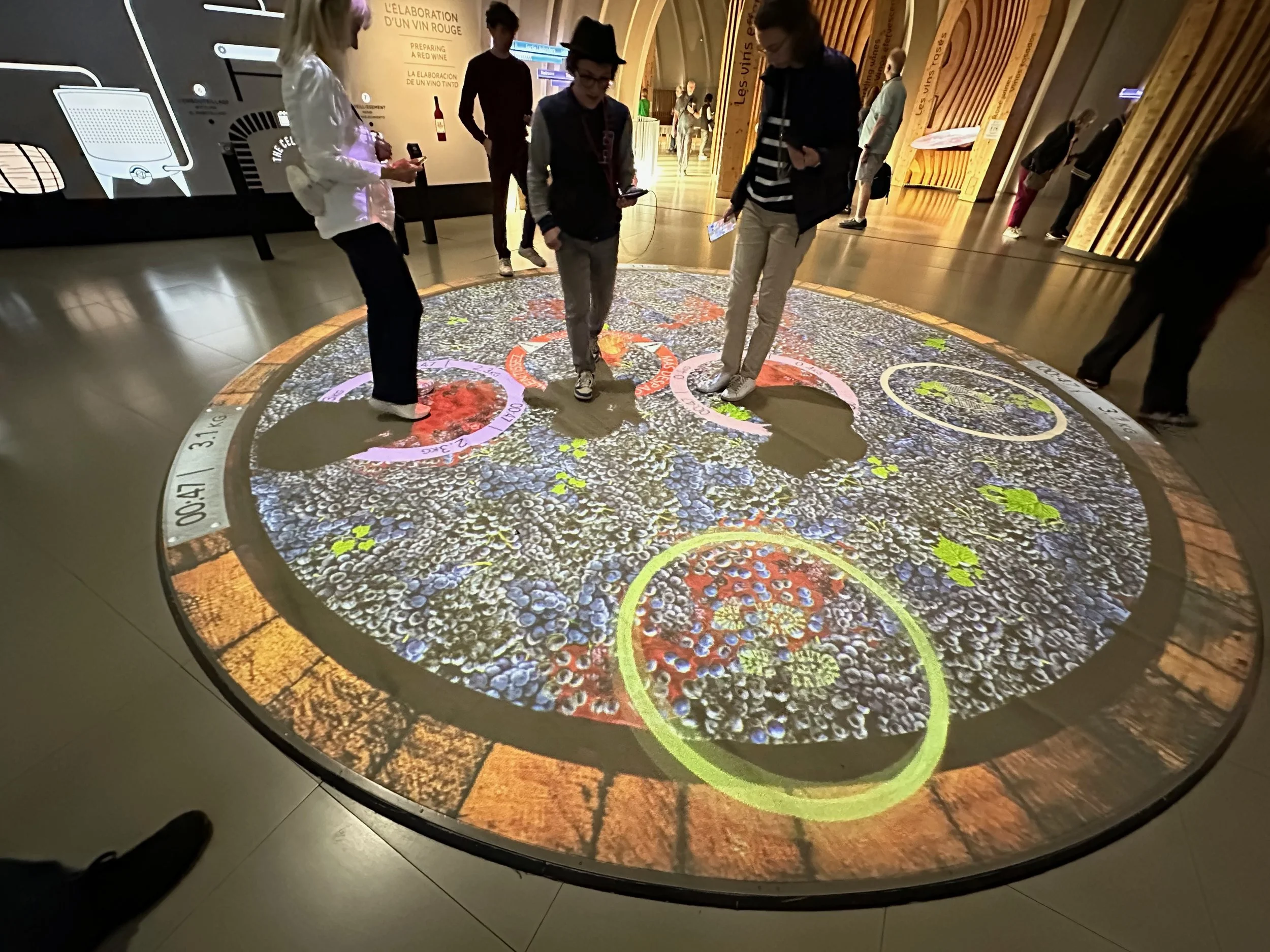
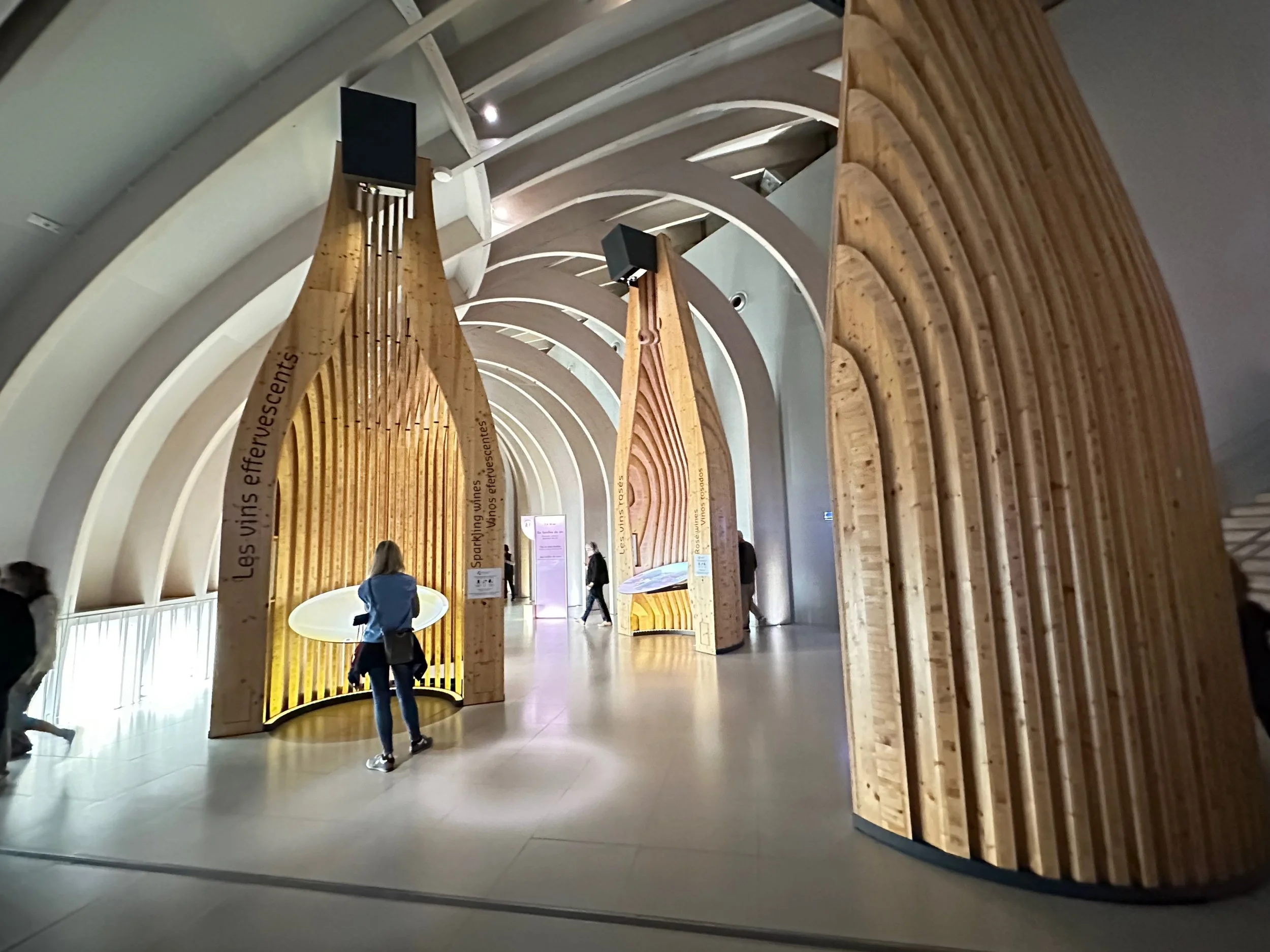
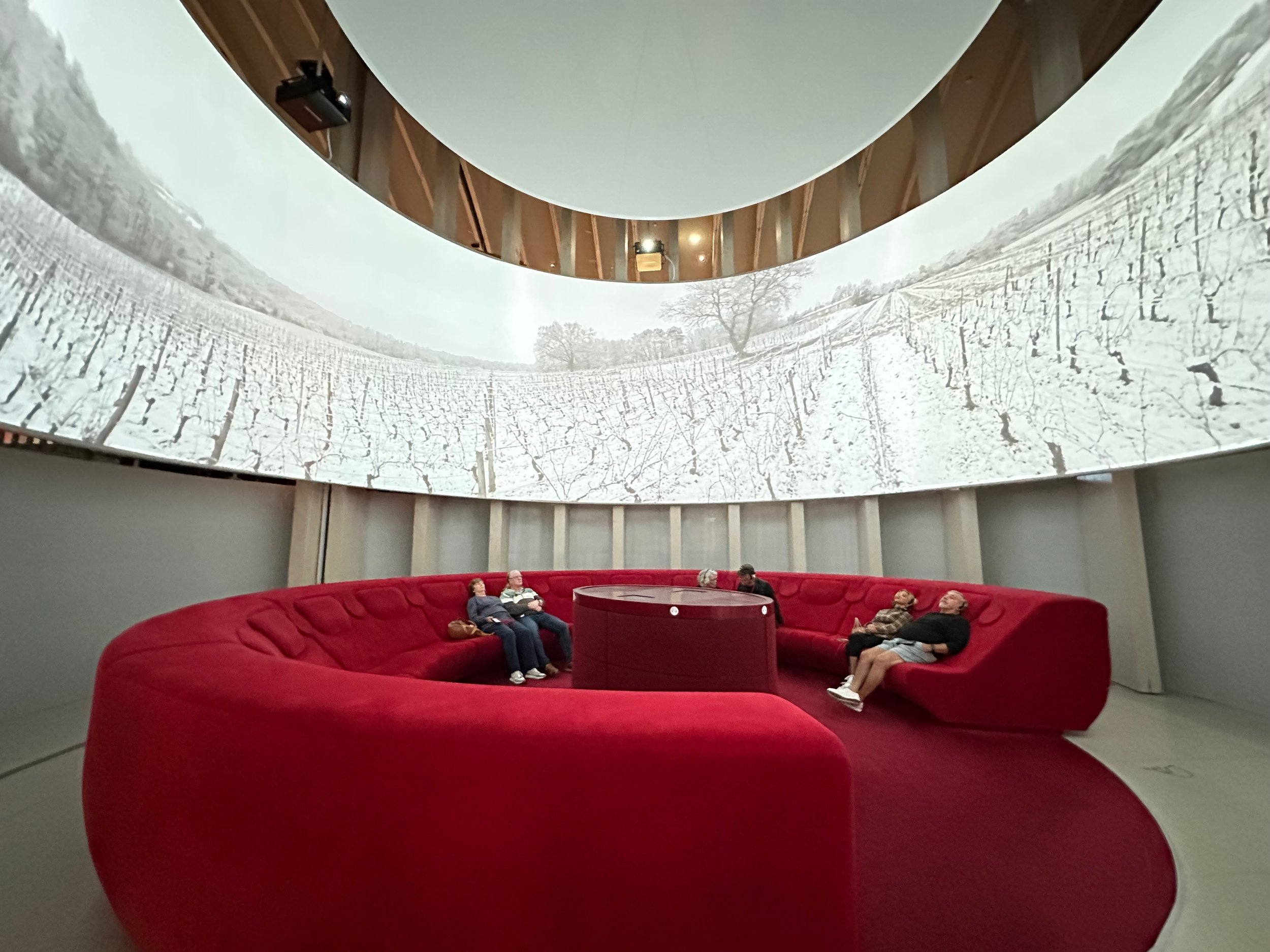
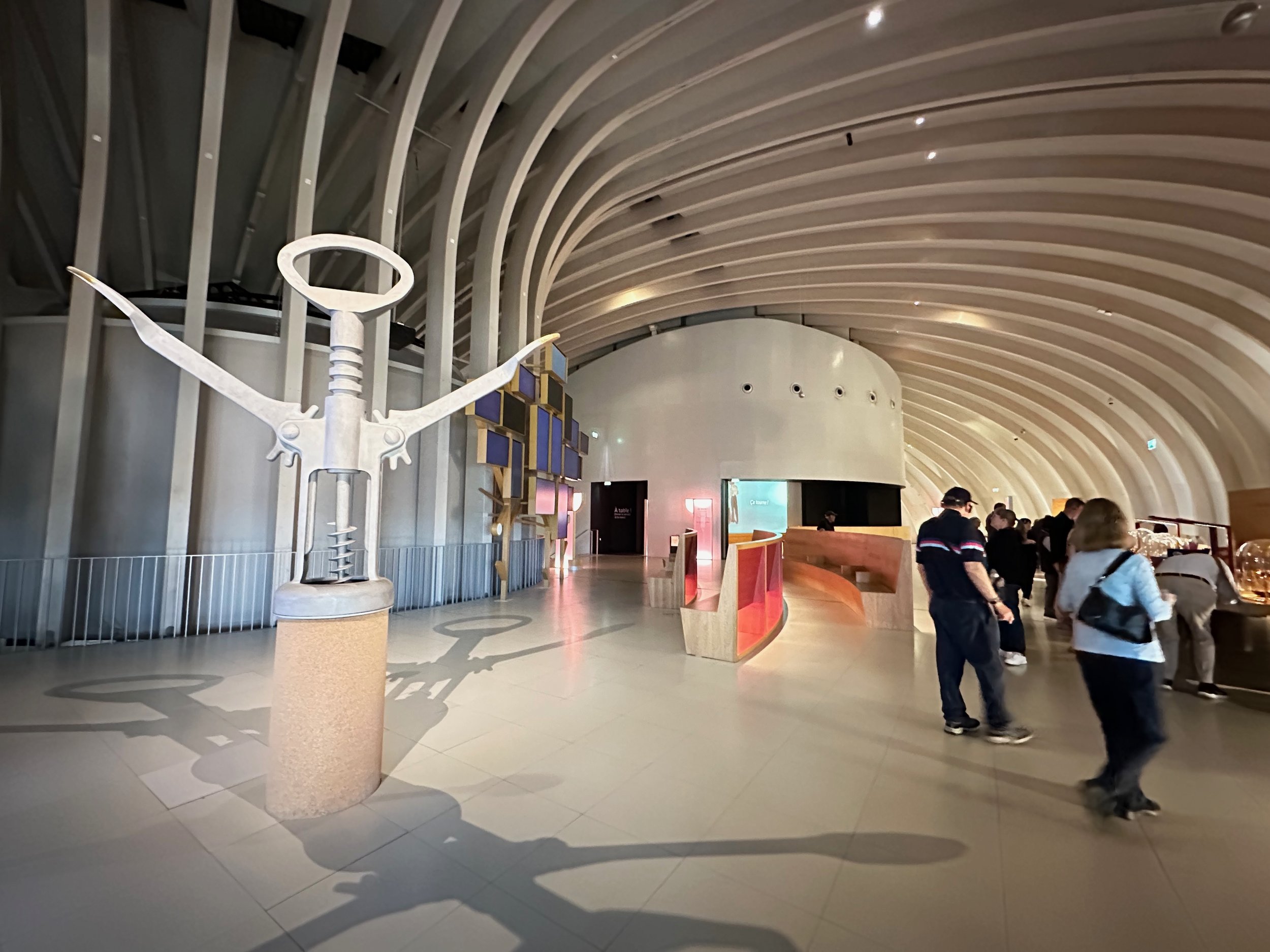
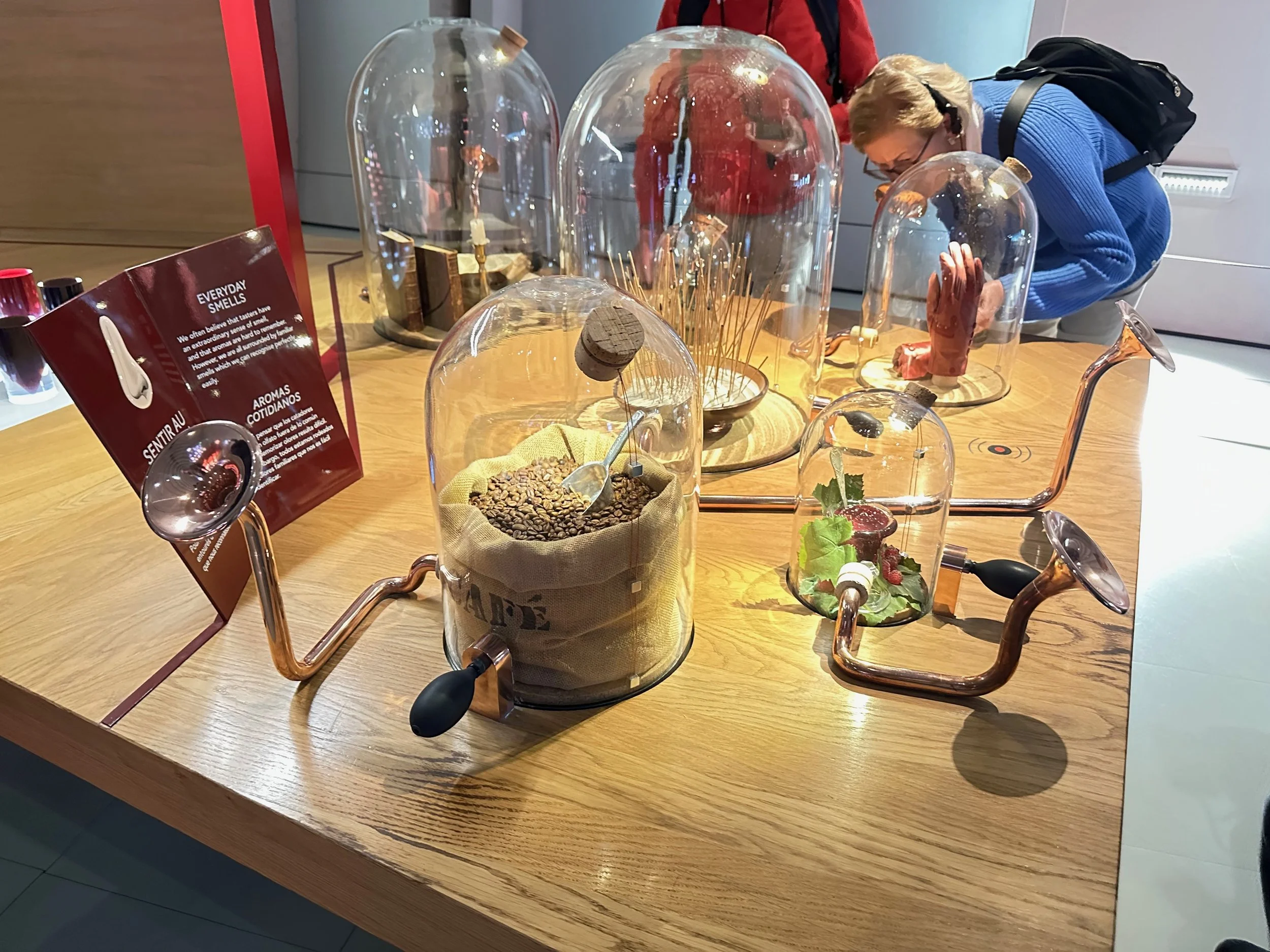
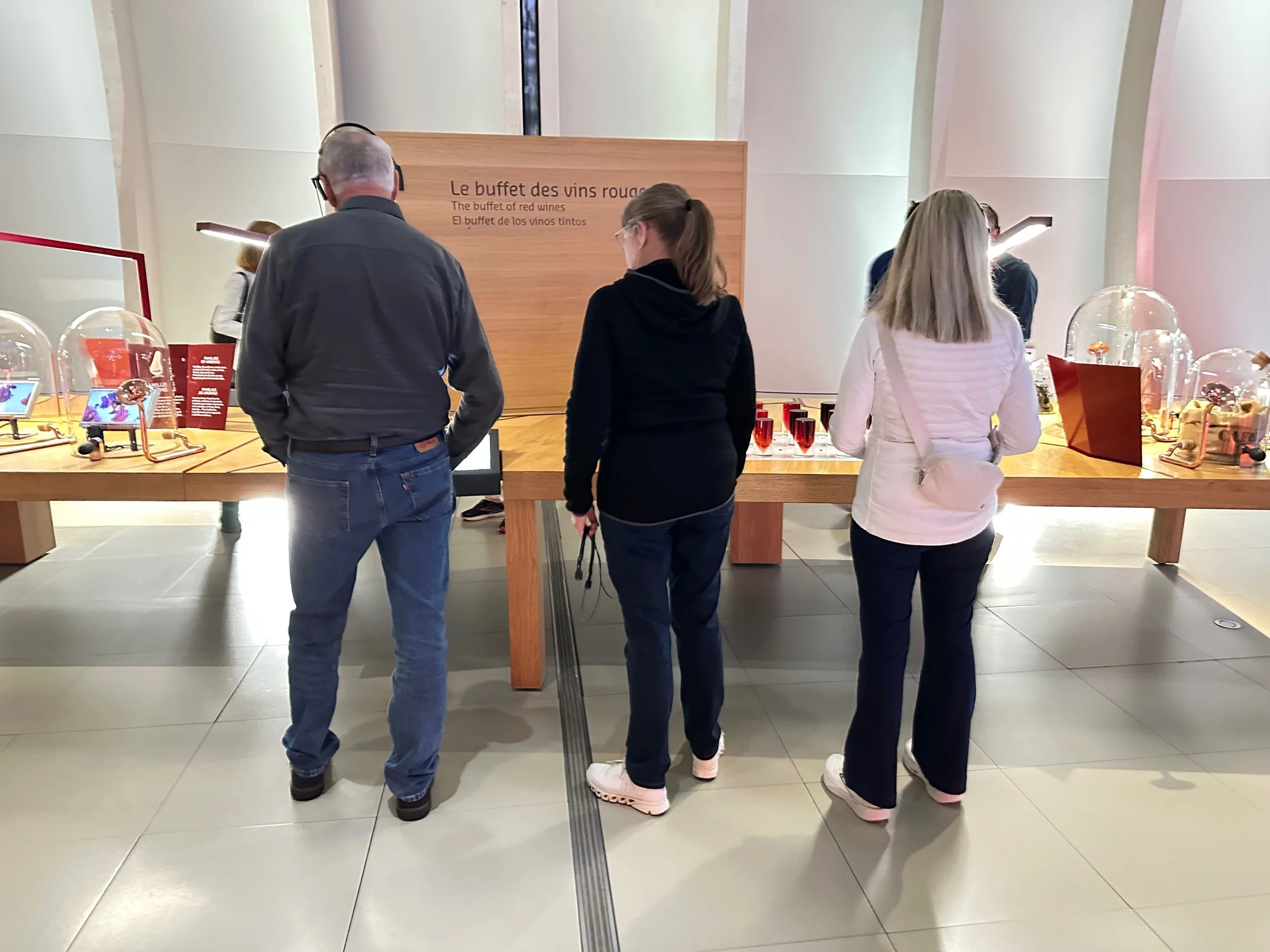
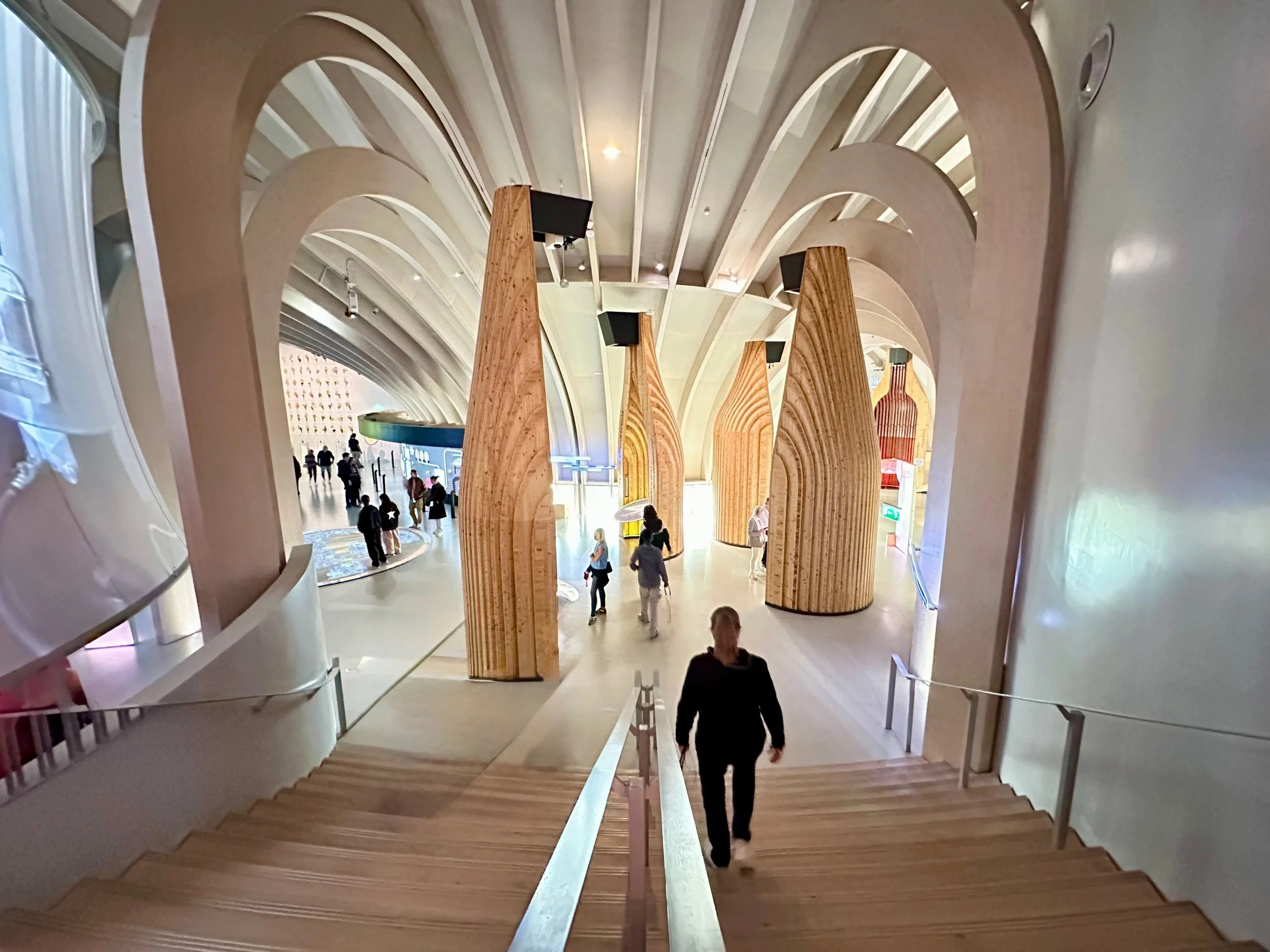
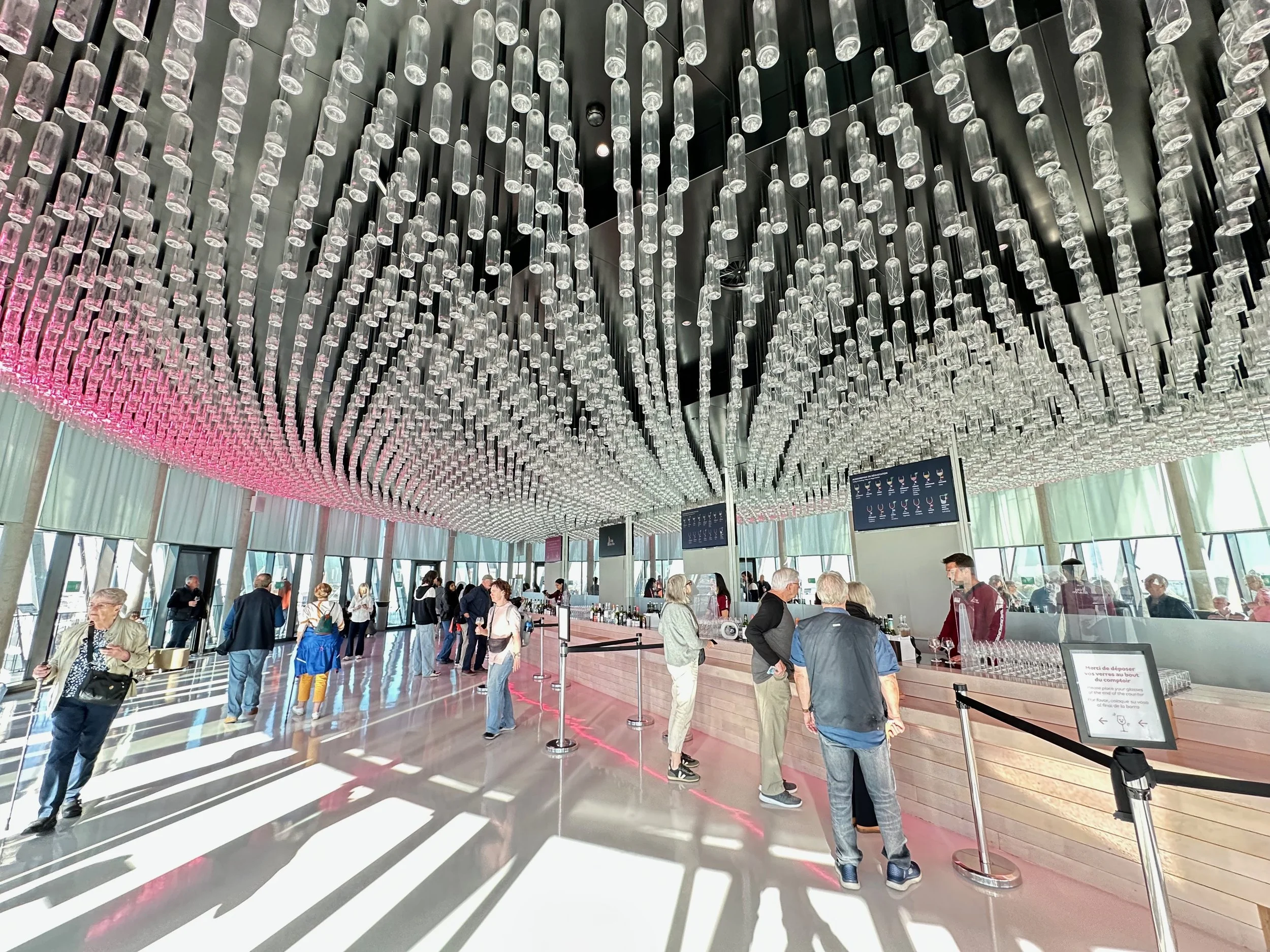
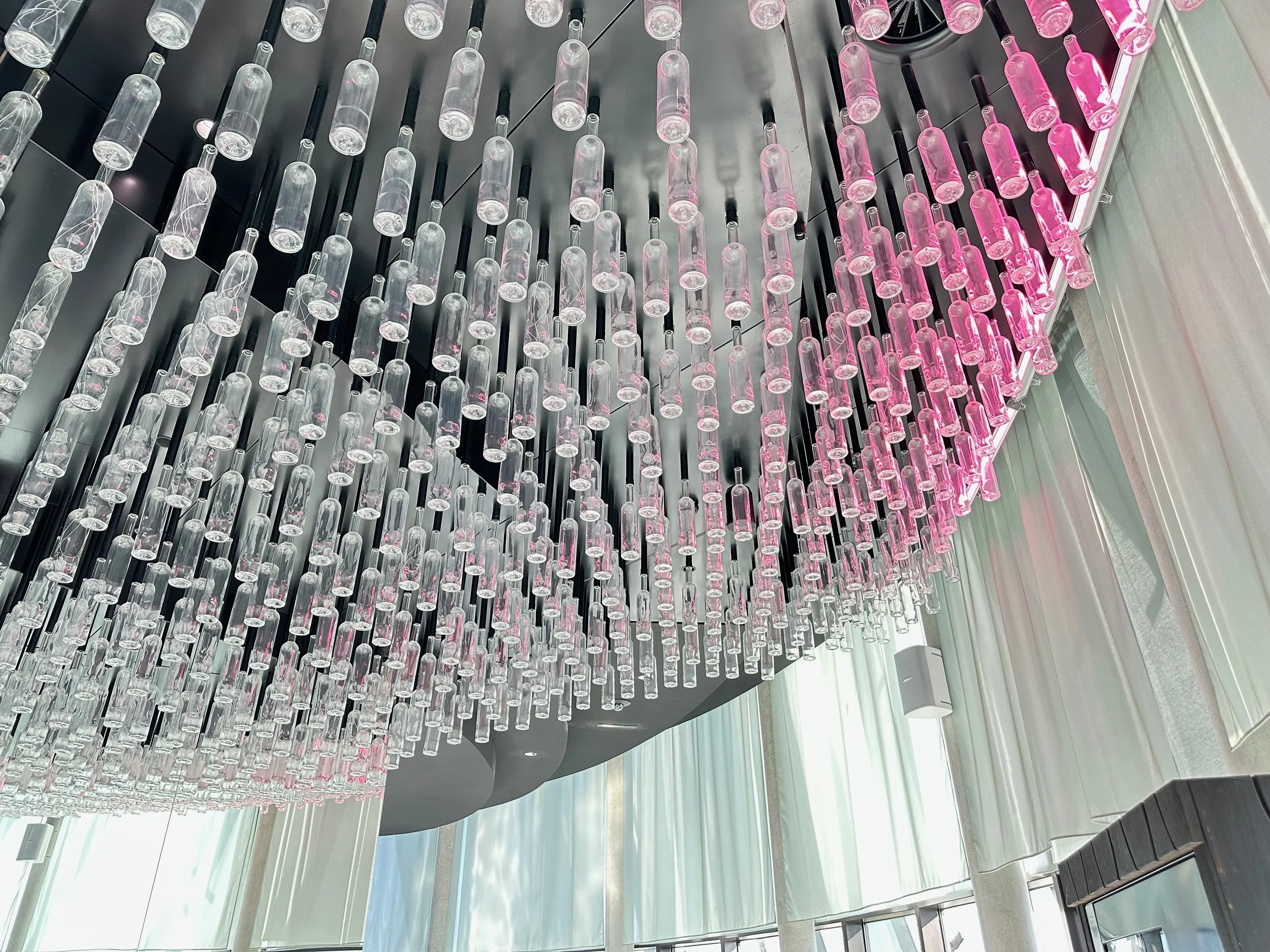
The next morning saw the start of our first full day in Bordeaux. After our 7:30 buffet breakfast we boarded a bus that would take us on a short tour around the old part of the city to eventually end up at the spectacular Cité du Vin. It’s a dedicated museum for wine and wine production around the world, and has some of the most stunning architecture we’ve ever seen. One could spend hours wandering the unique spaces inside, and learn from the wonderful exhibits, everything from preparing the soil and growing the grapes to the final bottling of the precious product. After the lower museum tour, one could take the elevator to the penthouse where one could enjoy a glass of the many different wines they had to sample. Sadly for those who drink, only a single glass was included with the admission ticket price.
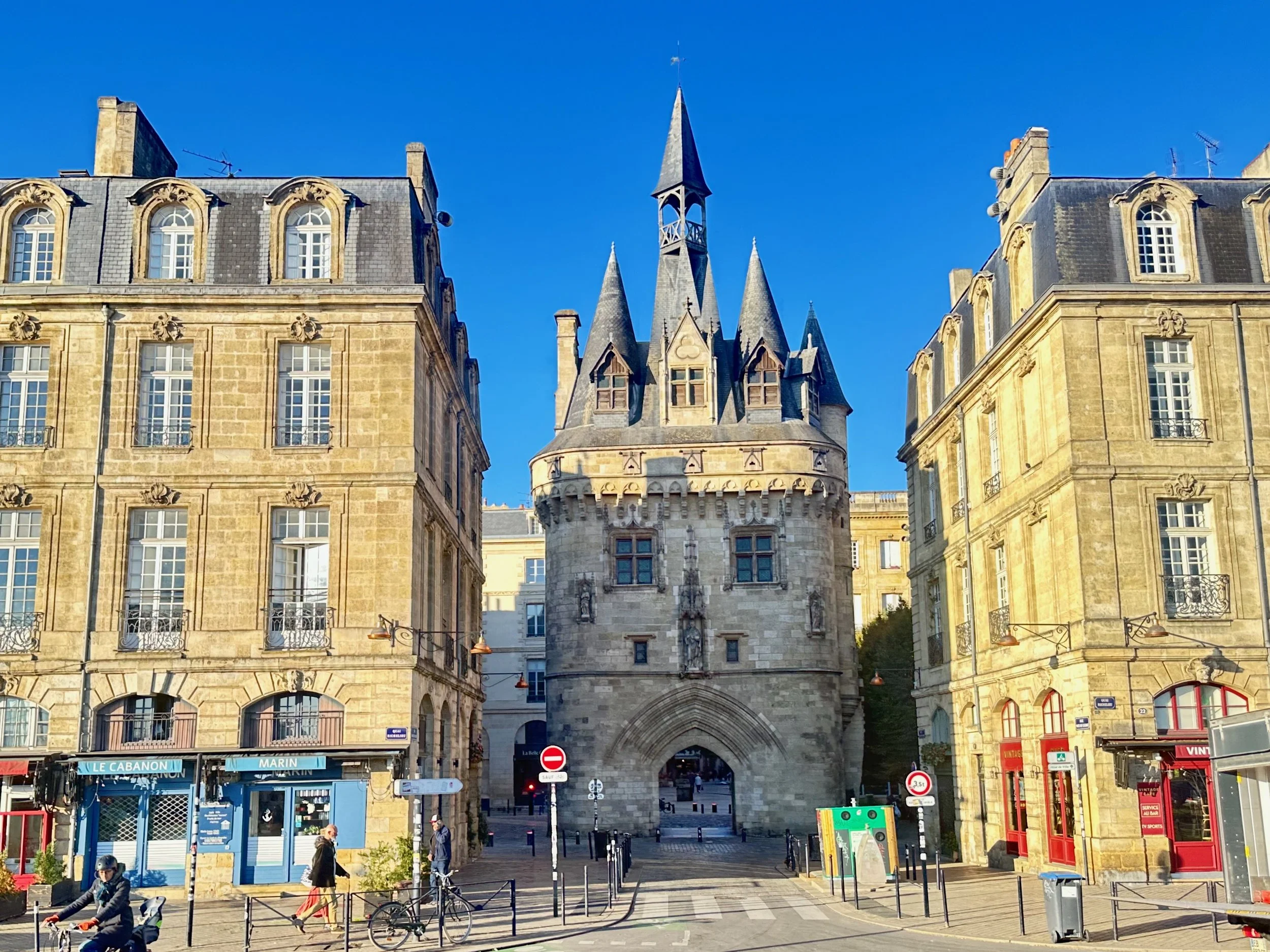
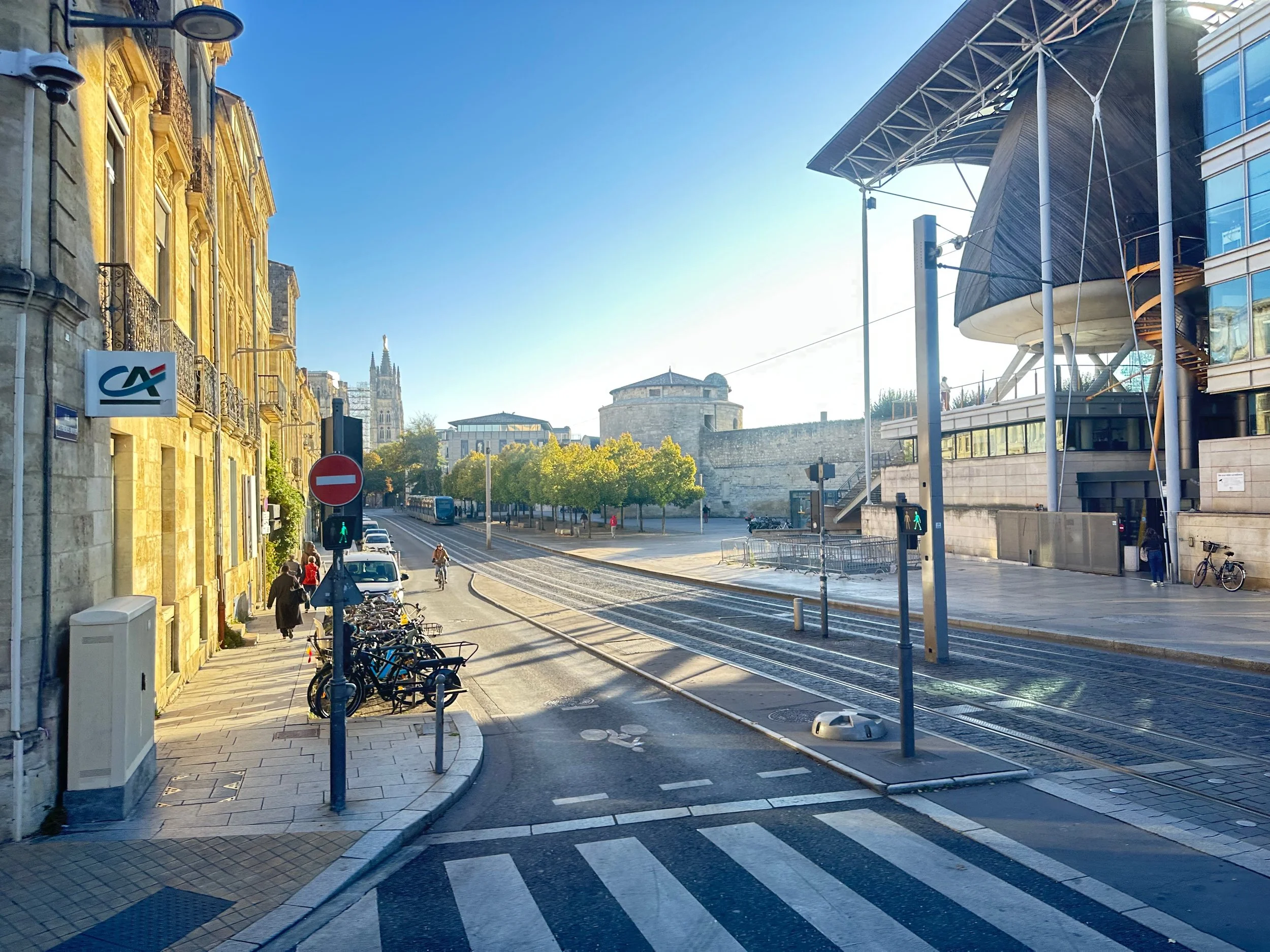
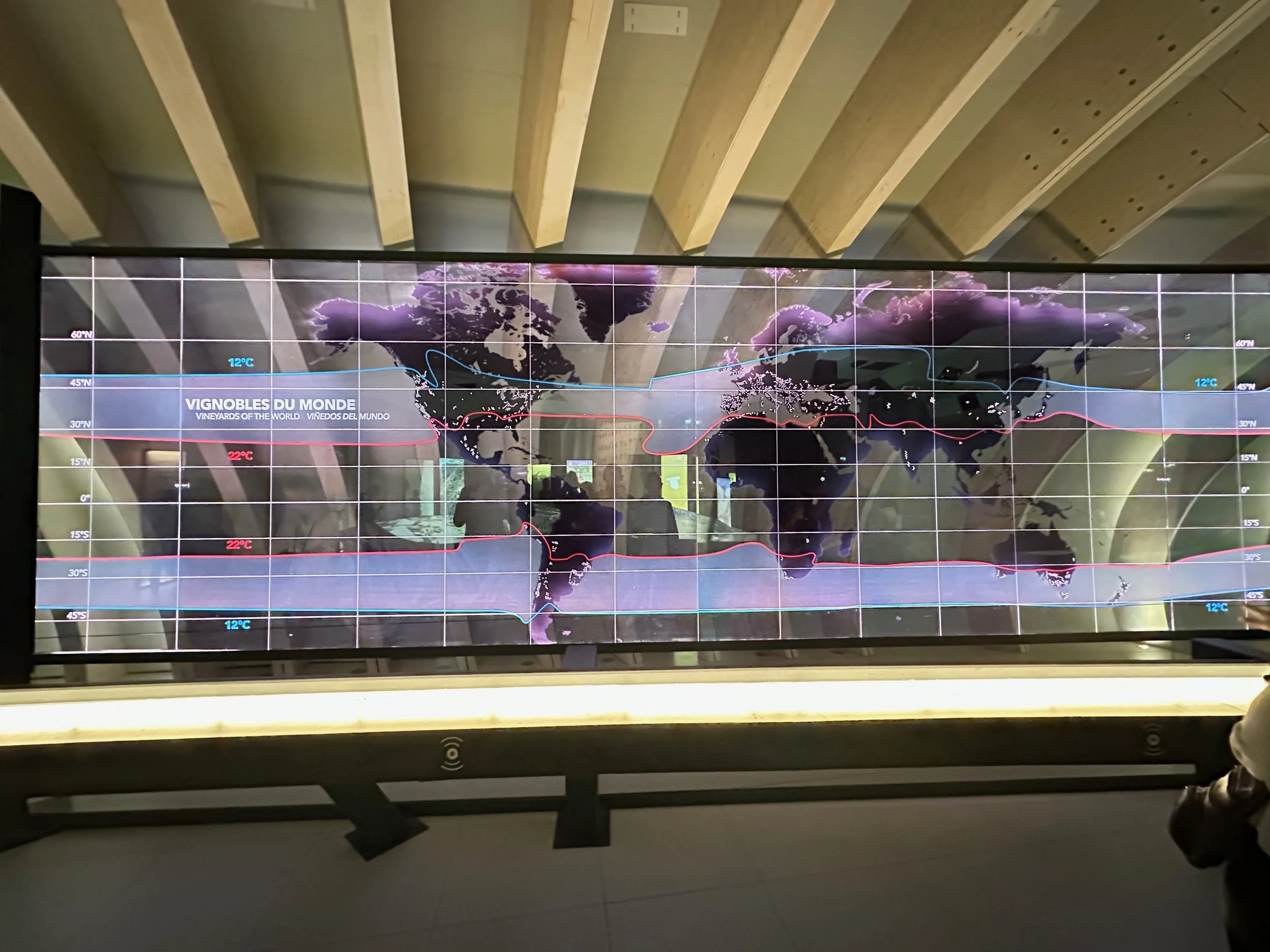
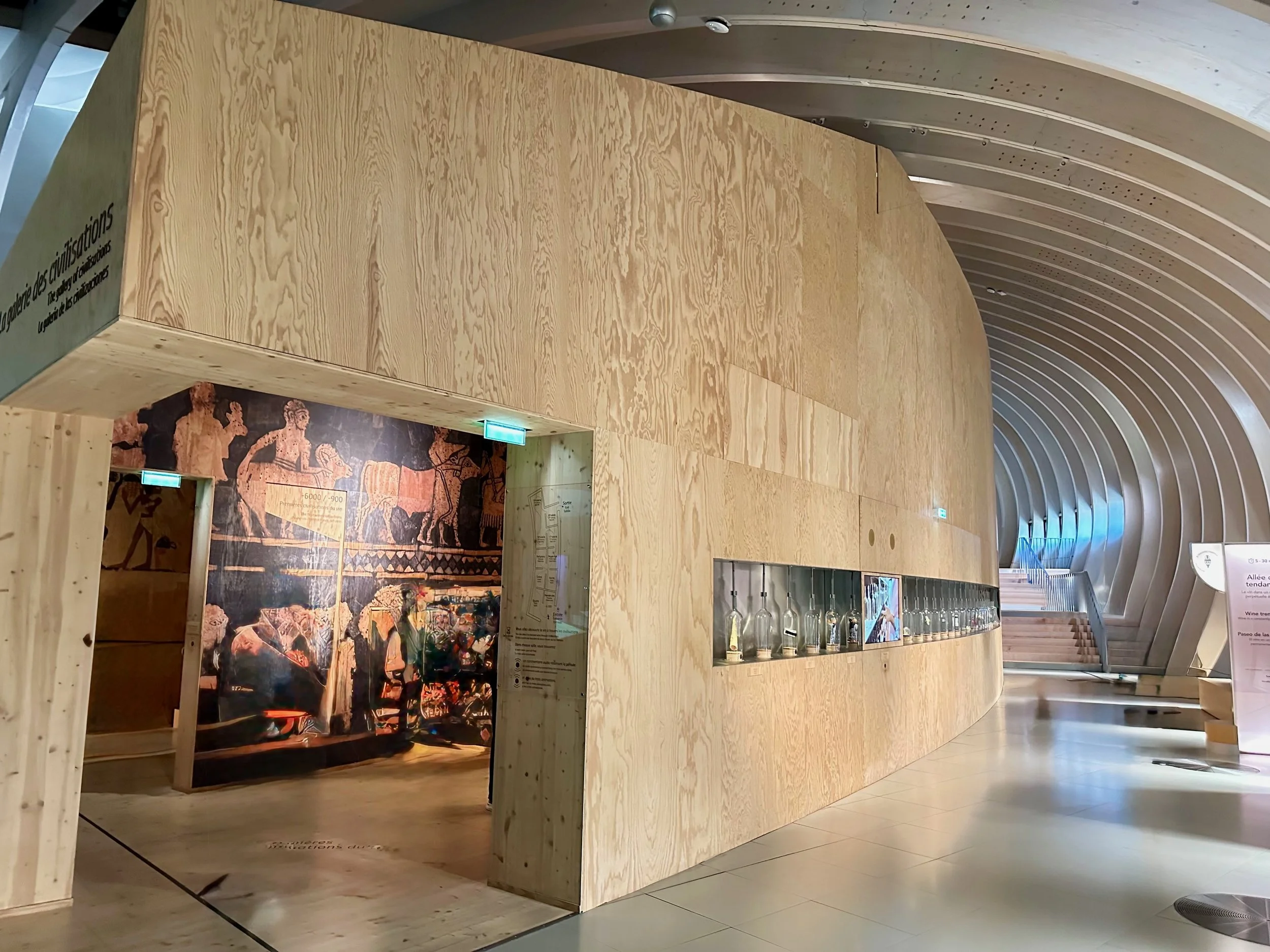
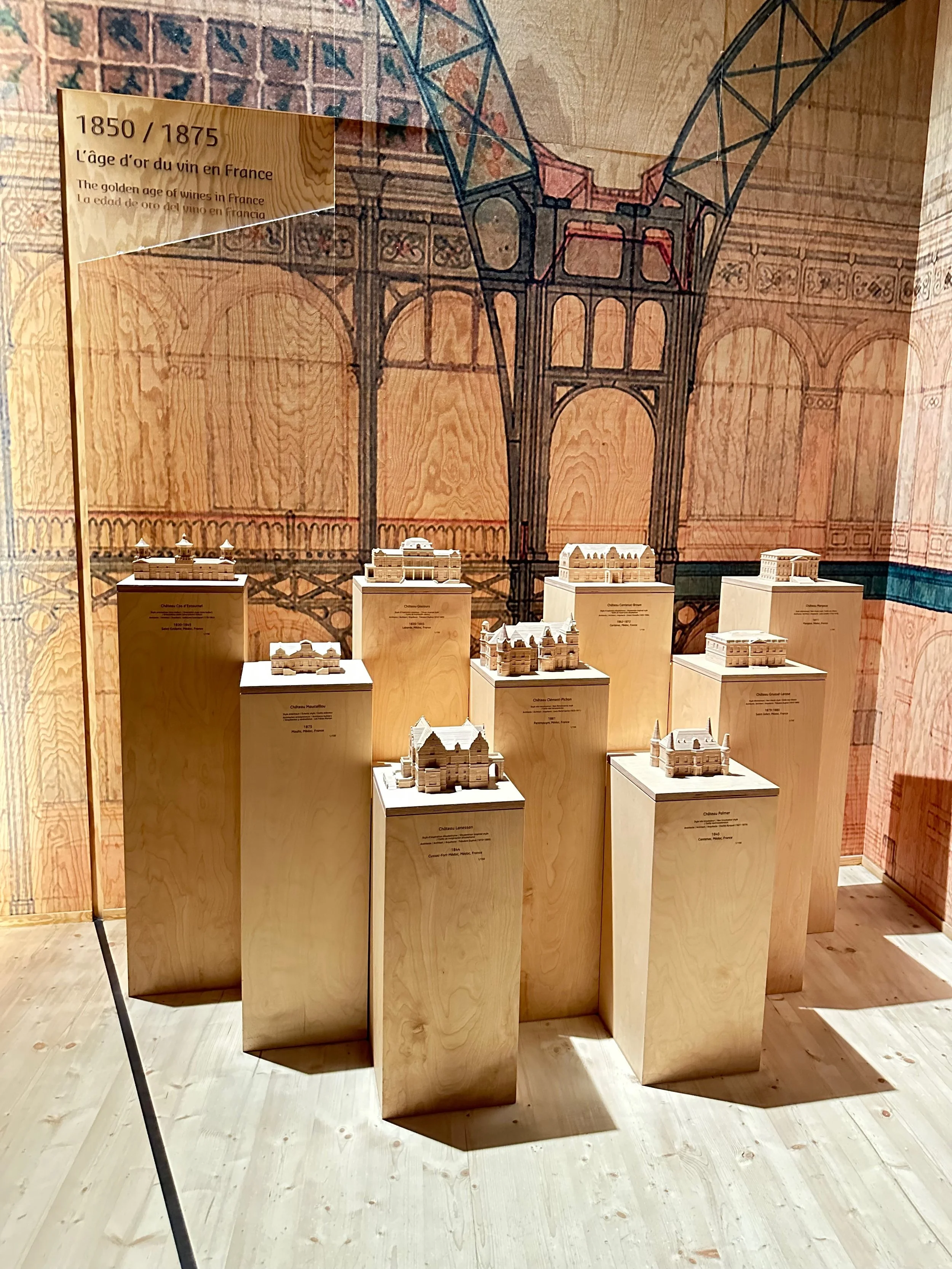
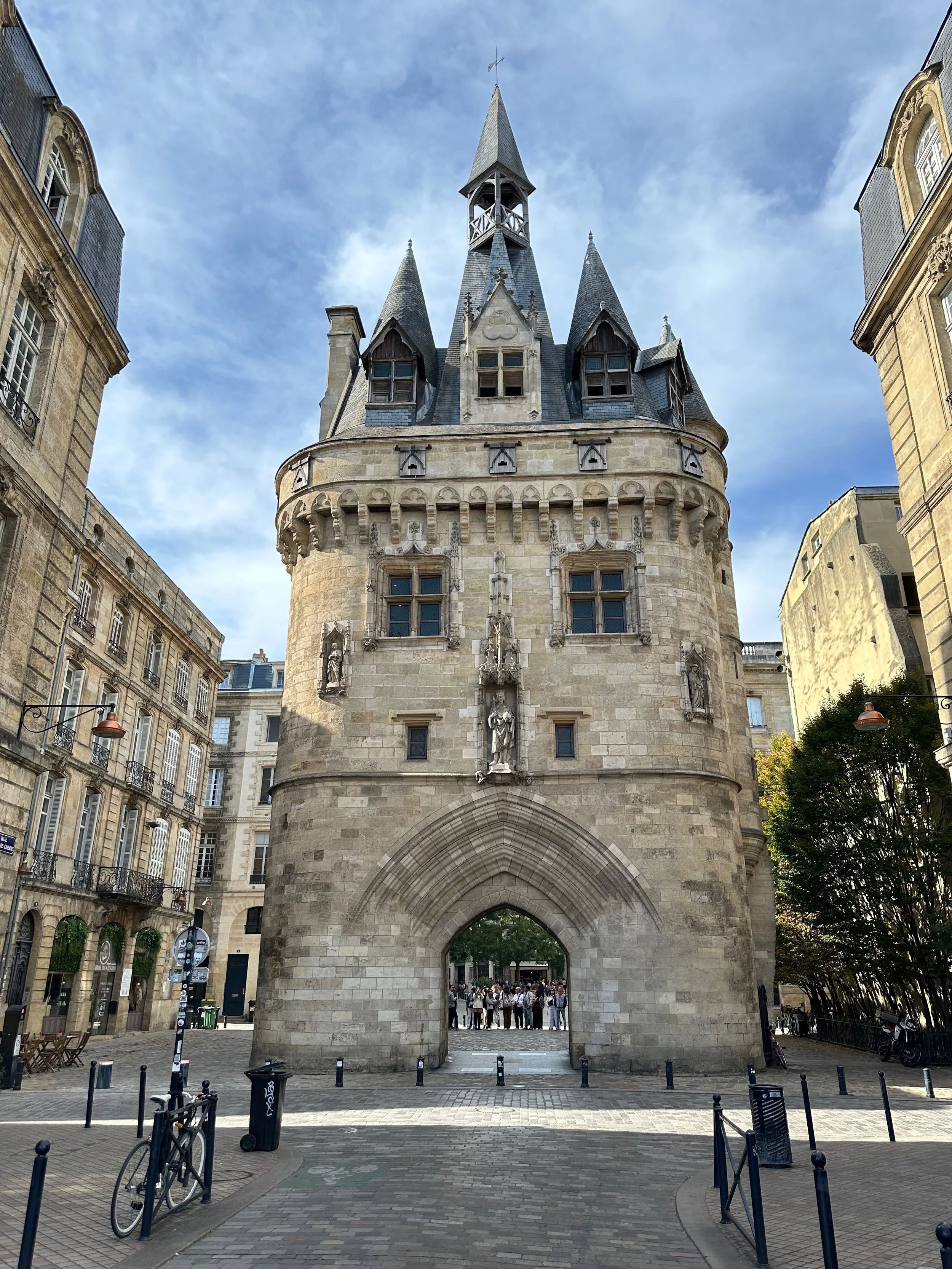
The Grosse Cloche de Bordeaux. Another security gate from the 13th century.
Walking inside history
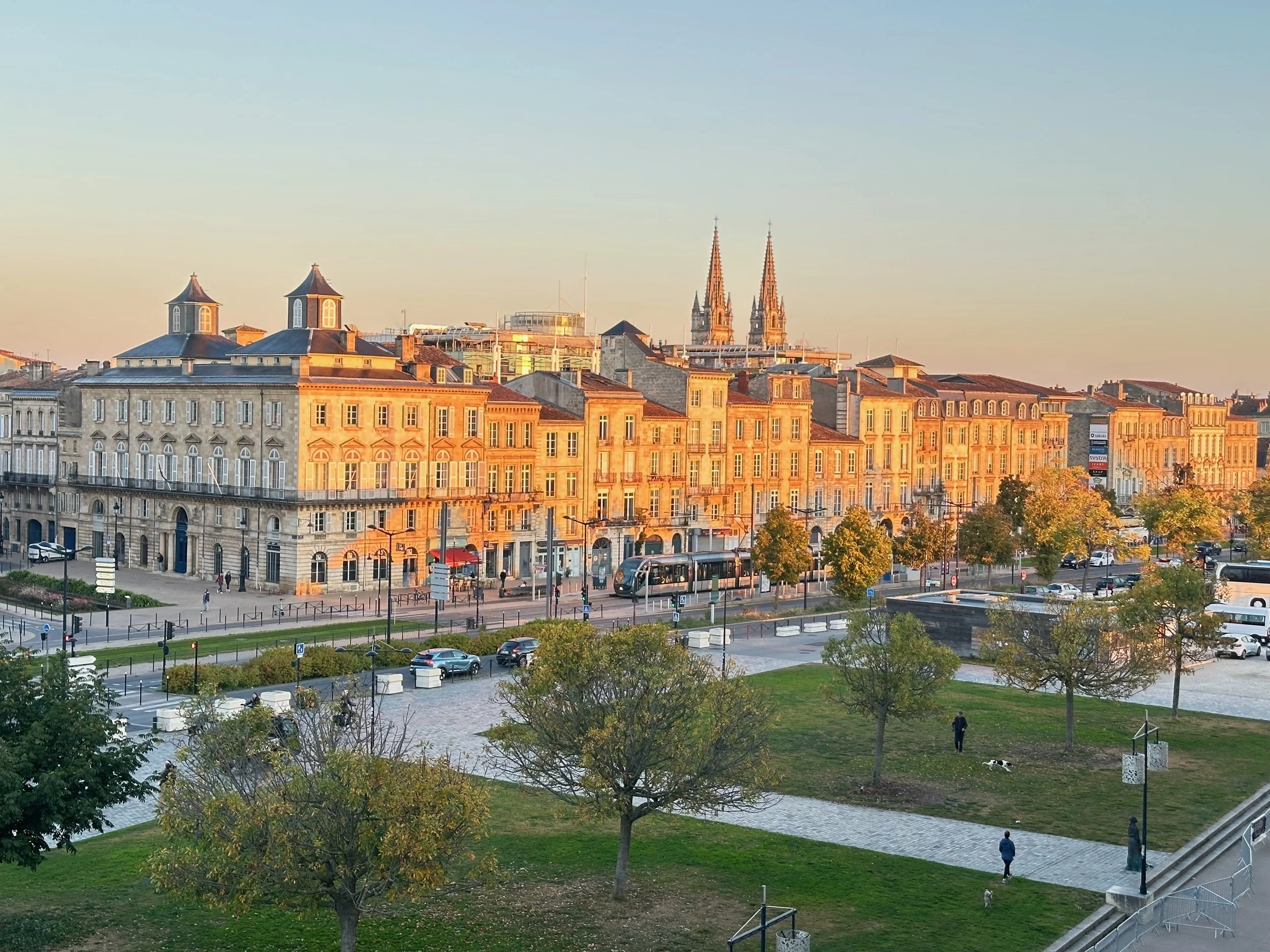
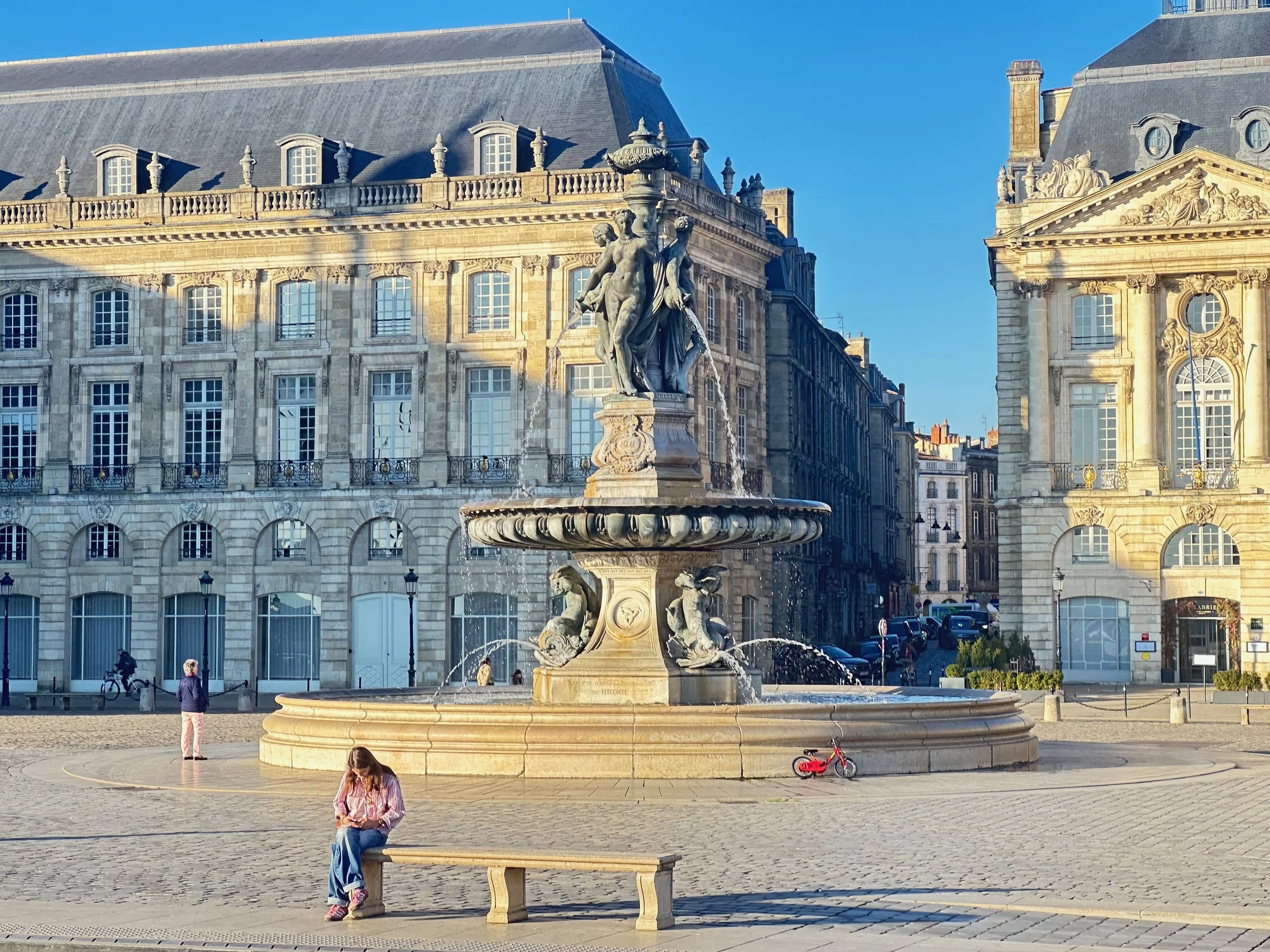
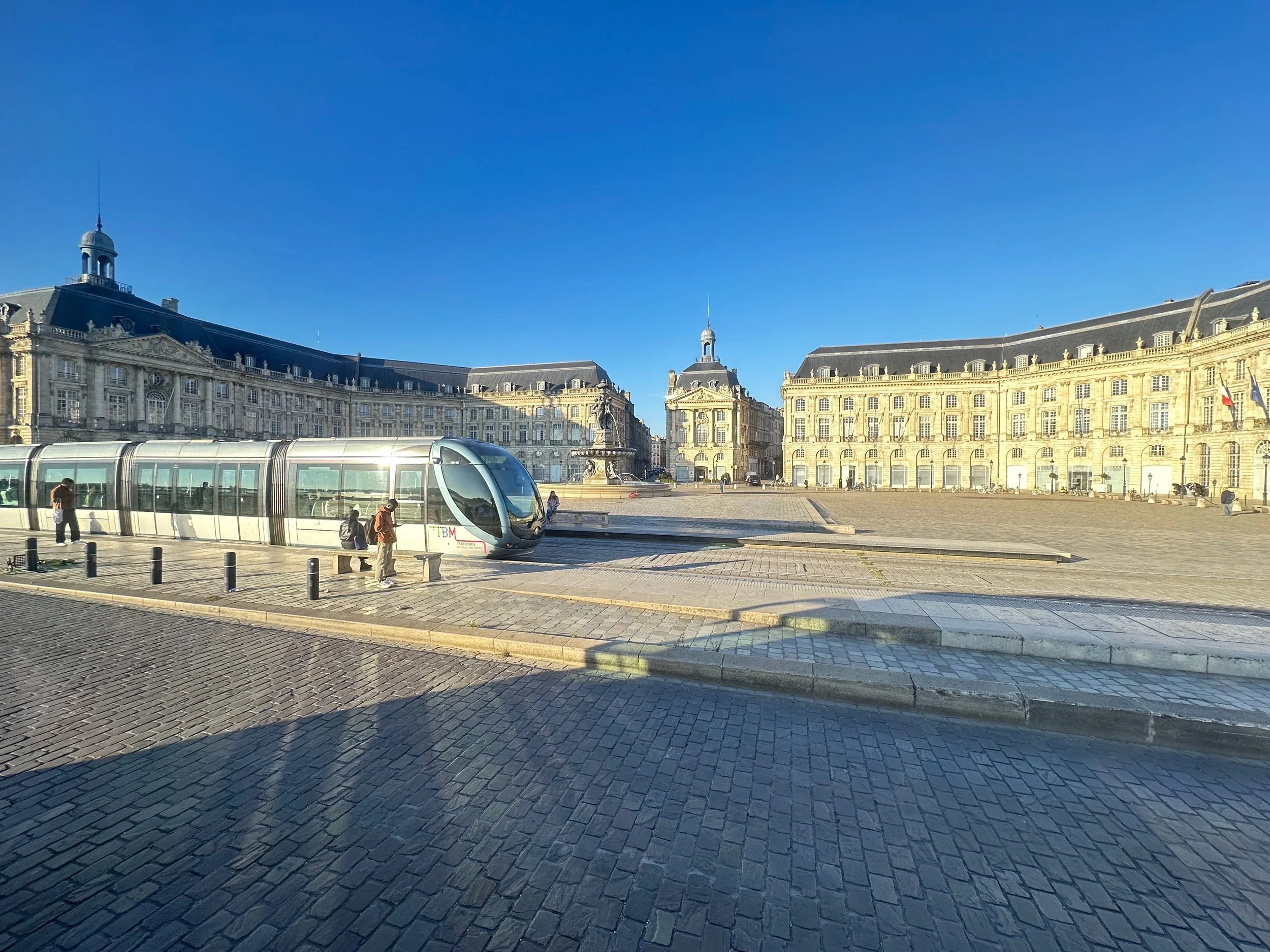
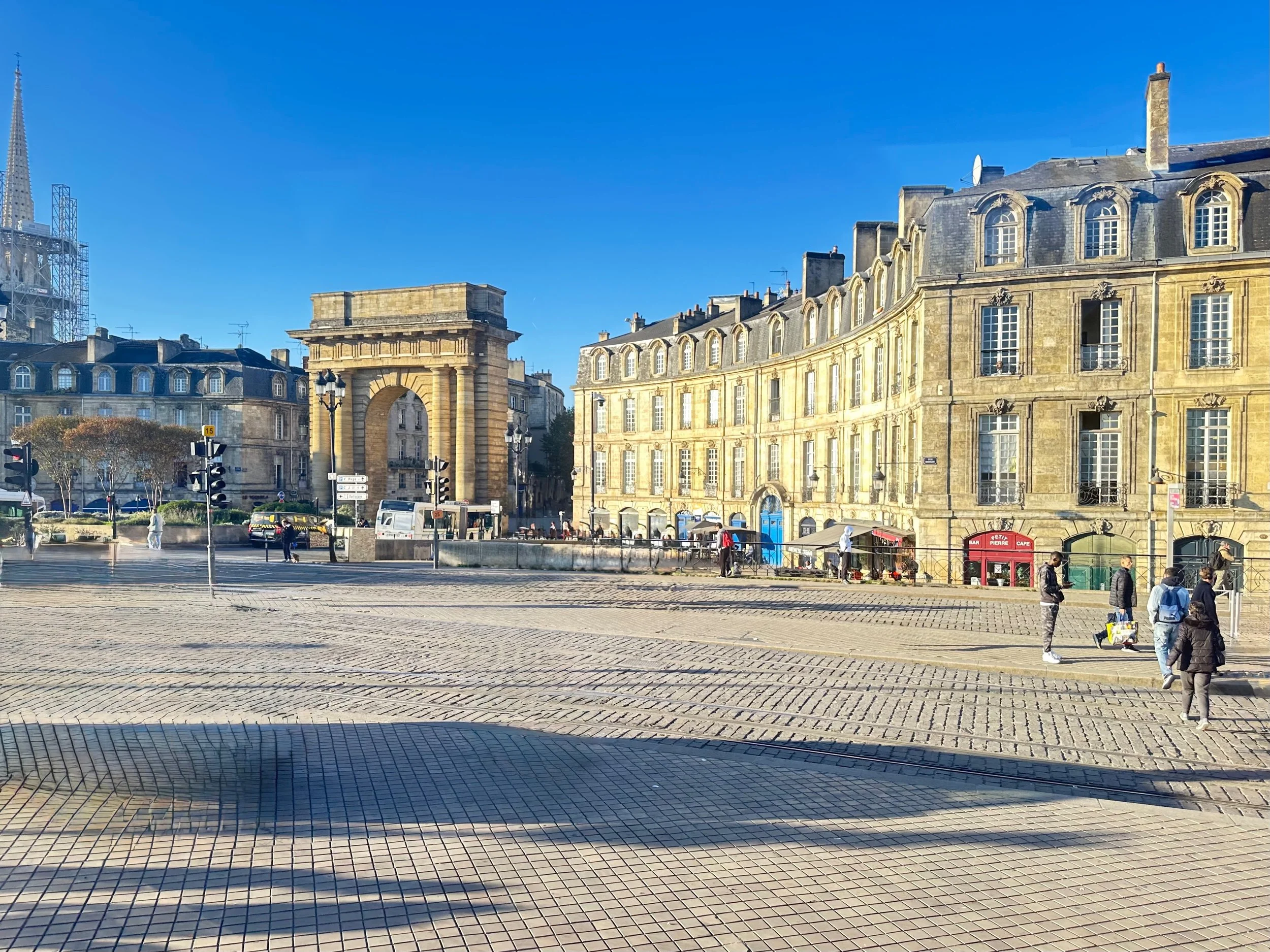
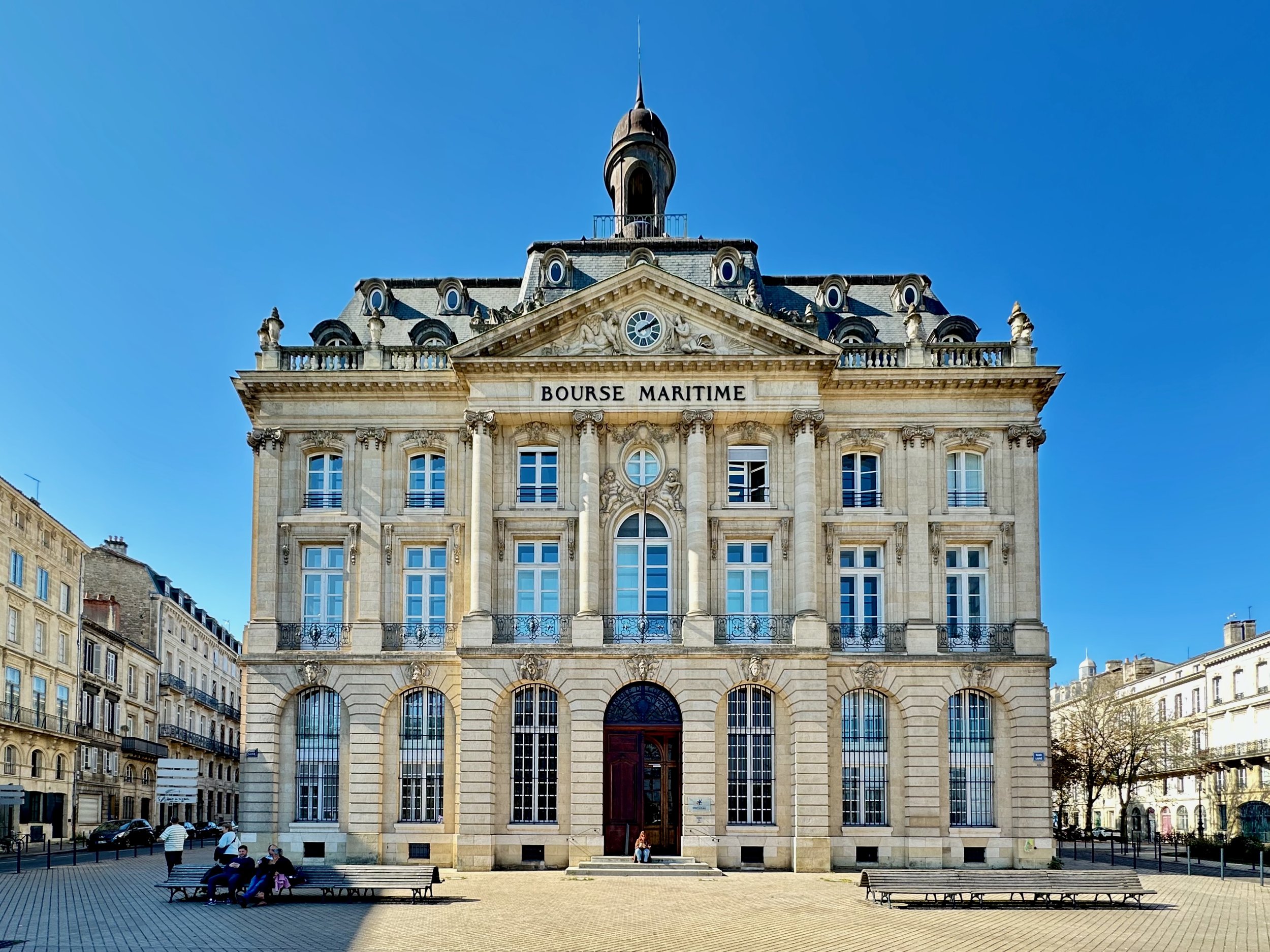
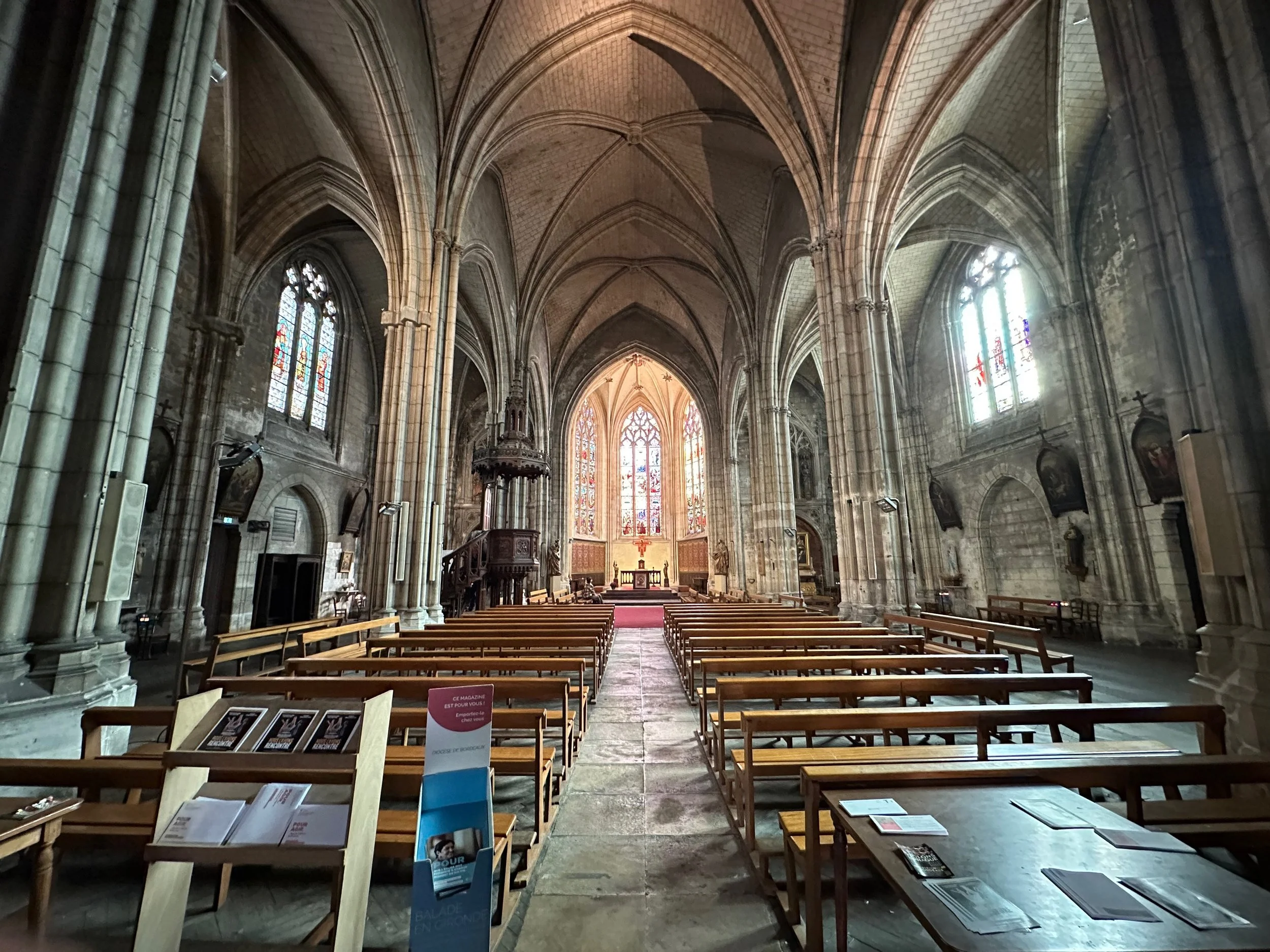
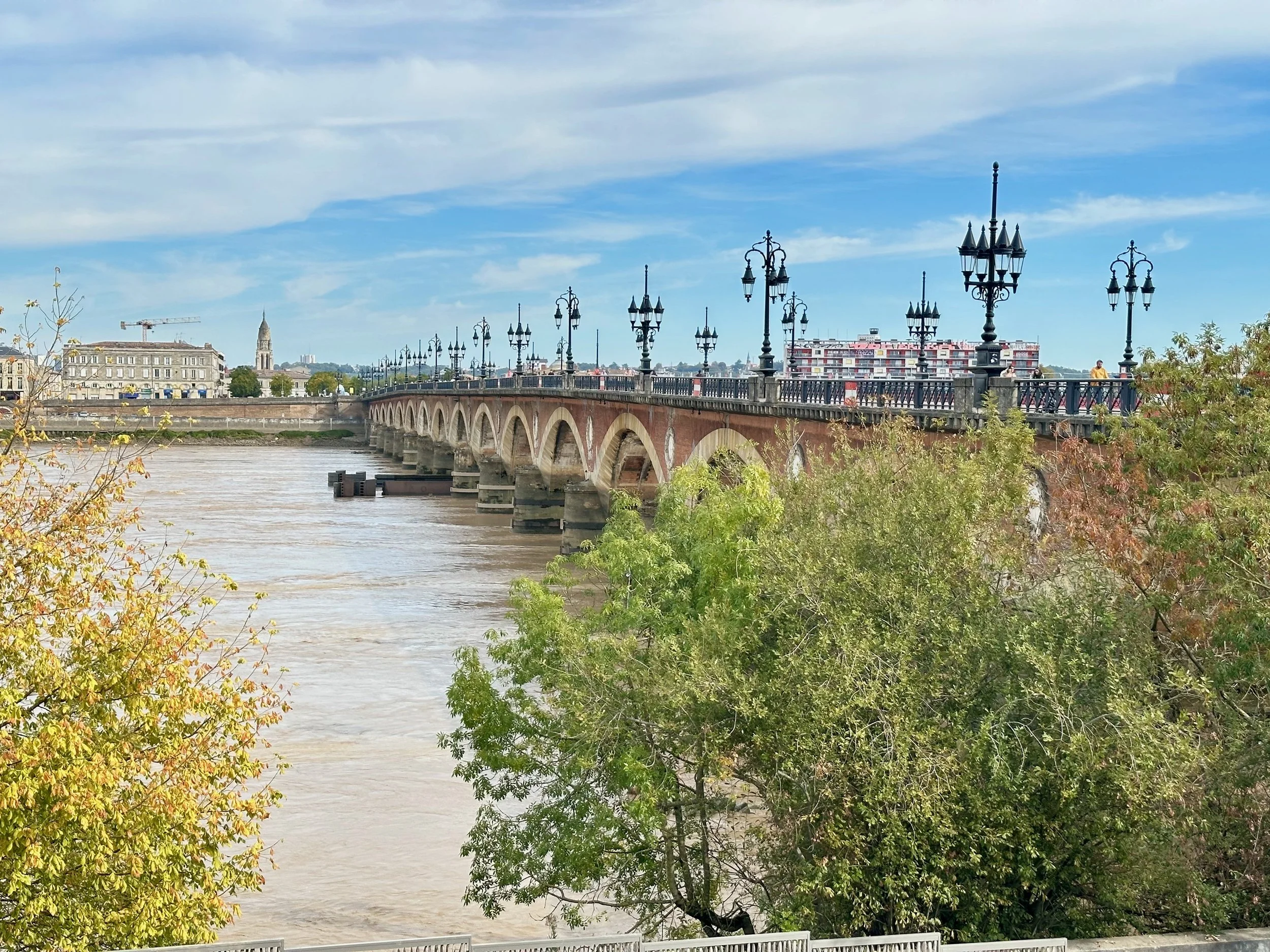
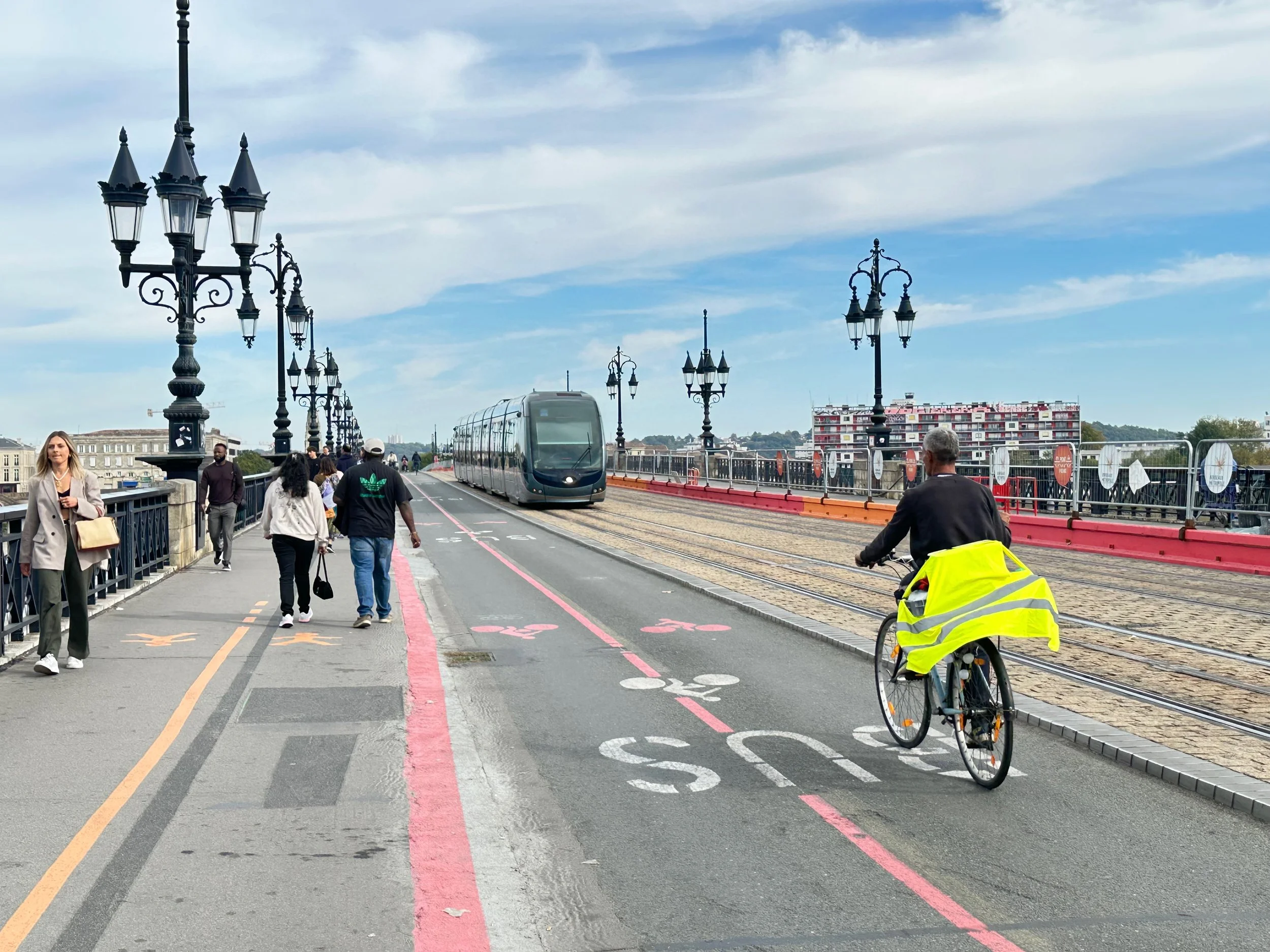
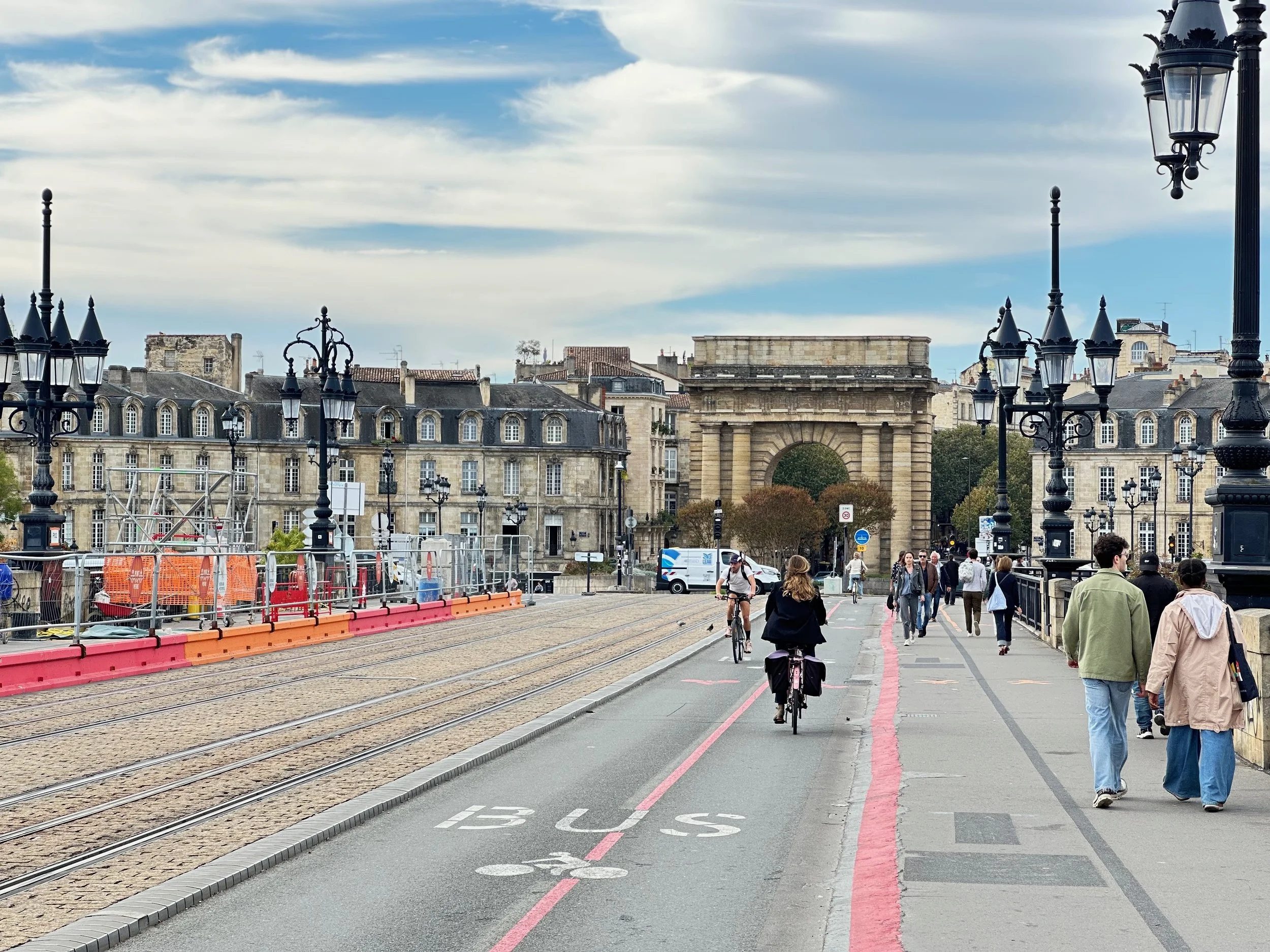
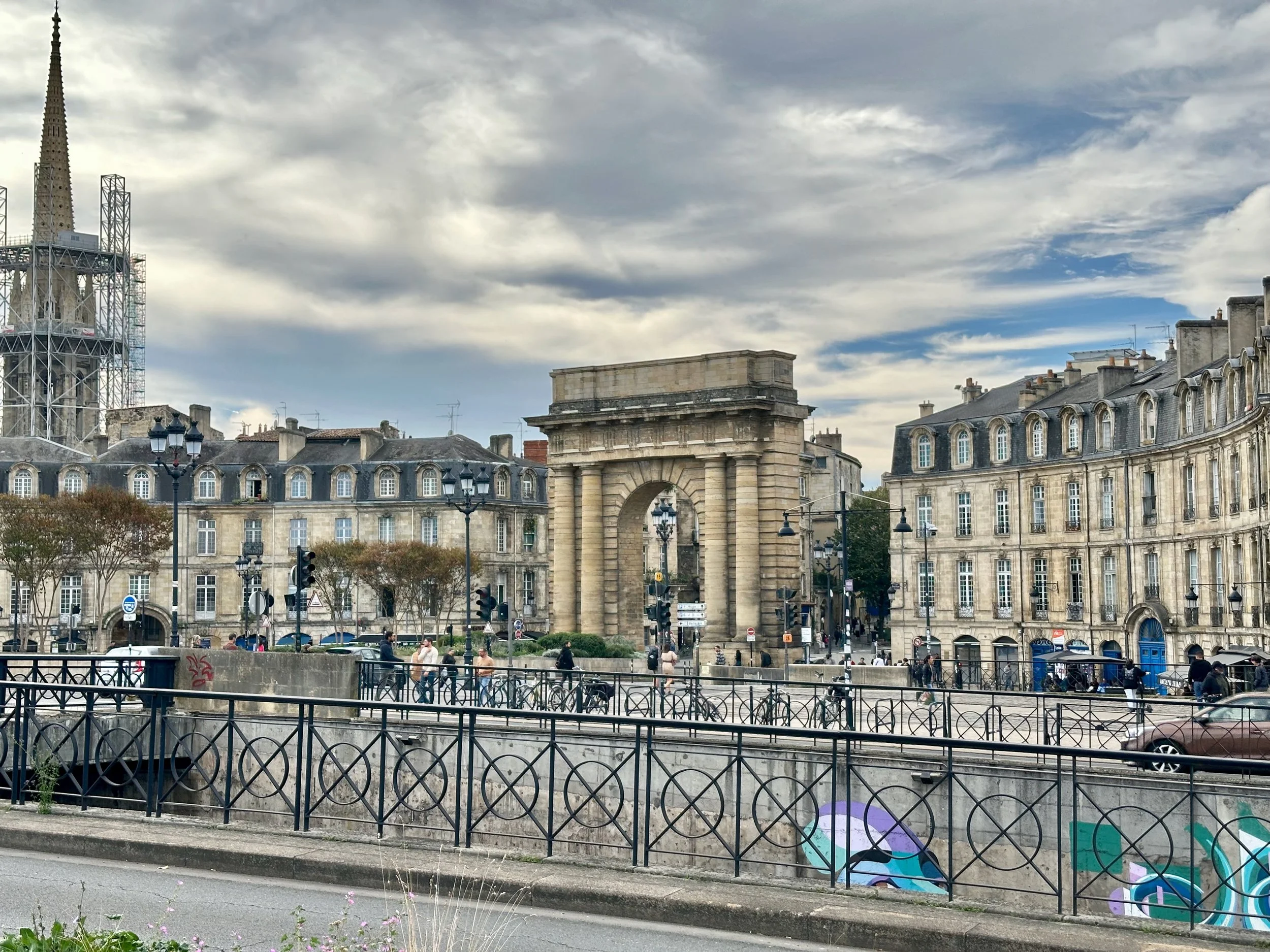
With the wine museum tour finished, we returned to the ship for lunch. After that we ventured out on our own to walk the streets in this historic city. Just being around the centuries old beauty was an experience to relish. The biggest revelation to us new world inhabitants was the sheer magnitude of the buildings made of stone, and carved to such detail and beauty. Nothing like this exists in Canada, except maybe in old Quebec City.
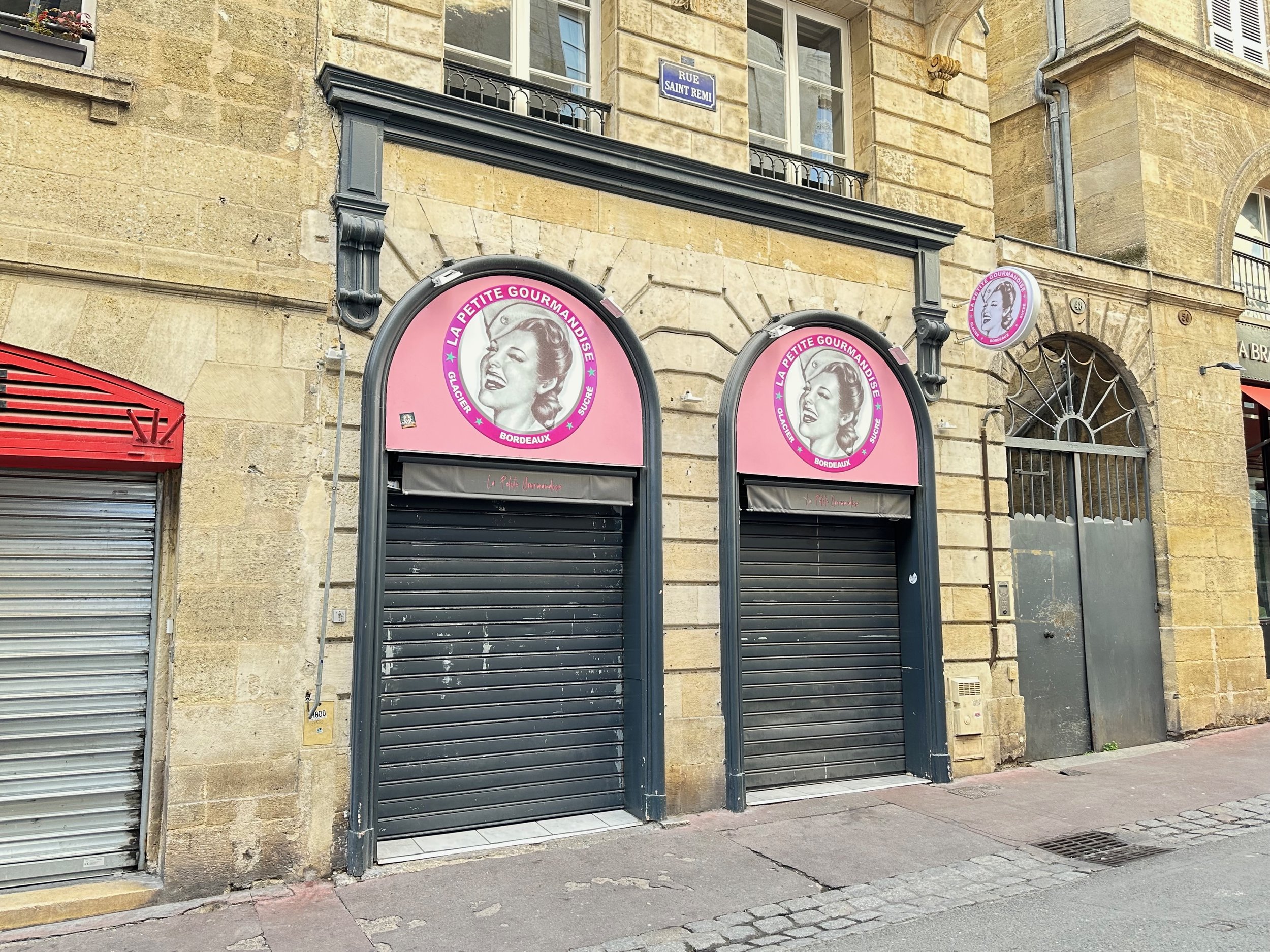
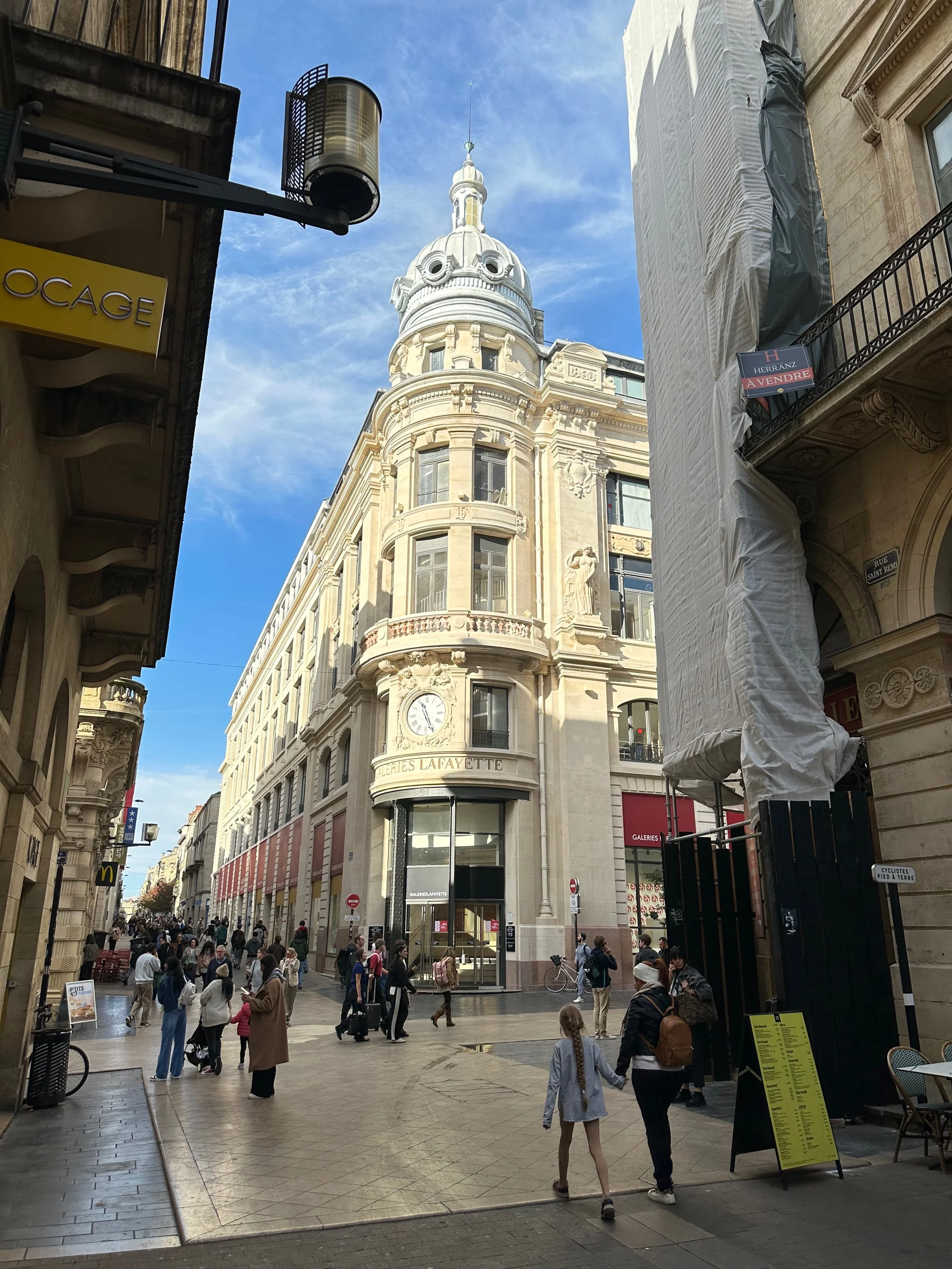
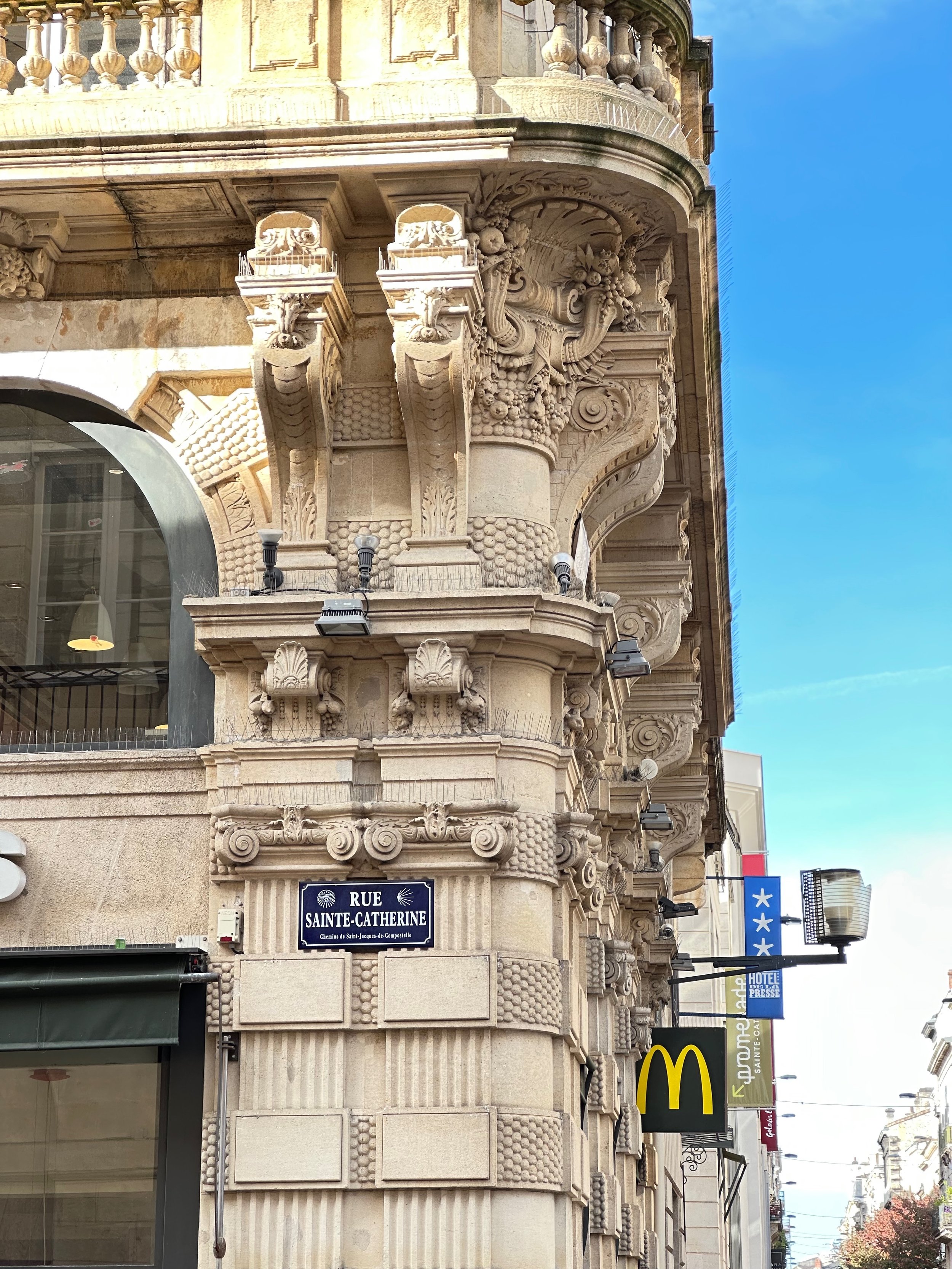
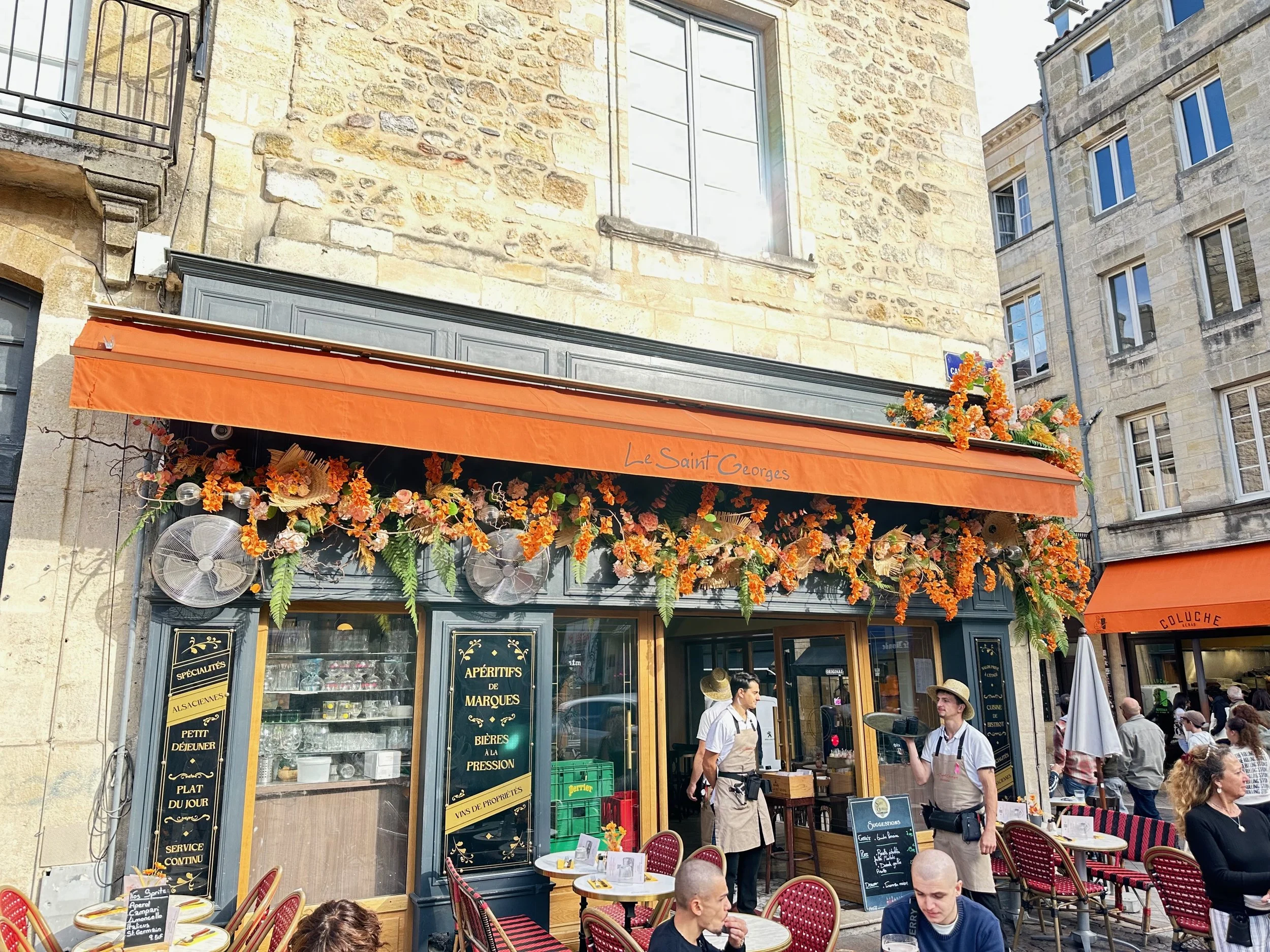
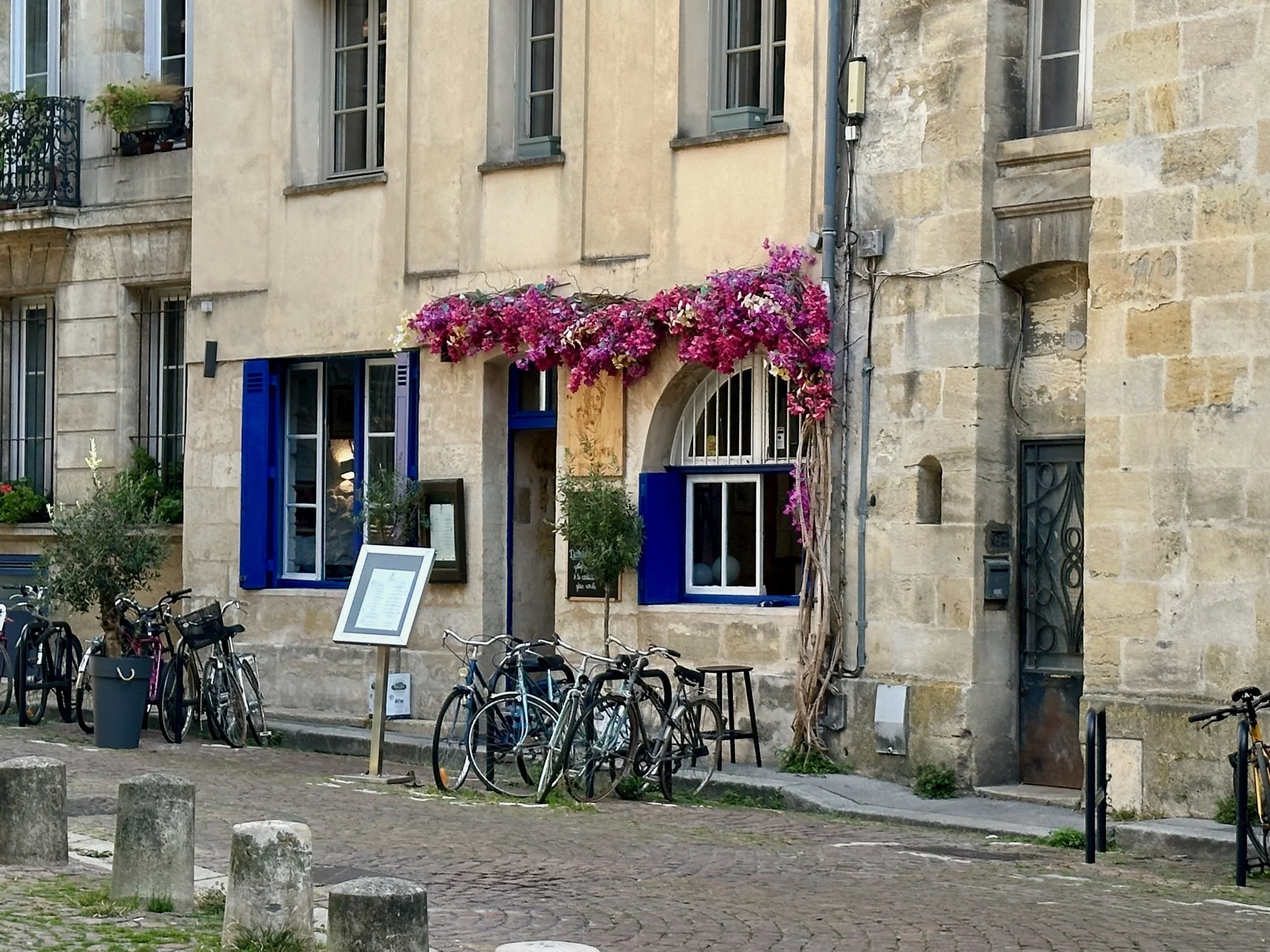
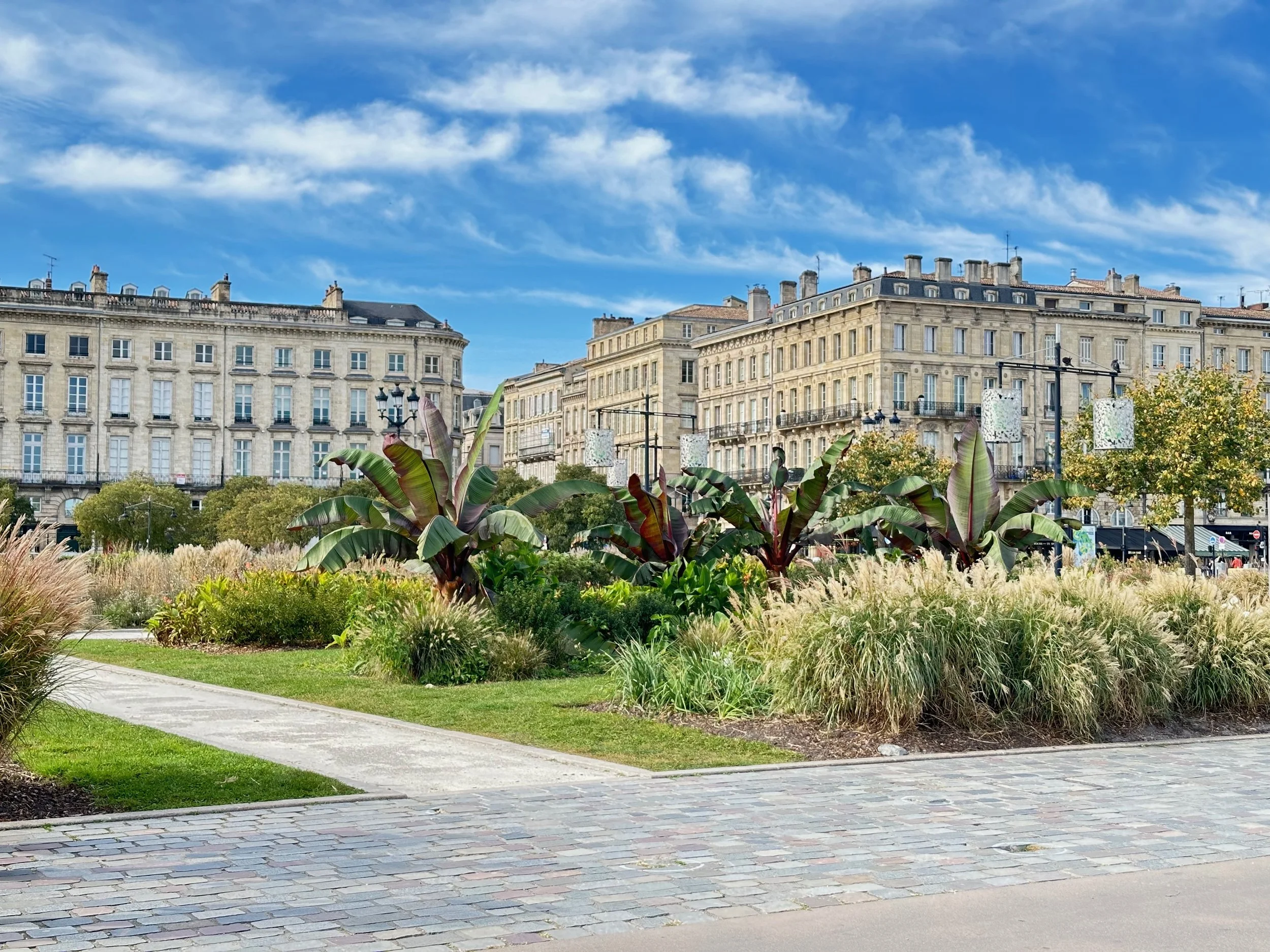
One thing puzzled us though as we walked about the streets. Where were all the people? For a city of over a million residents, the streets were, for the most part, empty. Even on a Friday afternoon the only place that we saw an abundance of people was on Rue Sainte-Catherine, the longest pedestrian only shopping street in Europe. Everywhere else had only a token showing of individuals moving about. The only exception to this was at the many neighbourhood plazas that we came upon. There people were sitting at tables enjoying food and drink from the establishments dotted around the plazas, and soaking up the exquisite warmth from this sunny fall afternoon.
Thirteen thousand steps later we found ourselves back at the ship. Hungry, and with very sore feet, we very much looked forward once again to dinner on the ship’s back deck after this first full day in Bordeaux.
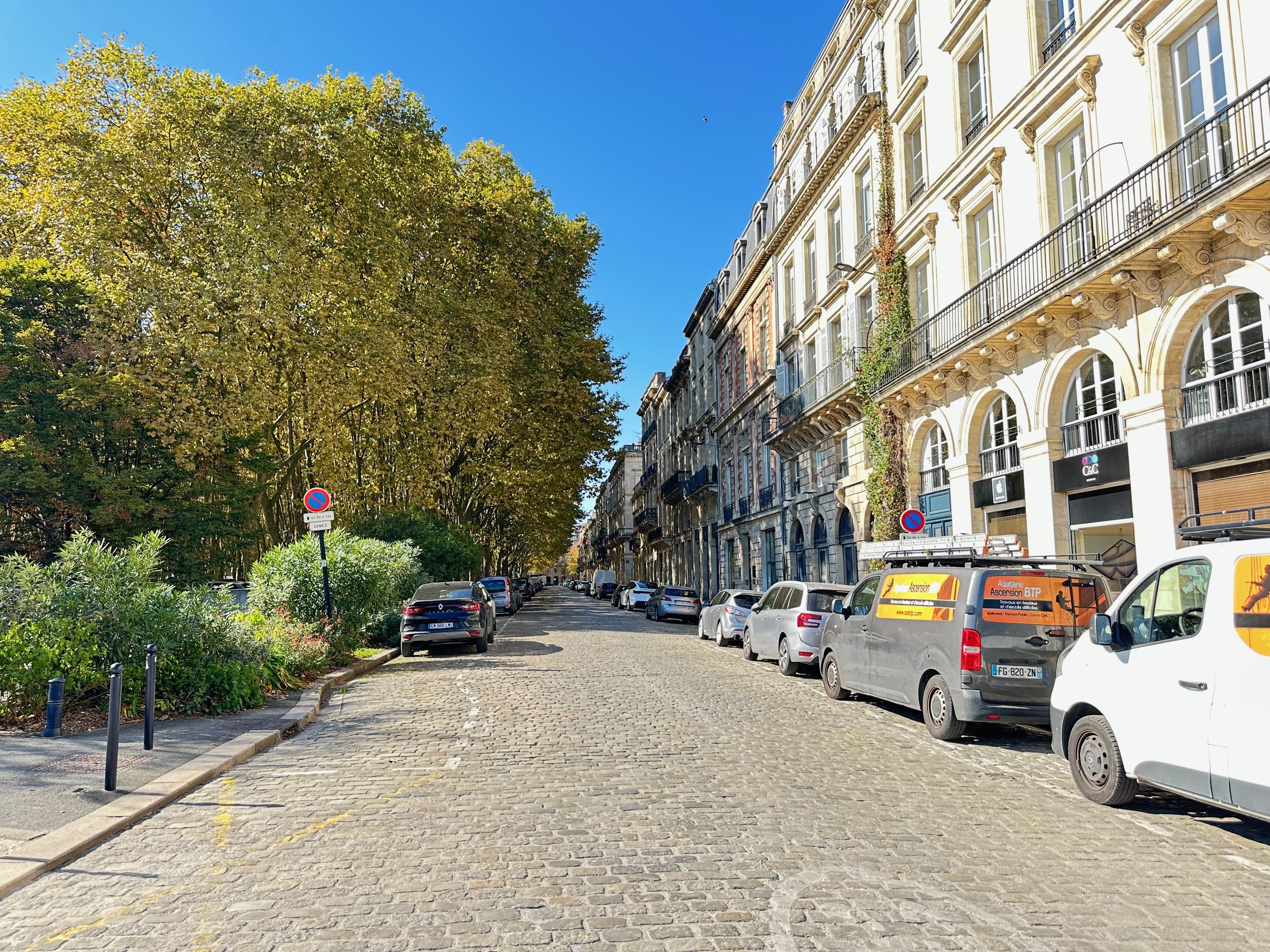
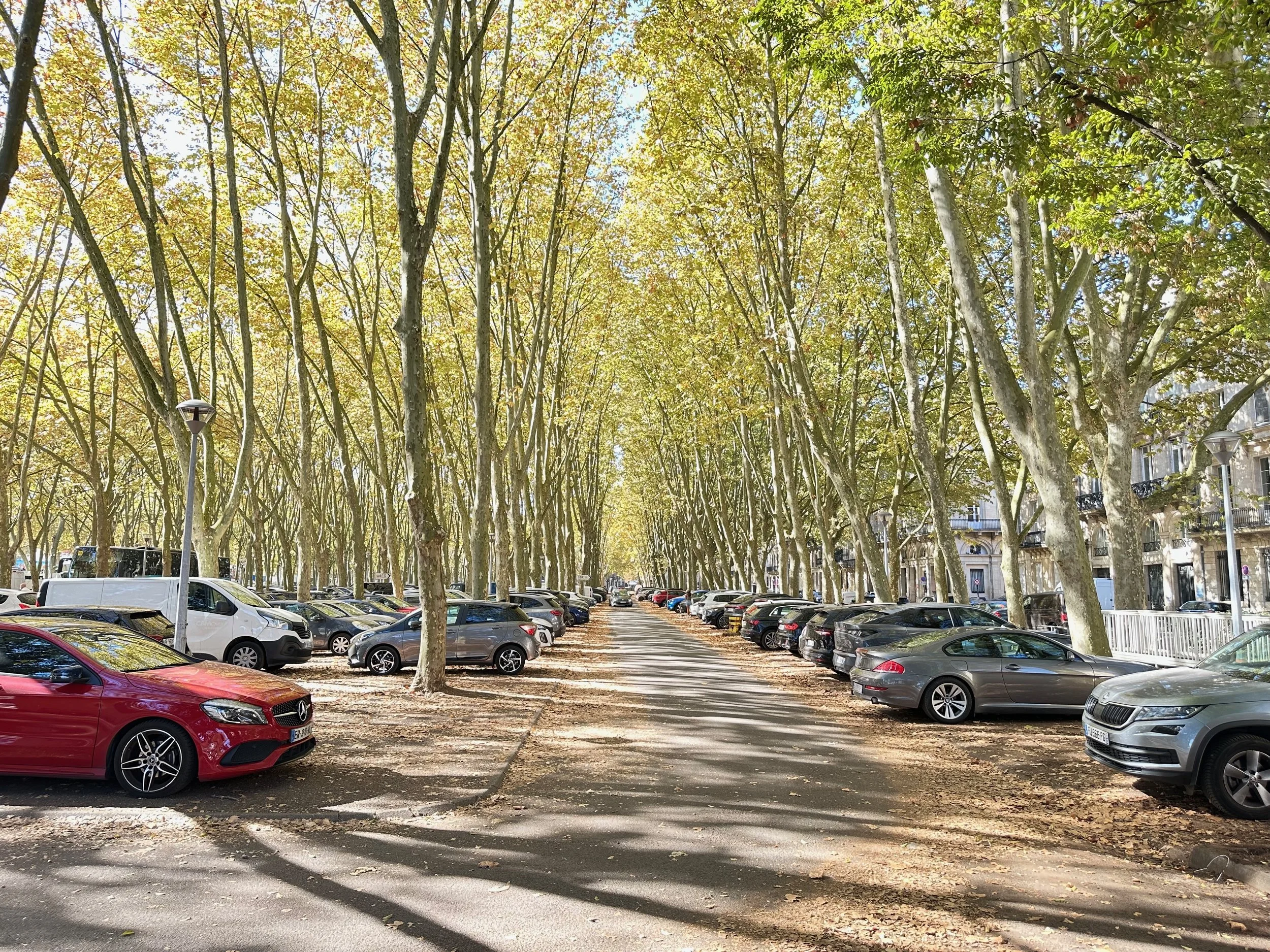
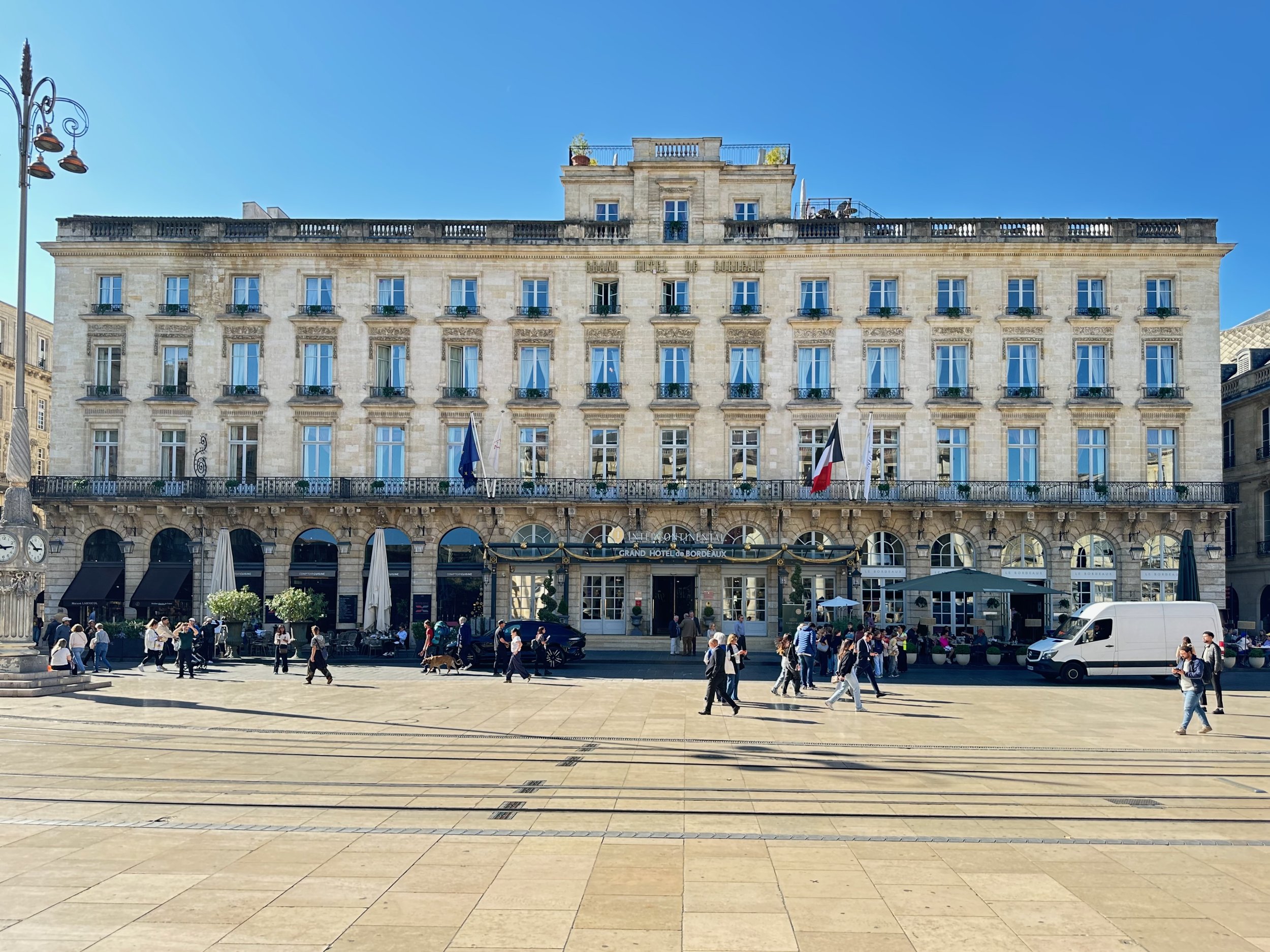
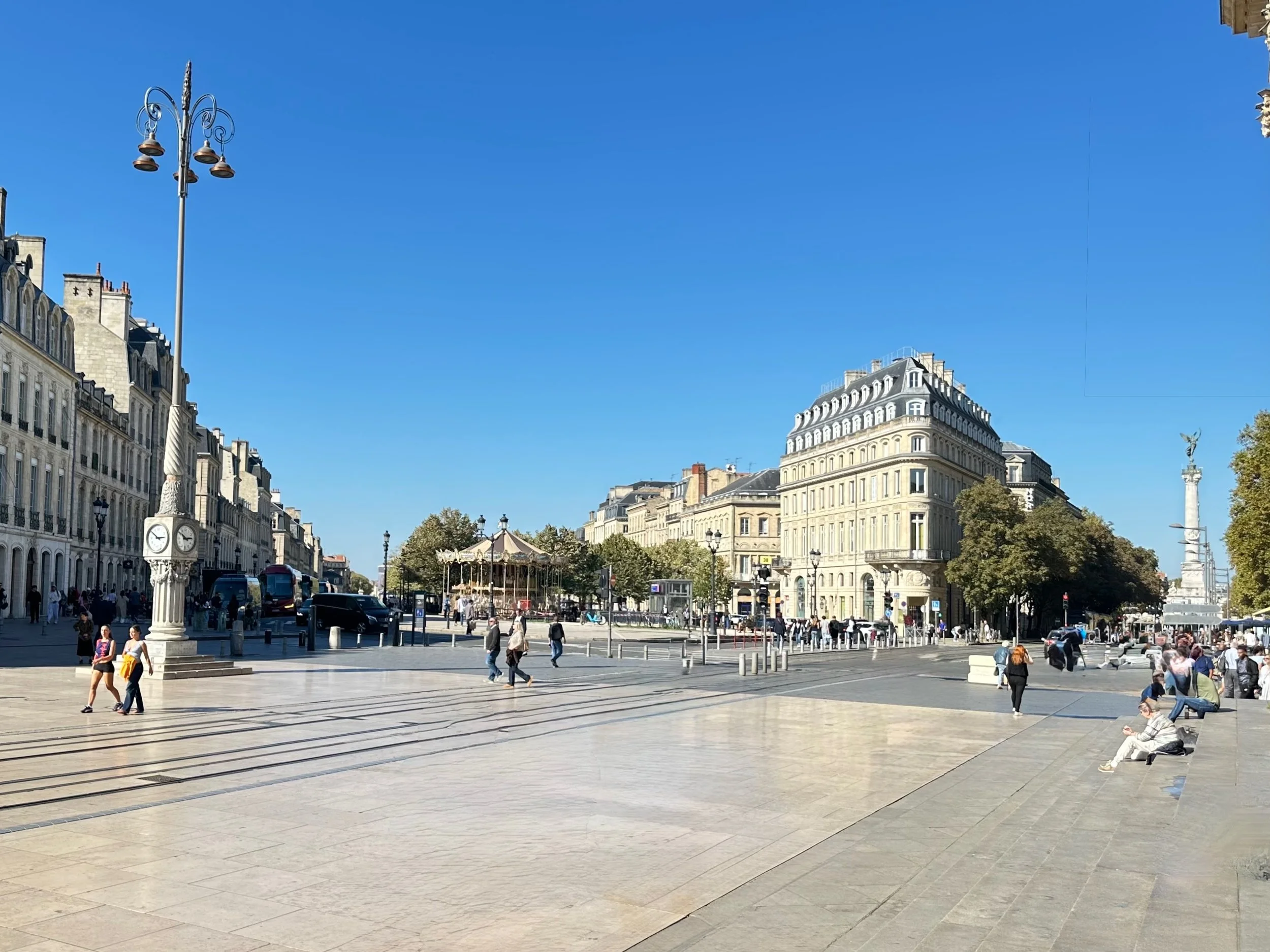
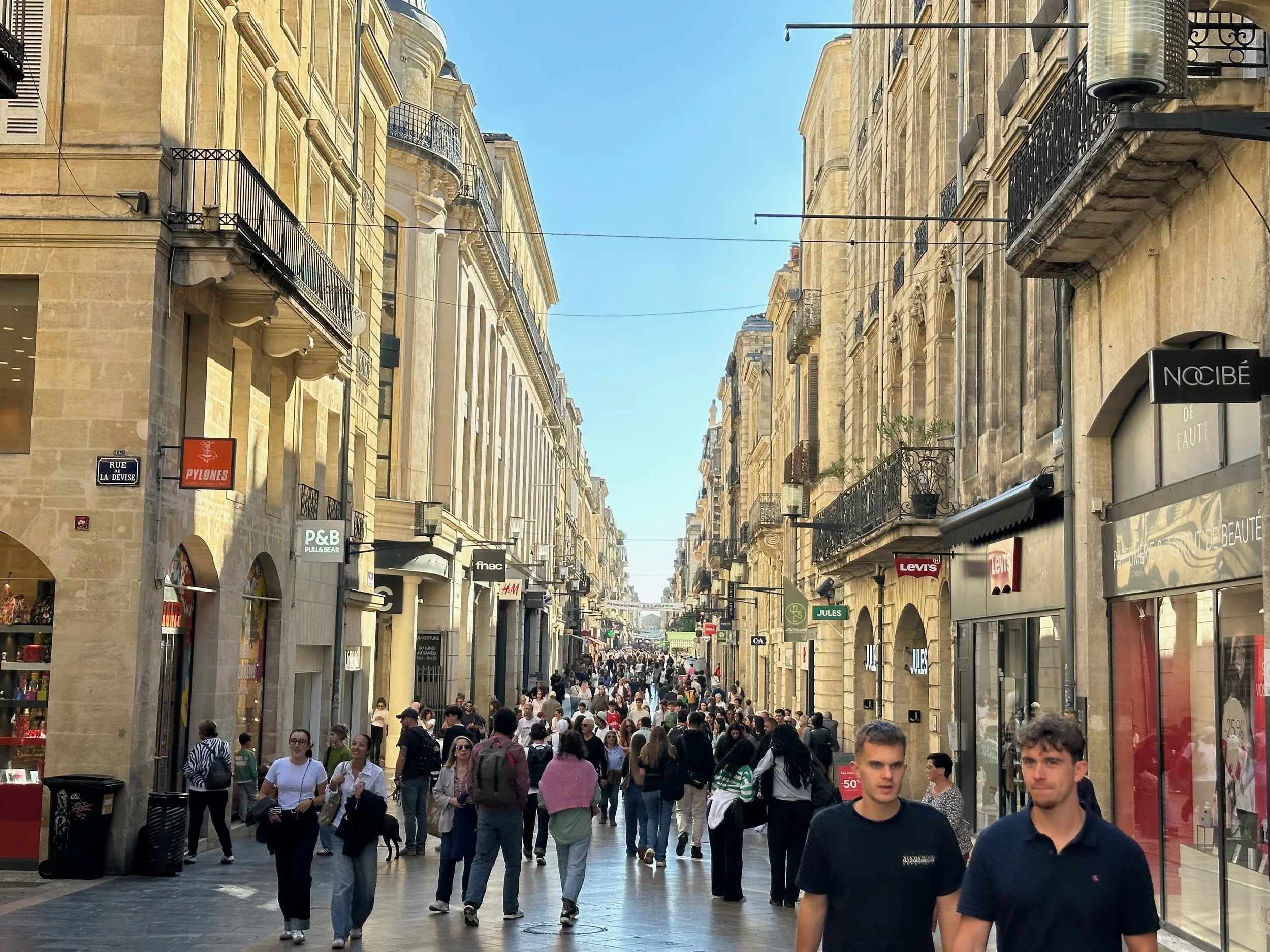
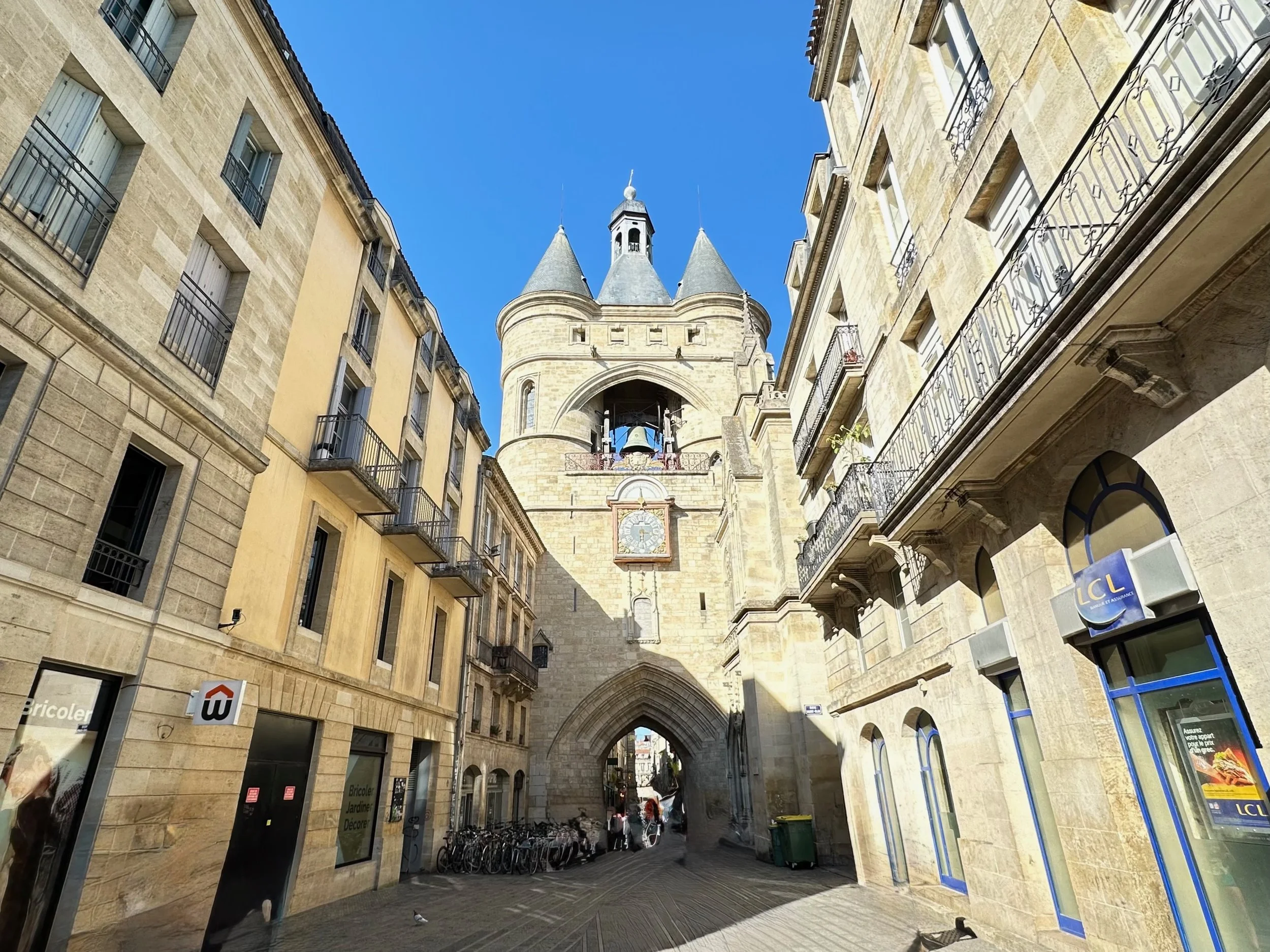
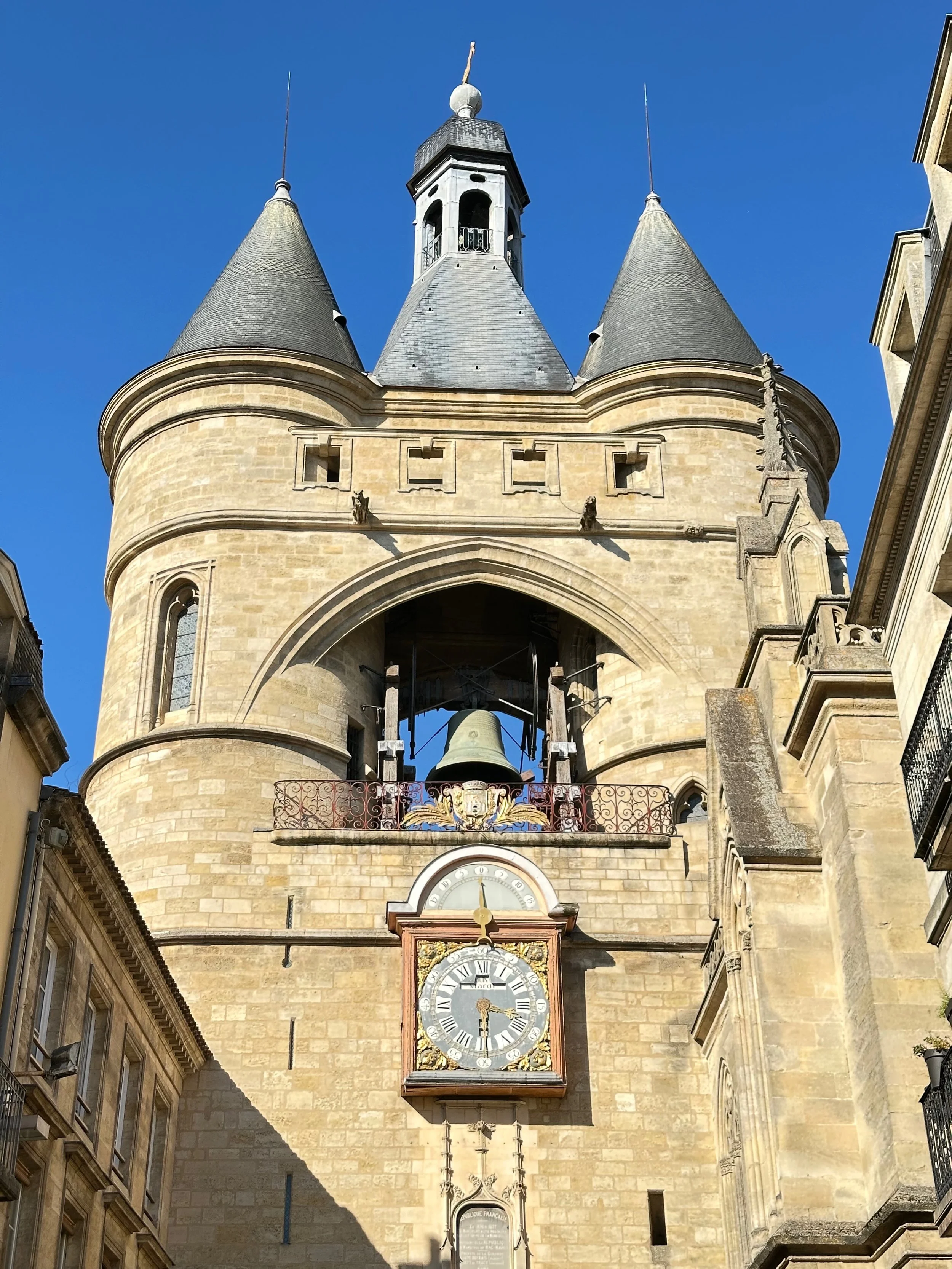
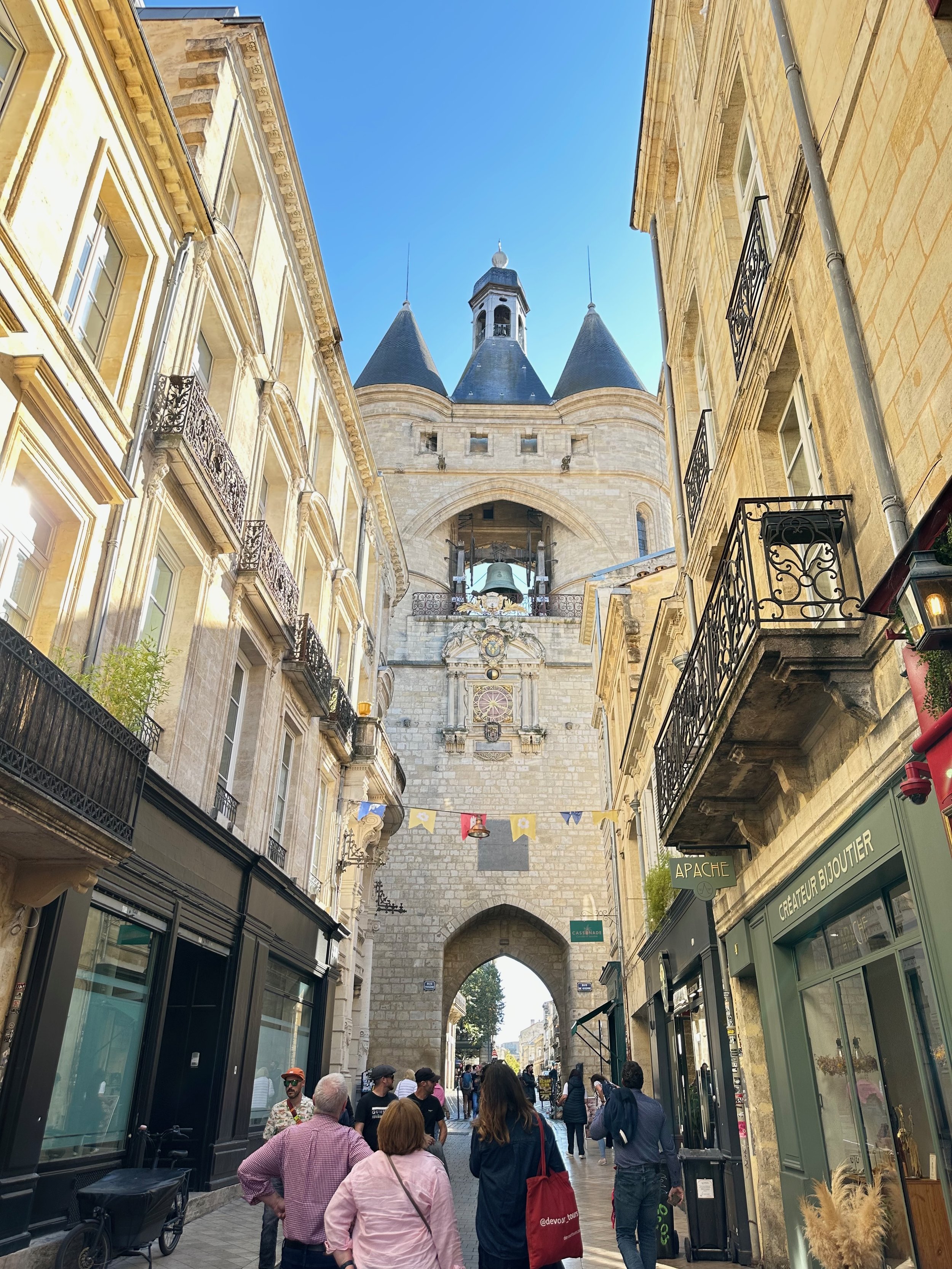
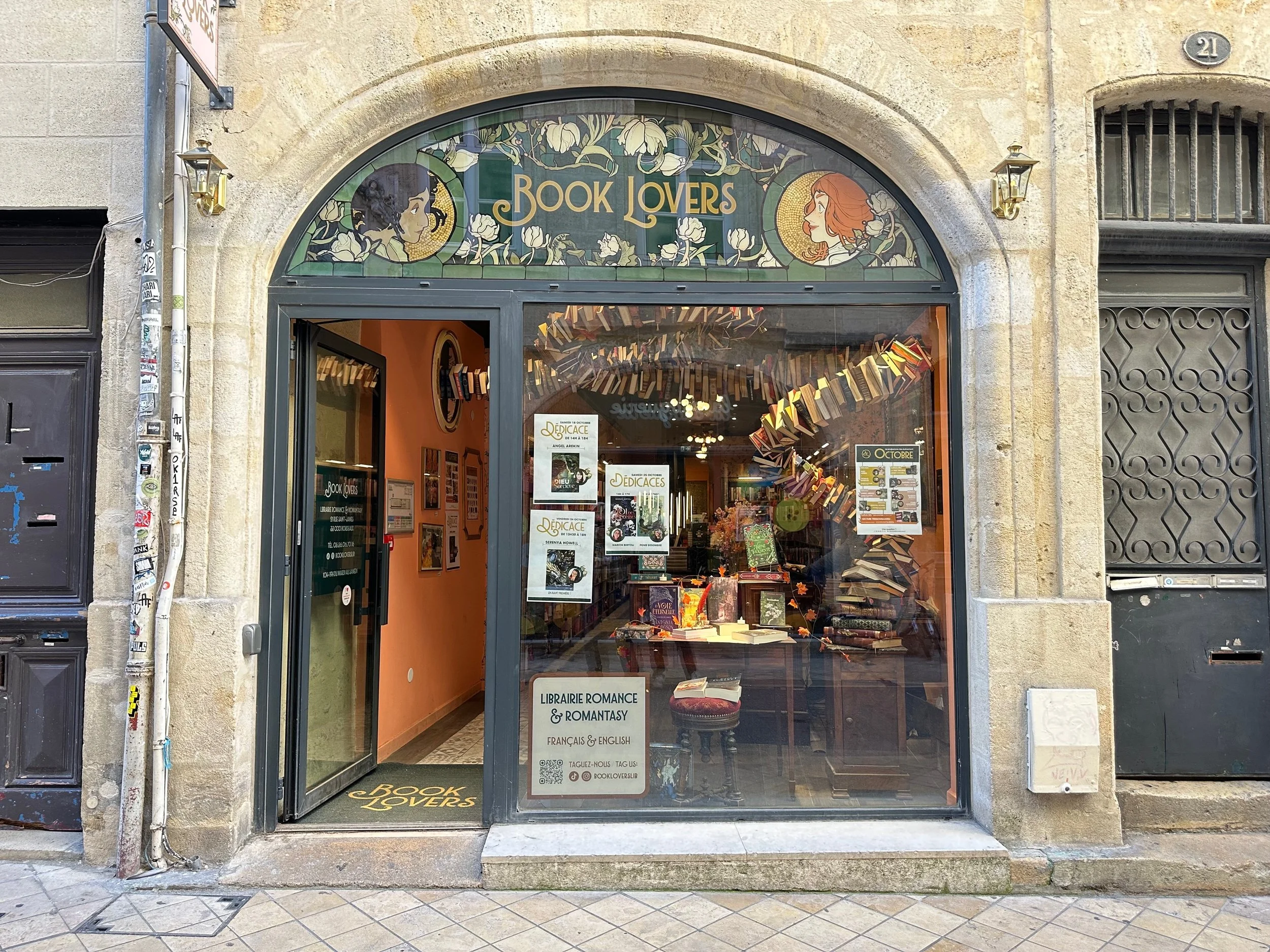
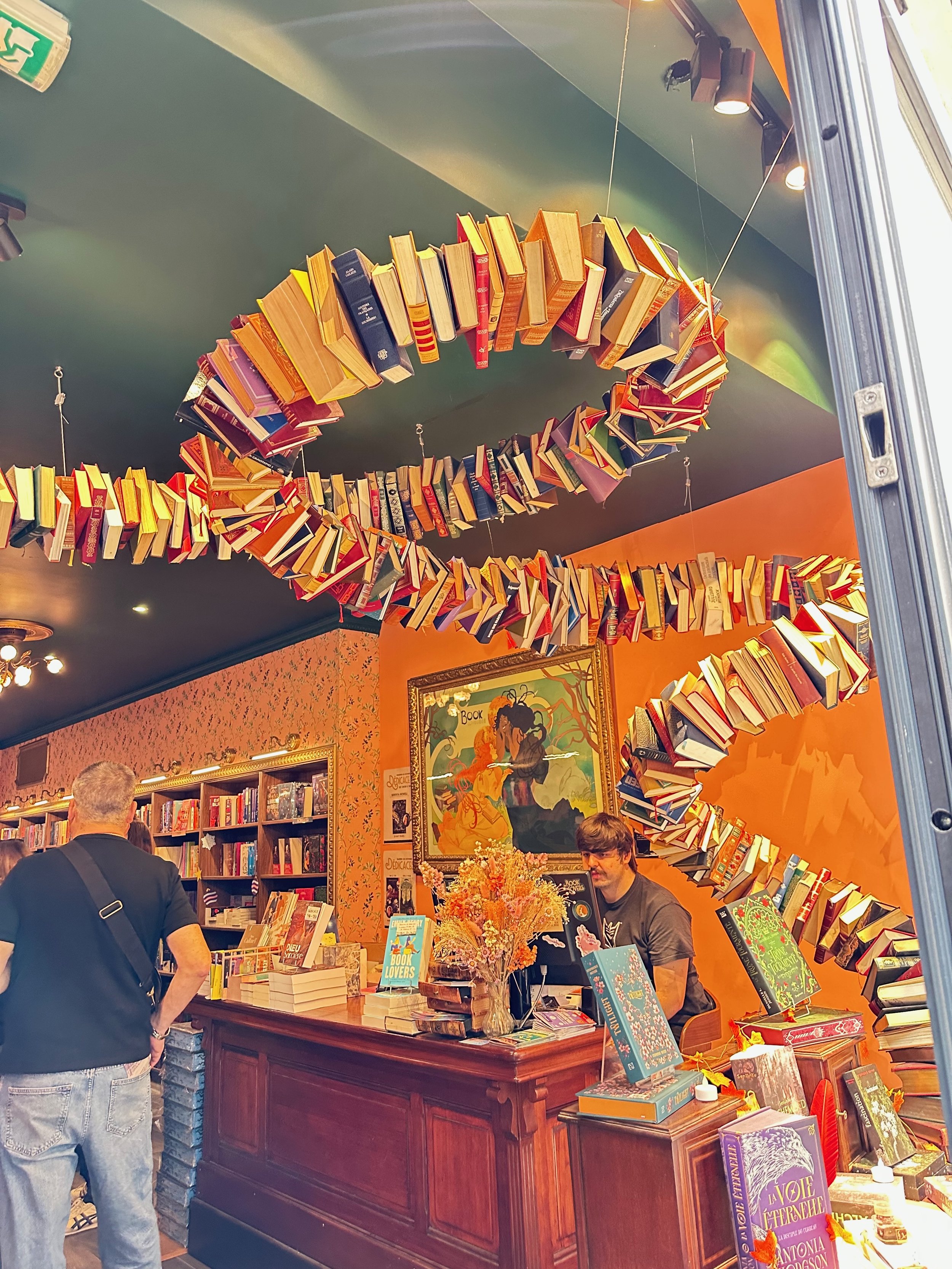
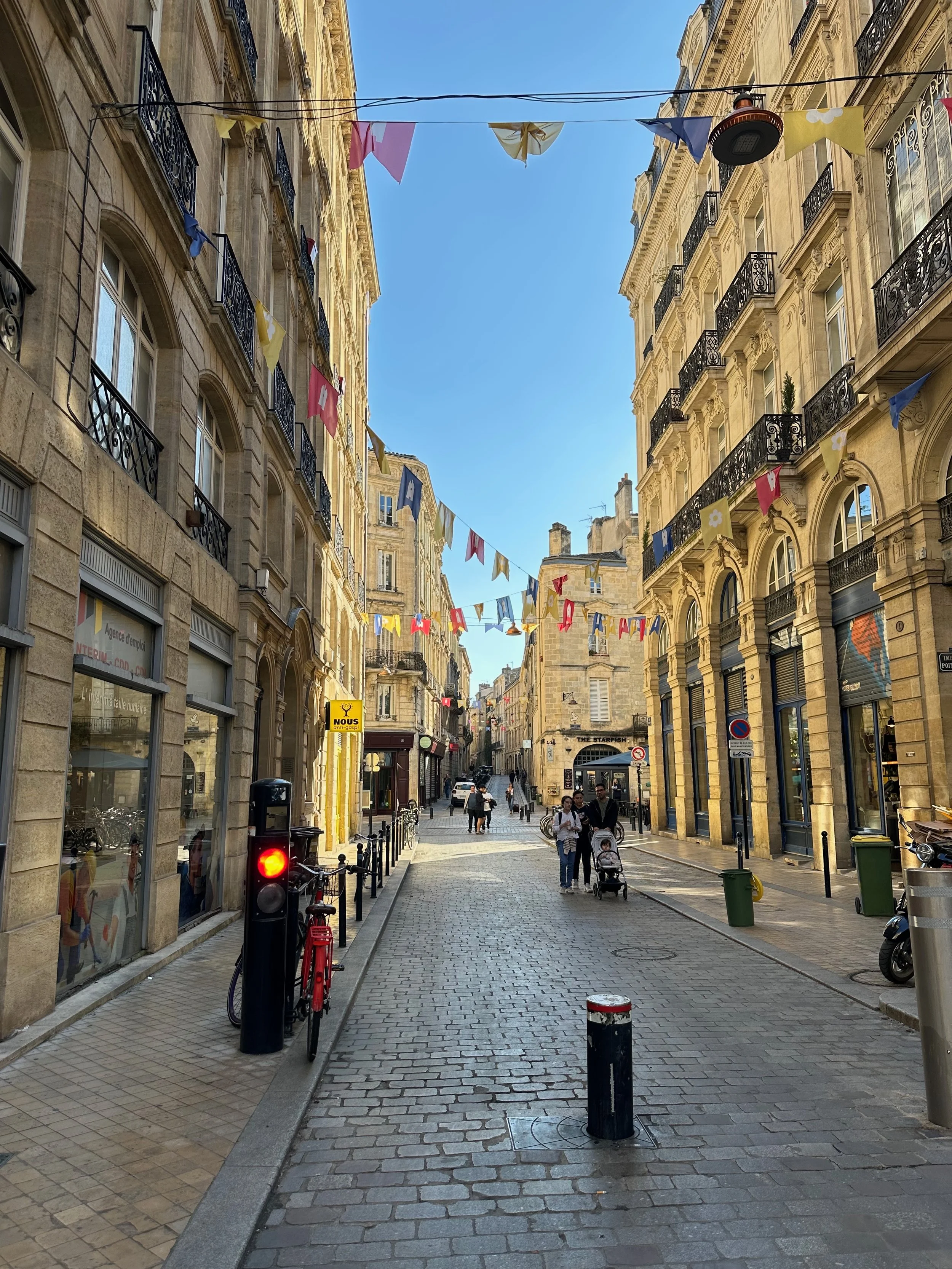
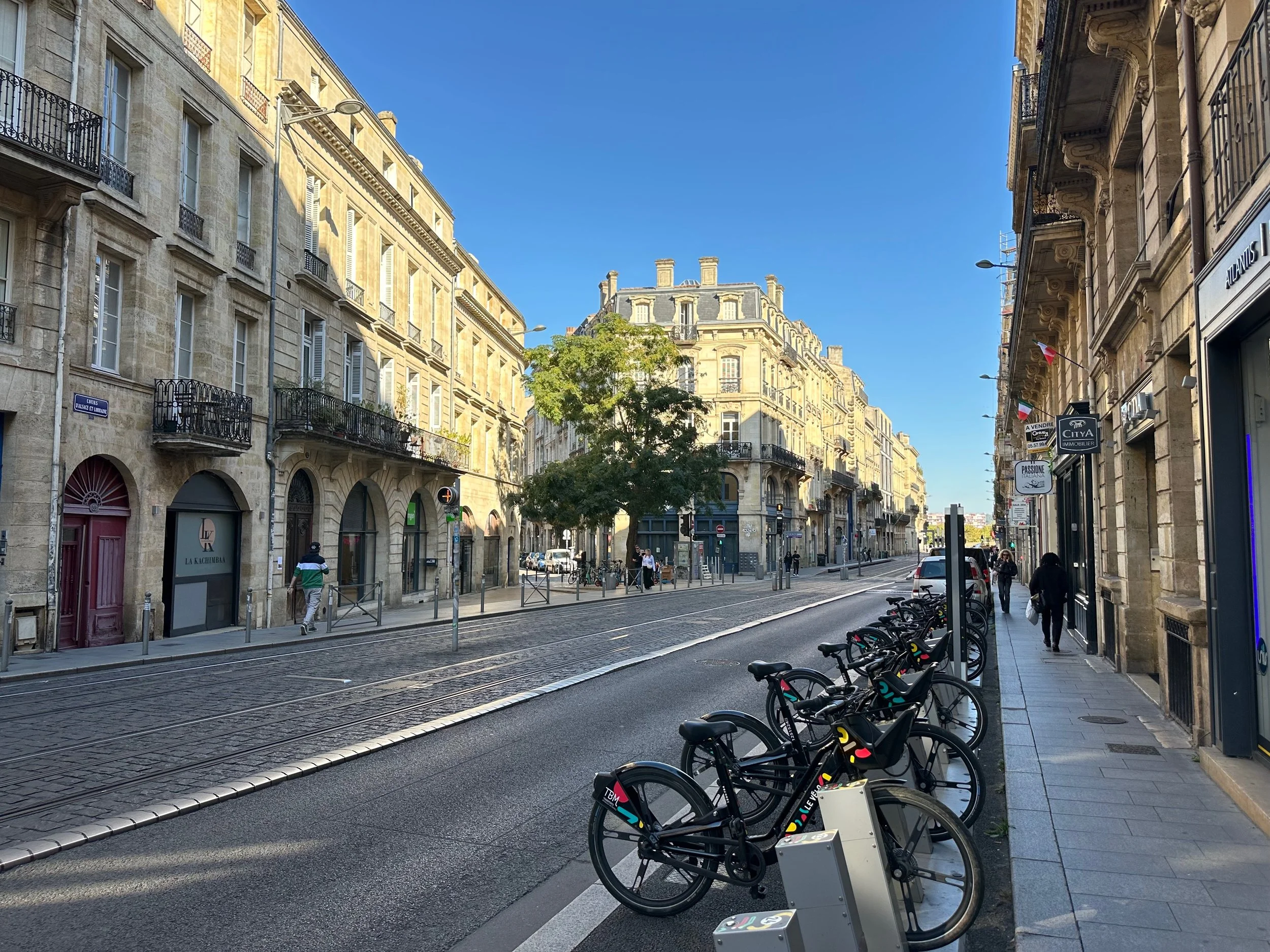
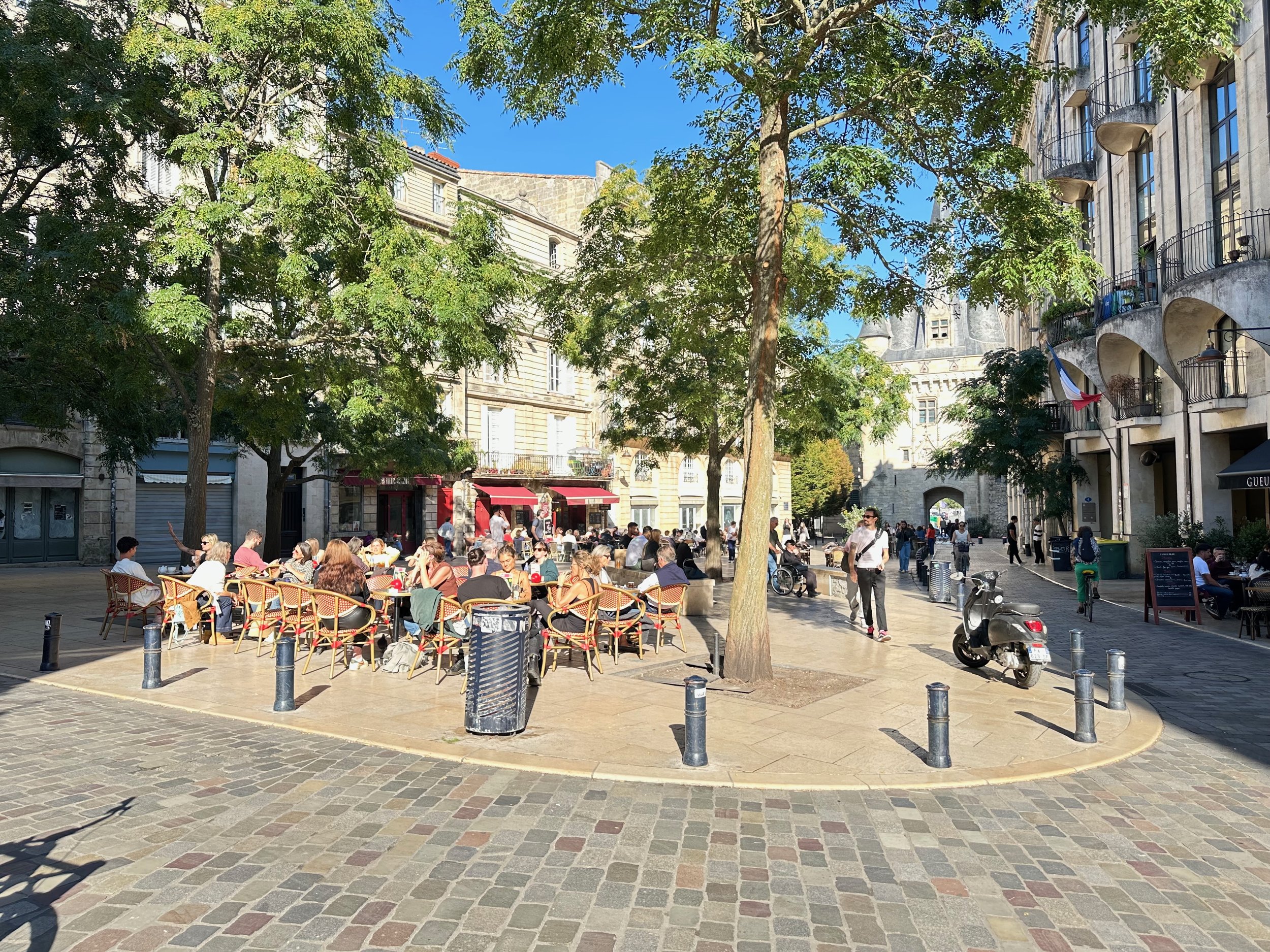
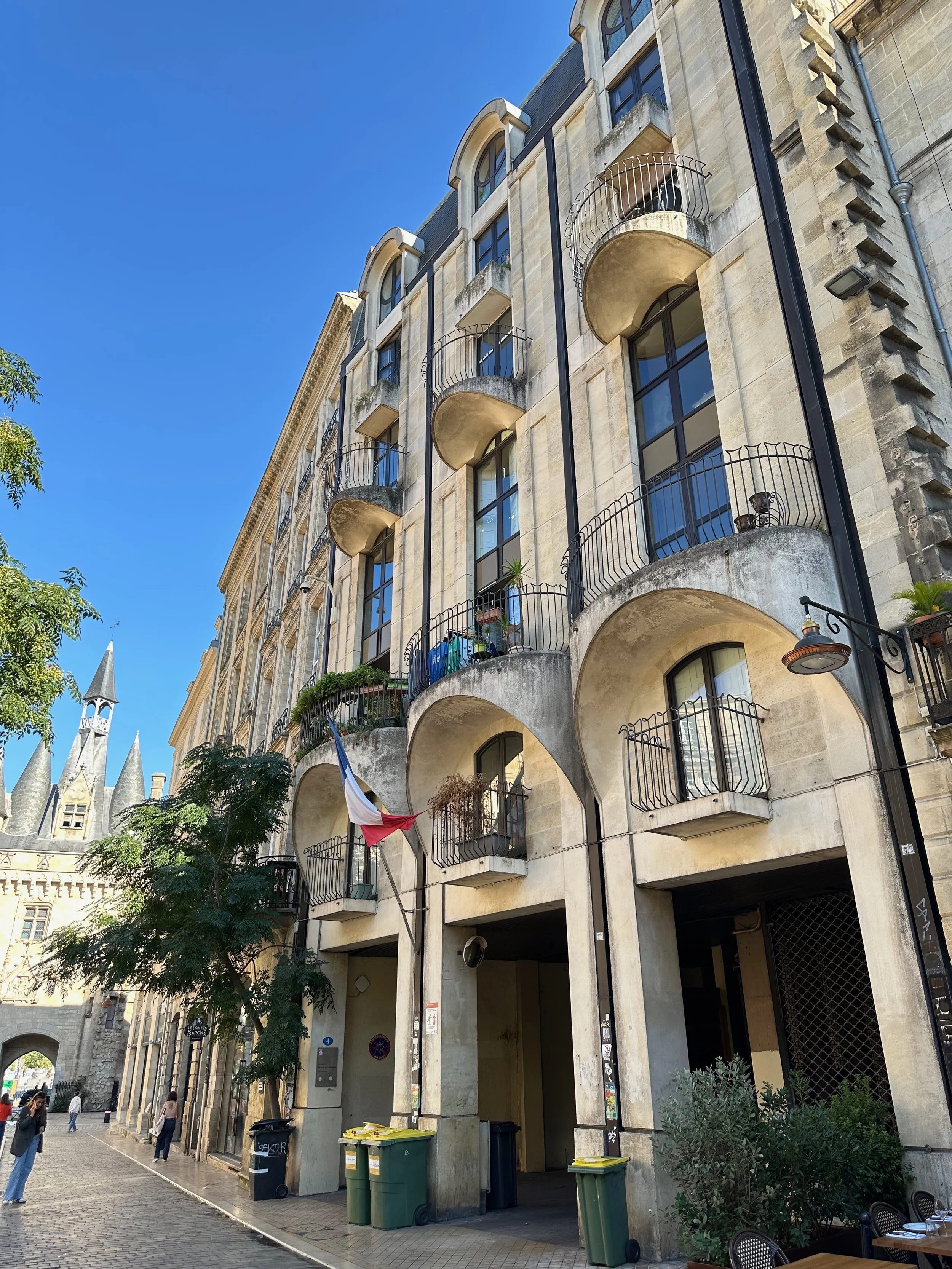
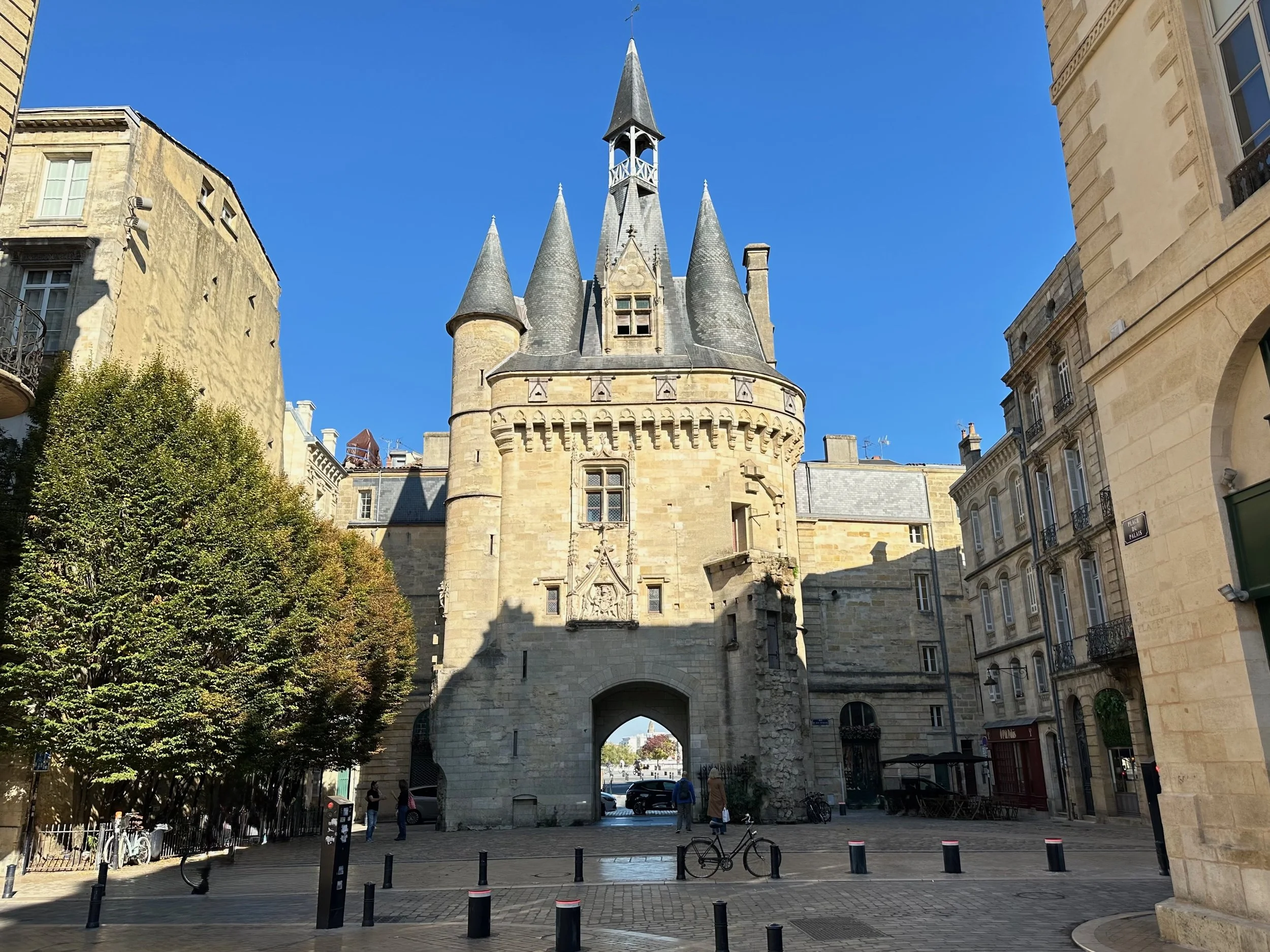
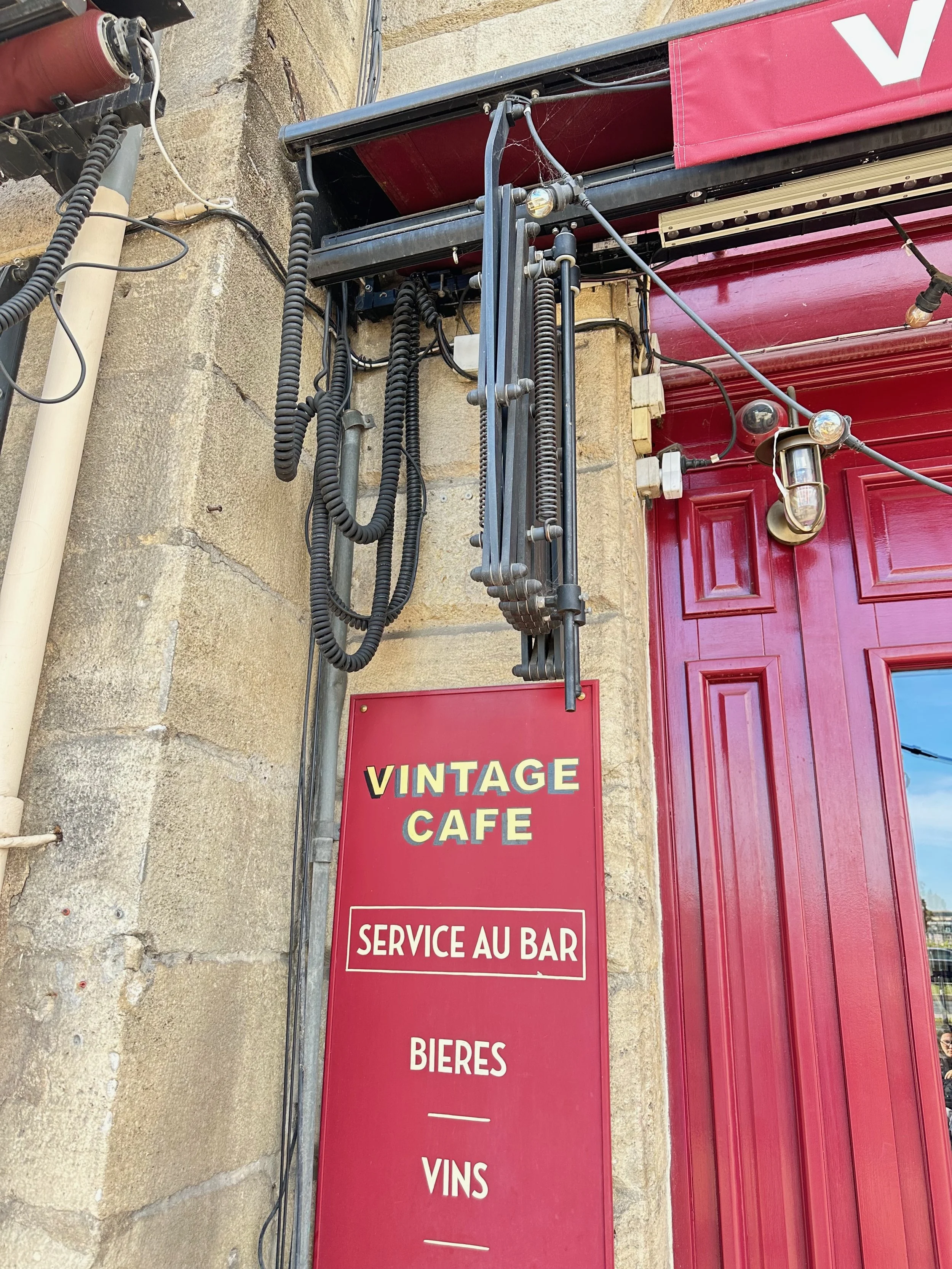
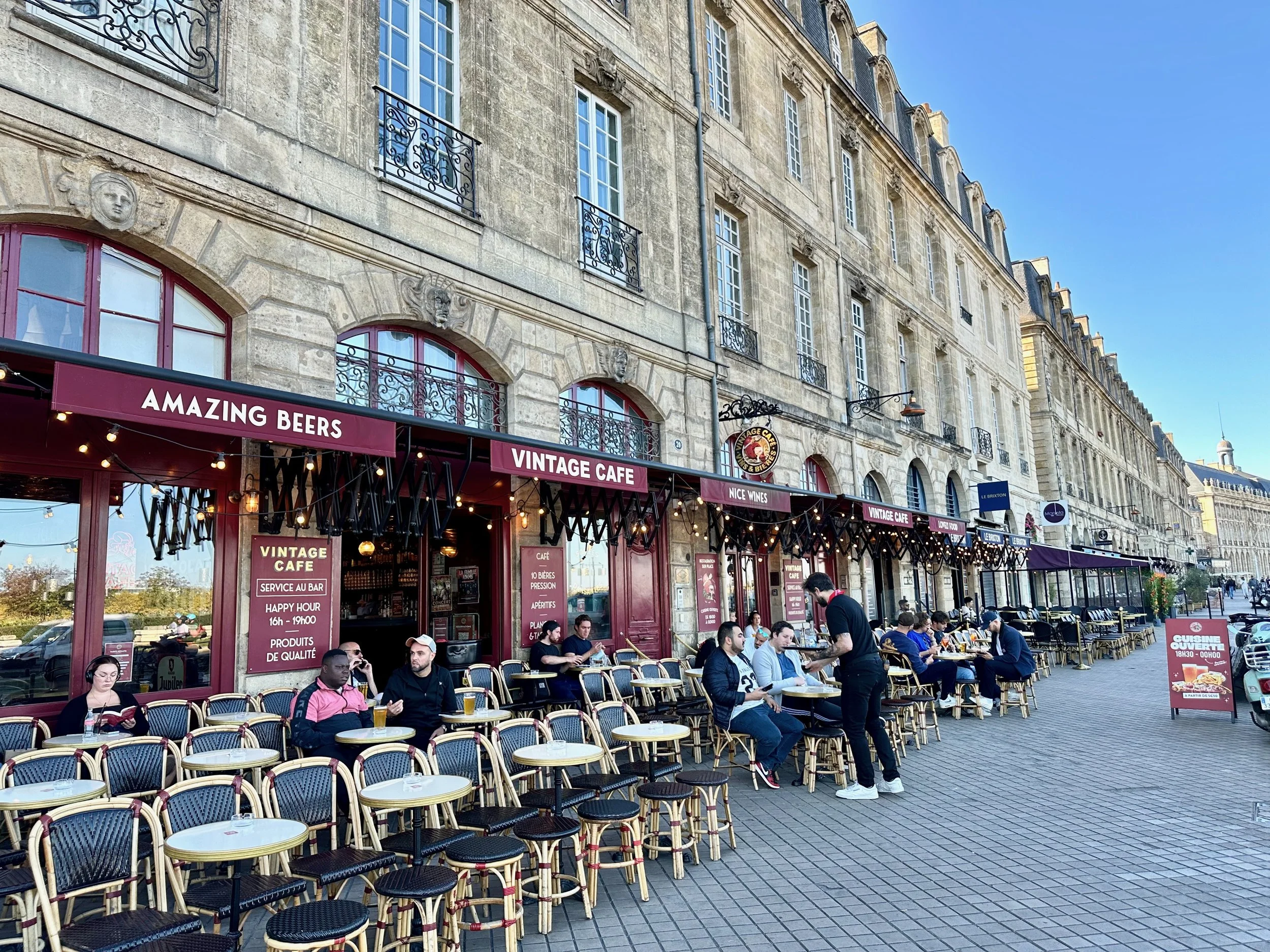
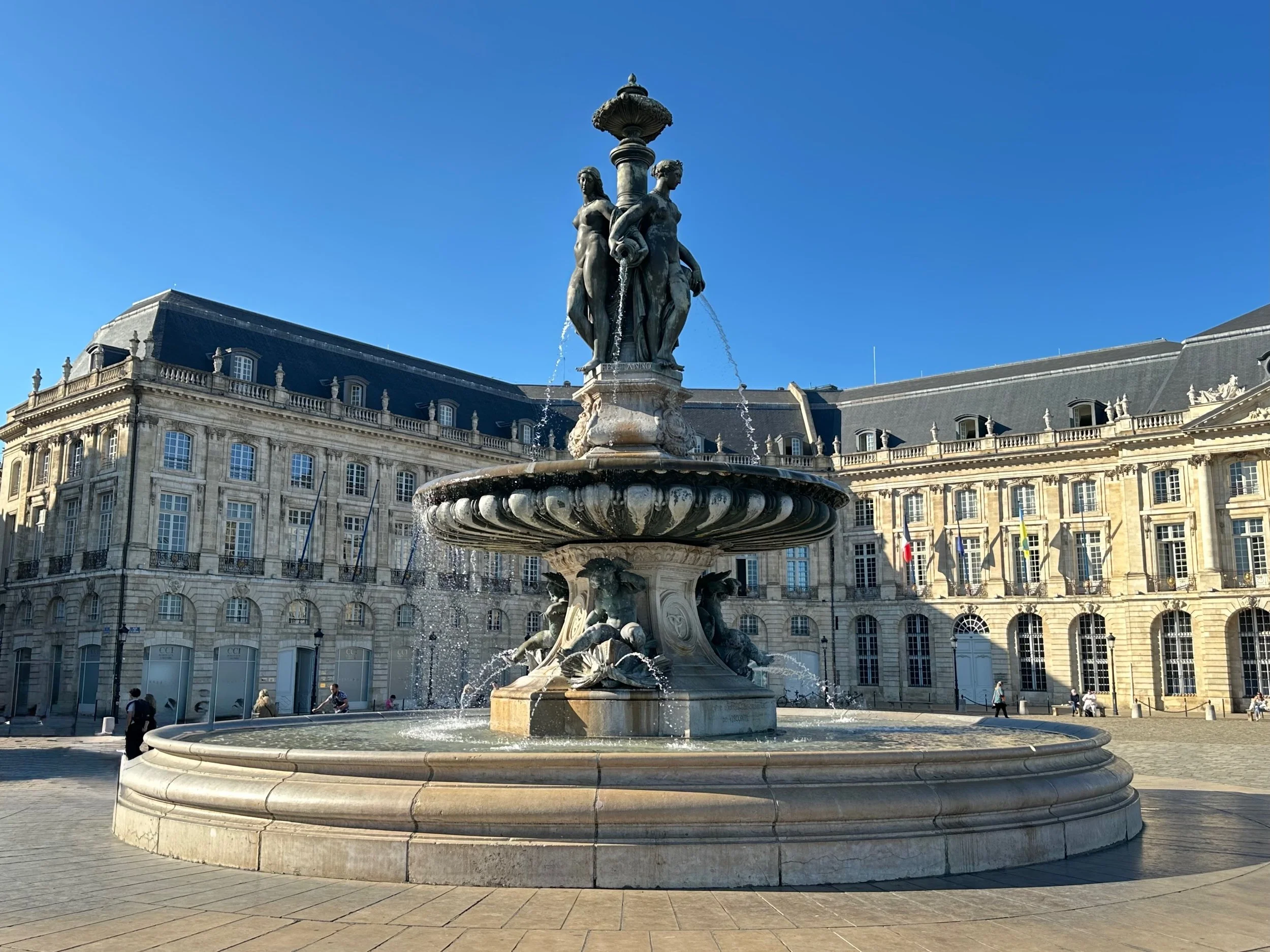
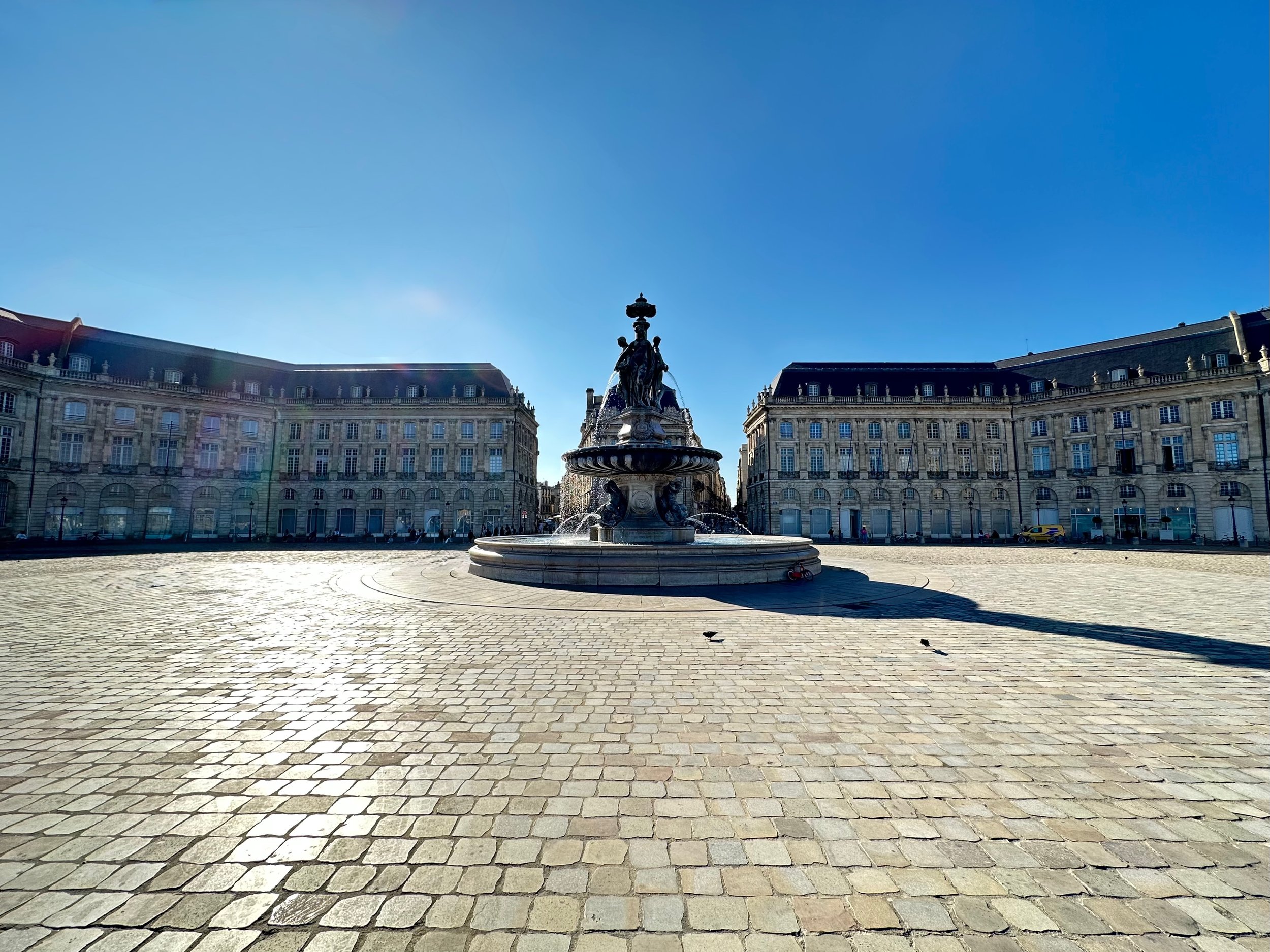
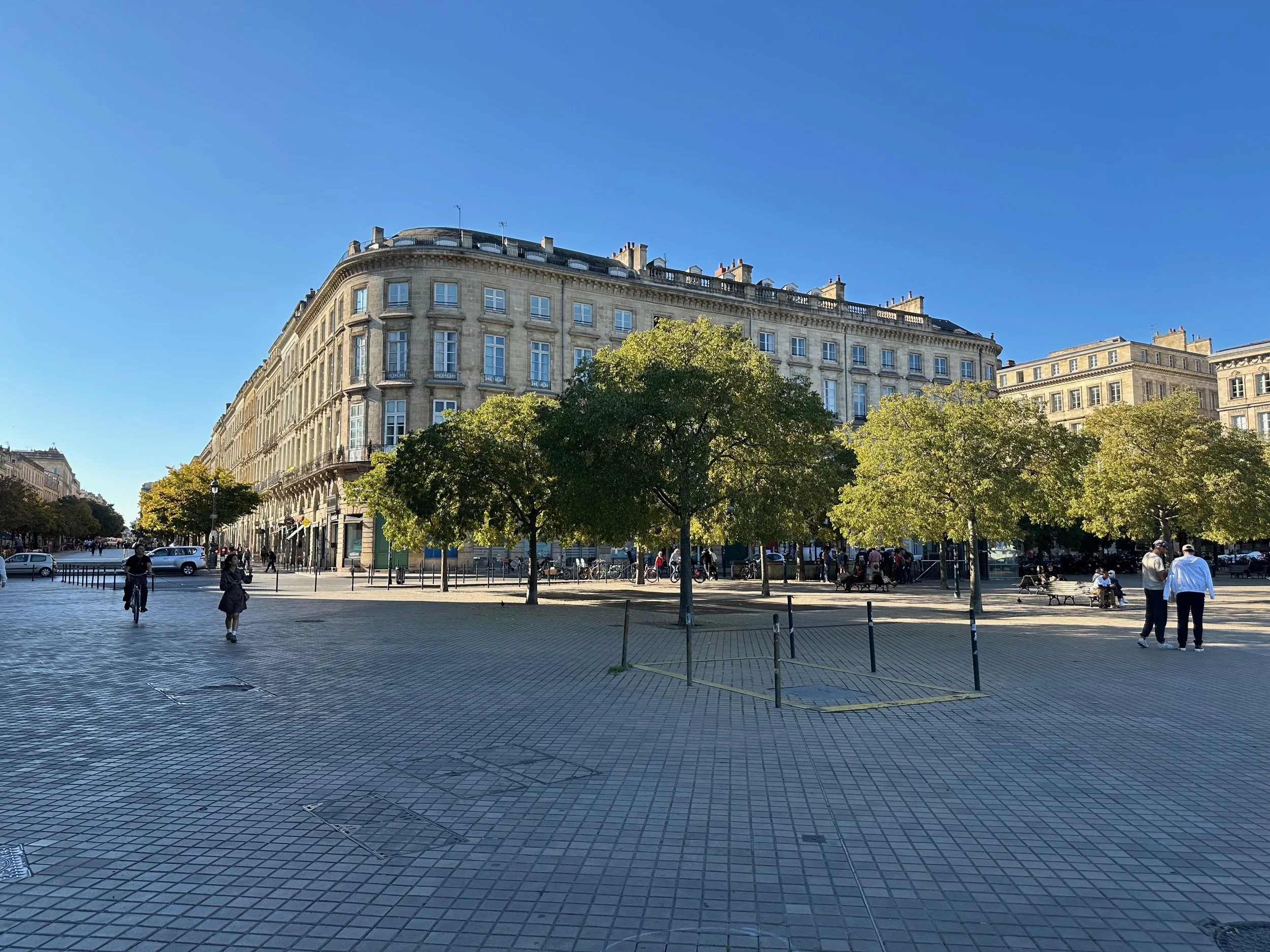
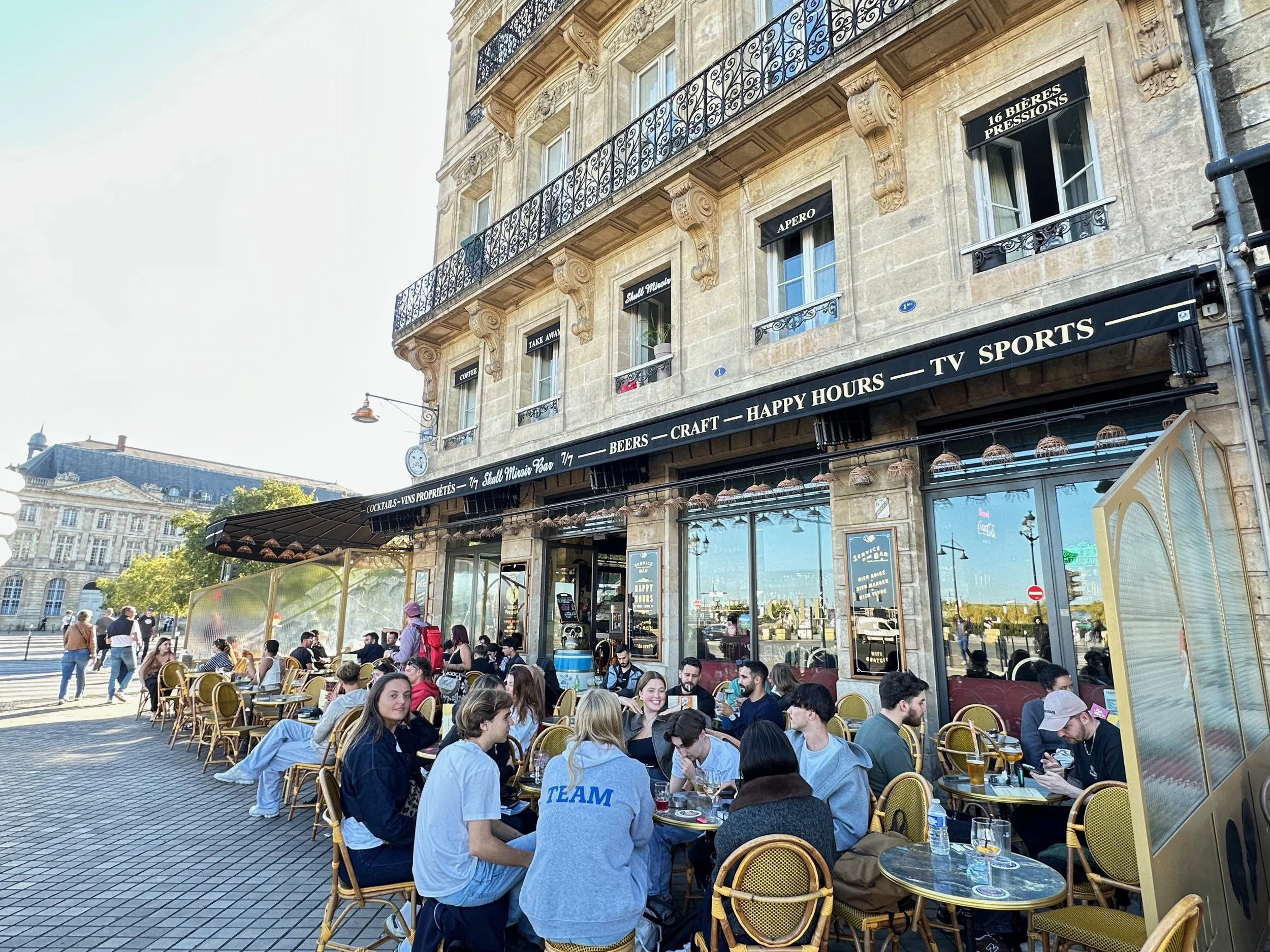
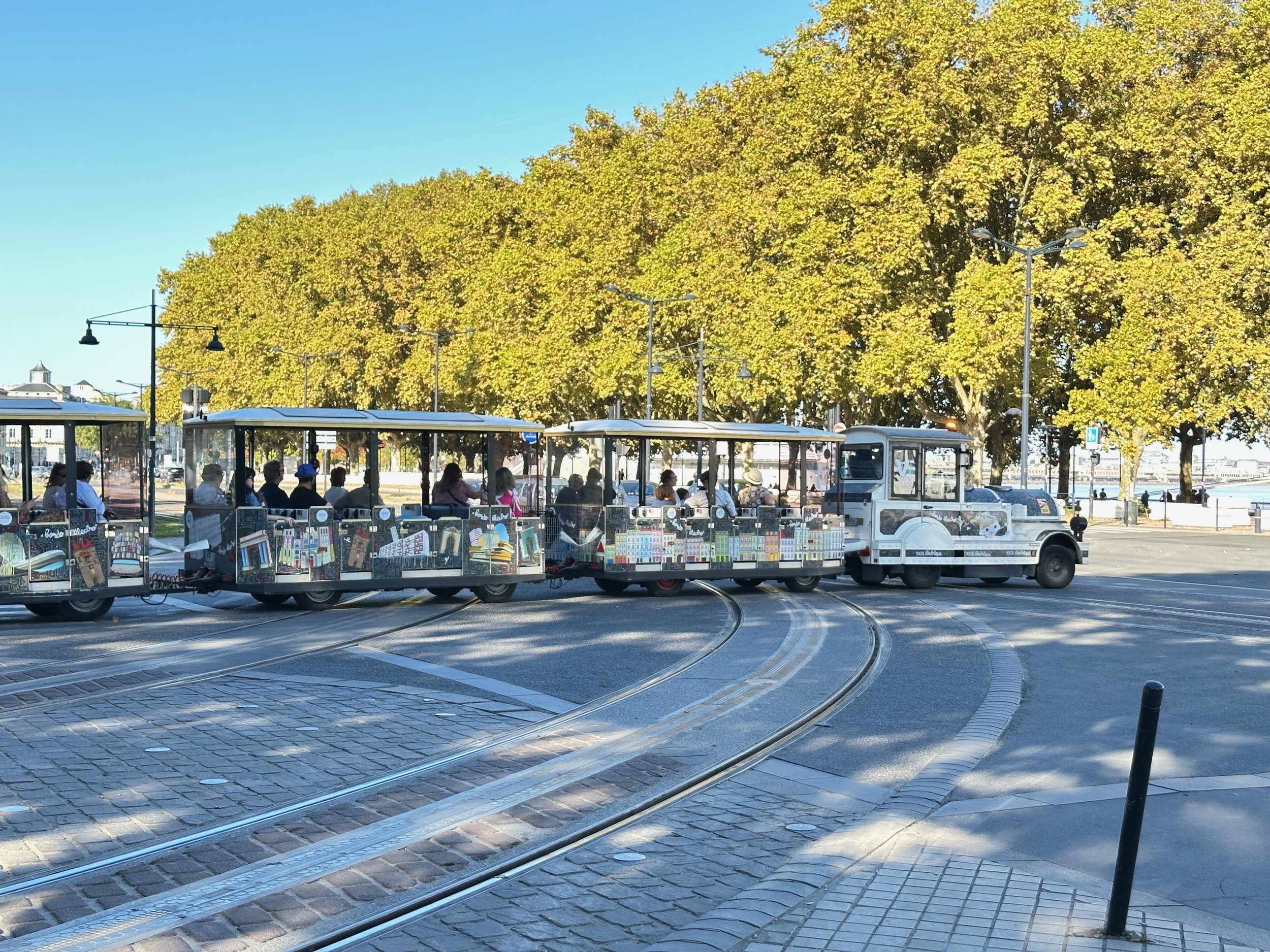
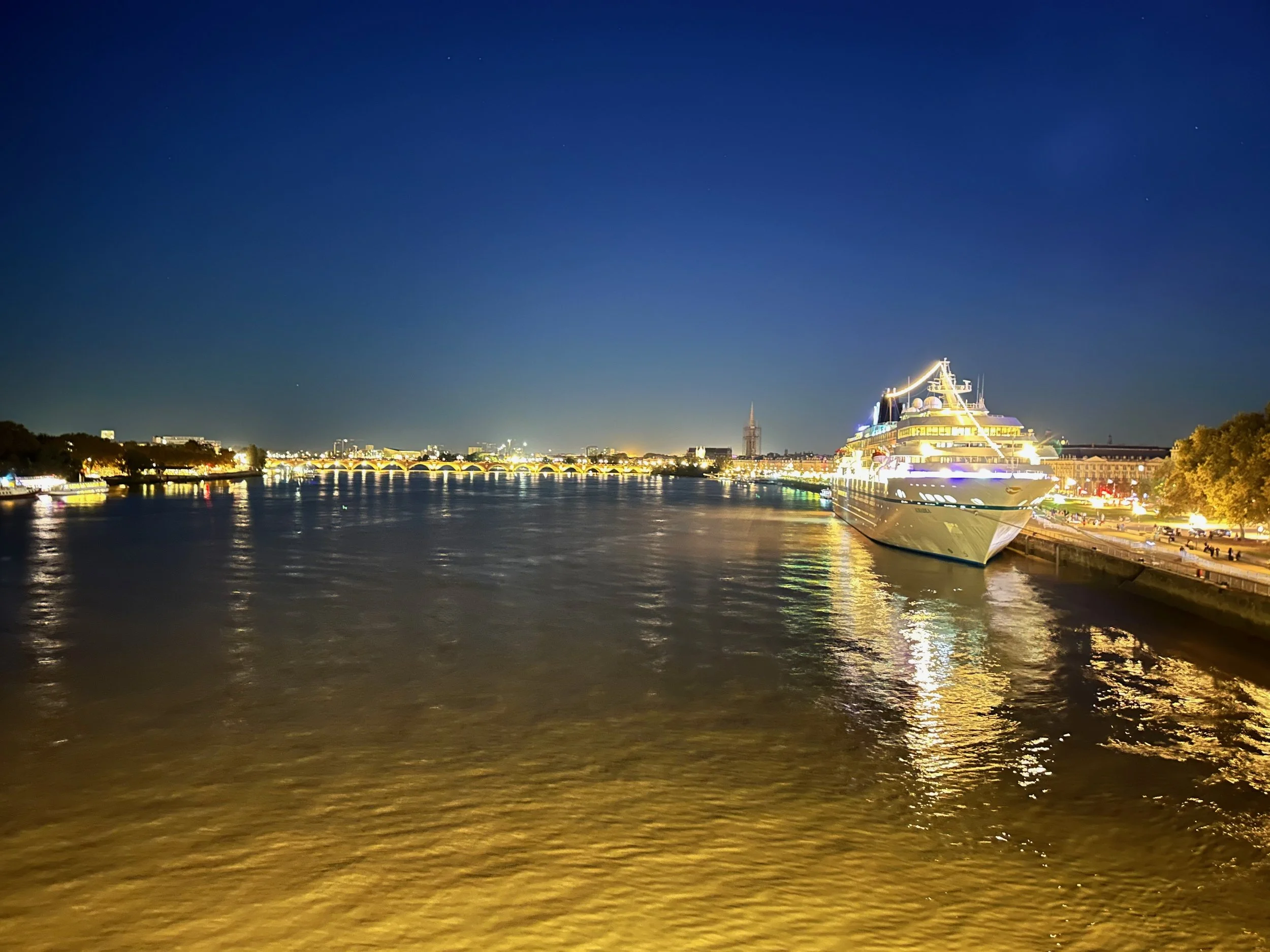
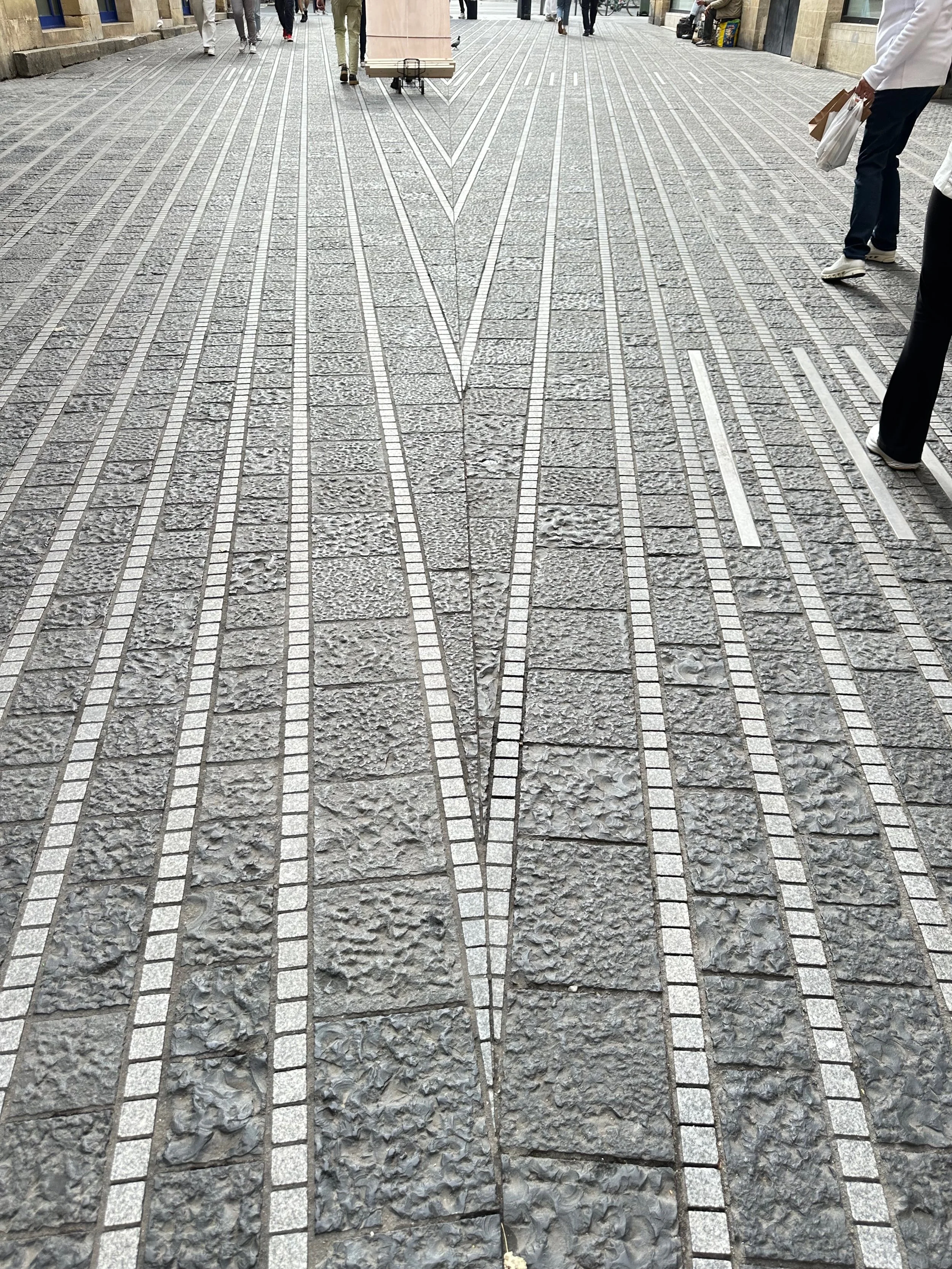
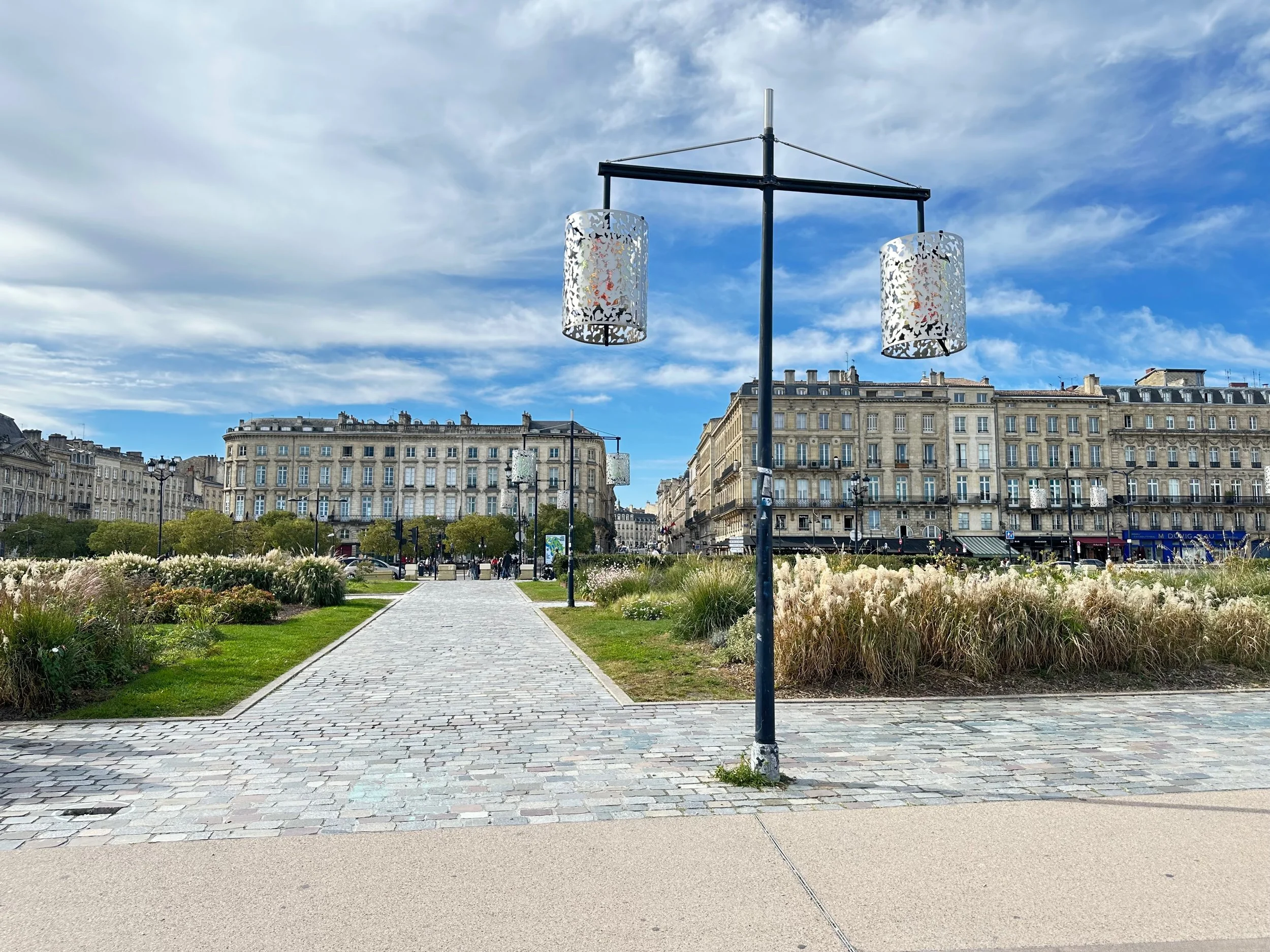
The proverbial fork in the road. Which way will our advance team go?
Day two… change of plan
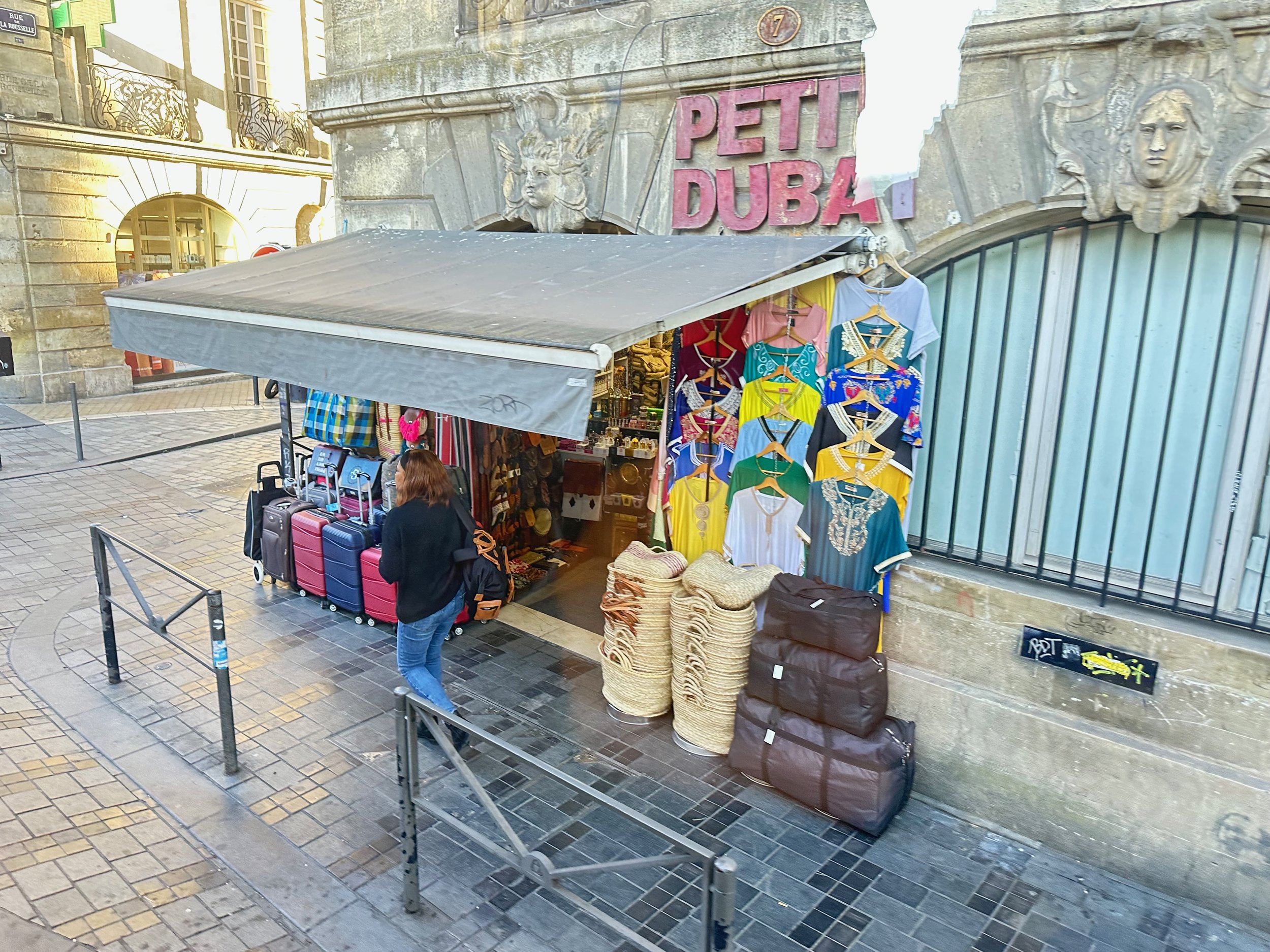
Although we had signed up for one of the ship’s tour excursions, at breakfast we and our travel companions decided not to partake. We wanted to try and find a couple of specific stores, and to continue our exploration of the city on our own. Our companions had walked a different area than us on the previous afternoon, and they didn’t see the iconic Bordeaux landmarks that we had discovered. So on this morning we all set out together to see what kind of highlights (read bargains) we could find. We stayed at it all morning and arrived back at the ship around 13:00.
After lunch my body was done in, so we stayed on board ship for the remainder of the day. But our companions did venture out again, all the while keeping 16:30 hour ever present in their minds. This is the time all passengers needed to be back onboard ship for the 17:00 cast off time. Since lunch was finished around 14:00 hours, it didn’t leave a lot of time for more exploring.
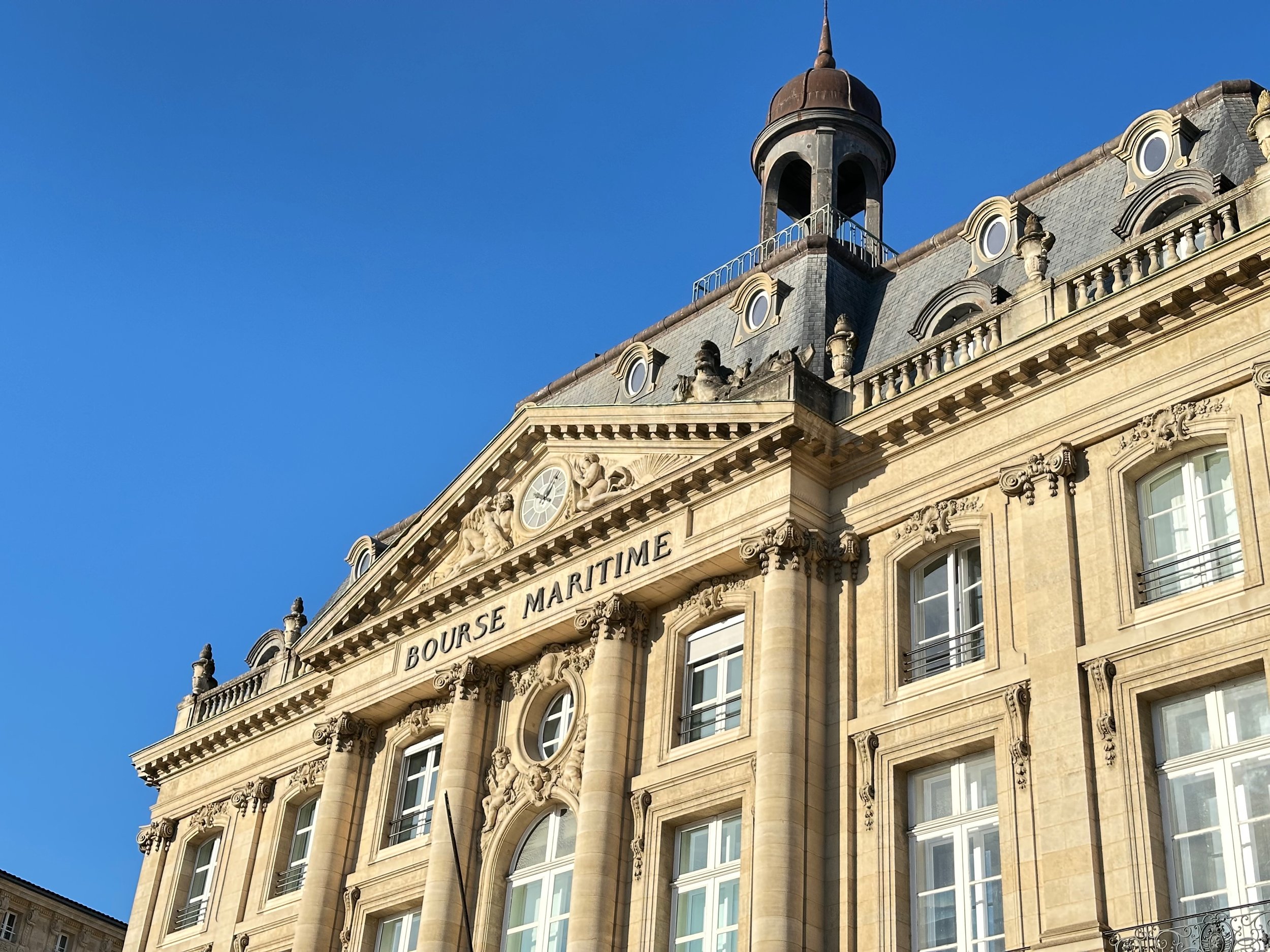
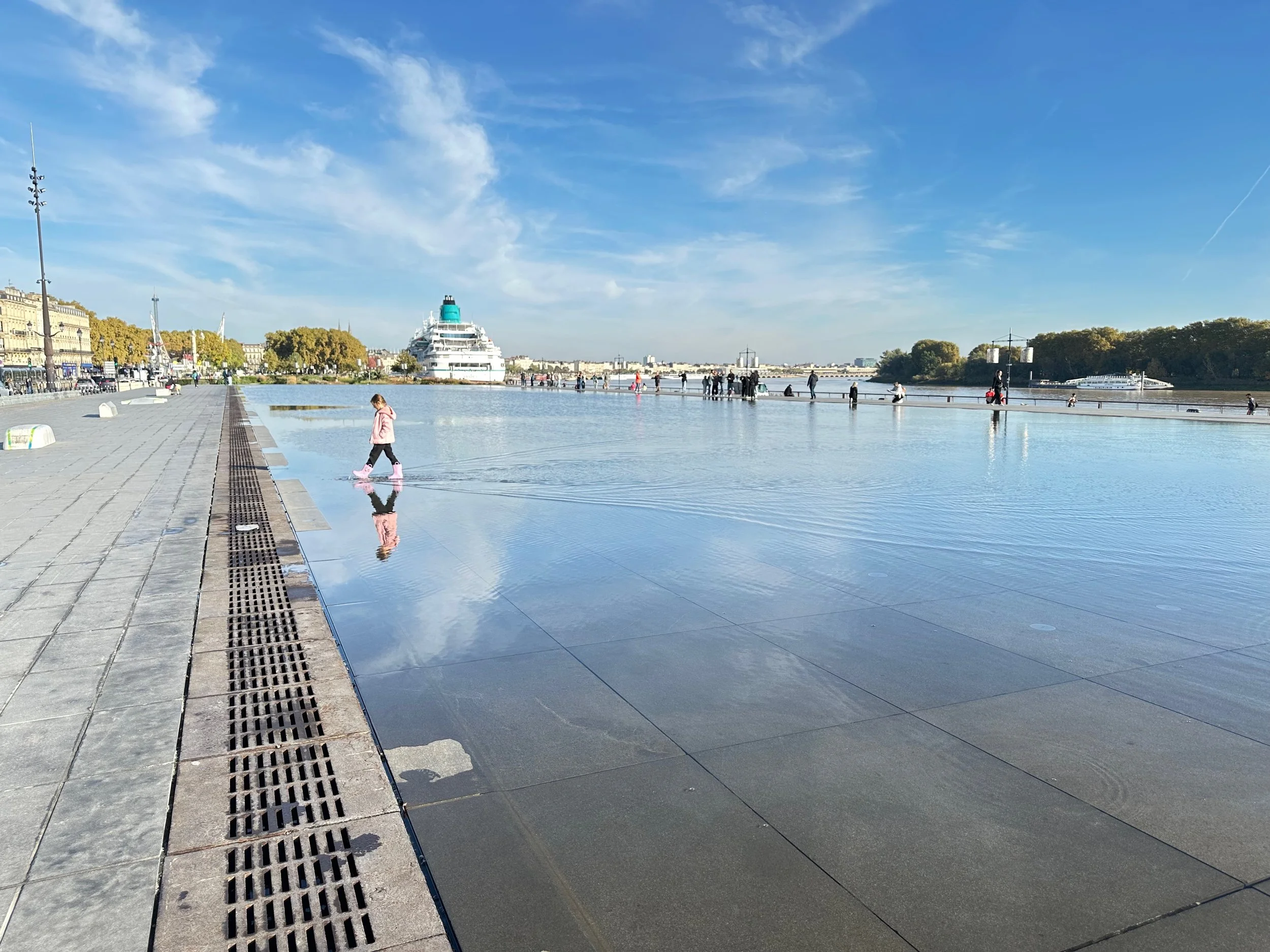
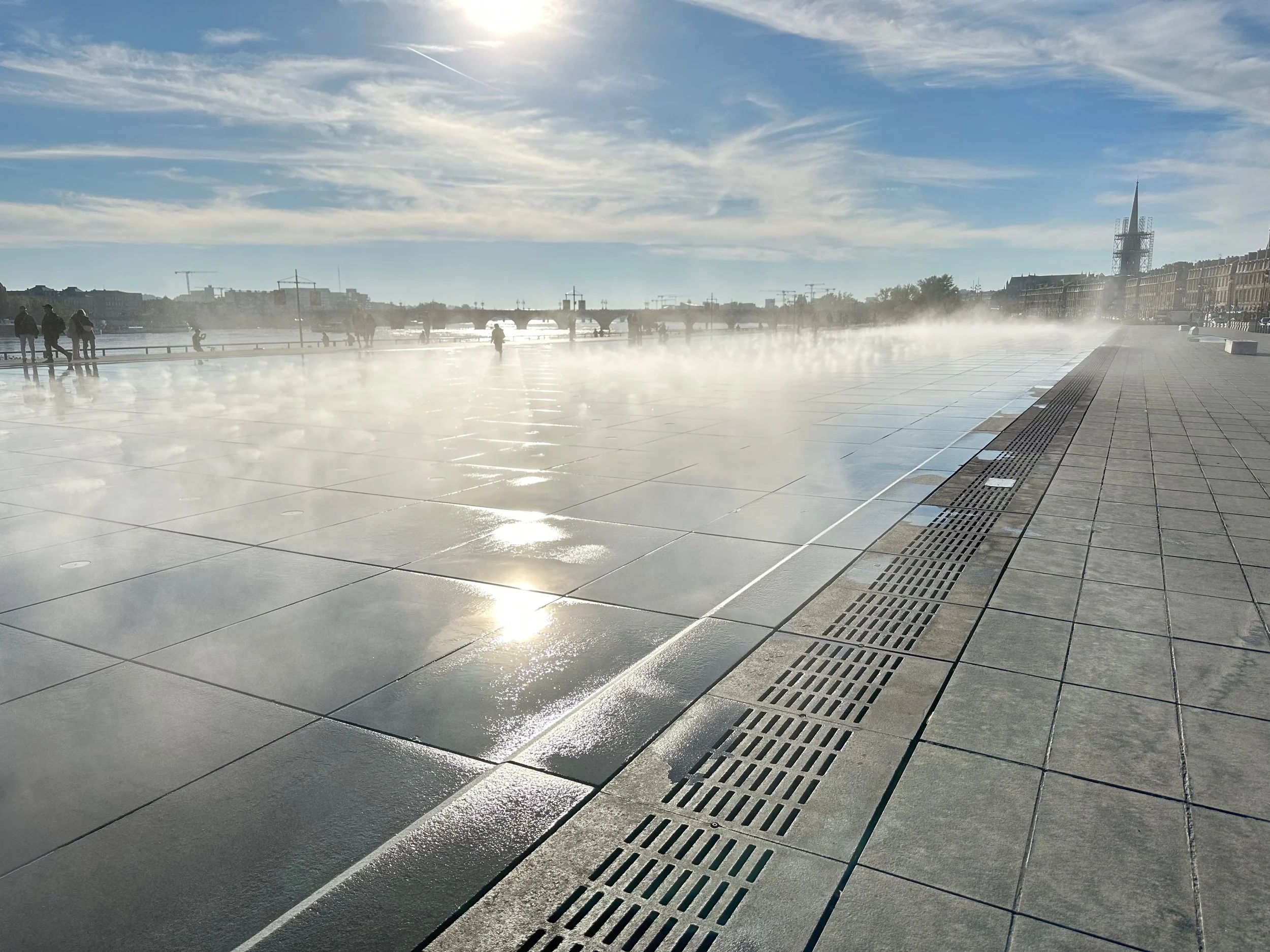
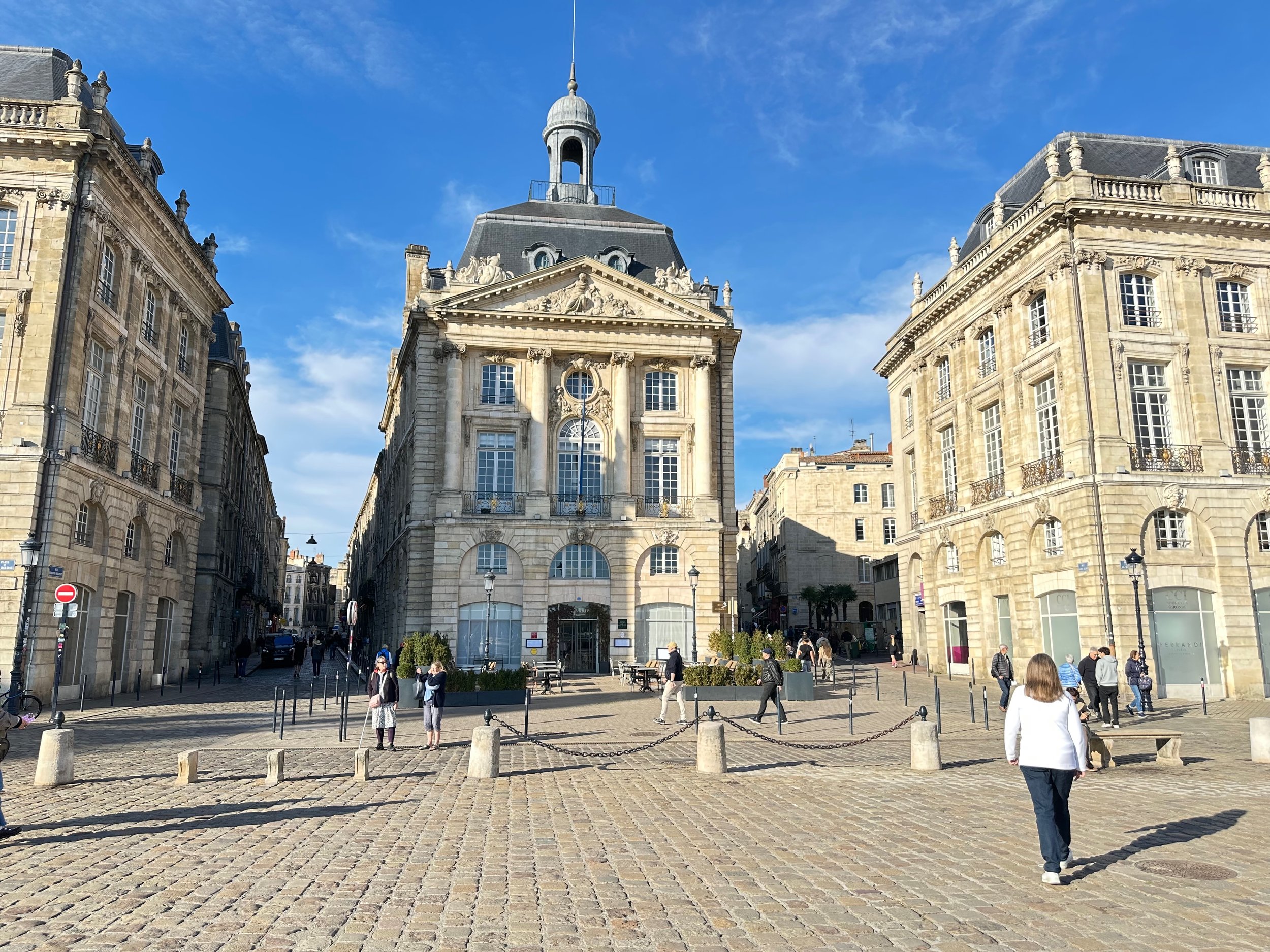
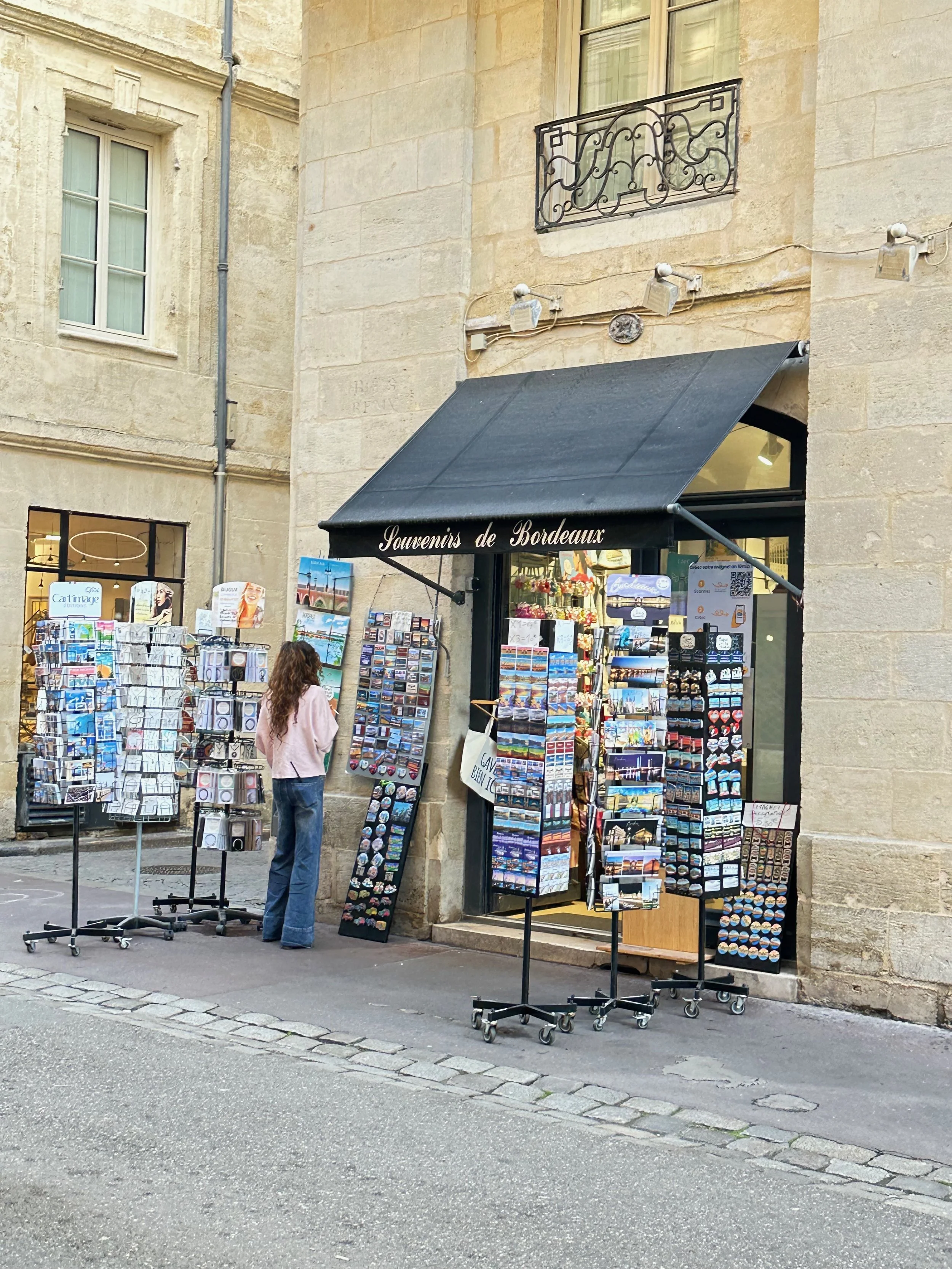
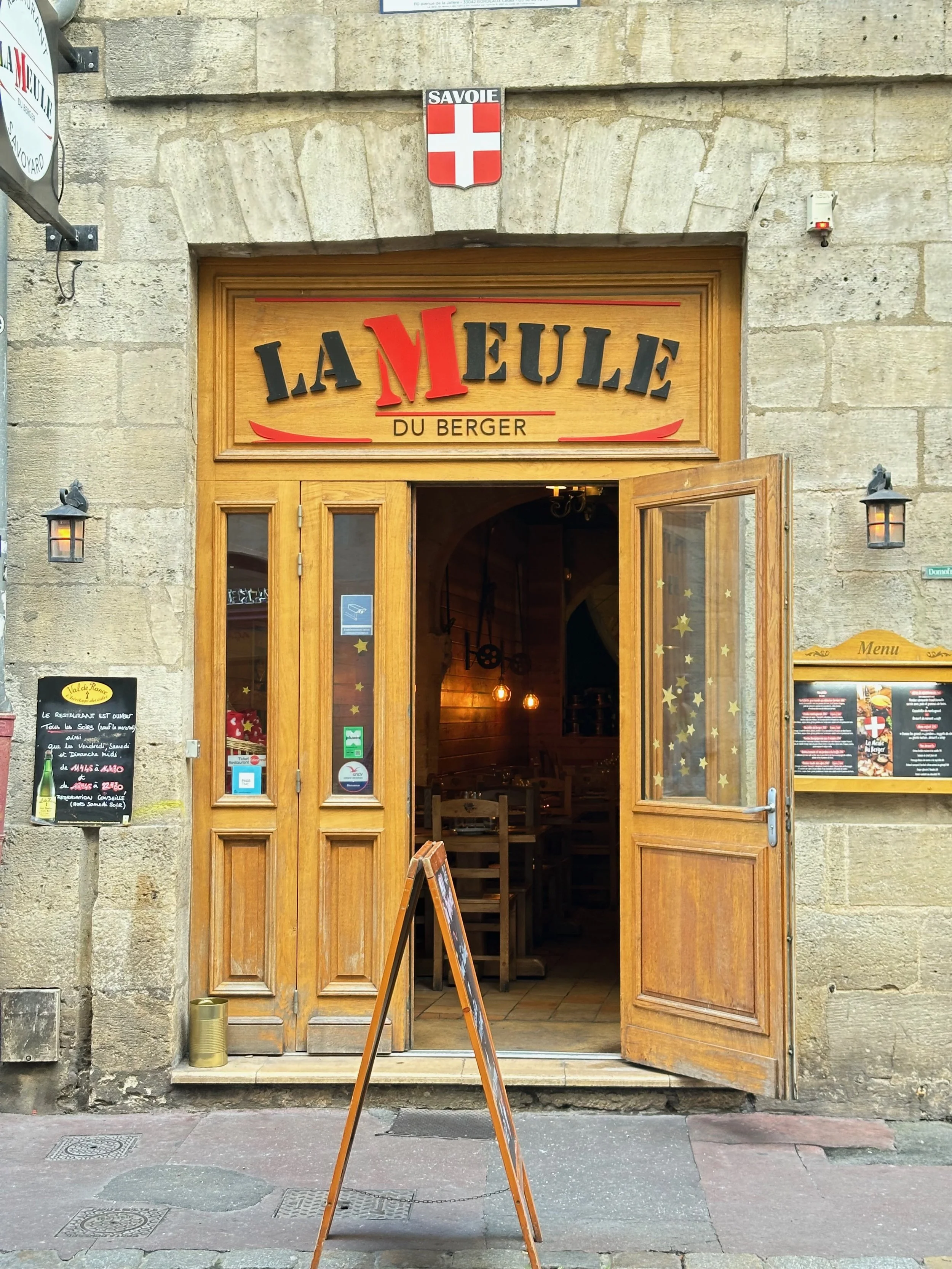
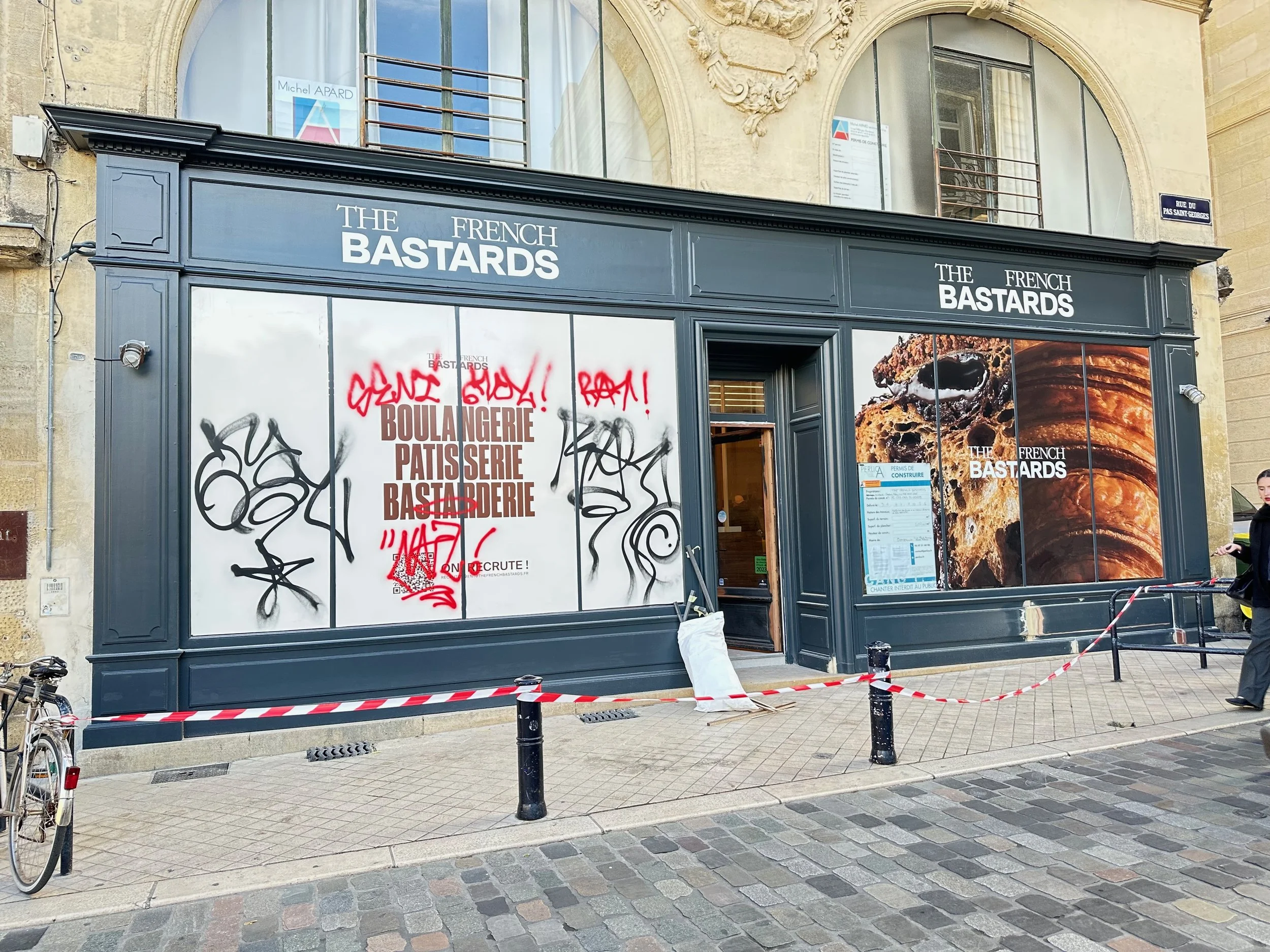
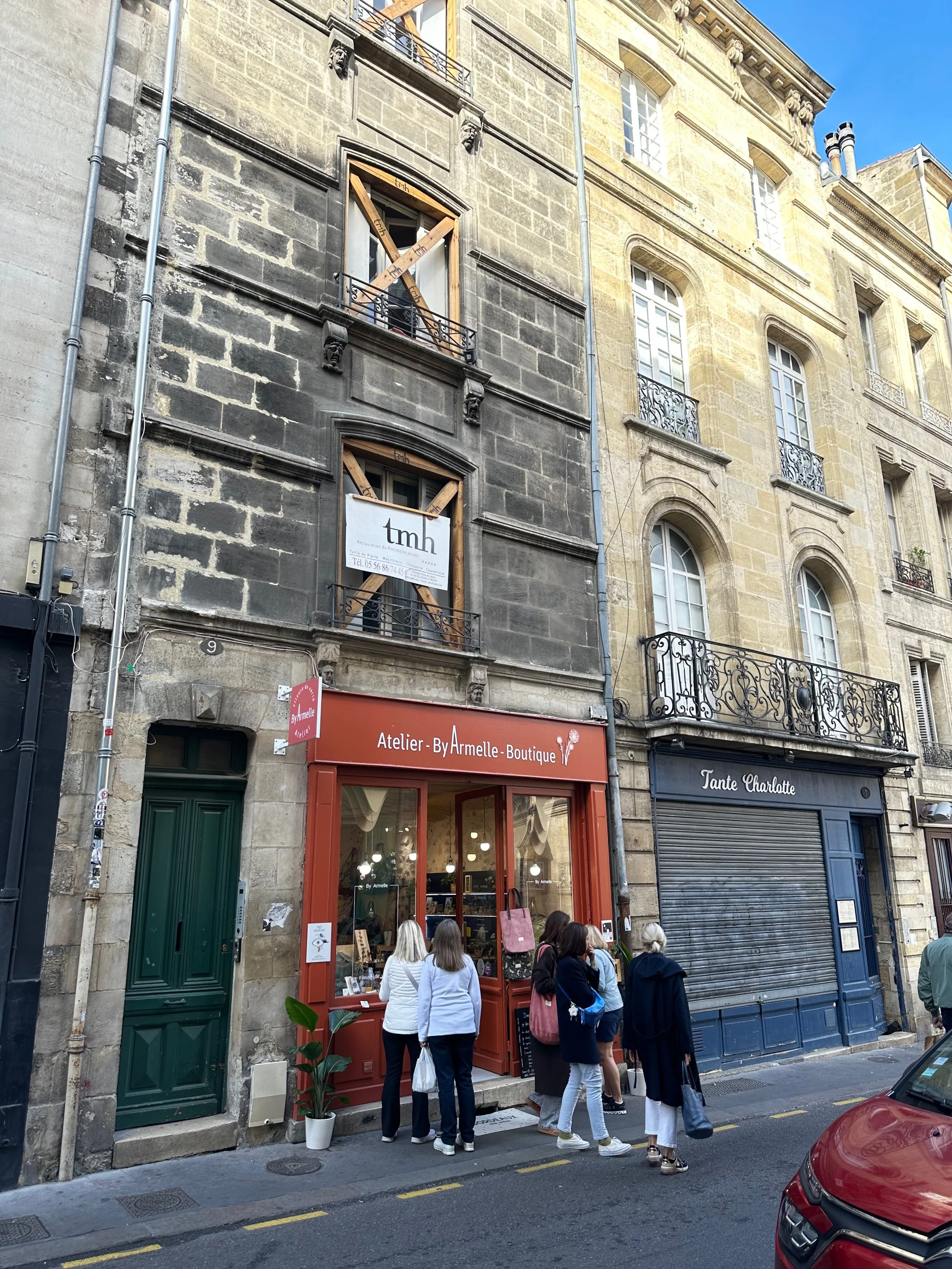
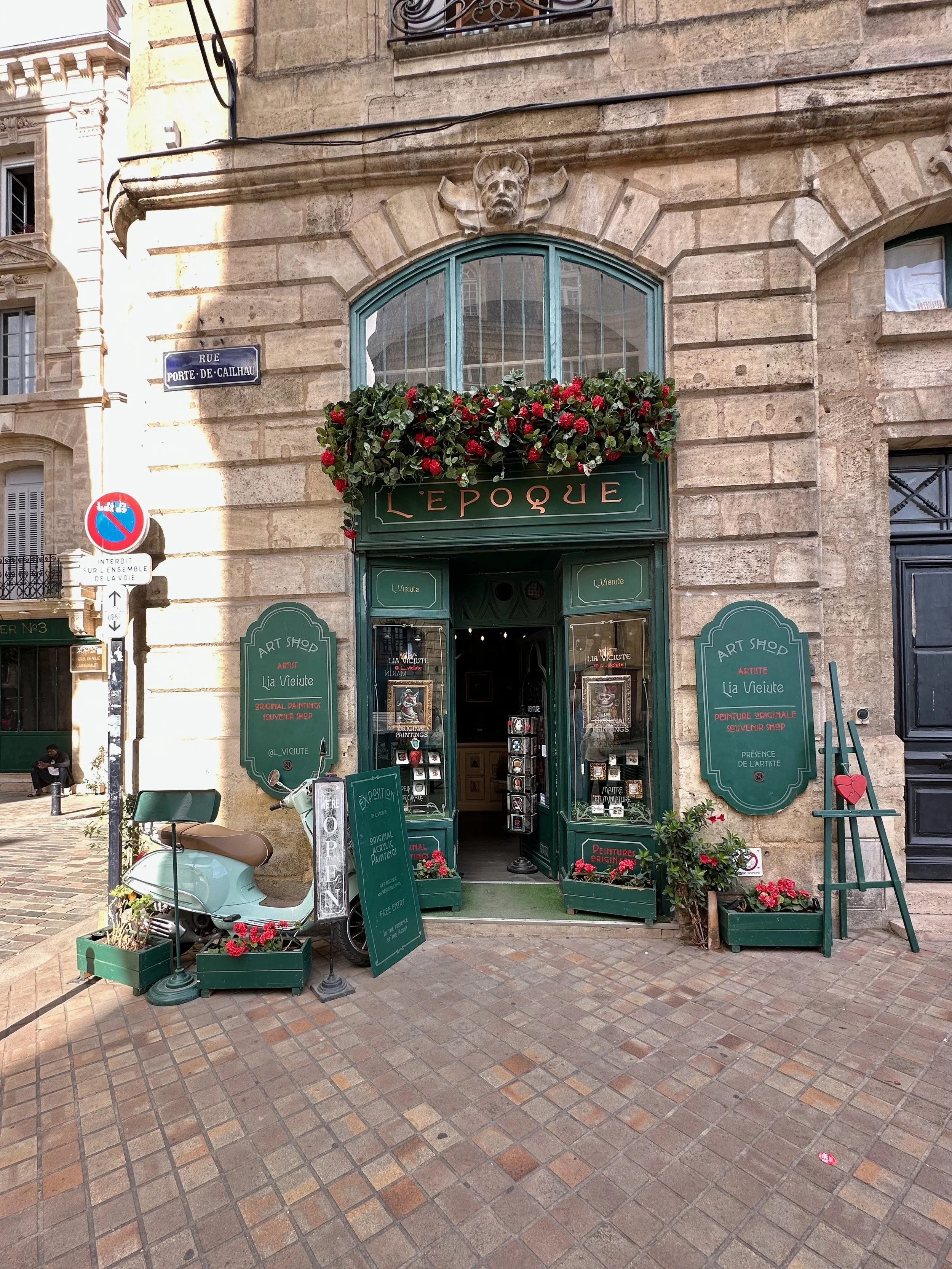
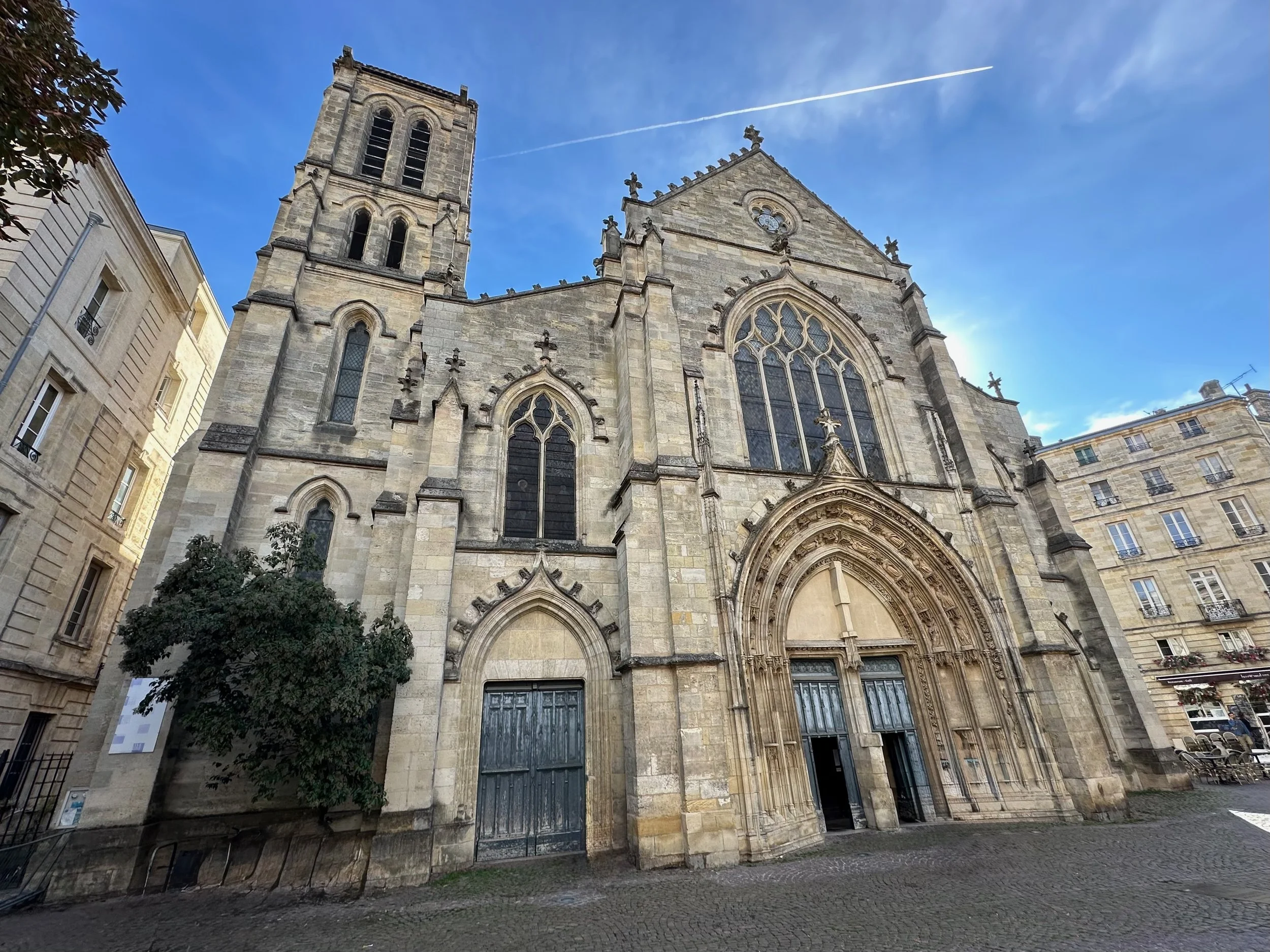
The dock worker waiting to release the last mooring lines.
Saying Good-bye To Bordeaux
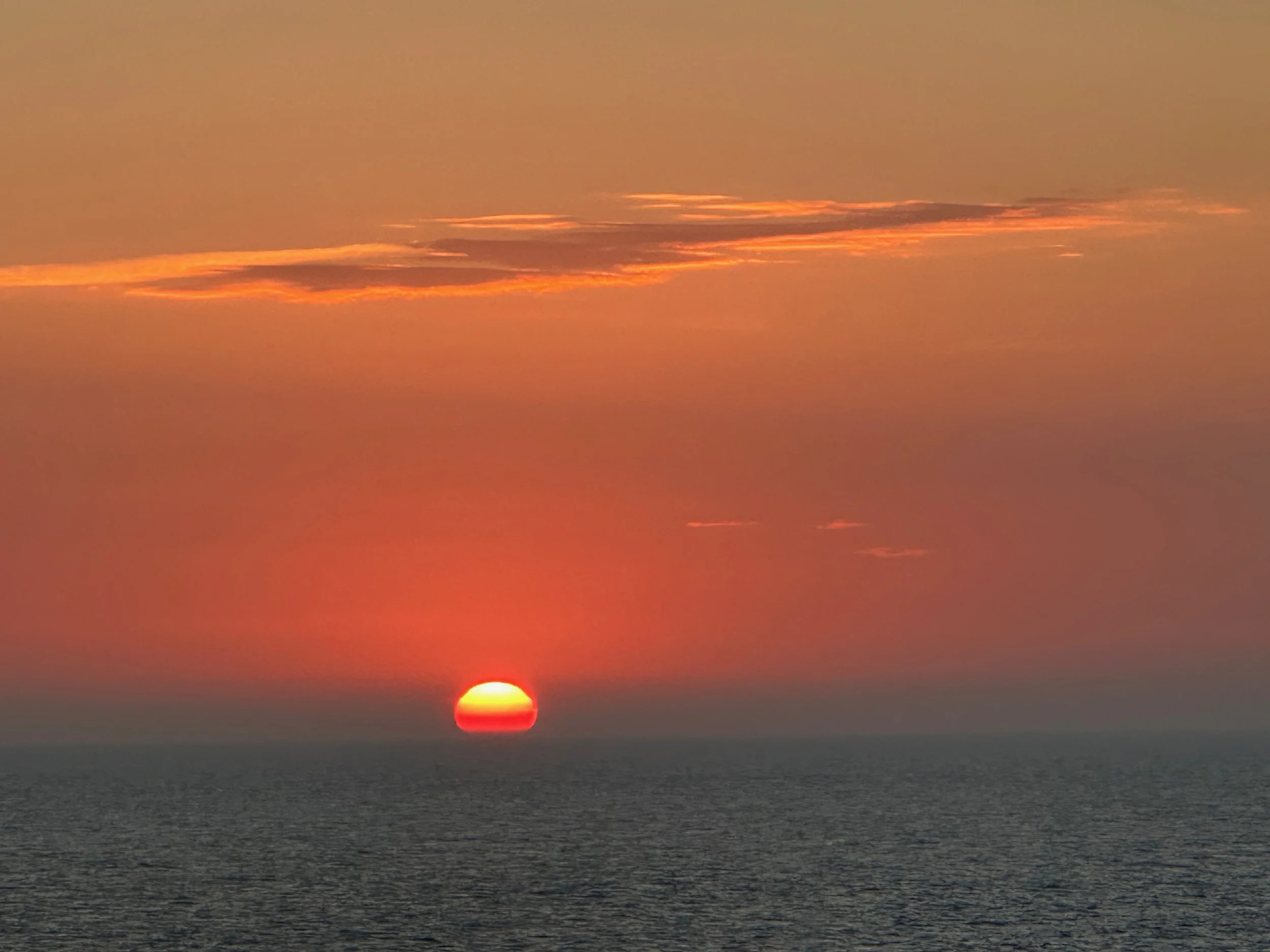
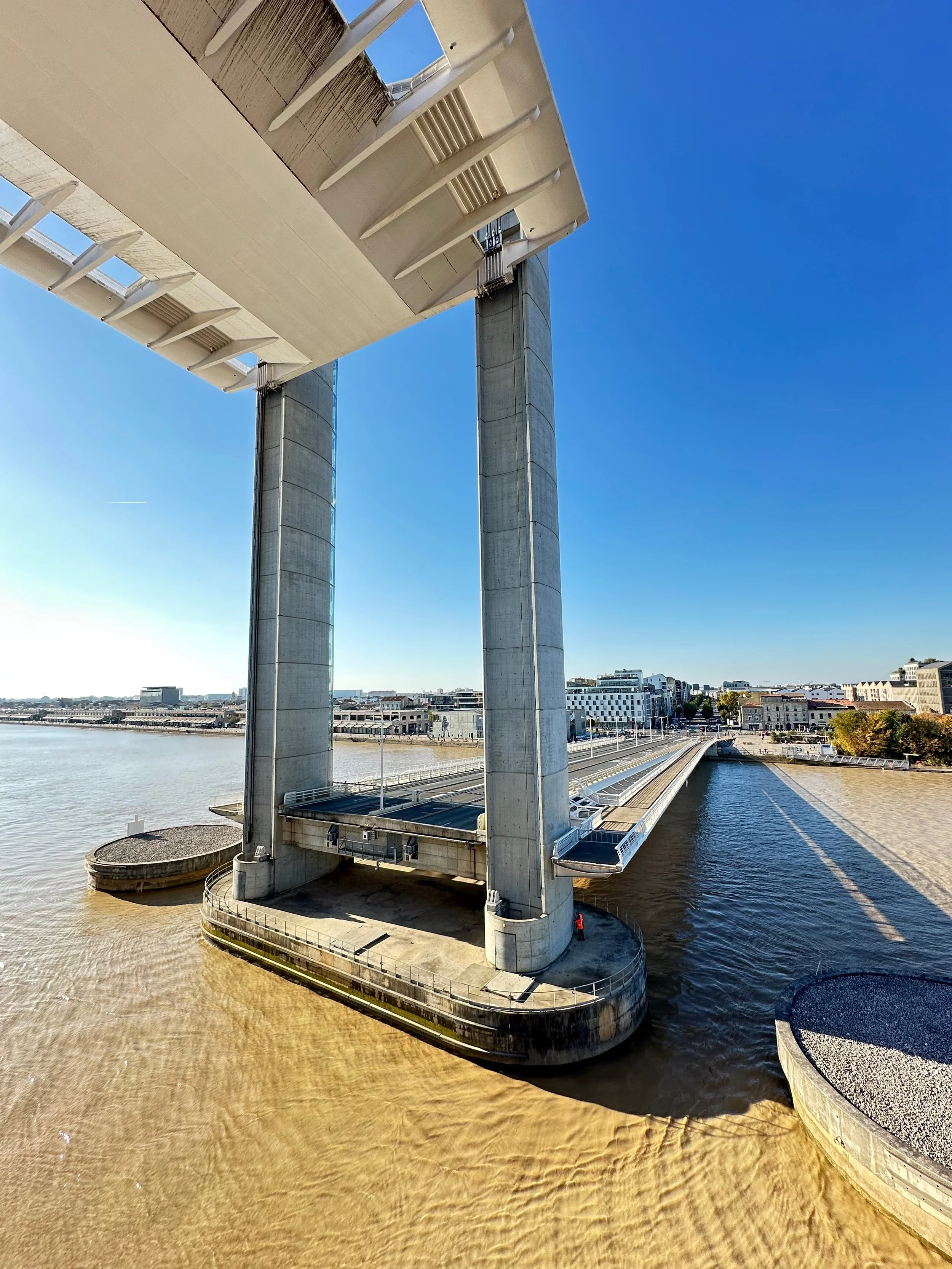
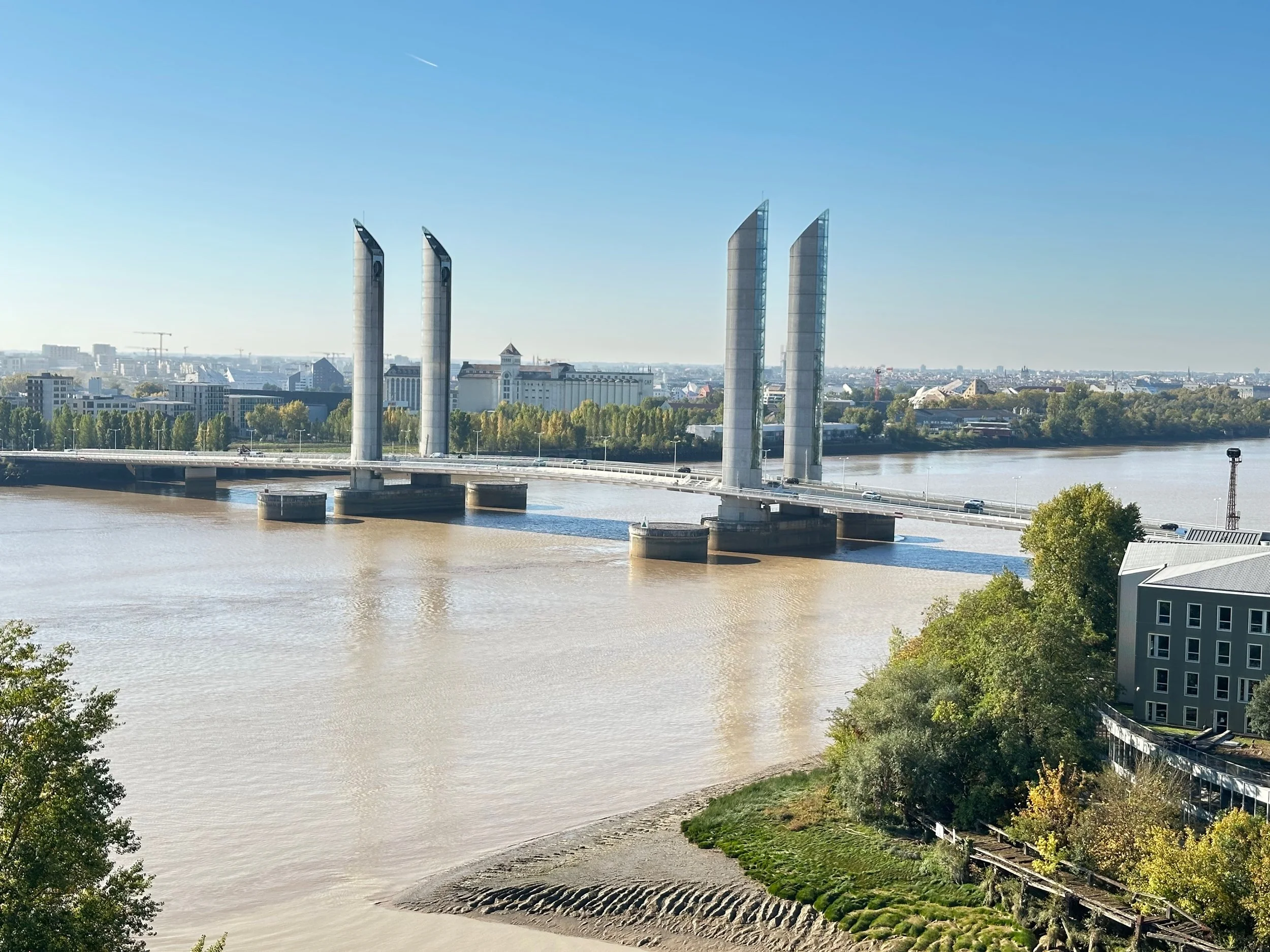
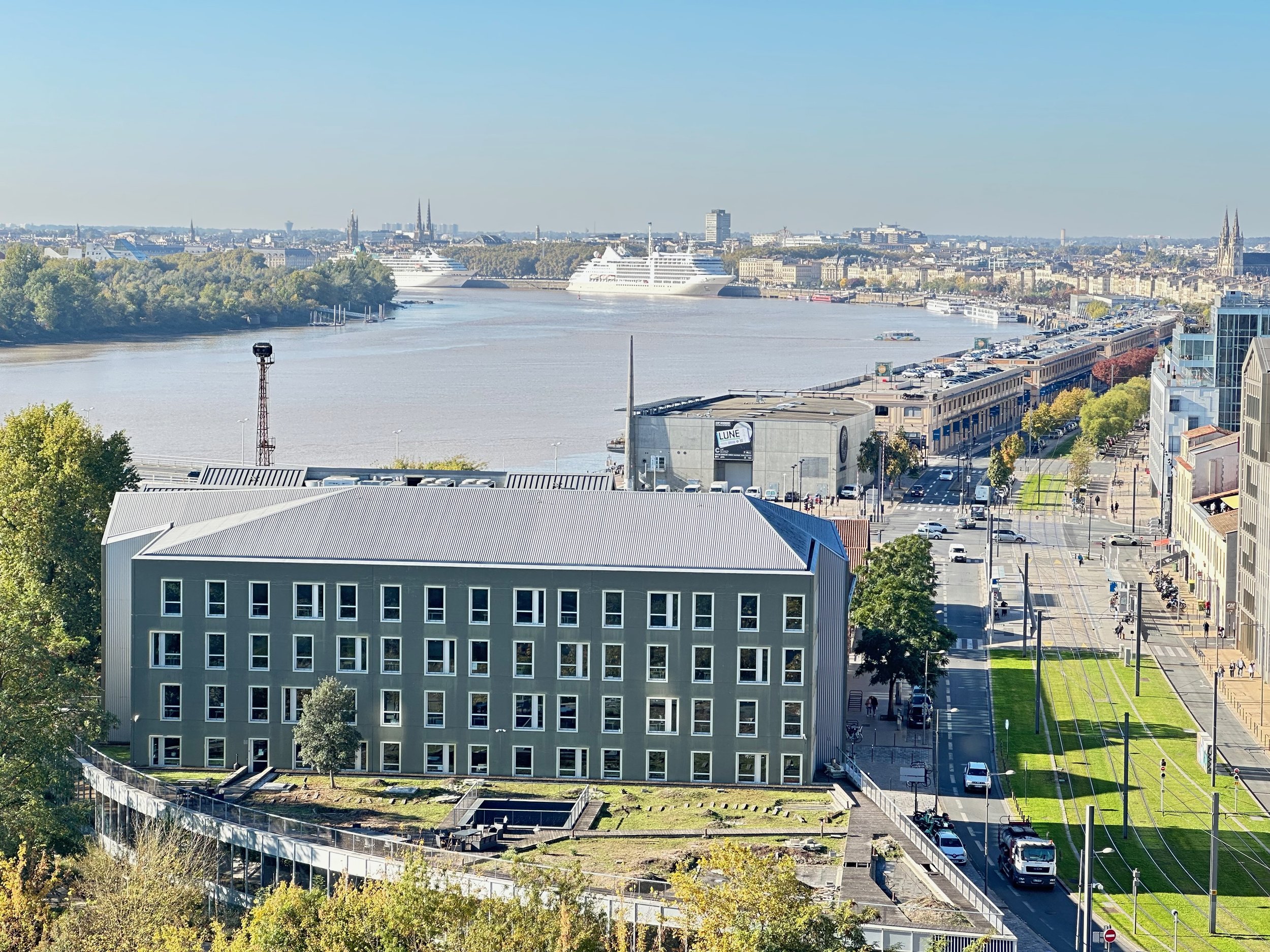
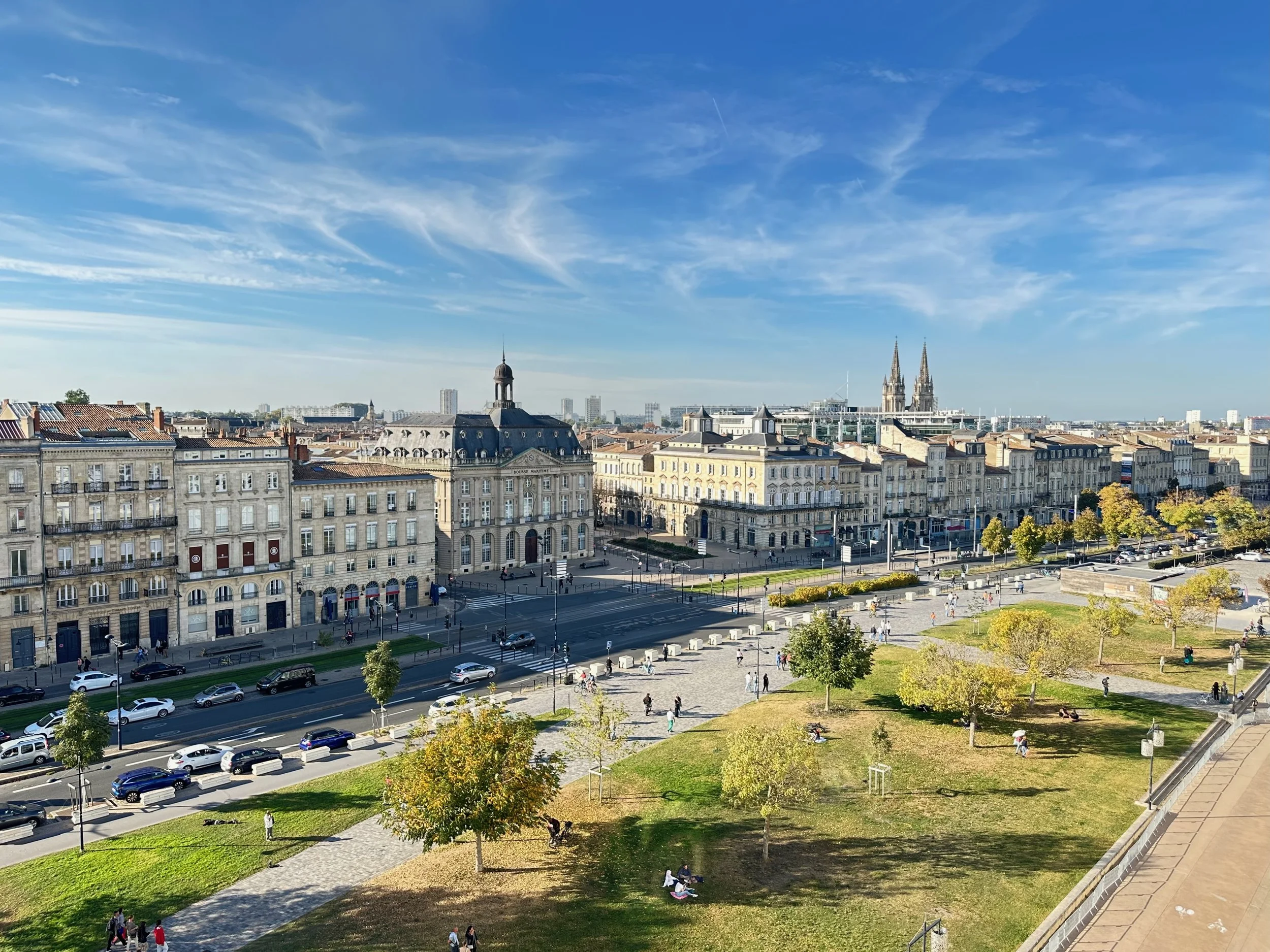
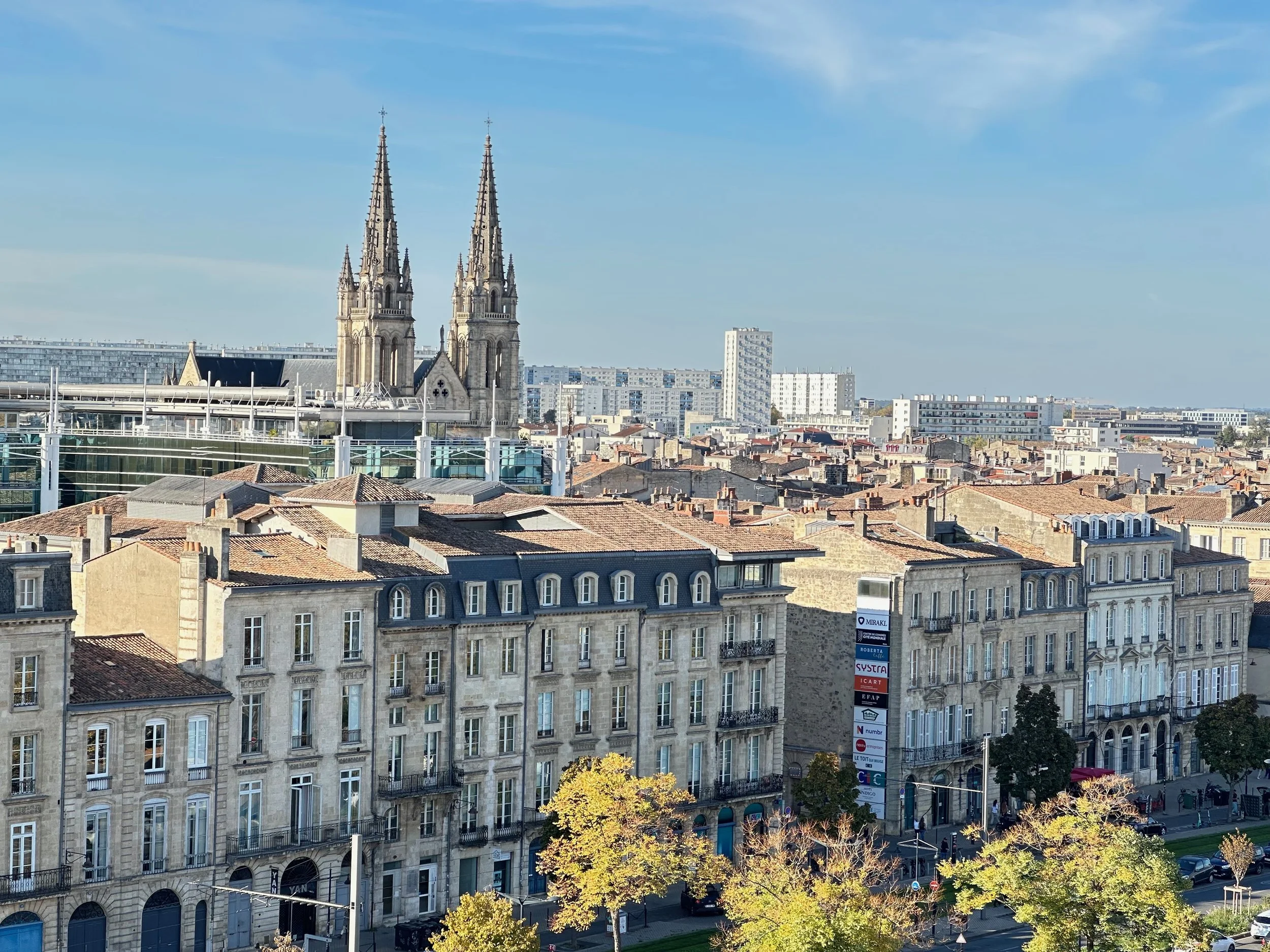
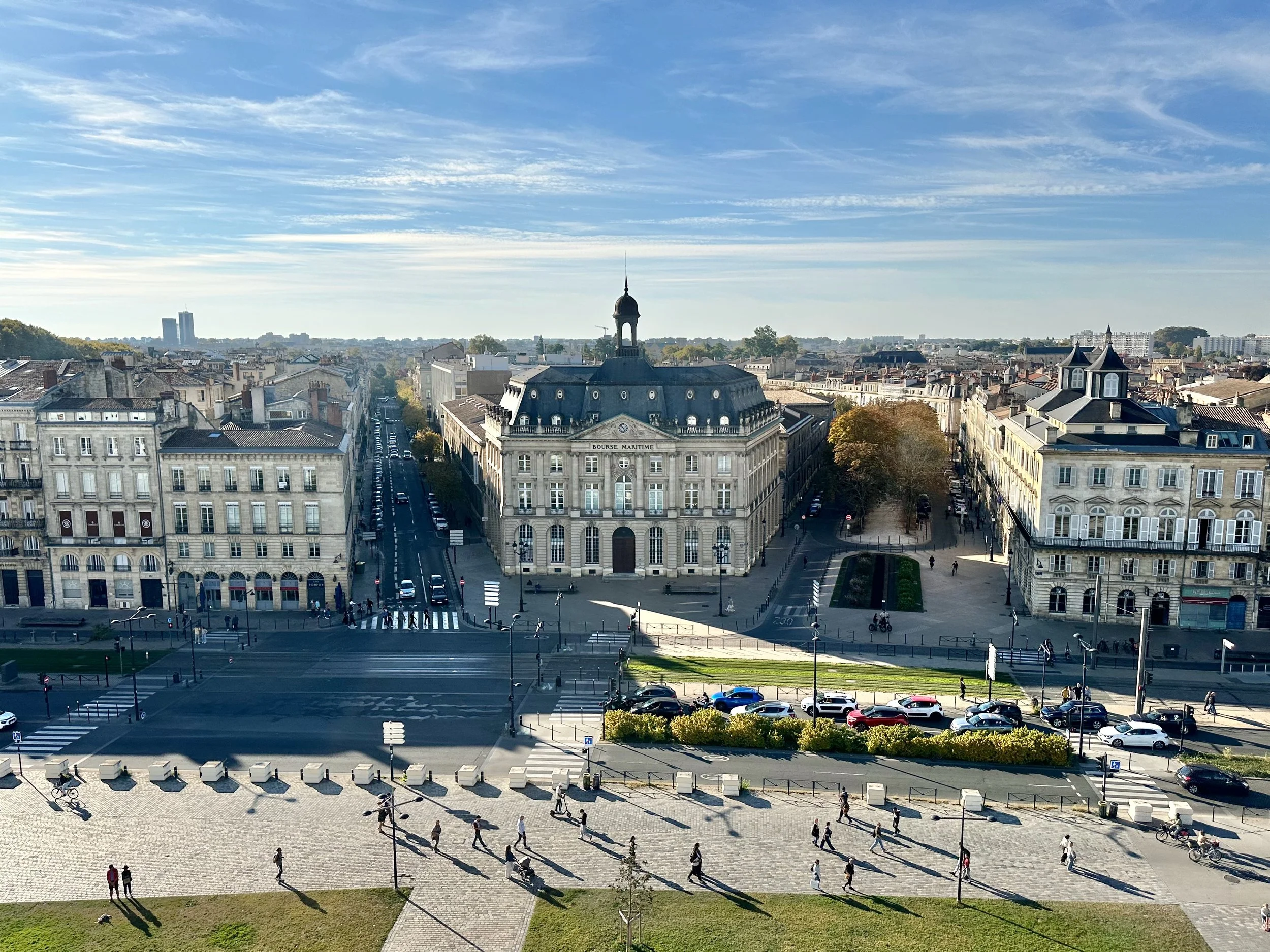
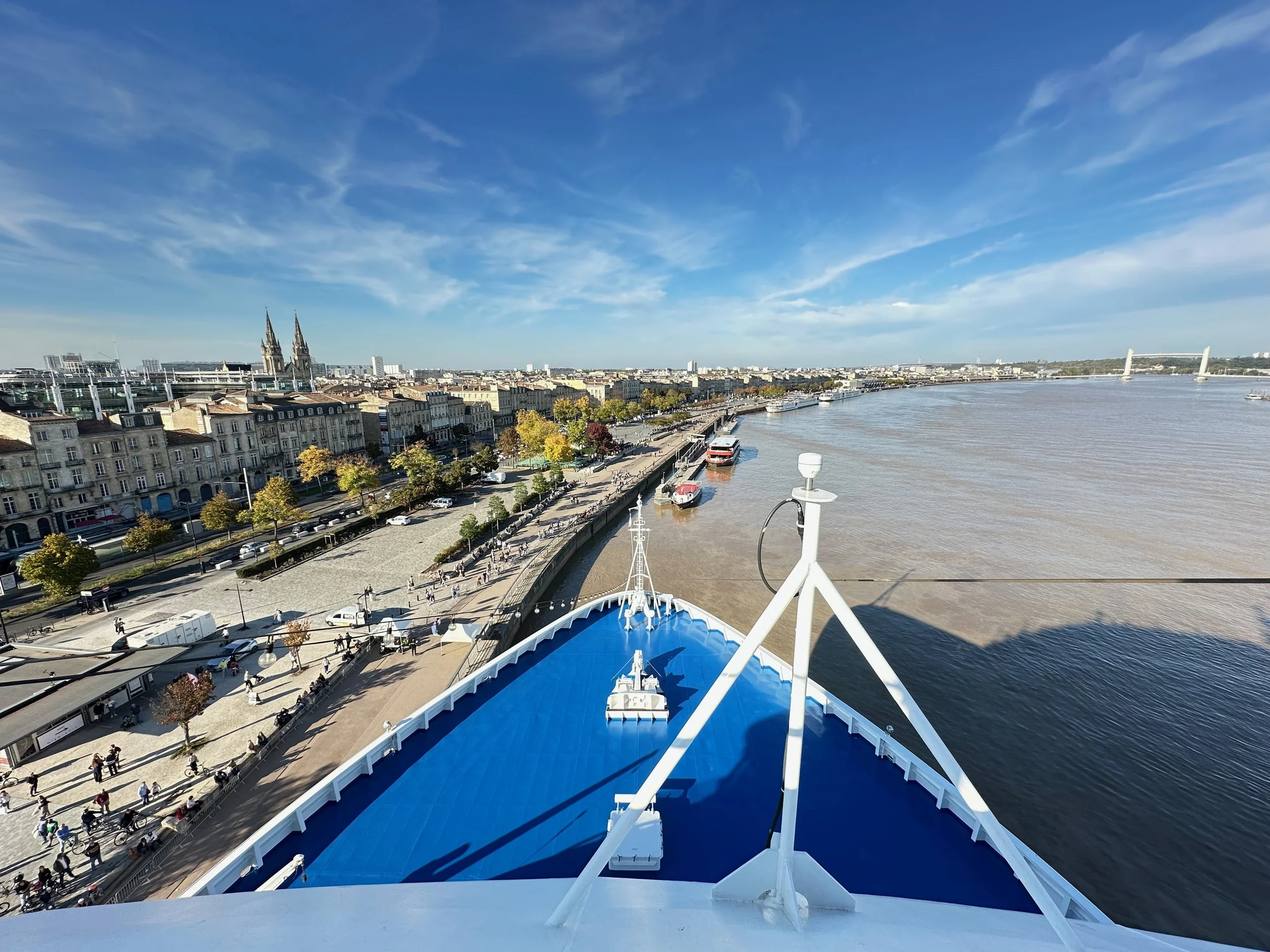
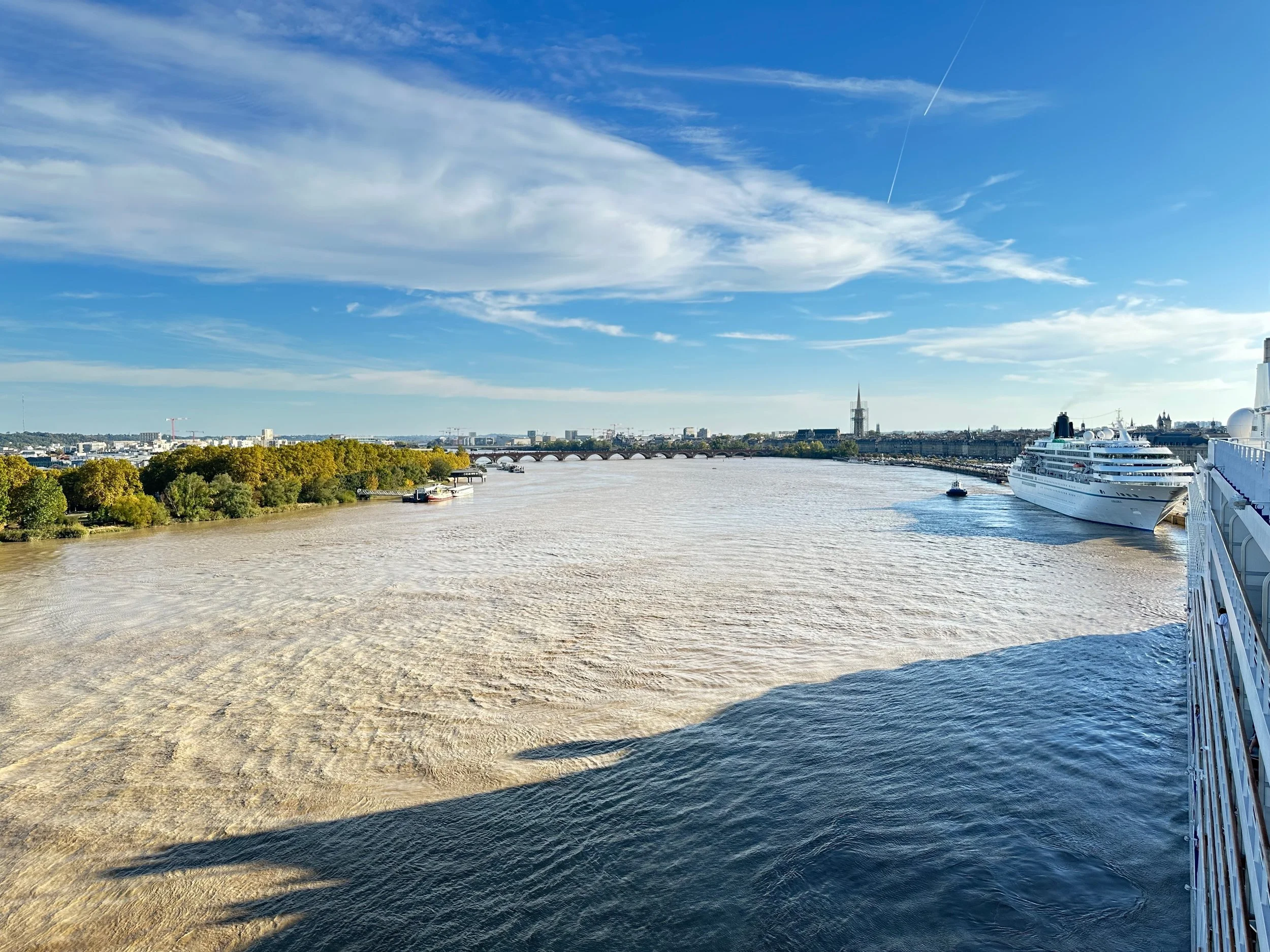
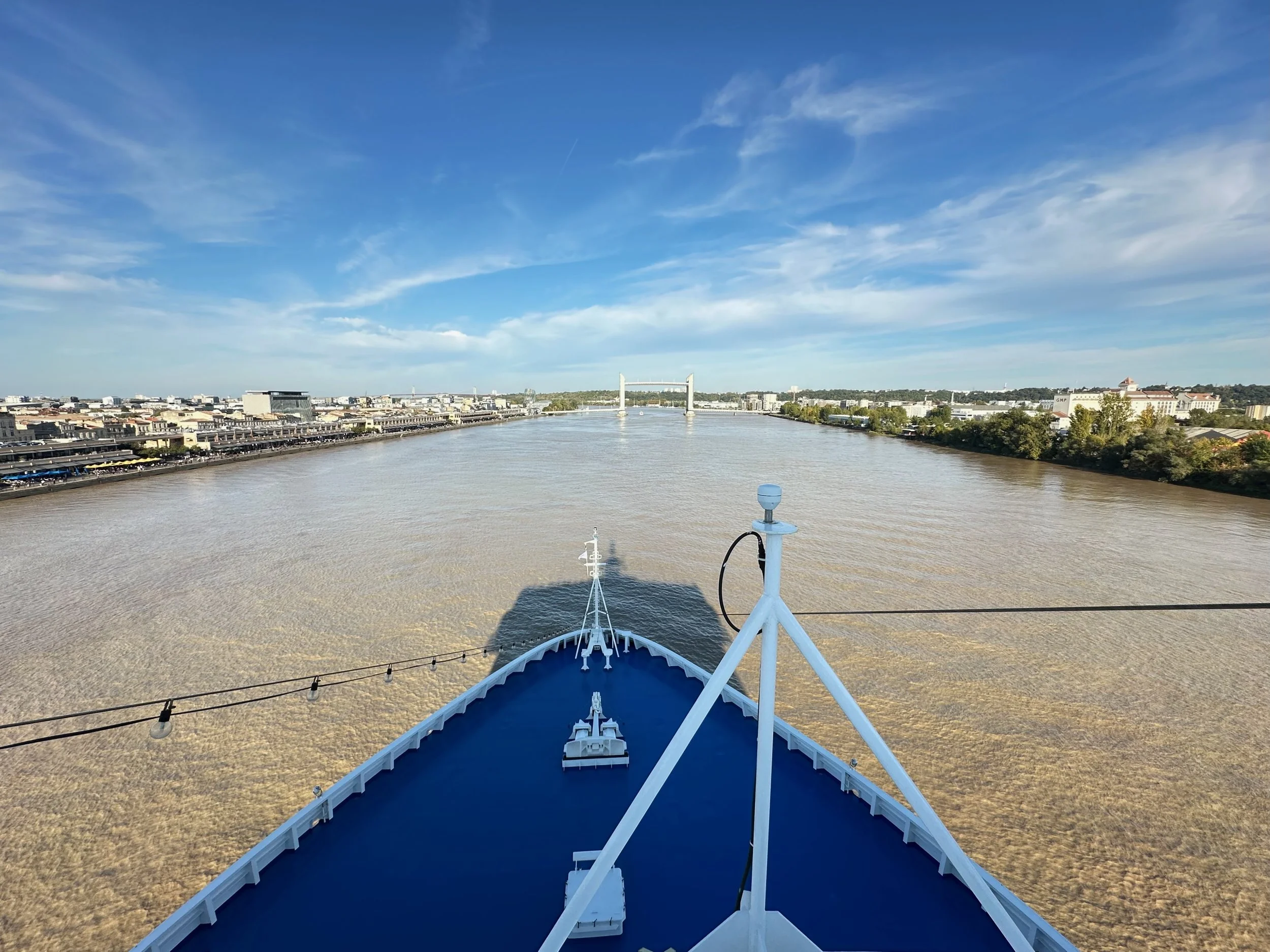
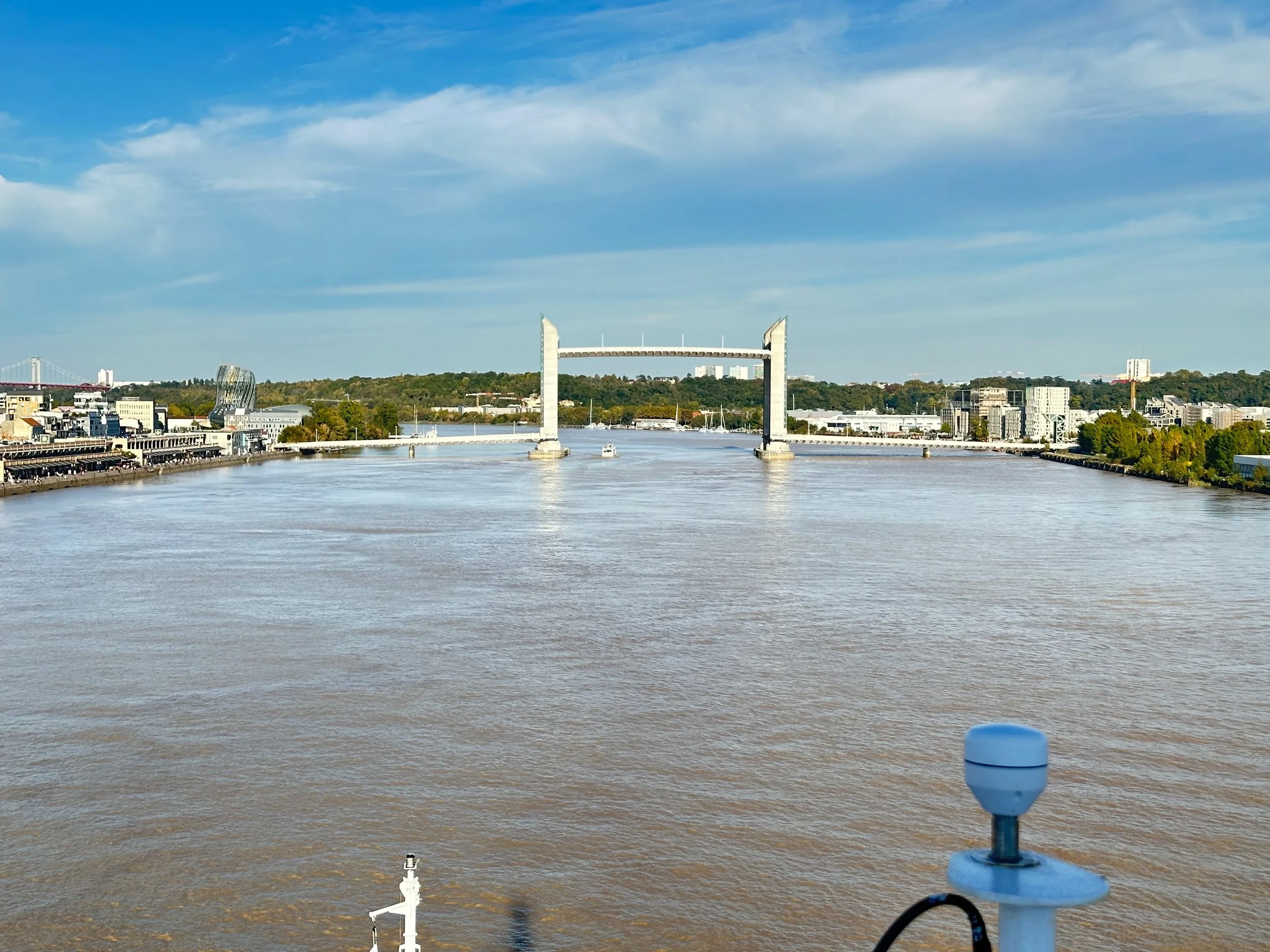
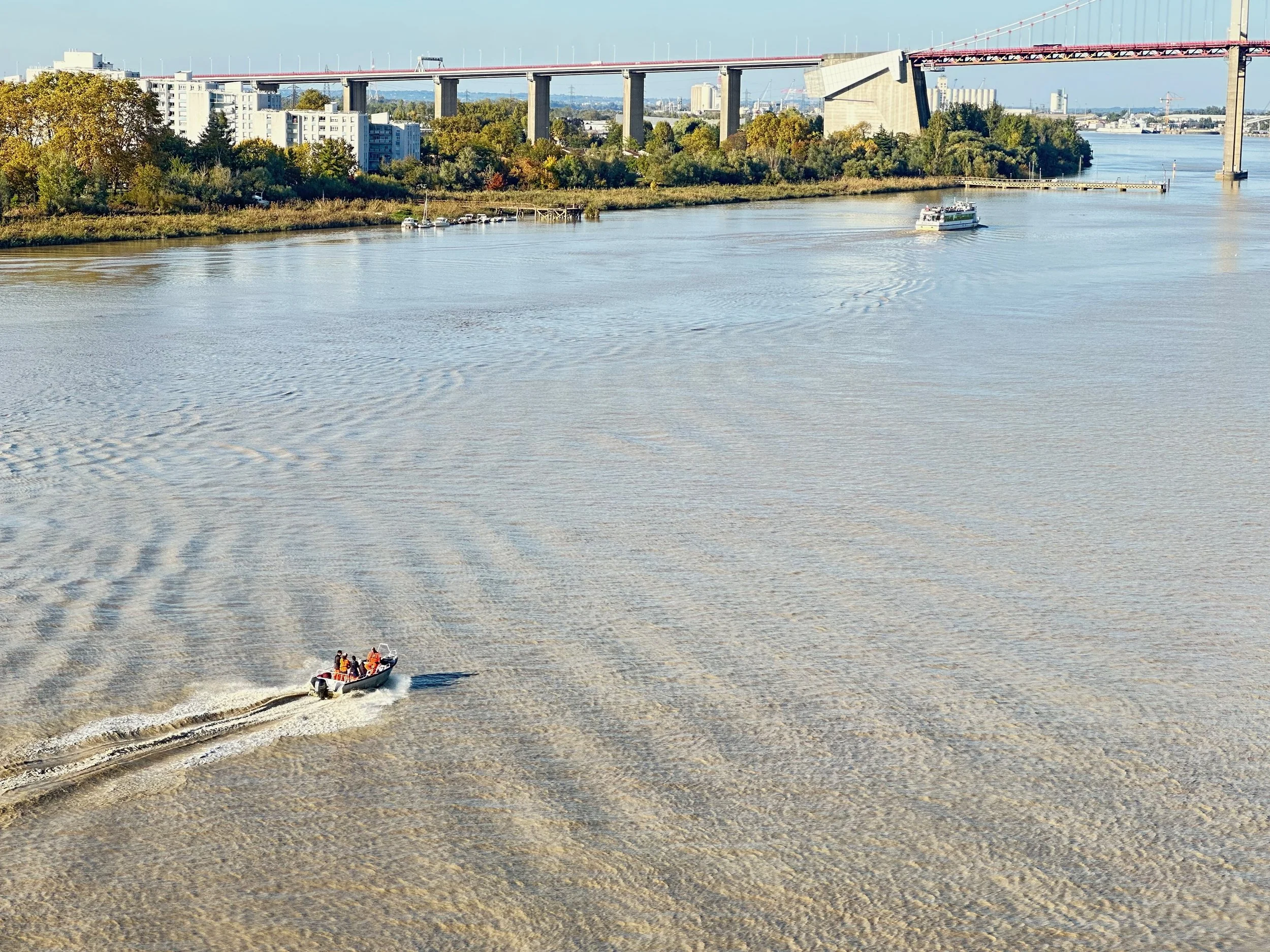
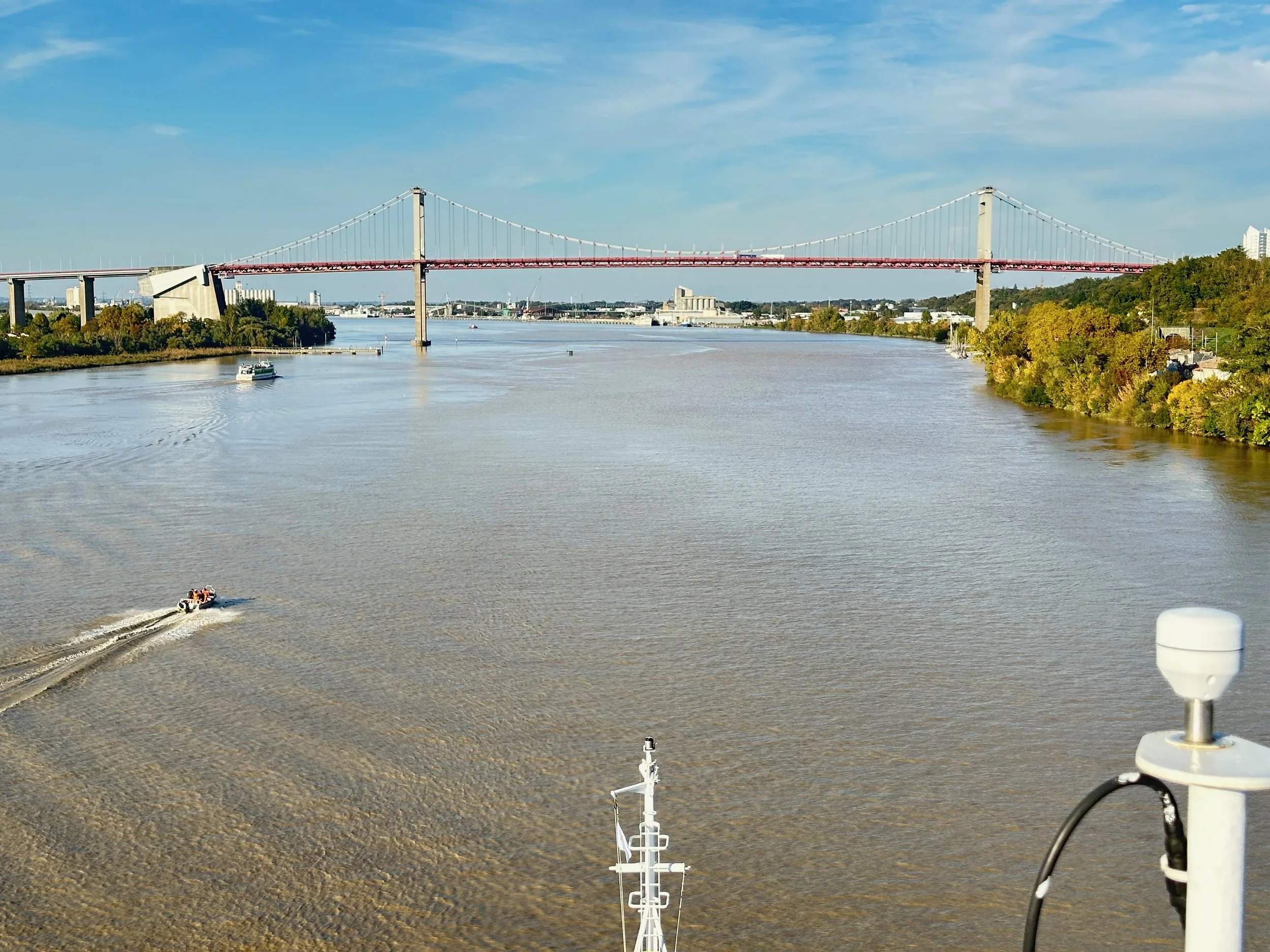
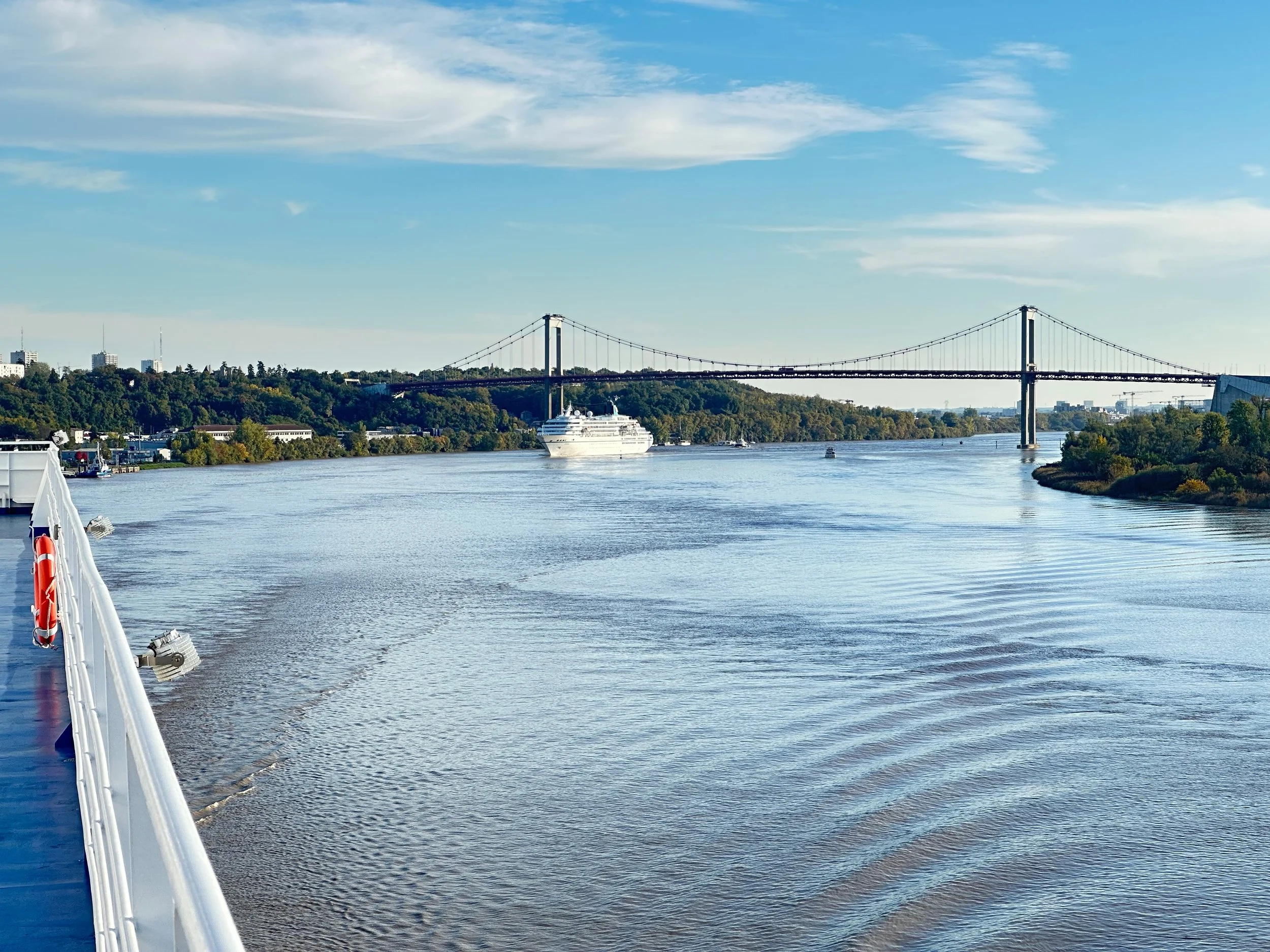
At 17:00 hour, right on schedule, the Silver Dawn slipped its mooring lines and began its slow return back to the sea. We made our way up onto the open deck above the bridge so we could get the best view of our departure and journey downriver. At the highest point on the ship we were well above the old world buildings and could see a great deal of the city. Places we had explored over the last two days came into view as the ship powered away from the land. Looking down river we could see that the Pont Jacques Chaban Delmas Bridge was already raised to its highest point in anticipation of not only our ship’s passing, but that of the German ship as well. It also left Bordeaux at the same time. Since it would be hours before we once again hit pure tidewater, and it was now approaching 18:00 hours, we decided to go and get ready for dinner. Sadly, dinner would not be on the rear outside deck like before. The speed of the ship, along with the ambient wind speed, made it too turbulent for one last true alfresco dining experience.
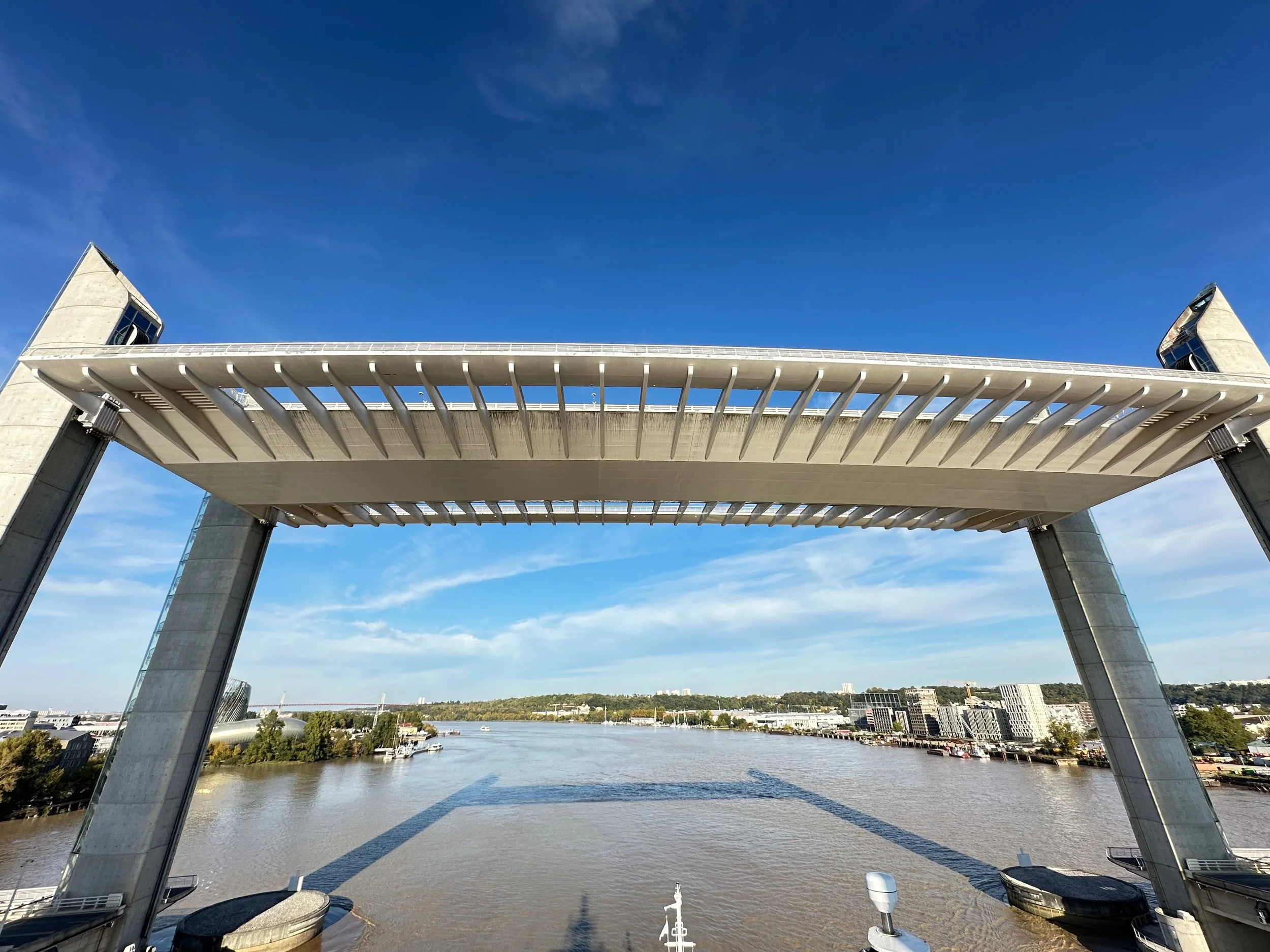
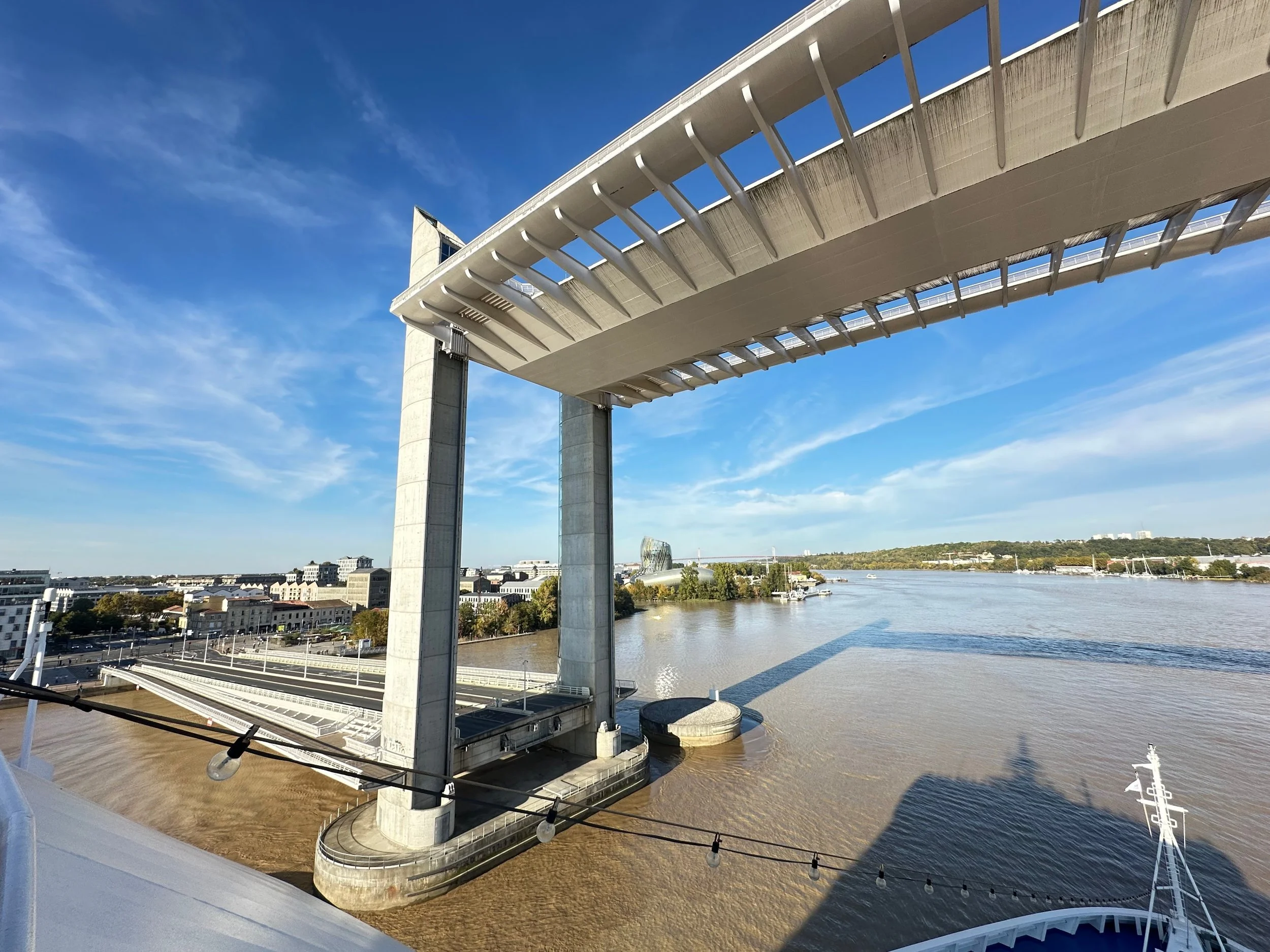
No More stops
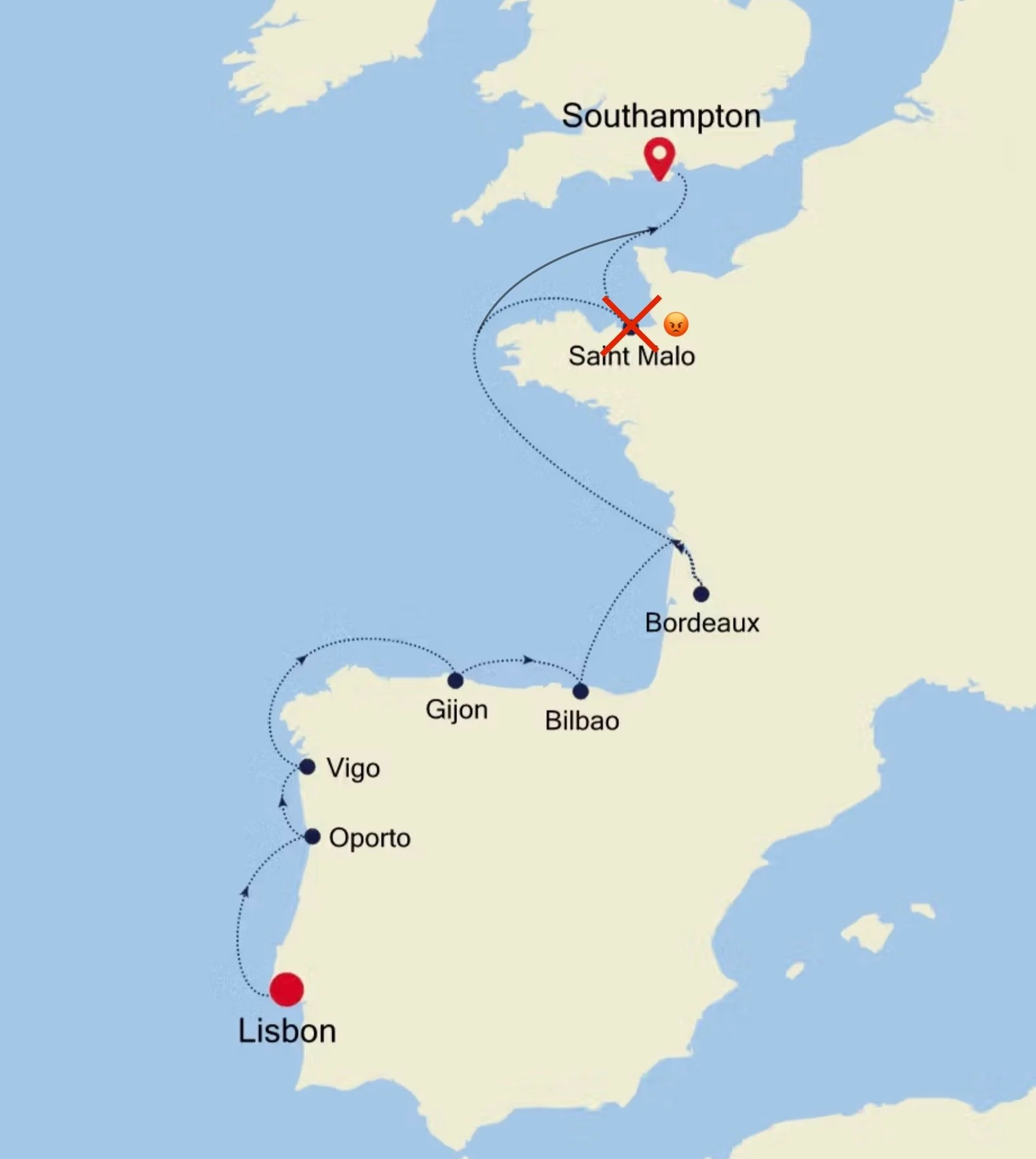
The “pièce de résistance” - not!
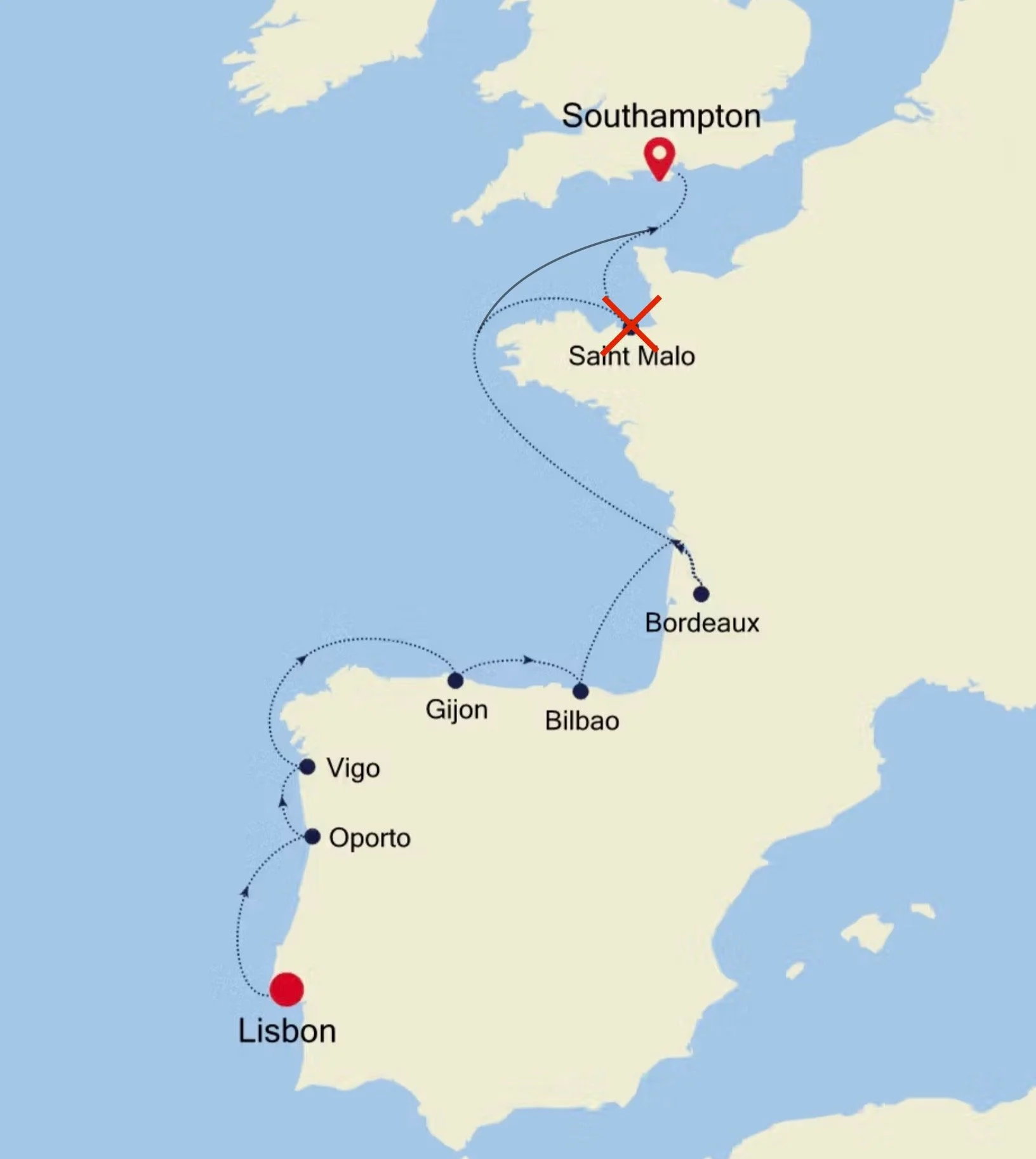
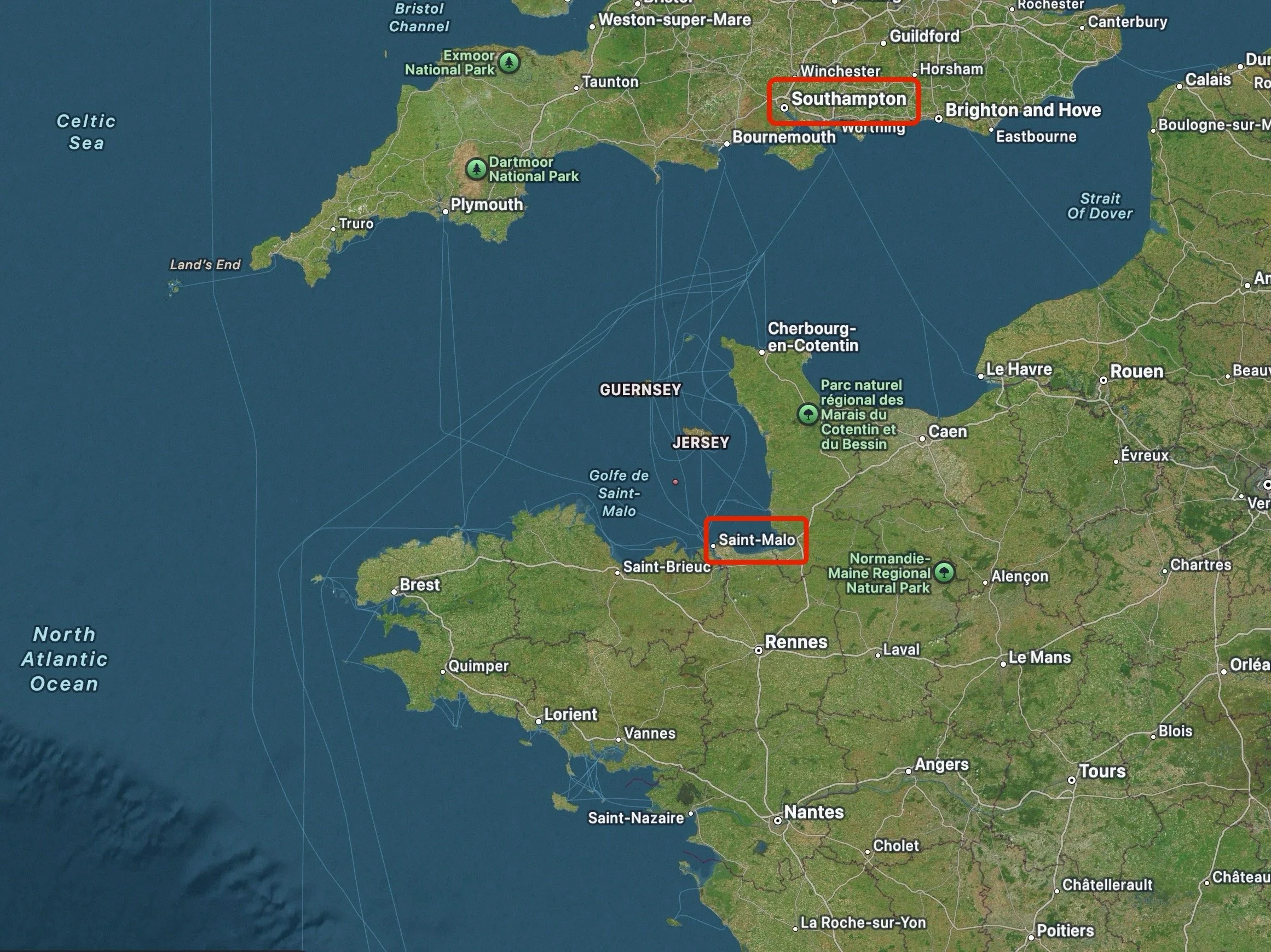
After our departure from beautiful Bordeaux the night before, there was a morning announcement by the ship’s Captain informing us that our final stop in France at Saint-Malo had been cancelled. Instead it was being replaced with an additional day at sea. The excuse given was that the seas were just too rough for the ship to travel at its usual cruising speed of up to 22 knots. Since the ship would have to slow down, it made it impossible to have a day in Saint-Malo and still make the docking time in Southampton for the completion of the cruise.
Of course this fostered intense disappointment not only with us, but the bulk of the passengers as well. What turned disappointment into utter contempt for the bridge crew was the fact that it was a complete lie. The seas were nowhere near passing the limit of the ships full cruising speed. How do we know this you ask? It’s a simple, one word answer…experience. We crossed the South China Sea from the Philippines to Hong Kong on a Silversea ship two thirds the size of Silver Dawn, just two days after a typhoon had assaulted the region. We also sailed across the Southern Ocean on a smaller Silversea ship from Antarctica to South Georgia Island. In both cases the seas were much rougher than this cruise, and those ships made the crossing at their regular cruising speed. Yes it was bumpy, but people could still walk the halls and eat in the restaurants.
The size of the sea we were wallowing in. Two to three metres at best. Not much for a 700 foot long ship travelling in the same direction.
Yes, on this occasion we did feel the ship getting hammered by the waves as we lumbered up to Southampton, but it wasn’t because of the ship’s speed. Rather, it was the opposite. The ship was going so slow that the waves of the following sea were going faster than the ship, and as a result were slamming into the stern! We wallowed in the open English channel for two days experiencing this unpleasant situation. The ship could easily have made it to the protected waters of the Gulf of Saint-Malo travelling at is normal cruising speed. A maximum speed, I might add, that was never reached during the entire cruise. Casual glances at the ship’s location screens available throughout the entire ship, including the television in each of the staterooms, showed that the ship never made it above 13 to 15 knots. So travelling at 6 or 7 knots in this sea was complete lunacy.
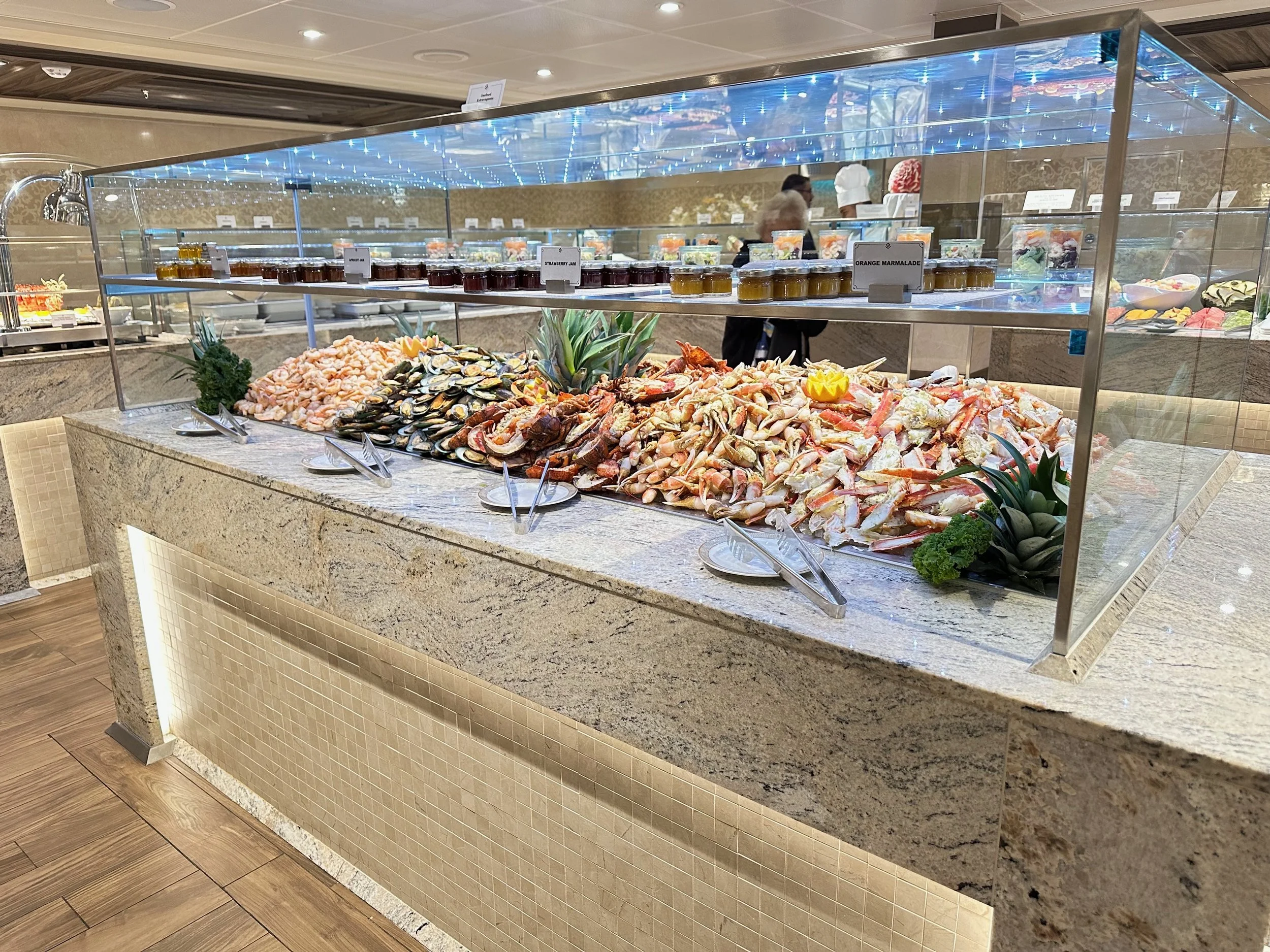
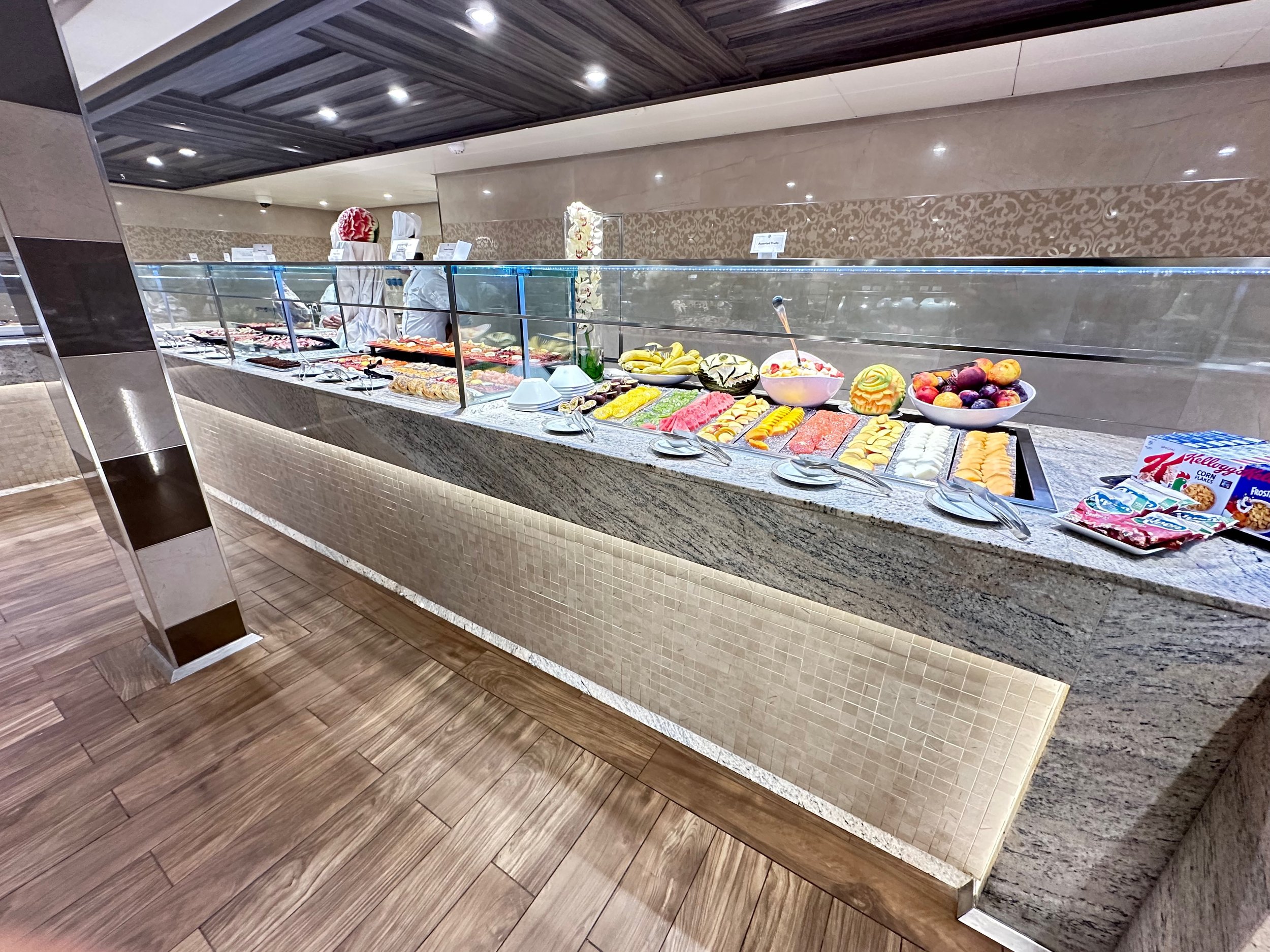
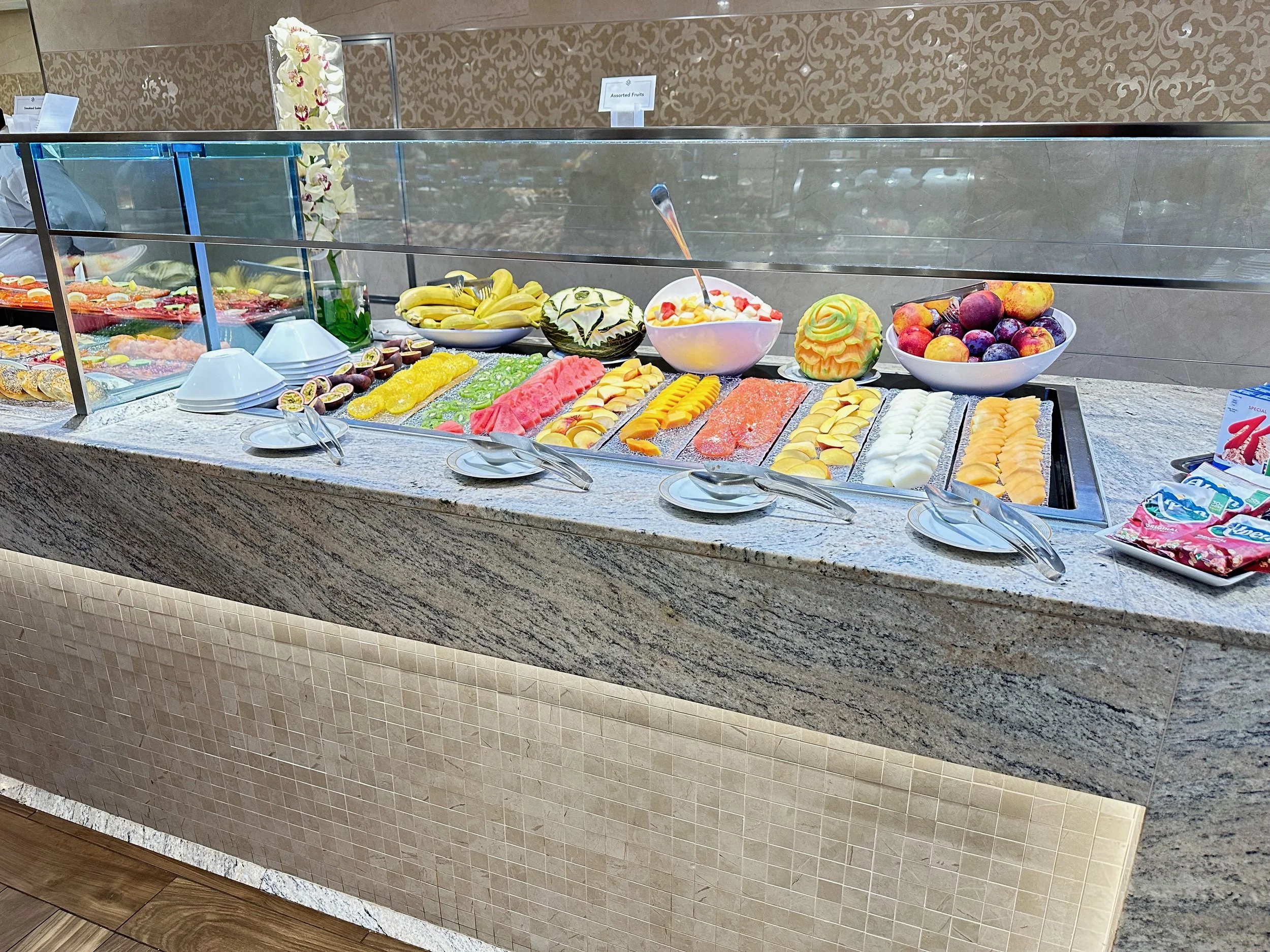
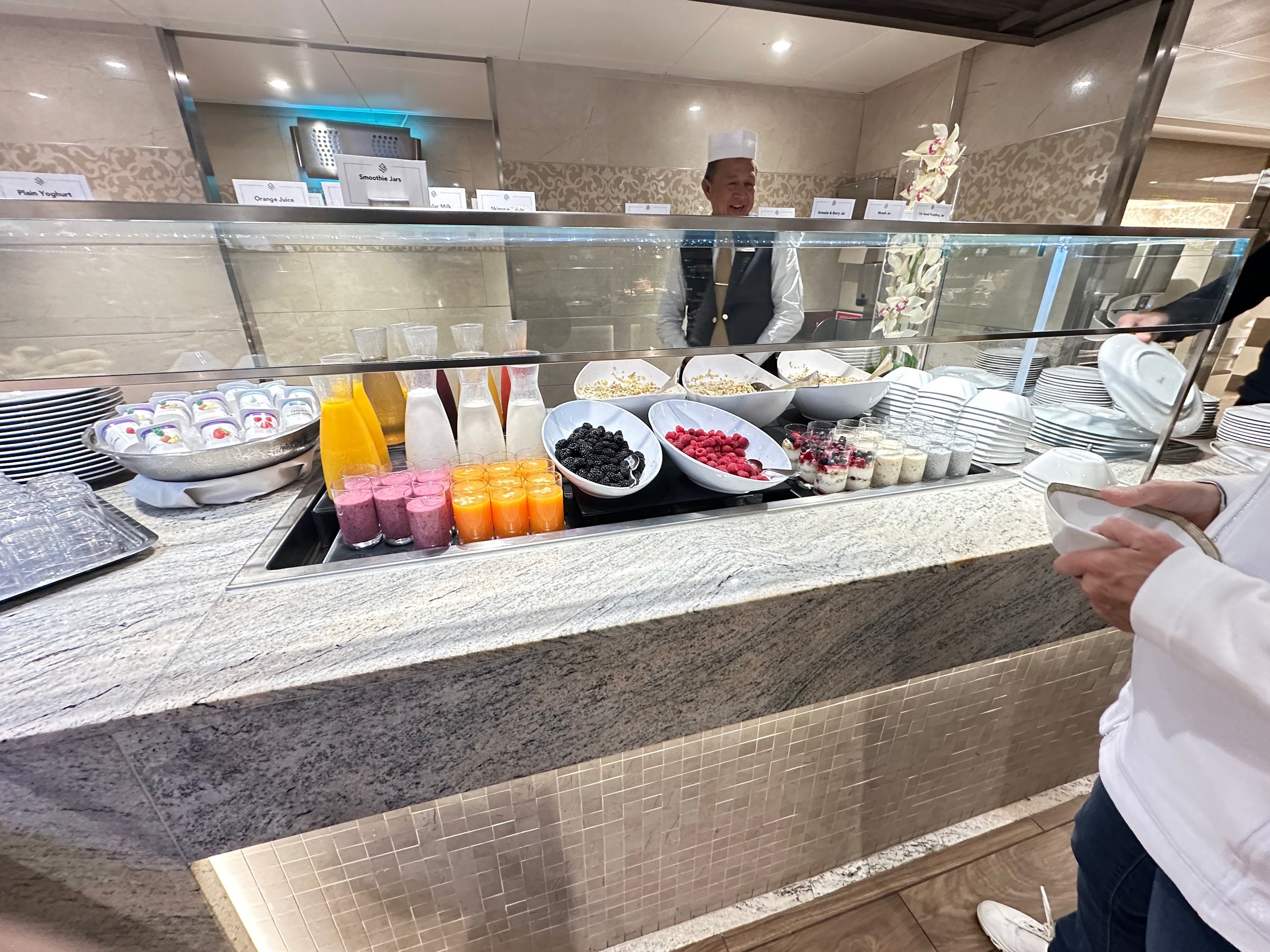
They tried to placate our disappointment with a first ever fancy buffet breakfast. We would have preferred to eat down in the formal dining hall where it was more comfortable and quiet. We could only do this on sea days.
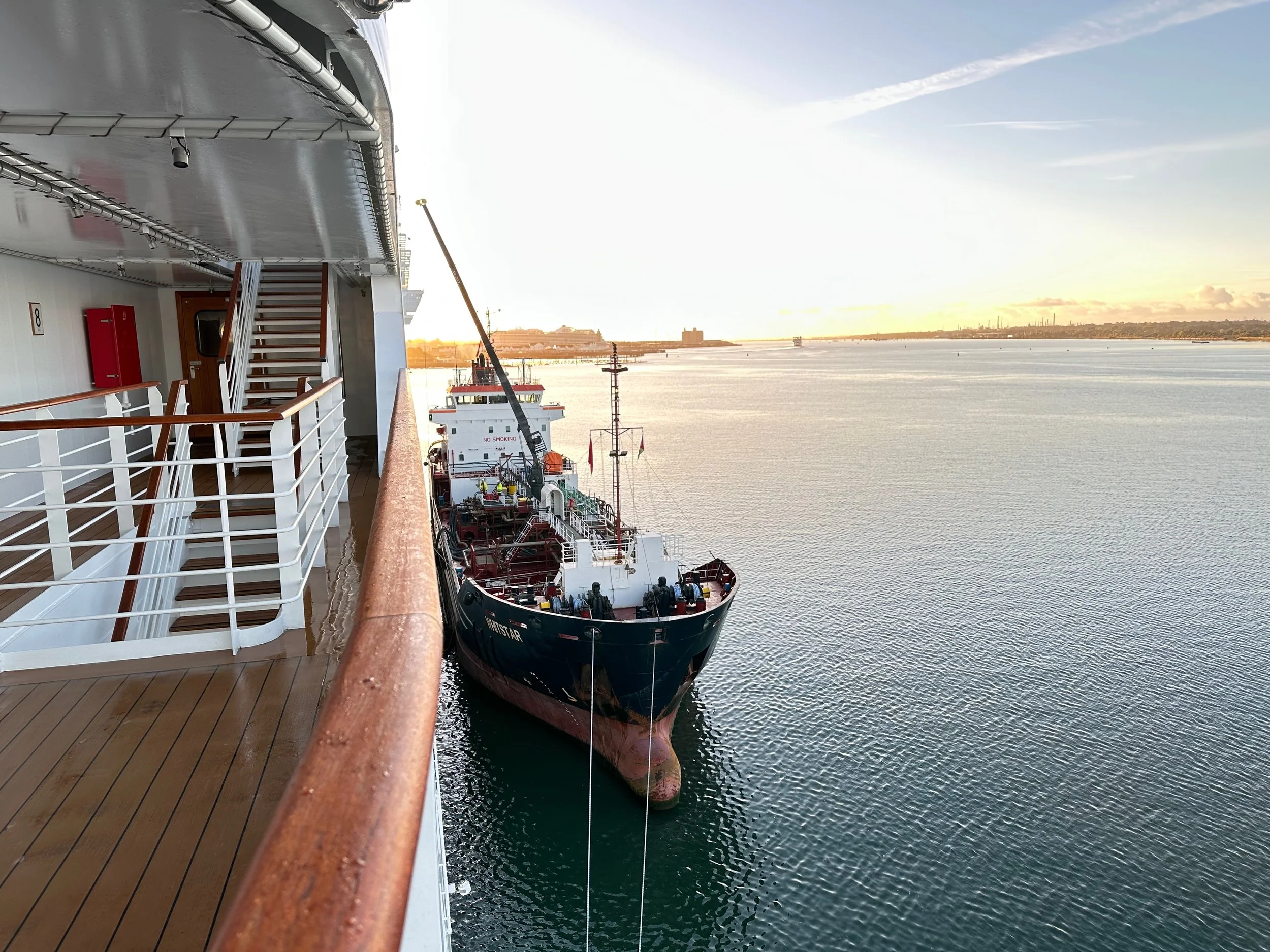
In hindsight, we can see only two reasons for the Captain to make this decision. One was when the ship took on fuel in Bilbao. It was done from a fuel truck on the dock which wouldn’t carry enough fuel to fully bunker the ship. So, did the Captain misjudge the amount of fuel needed to reach the end of the cruise, so had to conserve fuel by cruising at six knots so the ship could go the distance? Or is there a more nefarious reason? Since we saw other cost cutting practices on this cruise, was the Captain incentivized by the company to dream up excuses whenever he could in order to save the company the cost of port docking fees, and extra fuel cost for running at the higher cruising speed? We’ll never know for sure, but clearly the given excuse of heavy seas was complete rubbish. Did we feel cheated? You bet we did, and it will certainly be factored into any future decisions on what company we cruise with.
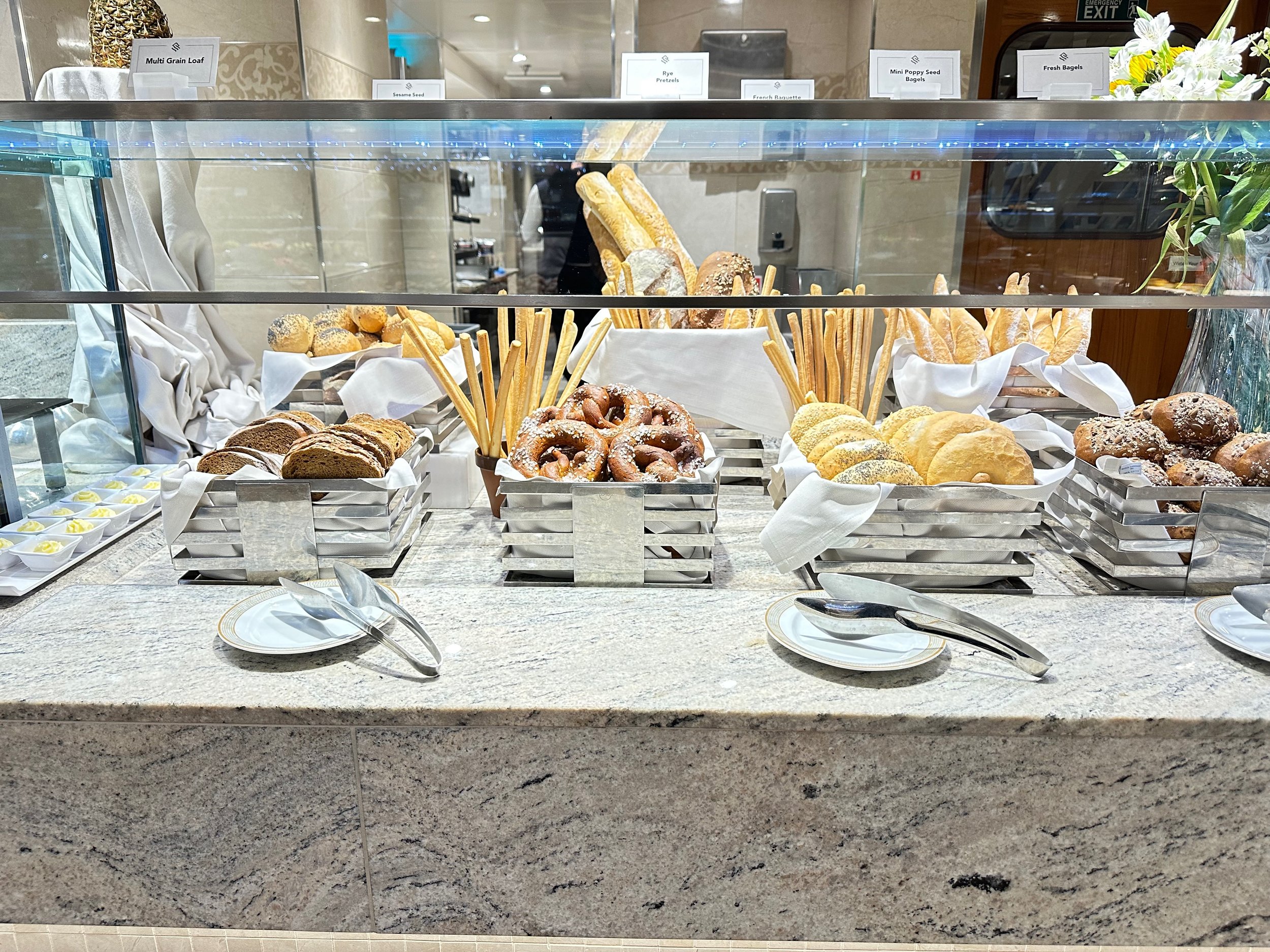
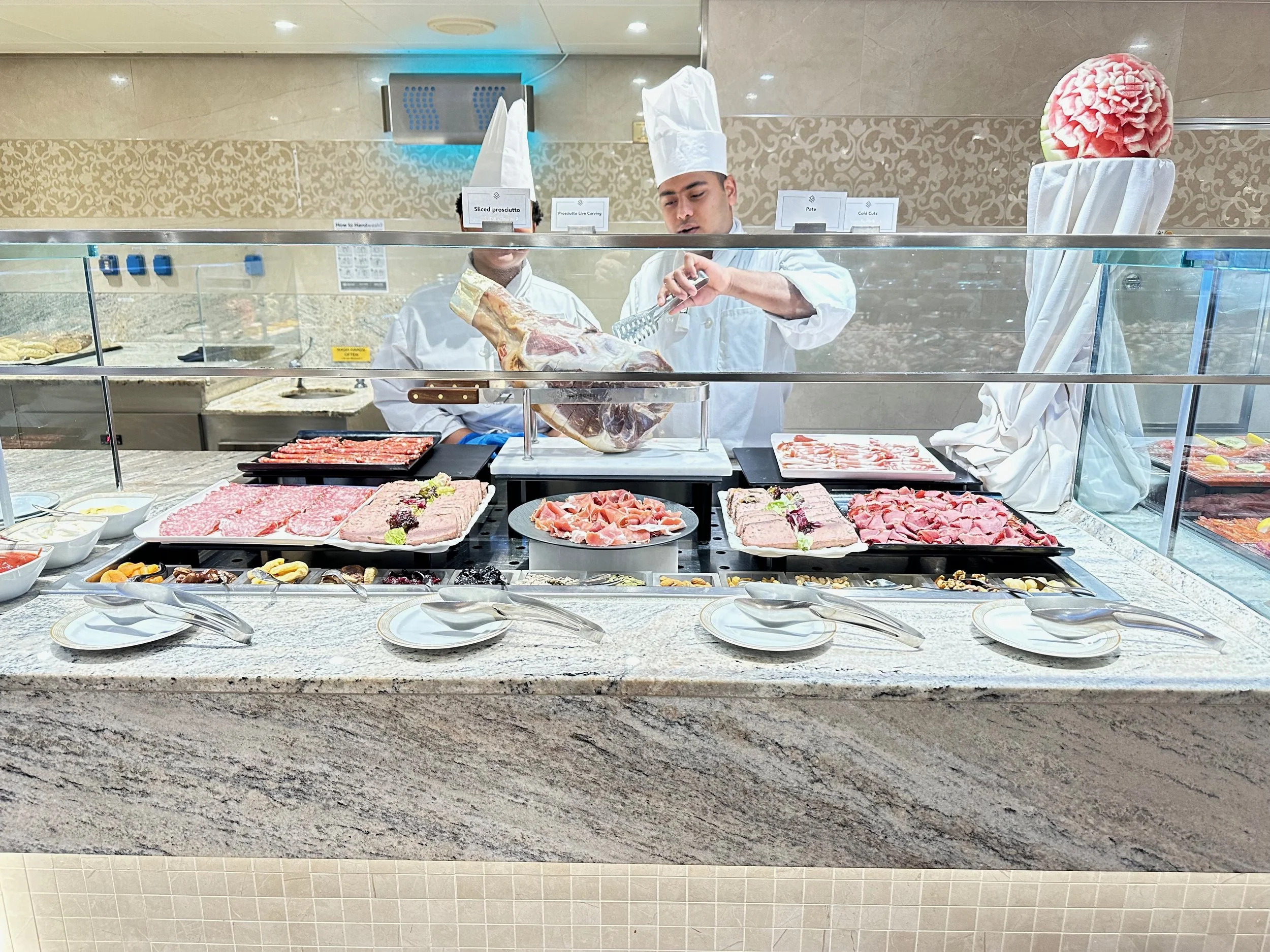
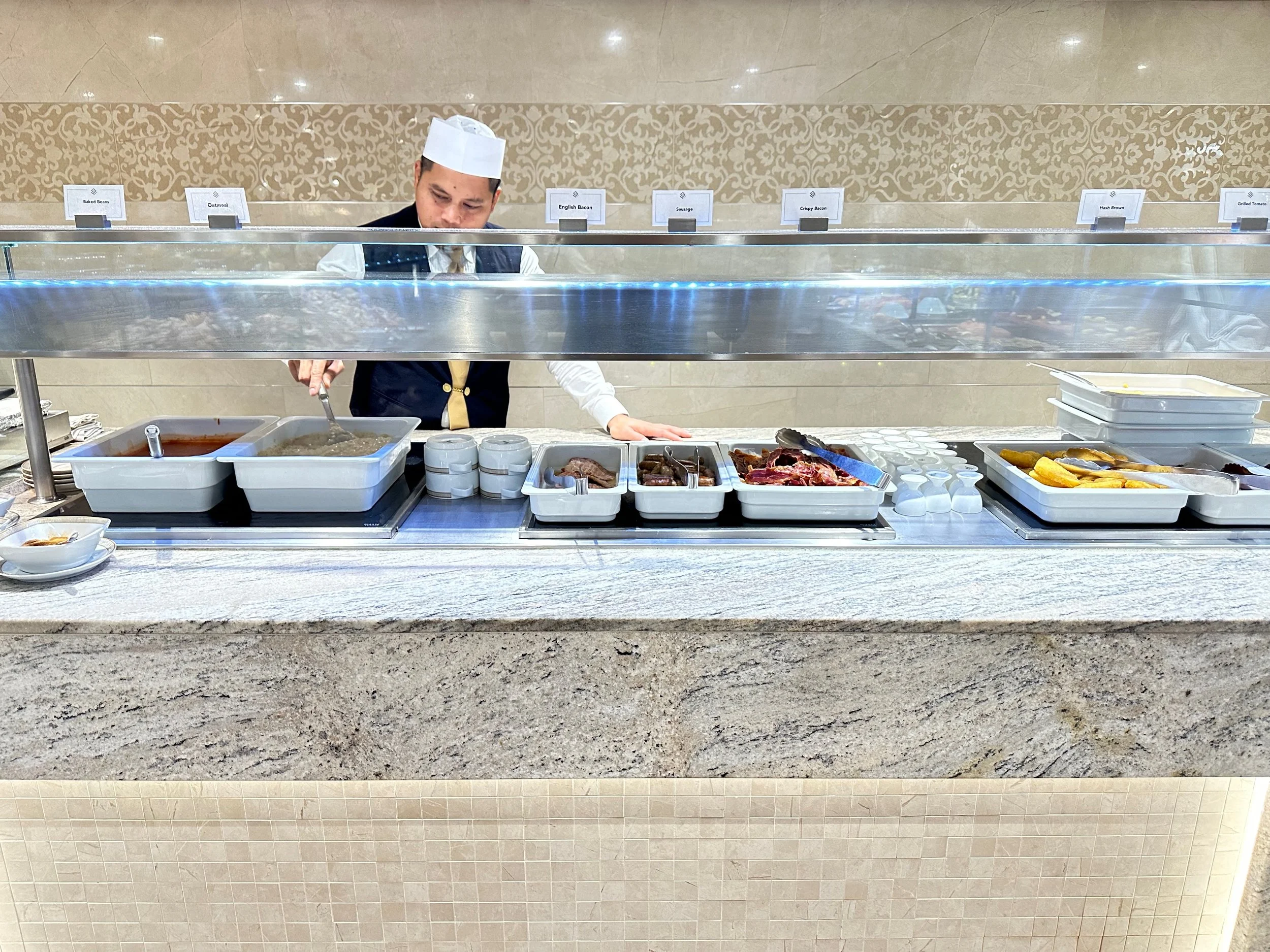
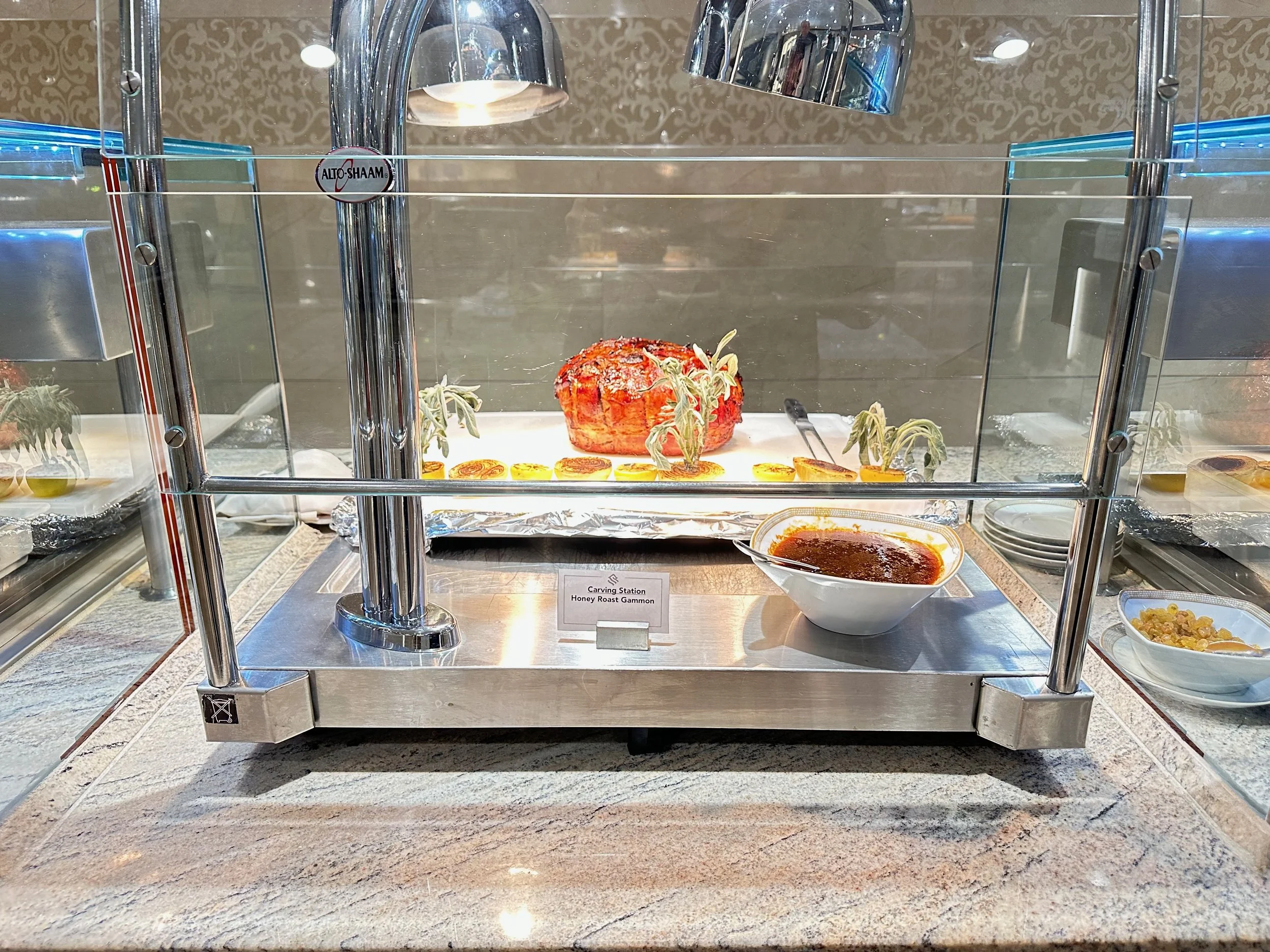
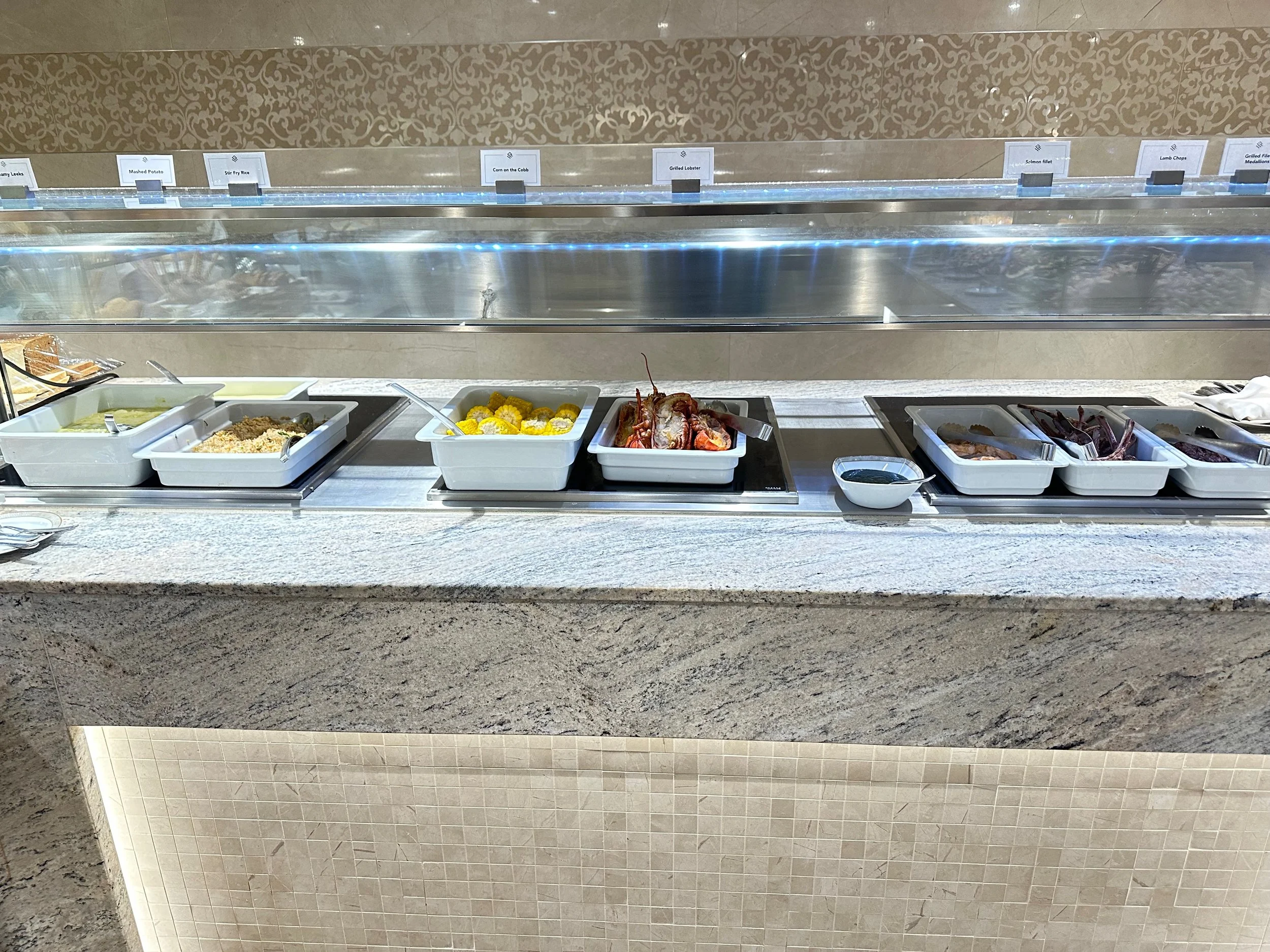
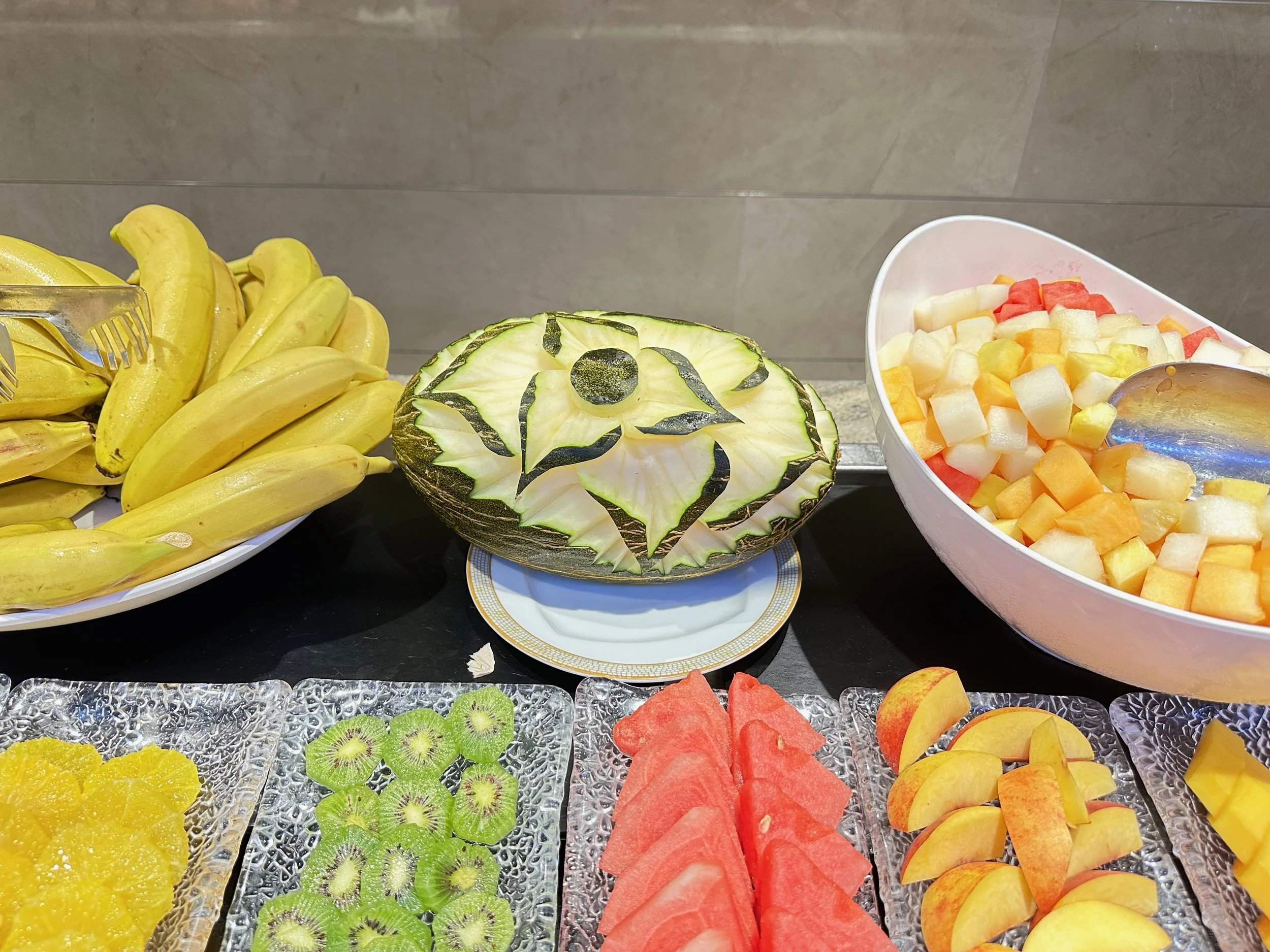
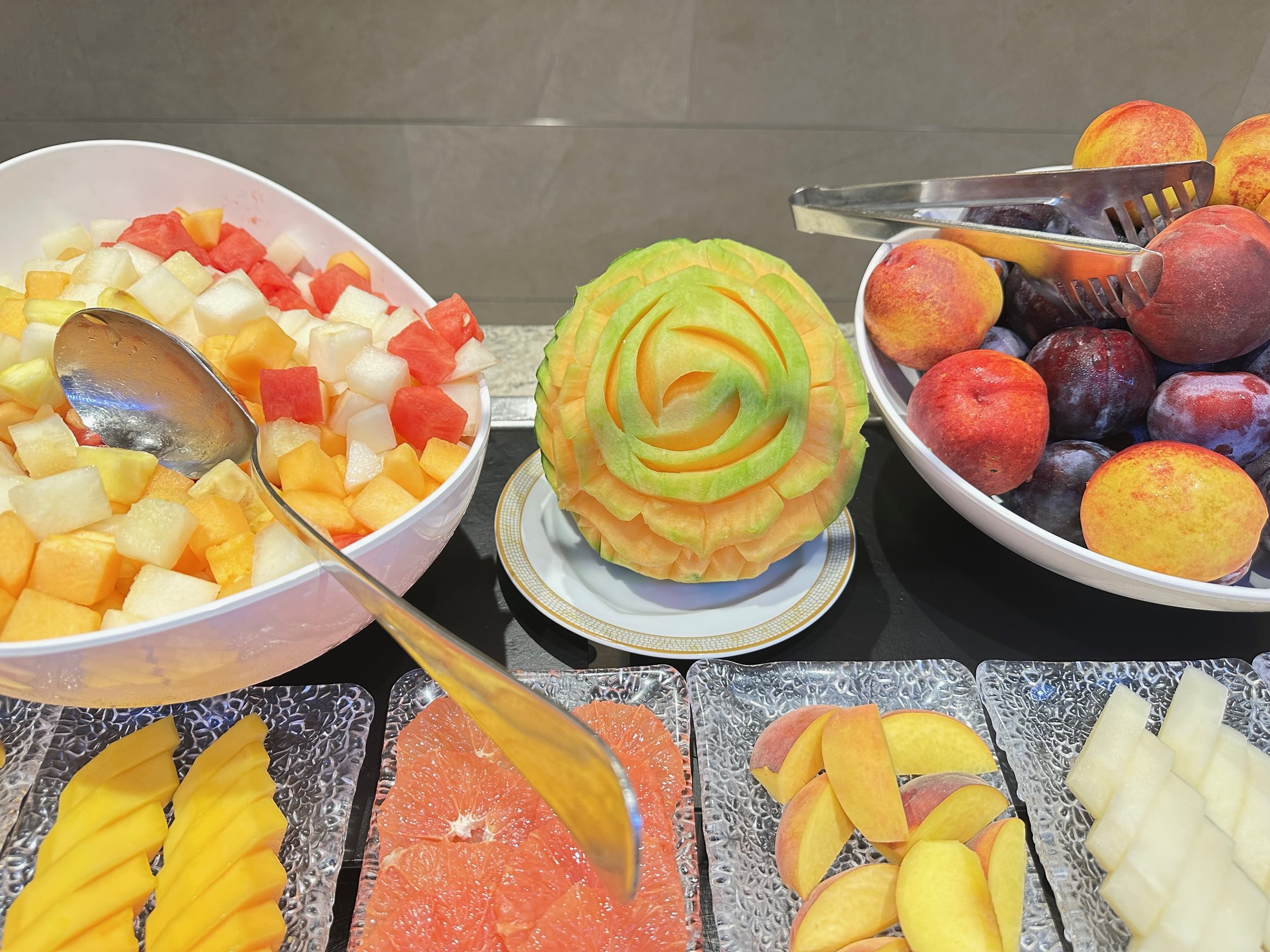
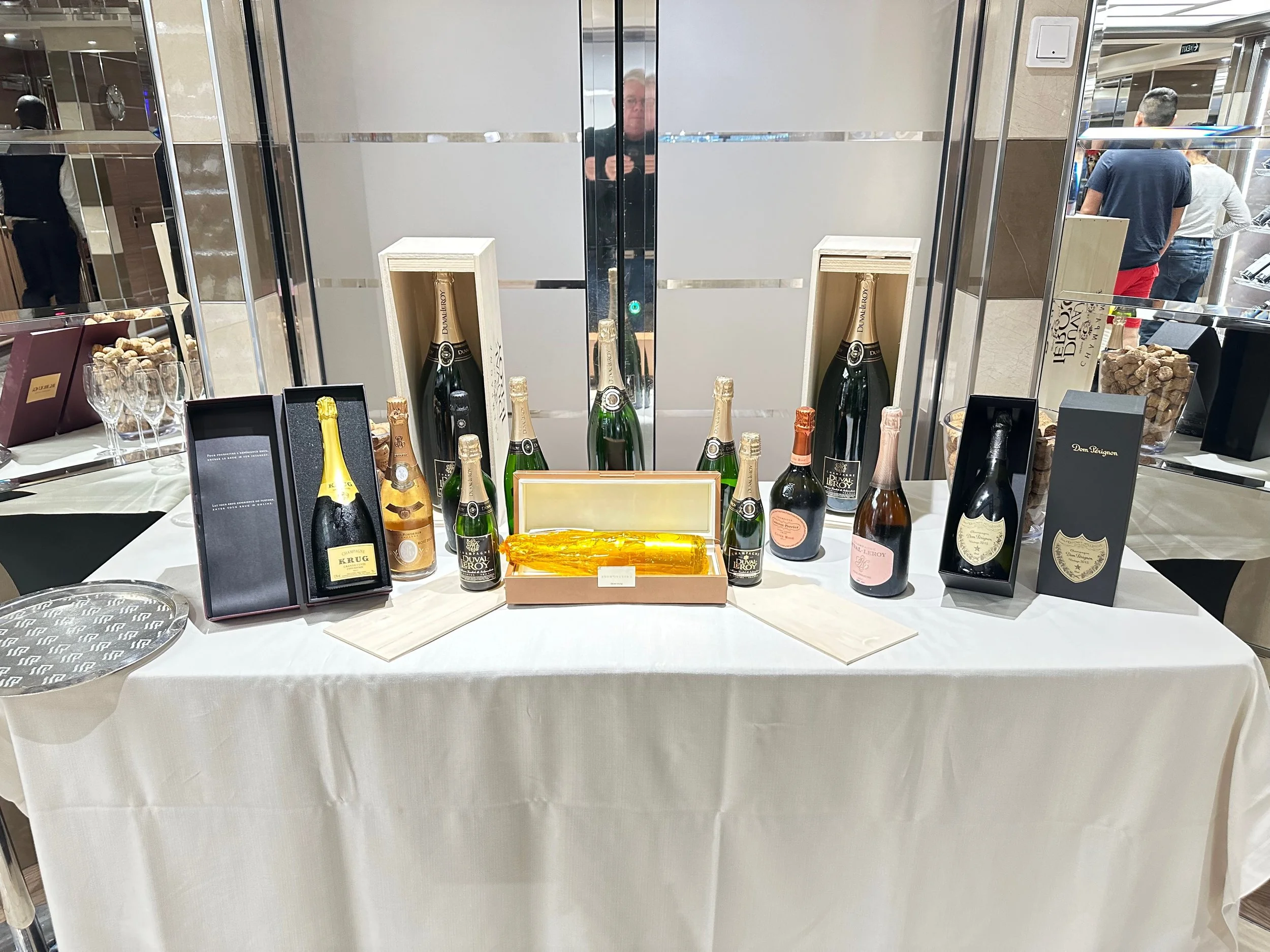
Images of the so-called special buffet breakfast
The special buffet breakfast was different only in its presentation. Set up more for visual appeal than anything else, the only added food items was a huge pile of shellfish in the centre of the food area. It did look nice, but it didn’t really provide anything special for us to savour. Frankly, since we could only manage breakfast in the main dining room on sea days, we felt somehow robbed of this by them closing the main dining room now for this “special” buffet brunch.
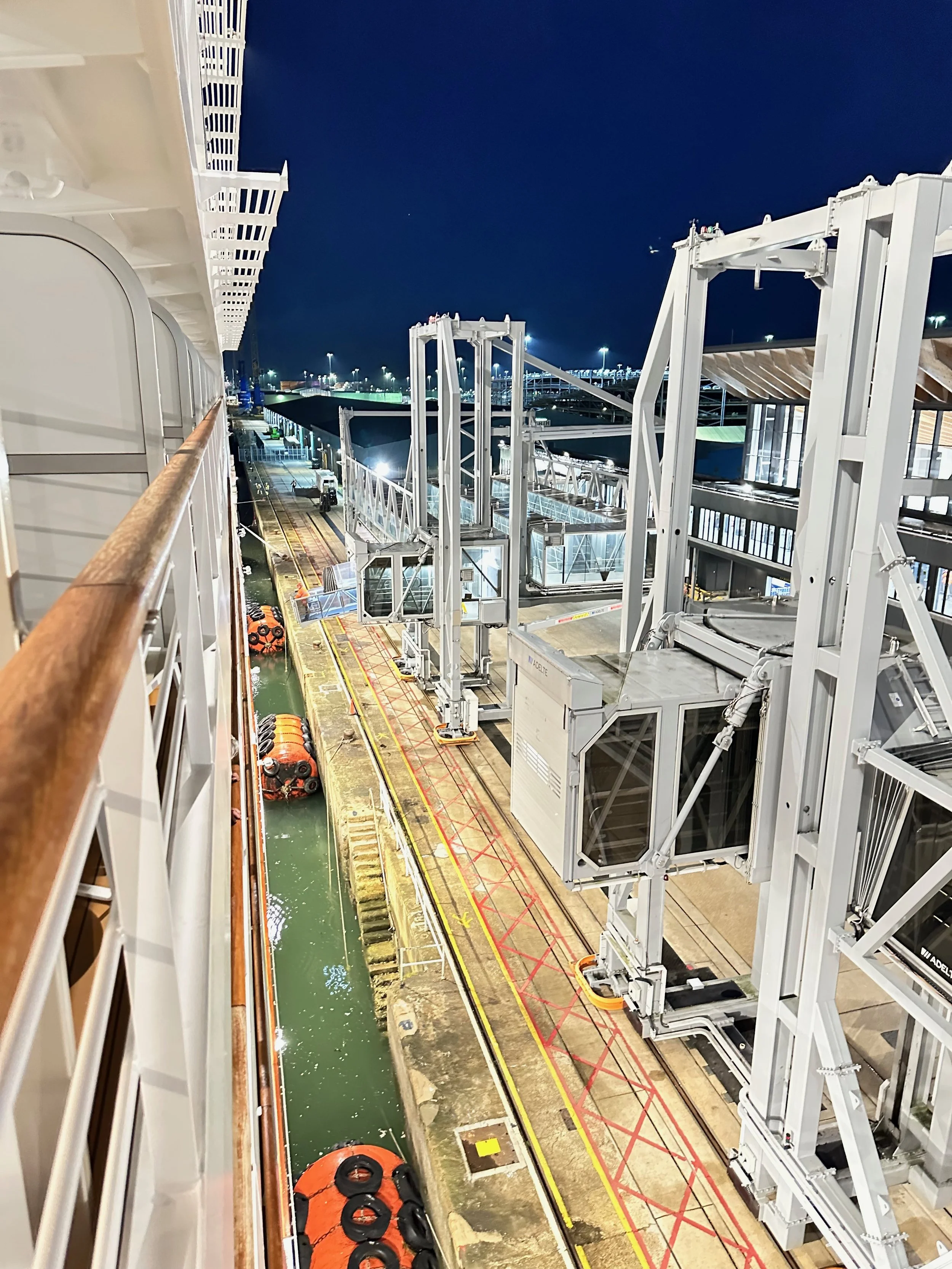
The suitcases being transferred from the ship to the terminal holding area.
Disembarkation
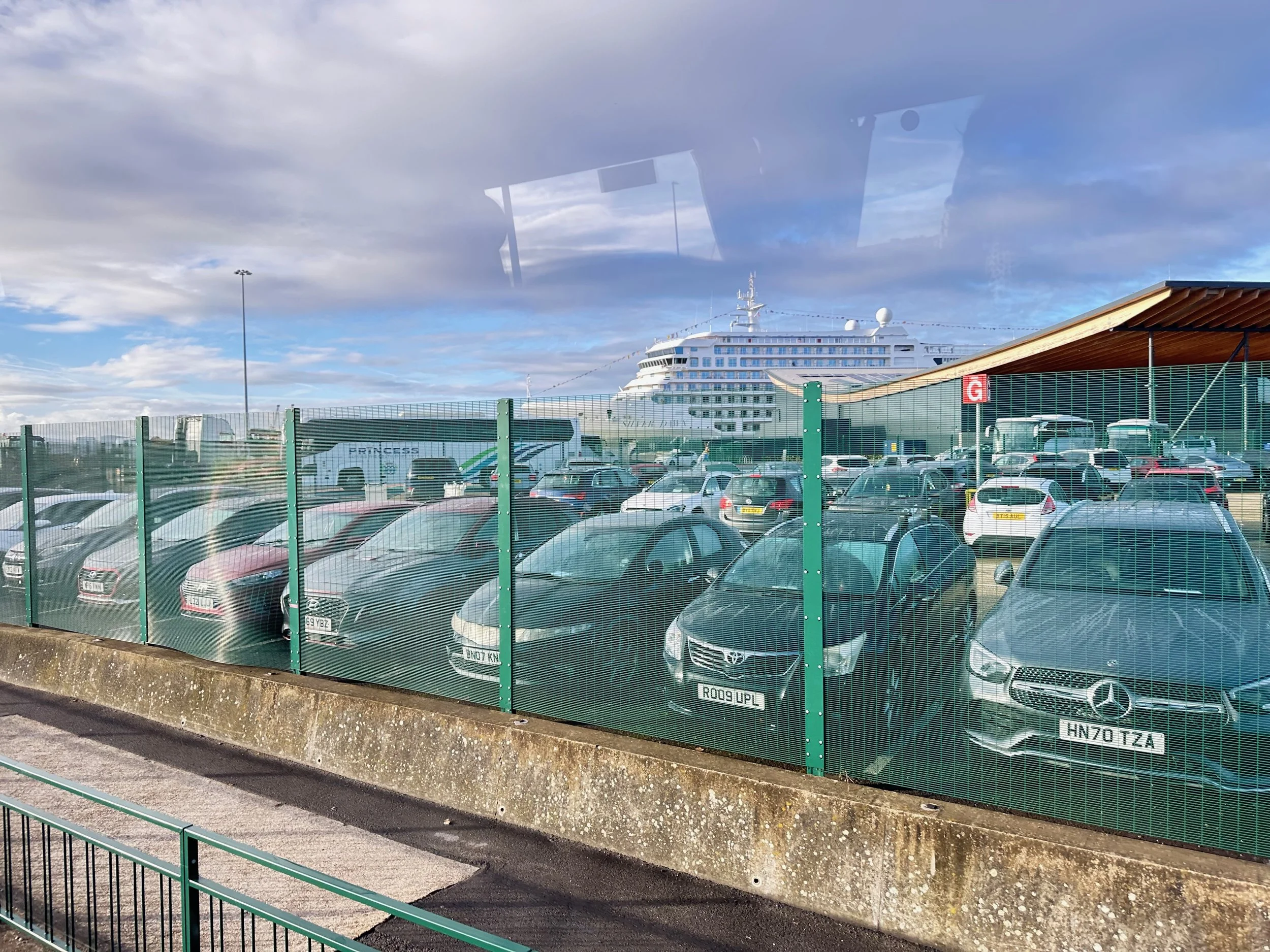
After two days of boredom and crappy mood, we finally made it to Southampton for our disembarkation. This process is well orchestrated as there are different waves of departure times depending on where and when the passengers have to meet their connections. For us, we were in group eight, which had the advantage of a later departure, so we were able to have a proper, unrushed breakfast. When our group was called, and before we could leave the ship, we had to retrieve our passports from the ship staff and then present them to the U.K. immigration officials that were aboard the ship in the same room. This also went without drama, and once done we made our way to the departure deck. From there we picked up our suitcases that had been collected from outside our room the night before, and were now in the cruise terminal’s holding area. Once we had them we headed for the bus that took us to Heathrow Airport and our British Airways flight home. Nine hours after boarding the plane we touched down in Vancouver where a car was waiting to take us home.